The US Major Called the SAS Amateurs. They Took the Hill His Battalion Had Given Up On.
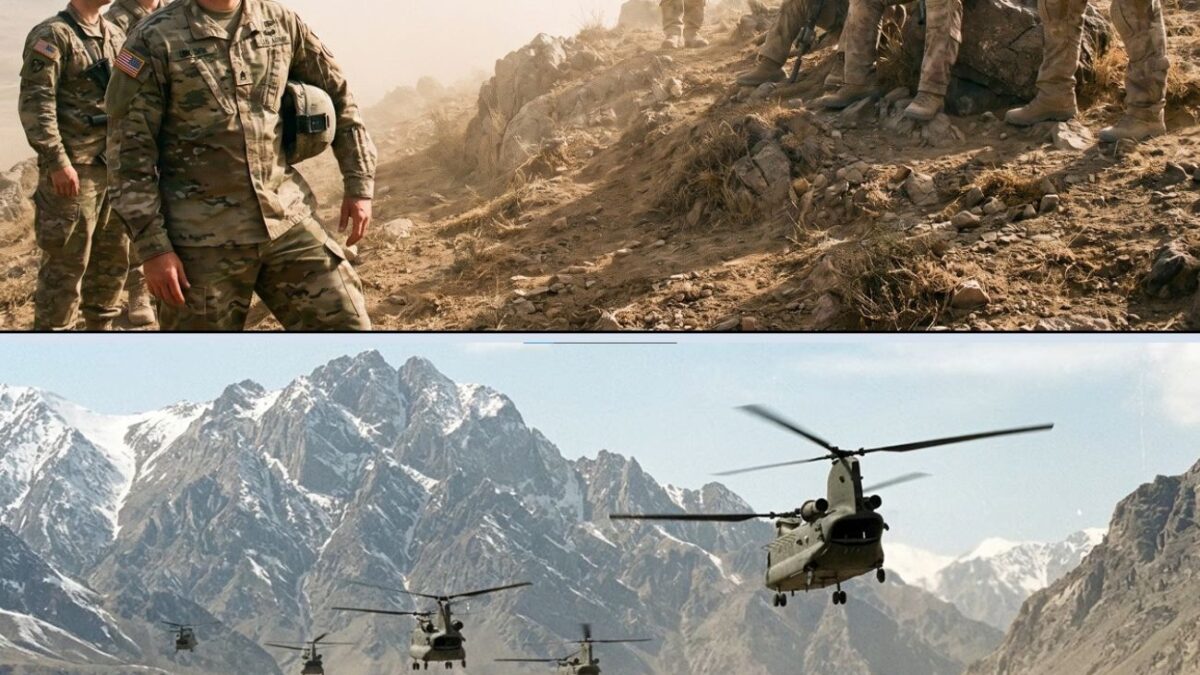
At 0510 on the 14th of March 2002, four men lay in a scrape of frozen shale on a spur of the Shy Cot Valley. The map called Objective Diane, 1100 meters above the valley floor, watching the sun come up through a Steiner spotting scope wedged between two rocks. The temperature was minus 6. A Minimi machine gun sat on a folded issue poncho to keep its bipod off the ice. Patrol Commander Sergeant Callum Ree had a strip of medical tape across the bridge of his nose where his sunglasses had cut him in a fall two nights before, and he had not slept in 31 hours. Below them, in dead ground they had crossed on their hands and knees, lay six previously unmarked fighting positions, cut into the reverse slope, invisible from the valley, invisible from the air, and exactly where the battalion that had tried this hill 4 days earlier said there was nothing.
3 days before that, the same slope had a different name in the afteraction file. A battalion objective assigned, attempted, and abandoned. Operation Anaconda had begun on the 2nd of March as a conventional air assault operation, the largest the United States had mounted in Afghanistan to that point. Battalions of the 101st Airborne’s Rakkasan Brigade and the 10th Mountain Division lifted by Chinook into blocking positions around the Shyokot Valley floor with the plan built on an intelligence estimate that put the number of Taliban and foreign fighters holding the high ground at a few hundred lightly armed likely to break and run once serious pressure arrived. The estimate was wrong within the first hour of the first lift when helicopters carrying the initial assault waves took fire from mortar and heavy machine gun positions dug into the ridge lines on both sides of the valley. Positions that had not shown up on any pre-mission imagery because they were built into reverse slopes, roofed over and camouflaged by men who had held that ground on and off since long before the Soviets had tried the same valley two decades earlier.
What had been briefed as a short clearing operation became within days a fight for individual ridge lines and peaks, prosecuted one objective at a time, each one requiring its own separate reckoning between what the map said and what was actually dug into the rock. Objective Diane sat on the eastern shoulder of a long limestone massif that American soldiers in the valley had already nicknamed the Whale. A ridge running north to south along the west wall of the Shyokot on the far side of the valley in the opening days of Operation Anaconda. The fighting for the eastern high ground had already produced the story that would dominate the afteraction reports out of the whole operation: the loss of a Navy SEAL from a Chinook helicopter on Takur Gar, the scramble of a Ranger quick reaction force onto the same mountain, and a death toll among the Americans committed to retake that single peak that would be argued over for years. Diane was not that story. Diane was smaller, quieter, and it belonged to a battalion from the 10th Mountain Division whose Alpha Company had gone up the eastern face on the 10th of March and come back down 2 days later with 11 men suffering frostbite injuries serious enough to require evacuation, one soldier dead from an 82mm mortar round that walked onto their assembly area during the withdrawal, and a written assessment filed by the company commander himself that put the position beyond what a company could take without armor or heavier indirect fire than the valley could support.
The Whale itself rose to just over 3,000 meters at its highest points, a wall of broken limestone and scree with almost no cover above the tree line that ended a few hundred meters up from the valley floor, and every approach to every position on it required climbing in full view of at least one dug-in position for some stretch of the ascent. Objective Diane sat roughly two-thirds of the way up the eastern shoulder at an altitude close to 3,000 meters, where the air itself became a factor units flying in from lower elevations at Bagram or Kandahar had to acclimatize against, and where a loaded soldier moving uphill burned through his water and his stamina at a rate the operation’s own medical planners had underestimated in the initial casualty projections. The company commander was a captain named in the file only by initial. His attempt on the 10th had followed the plan on paper closely: a two-platoon advance up the eastern face under cover of a rolling mortar barrage, with the third platoon held in reserve at the base of the slope to exploit any breach.
The plan came apart in the first 20 minutes when the lead platoon crested what its own map showed as the final approach and found a second line of fighting positions the imagery had never revealed, forcing the company to go to ground in the open on a 40-degree slope with no cover but scattered boulders in temperatures that would put 10 of the 11 eventual frostbite casualties into the medical evacuation chain before the company disengaged. The captain’s radio log for that afternoon records four separate requests for closer air support that could not be approved because the requested strike distance from friendly positions fell inside the safety margin then in effect for fixed-wing ordnance in that sector, and a fifth request for a resupply of climbing rope and cold-weather gear to attempt the position again after dark that went unanswered until well past the hour when a night attempt was still practical.
By the second morning, the company had six men who could no longer feel their feet, and the captain requested permission to withdraw. It was granted within minutes. One of the frostbite casualties, a private first class evacuated by litter down the same slope his platoon had spent two days trying to climb, later told a company medic that the worst of it had not been the cold itself, but the 40 minutes lying motionless behind a boulder while the platoon waited for a fire mission that never came, boots already going numb before anyone recognized what was happening inside them. The company’s own log for the withdrawal noted that the third platoon held in reserve at the base of the slope exactly as planned never fired a shot and never crossed a meter of the ground the plan had assigned it because there was no breach left to exploit by the time the order to disengage came down.
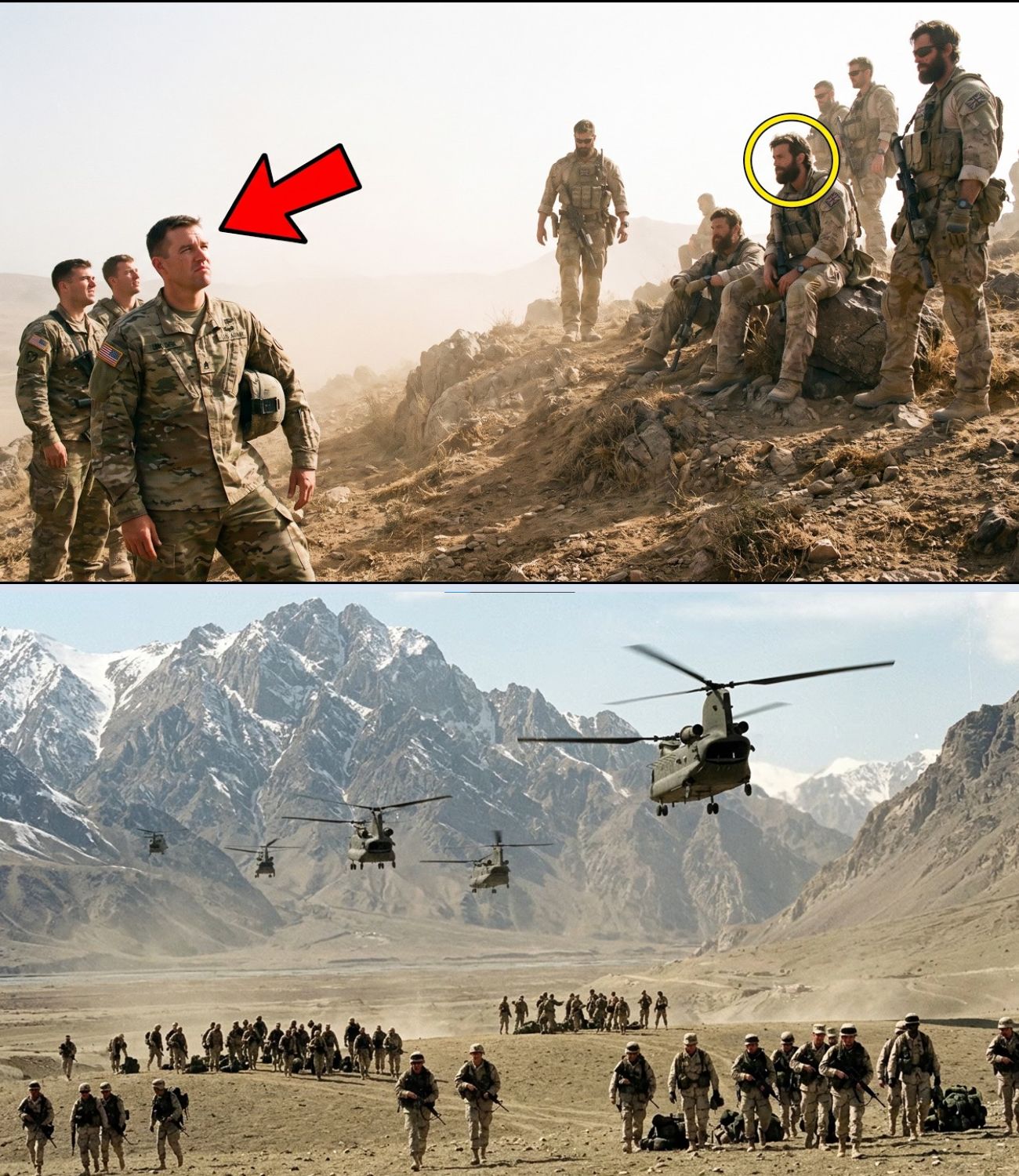
The officer who mattered more to what happened next was the battalion’s operations officer, the S3, a major who briefed the failed attempt to the brigade staff two days later with a map board and a laser pointer and a line that soldiers in that tactical operations center would repeat for the rest of the deployment. A liaison officer from the special operations task force had mentioned almost in passing that a four-man Australian reconnaissance patrol currently watching Diane from a hide on the northern spur believed the position was still takable with the right method. The major did not look up from the map board.
“The patrol was welcome to go play at it if they wanted. But Diane was a battalion problem, and the battalion did not need lessons in soldiering from four men who thought a rucksack of demolition charges was a substitute for a plan.”
Task Force KBAR’s operations cell logged the exchange without comment because logging remarks like that was not its job. Two days later, the patrol was on the hill. The patrol was Three Squadron, Special Air Service Regiment, attached to Task Force KBAR out of Kandahar Airfield, a unit whose entire commitment to Anaconda so far had been long-range surveillance and reconnaissance: watch, report, do not engage unless discovered. The insertion that put them on Diane’s northern spur on the night of the 13th had gone in by CH-47 out of Kandahar, a flight of just under two hours at altitude in an unpressurized cabin with the ramp cracked for the loadmaster’s visual check, cold enough that Densley later described his water bladder tube freezing solid before the helicopter had even crossed into the valley.
The aircraft put the patrol down a kilometer short of the objective on a false crest chosen precisely because it was invisible from Diane’s bunker line, and the four men covered the remaining distance on foot through 11 hours of darkness roped in single file across two sections of scree where a slip meant a fall of 30 meters or more, navigating by compass bearing and the shape of the ridge against a sky with no moon because the route had been chosen specifically to avoid the eastern face the American company had climbed 4 days earlier, and there was no other way onto the northern spur that did not cross open ground somewhere along its length.
The tasking itself had started as exactly what the task force did every night in that valley: an observation mission. Four men, call sign Diesel 41, ordered to confirm or deny continued enemy occupation of a position the 10th Mountain Battalion had already written off as unassailable. Ree’s patrol commander was a warrant officer named Trent Ashby, 12 years in the regiment, who had spent two of Anaconda’s first six days lying in a hide 200 meters from a mortar crew without firing a shot because firing was not the job that week. Confirming the position was the job, and confirming it meant staying still long enough to see what the earlier photo reconnaissance had missed.
Ree had transferred into Three Squadron from a conventional infantry battalion 5 years earlier and still carried tucked inside his notebook a qualification card from the regiment’s original reconnaissance and sniper cadre course, the one he referred to when asked as the only piece of paper that had ever actually taught him anything useful. Barnes was the patrol’s junior man by service but not by capability, a machine gunner who had spent the two years before Anaconda on exchange postings with a New Zealand SAS squadron learning mountain movement techniques that had until that morning never been tested against anything more demanding than a training range in the southern Alps.
They confirmed it inside the first 90 minutes on the ground. Ashby counted six fighting positions rather than the two marked on the current imagery, a heavy machine gun cut into rock with a wide arc onto the eastern approach—the same approach Alpha Company had used 4 days earlier—and at least a dozen fighters moving between positions with the unhurried confidence of men who believed no one was coming back up that face soon. He logged the count, the grid references, and the weapon types on a burst transmission at 0430 and settled in to wait for instructions to withdraw before first light exposed the hide.
The instructions that came back 40 minutes later were not to withdraw. Task Force KBAR’s operations officer, a lieutenant colonel coordinating special operations elements from three nations out of a joint operations center at Bagram, had spent the intervening time on a secure line with the 10th Mountain Brigade staff, and the brigade staff’s position had not moved. Diane remained a battalion problem. The battalion had made its assessment, and no further ground assault against the position was resourced for at least 72 hours pending a request for additional artillery and a fresh infantry company that would have to be flown in from Bagram or Kandahar and acclimatize to the altitude first.
72 hours was, by the operations officer’s own arithmetic, plenty of time for the fighters on that ridge to reinforce, resupply, and improve their positions further. He put a question to Ashby’s patrol over a link both men understood was not entirely secure: whether four men and whatever they were carrying could do anything about the position before that window closed for good. The 72-hour estimate itself was not arbitrary. It reflected the earliest the brigade could realistically fly a fresh infantry company from Bagram, acclimatize it to operating above 2,500 meters, marry it up with a mortar section, and rehearse an assault scheme against updated imagery that first had to be tasked, collected, and interpreted—a chain of approvals that in a valley where close air support was already stretched thin by simultaneous engagements on the eastern ridge line moved at its own institutional pace regardless of how quickly the tactical picture below the ridge was changing.
What four men were carrying was not designed for what was about to be asked of it. Diesel 41 had jumped off with reconnaissance loads, not assault loads, each man carrying somewhere between 32 and 38 kilograms depending on radio and demolition allocation: a mix of M4 carbines with one 7.62 SR25 sniper rifle assigned to Ree, four days of rations, spare batteries for two radio sets, and—because the regiment habitually carried demolitions on any task that might require destroying equipment or documents rather than hauling them out—11 kilograms of PE4 plastic explosive and detonating cord split across two of the four packs. It had been packed to blow up a cache if they found one and walk away. It had not been packed to clear six bunkers. It was about to become that anyway.
Ashby’s reply, transmitted at 0501, ran to two sentences:
“Request permission to reduce the position using available demolitions rather than wait on reinforcement, and request whatever indirect fire could be diverted to mask the approach.”
What followed over the next 11 hours did not resemble the tidy assault the mission would later be summarized as in briefing slides back at Kandahar. It was a sequence of narrowing decisions made by four men running on no sleep, facing a position that outnumbered them roughly 4 to 1 with no reinforcement possible before dark and no realistic route out that did not cross the same exposed ground where Alpha Company had already taken its casualties. The first problem was the machine gun’s arc. It covered the only approach with usable cover, a shallow re-entrant the American company had also used on the 10th, and any daylight movement into it would be picked up within minutes.
Ree did not try to avoid the gun so much as go around the whole shape of the ridge along a goat track on the north face that the patrol’s own reconnaissance the previous night had marked as passable, but exposed across a 200-meter stretch with no cover at all—a route the battalion’s own planners had rejected outright as unusable by any element carrying combat loads on the reasoning that it required hand-over-hand movement across a rock band with rucksacks that fully loaded weighed close to what each man weighed himself. The four crossed it in pairs, one pair covering while the other moved, taking 26 minutes to cover 200 meters in full view of the bunker line for at least four of those minutes, on Ashby’s judgment that a machine gun crew watching a known approach at first light was unlikely to be scanning a goat track no infantry unit in its right mind would attempt with full loads.
Ashby had brought the patrol to this point through a professional habit the regiment drilled into every man who wore its badge: confirm before you commit, and never let the size of a problem talk you out of measuring it accurately. He had spent the pre-dawn hour doing exactly that, working the spotting scope himself rather than delegating it, cross-referencing each bunker’s firing aperture against the compass bearing to the next, building a hand-drawn sketch in the corner of a laminated card because the patrol carried no camera capable of transmitting useful imagery back to Bagram in real time. The sketch would later be photographed and filed as an annex to the afteraction report, and it showed more plainly than any of the prose that accompanied it exactly how far the earlier photo reconnaissance had missed the mark: six positions where two had been marked, an offset line where a straight one had been assumed, and a machine gun bunker relocated by roughly 40 meters from where the American company’s own planning imagery had placed it.
The second problem only became visible once they were above the position. The bunkers were mutually supporting in a way the earlier imagery had never shown, dug in an offset line so that suppressing any one of them exposed the patrol to at least one other, and there was no single vantage from which all six could be watched at once. That killed any option of a standoff fight with the SR25 and two M4s. Four rifles could not generate enough simultaneous suppression to let anyone cross open ground between bunkers without being caught from a flank. It left exactly one workable method: close to grenade and demolition range on the two nearest positions, destroy them, and use the gap that opened in the mutual support line to reach the machine gun bunker before its crew reoriented onto the new threat behind them.
The third problem was time, and it arrived without warning at around 0900 when a runner moved between two of the lower positions, and a third fighter climbed toward the ridge crest carrying binoculars, close enough that Ree could make out the color of his coat with his naked eye. Diesel 41 was no longer unobserved reconnaissance. It was four men discovered on a ridge a battalion had needed a hundred men to fail at, with a clock now running on how long before the fighters below organized a coordinated response and with the only air support tasked to the valley still committed to a fire mission on the far side near Takur Gar, at least 40 minutes flight time away.
A fourth problem arrived almost immediately behind the third. Barnes, moving to reposition the Minimi, put his boot through a patch of scree that gave way under him, and the resulting slide of loose rock down the slope was audible enough that two fighters below turned toward the sound at once. There was no way to know in the moment whether the noise had been pegged to a location or simply registered as movement somewhere above them. Ashby made the call that mattered most that morning without being able to confirm it was right: that waiting to find out would cost more than acting, and that the only way to answer the question was to make the position untenable for whoever was listening before they could organize an answer of their own.
A fifth problem followed within minutes, and it very nearly ended the patrol rather than the position. A rocket-propelled grenade fired blind up the slope at the general area of the scree slide rather than at any confirmed target detonated against a boulder 8 meters from where Whitlock lay working his radio, close enough that fragments cut through the antenna cable and forced him to splice a spare length by feel, lying flat while Ashby covered the dead ground below with the SR25 in case the round had been ranging fire for a second, better-aimed shot. It was not, but the near miss cost the patrol its main means of calling for extraction if the assault went wrong, and Whitlock’s improvised splice, wrapped and taped in under 4 minutes, was the only working link back to the Joint Operations Center for the rest of the action.
Ashby would later tell the debriefing officer that the RPG, more than anything the fighters below did with rifles that morning, was the moment he understood there was no controlled way out of what they had started. The only way off the ridge that did not run through the same exposed slope Alpha Company had already bled on was to finish the position outright and call in the extraction from ground they actually held. By the time the runner and the man with the binoculars had been sighted, the patrol had already burned through roughly a third of its ammunition on suppressive fire nobody had planned for, and Whitlock’s count taken in the lull just after the splice repair put each rifleman down to four spare magazines and Ree down to 11 rounds of SR25 ammunition beyond what was already loaded—a number that meant every shot from that point forward had to justify itself because there would be no resupply if the fight ran past early afternoon and no realistic way to disengage carrying rifles empty of rounds.
What happened between roughly 0913 and 1140 does not read, in the debrief transcript later filed with the task force, like the clean assault the title of the mission would eventually suggest to anyone who only heard the outcome. It reads like four separate forced improvisations stacked one on top of the last, each one narrower than the one before it. Ashby’s radio operator, a trooper named Whitlock on his first operational deployment with the regiment, called in a danger close 81mm mortar mission from the valley floor onto the ridge crest itself, adjusting the fire by radio from a position less than 150 meters from the impact point—a correction that required him to talk the mortar section through its own hesitation because the section chief queried the fire mission twice before firing, uneasy about a correction that tight to a friendly call sign he could not see.
Ree and Barnes used the mortar rounds as cover to move onto the nearest bunker and place demolition charges cut down from full block size to manageable 1.5-kilogram packs directly against the firing aperture, destroying the position with the crew still inside it. Ashby held alone for nearly 6 minutes while the other three worked the flank, the only man positioned to see both remaining active bunkers and the machine gun beyond them, engaging targets of opportunity with the SR25 at ranges the weapon was never built for inside 80 meters simply to buy the demolition work the seconds it needed.
The machine gun position was the one Alpha Company’s own written assessment had specifically named as the reason the hill could not be taken without something heavier than an infantry company carried organically: a recoilless rifle, mortars pre-registered on the exact aperture, an armored vehicle that had no way to climb that slope at all. It fell not to anything heavier, but to the same method used twice already: close to point-blank range under covering fire from the fourth man, Corporal Densley, who had spent the exposed crossing of the goat track 2 hours earlier convinced the whole plan was going to get all four of them killed, and told Ashby so afterward, almost word for word, once there was time to say anything at all.
The approach to that last bunker took longer than the first two combined: 11 minutes across roughly 40 meters of broken rock because the crew inside had by then worked out that whatever was coming for them was coming from the flank rather than the front and had shifted a second weapon, an RPK light machine gun recovered from one of the destroyed positions, to cover the very approach Ree and Barnes were using. Densley’s suppressive fire from a fold in the rock forced that weapon’s crew to keep their heads down for the six or seven seconds at a time that mattered, firing in short, deliberate bursts rather than the sustained fire his training would ordinarily have called for because the patrol was down to what each man carried on his body and had no resupply coming if the fight ran long.
Ree placed the final charge himself, a demolition pack no larger than a rolled sleeping bag wedged against the aperture’s lower edge where the rock gave the least protection, and the two of them were already moving back off the position when it detonated. There was a sixth problem, smaller than the rest but nearly as costly, that surfaced in the final 20 minutes: the prisoner, a fighter caught in the open by the second mortar salvo, dazed rather than wounded, had to be restrained, searched, and controlled by a single man. Densley again pulled off the flank at the exact moment his rifle was most needed there, while the other three finished reducing the machine gun position, because leaving an ambulatory unsecured combatant behind them while they pushed forward was not something any of the four were willing to risk, whatever it cost them in firepower at the critical moment.
It was the kind of decision that never appears in a summary of an action because it changed nothing about the outcome, but it was one more variable narrowing what four exhausted men could do with the time and the hands they had left. By 1155, the ridge had gone quiet. Diesel 41 held six destroyed or cleared fighting positions; a single prisoner too disoriented by the mortar fire to have run; a stack of Chinese-manufactured 82mm mortar rounds the patrol destroyed in place rather than carried down; and a patrol casualty count of zero beyond Barnes’s hand, lacerated on the rock during the crossing and dressed with a field bandage that never appeared as a wound in the afteraction summary at all.
The four men had been on their feet without sleep for a little over 50 hours, and the position that had cost a 100-man company 2 days, 11 cold-weather casualties, and one fatality 4 days earlier had taken them just under 7 hours from first contact with the objective to the last charge going off. The 10th Mountain Battalion learned Diane had fallen the way most battalions learn something has gone differently than predicted: secondhand through the Joint Operations Center log roughly 90 minutes after the fact in a two-line update that gave the objective status as secured and the securing element as an SAS reconnaissance patrol.
The entry carried no commentary. According to two officers who were present in the battalion tactical operations center that afternoon and later spoke with Army historians compiling the operation’s official case studies, the reaction ranged from open disbelief to a request made twice that the report be reconfirmed by a second source before anyone briefed it up the chain. It was reconfirmed within the hour by an AC-130 gunship crew on station over the valley whose infrared sensors showed four heat signatures moving along the ridge’s former bunker line at a time when the battalion’s own current graphics still marked the whole position as enemy held in red.
The gunship, working under the call sign Basher according to the Joint Operations Center log, had been retasked from a fire support role over Takur Gar barely 40 minutes earlier and happened to still be on station when the query about Diane’s status came through. Its sensor operator reported the four heat signatures without being told what he was supposed to be looking for, simply describing what the infrared picture showed against a background the battalion’s own graphics still marked in red. It was by pure timing the fastest independent confirmation the Joint Operations Center could have asked for, and it left the battalion staff no institutional room to request a third source before briefing the change upward.
Neither of the two officers who described that afternoon to Army historians years later were willing to characterize the major as a poor officer, and the record does not support that reading either. By every measure available in the file, he had run his battalion’s planning process competently under conditions that had already produced one of the costliest single actions of the entire operation on the far side of the same valley. His skepticism towards the patrol’s claim was not unreasonable on its own terms: a four-man element succeeding where a hundred-man company backed by mortars and air support had failed was on its face an improbable proposition, and an officer whose job was managing risk to soldiers under his own command had every professional reason to doubt it until it was proven.
What the file preserves is not a portrait of incompetence; it is a portrait of an institutional reflex, the assumption that a smaller, less heavily supported element attempting the same ground a larger one had just failed on must be reckless rather than simply differently postured—carrying less weight, less doctrine, and more willingness to let the plan change shape entirely once contact revealed what the plan had gotten wrong. The major said nothing at all when the reconfirmation came through. According to the same two officers, he changed the objective status board himself, moved Diane from red to blue, and asked the operations cell to get him the patrol’s exact demolition expenditure for the logistics report because 11 kilograms of PE4 requested against what had been logged as a four-man reconnaissance tasking was on paper an anomaly somebody above him was eventually going to ask him to explain.
It was, in its way, the only acknowledgement the file would ever contain. There was no retraction of the earlier remark, no note of correction in the battalion’s own record. There was only a status board that had been red on the 10th and blue on the 14th and a logistics request for demolition resupply that any officer reading the file afterward could use to reconstruct without a single word of admission exactly what had happened on the hill in between. What the paperwork could not fully capture was the arithmetic sitting underneath it.
Alpha Company had gone up Diane on the 10th with more than 100 men, pre-planned mortar and close air support, and a rehearsed assault scheme built against photo reconnaissance that had missed the offset bunker line entirely. The attempt had taken two days, cost 11 cold-weather casualties and one soldier killed, and ended in a withdrawal—the company commander’s own report described it as unavoidable given the position as it actually existed on the ground rather than as it had appeared in planning imagery. The patrol that took the same ground 4 days later had gone up as four men on an observation tasking with no rehearsed assault plan of any kind, demolitions calculated to destroy equipment rather than clear fortified positions, and ammunition loads built for a reconnaissance mission that was never supposed to make contact at all.
They had reduced the position in well under 7 hours of direct action from first engagement to last charge, revising the plan completely at least three separate times as each new problem the terrain and the defenders presented forced a narrower and more improvised answer than the one before it: around the arc rather than through it, around the mutual support rather than against it all at once, into the danger-close mortar fire rather than away from it because away from it was no longer an option once the runner and the man with the binoculars had already seen something moving on the slope above them.
None of the four men described what they had done in the debrief transcript later filed with the task force at Bagram in language that resembled heroism. Ashby’s own account, recorded by the debriefing officer close to verbatim, was that the patrol had simply kept solving the problem directly in front of it until there was no problem left to solve, and that 100 men operating on a plan built from wrong information would always struggle against six well-sighted bunkers more than four men with no plan at all beyond the next 30 meters, because the four men had nothing riding on being right in advance; they only had to be right about what was happening in front of them, one decision at a time, and correct the next decision the moment the last one turned out to be wrong.
What the debrief transcript does record in the flat procedural language debriefing officers were trained to use is the moment the patrol’s own assessment of its situation changed from tactical to something closer to administrative. At 1147, 8 minutes before the last position went quiet, Whitlock’s spliced radio carried a transmission from the Joint Operations Center at Bagram asking Diesel 41 to confirm status, a routine check that had gone out every 30 minutes since first contact. Ashby’s reply, logged verbatim, was four words longer than any of his previous transmissions that day:
“Position clear. Sending grid. Request pickup. Danger of further contact assessed low.”
It was the first time since 0521 that any of the four men had used the word low about anything. The extraction itself, when it finally came, was almost anticlimactic by comparison with everything that had preceded it. A second Chinook lifted the patrol off a landing zone 200 meters below the cleared bunker line shortly after 1400, delayed 40 minutes by the same aircraft’s tasking elsewhere in the valley, and the four men spent that wait sitting inside the ruin of the machine gun position they had just destroyed, eating cold rations because none of them had the fuel left to argue about it, while the prisoner sat zip-tied against the same rock wall a few feet away.
Densley later told the debriefing officer that the strangest part of the whole day was not the assault itself, but those 40 minutes afterward on a hill that a battalion staff had spent a week insisting could not be held by anything less than a reinforced company, occupied instead by four men, a radio with a spliced antenna, and a prisoner who would not stop staring at the SR25 propped against the rock beside Ree. The battalion’s own afteraction report on Objective Diane filed roughly a week later listed the position as secured by supporting elements and did not name the unit responsible; Task Force KBAR’s log entry, three lines long, did.
The discrepancy between the two records was never formally reconciled, and within the small community of officers who had spent that week in the valley, it did not need to be, because the story had already taken the shape it would keep for years afterward in briefings and regimental histories on both sides of the Pacific: not a story about whose paperwork was accurate, but about a hill a battalion had given up on, and about four men who went back up it with a fraction of the manpower, a fraction of the ammunition, and none of the certainty the larger force had insisted was necessary, and came down 12 hours later having simply finished the job the bigger force had judged impossible to finish at all.
The prisoner, once flown out with the patrol, gave a short interview to intelligence staff at Bagram that added one further detail to the file: the position had been reinforced only 6 days earlier by fighters moving overland from the south, men who had been told the ridge above Diane was secure ground, held long enough that no serious assault was still expected against it. Whatever confidence the American company’s withdrawal on the 12th had bought the defenders, it had bought them exactly two more days.
Operation Anaconda officially concluded on the 18th of March, and the afteraction reviews that followed over the next two years—several of them compiled by Army historians with full access to unit logs from every element involved—singled out the operation’s intelligence failures and its improvised command relationships between conventional and special operations elements as the two lessons Anaconda existed to teach the rest of the force. Objective Diane rated barely a footnote in most of them, a single paragraph buried in appendices about task force coordination because a four-man action with zero friendly casualties did not carry the institutional weight of Takur Gar’s cost or the broader command failures the operation as a whole exposed within Three Squadron itself.
Though the action circulated for years in exactly the terms the major had unwittingly supplied it—not as Objective Diane, but as “the hill the Americans said couldn’t be taken”—the patrol members themselves let that framing stand largely because none of them ever learned or particularly wanted to learn whether the major’s remark had reached anyone above his own tactical operations center. It never needed to; the status board did the talking that the man himself did not. Ashby left the regiment years later at his own choosing, still declining, whenever asked by historians compiling the unit’s record, to name the American officer whose remark had framed the mission on the grounds that the point of the story had never been the insult.
He would allow in the same conversations that the exchange had done the patrol a favor. Nobody at any level above Task Force KBAR had expected the four of them to succeed, which meant nobody had built a plan around their success, which meant the entire method—the goat track, the danger-close mortar corrections, the demolitions cut down from a cache-clearing load to something that could reduce a bunker one aperture at a time—belonged to Ashby, Ree, Whitlock, and Densley alone, worked out under fire rather than argued over in advance by anyone with the rank to insist on a safer approach that would also have been a slower one; and by the time it was slow enough to be safe, the 72 hours would have already run out.
Ree was less delicate about it in private, telling a fellow patrol member not long afterward that the major had been right about one thing without meaning to be: it had not been a battalion problem; it had never needed a battalion at all. What it had needed was four men willing to keep revising a plan that kept turning out to be wrong for as long as revising it took on a piece of ground that everyone with more men and more equipment than they carried had already decided was not worth the cost of finding out.
Ree kept one object from the morning of the 14th: the strip of medical tape from the bridge of his nose, peeled off once the position was secured and pressed flat days later against the inside cover of his patrol notebook, dated underneath in ballpoint “14 Mar Diane 0510 to 1155″—the only entry in the entire notebook that recorded a time of completion rather than a time of contact. He told the regiment’s own historians years afterward that he had kept it not because the hill itself mattered and not because of anything the major had said about it beforehand, but because it was the one page in the book where the fight actually had an ending written on it instead of a withdrawal. And in that valley that March, endings of that kind had been in genuinely short supply.
The notebook itself went eventually into a regimental archive rather than a museum case, filed among dozens of others that recorded reconnaissance tasks with no comparable ending at all: patrols that watched, reported, and withdrew exactly as ordered, exactly as the job usually required. Diane’s page stood out from those only because of the two times written on it and the seven hours between them—a gap that a battalion had measured in days and a company had not closed, and that four men asked a single question over an insecure radio link at 0521 on a cold morning had closed anyway.
You Might Also Enjoy

“We Thought They Would Negotiate”—What Argentine Soldiers Said When The British Attacked Goose Green