“You’ll Never Finish My Ruck March, Limey” — US Sergeant Who Challenged the SAS, Then Fell Out First
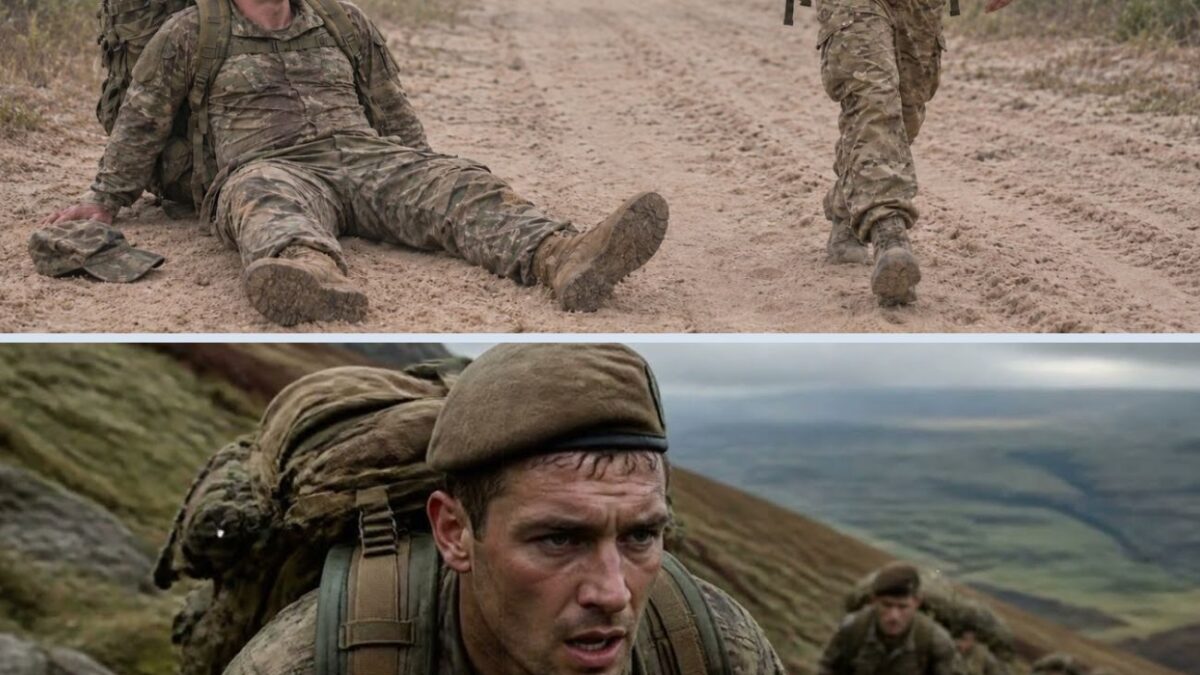
There is a sentence a man can say in a British Army cookhouse that will outlive him by about 7 hours. And on a Monday morning in late October in the warrant officers end of the mess hall at Credenhill, an American sergeant major said it with a mug of coffee in his hand and the easy voice of a man who has never been wrong in front of witnesses.
“You’ll never finish my ruck march, Limey. You tea-drinking amateurs don’t own hills. We own hills. Send yours in first and we’ll see who’s standing.”
He said it to three men in olive shirts with no insignia on them and he said it loud enough for the two tables either side to hear because he wanted them to hear. His name was Dale Rupke. He was 51 years old, four months, and he had been a soldier of the United States for 24 of those years, almost all of them in boots on ground that killed people. He was on an eight-day liaison tour. He had been in the country for 40 hours. He had been in Hereford for 16. Nobody at the British table laughed. Nobody at the British table answered. The oldest of the three, a man with a gray crop and half a left ear, lifted his tea, drank, set it back down on the exact ring it had left on the Formica, and said in a voice so flat it almost sounded bored:
“Right you are, Sergeant Major.”
Then he went back to his breakfast. The American next to Rupke, a master sergeant called Gaza, laughed because he was supposed to and the laugh died on the way out of his mouth and he was the first man in the room to understand that something had just been priced that none of them had money for. You are going to hear that quote again at the end of this account. And when you hear it the second time, it will be inverted because by last light on the Wednesday of that same week, Dale Rupke would be sitting on the lee side of a Welsh mountain with his boots off, his mug upside down in the heather, and a British captain with a stopwatch would be reading him a number off a clipboard. He would remember saying it. He would be made to. What follows is what happened in between. It is the story of a march, a credentialed man set as a trap for strangers and walked straight into himself. And of the regiment he insulted, which did not raise its voice at any point because it did not need to.
To understand what the sentence cost him, you have to understand that it was not an idle sentence. Dale Rupke had earned the right to most of the things he said about soldiering. He had enlisted into the United States Army in the spring of 1986, done his time as a rifleman in a line battalion, volunteered for the 75th Ranger Regiment at 22, and gone through the Ranger Indoctrination Program when it was still a thing designed to see the back of you. He had made specialist, then sergeant in 2nd Ranger Battalion out of Fort Lewis. He had been on the airframes that put men on the ground in Panama. He had been in Mogadishu on the 3rd and 4th of October 1993 as a young staff sergeant, and he had come off that city with a bronze star with valor. And a limp he eventually walked out of. After that, he had gone pathfinder, picked up the expert infantryman badge the hard way, done a tour with a brigade reconnaissance element in the Hindu Kush in 2003, and another, longer, uglier one in the same country 4 years after that. He had been the senior enlisted man in a battalion, then in a brigade. And by the time he set foot on the tarmac at RAF Brize Norton that October, he was the command sergeant major advising a combined joint task force on the readiness of its ground forces. And nobody in his chain of command had ever bet against him on a hill in his life.
The drive west from Brize took under 2 hours. He slept most of it. He woke up near the seven, looked at the color of the sky, and told Gaza it looked like a country that had never learned to produce weather. At the gate at Credenhill, he got out, showed his ID to a corporal of the Royal Military Police, and watched the barrier go up without being saluted, which he noted. Stirling Lines, when he saw it, was smaller than the base he had come from, flatter, quieter, with less fence and no visible gun positions. He said out loud to Gaza:
“This is it.”
And Gaza, who had been in the country before, said nothing. They were given rooms in the transit mess, and told that the senior enlisted of the squadron currently in buildup would meet them at breakfast. Rupke walked across the parade square the long way, so he could see what people were doing in the hangars. What people were doing in the hangars looked to him unhurried. Nobody shouted. Nobody ran. Two men in civvies were loading rope bags into the back of a long wheelbase Land Rover, and talking about football. He cataloged all of this, and he came to the breakfast table already decided. The breakfast table had three men on it. One was Lieutenant Colonel Edward Swain, the boss, who did not look like any colonel Rupke had ever seen, because he was wearing a brown jumper and reading. The second was the Regimental Sergeant Major, a warrant officer class one called Ainsworth, who had half a left ear and a face Rupke could not get a read on. The third was a staff sergeant called Caldo, mountain troop senior, who stood up to shake his hand and did not quite smile. Behind Rupke were Gaza, with his two canteens and his aid, a very young captain of the 3rd Infantry Division called Prior, who had already opened a Rite in the Rain notebook on his knee under the table. The talk, for 10 minutes, was polite. Then Rupke took a sip of coffee from the white enamel mug he had been carrying since Mogadishu, the one with the faded 75th scroll on the side, and he said that he had designed his unit’s loaded march standard personally, and that he had never seen a non-US soldier finish it, and that from what he had seen so far of what people called the regiment, he did not expect this week to be the week. Then he said the full sentence, the one you have already heard.
“You’ll never finish my ruck march, Limey. You tea-drinking amateurs don’t own hills. We own hills. Send yours in first and we’ll see who’s standing.”
Ainsworth drank his tea, Caldow looked at the boss. The boss closed his book, set it down on top of the napkin, and said:
“We’ll put a stick together for Wednesday, Sergeant Major. You’re welcome to carry whatever load you’re used to.”
Then he picked his book back up. That was the whole exchange. By 10:00 that morning, the sentence had crossed the parade square twice and reached the hangars. By 11:00, it had reached the troop sergeants on the hill. Nobody repeated it with any heat. Nobody needed to.
Hereford sits in rolling English border country, cider orchards and sheep-cropped fields that run west toward the hills, but are not themselves hills. The regiment’s lines are in a flat corner of Herefordshire, with a long runway at one end and a chapel at the other. And if you have never been there, you would drive past it and assume it was a logistics depot. The hills the regiment uses for selection and for the recurring hill phase that keeps its serving men honest are not in England at all. They are an hour and a half west, over the Severn Bridge, in South Wales, in the Brecon Beacons, a sawtooth range of grass and shale ridges that rise and fall in long open sweeps, with the highest point called Pen y Fan at 886 m, and a near neighbor called Corn Du, and a saddle between them that in bad weather turns into a wind tunnel, and in worse weather disappears entirely. The route that the regiment has used, in one form or another, for 60 years, starts at a car park on the A470 called the Storey Arms, runs up the long tourist path to the top of the Fan, down the far side onto the Roman Road that crosses the range at Torpenhow out to a turnaround point and back again. In its full form, it is called the fan dance. In its working form, used in squadron build-up, it is a 25-km loaded march at regimental standard weights, timed, pass-fail, and nobody who has done it will tell you it is easy, and nobody who has done it will tell you it is impossible.
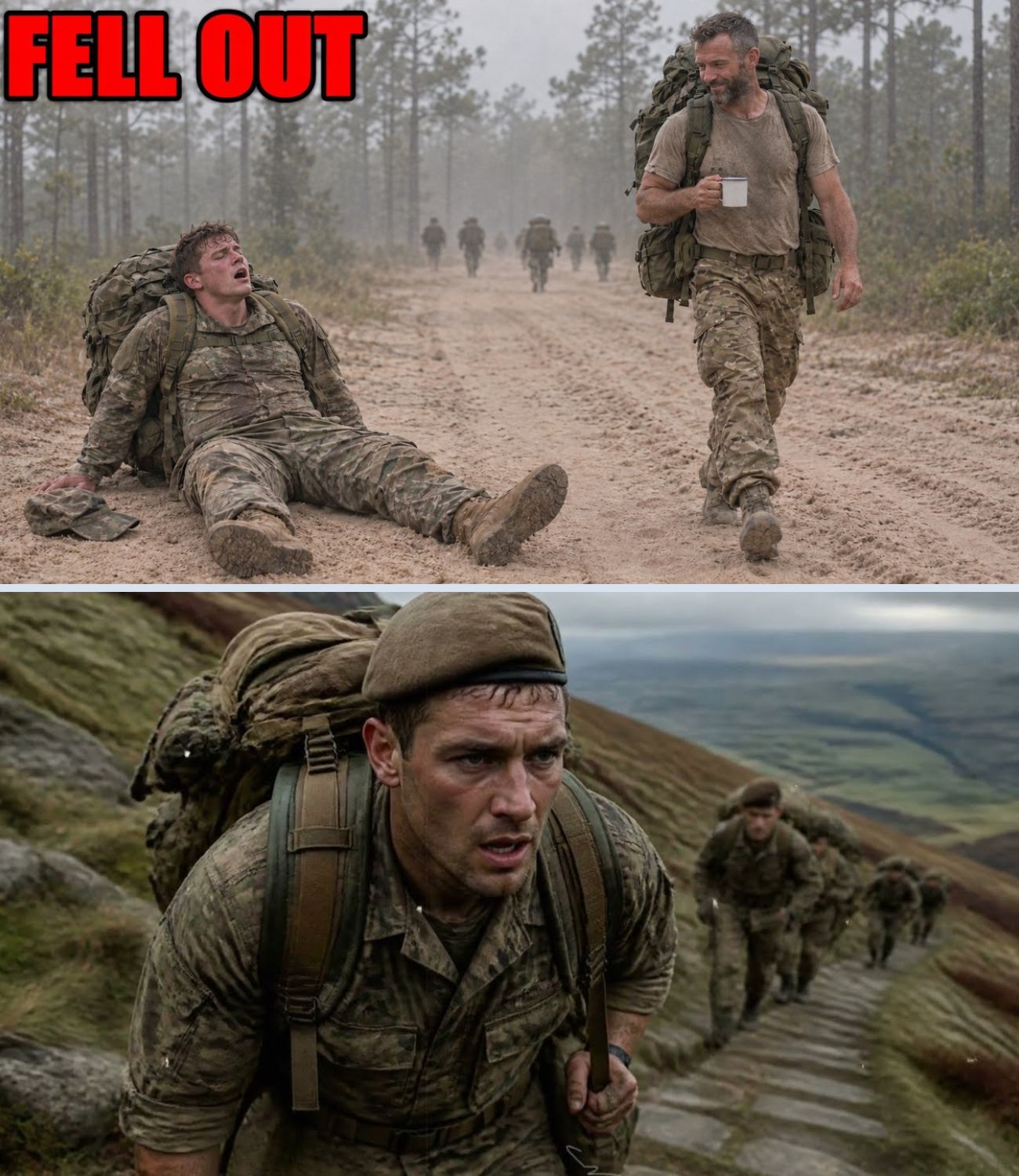
The agreement by the Tuesday evening was that a stick of eight men from Mountain Troop would run the march at the standard weight for that phase, with Roopki added to the stick. Roopki carrying his own United States pattern ruck with whatever he chose to put in it. Captain Moira Lennox, the exchange liaison officer attached from the Intelligence Corps, would run the clock. Sergeant West Darby from Mobility Troop would run range control from a long-wheelbase Land Rover at the Story Arms end, with a second vehicle at Torpenhow. The route would be marked, but not babyed. The weather forecast was 10° falling to 4, cloud base down to the top of the ridge, wind 20 gusting 30, intermittent rain. Roopki, when told this, said that in Fort Lewis they called that Tuesday. He turned up at the start line at 05:50 on Wednesday morning in full United States multicam, with a ruck that was clearly loaded for weight, a chest rig over the top of it, and the white enamel mug clipped to the outside of the ruck by its handle. Gaza was with him, carrying two canteens on his belt, as he always did. Prior was with him, carrying his notebook. All three of them were in a tight little group talking. Six meters away, with their backs to the Americans, the British stick were doing none of these things. They were doing, if you watched them, almost nothing visible at all. Calder was leaning against the tailgate of a Land Rover with a cup of tea, drinking it slowly, looking at the sky. Corporal Niall Thrush, the youngest on the troop at 29, was crouched down tightening the laces of his left boot methodically, and then in exactly the same way, re-tightening the laces of his right. Trooper Ben Horsham, the signaller, was checking the net in a monotone so quiet that Prior, 3 m away, could not have told you he was speaking. One of them was eating a flapjack out of a greaseproof paper. One of them was adjusting the sternum strap of his bergen with two fingers while reading a map that was folded four times. There was no banter. There was no stretching. There was no shouting. There was no coffee. There was no mug. What Roopkey saw when he glanced across was eight men who looked like they were waiting for a bus. What he was looking at, in fact, was the whole thing. It was all there in front of him in the first 90 seconds of the day. The discipline that was going to beat him, the pace that was going to beat him, the quiet that was going to beat him, the complete absence of ceremony that was going to beat him. He did not read any of it. He could not have. His whole career had taught him that the men who were going to be hard on the ground were the men who looked hard before they stepped off. And these men looked like plumbers waiting for a van.
Caldo finished his tea. He walked to the edge of the car park, poured the last mouthful out onto the gravel in a careful line, screwed the lid back on the flask, and clipped it to the side of his bergen. He pulled the bergen on with a short, economic swing of the shoulder, the kind of movement a man has done 10,000 times. The photograph of his daughter was inside the sweatband of his bush hat where it always was. He walked over to Lennox at the start line, said one word which was his name, and waited. Behind him, one at a time, the other seven did exactly the same thing. Lennox looked at her watch. The watch had been her father’s. He had flown in it. She waited for the second hand to come round to the top and when it did she said in a clear flat voice:
“Stick on 0600. Go.”
Caldo stepped off at a pace a touch under 4 miles an hour with no obvious effort and he did not change that pace in any meaningful way for the next 3 hours and 54 minutes. The gun had been loaded. You have seen it now. The man carrying the mug had not. 5 minutes before step off Rupkey walked back from the start line to Sergeant Dalby’s Land Rover and said he wanted the loads weighed. He said it in the voice senior enlisted men use when they are issuing instructions to people they outrank in their own head. He said:
“I want to see the numbers. Everyone on a scale in front of everybody. Yours, mine, his, his. Clean sheet. No arguments later.”
Dalby, who had been rolling a cigarette on the bonnet with one hand, looked at him for a second, looked at Caldo, got the briefest nod in return and said:
“Right, Sergeant Major. On the tailgate.”
He produced from a plastic crate in the back of the vehicle a Salter hanging spring scale, the kind of thing a farmer uses to weigh a lamb, calibrated to 50 kg, zeroed in front of Rupkey with Rupkey watching. He hung it on a steel bracket welded onto the roll bar. He said:
“Bergens one at a time, boys, in the order you’re standing.”
Caldo came first. He unclipped his bergen, lifted it onto the hook with one hand and stepped back. The needle swung, settled, hunted for a second, settled again. Dalby read it out. 25.2. Lennox wrote it on her clipboard. Caldo took the bergen off the hook, put it back on and walked away. Thrush came up second. 25.4. Horsham 25.3. The next 25.2. The next 25.4. the next 25.3. The eight weights were written down in a column on Lennox’s clipboard. The lowest number in the column was 25.1. The highest was 25.4. The spread across eight men on an unmarked morning in a Welsh car park was 300 g.
“Sergeant Major,”
said Dalby in the same voice he had been using all morning. Rubkey put his own ruck on the hook. The needle swung further, hunted longer, found a lower number than he had expected to see, and settled on 21.0. Dalby read it out.
“21.0.”
He wrote it down himself on a second line under the column of eights. Nobody said anything. The wind was coming across the car park out of the north. The cloud was down on Corndoo already. Gaza, standing just behind Rubkey, looked at the clipboard and then at the single number four lines below it, and did the arithmetic in his head once and then again because he thought he must have done it wrong the first time. He had not. Each of the British men on the hill that morning was carrying on average 4 and 1/4 kg more than the American Sergeant Major, who had told them two days earlier that they would not finish his march. Prior, three paces back with the right in the rain balanced on his thigh, wrote the figures down neatly in two columns and underlined the delta. Rubkey did not say anything either. He took the ruck off the hook, put it back on his shoulders, adjusted the sternum strap once, and walked back to the start line without looking at Dalby. He had, in his own mind, two moves available, and he was choosing between them. He could add weight to his ruck from the vehicle in front of everyone and admit that he had come to the start line light, or he could step off at 21 and tell himself, for the first 10 km, that weight was not the point, and that pace was, and that he would prove the point on pace. He chose the second one, most men would have. What he did not choose, because he could not have known to, was the thing the way in had just done to the next 6 hours. He had asked for the numbers in front of witnesses. He had got them. The witnesses now included his own master sergeant and his own aide, both of whom had seen the Delta. The witnesses included a British captain with a clipboard, who was now going to carry those figures on paper from here all the way to a sitrep that would be read by Lieutenant Colonel Swain at 1800. The witnesses included Darby, who was going to tell three men on the next evening what had happened on the tailgate, and those three men were going to tell nine. By Thursday lunchtime in the cookhouse, the number 21.0 would have reached every corner of Sterling Lines, not because anybody repeated it with any heat, but because the regiment, unlike the man who had insulted it, keeps a very careful inventory of specific weights. And that was only the first time that day he would be wrong.
The first kilometer of the Story Arms climb is a kindness. The path is wide, graveled, graded for Sunday walkers, and it rises at a gradient a man can hold a conversation on. Rubkey, who had expected to spend the first kilometer fighting the ruck, found himself breathing through his nose at a pace that felt in his legs like a slow jog. He tucked in two men back from the lead, where he could see Caldo’s shoulders, and he started to feel, for the first time since the tailgate, that the morning might still be his. At the kilometer marker, the path turns. It does not announce the turn. It simply stops being a graded track and starts being a series of eroded stone steps that climb the shoulder of the ridge at a gradient that puts most men on the balls of their feet. Rupkey felt his calves warm. He shortened his stride, lengthened his breath, dropped onto the flats of his boots, and did the things a man with 24 years in does on a climb. He expected the men in front of him to do the same things. They did not. Caldo, 3 m ahead, kept walking at the pace he had been walking at from the gravel. His stride did not shorten. His breath did not change. The man behind Caldo, Horsham, was eating something out of his pocket. The next man was looking at his watch. The next had taken off his hat and clipped it to his Bergen without breaking step. At the 2-km marker, Rupkey decided he was going to lead. He did not announce it. He simply lengthened his stride, broke out of the line, came up on Caldo’s left, drew level with him for a step and a half, and then pushed through to the front. He felt, when he did it, the small kick of adrenaline a ranger feels when he decides to put his body on the line of a thing. He walked the next 300 m at a pace noticeably hotter than Caldo’s, opened a gap of three paces, then five, then seven, and did not look back. From the back of the stick, Gaza, who had been watching Caldo’s shoulders for 20 minutes and had already decided something was wrong with the whole picture, saw the Mogadishu man pull ahead and did not call out. He had learned in the car park that calling out was not going to help. The pass came at the 4-km marker, where the path turns again, this time back on itself up a steep stone staircase that rises for about 400 m toward the saddle below Corndoo. Rupkey, who had been leading for a mile and a half, felt his quadriceps tighten and his breath start to come in through his mouth for the first time, and he thought consciously, “I will not be the man who slows on the staircase.” He slowed on the staircase. He slowed by half a mile an hour, maybe a touch more, and he adjusted the sternum strap, and he dropped his gaze to the step in front of his boot, and he kept going. Caldo came up on his right shoulder at the 31st step and went past him without a word. He did not accelerate. He did not nod. He did not look across. He went past Rupke at exactly the pace he had set in the car park, 4 miles an hour under weight, metronomic, as if the staircase was not there. Behind him came Horsham, then Thrush. Thrush, as he passed, was humming the first bar of something under his breath, four low notes repeated that Rupke did not recognize. The other five went past one at a time. By the top of the staircase, Rupke had seven British men ahead of him, walking in a loose line, moving away from him at a steady, unhurried pace that was somehow eating ground. He told himself it was tactical. He told himself he had wanted to see how they moved, and now he had seen it, and the back of the stick was the better place to assess from, and that he would catch them on the descent off the fan, which Rangers had always owned, because Rangers owned descents. He told himself these things while he climbed the next kilometer on legs that were 2 km more tired than they should have been, because he had decided, in the second kilometer, to try to prove something that the people he was proving it to had already stopped noticing. The men who had been called tea-drinking amateurs 48 hours earlier were at that moment 20 m uphill of him and opening the gap.
The top of Corndoo at 9:50 in the morning on a wet October Wednesday is one of the least hospitable places in Great Britain. The ridge is a narrow spine of broken shale that drops away on both sides into cloud. The wind on it that day was coming out of the northwest at a steady 25 miles an hour, with gusts the Met Office later put at 38, and the cloud base had dropped to perhaps a meter above the ground, which meant that visibility along the ridge in the direction of travel was no more than 15 m and often less. Roopki crested onto the ridge 8 minutes behind the back of the SAS stick. He could see one man ahead of him as a gray shape in the cloud and then he could not. His left hamstring cramped at the 8-km marker cleanly like a wire pulling tight. He broke stride, half stumbled, caught himself on his trekking pole and stood for 3 seconds breathing through his teeth. He did not sit down. He bent at the waist, hands on his thighs, let the cramp release, straightened, and started walking again. His stride, when it came back, was shorter than it had been. He felt the mug on the back of his ruck knock once against the frame and he reached a hand round and steadied it. He did not take it off. 30 paces further on, the gray shape of the last British man dissolved into the cloud and did not reappear. Roopki walked for another minute on his own in a wind that was now loud enough to be the only sound in the world and he understood, properly for the first time, that he was alone on top of a Welsh mountain in weather that was going to get worse before it got better and that the men he had come up here to beat were already further up the route than he could see and were walking away from him at a pace he was not going to be able to match on the legs he now had under him. Gaza came up on his left shoulder at the 8.4 mark. Gaza, who had been 30 m back since the staircase, had closed the gap in silence. He unclipped the canteen on his left hip, unscrewed the cap one-handed, and held it out at waist height without looking across the way a man passes a tool to another man on a job. It was the first time in 6 years he had done anything the Ranger Sergeant Major had not asked him to do. Roopki looked at the canteen, looked at Gaza’s face, and waved his hand across his chest once in a short, dismissing gesture. Gaza did not take the canteen back. He walked at Rupkey’s left shoulder for the next kilometer with the cap off and his thumb over the mouth of it in case and he did not say a word.
Somewhere between the nine and the 10, Rupkey stopped having the argument with himself. He had been running it on a loop since the staircase. Tactical assessment, descent, Rangers catch them on the flat. And at some point on the ridge, the loop simply switched off. He walked. He counted. He put his left boot down, then his right boot, then his left boot again. He felt the burn in the fronts of his thighs change character from the clean burn of a working muscle to the duller, scraping ache of a muscle beginning to fail. He felt his heart rate, which had been 120 at the car park, settle somewhere above 160 and sit there. He did not know, because he could not see them, that the back of the British stick was by then 11 minutes ahead of him and extending, that Thrush was still humming under his breath, that Caldo had not spoken since step-off, and that none of them had looked back for him at any point since the staircase, because looking back was not something the pace allowed for. He had come up the mountain to prove that nobody owned hills like Rangers owned hills. The mountain was in the process of correcting him on that specific point in a voice too loud to argue with and too impersonal to resent. He did not resent it. By the 10-km mark, he had, without noticing it happen, stopped resenting anything at all. He was simply walking and counting and looking at the step in front of his boot. The man who had said they didn’t own hills was learning in silence in the cloud what owning a hill actually looked like. And the people demonstrating it were already out of sight.
The second cramp takes him at the 13-km mark on the Roman road, both hamstrings at once, and this time he goes down. It happens on the lee side of a small cairn where the ridge begins to drop into the valley on the way to Torpantau, out of the direct wind, in a patch of cropped grass and heather. He drops to one knee first, then sits hard on the backs of his heels, then slides onto his side and gets the bergen off his shoulders. The ruck tips over as he lets it down. The white enamel mug unclips itself from the webbing on the back and rolls two feet into the heather, and the wind, which has been looking for something to do, catches it and flips it onto its mouth, so that it ends up upside down with its handle in the air. Gaza, standing over him, says:
“Dale.”
Rubkey, lying on his side, says:
“Give me a minute.”
Gaza says:
“Dale.”
Rubkey says:
“I said give me a minute.”
Gaza, for the second time that day, does what the ranger sergeant major has not asked him to do. He walks 10 paces up the track to a place where the net will reach, keys his pressel, and calls range control. Dalby takes the call at 11:41 on the dot. He is sitting on the tailgate of the Land Rover at the Story Arms with a brew in his hand. He writes the time down on the inside of his left wrist in biro, says:
“Roger, hold position, send grid, casevac on standby.”
And then, because he has been doing this job a long time, walks three steps to Captain Lennox and says:
“The sergeant major is down at 13.4, not injured, just done.”
Lennox looks at her father’s watch, converts, and writes in her neat, clear hand on the top line of a fresh clipboard sheet:
“Rubkey, D fall out, 11:41, distance 14.6 km, route corrected, elapsed 2 hours 41 minutes, cause non-injury, exhaustion.”
She underlines nothing. She does not need to. At 12:00, she passes the sitrep to the boss at Credenhill over the net in two words, which are:
“Rupkey out.”
And the boss in his office writes one word in his left-handed notebook on the top of a clean page, which is:
“Noted.”
The British stick at that moment is not aware of any of this. They cross the turnaround at Torpenhow at the 2 hour 11 mark in order, in silence, and start back. Calder at the turn reaches up under the brim of his bush hat, touches the photograph of his daughter with the pad of his index finger. The gesture takes less than a second, and keeps walking. Thrash, three men back, is still humming the first bar of the hymn, which has not left his mouth in 2 hours. Horsham on the net hears Darby’s traffic about the sergeant major, and does not relay it to the stick, because the stick is working, and the traffic is not relevant to the work. The pace from Torpenhow back to the Story Arms does not change. It does not change on the climb back onto the ridge. It does not change at the top of the fan. It does not change on the long descent down the tourist path. It does not change because it was never going to change. It is a pace that has been built in those men’s legs over 1,500 training miles each. And the whole quiet point of it is that it does not change for weather, for weight, for watches, or for Americans.
Calder comes into the Story Arms car park at 3 hours 54 minutes and 11 seconds on Lennox’s watch. He walks the last 50 m at exactly the pace he walked the first 50. He stops at the line, unclips his Bergen with one hand, lowers it to the ground, and says:
“Calder in.”
Lennox writes it down. Horsham comes in at 3:56. Thrash at 3:57. Two more at 3:59. Two more at 400 hours and no minutes exactly. And the slowest man on the stick, a corporal called Bale, finishes at 4 hours, 2 minutes, and 40 seconds with 25.3 on his back, which is 4.3 kg more than Rupke was carrying when he went down at the 13 km mark. Every bergen on the stick is reweighed on the same scale on the same tailgate in front of the same witnesses. Every weight is within 300 g of its morning number. Lennox writes them down in a second column next to the first. Dalby and Gaza come back off the hill at 4:40 with Rupke walking between them slowly on legs that have stopped cramping and started shaking. His ruck is on Gaza’s shoulder over Gaza’s own. The mug is clipped to Gaza’s belt. Rupke walks to the Land Rover, puts his hand on the bonnet, and leans. Captain Lennox walks over with the clipboard. She does not raise her voice. She reads in order the eight British finish times, each with its weight, and then she reads on a line by itself: Rupke, D fall out at 14.6 km, 2 hours 41 minutes. Load, 21.0. She hands the clipboard to Rupke. Rupke takes it with both hands because one hand is not working. He reads the number. He reads it again. He does not speak. He stands at the open tailgate of the Land Rover for the next 22 minutes with the clipboard still in his hands. Lennox has not asked for it back. She is at the second vehicle writing up the sheet. Dalby is winding in the net. The weather is beginning to lift, which somehow makes it worse. He reads the top line of the second page three times. He reads his own name, his own number, and the gap between his number and the lowest number on the sheet above it. The gap is 10.4 km. The gap in time is 1 hour and 21 minutes and still open because the clock does not stop for men who were not there to finish.
The British stick comes off the hill one at a time to de-kit at the second Land Rover which is parked 7 m from the one he is leaning on. They pull bergans, drop them, pull plate carriers over their heads, drop them, change socks, drink water, eat something out of greaseproof paper and talk to each other quietly about nothing in particular. They do not come over to him. They do not avoid him. Coldal walks within 2 m of him on his way to the second vehicle and does not look at him and does not fail to look at him. Horsham past at a slight angle carrying a reel of signal cable and nods at Gaza and keeps walking. Thrash is still humming. Not one of the eight men on the stick says a word to him. Not one of them says a word about him. There is no scorn in it. There is, if anything, a kind of indifference that is worse than either because scorn and pity both require that the man receiving them still matter to the people giving them and he can feel, standing against the warm bonnet of a vehicle in a Welsh car park, that he has stopped mattering in some quiet, specific way that will not be reversed by anything he says in the next 5 minutes or in the next 5 years.
Warrant Officer Class 1 Ainsworth arrives at the finish line in the second Land Rover at 10 past 5 having been at Torpantau for the back half of the march which is where he always is. He gets out of the vehicle, walks to Lennox, takes the clipboard from her, reads the sheet front and back, looks up, finds the credentialed stranger across the car park and walks the 15 m to the first Land Rover unhurriedly. He stops at a comfortable speaking distance, not close. He looks down at the top line of the second page, then up, then back down. He does not raise his voice. He says:
“Send yours in first. You said, ‘We did. Here they are.'”
Then he hands the clipboard back to Lennox and walks away. Gaza, who has been standing 6 ft to Rubkey’s left for most of the last hour, looks at Ainsworth’s back as he walks off and finds his eye drawn to the half of a left ear he had noticed and then forgotten about two mornings ago in a cookhouse in Herefordshire. He understands now, in the way a soldier understands another soldier, without needing it explained, that the thing that had taken the top off that ear had been in a place and a decade his sergeant major had been assuming for 2 days was below the pay grade of the people he was insulting. He does not say any of this. Prior, two paces behind Gaza, writes down the time of the fallout in his notebook and underlines it carefully twice. Rubkey takes his hand off the bonnet. He turns slowly so that he is facing Gaza and not Ainsworth because he cannot face Ainsworth. He opens his mouth, which is dry. He closes it. He opens it again. He says quietly:
“I was wrong about the men.”
He does not say he was wrong about the march. He does not say he was wrong about the country. He says he was wrong about the men and he says it to his own master sergeant in a car park with his boots loose and his mug upside down on the floor of the Land Rover behind him. Ainsworth, who has been 8 m away rolling a cigarette, hears it. He does not turn round. He goes back to Credenhill in a Land Rover with Gaza driving and Prior in the back and nobody speaking for the whole hour of the drive.
He showers. He changes out of multicam into civilian clothes. He walks across the parade square at 1900 to eat something in the warrant officer’s end of the mess because the other end would be worse and he eats at a table in the corner by himself. Lieutenant Colonel Swain is at the far end of the room reading the same book he had been reading on Monday. Swain looks up, meets his eye across 40 ft of linoleum, nods once, and goes back to his book. That is the entire interaction. It is also, in its way, the whole account. Dale Rupkey had come to Herefordshire certain of a sentence. He had been right about the tea. The tea at Credenhill, in a China mug, on a Monday morning, had been exactly as he had described it. He had been catastrophically wrong about the men who drank it. The men who owned the hill, it turned out, were the men who did not need to tell you they owned the hill. They were the ones who stood in a car park in olive shirts drinking from flasks and looked, to a credentialed stranger, like plumbers waiting for a van. They were the ones whose pace did not change for weather, for weight, for watchers, or for Americans. They were the ones who had not raised their voices on Monday because they had known, in a way the man opposite them did not, that the hill would raise its voice for them on Wednesday, and the hill had.
Up in the transit mess that night, in the quarters assigned to the senior American visitor on his eight-day liaison tour, the white enamel mug with the faded 75th scroll sat on a wooden shelf above a small desk. It had been washed. It had been dried. It was sitting right side up. There was no coffee in it. There would not be, that night, any coffee in it. The channel keeps a long, slow archive of these, the men who said a sentence they could not afford, and the regiments that made them afford it, told at the pace they were lived at. The next one is already written.
You Might Also Enjoy

“We Thought They Would Negotiate”—What Argentine Soldiers Said When The British Attacked Goose Green