Killer Escaped Custody In Liverpool Hospital ! Prison Guards Threatened
Killer Escaped Custody In Liverpool Hospital ! Prison Guards Threatened

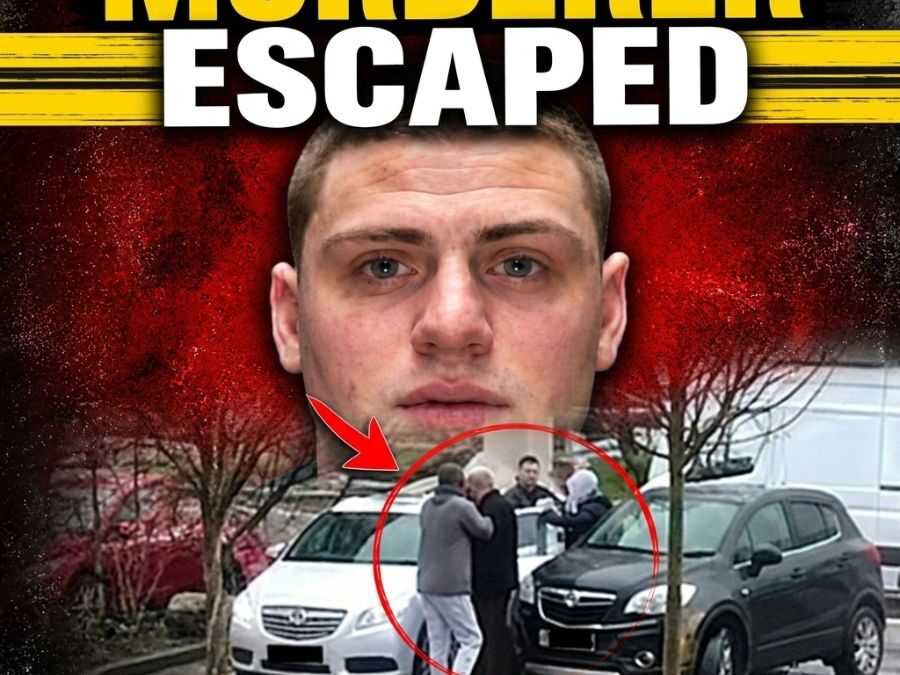
Imagine being sentenced to life imprisonment in your mid-twenties, with a minimum term of thirty years before you could even be considered for release. For Sha Womsley, the prospect of spending the best part of his life behind bars was apparently something he could not accept. In February 2017, while serving his sentence for murder, he was taken to hospital following concerns about his health. What happened next was extraordinary. Armed accomplices confronted prison officers outside the hospital, freed Womsley from his handcuffs and helped him disappear in a waiting getaway car. Yet the story of his escape began three years earlier, with a betrayal that cost a man his life.
In 2014, Anthony Duffy, aged thirty-three, became involved in a bitter dispute within the drugs trade in north-west England. His conflict was with Sha Womsley and Christopher Kenny, two men associated with a substantial criminal operation based in Liverpool. Their activities reportedly extended well beyond the city, with connections across different parts of the country and overseas. During the subsequent trial, both men were portrayed as individuals who believed their position made them untouchable.
The disagreement centred on a cannabis farm operated by Womsley and Kenny. The crop was reportedly worth as much as £60,000. Anthony had become increasingly angry because the two men were putting pressure on his cousin over a drug debt. Rather than allow the situation to continue, he decided to take matters into his own hands.
His plan was to steal the cannabis crop.
It was an extraordinarily risky decision, particularly given the people he was dealing with. Anthony sought help from John Hall, a fifty-four-year-old career burglar whom he trusted to assist with the proposed theft. However, instead of keeping the plan secret, Hall passed information about it to Womsley and Kenny.
That decision would have fatal consequences.
According to evidence presented at the murder trial, Hall was instructed to contact Anthony and arrange a meeting. He told him to come and collect cannabis at Loop Line Path, off Greenwich Road, near Anfield in north Liverpool. Anthony believed he was attending a meeting connected with the cannabis he intended to steal. In reality, the arrangements had been made to bring him into an ambush.
Womsley and Kenny prepared bags of grass cuttings to create the impression that cannabis was available for collection. Their preparations, however, went far beyond an ordinary confrontation. Evidence established that Kirk Melo, aged thirty-two, had supplied the men with a large knife and a firearm fitted with a silencer.
The court heard about payments for the weapons into an account controlled by Melo, as well as evidence that the weapons had been test-fired in front of Hall. When sentencing, the judge considered it possible that Hall had not known that Womsley and Kenny intended to murder Anthony. Nevertheless, he understood that something serious was being planned and knew that the two men intended to teach Anthony a lesson he would never forget.
Hall had briefly attempted to warn Anthony, but he did not do enough to prevent him from attending the meeting. The information he had supplied had already placed Anthony in grave danger.
When Anthony arrived at Loop Line Path, his sister was with him. He quickly sensed that something was wrong and attempted to escape. What followed was a terrifying attack witnessed by several people, including his sister and her boyfriend.
During the eight-week murder trial, Anthony’s sister described two men approaching. One carried a carving knife approximately ten inches long, while the other held a black object. Anthony called out to her for help. Her boyfriend intervened, apparently believing that Anthony was attacking her, and became caught up in the violence himself.
He was knocked to the ground, with Anthony falling on top of him as the attack continued. One assailant repeatedly stabbed Anthony while the other prevented him from getting away. During the assault, one of the attackers was heard shouting, “You house-robbing bastard.”
The violence was devastating. Anthony suffered twenty-eight separate wounds, affecting his face, arms, hands, chest, shoulder, leg and back. He was taken to hospital, but his injuries were too severe. At just thirty-three years old, his life came to an end.
For his family, the loss was sudden and irreversible. Whatever Anthony’s involvement in criminal activity, those closest to him were left to confront the death of someone they loved.
Detectives investigating the murder gradually established the roles played by the four men who would eventually stand trial. Womsley and Kenny were identified as central figures in the killing. Hall had revealed Anthony’s plans and arranged the meeting, while Melo had supplied the weapons.
The behaviour of Womsley and Kenny after the murder also attracted attention. They changed their clothes, disposed of their mobile phones and booked flights to Amsterdam. However, their attempt to leave the country did not succeed. On 30 May 2014, just days after Anthony’s death, both men were arrested at Manchester Airport.
The subsequent proceedings at Liverpool Crown Court lasted eight weeks. The jury heard extensive evidence about the cannabis dispute, the proposed theft, Hall’s betrayal, the supply of weapons and the brutal attack itself.
Investigators also uncovered details suggesting the considerable financial scale of the criminal operation. Although Kenny and Womsley were both only twenty-five when arrested, Kenny was found to have a running balance of approximately £465,000. A further £60,000 was discovered concealed behind a mirror in his city-centre flat. Womsley also possessed substantial funds.
The jury ultimately found all four men guilty of murder.
During sentencing, the judge made clear that the killing had been motivated by more than a disagreement between rival criminals. He explained that the defendants had decided Anthony had to be eliminated because he was not only a rival drug dealer but someone who had dared to challenge their authority. They wanted to send a message about who was in control.
Womsley and Kenny each received life sentences with minimum terms of thirty years. Hall was sentenced to life imprisonment with a minimum term of twenty-one years, while Melo received life imprisonment with a minimum term of twenty-two years.
The atmosphere in court when the verdicts were delivered was deeply emotional. Members of Anthony’s family wept in the public gallery. Kenny, meanwhile, showed little respect for their suffering, swearing at relatives and becoming involved in a struggle with court officers. It was an ugly ending to an already distressing trial.
For Womsley, however, imprisonment would not be the end of the story.
He had apparently made it clear that he did not intend to spend the best years of his life behind bars. After his appeal against the murder conviction failed in 2016, his attention turned towards escape.
His opportunity came through an unexpected route: his health.
While in prison, Womsley complained of bowel problems and drastically reduced his food intake. He eventually lost approximately four stone. Concerned about his deteriorating condition, prison medical staff arranged for him to attend specialists at Aintree Hospital in Liverpool for an endoscopy examination.
His first appointment took place on 17 February 2017. However, a security lapse meant that Womsley became aware that his follow-up appointment would take place just four days later. That information provided the opportunity he had apparently been waiting for. Despite being imprisoned, he had access to contacts and mobile phones that allowed arrangements to be made outside.
On 21 February 2017, following his hospital appointment, Womsley was being escorted towards a taxi by prison officers. Two men who had reportedly been waiting outside the hospital for around ninety minutes suddenly approached.
One was carrying a machete. The other appeared to be armed with an Uzi-style machine gun.
The situation became terrifying almost immediately. The man holding the machete ordered one of the prison officers to unlock Womsley’s handcuffs, threatening to cut him if he refused. Meanwhile, the second attacker threatened to shoot the other officer in the leg unless he complied.
Faced with weapons and direct threats to their lives, the officers had little choice but to obey. Womsley was released from his restraints and bundled into a gold-coloured Volvo. Within moments, the vehicle was speeding away.
The entire escape was captured on CCTV.
Investigators later established that the Volvo had been parked in the Fazakerley area of Liverpool, approximately half a mile from the hospital, from around midday. At least one person remained inside throughout the operation. At approximately 1.25 pm, the vehicle travelled towards the hospital and waited until the escape took place shortly after three o’clock.
Later that evening, at around eight, the Volvo was discovered abandoned. Detectives established that its last registered owner had sold it privately approximately two months earlier.
Police appealed for information from anyone who might have seen the vehicle in the weeks leading up to the escape. Their enquiries also revealed that Womsley had apparently switched to another vehicle after abandoning the Volvo. That second car was traced to an address in Cheetham Hill, north Manchester, around thirty-five miles away. Investigators believed this was where he obtained new identity documents and a mobile phone.
Merseyside Police launched a major investigation, not only to find the escaped murderer but also to identify everyone who had helped him. The escape attracted considerable national attention, raising serious questions about hospital security, prison procedures and how such an operation had been possible.
The investigation became known as Operation Devon and eventually involved around thirty arrests. Officers carried out raids, seized property and followed numerous leads in an effort to dismantle the network supporting Womsley’s disappearance.
Police also appealed directly to those within the criminal underworld who might have information. One detective warned that Womsley’s presence at large was creating problems for other criminals, some of whom were drawing unwanted attention to themselves while attempting to help him.
A reward of £20,000 was offered for information about his whereabouts.
Despite the extensive investigation, Womsley remained free for eighteen months. His time on the run finally ended on 21 August 2018, after 546 days.
He was located in the Harehills district of Leeds, a city well away from the Liverpool streets where the original murder had taken place. In a coordinated operation involving Merseyside Police and West Yorkshire Police, armed officers surrounded the vehicle in which he was travelling.
CCTV footage showed officers moving in from several directions, some wearing plain clothes and others high-visibility jackets. Womsley did not surrender peacefully. He was pulled from the car, forced to the ground and tasered before being handcuffed and taken back into custody.
Remarkably, he reportedly turned towards the officers who had arrested him and said, “Good job, boys.”
His appearance had changed considerably during his time away. The short-haired, clean-shaven man originally sent to prison was now almost unrecognisable.
Although his capture ended the manhunt, questions remained about how police had finally located him. Authorities did not publicly establish whether a member of the public had provided the decisive information or precisely what intelligence had led officers to the vehicle.
In October 2018, Womsley returned to Liverpool Crown Court, where he appeared before the same judge who had presided over his murder trial. He pleaded guilty to escaping from lawful custody.
For the escape, he received an additional eight-year prison sentence. Crucially, the judge ordered that it should run consecutively to his existing life sentence, rather than concurrently.
The judge explained that allowing the punishment to overlap with the original sentence would be an insult to society and to the police officers who had worked to recapture him.
The additional sentence meant that Womsley faced further imprisonment on top of his punishment for Anthony Duffy’s murder. His minimum term for the original sentence was not due for review until June 2047.
Looking back, this case raises difficult questions about loyalty, trust and the consequences of decisions made within the criminal world. Anthony Duffy placed his confidence in John Hall, believing that he had found someone who would help him carry out a risky plan. Instead, Hall passed that information to the very men Anthony intended to steal from.
Whatever Anthony’s choices in life, his death was a devastating loss to his family. They were left to carry the consequences long after the court proceedings and headlines had ended.
The escape also demonstrated how determined Womsley was to avoid the consequences of his conviction, but it ultimately brought another prison sentence and a prolonged police investigation.
Perhaps the most important people to remember are those who had no part in the decisions that led to the murder: Anthony’s relatives, his friends and the families of everyone whose lives were changed by the events of 2014.
For them, the consequences did not end when the courtroom emptied or when the abandoned Volvo was discovered. They continued through years of absence, uncertainty and difficult memories.
Anthony Duffy’s story is ultimately one of betrayal, violence and the lasting cost of a life taken too soon. And while the law eventually brought the men responsible to justice, nothing could undo the loss suffered by the people who loved him.
You Might Also Enjoy

A millionaire beat his pregnant wife until she lost the baby – her father’s revenge shocked the public.

The doctor sent the inexperienced nurse away – but her combat skills, acquired in the Navy, revealed who she really was.
Nine nurses fled from the feverish mafia boss – his portly veterinarian opened the stab wound in his back.
The mafia boss had been unable to walk for eight years – then a single mother found a needle hidden in his wheelchair.

“My Skin Hurt” — German Woman POW Shocked as U.S. Army Medics Save Her From Losing Both Hands