“We need a pilot for this beast” – The SEAL leader was shocked when she said: “I can do it!”
“We need a pilot for this beast” – The SEAL leader was shocked when she said: “I can do it!”
Pensacola Air Base smelled of kerosene, salt, and ambition. Lieutenant Commander Maya Reyes had known that smell since she was nineteen. She had grown up in Auadia, Puerto Rico, in a small house overlooking the Atlantic. Her father went out fishing, her mother taught at a school. When Marine jets roared overhead, Maya would stop and watch them. At twelve, she wrote her name on a piece of paper and put it in a book about naval aviation: One day I will fly one of those planes.
When she applied to the Naval Academy at seventeen, the adviser in charge greeted her with polite reserve. Maya thanked him and went home to continue her studies. She graduated sixth in her class and received her pilot’s badges in Pensacola. Maya was small, spoke softly, and observed closely.
By the age of twenty-six, she had accumulated more than eight hundred flight hours; by thirty, over sixteen hundred. She had been deployed twice to the Persian Gulf and had completed support flights under difficult conditions. More important to her than medals was the fact that she could rely on her decisions.
What was barely discernible in her personnel file had happened eighteen months earlier. Maya had been selected for a highly confidential joint testing program. There, a small group of pilots tested an experimental platform that was officially almost unknown. The engineers noted that she grasped unusual flight dynamics exceptionally quickly and remained precise even under new conditions. Maya didn’t speak about it.
Back home in Puerto Rico, her mother would probably still have had the kitchen lights on at that hour. Maya rarely thought about home during a mission; such thoughts could wait until the job was done. Then came that Tuesday evening in Djibouti. Master Chief Daniel Ror, a veteran SEAL commander, stood before a map. His team was to track down Khaled Azo, a weapons logistics operator whose shipments had been linked to numerous deaths in several conflict zones. He was now believed to be in a remote mountain corridor in northern Mali.
For the mission, Ror needed an aircraft capable of flying low, evading radar, and protecting the team. The only suitable aircraft was the X891 Wolverine. It was fully fueled and ready for takeoff on the tarmac. Only the pilot was missing. The two originally assigned planes had broken down at short notice; replacements would have taken at least three days. However, the window of opportunity closed within forty-eight hours.
The Wolverine was no ordinary helicopter. Its experimental propulsion system and unusual rotor configuration gave it capabilities other platforms lacked. At the same time, it was highly sensitive to even the slightest control inputs. At low speeds, it tended to roll abruptly, while yaw was delayed. Several test pilots struggled to reliably compensate for these characteristics. The program was subsequently revised, but the machine retained its nickname: the Beast.
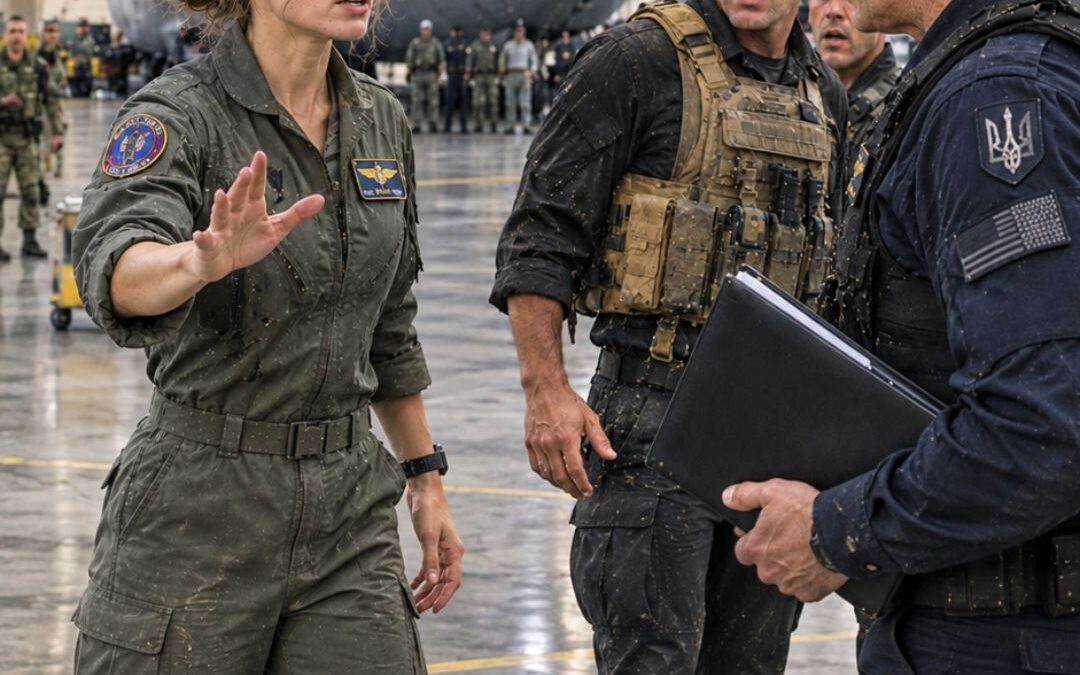
Maya was at the base for a liaison officer rotation. Seeing the men’s tense faces, she nevertheless entered the room and listened. Ror briefly explained what was missing. When he finally asked if anyone had a solution, Maya stepped forward from the back.
“I can fly them.”
Ror scrutinized her, making no attempt to conceal his skepticism. Maya stated her rank, her flight experience, and the approximately sixty hours of operational service she had logged on this very platform during the trial program in Palmdale. A petty officer named Teller audibly exhaled.
“Do you know what you’re getting yourself into?” Ror asked.
“I have read the operational documents. Including the updated threat assessment.”
“Why didn’t you contact us sooner?”
“They didn’t ask.”
Her response sounded neither defiant nor offended. That’s precisely why it hung in the air. Ror decided she should prove herself in the simulator. Forty-five minutes. His team would watch.
Maya took her time adjusting the seat, checking the straps, and reviewing the displays. Then the simulation began: night flight, mountains, shifting winds, and a radar display monitoring the corridor. Maya piloted the Wolverine slowly into the terrain, remaining focused neither on the onlookers nor on the time limit.
When the simulated radar detected her, she didn’t swerve. She knew that a reflexive breakaway in the narrow corridor would create more danger than the warning itself. She descended the aircraft in a controlled manner, using the shadow of a ridge, and maintained her course. The warning light went out. She then completed the approach, two support maneuvers, and an emergency with one engine running at reduced power. Her simulated hits were within the specified accuracy, and even with reduced power, she reached the evacuation point safely.
As she stepped out of the cockpit, Teller stood upright against the wall. Ror no longer folded his arms. He looked at his team and simply said, “She’s flying.” No one disagreed.
Twenty minutes later, Maya was back in the Wolverine. The eight SEALs stowed their equipment in the rear compartment. Ror took his seat near the cockpit wall. Shortly after 2:00 a.m., the aircraft took off. Above the mountains, the night was almost completely black. Maya decided against using the autopilot because the contour lines were changing faster than the system could reliably react. She flew by instruments, visual reference, and the subtle resistance the controls provided.
The approach led through a narrow corridor. Maya maintained her altitude with astonishing consistency and finally brought the aircraft to a stop on a narrow slab of rock. The ramp opened. Now the waiting began. Maya circled low above the valley, monitoring fuel levels, radio communications, and the time. For the men on the ground, she was the link between their mission and a possible return route.
After about half an hour, Ror reported a change. In addition to the actual target building, another storage room had been discovered. Furthermore, two groups of militia had repositioned themselves. A small group of civilians was located in a building southwest of the target.
Ror requested support against the eastern militia position. Maya examined the map and realized that a direct attack could endanger civilians. She suggested a modified approach from the northwest. This would maintain sufficient distance from the populated area while allowing the aircraft to fly under the cover of the hills. Ror approved the plan. Maya repeatedly verified the target designation and deployed only the necessary firepower.
The situation remained tense. The northern militia group advanced faster than expected and occupied the ridge above the agreed-upon landing site. Ror’s voice now sounded more strained. The landing site was in danger; his team had to retreat under fire. They needed a clear approach.
Maya checked the position on the display. A standard approach would have kept the Wolverine in the line of fire for a long time. She listened to Ror’s brief reports and asked no unnecessary questions. They both knew how little time they had. She opted for a short approach from the south, close to the terrain. Over the ridge, she brought the aircraft into position and unleashed a well-aimed burst of fire that forced the attackers to retreat. Then she immediately turned toward the rocky outcrop.
Two bullets struck the right side of the Wolverine. The cockpit vibrated, red warning lights illuminated. The right engine was losing power. Maya realized she only had a few minutes before the aircraft would become uncontrollable. She didn’t abort the approach. Eight men were waiting for her return, one of them wounded. Aborting would have meant leaving her stranded in the mountains as the militia advanced.
She corrected the course, compensated for the loss of thrust with the remaining control inputs, and landed the Wolverine hard but smoothly. The men ran to the ramp. Maya kept the rotors at operating speed, as a complete shutdown could have made a restart impossible. Ror reported that everyone was on board. Once the ramp was closed, Maya lifted the damaged aircraft again. She countered the rightward roll and slowly gained altitude. The right engine bay trailed a thin plume of smoke.
She monitored the temperature gauges and kept the aircraft as stable as possible. Several warning messages appeared, but none could be effectively addressed in the air. Only when the base’s runway was below her did she allow herself to momentarily look away from the instrument panel. Her shoulders ached, and her fingers were stiff from gripping the controls for so long. She didn’t loosen her grip until the wheels touched down. At daybreak, she landed the Wolverine. Mechanics and paramedics were already waiting at the edge of the runway with fire extinguishers and tools for the damaged aircraft.
The wounded Petty Officer First Class Garcia was helped out of the compartment by two comrades. He was able to walk on his own and was already speaking with the medical personnel. The other men disembarked unharmed. Ror left the aircraft last. Maya completed the shutdown procedure, documenting the initial impact and the progressive engine failure. Only then did she release her seatbelts and exit the aircraft.
Ror waited beside the aircraft. He wasn’t a man of long speeches. This time everyone had returned. Garcia would receive medical attention, and the others could see their families again. Ror looked at Maya as if he wanted to say something, but decided against it. In his mission report, he summarized the operation in four words: “Extraordinary. Calm. Precise. Lifesaving.”
The mission remained secret. Maya continued flying, training other pilots, and participating in missions she could hardly discuss at home. Three months later, a young officer candidate in Virginia asked her instructor who the best pilot he had ever seen on an experimental platform was. The man with twenty years of service answered without hesitation: Maya Reyes.
The Wolverine was decommissioned years later when a successor model adopted its technical specifications. Two impact marks remained visible on the right engine cowling in a secure hangar. No one had them fully repaired.
Maya herself didn’t tell the story. She knew that courage isn’t always loud and that responsibility rarely needs applause. Sometimes it consists of remaining calm while others wait for an answer, and bringing back people you can’t let down. For her, that was enough.
You Might Also Enjoy


A millionaire beat his pregnant wife until she lost the baby – her father’s revenge shocked the public.

The doctor sent the inexperienced nurse away – but her combat skills, acquired in the Navy, revealed who she really was.

Nine nurses fled from the feverish mafia boss – his portly veterinarian opened the stab wound in his back.

The mafia boss had been unable to walk for eight years – then a single mother found a needle hidden in his wheelchair.
“My Skin Hurt” — German Woman POW Shocked as U.S. Army Medics Save Her From Losing Both Hands