20 Diana Dresses That Made History: Each One Was a Silent Declaration of War
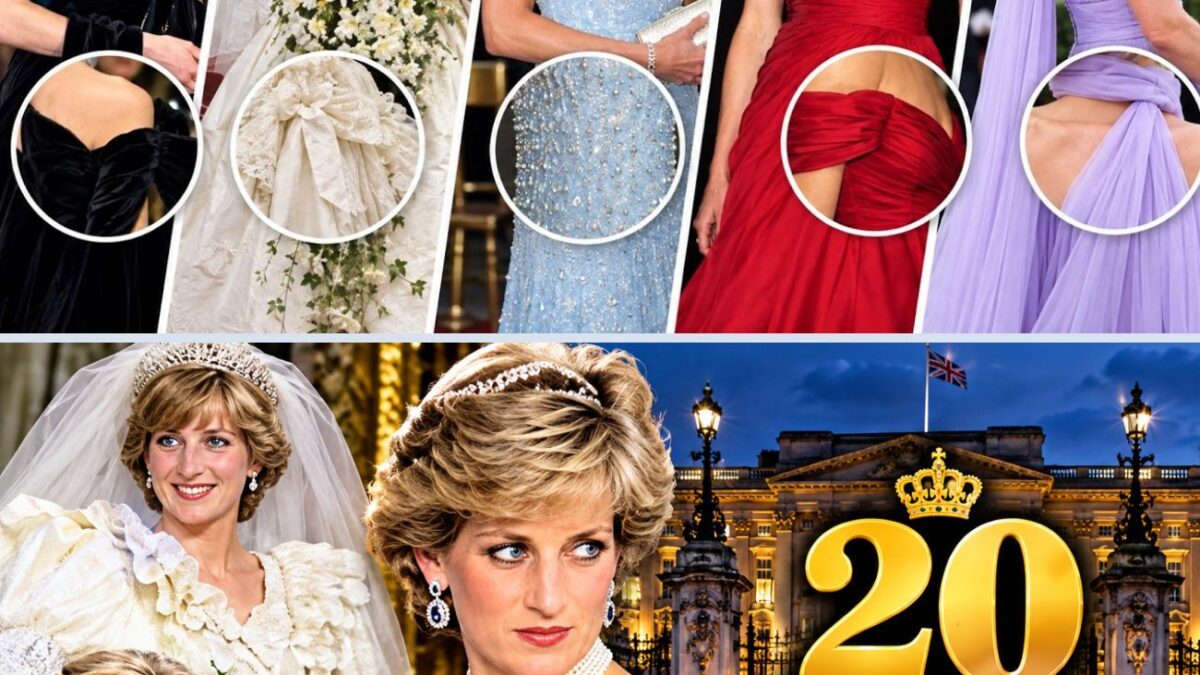
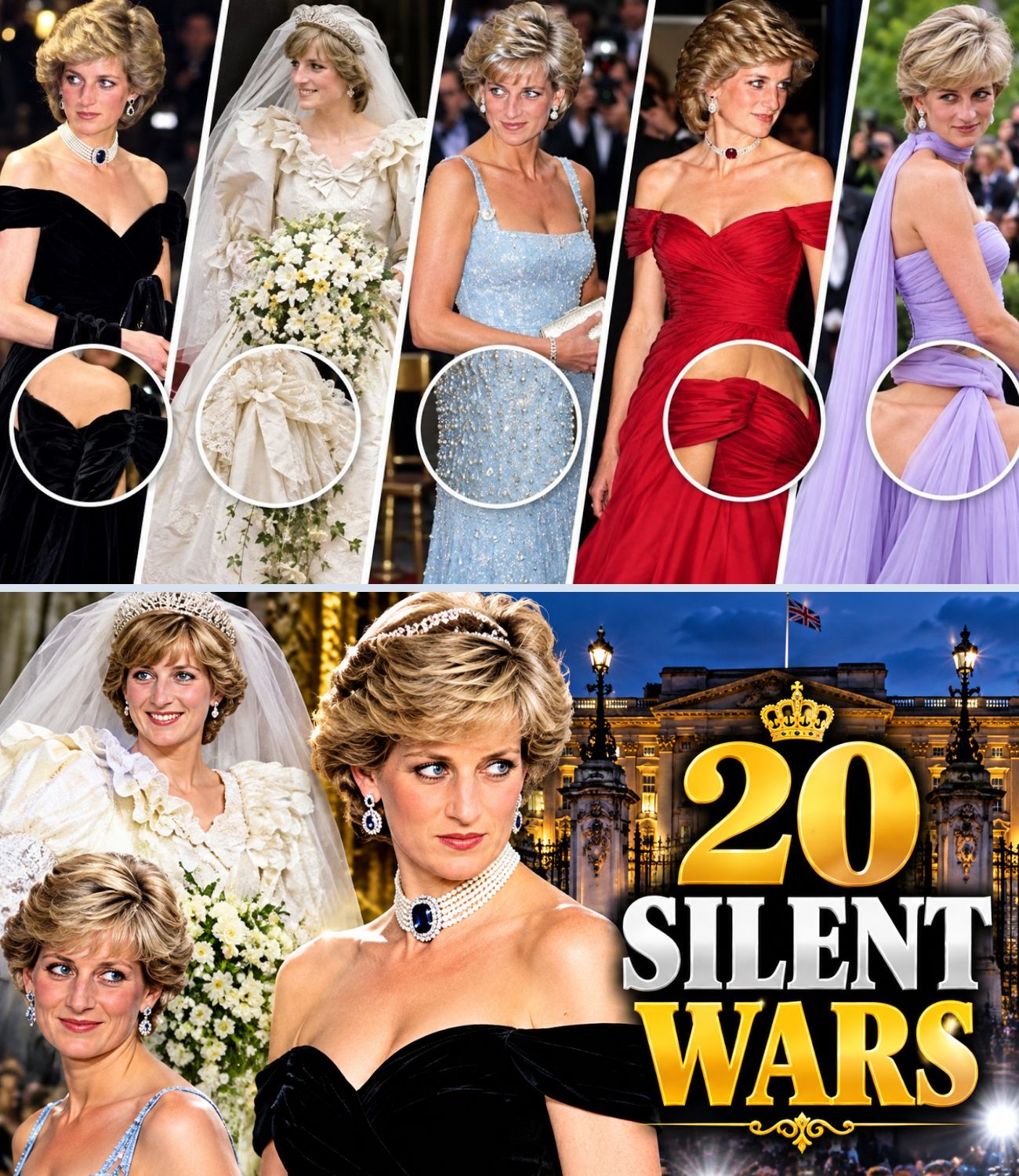
What message will I send when I wear this? That was the question Diana asked herself before choosing a dress. Designer Jasper Conran remembered it, and pay close attention to what he didn’t ask:
“I didn’t ask if the dress was pretty. I didn’t ask if it was fashionable. I was asking what the person on the other side of the camera was going to see, because depending on the day that person could see very different women.”
A 20-year-old bride, nervously entering a cathedral, a representative of the crown in a foreign country, a mother bending down to talk to a sick child. And years later, a woman who no longer needed anyone’s permission to occupy the front page. Today you will go through 20 dresses, 20 exact moments in her life.
From a black dress that surprised London before the wedding to one of the last ones Diana wore just weeks before she died. Along the way you will discover a dress that there is not a single known photograph of Diana wearing, a hat that she decided not to wear, and the reason will move you, and the dress that the press dubbed the revenge dress.
Although the true story of that night is much more human than that nickname, the most powerful thing comes at the end, because Diana’s bravest decision was not to put on a dress, it was to say goodbye to many of them. Let’s begin.
London, 1981. Diana is not yet a princess, she is Lady Diana Spencer, a young woman who has just become engaged to the heir to the throne and who does not yet know what that really means.
That night Charles and she attend a gala at Goldsmith’s Hall. Diana appears in a black satin dress designed by David and Elizabeth Emmanuel. Off-the-shoulder, plunging neckline, dress number one. Today we find it hard to understand the commotion. A young woman at an evening party dressed in black. What’s so creepy about that? But think about their situation.
His life had just become a showcase. Every gesture was going to be measured by rules she was still learning. And black people in that world had their own codes. The press was expecting the prince’s shy fiancée, the girl who looked down, and instead found someone they couldn’t stop photographing. Elizabeth Emmanuel would later recall the power of that apparition.
Now, let’s be honest, Diana didn’t announce any rebellion that night. There is no evidence that she intended to provoke anyone, but that dress matters for another reason, and it is a more disturbing one. It showed, before she could control it, the power that a simple garment would have over the story of her life.
And in a matter of months that power multiplied by millions, because the same design house that had created that nighttime black was already preparing another commission, the most guarded in the world, her wedding dress. A gala allowed for some freedom; a royal wedding did not. That dress had to fit the liturgy, the cathedral, and the expectations of an entire planet.
The girl, who had attracted headlines dressed in black, was going to enter St. Paul’s dressed in ivory. Only a few months passed between the two images, but the public saw them as if they were two different women, and that’s where a problem began that would haunt her for years. The stronger the photograph, the easier it was for others to believe they knew the person inside the dress.
July 29, 1981, St. Paul’s Cathedral, dress number two. Diana gets out of the carriage and the fabric seems to go on forever. Ivory silk taffeta, puffed sleeves, lace, and a 7.5-foot train, about 25 feet long, that literally filled the cathedral aisle. Today the piece is preserved and studied by Historic Royal Palaces.
And there’s a detail that very few people know. Part of the antique lace had belonged to Queen Mary. A letter from the Royal School of Needlework workshop helps to reconstruct that story. So that dress wasn’t just a romantic whim. It carried with it family heritage, ceremonial tradition, and all the charm of the early 80s.
Elizabeth Emmanuel explained that they were looking for exactly that, a theatrical scale, and they achieved it. After that morning, a whole generation of brides wanted volume, sleeves, and drama. For millions of viewers, that queue meant a fairy tale. But for Diana, who was 20 years old, it meant something else.
It was the first day of a public job that he would have to learn in front of the whole world, without rehearsal, without room for error. And here is what the photograph could not show. The camera captured the fabric, the ceremony, the kiss on the balcony, but it couldn’t capture what those two people were going to feel 10 years later.
The image was perfect. Life afterward did not follow the script of a perfect picture. And Diana was about to discover something that would change her way of dressing forever. A photograph could be a cage, but it could also be a tool.
Now, two years after the wedding, Diana appeared in a dress that looked like it came from another screen. Premiere of the James Bond film, Octopussy, dress number three. A white, asymmetrical, one-shoulder design covered in sparkling beads. It was signed by the designer Hachi. Look at the stage.
It wasn’t a state reception, it wasn’t a school visit, it was the red carpet of a Bond film. And Diana had already understood something that many in the palace found difficult to accept. Each occasion called for a different image. That night she didn’t need to be the picture-postcard bride. I could arrive at a movie night with some fantasy and a much bolder line.
Years later, that dress would be sold at its hefty price in Christie’s and would fetch a considerable sum. But its true value is not in the price. It is at that moment when a woman still bound by protocol managed to bring together the red carpet and royal attire. Of course there was a risk. And it was obvious that if the dress seemed too flashy, the conversation could shift from the event to her.
It had already happened with the black satin. But Diana knew something that the others didn’t want to admit. The attention wasn’t going to disappear just because she put on a higher collar. The cameras had been following her since the day of the engagement. I couldn’t turn them off.
So he chose something else, to learn to steer, even if only for a few minutes, towards where they were looking. That night he did not declare war on anyone. He stated something more subtle, that the young princess was beginning to understand the terrain and very soon she was going to use that terrain for something much bigger than a movie premiere.
March 1985, a gala at Grosvenor House in London. Dress number four. A metallic design by Bruce Oldfield, silver and gold fabric, pleats and a completely open back. It had all the sparkle of a formal evening, but there was no trace of the big ruffles from 1981. Perhaps it seems like a small change to you, a few less sleeves, an open back.
But for a woman observed from every angle, it was a huge change, think of it that way. The wedding dress forced you to look at the train. This forced one to look at her, at Diana entering, moving, occupying the room without the fabric arriving several meters before its owner. And here’s something that debunks one of the great myths about Diana.
Bruce Oldfield described the job of dressing her in a much less glamorous way than the headlines suggested. It was necessary to create appropriate clothing for a young woman with public duties, clothing she could rely on. Clothes that would work in a specific place, at a specific time, in front of specific photographers.
It wasn’t a matter of putting a runway dress on her and expecting the palace to adapt. So forget the idea of a target that one day woke up with perfect style. That wasn’t the case. She would try it out, look at the photographs, adjust it, and go back out. What she was accumulating wasn’t a collection of expensive dresses, it was experience.
And that experience was about to give her the most famous night of her life. November 1985. Official visit to the United States. Dinner at the White House. Dress number five. Dark blue velvet created by Victor Edelstein. Bare shoulders, a skirt that opened with every step. And in that room, under the lights of the presidential residence, Diana danced with John Travolta, two types of fame crossing paths on the same dance floor, the Princess of Wales and a Hollywood movie star.
The image went around the world and even today, decades later, it is the photograph that almost everyone has in mind when they think of her. Travolta would remember that dance with amazement. And there’s no need to imagine secret conversations on the track. The actual event is powerful enough. A woman who had entered the royal family only 4 years earlier walked through that room and was etched in the memory of people who didn’t even see the original broadcast.
But the story of this dress does not end that night, it ends 12 years later, because in 1997 this same blue velvet became the most expensive lot in the charity sale that Diana organized. Final price, 222,500. And now look at this dress twice. The first time on the dance floor, Diana participates in a ceremony that others have arranged for her.
The second time, 12 years later, she is the one who decides what fate awaits that fabric. The difference isn’t in the sleeves or the color, it’s in who makes the decision. That recognition, however, came at a price. The public could fall in love for a moment and forget that the next morning she still had a schedule, commitments, and an increasingly complicated family life.
And the next dress is the exact opposite of blue velvet. He doesn’t have a famous photograph. In fact, there is no known photograph of Diana wearing it, and yet, perhaps it explains her intelligence better than any dance. Official visit to Saudi Arabia. Dress number six. Bruce Oldfield prepared a red silk crepe dress for a private event.
Historic Royal Palaces preserves the piece. High neck, long sleeves, embroidery, floor-length skirt. It was a distinguished evening dress, but carefully chosen for the cultural context of its hosts. And here the story is told in a different way. There is no cover reproduced thousands of times, there is no flash. The only proof is the dress itself and the work of the person who designed it.
And that reminds us of something that headlines almost never say. Diana’s clothes weren’t always meant to defy; sometimes they were meant to show respect without disappearing. Catherine Walker, the designer who would work with her for years, explained it clearly. On a visit abroad, it wasn’t enough for the designer to like an idea.
It wasn’t even enough that Diana wanted to wear it. The occasion had to allow it. So this red was not a secret act of disobedience, it was the response to a very specific diplomatic task. If every dress in this story is a statement, this one’s statement was simple and firm. I know where I am. Diana’s fashion was much richer than that old idea of obeying or rebelling.
In the same week, I might need discretion in one place and dazzling brilliance in another. The difficult thing wasn’t having nice clothes, the difficult thing was knowing the difference before opening the closet. And a year later that difference was put to the test again in the most photographed city in film.
Cannes Festival, dress number seven. Katherine Walker designed a dress made of very light blue tulle, with a delicate silhouette and a fabric that fell from the nape of the neck like a cape. The inspiration came from Grace Kelly in To Catch a Thief and it made perfect sense. Cannes was a city associated with cinema and the international gaze, but unlike the wedding dress, here the effect did not depend on volume, it depended on movement.
In a still photograph, she appears to be a serene figure. When she walks, the dress changes completely. Diana wasn’t an actress playing Grace Kelly, but she was a woman who understood that an entrance can tell a story before a single word is spoken. Years later, Walker would talk about something that almost no one took into account. A dress for Diana had to work from every angle, and that was no exaggeration.
With photographers in front, behind, and on both sides, the back of a garment could become as famous as the front. Cannes turned that difficulty into an advantage. The blue didn’t compete with the place, it blended with the light and left Diana in the center. Those who only see glamour miss the work behind it. Test the drape, the length, the transparency, make sure you could walk naturally.
Those photographs look spotless precisely because someone thought of every detail. Ease is also something that is crafted. And two years later, Walker was going to take that idea to the extreme with a dress so theatrical that the public gave it a rock star name. Dress number eight. A creation by Katherine Walker that many know as the Elvis dress.
A white column covered in pearly beads accompanied by a short high-necked jacket. Diana wore it to several events that year, including a visit to Hong Kong and the British Fashion Awards. The nickname is understandable as soon as you see the neck and the shine, but that nickname can make us forget the craftsmanship.
There are reports of around 20,000 beads, and none of them were placed randomly on a white cloth. They had to capture the light without turning the woman inside into a rigid statue. Walker said he found it hard to imagine someone else wearing that combination, and that says a lot. It wasn’t a store-bought dress; it was the result of a very precise collaboration between a designer and her client.
In Hong Kong, an evening gown could be part of an official program and at the same time appear in fashion magazines on the other side of the world. Therein lay Diana’s great paradox. For some, so much attention to her clothes detracted from the seriousness of her work. For others, that same attention meant that an official visit went far beyond protocol.
Today the piece is linked to the Victoria and Albert Museum’s collection after going through the 1997 charity auction. Think about the journey of that dress. It was born in a workshop, traveled to Asia, made headlines, sold out for a cause, and ended up in a museum. We are no longer just talking about a photograph; we are talking about an object that came from Diana’s life, fulfilled a public service, and gained a life of its own in history.
But a jacket covered in pearls also creates distance. And the next dress proves that Diana knew exactly when that distance didn’t work. Official visit to Pakistan. Dress number nine. A pale pink dress by Catherine Walker. The body is decorated with pearl embroidery and a Paisley-like motif. The skirt with a wrap cut and Diana added something else.
A gauze stole inspired by the dupatta. The photo is delicate, but the decision behind it is even more interesting. When a British representative arrives in another country, every detail can be interpreted in two ways: as indifference or as care. Walker didn’t copy a traditional costume, he did something more difficult.
It took elements of the host country’s visual language and brought them into a Western creation that acknowledged the occasion and the people who were receiving it. Compare it to the red dress from Saudi Arabia. There, Oldfield responded with a high collar and long sleeves to a very formal setting. Here Walker engaged with another tradition through the stole and embroidery.
There is no one-size-fits-all formula, and that’s why the outfits on their tours are not just a collection of pretty colors. Diana and her team were solving a real problem. How to be visible without behaving as if London were the center of every room. He could make mistakes like anyone else under so much pressure.
But behind these pieces there is a very clear professional intention and there is something intimate about a stole. It moves, adjusts, changes position while you greet it. Here, clothing wasn’t a rigid uniform; it was a way to be comfortable during a conversation. And now we come to the dress that for many people says more about Diana’s heart than any evening gown. Dress number 10.
The designer David Sassoon created for her a blue silk dress with yellow and pink flowers. It is known as the caring dress. Diana took him on several visits, one of them in 1992 to The Lighthouse, a project for people with HIV and AIDS. Historic Royal Palaces preserves the original sketch. Sassoon explained something beautiful.
When Diana visited hospitals, children’s homes and hospices, she looked for cheerful colors and she didn’t chose them thinking about the journalists, she chose them thinking about the people she was going to meet. And now the detail I promised you at the beginning. The original sketch included a wide-brimmed hat. Diana decided not to wear it.
Why? Sassoon told the story. That hat would have been in the way when she physically approached people, when she bent over a bed, when she hugged someone. And it wasn’t an isolated case. On other visits to children, she would choose jewelry that might catch their attention while she held them in her arms.
This completely changes the meaning of the word getting dressed. It wasn’t about choosing a perfect image and keeping your distance so it wouldn’t wrinkle. The dress had to allow her to bend down, take a hand, and listen. The press criticized her for wearing that garment too often.
Diana repeated it because it was useful for her work. In an era when a princess had to always appear with something new, repeating that dress became much more valuable than novelty. It was proof that certain visits mattered more to her than changing her wardrobe, and The Lighthouse didn’t appear out of nowhere. For years, Diana had worked to ensure that people with HIV and AIDS were not reduced to the fear caused by their diagnosis.
The same woman, who had been photographed dancing under the lights of Washington, now agreed to be photographed approaching patients that many others avoided. They weren’t two targets; there wasn’t a fashion princess on one side and a charity worker on the other. It was a single woman deciding what to do with the attention she already had, and Sassoon understood.
If a dress could make the first second of a difficult conversation easier, it had fulfilled a function that is not measured in sales or awards. Of course, a cheerful color doesn’t magically transmit joy. When faced with someone who is ill, no pattern can replace the willingness to stay, to ask questions, and to listen.
That’s why that missing hat says so much. Diana could have worn the complete look from the sketch and looked impeccable in the photos. She preferred a garment that wouldn’t create any barrier when she bent over. It was a small decision for the headlines and a huge one for the person sitting across from it.
And at that moment Conran’s question: what message shall I give? It ceased to be an abstract idea. The message was delivered from just a few centimeters away. If you’ve ever wondered what garment best expressed her affection for others, it might not be any of the ones that graced magazine covers. Perhaps it is this silk with flowers chosen time and again to shorten the distance with someone who needed company.
But that same year, 1992, another of Diana’s dresses was going to reveal a side of her that the camera could almost never see. Dress number 11, green velvet by Catherine Walker. Historic Royal Palaces preserves it and it is one of the most amazing designs of her entire life.
From the front it looks like a tailored double-breasted jacket, lapels, shiny buttons, absolute discipline, but when you turn it around everything changes. A completely bare back with an altered neckline. Tailoring in front, freedom in back. It almost seems like an elegant joke. And where did she take it? Not at a gala, not on a tour, she wore it to private family dinners.
And here’s the most revealing part: the institution that safeguards the dress points out that Diana sometimes chose bolder outfits for private occasions than for public events. That completely shatters the easy narrative. The idea that Diana dressed only to provoke the press or to defy the palace.
At a dinner without photographers, she could also enjoy an unexpected view of her back. Her taste mattered. Her pleasure mattered. David Sassoon would insist years later that she truly enjoyed fashion and knew how to have fun with it. Clothing wasn’t just armor, nor just a coded message; sometimes it was simply hers. And remember this dress because it would come back.
It would end up among the 79 that Diana put up for sale in 1997. An object that once entered a family dining room would end up helping cancer patients and people affected by AIDS. But between the intimacy of that dining room and that auction, something happened that forever changed the way the world viewed everything Diana wore. December 1992. Prime Minister John Major rises in the House of Commons and announces that Charles and Diana are separating.
It wasn’t a fashion detail, it was an earthquake in her family life and in her place within the crown. And from that day on, every time Diana appeared in public, the press repeated the same question relentlessly. What does what she’s wearing mean? Sometimes the answer was simply, “It’s a dinner dress.” But sometimes a news story and an image coincided so exactly that no one could separate them.
And that brings us to the most famous dress of all. June 29, 1994, Serpentine Gallery summer party in London. Dress number 12. A short black dress with bare shoulders. Designed by Christina Stambolian. That same day, television broadcast a program about Charles, in which he admitted his infidelity during the marriage.
Think about that night, millions of people listening to her husband’s confession and at the same time Diana getting out of the car on the Serpentine road. The coincidence turned that photograph into a visual response for the entire public and over time it acquired a name that would never leave it, the revenge dress. What we know for sure now is that Anna Harvey, who advised her, recalled that the choice was last minute and that Diana wanted to look extraordinarily good that night.
And most importantly, she went out. She didn’t cancel, she didn’t hide behind someone else’s news. She didn’t let that night belong only to Charles. That black dress no longer had anything to do with the bride with the puffed sleeves or the princess of the official dinners. And the press placed two images face to face.
On one side, Charles explaining himself on television. From the other side, Diana entering the Serpentine. She didn’t have to say a single word. Millions of people understood that scene as a shift in the balance. And look at the necklace, a pearl choker with a large sapphire on a night that invited her to become a secondary character in her husband’s biography, Diana appeared as the absolute protagonist of her own image.
The word revenge sells a quick explanation, but the real story is more human. A woman went out to fulfill an engagement knowing that she would be looked at with brutal intensity. The dress didn’t fix her marriage, it didn’t erase the pain, but it allowed her to control at least the visible part of that night.
And that is the danger of such a powerful image that it overshadows everything that comes after. Because that same year Diana wore another black dress and almost nobody remembers it. Charity dinner at the Palace of Versailles. Dress number 13. Catherine Walker designed a long dress with a high neckline and a sparkly area next to the neckline.
Headlines tend to lump all the black from the 90s into the same box, as if after the breakup every dark dress was another protest. Versailles demonstrates why that reading is lazy. It was a gala in France, in one of Europe’s most solemn fundraising venues. The dress had to be up to the occasion. Do not repeat the June message as if Diana only had one emotion for an entire decade.
Walker sought to combine dignity and presence, and it shows in the cut. The facade has an almost architectural cleanliness. All the light is concentrated above. Diana could enter a historic palace without disappearing under so much gold. The important thing here is not an attack against anyone, it’s consistency. Her private life had completely changed, but her public role remained.
Separated from Charles, she continued to attend charity events, work with designers, and learn how to project a presence that didn’t depend on being by his side. The Serpentine caused a sensation of headlines in a single night. Versailles allowed her to move on when the headlines faded. And perhaps that is the most difficult thing of all: maintaining work, discipline, and commitment to the causes after the blow.
The dresses didn’t replace her work; they were part of how she got to it.
London premiere of the film Apollo XIII, dress number 14, black, short, clean lines and a new signature in her wardrobe, Versace. The contrast with the revenge dress is striking. Stambolian’s outfit featured bare shoulders, asymmetry, and a moment of enormous media tension. Versace’s didn’t need any of that. A straight silhouette, almost without embellishments, and that was enough.
In the mid-90s, Diana’s image began to shed things that previously seemed inseparable from a princess. Less volume, less ceremony, and much more confidence that simply being there was enough. Anna Harvey, who helped her build that wardrobe, considered the simple Versace pieces and Catherine Walker columns from that period to be among the best she wore. And that opinion is worth a lot.
It doesn’t come from someone who looks at photos 30 years later and guesses moods. It comes from a professional who knew the real problems of dressing her. Because a simple line requires more precision than a dress full of details. If the cut fails, there’s no ribbon to distract the eye. The shoulder, the waist, the way the fabric falls when sitting. Everything becomes important.
Versace also brought another type of relationship with fashion. It was no longer just a matter of commissioning clothes from a dressmaker accustomed to the court’s schedule. Gianni Versace belonged to a world of artists, musicians and celebrities that Diana began to frequent after the separation. It would be easy to turn that into a fantasy of instant liberation.
The reality was more gradual. Diana still had responsibilities and limits. But that dress does show a very concrete decision: to use an international fashion house without asking the clothes to dress up as a royal uniform. And notice how the circle closes. Another movie premiere, just like in 1983 with Octopussy.
Then there were glittering beads and a theatrical shoulder. Now the effect was to remove, not to add. Between those two nights there were 12 years of learning. Diana already knew that she could enter a room without the dress arriving before her. And what would happen when she brought that same confidence to the exact place where the legend of revenge was born? June 1995, Serpentine Gallery.
Dress number 15 again. A year after the famous black dress, Diana returned to the same place for a Vanity Fair dinner. This time she wore a short Catherine Walker dress in a pale, almost gray, blue, embroidered and with a high collar. It would be tempting to describe it as a perfectly planned triumphant return.
It’s not necessary. What we already know is enough. She returned to a place that the public had etched in their memory and appeared with a completely different image, luminous, soft, with a haircut that showed how much her style had matured. And this says something about collective memory. We tend to remember the moment of the breakup, not the months of life that follow.
In 1994 the public saw a challenge. In 1995, the woman in the photograph no longer needed to repeat that pose to continue to matter. She continued building relationships, supporting events, and choosing what image would accompany her work. That continuity doesn’t have such a marketable nickname as revenge, and perhaps that’s why it deserves more attention.
Walker’s selection also debunks another myth. It is often said that after the separation Diana abandoned British designers for major foreign brands. That wasn’t the case. Versace went into her wardrobe, yes, but Walker continued to create fundamental pieces. Having your own identity doesn’t mean breaking with everything that came before; it means freely choosing when to trust a familiar hand and when should you try a new one.
And that pale blue has something special about it. It does not force you to read her face as a response to the past. Let the night be present. A year later, on another continent, she was going to wear a much more intense color before an audience that didn’t need to know anything about the intrigues of London to understand why her visit mattered.
June 1996, Chicago. Dress number 16. For a gala at the Field Museum, Diana chose a long purple Versace dress, matching shoes and a choker of pearls, diamonds and sapphires. It’s easy to get caught up in the glitz of the museum and the jewels. But Chicago raises a much more interesting question. How does a woman being pursued by photographers turn that pursuit into something useful? How does that attention reach a city to help illuminate a cause?
The dress was part of the visual answer, but never the complete answer, because coverage of a Diana trip worked on two levels at once. Some saw the color and the gala, others discovered, thanks to that same coverage, the organizations and people she had gone to support. If that purple color managed to get a news report into a home where a hospital or a cause would never have been discussed, then fashion had worked as a gateway.
Diana knew she couldn’t force the press to stop photographing her, but she could try to shift that attention to something else, and that balance was never guaranteed. A photographer could choose the neckline and leave out of the frame the person she had come to visit. A headline could completely forget the reason for the fundraising.
Diana didn’t control every cover, she controlled some choices, what event to go to, what to wear, who to dedicate her time to. The rest was in the hands of thousands of people. And two months later, that gap between the image she chose and the story others published grew even wider. August 28, 1996, Charles and Diana divorce.
From that day on she continued to be Diana, Princess of Wales, but lost the title of Her Royal Highness. And that fact explains why the next dress carries so much weight in her story. Late 1996, New York, the Costume Institute Gala at the Metropolitan Museum of Art. The first and only time Diana attended. Dress number 17.
A dark blue silk slip dress with black lace by Dior, designed by John Galliano. Put this image next to the wedding at St. Paul’s and they look like two different lives. In 1981 the fabric expanded around it until it filled the aisle of a cathedral. At the Met, the fabric hung close to the body. The first image was tied to an institution and a marriage.
The second one showed her alone on a night dedicated to fashion. That does not mean that she had stopped being a mother, or caring about her causes, or carrying difficulties. This meant that finally a public appearance could be entirely her own, without relying on Charles’s figure. For many women who had watched the wedding live, the contrast must have felt almost physical.
The fabric took up less space, and Diana seemed to take up much more. And there is a beautiful irony in that night. The woman who had been judged for every garment she wore was entering one of the world’s biggest fashion celebrations. At the beginning of this story she was learning the codes. Here she could use them, discuss them, and play with them.
And do you know what jewelry she was wearing? The same pearl and sapphire choker from the night of the revenge dress. The same piece in two completely different scenes, like the woman who wore it, who was also not frozen forever in a single night. But while the cameras were photographing her at the Met, there was another transformation underway, one that wasn’t visible on any red carpet.
Diana was thinking about how much of her former life she wanted to keep locked away in a closet, and the answer was going to surprise everyone. In January 1997, Diana traveled to Angola to support the campaign against anti-personnel mines, and the image that remained etched from that trip was not an evening dress, but work clothes with the Red Cross insignia.
I don’t count it among our 20 dresses, precisely because it wasn’t one, but I mention it because it puts everything else in its place. The British Red Cross preserves the memory of a visit designed to show the world what mines did to real lives. An image of Diana attracted the public, but the injured person was not an accessory to that image, he was the center and it was not an isolated gesture.
The official website of the royal family also records a speech by Diana at a conference on landmines in London and a visit to Washington in June to boost the American Red Cross campaign. It wasn’t a pose in dangerous terrain, it was a work sequence. And take a look at this. That same month of June, Diana opened her old wardrobe to the public and prepared an auction.
The contrast is striking. On one side, people who needed attention and urgent political changes. The other dresses could be sold for figures that most people will never have in their hands. Diana couldn’t solve the mine crisis with clothes, but she could use the extraordinary interest her image generated to bring money and attention to causes that almost never made it to a cover.
That is the context in which one must cross the door of Christie’s. June 2, 1997, London. Private viewing at Christie’s auction house. Dress number 18. Diana arrives wearing a short, light blue embroidered dress by Catherine Walker. If you look at the photograph without knowing where she was, you might think she was going to just another party, but all around her were her dresses.
Those she had worn at ceremonies, at dinners, in front of crowds, all gathered in the same room so that the public could see them before they changed hands. And Diana was there, dressed by the same designer who had created so many pieces of her story, helping to put that story into circulation.
Think about what it means to let strangers examine your wardrobe. The fabric holds measurements, adjustments, small personal decisions. The catalog can record the designer, the fabric, and the date, but it cannot record what someone felt while buttoning up that dress. Diana did not hand over a private diary, but she opened a door that almost all public figures keep closed, and that light blue placed her right between two roles.
She was the living hostess of the event and at the same time the owner of objects that were already beginning to become history. She was not contemplating an organized retrospective after her life. She was deciding for herself what went out into the world. The sale was held on June 25 in New York. 79 dresses, more than 3 million dollars raised.
And where did that money go? The Royal Marsden Hospital Cancer Fund and the AIDS Crisis Trust. This is not a colorful note at the end of a fashion chronicle. The money had a destination, and that destination was connected to the heart of Diana’s work. Whoever bought the blue velvet from the ball against Travolta didn’t just take away a souvenir from that night at the White House. He paid an amount that went directly to causes related to cancer and AIDS.
After that, each dress went its own way. Some ended up in private collections, others in museums. Years later, Kensington Palace presented an exhibition showing its evolution from the early romantic dresses to the clean lines of the 90s. And seeing couture up close is a completely different experience than seeing it in a photograph.
The photograph gives you a spectacular entrance. The object shows you the patient work of those who cut and adjusted each piece and also allows you to correct dates and attributions that, through constant repetition on the internet, have become legendary. In such a famous wardrobe, an embroidery, a label, or a catalog page are silent, but very concrete witnesses.
And pause for a second to consider what that decision meant. A stored dress fuels the nostalgia of its owner. An auctioned dress can fund care for people who will never meet its original owner. Diana didn’t do it alone. Sure, there were charity teams, organizers, buyers, and auction professionals, but the gesture of parting with a recognizable part of her past was her own.
And once the garments were handed over, other people would decide where to store them and how to tell their story. That deliberate loss of control is precisely what makes that decision so powerful. And Walker’s blue at Christie’s was trying to compete with the dresses on display. Diana did not arrive dressed as her most famous character. She came to accompany a specific mission.
If the black of 1994 drew all eyes to her in a moment of pain, this blue directed attention to what those pieces could do for others. But her life had not been reduced to saying goodbye to old clothes. There were still two dresses left, and both belonged to the present.
The following day, June 3, 1997, at the Royal Albert Hall, the English National Ballet performed Swan Lake. Dress number 19. An ice blue dress by Jacques Azaguri, fitted to the body with small sparkling embellishments. Diana wasn’t there just to watch ballet. She had supported the company and her presence drew the cameras to the event.
The diamond and pearl necklace she wore that night became famous because of its connection to that performance, but look at the dress first. After Christie’s soft, embroidered blue, Azaguri offered another version of the same color, clean, luminous, designed for a night of culture.
Azaguri had been dressing her since the 1980s. And there’s something important to be careful about here. It is very tempting to read each appearance of her last months as if everything were announcing a farewell. But Diana didn’t know that this would be one of her last public appearances. She entered a theater to see a ballet, not a scene written by the future.
To tell her story with respect demands remembering that. The photographs from that June are full of plans underway. The auction had not yet taken place. The commitments continued, the calendar moved forward. The sadness we feel today when we look at them is our own, because we know the end. We must not put that into Diana’s thoughts.
In two days, Diana had worn two blue dresses for two different public engagements. One to present a charity sale, another to support an artistic institution. Simply saying she looked beautiful leaves out what she was doing. Some said she wanted to send a message to the palace. Her agenda was much broader than any of those phrases.
Think of the girl in 1981, overwhelmed by rules she was just beginning to learn. Sixteen years later, she could go from an auction house to a theater with complete ease, not because it cost her nothing, but because she had spent half her life working under the gaze of the whole world.
And the last dress in this story is not linked to a political gala, an official visit, or an auction. It is linked to a birthday. For once, she was the focus of the day. July 1, 1997. Diana turns 36. Dress number 20. For her celebration at the Tate Gallery in London, she wore a long black dress covered in beads by Jacques Azaguri, and she didn’t buy it. It was a gift from the designer. She accessorized it with an emerald necklace linked to the jewelry she had received upon her marriage.
And yes, the black color immediately brings to mind the dress from 1994. But notice how different everything was. At the Serpentine, her image was overshadowed by her husband’s televised confession. At the Tate, the occasion was her birthday. This time the fabric didn’t have to answer to anyone. She had permission to celebrate the woman who wore it.
A gift from a designer who had known her for years also tells a small story of trust. That dress did not arrive as an impersonal formula sent to the palace. It came from someone who knew her way of moving, her taste for surprise, and the light she was going to find that night. We don’t know what words were said before the party and we’re not going to invent them, but the result is plain to see.
A dress that shone without regaining the volume of its early years. Diana had gone from the spectacle of the fabric to the mastery of a line capable of holding all those beads without hiding her. And the Tate gives us an honest way of looking at this whole list. In 1981, a black dress suddenly made her the subject of debate.
In 1997, another black dress accompanied a personal celebration. Between one and the other there are 20 different decisions under different circumstances. They don’t draw a straight line from a quiet young woman to a heroine who never doubted. Diana changed, she learned. She had good days and very bad days. She needed help and worked with people who knew what they were doing.
Her wardrobe allows us to follow some of those changes, but it doesn’t replace the woman. If a garment seems to be talking, the first thing to do is ask who was wearing it, where they were going, and what they were doing there. When that birthday arrived, the auction had already taken place.
The 79 dresses that came out of her closet were already on their own path. The one from the Tate, on the other hand, belonged to the present. It wasn’t necessary for each new dress to usher in a grand new era. That night, all it took was turning 36 and going out. And perhaps that’s why that photograph retains so much power. We know how little time she had left, but what we see is a woman living a normal day on her own calendar, not a posthumous memory.
A woman is walking towards a party carrying a gift. Now go back to the beginning with me. Jasper Conran remembered the question Diana was asking herself: “What message shall I send when I wear this?” And after these 20 dresses, you know there isn’t just one answer.
The black dress at Goldsmith’s Hall showed the unpredictability of attention. The wedding dress carried the weight of an immense ceremony. Bond’s premiere played with cinema. Oldfield’s metallic design freed her from the volume. The velvet in the White House hosted a historic dance and years later helped raise money. Saudi Arabia’s red respected a context. Cannes’ blue worked with light and movement.
The pearls on Elvis’s dress sparkled in Hong Kong. The pink one from Pakistan spoke with its hosts. The silk with Sassoon’s flowers approached patients and children without hats. And the green of the private dinners reminded us that she also dressed for herself. Each moment asked something different of her, and she knew how to listen to it.
Then came the black dress from Stambolian, the one the press decided to call revenge. It was a powerful image, but it wasn’t the complete explanation of a life. Versailles, the premiere with Versace, the return in blue to the Serpentine, Chicago, the Met, Christie’s, the Ballet, the Tate. They all show a woman who continued working and choosing long after the most famous headline.
The press called it a silent war, but if we reduce everything to a war, we lose the voices that truly deserve to be heard: the designers who remembered her questions, the institutions that still preserve her dresses, the organizations that received the proceeds of that auction. Diana didn’t win her freedom one night by wearing a black dress. She exercised it time and time again in decisions both big and small.
And perhaps the final gesture in this story is the most unexpected of all. Many people would have kept forever the dresses that the whole world wanted to see. Diana allowed 79 of them to come out of the closet and become helpers. She didn’t destroy her past, she didn’t deny it, she gave it another purpose.
The velvet in the White House could evoke a ball while simultaneously supporting a medical cause. The green of a private dinner could leave its perch forever. The clothes that had been observed, judged, admired and misinterpreted for 16 years were finally serving a purpose that did not depend on any headline.
That was the real statement, the one no dress could make on its own; she made it.
You Might Also Enjoy

“We Thought They Would Negotiate”—What Argentine Soldiers Said When The British Attacked Goose Green

“You’ll Never Finish My Ruck March, Limey” — US Sergeant Who Challenged the SAS, Then Fell Out First






