300 Taliban Fighters Thought 30 British Troops Were Finished in Helmand. They Were Wrong
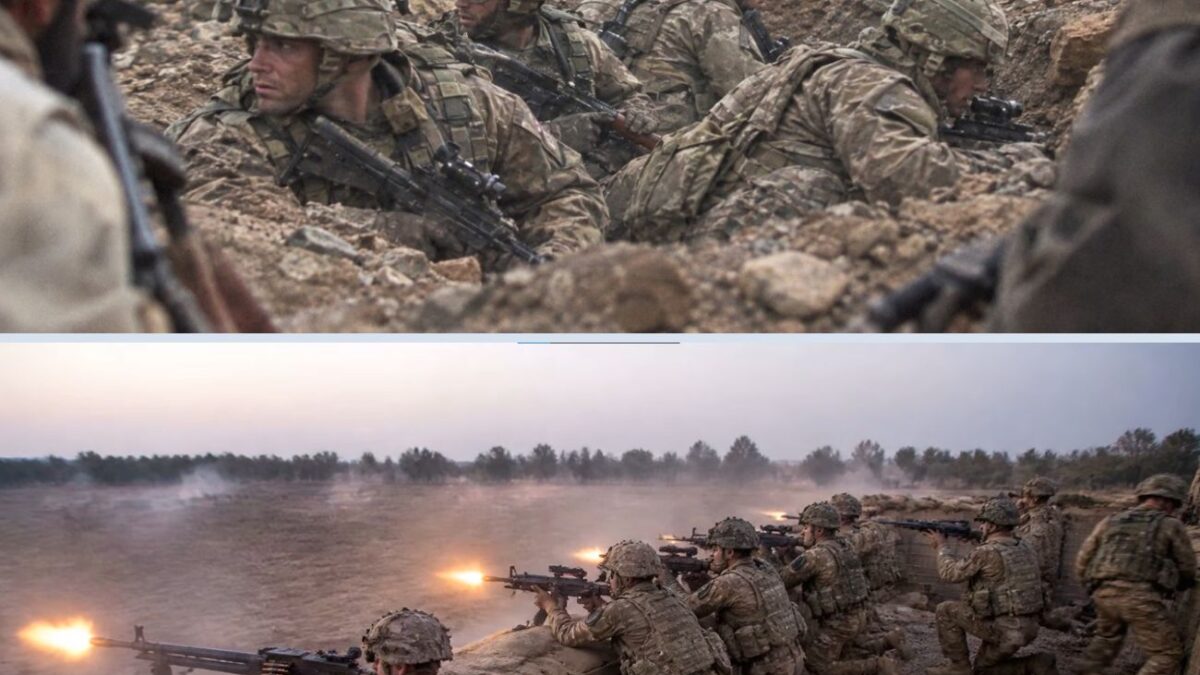
300 Taliban fighters look down on a mudwalled compound in Helmond Province and see 30 British soldiers who are already finished.
You are standing on that compound’s north wall at 06:26 in the morning in the last week of June 2008 and you can feel them coming from the west, from the north, from the dry riverbed to the south.
The maps call the place patrol base Kestrel. On paper, the morning is over before it begins. You know the arithmetic. 300 against 30 is 10 to 1. 10 to 1 is what a determined enemy needs to be sure of taking a defended position.
The men inside the walls of Kestrel have done that sum themselves before the sun is fully up, and they have reached the same answer.
The senior man on the ground has finished his tea and he has said in a Yorkshire accent that 20 years in the army have not softened, “Right, then.”
That is the beginning. It is not the story.
The story is that within the next 4 hours more than half of the 300 fighters who moved on Kestrel from three sides would not walk away. Of the 30 British soldiers inside the walls, 29 would still be alive when the dust settled and the Apache helicopters finally came on station.
By the end, the ratio that had stood at 10 to 1 against them would have turned itself inside out. That arithmetic makes no sense on paper because paper does not know what those 30 men did with the ground.
The mechanism is the point. A determined enemy of 300 moving in three coordinated columns with mortars and heavy machine guns and the tactical patience of men who had grown up in these fields does not lose more than 150 of its own inside 4 hours to a garrison it outnumbers 10 to 1. That does not happen.
It did not happen anywhere else in that campaign at that scale at that speed with so little air support in the opening hours. It happened at Kestrel because of a decision made by a captain who had walked a piece of ground in the dark, a corporal lying behind a rifle in a battered watchtower, and a dry irrigation ditch running west of the compound that had been dry for three summers running.
So you have the result. The 300 were wrong.
What the result alone cannot tell you is how. How 30 men in a walled compound turned an assault force 10 times their size into a killing ground of their own choosing. How a plan jotted in a notebook weeks earlier became one of the most lopsided small unit actions of that year of the war. The arithmetic, the mechanism, the named men who paid for it and the two numbers at the end that finish the equation.
It started at Kestrel at 06:22 local time on a Thursday. Patrol base Kestrel was not the sort of place anyone visited by choice. It sat 6 kilometers east of the green zone, the fertile irrigated belt along the Helmond River, on the shoulder of a low ridge overlooking a stretch of farmland that the intelligence cell in Lashkar Gah had begun calling without irony the bowling alley.
The name came from the way the compounds ran in straight lines along the canals and from the way that anything moving down those canals in daylight tended sooner or later to be knocked down.
The compound itself was a farmer’s holding that had been vacated and requisitioned 4 months earlier. Mud walls 2 feet thick and 8 feet high, baked by 30 summers into something closer to concrete than earth. A central courtyard with a well that still gave water if you worked the handle for a full minute. Two long single-story buildings on the north and east sides, their roofs reinforced with sandbags and Hesco, the wire-framed barriers filled with earth. A watchtower in the northwest corner, cobbled together from timber and more Hesco, high enough to see over the wall and low enough that a good marksman with a Dragunov rifle could reach it from 400 m.
One vehicle gate on the south wall sandbagged both sides with a metal boom lifted by hand. Around it all, three coils of concertina wire at a standoff of 20 m, and Claymore mines set on four approaches.
30 men held it. A rifle platoon of the resident battle group made up most of them, under strength that week because two men were away on rest and recuperation, and one was in Camp Bastion with an ankle broken during a compound clearance the previous Sunday. Attached to them, and technically the reason Kestrel existed at all, was a five-man patrol from the Special Air Service, the regiment, working the district on a task that had nothing to do with holding ground, and everything to do with a name on a list.
Between them that morning, they had 30 rifles, two general-purpose machine guns on tripods, one Javelin missile post with four missiles, one 51 mm light mortar with 60 rounds, and a radio.
Kestrel mattered because of what it watched over. Three kilometers west along the eastern edge of the bowling alley ran the district’s main resupply route, a graded dirt road that carried every logistics run, every troop rotation, and every casualty evacuation out of the northern platoon houses towards the ring road and Bastion. Whoever held Kestrel could see 8 km of that road. Whoever held Kestrel could, with a Javelin and a radio, make it unusable to any enemy convoy that ventured onto it in daylight.
Lose Kestrel and you handed the enemy the power to cut the northern platoon houses off for as long as it took to build a new base somewhere less useful.
The men on the ground did not need that explained. They had spent 4 months being probed, sniped at, mortared, and twice rushed by small groups testing the wire. The Taliban commander in the district, a man the intelligence cell had a name for and a face for, and that morning a mistaken assumption about, had been building towards this for weeks. He had lost fighters to an Apache strike directed from Kestrel in April. He had lost a weapons cache to a night patrol out of Kestrel in May. By the 24th of June, he had committed, and the intelligence cell had not caught it in time.
The ground around Kestrel favored the defender in only one direction and only in one specific way. To the north lay open compound farmland for 800 m, then broken ground up to a treeline. To the east the ridge fell away in shale, awkward but climbable, covered by dead ground the compound could not see into from its lower walls. To the south, the bowling alley ran along the canal, and the canal offered a covered approach to anyone willing to wade waist-deep in stinking water. Three sides that a determined attacker could exploit, and the garrison knew every one of them.
To the west, though, running in a rough line from the ridge shoulder down towards the bowling alley, was an old irrigation ditch. It had been cut perhaps 30 years earlier to feed a network of poppy fields since plowed under and replanted with wheat. It was 6 feet deep in places and 4 feet wide, walled on both sides with earth compacted by decades of dredging. It ran for nearly 900 m in a shallow curve that ended at a concrete culvert under the resupply road, and it had been dry-cracked at the base and drifted with dust for three summers running.
The rifle platoon patrolled it twice a week. On their second night at Kestrel, the Special Air Service patrol walked its whole length in the dark. At the culvert their captain stopped and stood in the bottom of the ditch for a long time looking back the way they had come.
He did not say what he was thinking. He made a note in a green waterproof notebook and the note said only this, “West ditch funnel 60-40. If they use it, plan for it.”
That was the second week of June. On the 26th at 06:22, they used it.
The ditch is a piece of terrain. Keep it in your mind. It will do a great deal of work before the morning is out.
There were 30 men inside the walls on the morning of the 26th. Nine of them carry this story because to name all 30 is to name none of them. And by the end, you need to feel the shape of who is left standing.
Captain Marcus Ren commanded the Special Air Service patrol. He was 32 from a village outside Winchester and had been a subaltern in the Rifles before selection. He was quiet in the way competent men often are, not withdrawn, simply economical. He kept a folded photograph of his daughter, Iris, aged four, inside his plate carrier over his heart. He had shown it once to his signaler on a night in April when word came that a helicopter had gone down near Sangin, and it took 40 minutes to confirm it was not one of theirs. He had not shown it since.
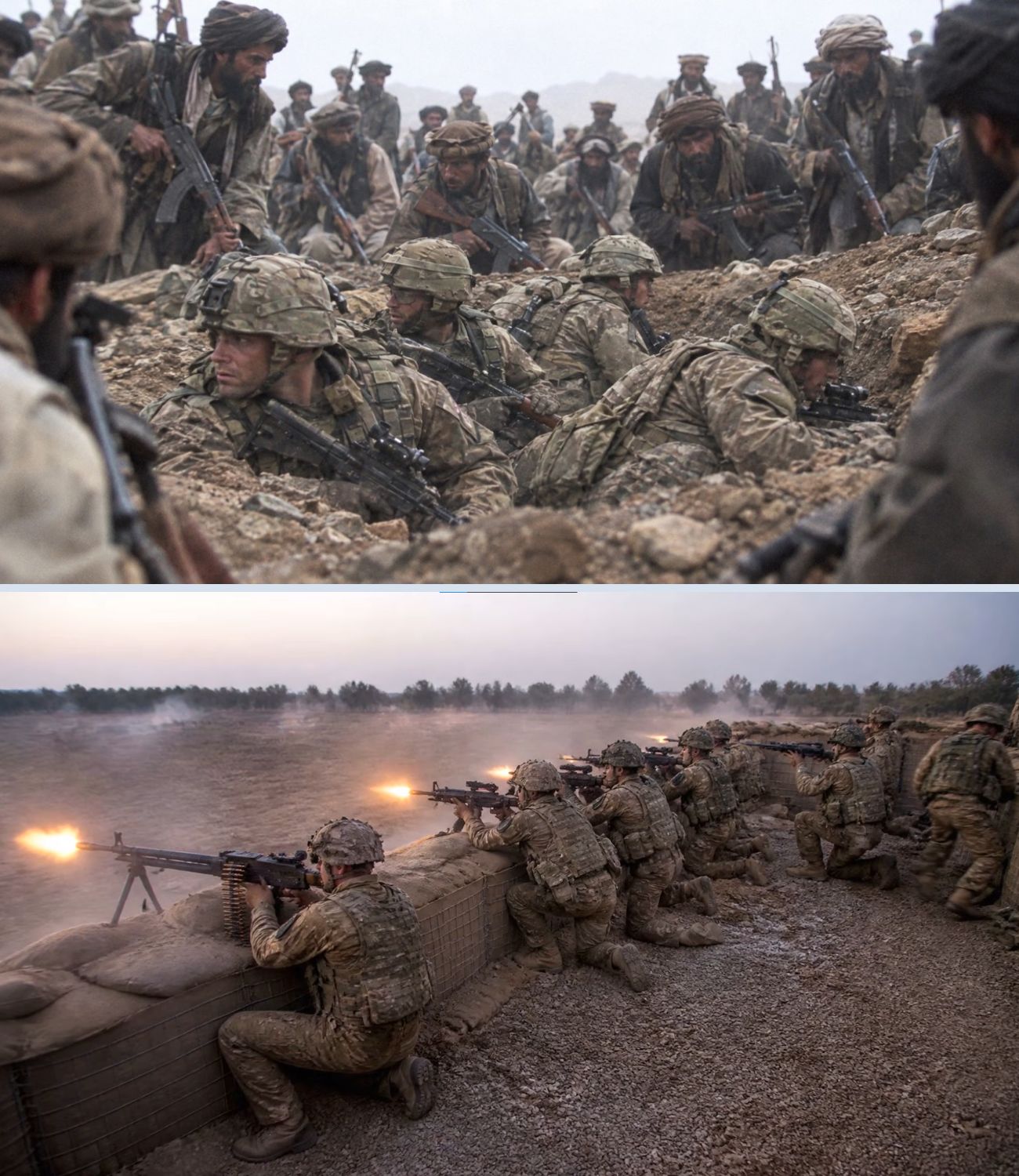
His senior non-commissioned officer was Staff Sergeant Danny Halbrook, a Yorkshireman of 41, in the army since 17 and in the regiment for the last decade. Halbrook drank his tea so strong that his troopers swore the spoon stood up in it, and Halbrook said so himself every morning as a ritual.
“This will put hair on your chest, lad,” he would say, as though the joke had not been made every day for 11 years.
He had a wife in Catterick, no children, and a Border Collie called Ted, and he spoke about Ted more than about his wife, and his wife knew and did not mind.
The sniper pair was led by Corporal Euan Pritchard, 28, from Aberdovey on the Welsh coast. Pritchard had not seen the sea in 11 months, and mentioned it at least twice a week, usually to the same audience. The audience had stopped mocking him around the fourth month because it turned out he was not joking. He carried an L115A3 long-range rifle and treated it like an instrument. When he was not shooting it, he was cleaning it. When he was not cleaning it, he was thinking about it.
The machine gun in the north wall sangar, the sandbagged firing position, was manned by Trooper Rory Kilbane, 23, from a village outside Cork by way of a British passport and a stepfather in the Royal Engineers. Kilbane was funny in a slow, deliberate way that never survived being written down. His mother had sent three tins of Quality Street in the last mail run, and he refused to open them until Christmas.
Halbrook told him twice he might not make Christmas at the rate he was going.
Kilbane grinned and said, “Well, then someone else can have the strawberry creams.”
The patrol medic was Trooper Tomasz Pielski, 29, London-born to Polish parents who had come over in the 70s. Everyone called him Tom except the padre, who called him Tomasz because he had asked once and remembered. Pielski carried a battered paperback of Marcus Aurelius in his dump pouch and read a paragraph before he slept. He had underlined the same line in three different pens across three different tours, “Ask, what is it in itself?”
Those were the five. The other 25 were the rifle platoon and its attachments. And of those, four names matter to what is coming.
Lieutenant Alex Redgate commanded the platoon. He was 24 and had been in Helmond 9 weeks, and he was still writing letters to a fiancé in Salisbury that he had not yet posted. They sat in an ammunition tin under his cot, addressed and sealed. He had told himself he would post them on the next resupply, and he had told himself the same thing on the resupply before. He was competent, careful, and terrified, and he was doing a good job of hiding the third.
His platoon sergeant was Sergeant Nat Coyle from Belfast, 21 years in the army, and about a decade of it on operations of one kind or another. Coyle called every private son, whatever his age, and had once called the lieutenant son during a difficult morning, and apologized, and done it again the following week. Redgate had stopped correcting him. Coyle was the reason the platoon was as tight as it was.
Lance Corporal Idris Fenwick commanded one of the rifle sections. He was from Cardiff and had a small red Welsh dragon inked on the inside of his left wrist, done in Brecon on a weekend pass 6 years earlier at the urging of a woman he had been briefly and unwisely in love with. The dragon had faded. Fenwick had not.
The youngest man on the position was Private Sam Ogilvie, 19, who had joined at 16 and a half. He was number two on one of the platoon’s tripod machine guns, and Coyle called him son and meant it more than usual because Coyle had a boy of about that age at home in Belfast who had not spoken to him in 2 years.
Those are the nine. Hold them in your mind because in about 90 minutes the numbers inside the wire are going to start moving the wrong way and it will matter a great deal which of them is still moving when it stops.
At 05:45 they stood to on the walls as they had every morning for 112 mornings running. Halbrook made his tea and made his joke. Pritchard checked his sight. Kilbane cleaned the feed tray on the gun for the third time that week. Pielski read his paragraph. Ren looked west at the ridge shoulder and the ditch he had walked in the dark, not yet knowing his notebook was about to be proved right.
At 06:22, the signaler in the operations room said quietly, “Sir, we’ve got movement. A lot of movement.”
The signaler was watching the feed from a Desert Hawk, a small hand-launched surveillance drone that a lance corporal had put up 10 minutes earlier after a report of a change in the pattern of life in a village 2 km to the northwest. In the district’s language, that meant the market had emptied at the wrong hour, or the women had gone indoors, or the children had stopped kicking a ball in the dust. That morning, it had been all three.
Redgate came into the operations room with his helmet in his hand. Ren was already there. They watched the screen together and Ren said without any particular inflection, “How many are you seeing?”
The signaler counted for 11 seconds. “I’ve got, sir, I’ve got about a hundred at least moving south through the treeline north of the compound. And there’s more behind them. I can’t see the tail.”
“How much more?” said Redgate.
“I don’t know, sir. It keeps going.”
Ren took the field glasses from the map table and went out to the north wall. The morning was already hot. The sun had cleared the ridge and the light was flat and gray with the dust that hung in the air at that hour. He lifted the glasses and did not need them for long. The treeline was moving. At 800 m, it should have looked static. It should have looked like trees. Instead, it looked like a treeline that was slowly and in step walking south.
He watched for perhaps 20 seconds. Then he lowered the glasses and said to Halbrook, who had come up beside him without being called, “Danny, get on the net. Tell Zero we have—call it 300 coming south through the north treeline. And I’d bet money there’s more coming up the canal from the south and more money there’s a stop group on the east ridge. Tell them contact is imminent. Tell them we need everything they can put in the air. We need it now and we will hold.”
“30 to 300. That’s 10 of them for every one of us.”
“I know.”
Halbrook went to make the call. Ren stayed at the wall. He looked north for another moment and then he looked west at the mouth of the dry ditch where it came out of the ground about 600 m away. He looked at it for longer than he had looked at the treeline. Then he went back inside, opened the green notebook to the page he had written in the second week of June, read it, closed it, and turned to the lieutenant.
“Alex, how’s your Javelin gunner?”
“Good, sir. He’s good. He’s fired two. Both hits.”
“I want him on the east wall watching the ditch mouth. I want the Javelin ready, and I want him not to fire it until I tell him. Not before. Understood?”
“Understood, sir.”
“And Alex, 30 of us, 300 of them. One rifle for every 10 men in that treeline. And there’s another lot in the canal we haven’t counted yet. That’s the maths. But there’s a shape to this morning they don’t know about, and we are going to make them find it.”
“All right. All right, sir.”
He was 24 with 9 weeks in Helmond. He said all right without entirely knowing what he was agreeing to, but he said it and meant it and went to give his orders.
Out on the wall Halbrook came back. The message was passed. Zero had acknowledged; two Apaches at Bastion were coming up on their 40-minute readiness and a pair of Harrier jets had been tasked but were 40 minutes and change out.
“So we’re on our own for about that long,” he said about that.
Halbrook looked north and then west. “300 of them. 30 of us. That’s 90 men out there for every nine in here, give or take a rounding error.” He paused. “You’ve got a plan, boss.”
“I’ve got a piece of ground,” said Ren.
The trap had closed. Kestrel could not withdraw. 30 men with two machine guns and a Javelin do not walk out through 300 fighters moving in coordinated columns. Not in daylight, not across 8 kilometers of open country. The compound could not be reinforced inside 40 minutes, and by the logic of every field manual ever written, a determined force of 300 would be through the wire long before then.
That was the sum on paper. But you have already seen what paper does not know. The ground west of Kestrel had been dry for three summers running.
In every action of this kind, the hinge is a single decision made in a compressed window by a single man. And once it is made, the rest of the morning is only the working out.
Ren made his at 06:31, 9 minutes after the first sighting, and 16 minutes before the first round came over the north wall. He made it in the operations room with Redgate, Halbrook, and Coyle standing around the map.
And he made it plainly, “They’ll come from three directions. North, south, east. They want us fixed on the north because that’s where the mass is, and bleeding on the south because the canal gives them cover in. The east is diversionary. The east is where they want us to look because they’ll be moving their real assault force, the shock element. The men meant to get inside the wire through the west ditch. It’s the only covered approach that gets them within 50 m of the west wall without being seen from the tower. That is where they intend to break us, and that is where we are going to break them.”
“How?” said Halbrook.
“We let them into the ditch. All of them. We let them fill it. We don’t fire on the west side at all until they’re inside, and then we close the ends.”
“Close the ends,” Redgate repeated.
“The Javelin on the culvert at the south end, the gun on the ditch mouth at the north end, and the 51 mm mortar on the length of it. When the ends are shut and the mortar is walking down the middle, they’ll have nowhere to go and no cover to reach. We don’t fire a single rifle from the west wall the whole time. Not one. The moment we do, they’ll know the ditch is a killing zone. They’ll climb out of it, and we lose the trap.”
Coyle said quietly, “Boss, that means we take everything else on three sides with what? 20 rifles and a gun.”
“22 rifles, one gun, and the sniper pair.”
“Yes.”
“So 10 to 1 on three sides while we wait for the fourth.”
“Yes.”
Coyle looked at him for a moment. Then he said, “Right, good.”
That was the hinge. A staff sergeant from Yorkshire, a Belfast sergeant with 21 years in, a lieutenant nine weeks in country, and a captain from Winchester carrying his daughter’s photograph bent over a map in a mudwalled room in Helmond. And one word from Coyle that carried the weight of it.
“Good,” Redgate said. “Sir, if they come through the wire on the north before the ditch is full, then we die on the north wall.”
“Yes, right. I know,” said Ren.
They went out. Halbrook took the north wall with Kilbane on the gun and half the rifle platoon either side of him. Coyle took the south wall with the other half of the platoon, the second gun, and the mortar line in the courtyard behind him, already laid on grids plotted along the ditch weeks before. Redgate took the east wall with the Javelin gunner and a section of riflemen under orders to fire nothing heavy and to make it look from the east ridge as though the compound expected the main effort there.
Pritchard climbed the northwest tower with his spotter, a young trooper who barely spoke, and laid the rifle across the roof line to cover the ditch mouth.
Fenwick’s section held the west wall and theirs was the hardest order of the morning. Do not fire. Whatever you see, do not fire until the captain says fire.
“Understood, sir,” said Fenwick.
“Idris, I mean it. Not one round.”
Fenwick turned his left hand over and showed him the faded dragon, “Not one, sir.”
Ren took position in the corner sangar at the foot of the northwest tower. From there he could see the ditch, its mouth on the ridge shoulder, the culvert at the far end, the treeline to the north, and the canal to the south. From there he could see the whole shape of the morning.
At 06:43 the first mortar rounds came in from the treeline. The compound shook. Sand and dust lifted off the sandbags.
Halbrook shouted, “Stand to! Stand to! Stand to!” in the voice he kept for when he meant it.
The north wall opened up with a gun and 11 rifles, and 800 meters out the treeline began to blur with muzzle flash and the running shapes of men in loose robes crossing the open ground. 30 men, 300 coming. The clock had started.
Ren looked west, and the ditch mouth was empty. He keyed the radio, “All stations, hold west. Hold west.”
He said it in the same voice he used to say good night to Iris. 06:43.
The mortars came in three at a time, walking from northwest to northeast along the outside of the wire, dropping 50 m short, then 20 long, then finding the wall. The wall took them. The mud held. The sandbags on the north building’s roof shivered and shed dust and held.
Halbrook ran fire control from the wall. Kilbane fired in five-round bursts because Halbrook had told him in training that a five-round burst was a language and a 10-round burst was a scream and screaming did not win firefights.
The treeline emptied. Perhaps 140 men—the intelligence cell would later say 138—came south towards the north wall in three groups, two swinging wide on the flanks and one heavy in the center. They moved in short rushes of 20 m, dropping behind irrigation bunds, rising, running again. It was competent work. It was the work of men who had done this before and fully expected it to succeed.
Kilbane’s first belt went in 90 seconds. He was on to his second before Halbrook told him to slow down.
“Aye, boss,” he said, and slowed, and his next short burst dropped a running figure at 400 m, and then another, and then, in a voice nobody but his loader heard, he murmured, “Strawberry creams.”
06:47, the south wall opened up. A group of about 60 had come up through the canal in the dark, crept along the reed beds in the first light, and now surged onto the near bank 200 m from the wire.
Coyle was already firing. Ogilvie was on the second gun, 19 years old, pouring fire into 60 men at 200 m, and Coyle was crouched beside him, saying, “Steady, son. Steady. Short, short. That’s it. That’s it, son.”
06:50, the East Ridge began to speak. Small arms at long range, three or four PKM machine guns firing in bursts from dead ground 400 m out, sparking off the east wall and doing no damage.
Redgate held the Javelin gunner back and had his section return fire in a way that looked committed while using about a quarter of the ammunition it seemed to. That was the play. Look pinned. Do not be pinned.
Ren watched the west. The ditch mouth was empty. The ridge shoulder above it was empty. All 900 m, as far as he could see, were empty. And that was wrong. If the assault was coming, it should be coming now, while the north and south held the garrison in place, and the east ridge pulled its eye.
He keyed the radio, “Euan. Anything at the ditch mouth?”
Pritchard, eye to the scope above him, answered, “Nothing, boss. Empty.”
“Watch it.”
“Watching.”
06:54, a mortar round from the north cleared the wall and landed in the courtyard 10 m short of the well. The blast threw a rifleman off his feet with a fragment in his thigh, and his swearing carried over the noise of the gun.
Pielski was on him in 7 seconds, tourniquet cinched, morphine in, a hand on the man’s shoulder, and the paperback still absurdly in the dump pouch. The rifleman would live. No one had died yet.
Take the count as it stood. 30 rifles, perhaps 280 enemies still in the fight after 11 minutes, with the north wall accounting for a dozen and the south for a dozen more. 10 to 1. Still nothing had changed on paper, but something was moving that could not be seen from the sangar, and Pritchard saw it first.
06:57, Pritchard’s voice came over the radio in the same flat tone he used for every call, “Boss, movement at the ditch mouth. Two, three, five men entering the ditch from the ridge shoulder. They’re low. They’re moving well. They’re going south down the ditch.”
“How many following?”
“Stand by.” 10 seconds passed. “Boss, they’re still coming. I’m counting heads going in over the lip. 12, 15, 20, 25. It’s a column. They’re pouring in.”
“Euan, do not fire. Do you understand me? Do not fire.”
On the north wall at that moment, a round tore through the sleeve of Halbrook’s smock without touching skin. He looked at the ragged fabric, said “bloody cheek,” and went straight back to running Kilbane’s gun.
07:01, “Boss, 40 plus in the ditch. Still coming.”
“Hold.”
07:04, “Boss, they’re stacking. They’re closing up tight. This is their assault element.”
“Hold.”
He did not take his eyes off the ditch mouth. He was doing arithmetic, though not the ratio anyone with a map could work out. How many men fit into 900 m of 6 ft ditch before the front of the column began bunching at the culvert? How long before the tail was still exposed on the ridge shoulder? How long once they were fully inside before they understood where they were?
He was calculating a window, and the window was about 90 seconds wide.
Down in the ditch, perhaps 120 men in robes and chest rigs, some with rifles, some with rocket-propelled grenades, some carrying spare belts for the machine guns behind them, moved in a compressed column down an approach they believed the compound could not see. They had reconnoitred the route. They had rehearsed it. They believed, and their commander on the east ridge believed with them, that in about 4 minutes they would reach the culvert and rush the west wall from 50 m.
That commander was no fool. He was watching Kestrel’s east wall trade fire with his diversionary group. And from what he could see, he drew the correct wrong conclusion. The west wall had not fired all morning. So the west wall was undefended or the west wall was dead.
It was neither. It was Idris Fenwick’s section. 12 men flat on their belt buckles behind mud brick. Rifles laid across the parapet. Safety catches off. Fingers resting outside the trigger guards waiting for one word. The word had not come.
07:07, “90 in the ditch. Boss, they’re packed.”
“Hold.”
The west wall was silent. The ditch was filling. Nobody on the ridge, in the ditch, in the treeline or in the canal knew what a captain from Winchester was watching with his hand on a radio. But before he could speak, the cost was going to come, and it was going to come to the gun.
07:09. The mortar to the northeast had been walking for several minutes. It was not a good mortar. Its rounds fell short, then long, then short again, and the man on the base plate, the intelligence cell would later judge, was inexperienced. He was also lucky. One of his rounds cleared the north wall by about 3 ft, sailed over the courtyard, and struck the northwest tower, Pritchard’s tower, about 2 m below the parapet where the rifle lay.
The tower lurched. The sandbags on that face, hastily reinforced in April and never properly reset, slid away in a spill of hessian and grit. Pritchard went down with the parapet, and his spotter went down with him. Something in the mounting block caught Pritchard across the temple, and he came to 20 seconds later with blood in his left eye, and the world tilted at an angle it should not have had.
His voice on the radio was half its usual self, “Boss, we’ve taken a hit. Tower’s still up. I’m all right. Rifle’s all right. I’ve lost the mount. Give me a minute.”
“Euan, are you all right?”
“Aye, boss, give me a minute.”
He wiped his eye with his sleeve. His spotter was moving. The rifle was intact. He set the bipod back on a parapet, now 3 inches lower than before, put his eye to the scope, and found the ditch again. It was still filling.
“Boss, I’m back on. Count’s about 110 in the ditch. Still coming.”
“Good lad.”
That was the first cost and it took nobody off the count. The second came at the gun.
07:12. Kilbane had been on the north wall gun for 26 minutes and four belts. The barrel was hot enough to have burned the paint off the flash hider. Halbrook crouched beside him, feeding, timing the change onto the fifth belt, murmuring things low and steady that Kilbane needed and would never have asked for.
A PKM in a compound doorway 620 m to the northeast had been walking rounds along the top of the wall for a minute and a half. Halbrook had been steering Kilbane onto it, and Kilbane was about to fire when the enemy gunner found the sangar first. The round came over the sandbag lip and struck Kilbane square in the plate. The plate did what plates are for and stopped it. It did not stop two ribs cracking or the wind being driven out of him or the blow that laid him flat on the sangar floor, mouth open, fighting for air.
“Rory, Rory, Rory, look at me.”
Kilbane looked. He tried to speak and had no breath to do it.
“Breathe. Breathe, lad. Slow. You’re all right. You’re all right.”
Kilbane dragged in a breath, “Aye.”
“Come on. Up. Up on the gun.”
Kilbane got up. He got the butt back into his shoulder and fired a burst that went low. Then another that was better. Halbrook was already calling Pielski.
07:14. Pielski came across the courtyard low and fast and climbed into the sangar. He opened Kilbane’s smock and plate carrier and looked at the bruise already spreading across his chest like ink under the skin.
“Rory, deep breath for me.”
Kilbane breathed and winced, “Fine.”
“Snapped two ribs, maybe three. You should be off the gun.”
“Not off the gun, Rory. Tom, not off the gun.”
Pielski looked at Halbrook. Halbrook looked back and said nothing.
“All right,” said Pielski. He gave him something for the pain and taped a field dressing over the bruise for reasons that were entirely psychological. “You call me the second it changes.”
“Aye.”
07:17, Kilbane was back on the gun, breathing shallow, still firing in fives. The PKM in the doorway had shifted its fire onto the east wall. Kilbane found it anyway and put a long burst into the doorway and the gun there fell silent.
07:20. The second PKM found him. This one was closer. 380 m from a bund line to the north-northwest that had not been used all morning. The burst came in low under the sandbag lip. The round struck Kilbane in the throat above the plate, and at that range there was nothing a plate or a man could do about it.
Halbrook was on him before the burst had ended, a hand pressed hard to the wound, the other keying the radio without letting go. His voice was still Halbrook’s voice, still Yorkshire, still steady, “Tom. Tom, now.”
Pielski was back in the sangar in 11 seconds. He was good. He had done this in Iraq, in Sierra Leone, and on one terrible night on the training area at Sennybridge with a man who had fallen from a cliff. He did everything that could be done. By the fourth minute, he knew it was not going to be enough, and he kept going anyway.
“Rory, Rory, lad, you’re all right. You’re all right.”
Kilbane could not speak. He looked up at Halbrook, his eyes very clear, and tried to say something.
“It’s all right,” said Halbrook. “Don’t. Don’t.”
“Aye, I know.”
Trooper Rory Kilbane died at 07:26 in the north wall sangar of patrol base Kestrel, 43 minutes after the action began. With his hand still on the pistol grip of the gun, Halbrook lifted his hand from the wound and looked at Pielski.
Pielski shook his head once. Halbrook nodded. “Right,” he said.
He took Kilbane’s hand from the gun and laid it gently on the sangar floor. Then he took the gun.
“Boss,” he said on the radio. “Rory’s gone. I’m on the gun.”
“Understood.”
29 now against something like 260 still in the fight. 9 to 1, and worse if you looked at the ditch because the ditch held 130 men and those men were the assault force and in about 90 seconds they would come up out of it.
Halbrook on the gun. Pielski closing Kilbane’s eyes with his thumb. Somewhere beyond the horizon, the two Apaches were in the air at last, climbing north out of Bastion. They were still minutes out, and at this rate, minutes were going to feel very long.
Ren watched the ditch. His hand on the radio was steady. Inside his plate carrier, Iris pressed against his breastbone, and he did not think about her. He thought about the 92nd window, and the window was now.
“All stations,” he said, “Stand by west. Stand by west. Stand by.”
07:27. Now watch, watch what a captain from Winchester with a green notebook and three summers of drought does with a piece of ground.
Pritchard, blood drying on his temple, speaks into the radio, “Boss, column at the culvert, front element at the culvert, tail element still entering the ditch mouth. The ditch is full.”
Ren does not answer at once. He looks. 900 m of dry ditch curve from the ridge shoulder to the road. And inside it, invisible from anywhere but this corner of the compound, crouches a column of 130 men. Rifles slung, rocket launchers on their backs, two machine guns in the file. Every one of them believes he is unseen. Every one of them is 30 seconds from rushing the west wall. They are inside the thing they built themselves.
Ren’s voice carries no lift at all, “Javelin, culvert. Now.”
On the east wall, the Javelin fires. The missile climbs, turns, and comes down almost vertically onto the culvert at the south end. The concrete pipe beneath the road takes the warhead in its throat and caves inward, bringing 8 m of road down with it onto the head of the column. When the dust begins to settle, the south end of the ditch is sealed with rubble and compacted earth that no one will dig through inside an hour. That is the far end.
“Danny, ditch mouth, north end, traverse. Now.”
Halbrook on Kilbane’s gun is already laying it. The mouth sits 600 m out, 45° off the line of the wall. His fingers are on the traverse and elevation wheels, and he walks a long sustained burst of 20 rounds across the ditch mouth. The language abandoned now for the scream. The tail of the column, still filing down off the ridge shoulder, falls where it stands. The men behind it, caught in the open, fall, too. Halbrook does not stop. That is the near end.
Both ends of a 900 m ditch are shut inside 11 seconds.
“Mortar. Fire mission pre-plot one. Fire for effect.”
In the courtyard, the mortar crew of three men and one tube, with high explosive bombs fused and stacked in the order they will be needed, begins to fire. The tube has been plotted onto the ditch since the second week of June.
The first bomb falls two-thirds of the way along, and for 30 m either side of it, the ditch becomes a place where nobody can live.
The second bomb leaves the tube before the first has landed and falls 50 m north of it.
The third falls 50 m beyond that.
The crew walks the fire down the length of the ditch from the sealed culvert towards Halbrook’s gun, and the ditch does what ditches always do when explosives go off inside them. The earth walls that hid the column now hold the blast in with it, and the pressure has nowhere to go but up and through the men who thought they had found cover. It is not cover anymore. It is a corridor with a gun at one end, a rockfall at the other, and a sky that is raining fire.
“Idris, west wall. Anyone who comes out of the ditch. Now.”
Fenwick, the faded dragon pressed against the wood of his rifle stock, says, “Roger.”
The section opens up. 130 men is a large number, and some of them try to climb out. Those who scramble up the compound side meet Fenwick’s rifles at 50 to 80 m, from 12 men who have lain behind mud brick all morning, sights laid, not firing a single round. They have been waiting. They are not waiting now.
Those who scramble up the far side towards the fields meet the rifle in the tower. Pritchard, blood in one eye, the parapet 3 inches lower than it ought to be, works the bolt in a rhythm his spotter has never seen even in training. The corporal from Aberdovey, 11 months from the sea, does not miss at 400 m.
The mortar walks. The gun holds the mouth. The rubble holds the culvert. The rifles take the climbers. And at the bottom of the ditch, in the dust and the smoke and the trapped force of high explosive, the assault force, the shock element, the men who were meant to get inside the wire, is destroyed.
It takes 90 seconds.
Out in the treeline, in the canal, on the east ridge, perhaps 140 men remain. They hear the Javelin take the culvert. They hear the gun on the ditch mouth and the mortar walking the ditch and the west wall opening up for the first time all morning. They are veterans. They know the shape of a trap when they are standing inside one, and they understand what has just happened to their reserve.
The treeline breaks first, then the canal, then the ridge. On the east ridge, the commander who had drawn the correct wrong conclusion watches his reserve die in the ditch and orders the withdrawal.
He gives the order too late.
At 07:30, the Apaches come on station and they find a broken force in the open, retreating in three directions, and they do what attack helicopters do to a force caught in the open.
Kestrel does not fire another round from its walls that morning. The mechanism was a piece of ground and a captain who had walked it in the dark and written a note. Everything else was only the working out.
At 07:31, you could count it from the sangar. 29 inside the walls. Perhaps 120 still alive out there and running. Now turn the sum the other way and set the men Kestrel had put down against the one man Kestrel had lost. It was no longer 10 to 1 against the garrison. It was past 150 to 1 the other way round.
The relief force reached Kestrel at 11:40 local, about 5 hours after Halbrook’s call. It came up the resupply road from the south, halted short of the collapsed culvert, and its lead elements dismounted and walked the last 400 m.
The officer commanding was a major from B Company of the resident battle group. On the way up, he had been told that Kestrel had held, and he had not believed them. He had seen enough of Helmond to know what 300 committed fighters could do to a platoon house, and he had assumed, the way any sensible officer would, that someone on the radio had been counting in a hurry.
He believed it when he saw the ditch.
The count took the rest of that day, and part of the next. The battle group’s intelligence cell walked the ditch with cameras, a sergeant from the Royal Military Police, and a chaplain who had asked to come, which was not a request anybody was going to refuse.
They counted in the ditch, at the mouth on the ridge shoulder, at the fallen culvert, on the open ground north of the wall, in the reed beds by the canal, and in the dead ground on the east ridge where the Apaches had worked.
At the end of it, the Taliban dead numbered 172 confirmed. Counting the wounded who had been dragged away and did not survive the withdrawal, the intelligence cell put the figure between 210 and 230.
The British dead numbered one: Trooper Rory Kilbane, 23, of the Special Air Service patrol, killed in action at the gun on the north wall at approximately 07:26 on the 26th of June 2008.
There were nine wounded. Corporal Pritchard, concussed with a laceration to the scalp, back on duty within 72 hours. Staff Sergeant Halbrook, with a graze along his left forearm that he never noticed until Pielski cleaned it that evening. The rifleman with the fragment in his thigh, evacuated to Bastion, who kept the leg. Six others, minor, all back on duty within the fortnight.
The major stood at the lip of the ditch for a long time that afternoon, with Ren beside him, neither of them speaking. He had come up the road expecting to find a broken garrison and a compound half overrun. He had found the walls intact, the gate still sandbagged, and the enemy’s assault force lying in the one approach it had trusted.
He looked back at the compound, then along the ditch to the rubble of the culvert, and when he spoke, it was quietly, the way a man speaks when he is correcting something he had been sure of.
“300 Taliban fighters thought 30 British troops were finished in Helmond. They were wrong. 30 went into the morning. 29 walked out of it. 210 to 230 to 1. Take whichever figure you like for the far side of the equation. The near side does not change.”
Redgate wrote it up that night in the operations room by torchlight with a mug of Halbrook’s tea beside him. In the dry, careful prose of operational reports, it ran to 11 pages. Those pages did not contain the word good or the word strawberry, and the ditch appeared only as a grid reference. In the section headed own force casualties, they contained Kilbane’s name, the time, the cause, the fact that he had remained at his post, and the phrase conduct of the highest order.
The next morning, Redgate took the sealed letters out of the ammunition tin and put them on the resupply. He posted them.
Halbrook sat with Kilbane’s body in the medical bay for an hour before the helicopter came. He did not say much.
When Pielski looked in on him, he said, “He wouldn’t come off the gun, Tom.”
“I know. I should have made him.”
“You couldn’t have.”
“I know.”
They said nothing else.
The three tins of Quality Street went home unopened with his effects. The strawberry creams reached his mother in October.
Kestrel held for the rest of that tour and the one after it and was finally handed over to the Afghan National Army in the summer of 2011. The ditch was still dry on the day of the handover. Nobody had rebuilt the culvert.
The action of the 26th of June never took a name in the public record. No lectern ever announced a battle of Kestrel. The district’s Taliban leadership needed a year to rebuild the network broken on that ridge shoulder. The commander who had ordered the assault was killed by a strike 2 months later in a compound 7 kilometers north on intelligence developed by the very patrol that was the reason Kestrel existed at all.
Ren was awarded the Military Cross. His citation spoke in careful language of tactical anticipation of the enemy’s chosen approach and of the fire discipline that allowed it to be exploited. He returned to the regiment’s base at Hereford in the autumn. That Christmas he was seen at a school nativity in a village outside Winchester in the third row, holding a folded piece of paper on which his daughter, five now, had drawn a soldier who was mostly helmet.
Halbrook was mentioned in despatches and made no comment on it. He drank his tea the same way for another 6 years, then retired to a village near Catterick, where he lives with Ted and a second Border Collie called Rory. He does not explain the second dog’s name to people who do not already know it.
Pritchard went home to Aberdovey on leave that October and stood on the beach in the rain for a long time, and so far as anyone knows, said nothing at all.
Pielski still carries the Marcus Aurelius. The underlining is in four pens now.
Redgate married his fiancé in Salisbury the following spring, and Coyle was his best man. Coyle’s son had started speaking to him again that January, and Coyle would say, if pressed, that it was the only good thing from that summer that was his to keep.
Fenwick had a second small tattoo done on the inside of his right wrist. He does not show it to anyone.
Ogilvie, 19 on the south wall that morning, is a color sergeant now with a boy of his own, and the boy is called Rory.
300 came for 30 in Helmond in the summer of 2008. 29 walked home and one did not, and more than 200 of the 300 did not walk home either. The arithmetic that said 10 to 1, finished before the sun was up, was settled in a ditch that had been dry for three summers by men who had walked it once in the dark and written a note.
In a house near Cork, a woman keeps one tin of Quality Street on a shelf. She has never opened it.
If you carry anything away from Kestrel, let it be the names. The ratio was only ever a number. The names are the story and they are yours to keep.
You Might Also Enjoy

“We Thought They Would Negotiate”—What Argentine Soldiers Said When The British Attacked Goose Green

“You’ll Never Finish My Ruck March, Limey” — US Sergeant Who Challenged the SAS, Then Fell Out First






