7 Things German Officers Found Strange About British Commandos
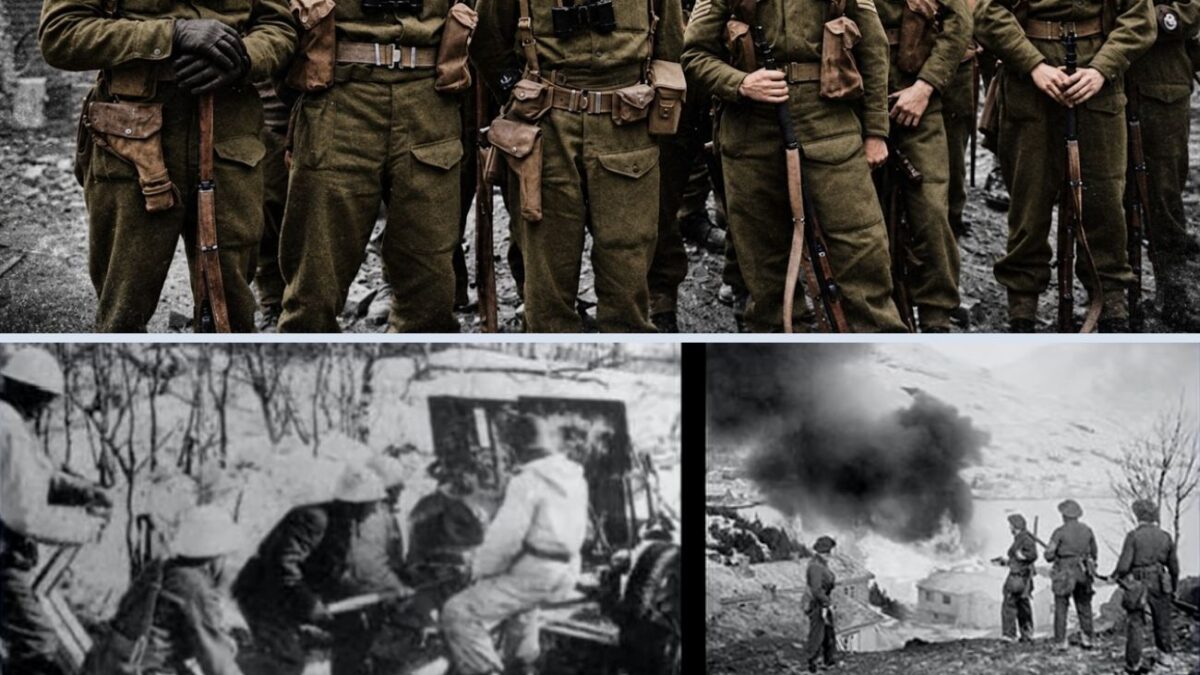
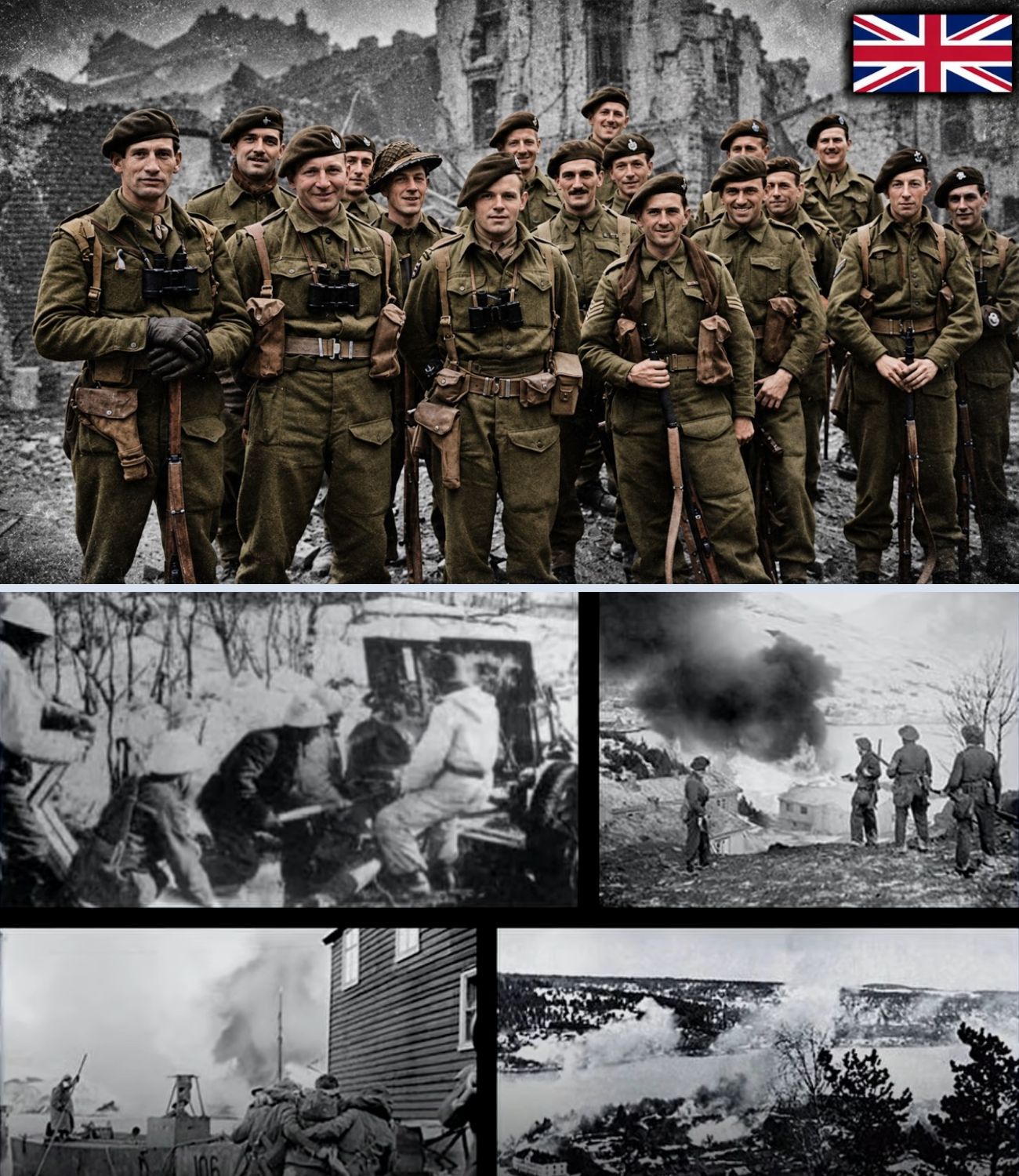
“Members of the so-called commandos behave in a particularly brutal and underhanded manner.”
That line was typed in October 1942 on a document marked secret produced in 12 copies. Field Marshal Wilhelm Keitel put his signature at the bottom on the 18th. The third paragraph of that document was much shorter.
“From now on all men operating against German troops in so-called commando raids in Europe or in Africa are to be annihilated to the last man.”
Not captured, not interrogated, annihilated. And there was a clause underneath it in case any officer misunderstood.
“Even if these men make obvious their intention of surrendering, no pardon is on any account to be given.”
That was not a burst of temper. It was a filed instruction in the dry register of a staff office and it carries a meaning its authors did not intend.
An army in control of a situation does not put orders like that on paper. It processes prisoners. It writes reports. It moves on. So hold that question for the next half hour because everything here turns on it. Why did the most professional military establishment in Europe need a written order signed at the highest level and distributed under seal to deal with a force that at its peak numbered a few thousand volunteers? The answer is not in British records.
It is in German ones. In war diaries, in interrogation notes, in the testimony German officers gave later under oath, in one recommendation made by a German naval officer that had no business existing at all. Because before the killing order came the reports, two years of them, from Norway, from the Channel Islands, from the Atlantic coast of France.
And what runs through them is not hatred. It is the sound of professional soldiers describing something they cannot categorize. Seven things kept coming back. Seven observations from men whose job was to read an enemy correctly and who kept finding that the usual readings did not apply.
None of them is the thing you would expect. A short pause before we go back to 1940. Accounts like this one survive only when somebody bothers to pass them on. Now, the beginning.
June 1940. France has fallen. The British Army has come off the beaches at Dunkirk without most of its equipment, and there is no realistic prospect of returning to the continent for years. Out of that comes an idea that is not really a military idea at all. Small forces, sea landings at night, destroy something specific, then leave.
The first men are volunteers, drawn out of regiments that already exist across Britain. Infantrymen, sappers, gunners, men who put their names down without being told what the job is, because nobody is allowed to tell them. And here is the first thing that made no sense to a German officer reading about it later.
These men had no barracks. A volunteer accepted for commando service was handed a ration card and a subsistence allowance, and told to find somewhere to live. 6 shillings and 8 pence a day, according to most veterans who recorded the figure, though the sum varies slightly between accounts. He found a room in a fishing village or a Highland town. He fed himself.
He answered to nobody between parades. The only requirement was that he be in the right place at the right minute, ready. Consider what that means inside a system built on garrisons, roll calls, and standing orders. There is no compound, no cookhouse queue, no sergeant to check the bed spaces at night. The entire structure rests on the assumption that a man who wants to be there will be there.
German staff work did not have a column for that. An army is a structure that holds men in place. This one dissolved every evening and reassembled every morning, and it worked. The second thing was the training, and the training killed people. Achnacarry, in the Scottish Highlands, a house above a river, requisitioned and turned into a school.
Lieutenant Colonel Charles Vaughan ran it. Arriving candidates came off the train at Spean Bridge and marched the 7 miles to the gate carrying everything they owned. Live ammunition was used throughout, not blanks, not simulation. Live rounds fired over and around men crawling through the wet ground because the purpose was to remove the shock of being shot at before the shooting mattered.
Some of them died there before they had ever seen a German. The exact number is not recorded in one clean figure and the records that exist do not agree, but the graves are real and the place has never pretended otherwise. Those who could not meet the standard were not punished. They were sent back to their old regiment without ceremony on the next train.
Failure carried no disgrace and no second chance. Between 1946 more than 25,000 men passed through that valley.
A third observation and this one appears in German descriptions almost as an accusation. They fought within arms reach on purpose and they carried a tool made for it, a slim double-edged blade 7 in tapering to a point built for thrusting rather than cutting.
Designed by two former officers of the Shanghai Municipal Police, William Fairbairn and Eric Sykes, who had spent years in a city where violence happened at conversational distance. Wilkinson Sword began producing it in early 1941. It was not a bayonet. A bayonet is a spike on a rifle and a rifle makes noise. This was the other thing.
Faces blackened, boots chosen for silence, men trained to cross open ground without being heard, to work in the dark, to finish a sentry without waking the man 20 ft away. Read the German phrasing again.
“Brutal and underhanded.”
There is a judgment buried in those two words and it is a judgment about what soldiering is supposed to look like. Ranks, positions, fire and movement, a visible front. Men who arrive out of the water in the dark and are gone before sunrise do not fit that picture. So, the vocabulary shifts. In the 7th of October communique, a fortnight before the killing order, the wording is already set.
“These are troops who do not act like soldiers, but rather like bandits and will be treated as such.”
They were wearing uniform, every one of them. That detail becomes the hinge of this whole story and there is a German admiral who put it in writing. Remember that because it comes back at the end. Fourth, they attacked places they had no intention of keeping. The 27th of December, 1941, Vågsøy on the western coast of Norway, 2 days after Christmas.
Around 570 commandos under Lieutenant Colonel John Durnford-Slater with a light cruiser and four destroyers offshore. The garrison in the town is small, perhaps 240 troops, a tank, around 50 sailors, but there is something in the town the British do not know about, a unit of mountain troops, Gebirgsjäger, back from the Eastern Front and spending their leave there, veterans, men who know how to fight between buildings and how to shoot from windows.
The landing goes in at first light. The fighting runs street by street, house to house. It is slow and it is close and it is expensive and it lasts most of the day. Then, in the early afternoon, around 2:00, the British stop. They do not consolidate. They do not dig in. They do not send for reinforcements. They walk back down to the water and they leave.
Behind them, four factories destroyed, fish oil stocks burned, the kind used in the German war economy, an ammunition store gone, fuel gone, the telephone exchange gone, 10 vessels sunk offshore. The casualty figures do not agree between sources. British accounts list 17 commandos killed with four naval dead.
Others give the round figure of 20 killed, 53 wounded. On the German side, around 120 dead. One Norwegian civilian killed by shrapnel, which the raiders recorded as well. And here is the part that a staff officer cannot process. The town was not the objective. The town was never the objective. Nothing had been taken because taking was not the point.
A German commander is trained to ask what ground the enemy wants. When the enemy wants no ground at all, every assumption behind the defensive plan becomes worthless. You cannot defend everything on a coastline that runs for thousands of miles, which brings the fifth observation, and this one was not noticed at the time. It was noticed in the consequences. They left with people.
98 German prisoners went aboard the ships. That alone was strange enough, but more than 70 Norwegians walked down to the boats with them and asked to come. Not refugees, volunteers going to Britain to join the fight. A handful of local collaborators were taken, too, for questioning. A raider is supposed to subtract. This one added.
And the effect in Berlin was out of all proportion to a single day in a fishing town. The conclusion drawn at the top of the German command was that the British were probing for a full invasion of Norway, with Sweden and Finland behind it. Major warships were repositioned north, including the battleship Tirpitz.
A field marshal was sent to inspect the coastal defenses. 30,000 additional troops were committed to Norway. They stayed. By the summer of 1944, when those divisions were needed in France, the German garrison in Norway stood at something close to 400,000 men, held in place against an invasion that was never going to come.
570 men spent one morning ashore. Do the arithmetic on that exchange rate, then consider that the German staff did the same arithmetic and knew. The sixth thing they found strange has a name, an age, and a grave. The 28th of March, 1942, St. Nazaire, at the mouth of the Loire. The target is the Normandy Dock, the only dry dock on the Atlantic coast large enough to take the Tirpitz.
If it is destroyed, the largest German warships have no repair facility west of Germany. The plan is close to absurd. An old destroyer, HMS Campbeltown, is filled with 4 and 1/2 tons of explosives set in concrete in her bows, fitted with delayed fuses, and driven at the dock gates.
Around her, a line of small wooden motor launches carrying the demolition parties, 612 men by the count most often given. Some records say 611. 346 naval, 265 commandos. Wooden boats full of petrol going up a defended estuary. The German defenses at St. Nazaire are commanded by professionals. Kapitänleutnant Egon Dieckmann has the naval artillery. Kapitänleutnant Carl-Conrad Mecke has the Flak Brigade, guns that can be leveled at the water. Around 5,000 German troops are within reach. The force is challenged, bluffs, and is detected. At 34 minutes past 1:00 in the morning, Campbeltown hits the caisson at full speed and wedges herself into it.
The commandos come off her and go to work. Lieutenant Stuart Chant’s party takes the main pumping house and puts 40 lb of explosive onto the pumping machinery. Chant already carrying shrapnel in his knee, his arm, and his hands. Major Bill Copland’s men destroy the north winding house. Within minutes, both pump houses and the winding gear are wrecked.
That machinery cannot be improvised. Without it, the dock is a hole full of water. But, the withdrawal has already failed. Of the launches assigned to hold the evacuation pier, all but one are sunk or burning before they reach it. The pier becomes a killing ground covered by concrete gun positions. Out on the water, motor launch 306 is trying to get clear, and this is where the name belongs.
Sergeant Thomas Frank Durrant, Royal Engineers, number one commando, 23 years old, born on the 17th of October, 1918. He is behind the bridge on a Lewis gun, standing in the open. There is no armor there and nothing to get behind. He engages the shore positions and the searchlights and takes a bad wound in the arm early and does not leave the gun.
Then a German destroyer, the Jaguar, comes alongside in the dark at 50 to 60 yards. 50 yards. A wooden launch and a warship, he keeps firing. He is hit again. And again, the official wording, written later, is that he was wounded in many places. At the end, he cannot stand unsupported and holds himself upright on the gun mounting and goes on firing at a ship he cannot possibly hurt.
The Jaguar closes, grapples the launch, and takes off the survivors. Now hold Saint Nazaire for a moment because the ship is still sitting in the dock gate. Through the morning, the Germans go over the Campbeltown. They find nothing. Officers and dockyard officials come aboard to look at the wreck of this pointless British gesture.
Lieutenant Commander Stephen Beattie, who drove her in, is under interrogation ashore. A German officer explains to him that the ramming has achieved nothing, that the dock will be repaired within months. At noon, the charges go off. Around 360 Germans are killed that day, among them roughly 40 officers who were aboard or beside the ship. The caisson is destroyed.
The Normandy dock does not return to service until 1948, 3 years after the war ends. The cost is what you would expect. 169 of the raiders killed, 105 naval and 64 commandos. The number taken prisoner is given as 215 in some records and 232 in others, and the difference has never been resolved. 228 came home.
Five walked out through occupied France and Spain to Gibraltar. Five Victoria Crosses were awarded for one night, and one of them exists because of a German officer. About a week after the raid, in a prisoner of war camp at Rennes, the commander of the Jaguar came to find the senior British officer in captivity, Lieutenant Colonel Augustus Newman.
His name was Kapitänleutnant F.K. Paul. He had watched a wounded sergeant fire a light machine gun at his warship from an open deck at point-blank range until the man could no longer stand. He wanted Newman to know what he had seen, and he suggested that the colonel might wish to recommend that soldier for a high decoration.
Newman was a prisoner. He had no way to send anything anywhere. He carried it in his head for 3 years. Durrant’s Victoria Cross was gazetted on the 19th of June, 1945, after the men who could testify came home. It remains the only Victoria Cross awarded to a soldier for an action at sea.
The recommendation began with the officer commanding the ship he was shooting at. That is the sixth strangeness, and it is the one that does the most damage to the official version, because you cannot write bandit in a war diary at 9:00 in the morning and ask for the enemy’s highest decoration at 4:00 in the afternoon. One of the two is a lie, and the German officer who crossed the camp at Rennes knew which.
Which brings the seventh, and the order this account opened with. The night of the 3rd to the 4th of October, 1942, Sark, in the Channel Islands. 12 men under Major Geoffrey Appleyard land to take prisoners for interrogation. They find a party of Germans billeted in an annex by the Dixcart Hotel. A sentry is killed silently by Anders Lassen.
Five sleeping men are taken. Then the practical problem of moving five prisoners over broken ground in the dark with 12 men in a boat waiting. They bind their hands with toggle ropes, 6 ft of line with a wooden peg at one end and an eye at the other, the standard piece of commando equipment used for climbing, for crossing obstacles, for linking men together on a cliff.
Every man carried one. It was the least warlike object in the kit. They also open the prisoners’ trousers, so a man cannot run. In the confusion of the withdrawal, two of the bound prisoners are shot. The German communique that follows says that prisoners were shot while resisting having their hands tied. It lands at the worst possible moment, in the middle of an existing dispute about the shackling of prisoners after Dieppe.
Two weeks later, to the day, Keitel signs the order. Six feet of climbing rope and a document instructing an army to kill men who are trying to surrender. And now the part that the orders authors did not plan for. It did not work cleanly because German officers would not make it work cleanly. 12 copies went out. Alfred Jodl distributed them on the 19th of October.
Under oath at Nuremberg, Jodl testified that he had told Hitler’s adjutant he refused to issue such a thing and that he later put out a directive that captured personnel of this kind should be handled as prisoners of war. He was a defendant and defendants say useful things and the tribunal weighted accordingly. But Rommel is a harder case to explain away.
Commanding in Normandy, he did not pass the order down. Captured Allied raiders in his area were treated as ordinary prisoners and in December 1942, the order was carried out in full at Bordeaux, Operation Frankton. From the 7th to the 12th of December. 13 men, six canvas canoes launched from a submarine, paddling roughly 60 miles up the Gironde at night and hiding by day to put limpet mines on blockade runners in the docks.
Major Herbert Hasler led it. Marine Bill Sparks went with him. Six ships were hit. Accounts differ on how many were sunk outright and how many were only put out of action for a period. Of the 10 men who went into the water, two came back. Hasler and Sparks walked out through France and Spain.
Samuel Wallace and Robert Ewart were captured and shot on the 11th of December 1942 in a sandpit north of Bordeaux. Albert Laver, William Mills, John McKinnon and James Conway were executed as well, most likely in the same place. The exact dates for the four are still not established. They were in uniform when they were taken, and in the German naval war diary, according to the record that survives, Grand Admiral Erich Raeder noted what had been done and called it something new in international law, since the men had been wearing uniforms. That is the
seventh thing. Not the raids, not the knives, this, that a German officer, reading his own side’s paperwork, could see that the arithmetic did not close. The document said bandits. The bodies were wearing uniform. Both statements could not stand. The tribunal at Nuremberg reached the same conclusion and put it in plainer language.
The order was a breach of the laws of war. Officers were convicted for carrying it out. Anton Dostler was executed on the 1st of December, 1945. Nikolaus von Falkenhorst was sentenced to death, had it commuted, and was released in 1953. There is no celebration at the end of any of this. Durrant is buried in France.
He was 23, and he has been dead for more than 80 years, and the medal reached his family after the war it was won in had finished. Newman survived captivity and came home with a Victoria Cross of his own, and a story about a German naval officer he was expected by everybody to hate. Hasler survived and spent his later life at sea, in small boats, mostly out of public view.
Spark survived and worked in London. Kapitänleutnant Paul crossed a prisoner of war camp at Rennes in April 1942 to make sure an enemy sergeant’s conduct was not lost, and then, for the purposes of the historical record, walked out of it. He is not a famous man. He is a rank, an initial and a surname on a document.
He is also the most reliable witness in this entire account, because he had no reason on earth to lie. So, why is none of this in the standard story? Partly because the commandos were small. Vågsøy was one morning. Saint-Nazaire was one night. Frankton was 10 men in canoes. Against the scale of the Eastern Front or the Normandy landings, these are footnotes, and history written at the scale of army groups does not stop for footnotes.
Partly because the raids are difficult to celebrate. Saint Nazaire cost more than a quarter of the force killed, and most of the rest captured. Frankton lost eight men out of 10. That is not a shape anyone knows how to film, and partly because the best evidence was in German hands. In war diaries, in interrogation files, in a secret order that had 12 copies, and was never meant to be read by anybody outside a very small circle.
The people who kept the memory were the survivors, and the families, and eventually the archivists who put the captured German paperwork in order, and found inside it an unintended commendation. Go back to where this started. Members of the so-called commandos behave in a particularly brutal and underhanded manner, to be annihilated to the last man. 12 copies. Secret. Read now.
That is not a description of an enemy. It is a measurement of one. It records, in the enemy’s own hand, that a force of a few thousand volunteers with no barracks, living in rented rooms on six shillings and eight pence a day, had reached the level at which the highest command in Germany could no longer answer them by ordinary military means, and reached instead for something it needed to keep secret, and needed to sign.
That is what the paper says, whatever the words say. An order like that is not written about men you can beat. It is written about men you cannot explain.
You Might Also Enjoy

“We Thought They Would Negotiate”—What Argentine Soldiers Said When The British Attacked Goose Green

“You’ll Never Finish My Ruck March, Limey” — US Sergeant Who Challenged the SAS, Then Fell Out First






