72 Nerve-Wracking Hours in London: HARRY Panics and Seeks Help Amid Pressure From DAVID FOSTER
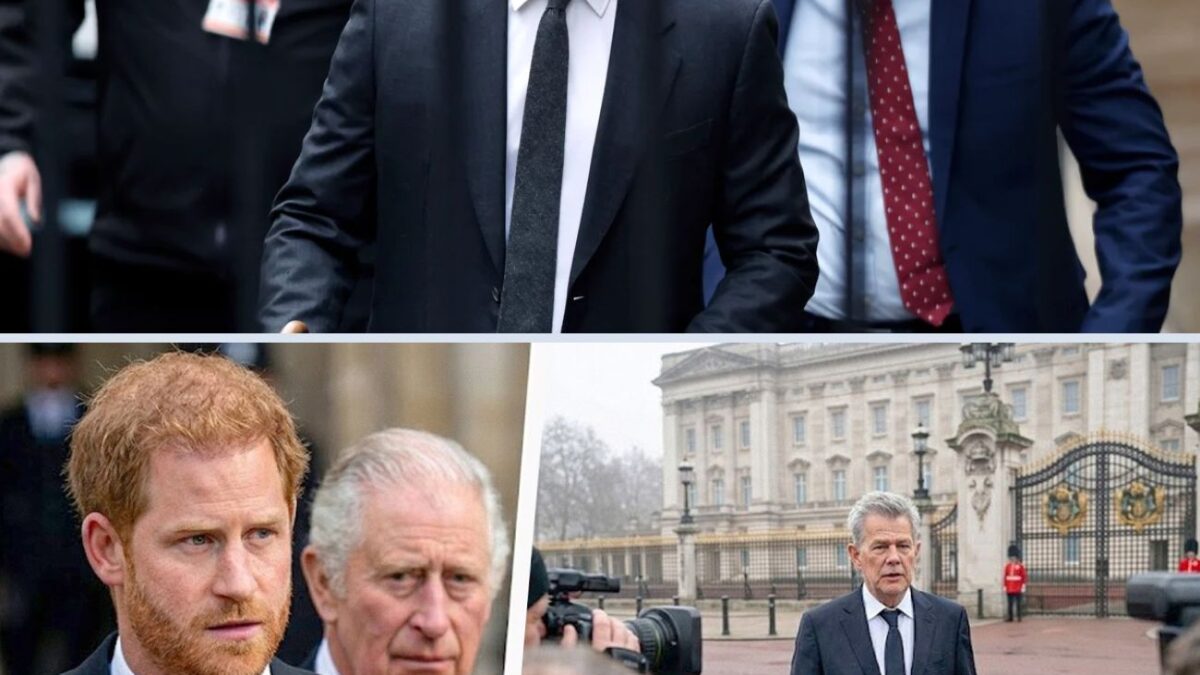
The Iron Trap of Windsor: Inside the 48-Hour Extortion Crisis That Paralyzed the Monarchy
The morning mist still clung stubbornly to the damp tarmac of Farnborough Airport when the chartered Bombardier Global Express touched down without standard diplomatic notification or institutional coordination. Inside Buckingham Palace, the red ministerial boxes had barely been unlocked when an urgent dispatch landed upon the private secretary’s desk. Prince Harry, Meghan Markle, and their two young children had arrived on British soil. The palace machinery, accustomed to months of meticulous diplomatic planning for royal itineraries, had received a scant twenty-four hours of advanced notice. It was not a formal itinerary; it was an ultimatum on wings, calibrated to shock the monarchy into providing emergency armed protection.
Prince Harry had calculated that his physical presence alongside his young family would instantly collapse the resistance of the Home Office and bypass the rigid, unyielding rulings of the Royal Executive Committee for the Protection of Royalty and Public Figures (RAVEC). But the real explosion had been detonated days prior across an encrypted satellite call between Montecito and Gatcombe Park. In that conversation, Harry had addressed his aunt, the Princess Royal, not with the deference expected toward the crown’s hardest-working veteran, but with a swagger bordering on theatrical disdain.
Emboldened by his California circle and the illusion of limitless private resources, Harry had told Princess Anne that the Sussexes no longer required the archaic blessings of the royal household. He boastfully informed her that the palace was an obsolete relic in matters of personal protection. Their international stature, American prestige, and commercial alliances, he insisted, allowed them to privately contract elite armed squads and dictate security protocols to local British constabularies through sheer purchasing power. He claimed that commercial capital and high-priced American private operators could easily subordinate local police chiefs and command public thoroughfares whenever his family chose to travel through the United Kingdom.
Princess Anne, seasoned by decades of constitutional crisis and the survivor of a violent kidnapping attempt in 1974, listened to the Duke’s monologue in frigid silence. When Harry finished outlining his grand architecture of self-funded omnipotence, she delivered a measured, devastating response that reverberated through the royal household. She informed her nephew that he had fundamentally misunderstood the nature of the British state. In Great Britain, she reminded him, the police force serves the public and the law, not the whims of private wealth or exile princes attempting to lease armed constables like private mercenaries. No private citizen, regardless of pedigree or transatlantic publicity, holds the authority to buy the sovereign weapons of the state.
Anne’s concluding remarks were even more chilling for the Duke. She advised him that his provocative arrival would not bend the rules but enforce them with unprecedented severity. She warned him plainly that the Prince of Wales, William, was fully briefed on every manoeuvre, every boast, and every back-channel demand, and told Harry that instead of receiving royal motorcades, he and Meghan should prepare themselves to face the full judicial and financial consequences outlined by William. She added a pointed warning that commercial ventures, corporate endorsements, and vanity productions seeking to exploit their titles on British soil would face complete institutional quarantine.
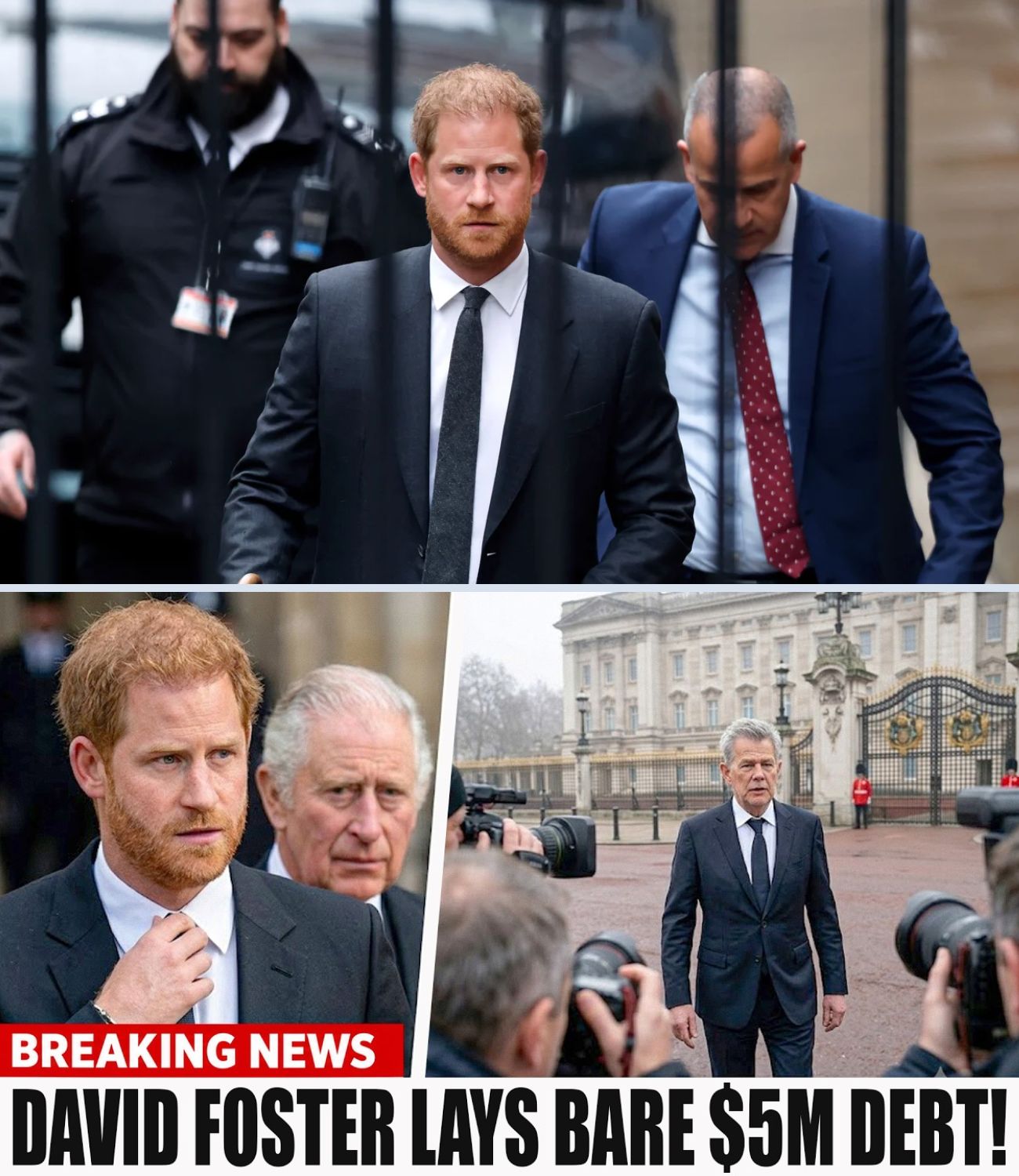
The Disarming of Illusion on the Tarmac
When the Sussexes stepped down into the damp Hampshire air, the reality of their isolation materialized almost immediately. There was no royal reception committee, no sovereign motorcade, and no police outriders clearing motorway intersections. Instead, two unmarked civilian vans hired through a third-party private contractor waited beyond the airfield perimeter. Armed port officers quickly told Harry’s American bodyguards that their concealed carry permits were completely invalid on sovereign British soil and could not be relied upon. They were disarmed, stripped of legal authority, and placed under immediate monitoring by local authorities. The grand illusion that Hollywood riches could purchase sovereign immunity had dissolved within an hour of touchdown.
Harry had wagered his family’s safety on an assumption of royal panic. He did not know William had instructed every department of state to treat the Duke not as a protected royal principal, but as a private traveller bound by the strictest civilian limitations.
Within seventy-two hours of unpacking their luggage inside a heavily fortified private rental in the English countryside, Prince Harry’s psychological fortress around his family began to crumble. The strain came from sudden, agonizing financial realities. The sudden British expedition, conceived in arrogance and executed through secrecy, had transformed into an operational quagmire. In California, private protection was a routine commercial commodity. Wealthy celebrities hired armed former federal agents, leased customized sport utility vehicles, and navigated private residential enclaves without bureaucratic friction.
However, on British soil, where firearms are strictly regulated and state authority cannot be purchased, the Duke of Sussex discovered that private wealth without royal sanction buys only theatre, not genuine security. They were reduced to civilian observers unable to carry sidearms, prohibited from utilizing tactical sirens, and barred from exceeding statutory speed limits on public highways. When local transit routes required planning, British constabularies offered no rolling blockades or specialist motorcycle outriders. The Metropolitan Police made it explicitly clear that private security details operating on British roads were treated like any civilian courier service. If aggressive paparazzi or civilian vehicles trailed the Sussex convoy, the private guards possessed no legal authority to intervene or clear traffic corridors.
For Harry, whose worldview was shaped by the tragic death of his mother, Princess Diana, in Paris, the absence of sovereign escorts triggered acute, paralyzing panic. Every roadside flash, every courier motorcycle idling beside their vehicle, and every curious pedestrian on the country lanes became a perceived mortal threat. His determination to shield Meghan, Archie, and Lilibet from public exposure collided violently with the pile of invoices accumulating on his mahogany desk. To compensate for the lack of state protection, private contractors had to multiply their manpower. Specialized armour-plated passenger vehicles had to be imported from continental transport hubs at exorbitant rates. Round-the-clock perimeter guards were hired through discrete private military companies in London, costing tens of thousands of pounds every single day. Hotel suites required comprehensive electronic sweeping, and decoy routes had to be manned by rotating crews. Expenses were compounding with terrifying velocity, reaching sums that outstripped the liquidity of the Sussexes’ commercial operating accounts.
The Collapsing Transatlantic Lifeline
Harry had anticipated that the transition back to British public visibility would demand substantial funding, but he had catastrophically miscalculated how rapidly capital burns when privacy, luxury, and paranoia are treated as indistinguishable necessities. Montecito production deals had suffered significant delays. Commercial brand ventures remained unlaunched, and legal retainers with London law firms continued to drain their liquid reserves. The Duke of Sussex was facing an immediate cash-flow insolvency that threatened to derail his entire British itinerary.
Trapped between his mounting terror and his shrinking treasury, Harry turned toward the familiar back channel that had rescued him from difficult predicaments before. Across the Atlantic, in the tranquil hills of Los Angeles, lived David Foster, the multi-award-winning Canadian music producer whose immense personal wealth, elite rolodex, and protective paternal instincts had sheltered the Sussexes during their dramatic exit from royalty in late 2019. To Harry, Foster was not merely a wealthy Hollywood contact; he was a surrogate father figure, a magnanimous titan who solved logistical nightmares effortlessly without delivering moralizing lectures about duty or fiscal prudence.
Harry dialed the private California exchange. The first conversation was smooth, diplomatic, and carefully framed. Harry presented the situation not as an admission of financial failure, but as a minor, temporary liquidity shortfall. He explained the unprecedented complexities of British security logistics, highlighted the urgent safeguarding of Archie and Lilibet, and politely requested an immediate bridging advance of $1,500,000. He spoke as a highborn friend speaking to a trusted elder statesman, assuming that mutual affection and social prestige would ensure an instantaneous wire transfer.
However, three thousand miles away, the seasoned music producer listened to the young prince’s polite appeal with an uncharacteristic silence that signalled the start of a difficult reckoning.
The silence that followed Prince Harry’s initial financial petition did not dissuade the Duke; it merely agitated his growing sense of desperation. When David Foster failed to authorize an immediate wire transfer, Harry waited barely forty-eight hours before initiating a second transatlantic call. This time, the conversational tone shifted noticeably from patrician cordiality to urgent insistence. Harry emphasized the ticking clock, explaining that private security contractors in London were demanding full upfront deposits before deploying their armoured fleets. Postponing these operational decisions, Harry argued with heightened agitation, was exposing Meghan and their two infants to unconscionable public peril.
David Foster, a veteran negotiator who had navigated the volatile temperaments of international superstars for more than five decades, recognized the psychological manoeuvre instantly. Throughout his legendary career in the recording industry, Foster had learned to distinguish between genuine emergency appeals from colleagues and the coercive cadence of entitlement. He reminded Harry gently that substantial capital allocations required careful administrative review through his business managers. Foster reiterated that while he cared deeply about the welfare of the children, he was not in a position to commit several million dollars on a casual verbal understanding.
Yet before the week concluded, Harry placed a third call. In this final conversation, any pretense of fraternal modesty dissolved entirely. Harry did not speak as a friend seeking help; he spoke as a principal demanding compliance. He took Foster’s hesitation as a personal insult, implying that withholding immediate financial relief would be like abandoning family at a moment of mortal danger. When Foster ended the call without promising a single dollar, the Canadian producer felt a sharp, deep disillusionment. For years, he had extended generosity with an open hand; now, that benevolence was being claimed as an indisputable sovereign entitlement.
The Duplicity of the Inner Circle and the Gala Snub
Recognizing that Harry’s direct telephone appeals had hit an unexpected barrier, Meghan Markle launched a parallel diplomatic offensive. Rather than call David, she reached out privately to his wife, Katherine McPhee. Their connection was public; they had met years earlier while both were trying to break into stage work and acting in Los Angeles. Meghan calculated that shared Californian roots and female empathy might break the financial deadlock where Harry’s blunt demands had hardened.
Meghan’s opening messages to Catherine read like practiced, affectionate diplomacy. She asked warmly after Catherine’s young son and spoke nostalgically of their shared heritage, while lamenting the suffocating pressures bearing down on Harry. But beneath the warm veneer of familial solidarity, the underlying objective emerged with swift precision. Meghan suggested that David had perhaps misunderstood the modest nature of Harry’s administrative request. She proposed that a quiet, private intervention from Catherine could resolve the tension, ensuring that vulgar disputes over money would never tarnish a sacred, years-long friendship between their households.
Catherine listened politely during their subsequent telephone conversation, but as a second and third message arrived in rapid succession over the following days, her unease deepened into alarm. What had started as an awkward financial negotiation between two men was being deliberately dragged into the sanctuary of her own marriage. Catherine recognized the subtle mechanics of emotional manipulation: the flattering invocations of sisterhood, the dramatic depictions of vulnerability, and the persistent implication that withholding funds was equivalent to inflicting cruelty.
When Catherine sat down beside David in their quiet home that weekend, she placed her smartphone on the table between them and asked her husband to read the accumulating correspondence. David read through the messages carefully, noting how every affectionate phrase seemed to function as an emotional lever designed to overturn his business judgment. Catherine did not issue dramatic ultimatums, nor did she demand an immediate rupture of the friendship. Instead, she asked her husband the single question that would forever shatter the foundation of their relationship with the Sussexes: Did David truly believe Harry would call him with such emotional urgency if David no longer possessed the immense wealth, global influence, and private resources that made him so exceptionally useful?
Foster sat in heavy, prolonged silence, unable to produce a single recent memory of Harry calling merely to ask about his health.
The simmering psychological tension between the two households had already reached a dangerous threshold by the summer of 2026, but the public fracture finally erupted into view in Victoria, British Columbia. On the evening of August the 7th, the David Foster Foundation celebrated its landmark 40th anniversary gala. The milestone gathering was meant to commemorate four decades of philanthropic dedication, raising critical charitable funds for Canadian families with children requiring life-saving organ transplants. For Foster, a native son of Victoria, the evening was the crowning civic achievement of his lifetime, designed to honour vulnerable pediatric patients and medical philanthropists.
Prince Harry and Meghan attended as the marquee VIP guests, arriving amid a blaze of international paparazzi flashes that instantly warped the atmosphere of the evening. Foster had welcomed the Sussexes in the spirit of enduring hospitality, hoping their global prominence might amplify donor contributions. Instead, within hours of their arrival, a five-second clip captured along the media step-and-repeat sparked a transatlantic wildfire across digital platforms. The footage showed Meghan standing beside the VIP arrivals corridor while David moved swiftly past her toward the banquet hall without pausing to offer an embrace or a formal greeting.
In truth, Foster had already spent considerable time greeting the couple privately behind closed doors prior to the reception. But in the ruthless crucible of online commentary, those five seconds were packaged as an undeniable public humiliation. Digital tabloids declared that the legendary music maestro had openly snubbed the Duchess of Sussex on his own red carpet. For Meghan, the viral narrative was utterly devastating; an image cultivated through years of royal and Hollywood positioning was suddenly reduced to a humiliating meme of public exclusion.
Harry reacted with instantaneous, white-hot fury. He reached out to Foster that very night, insisting that David issue an immediate, unequivocal public correction to salvage Meghan’s reputation. Exhausted by the drama and desiring only to protect his foundation from further tabloid contamination, Foster capitulated. He released a public statement through his media representative praising Harry and Meghan, warmly rejecting the snub as malicious fiction and confirming their affectionate friendship.
Harry interpreted Foster’s public compliance as absolute vindication of their bond. But inside the Foster residence, the victory carried a toxic aftertaste. Katherine McPhee observed the entire episode with profound sorrow and gathering resolve. Her husband had spent four decades building a philanthropic legacy, only to have his landmark celebration transformed into a clean-up operation for Meghan’s vanity. Catherine pointed out to David that their connection with the Sussexes had developed an intolerable recurring pattern: whenever an awkward public moment occurred, or whenever massive logistical bills arrived, it was always David who was expected to absorb the collateral damage, soothe the wounded egos, and foot the financial tab.
The Forensic Audit and the Final Reckoning
Disturbed by his wife’s unsparing clarity, Foster took a step he had long resisted. The following morning, he contacted his business managers and chief accounting officers in Century City. He ordered a comprehensive, discrete forensic audit of all financial outlays, third-party vendor guarantees, and corporate credits extended to the Duke and Duchess of Sussex since their departure from Great Britain in late 2019.
What the internal ledger revealed shocked even the seasoned music executive. Over the preceding six years, Foster had personally absorbed hundreds of thousands of dollars. The charges covered private aviation coordination, expedited international estate security, legal vetting, and residential perimeter protection. When the young royal family sought absolute seclusion at the Mille Fleurs estate on Vancouver Island, Foster’s private holding companies underwrote complex security protocols and radar maritime surveillance. Those costs, however, were never reconciled. In California, private executive protection agencies billed Foster’s corporate accounts for tactical escorts and armoured transport under the vague assumption that royal funds would eventually reimburse the disbursements. The money had never arrived. What Harry had dismissed as casual favours between friends represented millions of dollars in unpaid commercial liabilities. Foster stared at the accounting summaries and finally faced the bitter truth: his generosity had not created a sacred brotherhood; it had paid for an ongoing lifestyle of borrowed grandeur.
The detailed financial dossier compiled by David Foster’s business managers turned ambiguous social impressions into hard, indisputable numbers laid out across the mahogany conference table in Century City. Itemized invoices spanning nearly seven years of transatlantic manoeuvring revealed a cumulative total of unrecovered disbursements, corporate credit guarantees, and third-party liabilities tied directly to the Duke and Duchess of Sussex reaching $4,950,000 American, equivalent to nearly four million British pounds.
The ledger was categorized into four distinct epochs of Sussex transit:
The First Tier: Traced back to the winter of 2019 and early 2020 at the secluded Mille Fleurs sanctuary on Vancouver Island, where Foster’s private commercial accounts covered $1,200,000 paying for high-frequency perimeter sweeps, tactical coastal radar installations, and specialized maritime patrols.
The Second Tier: Encompassed $1,800,000 in recurring retainer fees paid to Gavin de Becker Associates and elite private security firms across Southern California to ensure twenty-four-hour armed motorcades.
The Third Tier: Comprised $450,000 absorbed during the recent Victoria Foundation gala for emergency crisis public relations and private VIP protection.
The Fourth Tier: Represented the $1,500,000 Harry was actively demanding for his emergency British security deposit.
Armed with these undeniable figures, David Foster chose not to delegate the confrontation to corporate attorneys or intermediate handlers. When Prince Harry placed his next follow-up call from England, expecting an affirmative confirmation of his emergency bank wire, Foster answered the line in his private study.
Harry opened the dialogue with familiar warmth, assuming the previous days of silence were merely bureaucratic delays. But Foster interrupted the polite conversational pleasantries, cutting straight to the core of the financial dispute. In a calm, measured voice, Foster systematically walked the Duke through the $4,950,000 in uncollected balances. He explained that these substantial disbursements had never been intended as permanent philanthropic endowments or open-ended royal sponsorships; they had been extended as fraternal emergency bridges during moments of acute domestic crisis with the natural expectation that an honorable commercial settlement would eventually follow.
Harry’s initial reaction was defensive shock, quickly turning into vocal outrage. He reminded Foster that their connection had never been governed by commercial contracts or vulgar corporate accounting. Harry argued passionately that the early arrangements in Canada and California had been offered freely as acts of unconditional paternal love. To introduce formal invoices at this precarious juncture, Harry claimed, felt like an ambush—a betrayal of an unspoken familial compact. Harry invoked the cherished description of Foster as his second father, recalling the sanctuary Foster had provided when the royal family in Britain had turned their backs.
Foster listened patiently to the Duke’s emotional appeal, allowing the younger man to exhaust his grievances. When Harry finally ceased speaking, a profound, heavy silence settled over the transatlantic satellite connection. Foster leaned forward over his mahogany desk, took a deep breath, and delivered the devastating question that had been echoing in his mind since Catherine had confronted him:
“When was the last time you called me because you wanted to know how I was, Harry, rather than what I could do for you?”
The silence that followed was suffocating. Across three thousand miles of ocean, Harry’s voice vanished entirely. The Duke began to assemble an answer, stammered a fragmented syllable, and then stopped completely. He searched his memory for a single phone call, a single handwritten note, or a solitary dinner conversation over the preceding three years that had not concluded with a logistical request, an appeal for celebrity introductions, or an urgent plea for financial cover. He found nothing.
Foster did not demand a calendar date; the unbroken silence was an eloquent confession. With quiet, unyielding finality, Foster delivered his verdict. He informed the Duke of Sussex that the financial lifeline was permanently severed. No further funds would be wired to London, no additional corporate guarantees would be authorised, and his office would formally pursue full legal restitution of the $4,950,000 in outstanding liabilities. The paternal illusion had vanished. Only the creditor and the debtor remained.
The Locked Gates of Los Angeles
Unable to accept that their golden transatlantic pipeline had been permanently severed by a telephone conversation, Prince Harry and Meghan Markle took an astonishingly reckless gamble. Within forty-eight hours of Foster’s verbal ultimatum, the couple abandoned their British itinerary temporarily and flew back to California on an urgent mission of private damage control. Believing that their physical charisma and royal standing could dissolve the confrontation, they drove directly to David Foster’s private residential estate in Los Angeles without arranging an appointment or receiving an invitation.
When their black luxury sport utility vehicle pulled up before the imposing wrought-iron security gates, the estate surveillance cameras recorded their unscheduled arrival. Inside the residence, household staff immediately alerted Katherine McPhee. Rather than permitting the visitors to cross the perimeter, Catherine walked down the paved driveway alone to intercept the royal couple at the barrier.
Through the iron grating, Harry appeared visibly agitated, his composure unraveling under the weight of accumulating humiliation. Beside him, Meghan maintained an air of poised, urgent diplomacy, stepping forward with outstretched hands to offer an affectionate greeting. Meghan swiftly launched into a passionate appeal, insisting that the entire dispute was an unfortunate misunderstanding blown out of proportion by administrative intermediaries. She pleaded that years of deep domestic friendship between their families should never be sacrificed over vulgar commercial disagreements.
Harry addressed Catherine directly, his voice raw with desperation. He insisted he was not seeking fresh capital and had withdrawn his request for security advances; he wanted only five minutes alone in the study with David to clear the air, restore mutual trust, and preserve their familial bond.
Catherine listened with quiet, steady composure, refusing to unlatch the heavy iron gate. Her gaze was neither hostile nor vindictive, but it was an impenetrable wall of resolve. She told Harry her husband was inside the house and fully aware of their presence on the driveway, but had made an explicit decision not to come outside or grant an audience.
Catherine answered with a calm, historic line that punctured years of entitlement:
“You have had years, Harry.”
Those four quiet words held every unreturned favour, every unwritten check, and every manipulative demand David Foster had absorbed since 2019. Catherine reminded the prince that affection could never be used as a moral weapon to demand perpetual subservience. She told him gently that there was no misunderstanding left to negotiate; David had spoken his truth, established his boundaries, and closed his ledger.
Without dramatic gestures, Catherine turned around and walked back toward the house. The iron gates remained locked, leaving the Duke and Duchess of Sussex stranded on the asphalt road, staring at the shuttered windows of a sanctuary they would never enter again.
The Sovereign Veto: William Slams the Palace Vaults
Humiliated on the driveway in Los Angeles and facing an imminent corporate lawsuit from David Foster’s legal team, Prince Harry executed a desperate, dangerous pivot back toward London. His private credit was shattered, and commercial vendors demanded immediate liquidation of accounts. The Duke of Sussex attempted to transform his private insolvency into a constitutional bargaining chip. Harry routed back-channel communications directly to King Charles’s private secretaries, proposing an astonishing quid pro quo that seasoned palace courtiers found stunning.
Harry’s proposition was audacious in its cynicism. He offered to formally reactivate the dormant clauses of the 2020 Sandringham Summit agreement, proposing a temporary return to royal duties alongside a calibrated cessation of transatlantic media attacks. But this offer of fraternal reconciliation came tethered to an exorbitant financial ransom: King Charles and the Crown Estate were required to assume full liability for Harry’s outstanding private debts, specifically liquidating the $4,950,000 demanded by David Foster. Furthermore, the Sovereign Grant was expected to permanently underwrite twenty-four-hour armed protection for the Sussex household whenever they stepped onto British soil.
Harry believed he had crafted a masterstroke of emotional leverage, wagering that an aging monarch confronting personal health battles would readily surrender funds to secure family peace. But the Duke had fundamentally underestimated the shifting balance of power within the House of Windsor.
Before King Charles could even draft a response, Prince William intervened with cold, surgical authority. As the Prince of Wales, custodian of the vast Duchy of Cornwall revenues, and future monarch, William moved swiftly to neutralize his brother’s manoeuvre. In a private summit held at Windsor, William confronted the king with unyielding constitutional logic: to use royal revenues or public funds to bail out an exile prince’s Hollywood debt would permanently corrupt the moral standing of the British monarchy.
William made his position unequivocally clear to senior royal advisers. Under no circumstances would sovereign assets be diverted to appease private creditors in California or compensate for reckless American contracts. William viewed Harry’s offer not as an olive branch, but as financial extortion masquerading as filial devotion. He reminded his father that the British public was enduring severe domestic economic pressures; for the crown to discreetly extinguish a multi-million-pound vanity debt incurred through celebrity indulgence would ignite a catastrophic constitutional scandal.
With the unbending backing of Princess Anne, William took total operational command of the Sussex portfolio. He ordered the King’s private office to reject every facet of Harry’s proposal without qualification or diplomatic ambiguity. There would be no secret bailouts, no partial royal restorations, and no state-funded armed details. William closed the royal vault firmly, leaving his brother stranded in the cold light of fiscal reality, where unpaid debts cannot be erased by royal blood alone.
The Institutional Blockade and Total Erasure
With Prince Harry’s back-channel extortion dismantled, Prince William and the Princess Royal unleashed a coordinated institutional counter-offensive that transformed palace resistance into an enduring economic blockade. Drawing upon the rigorous constitutional precedents that have governed rogue members of the dynasty across centuries, the crown systematically shut down every avenue through which the Duke and Duchess of Sussex sought to monetize their royal associations on British territory.
At the core of William’s strategy lay the unbending legal architecture of the Titles Deprivation Act of 1917, updated through modern parliamentary mechanisms designed to penalize royals who breach sovereign trust while resident abroad. William coordinated closely with the Lord Chancellor and the Cabinet Office to ensure that Harry’s formal inclusion among the counsellors of state remained an entirely dead letter. By cementing statutory amendments that require working royal residency for any constitutional deputy, the palace permanently stripped the Duke of any legal capacity to exercise state powers or influence royal governance during the monarch’s absence.
Simultaneously, Princess Anne directed the Crown Estate and Royal Patent Offices to institute an impenetrable commercial quarantine. When Harry and Meghan departed royal duties during the Sandringham negotiations of 2020, they had solemnly agreed never to exploit their royal styles for commercial profit. Yet their subsequent transatlantic deals with streaming conglomerates and speculative lifestyle brands continually skirted that prohibition. William and Anne moved decisively to ensure that the United Kingdom was declared an absolute commercial dead zone for the Sussex brand.
Under Anne’s personal oversight, royal warrant holders, elite private banking houses, and major British entertainment distributors were discreetly advised that commercial collaboration with the Sussexes would result in the immediate revocation of royal patronage and corporate exclusion from sovereign ceremonies. Inquiries regarding potential British book promotions, speaking engagements, and boutique luxury launches orchestrated by Meghan’s representatives were met with unyielding, coordinated corporate rejection. The British corporate ecosystem, long sensitive to royal displeasure, closed its doors with unified discipline.
Furthermore, William instructed the Treasury of the Duchy of Cornwall to establish rigid legal monitoring over any British accounts associated with the Sussexes’ charitable trusts. The palace served formal notice that any unauthorized commercial exploitation of their royal coat of arms or territorial dukedom would be met with swift intellectual property litigation before the High Court of Justice in London.
Harry had arrived in England believing his royal status made him an untouchable global player. He thought he could dictate terms to state institutions and force private patrons to finance his lifestyle. Instead, he discovered that the ancient British monarchy wielded by William and Anne held devastating legal and economic power. The Sussexes were not merely denied armed protection; they were systematically stripped of the commercial leverage required to survive as independent global figures, leaving their financial foundation exposed to the elements.
The Inescapable Reckoning
As autumn shadows lengthened across the Berkshire countryside, Prince Harry and Meghan Markle found themselves caught irrevocably between two merciless forces. In London, Prince William’s institutional blockade pressed in relentlessly, while in California, David Foster’s corporate attorneys pursued forensic debt recovery with clinical precision.
The grand idea that Hollywood celebrity, self-pitying media disclosures, and borrowed aristocratic glamour could permanently intimidate a thousand-year-old monarchy and exploit billionaire patrons had collapsed into ruinous ignominy. On the British front, the verdict of the royal family had materialized with terrifying permanence. The twenty-four-hour ambush that began with provocative boasts to Princess Anne ended with total institutional erasure. Buckingham Palace did not issue furious manifestos or trade public insults; instead, it imposed absolute silence. William and Anne demonstrated that the crown does not negotiate with prodigal sons making public demands. Armed state escorts were permanently denied, private mercenary details were legally neutralized, and every speculative commercial contract eyed by the Sussexes on British soil was quarantined out of existence.
Across the Atlantic Ocean, the consequences were equally catastrophic. The $4,950,000 in uncollected advances and security retainers remained an inescapable legal reality. The iron gate Katherine McPhee had held closed against the prince’s desperate pleas stood as a permanent architectural barrier—marking the boundary where paternal indulgence ended and cold, unyielding litigation began.
David Foster, whose personal wealth and elite rolodex had cushioned the couple’s flight from Great Britain in late 2019, had formally withdrawn his protective mantle. The man Harry once celebrated as his second father now stood as an unyielding creditor demanding full commercial restitution.
Trapped in an escalating cash-flow crisis, with Montecito operational accounts hemorrhaging funds and elite transatlantic networks turning their backs, the Duke of Sussex was confronted with the raw, naked truth of his position. The royal titles he wielded as commercial cudgels possessed no sovereign authority when separated from genuine duty, and the elite friendships he traded upon dissolved the moment they were treated as infinite financial entitlements.
Standing outside the locked gates of British royalty and California wealth, Harry was left with the two questions he could never answer: David Foster’s devastating inquiry demanding to know when he had last called out of pure affection, and Katherine McPhee’s four chilling words reminding him that he had already been granted years of unmerited grace.
The telephone remained utterly silent. The palace vaults were bolted shut. The Californian estates were closed to unscheduled visitors. The era of royal exemption had ended forever. In their wake remained only the bitter, inescapable reckoning of self-inflicted exile, where a broken trust cannot be bought back and unearned privilege finally meets its boundary.
You Might Also Enjoy

“We Thought They Would Negotiate”—What Argentine Soldiers Said When The British Attacked Goose Green

“You’ll Never Finish My Ruck March, Limey” — US Sergeant Who Challenged the SAS, Then Fell Out First






