A US Major Gave an SAS Patrol Until Sunrise. They Radioed In Before His Shift Ended.
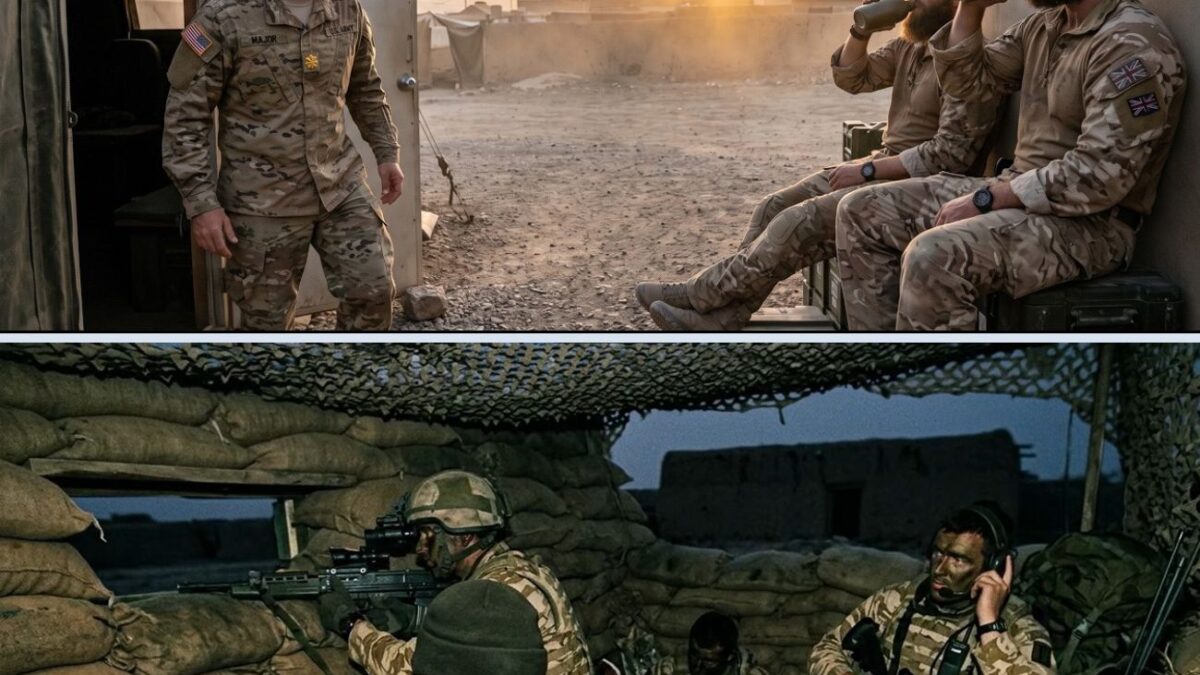
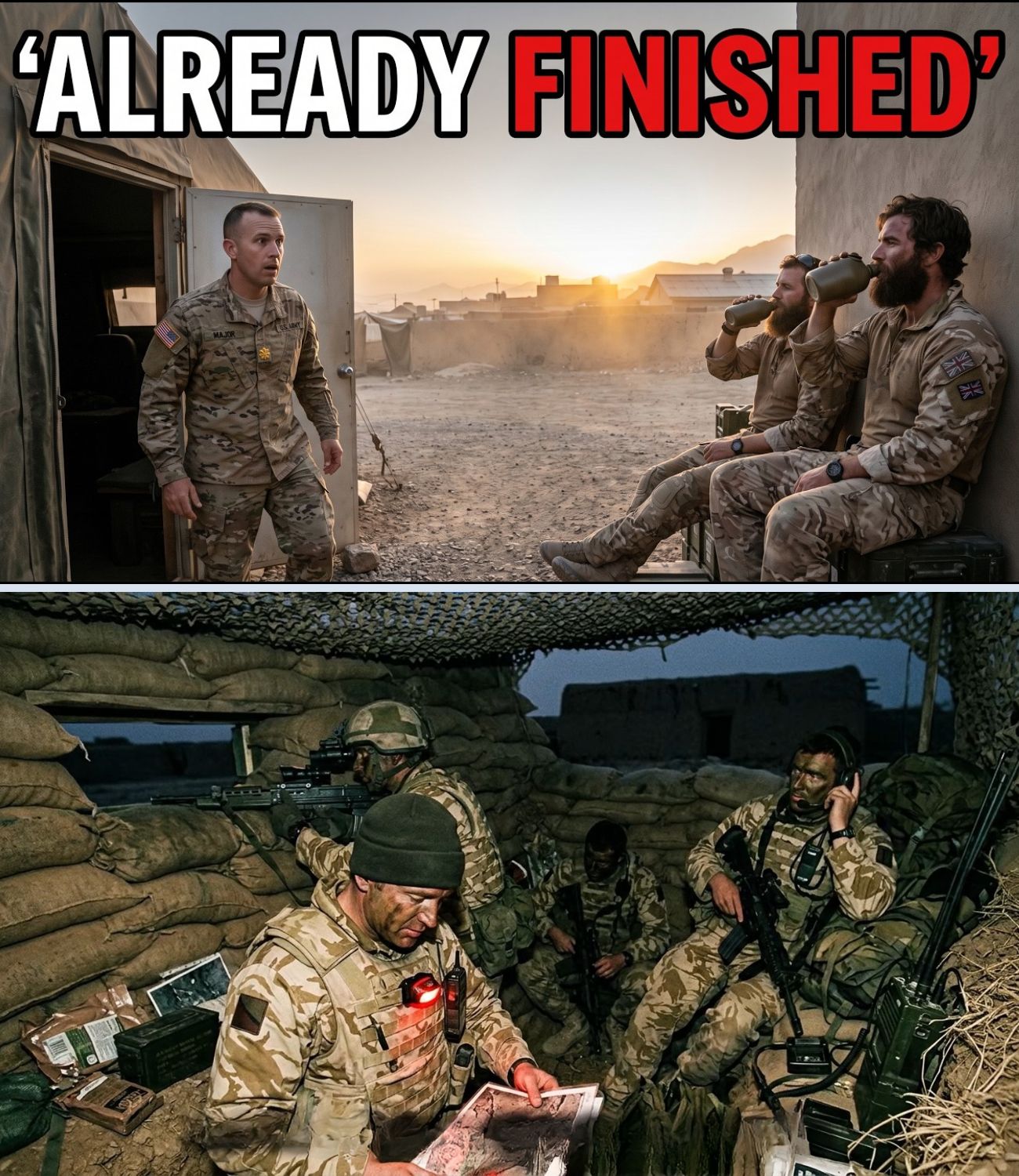
Sangin District, Helmand Province, the 3rd of July, 2007. Four men lie flat along a dry irrigation ditch, 600 m from a compound wall. Dust settling into the folds of their sleeves, a PRC-152 radio wrapped in a sand-colored cloth beside the patrol commander’s elbow. Its antenna taped low to avoid silhouette.
A canal bridge behind them has been assessed twice as unusable for vehicle recovery. In a joint operations center, 11 km south, lit only by the pale glow of a bank of monitors, a US major leans over a radio log and tells the duty officer plainly they have until sunrise. After that, this patrol goes down as missing and the next shift makes its own decisions about what happens to that compound. That’s just one story like it.
The major’s name, for the purposes of this account, was Major Wendell Harker, running the night shift of a coalition joint operations center supporting operations across northern Helmand that summer, a season in which Sangin District had already earned, among the units rotating through it, a reputation as one of the most heavily contested stretches of ground in the province.
Harker had been in post for 4 months by early July, long enough to have absorbed the particular arithmetic of a night shift commander. Every hour a patrol stayed unaccounted for past its scheduled report time was an hour in which the entire coalition effort in that sector effectively idle, waiting on one radio call that might never come while a dozen other decisions, air taskings, resupply convoys, and casualty evacuation slots sat backed up behind it, each one waiting on a single overdue patrol he could not see and could only trust.
The four-man patrol under his loose oversight that night belonged to a British special forces squadron working reconnaissance and targeting support along the Helmand River green zone, tasked with confirming activity at a compound roughly a kilometer north of the district center suspected of storing weapons and serving as a staging point for fighters moving between Sangin and the outlying villages further up the valley.
Their patrol commander, a sergeant the others called Priest, had briefed the mission the previous afternoon on the assumption of a 6-hour window insert before last light, observe through the night, extract before the heat and the morning foot traffic made movement back to the pickup point too exposed to risk.
It was, on paper, a straightforward tasking, the kind the squadron had run dozens of times that tour. Very little about it stayed straightforward once the patrol was actually on the ground. The first problem arrived within 90 minutes of insertion when the quad bike carrying the patrol’s spare radio batteries and a portion of their water load struck a drainage culvert hidden beneath loose soil on the approach track, snapping a rear axle mount and leaving the vehicle undrivable roughly 400 m short of the planned hide position.
Priest made the call to abandon the bike where it lay rather than risk the noise and time of attempting a field repair that close to the target, a decision reached in under a minute with no time for debate and redistributing its load across four already heavily burdened men. It meant less water, less redundancy on communications equipment, and a 40-m carry across open ground that the original plan had specifically been built to avoid.
The route itself had already narrowed the patrol’s options considerably before the quad bike ever failed. The planned approach ran along a single elevated track between two irrigation channels, a route chosen specifically because the alternative, a longer loop through a cluster of compounds to the west, ran through ground the squadron’s own recent reporting suggested carried a higher concentration of pressure plate devices than anywhere else in that stretch of the green zone.
Priest had accepted the narrower, more exposed track as the lesser of two genuine risks, precisely because it offered no cover for a follower to use against them, either. A calculation that looked sound on the planning table and considerably less comfortable once the patrol was 400 m into an unplanned carry across open ground with a dead quad bike behind them and no second route available if the first one turned out to be watched.
Harker learned of the vehicle loss within the hour, relayed through the patrol’s scheduled check-in, and it was this single piece of information, more than anything else that night, that set his mental clock running. A patrol on foot, carrying more weight than planned, with less water than planned, moving through terrain that had already cost them one piece of equipment before they had even reached their objective, was a patrol whose margin for further complication had just narrowed considerably.
Harker did not say this to Priest directly. He noted it in the clipped shorthand of an operations log and continued watching. The hide position itself, a shallow depression behind a low mud wall, roughly 600 m from the compound, offered reasonable concealment, but almost no natural water source nearby, meaning the patrol’s entire supply for the night was whatever they had carried in on their backs after the quad bike’s loss.
By the second hour of observation, with temperatures that had barely dropped below 30° even after dark, the water question had already become the same blunt arithmetic Foxy’s patrol had faced in Ramadi the year before and Renner’s had faced in Mosul before that. How many hours of stillness, sweat, and silence four men could sustain before the math simply stopped working? Weather, too, played its part before the compound itself became the night’s central concern.
A dust haze that had been building since mid-afternoon thickened noticeably after dark, cutting the patrol’s night optics range by close to a third, and forcing Priest to accept a hide position slightly closer to the compound wall than the original plan called for, in order to keep the target reliably within observable range.
Closer meant more exposed in every sense that mattered to four men with nowhere to run. It also meant, in the driest possible terms, less time to react if anyone inside the compound happened to look in the right direction at the right moment. A trade-off the patrol accepted because a mission that could not actually see its own objective clearly was, for every practical purpose, a mission that had already failed, regardless of how carefully it had been planned beforehand.
At approximately 11:00 that night, the compound showed the first sign that something beyond routine domestic activity was underway. A generator, previously silent, began running, and lights appeared briefly in what the patrol’s pre-mission imagery had identified as a storage outbuilding rather than a living space, a detail that on its own, in a compound with a documented history of running generators for entirely mundane reasons, would not have justified any escalation at all.
Two vehicles arrived within 20 minutes of each other, parking inside the compound’s outer wall rather than in the open yard where previous night’s imagery had shown vehicles typically left. A small deviation from routine that meant little on its own, but that Priest logged carefully all the same, aware that the difference between a genuine pattern and a false alarm often came down to exactly this kind of accumulated small detail rather than any single dramatic observation.
Priest logged the changes and continued watching, resisting the urge which every man on that kind of patrol eventually feels to read too much into a handful of details that might mean nothing at all. It was the second problem arriving shortly after midnight that turned observation into something closer to crisis.
A dog somewhere inside the compound’s outer wall began barking with a persistence that suggested it had caught scent rather than sound. And within minutes a man emerged from the compound’s main structure carrying what the patrol through night optics identified as a rifle rather than a torch walking the perimeter wall in the general direction of the patrol’s hide.
He did not walk directly toward them. He walked close enough and slowly enough that Priest made the call over a radio kept at the lowest possible volume to freeze all movement entirely. An instruction that meant four men lying motionless in a shallow depression in body armor in heat that had not meaningfully dropped since sunset for the better part of 40 minutes while the man completed two full circuits of the compound’s perimeter before eventually turning back inside without once looking directly at the ditch.
There was a further complication running underneath the surveillance itself. One the patrol had absorbed before ever setting foot on the ground. The compound belonged to a family with documented if uneven ties to the district’s own reconstruction effort having supplied labor for a coalition funded canal repair project earlier that spring.
A fact that meant any decision to act against it would need to survive scrutiny from the provincial reconstruction team as well as the purely military chain of command. Priest’s own briefing notes, prepared the previous afternoon, flagged this explicitly. Whatever the patrol observed that night would need to be unambiguous enough to justify overriding a family’s prior cooperation with coalition reconstruction efforts because a mistaken strike against a household with that kind of history carried consequences well beyond the immediate operation, souring relationships with local elders that had taken the better part of a year to build.
It was exactly the kind of political restriction that rarely appears in any account of a night like this one, and that shaped, without ever being spoken aloud during the observation itself, how cautiously Priest weighed every single subsequent piece of evidence before relaying any of it upward.
Harker, monitoring the patrol’s intermittent traffic from the joint operations center, understood exactly what a 40-minute freeze at that hour meant for four men already short on water and already carrying more weight than planned. He did not intervene because there was nothing to intervene with. No reaction force could reach that position inside 40 minutes without itself compromising the patrol further, and Priest’s own judgment, made on the ground with eyes on the actual threat, was self-evidently the only judgment that mattered in that moment.
What Harker did do in the log entry he made once the patrol reported the freeze had ended and the man had gone back inside was begin, for the first time that night, to think seriously about what would happen if the patrol did not make its extraction window. Harker’s own path to that particular hour of that long night had not been a straight one, either.
He had spent the earlier part of his shift, before the patrol’s insertion, managing an entirely unrelated crisis involving a resupply convoy delayed by a suspected device on a route south of the district center, a problem that had consumed nearly 2 hours of his attention and left him running the remainder of the night with less sleep banked and less margin for a second major decision than he would have preferred.
It is worth pausing to note, if only because this kind of documentary account so rarely does, that the officer making the call about a patrol survival that night was himself operating on accumulated fatigue of his own in a joint operations center that never actually closed, staffed by men and women working the same grinding rhythm of shift after shift that the patrols on the ground endured in their own way on considerably less sleep than any of them would have admitted to a superior officer if asked directly.
The answer, in the plain terms of coalition procedure that summer, was not comforting. A patrol reported overdue past a certain threshold triggered an automatic escalation, search and rescue assets placed on alert, a review of last known position data for potential strike options against anything in that vicinity assessed as hostile, and critically, a handover of the entire situation to whichever officer took the following shift.
An officer who would inherit the patrol’s overdue status without Harker’s four months of accumulated judgment about how this particular squadron typically operated, how much margin its patrol commanders typically built into a plan, and how often, in Harker’s own experience that tour, a delayed check-in had turned out to mean nothing more than a patrol being sensibly cautious rather than a patrol in genuine trouble.
Harker’s incoming relief, a Major named Grady Calkins, was due to take the shift at 6:00, roughly the same hour the patrol’s extraction window was scheduled to close. Calkins had arrived in theater only 3 weeks earlier, had not yet worked directly with this particular British squadron or any other British element operating in the province, and had, in a briefing two nights prior that Harker had personally sat through expressed a clear preference for aggressive early escalation on any overdue patrol.
A preference Harker privately thought was reasonable in the abstract and potentially disastrous in the specific case of a squadron that in his own experience tended to run its extraction windows tight by design rather than by accident. It was this specific handover more than any abstract deadline that produced the sentence Harker gave the duty officer and that would later be repeated in slightly different phrasing by everyone who heard it that night:
“They have until sunrise. After that, it’s Calkins’ call, not mine and Calkins doesn’t know these men the way I’ve come to.”
There was underneath that sentence a second and more personal calculation Harker did not share with his staff that night though he acknowledged it later in a conversation with a fellow officer well after the deployment had ended.
Four months earlier in his first week running the night shift, Harker had inherited an overdue patrol situation from a predecessor who had escalated immediately and by the book triggering a strike authorization against a compound that turned out once daylight confirmed it to have no connection whatsoever to the patrol’s actual position.
A mistake that cost nothing in lives but a great deal in trust with a local population for months afterward. Harker had spent much of his tour since then trying to build back precisely the kind of judgment that avoided repeating that mistake learning which squadrons ran tight margins by habit and confidence rather than carelessness which patrol commanders tended to call for help early and which tended to solve their own problems quietly.
And Priest’s patrol in his own private assessment sat firmly in the first category on every count that mattered. It was that accumulated unglamorous experience four months of watching how this particular squadron actually worked rather than any single dramatic moment that led him draw a line at sunrise with something closer to confidence than guesswork.
Priest, for his part, had no way of knowing any of this while lying in the ditch and would not learn the specifics of Harker’s reasoning until well after the deployment. All he knew, relayed secondhand through the Joint Operations Center’s own clipped radio procedure, was a single instruction:
“Extraction window closes at first light. After that, assume the picture changes.”
It was enough. Patrol commanders in that line of work rarely need the reasoning behind an instruction spelled out in full. They need to know the boundary, and Priest had spent enough years working alongside American command elements to understand exactly what the picture changes meant without further explanation.
The compound’s activity resolved itself in the patrol’s assessment into a pattern by roughly 2:00 in the morning. The two vehicles that had arrived were being loaded methodically with crates carried from the outbuilding where the generator and lights had first appeared in a rhythm that matched every previous account the squadron had gathered of how this particular network moved weapons between staging points ahead of an operation.
It was exactly the confirmation the mission had been sent to obtain. It was also immediately a new and more urgent problem because a compound actively loading vehicles for movement was a compound that might disperse its contents and its personnel before any coalition force could act on the observation unless that observation reached someone able to task a response quickly.
Priest’s radio, at this point, delivered the third blow of the night. The patrol’s primary set, already run hard through hours of low-volume traffic during the perimeter freeze, began cutting out intermittently, a fault the patrol’s signaler diagnosed working by feel in the dark, rather than risking a light, as a loose connection in the battery compartment, rather than a failed unit outright.
A distinction that mattered enormously because a loose connection could potentially be fixed in the field, while a failed unit could not. Repairing it meant removing the taped antenna cover and working the battery housing with cold, dust-fouled fingers for what turned out to be nearly 25 minutes, all while the compound below continued loading its vehicles and the clock Harker had set continued running, unseen and unstated, over every minute of that repair.
The signaler working the fault that night, a corporal the others called Tanner, had trained for exactly this kind of repair in conditions far less demanding than a shallow ditch 600 m from an armed compound. And the gap between training and application became, for those 25 minutes, the entire war in miniature.
He worked by touch, unable to risk even a shielded light that close to the target, feeling for the loosened contact inside the battery housing with fingers already stiff from hours of stillness, while Priest and the other two men held their positions and watched the compound wall for any further movement.
It is the kind of moment that never appears in any official record of an operation, a corporal’s cold fingers finding a loose contact in the dark, but it was, in the plainest sense, the hinge on which the entire remainder of the night turned. Without that repair, the compound’s vehicle movement would have gone unreported, and the intercept that followed would never have happened at all.
The radio came back at approximately 2:40, patchy but functional, in time for Priest to relay a description of vehicle loading activity that Harker’s Joint Operations Center used to task additional overhead surveillance, a decision that itself required convincing a duty officer at a higher headquarters over a phone line with its own delays that the asset should be diverted from another sector’s tasking on the strength of a British patrol’s ground observation rather than any independent confirmation.
It was Harker himself who made that call staking a measure of his own credibility on Priest’s report at an hour when a wrong judgment would have cost a scarce and contested surveillance asset for nothing and left him with very little to point to afterward beyond his own confidence in a patrol he had never personally met.
By 4:00 in the morning with roughly 2 hours remaining before Harker’s shift ended and Calkins took over, the patrol faced its final and most dangerous decision of the night. The vehicles inside the compound had finished loading and showed signs of imminent departure, meaning that whatever action was going to be taken on the strength of the patrol’s observation needed to happen within the hour, not at some point during the following day once a formal targeting package worked its way through the usual channels.
Priest requested through the intermittent radio link immediate tasking of a strike or intercept against the departing vehicles, a request that under normal circumstances would have required considerably more verification and sign-off than the compressed timeline allowed for that morning. The quick reaction force itself was not a simple asset to task on short notice.
It belonged to a coalition company operating a separate patrol base to the south tasked primarily to route security along the district center road rather than to rapid interdiction and its commander, a captain who had not been briefed on the compound or the reconstruction sensitivity surrounding it, needed to be brought up to speed in a matter of minutes over a radio link that was itself only intermittently reliable.
Harker walked the captain through the situation in a compressed briefing that skipped every piece of context that would normally accompany an operation of this kind, trusting the captain’s own experience to fill the gaps that time did not allow him to explain. A trust that turned out to be well placed, but that carried its own risk.
A force moving on partial information, tasked to intercept vehicles it had never been shown imagery of, based on a timing estimate relayed second-hand from a patrol it had never worked alongside, in terrain none of its own soldiers had personally reconnoitered that week. Harker made the call to authorize an intercept using that quick reaction force already staged 4 km south, accepting personal responsibility for a decision built almost entirely on one patrol’s uncorroborated ground observation and a partial overhead pass that had confirmed vehicle movement but not conclusively identified cargo.
It was, in the plainest terms, exactly the kind of decision that goes badly for the officer who makes it if the underlying intelligence turns out to be wrong, and Harker made it anyway in the last 90 minutes of his shift because the alternative, waiting for Calkins to arrive and reassess a situation he had no personal history with, meant losing the vehicles entirely.
The intercept conducted on the district center road roughly 3 km from the compound at approximately 5:15 that morning stopped both vehicles without a shot fired. The quick reaction force having positioned itself ahead of the projected route based on Priest’s timing estimate relayed 20 minutes earlier. Both vehicles were found loaded with weapons and components consistent with roadside device construction, wrapped in sacking beneath crates of what appeared at first glance to the captain’s own men to be ordinary agricultural produce, confirming in full everything the patrol’s night of frozen water starved observation had suggested.
Four men were detained at the scene, and the reconstruction sensitivities that had weighed on Priest’s judgment all night resolved themselves cleanly the moment the cargo was confirmed. Whatever cooperation the family had extended to the canal project that spring, it had not extended to what the household was apparently also being used for after dark.
And there would be no awkward accounting owed to the provincial reconstruction team over a mistaken strike against innocent laborers. The scene itself, in the gray thin light just before full dawn, offered a brief, almost mundane coda to a night that had otherwise run on nerve and improvisation. The quick reaction force captain, securing the detainees and the vehicles, reportedly radioed back a single dry observation once the cargo was confirmed:
“Whoever had called this one in from 600 m out in the dark had earned themselves a very good breakfast.”
It was not recorded whether Priest’s patrol, still moving toward their own extraction point at that moment, ever heard the remark, but Harker did. And it was, by his own account afterward, the first moment that night he allowed himself something like relief. Priest’s patrol, meanwhile, still had its own extraction to manage, and the compound’s now alerted occupants, aware within minutes that their vehicles had been stopped, represented a fresh and immediate threat to four men still lying in a hide position 600 m from a wall full of people who would very shortly understand exactly where the coalition’s information had come from.
Priest made the call to move immediately, rather than wait for the scheduled extraction window covering the 400 m back toward the abandoned quad bike and the planned vehicle pickup point in the gray half-light just before dawn.
The single most exposed stretch of movement the patrol had undertaken all night, carried out at a pace dictated entirely by how much daylight was left before their silhouettes became visible against the brightening horizon. That final movement carried its own separate risk that had nothing to do with the compound’s alerted occupants and everything to do with the ground itself.
The elevated track between the two irrigation channels, the same route the patrol had accepted at the outset, specifically because it avoided the higher device concentration further west, still had to be crossed in daylight rather than darkness. And a route judged an acceptable risk under night optics at last light carried a genuinely different calculus entirely once the sun drew close enough to the horizon to throw long shadows across the open track and expose four moving men fully to anyone watching from the compound’s rooftop above.
Priest split the patrol into two pairs moving in short, staggered bounds rather than as a single file. A decision that slowed their overall pace by several minutes, but reduced the chance that a single burst of fire could account for more than two men at once. A trade-off made in seconds on the move without a word of discussion by a man who had spent the entire night making exactly this kind of compressed consequential judgment call one after another until it had become almost automatic.
They reached the pickup point and radioed in at 5:51 that morning, 9 minutes before Harker’s shift formally ended and Major Calkins took the log. It was, in the end, precisely the margin the sentence given hours earlier had allowed for, no more and no less. And it meant that the entire night’s accumulated crisis, the lost quadbike, the water math, the 40-minute freeze, the failing radio, the staked reputation on an unverified intercept order resolved itself inside a window of minutes that belonged by the letter of the schedule entirely to the major who had drawn the line in the first place.
Harker’s log entry for that shift, filed before he handed over to Calkins, recorded the outcome in language stripped of any of the tension that had actually driven it: Patrol extracted, four detained, two vehicles interdicted, no coalition casualties. It was the kind of entry that, read cold by anyone outside that operation center, revealed nothing at all about the 4-month accumulation of judgment that had led one major to draw a line at sunrise rather than an hour earlier, or about the specific knowledge of one squadron’s habits that had made him willing to stake a diverted surveillance asset and an unverified intercept order on a patrol he trusted precisely because he had watched them work that way for 4 months running.
There is a version of that handover conversation worth dwelling on briefly because it captures something true about how institutions actually absorb this kind of near miss. Calkins was not wrong, in the abstract, to say he would have escalated earlier. His instinct reflected a genuinely defensible reading of standard procedure built to protect patrols from commanders who might otherwise gamble with their lives on the strength of personal familiarity rather than hard evidence. Harker’s approach carried its own real risk, the risk that personal trust in a squadron’s habits might one day be wrong about the one night it mattered most, and nobody in that operation center, least of all Harker himself, pretended that risk did not exist.
What made that July morning work was not that one philosophy was simply correct and the other simply mistaken. It was that Harker had spent four months earning, patrol by patrol, night after grinding night, exactly the kind of specific hard-won judgment that let him take a risk.
Calkins, three weeks into theater, had no comparable basis to take yet, and both men understood that difference perfectly well without needing to argue about it at length in front of the duty staff. Major Calkins, arriving to take the shift, read the log, asked a handful of clarifying questions about the intercept’s evidentiary basis, and according to one officer present for the handover, remarked only that he would have escalated the overdue status considerably earlier had the decision been his to make.
Harker’s reported response, kept deliberately mild given that the two men would be sharing an operation center for the remainder of the deployment, was that he understood the instinct entirely, and that he might well have made the same call in Calkins’ position, having not yet spent four months learning exactly how tightly this particular squadron liked to run its numbers.
The detainees taken that morning were processed through standard procedures, and the intelligence recovered from the intercepted vehicles fed into a wider targeting effort across the district over the following weeks, contributing, according to the operations own after-action assessment, to the disruption of at least one additional weapons cache identified through information the detainees provided.
One of the four, during subsequent questioning, reportedly acknowledged that the compound had been used as a transit point for roughly six weeks prior, moving material in small quantities specifically to avoid drawing the kind of sustained attention a larger single shipment would have attracted, and that the household’s cooperation with the earlier canal project had been, in part, a deliberate effort to keep exactly this kind of suspicion at bay.
It was a detail that confirmed, after the fact, the value of the long, patient pattern of observation that had first flagged the compound as worth watching in the first place, rather than any single dramatic piece of evidence. None of this reached any public account at the time, which was, as with so much of this kind of work, entirely ordinary.
The true value of a night like that one was measured only in weapons that never reached the road, rather than in any headline anyone would ever actually read. The wider lesson, however, did travel in the same quiet way these lessons usually do. Within a year, a sanitized account of the handover, stripped of names and specific dates, had found its way into an internal briefing used to prepare incoming Joint Operations Center staff for exactly the kind of judgment call Harker had made that July morning, framed not as a story about a reckless gamble that happened to pay off, but as a case study in the difference between procedural caution, which protects an institution from its own worst outliers, and earned judgment, which sometimes has to override procedure precisely because it has accumulated enough specific, hard-won knowledge to know when the general rule does not fit the particular case in front of it.
Instructors who used the account in later years reportedly called it, informally, the sunrise call, a shorthand that meant something specific to everyone who had ever sat a night shift in an operations center and felt the particular weight of a deadline they alone had decided to set, knowing full well that nobody above them would ever have to explain it if it went wrong.
For Priest’s own men, the 6 weeks remaining in that rotation were shaped less by the drama of the intercept itself, which they had not even witnessed directly, than by the smaller physical facts of that one night that stayed with them afterward. Tanner, the signaler, carried a spare battery contact plate taped inside his kit for the remainder of the tour, a habit the other three men noticed and never questioned, understanding without being told exactly what 25 minutes of cold, blind fumbling in a ditch had cost and what it had very nearly cost them and what it would cost the next patrol that failed to plan for the same small, ordinary failure.
The youngest man on the patrol, a trooper the others called Ashdown, mentioned only once, weeks later and only in passing, that 40 minutes of the perimeter freeze had felt considerably longer than 40 minutes, a small, understated admission that every man who has ever lain motionless while an armed stranger walked toward him will recognize immediately as understatement rather than exaggeration, and that nobody else on the patrol bothered to contradict or needed to.
Priest’s patrol rotated out of Sangin District 6 weeks later at the end of that squadron’s tour, handing their notes on the compound, the district center road, and the specific timing of the man who walked perimeter circuits at midnight to the incoming British element.
They also left behind, informally, a piece of institutional memory that outlasted the specific mission entirely, a joint operations center’s night shift log from that July in which one major’s private calculation about exactly how much runway to give a patrol he trusted became, for a handful of officers who read it afterward, the clearest illustration available of the difference between a deadline set by procedure and a deadline set by earned judgment.
There is a temptation, again, to reduce this account to a simple moral about trusting the man on the ground, and again, that would flatten something more complicated than it deserves. Harker’s judgment that night was not infallible in principle. It happened to be correct on this occasion, built on 4 months of accumulated familiarity with one specific squadron’s habits, and it could just as easily have gone the other way with a different patrol, a different commander, or a slightly less fortunate roll of the same dice.
What made the sunrise deadline meaningful was never the hour itself. It was the four months of quiet, unglamorous observation that let one officer decide correctly exactly how much slack a particular group of men had earned, and the willingness of those same men under pressure that had nothing to do with any clock to make every single minute of that slack count for something.
Harker kept a copy of that log page for years afterward, folded into a personal notebook rather than any official file, a single sheet recording nothing more dramatic than one plain timestamp, 0551, patrol in safe, nine full quiet minutes to spare, and not one of them wasted. He was asked about it once years later at a reunion of officers who had served through that rotation by a junior officer who had only heard a second-hand version of the story and wanted to know what had actually gone through his mind in that final hour before Calkins took the shift.
Harker’s answer, by the junior officer’s own later account, was short, almost dismissive, delivered over a drink rather than in any formal setting, and entirely characteristic of the kind of man who runs a night shift for months without ever once needing anyone else to notice how much weight he is carrying.
He said only that he had simply done the arithmetic he always did, water against time, against trust, the same three figures he weighed every single night of that deployment whether anyone was watching or not. And that on that one particular morning, for that one particular patrol, the numbers had simply come out right.
He did not describe it as luck. He did not describe it as courage either, on his own part or on Priest’s. He described it, in the end the way most of the men in this account would have described almost everything that happened that night as a job done under pressure by people who had learned exactly how much they could ask of themselves and of each other, tested one small failure at a time across an entire night, and who had on that one morning in Sangin asked for exactly enough and not one minute more.
You Might Also Enjoy

“We Thought They Would Negotiate”—What Argentine Soldiers Said When The British Attacked Goose Green

“You’ll Never Finish My Ruck March, Limey” — US Sergeant Who Challenged the SAS, Then Fell Out First






