Al Qaeda Fighters Ordered the British SAS to Surrender. 40 Seconds Later They Were Captured
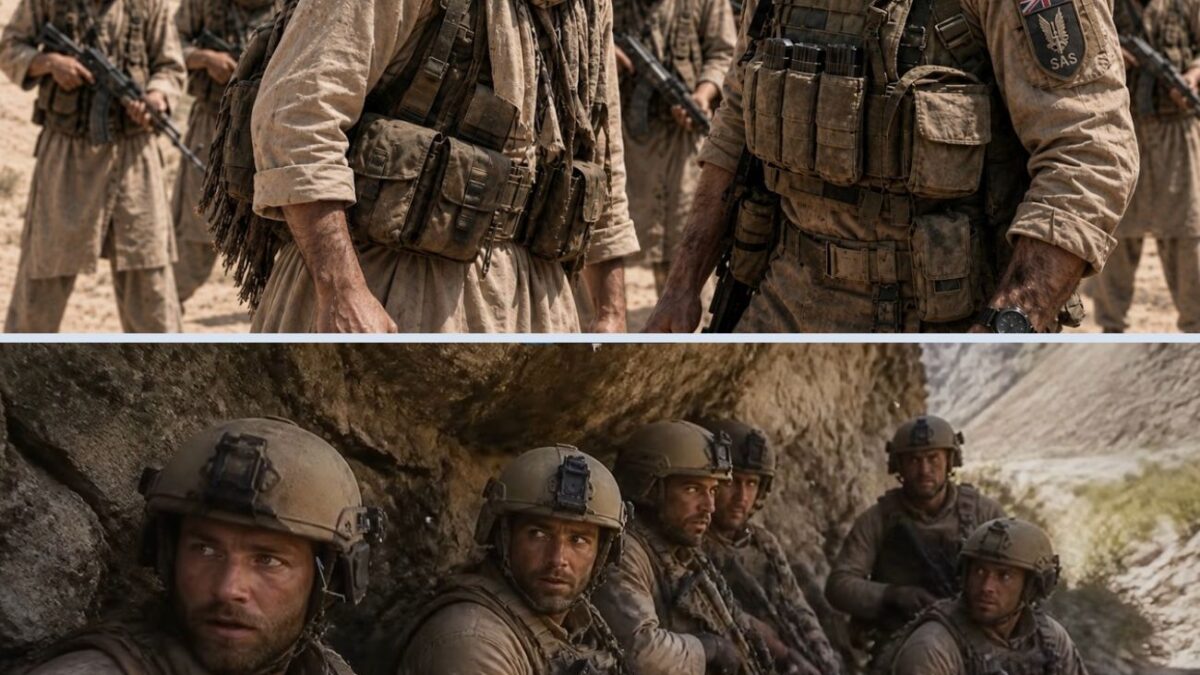
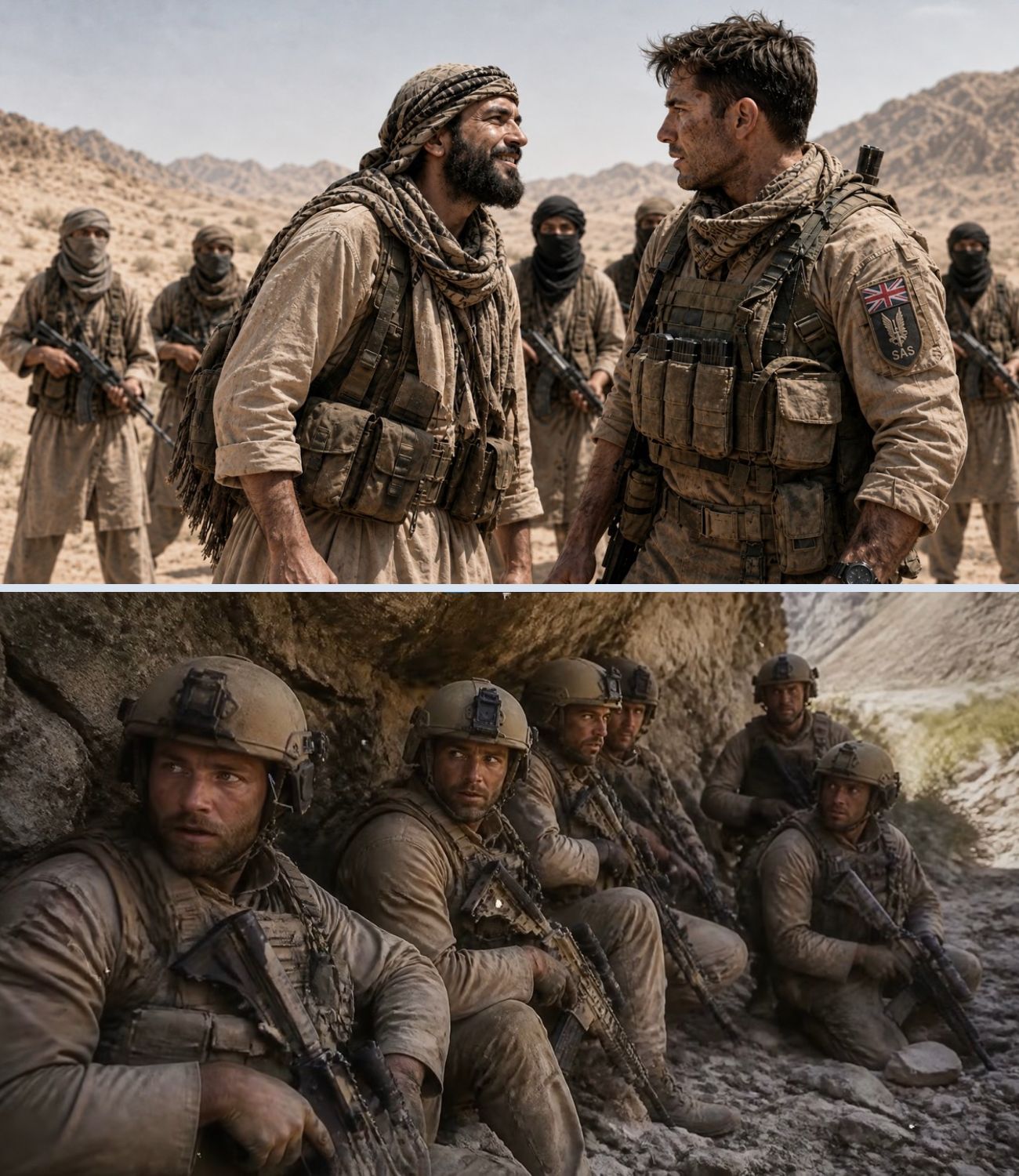
There is a man in a pale tunic standing 40 metres above you with a loud hailer and he is giving you 40 seconds to lay down your weapons. Around him on the ridges of a dry wadi in eastern Afghanistan stand 240 al-Qaeda fighters. Below him in the bed of that Wadi lie six men of the British Special Air Service. That is where you are.
It is a little after 11 in the morning on a day in the spring of 2006 in a district the maps politely refuse to detail and the man with the loud hailer is smiling. He has counted the British patrol. He has counted his own fighters. He has done the arithmetic that any commander does when he has surrounded a hostile force 40 to 1.
And the arithmetic has told him what it always tells him. He is wrong. He does not know he is wrong. He has 38 seconds left to keep being wrong. And then 37 and then 36. Six men 240. 40 seconds on a loud hailer in accented English. The words carrying cleanly down the wadi walls because stone carries sound and the wind was with him.
Lay down your weapons. You will not be harmed. You have 40 seconds.
On the ridge behind him, two dozen rifles were already shouldered. On the ridge opposite, more in the dead ground at the Wadi’s mouth, more still, the trap was closed. The count was running, and in the bed of the Wadi, in the shadow of an overhang no wider than a garage door, a British staff sergeant looked at his signaler and said one word very quietly.
And the signaler keyed a handset and read six digits into it. Six digits. That was the mechanism. That was the thing the man in the pale tunic did not know, could not have known and would understand only in the last two seconds of his 40 when the sky above the wadi did something the sky is not supposed to do. He was not a foolish man.
You should hold on to that because the story does not work if you let go of it. He had fought for most of his adult life in country like this. He had closed traps before. He had taken the high ground on both sides, sealed the back door, and kept his reserve out of sight on the reverse slope. He had done everything a capable commander does.
He had simply counted the wrong thing. They will tell you afterwards that the regiment broke a force 40 times its size in the time it takes to boil a kettle. They will not tell you how. The how is the whole story. The how is why six men cornered in a dry riverbed with no cover worth the name with the enemy on three sides and a loud hailer counting them down walked out of that wadi with every man on his feet and the man in the pale tunic in plastic cuffs beside them 40 seconds. That was the offer.
Minutes later, the fighters who had made the offer were faced down in the dust, disarmed, hands behind their heads, and the commander, who had smiled through his loud hail, was being warped, bound past a British corporal who was humming something under his breath that sounded, if you listened closely, like a Welsh hymn.
This is how six men turned a 40-second ultimatum back on the men who gave it. This is what they did with the 38 seconds they had left. To understand what happened in the Wadi, you have to understand why six men from B squadron were in it at all. And to understand that, you have to understand a compound, a courier and a bowl of dead ground about 40 km from the Pakistan border.
The compound was a walled farmhouse with two outbuildings and a well set at the bottom of a natural depression. The local tribesmen called, in rough translation, the cup. From the air, the cup looked exactly like its name. A shallow dent in the brown skin of the foothills, rimmed by ridges too low to be called mountains and too high to be called anything else.
From the ground, it looked like nothing at all. That was the point. The compound in the cup was a switching station, not electrical, but human. It was a place where couriers arrived on foot from three separate directions, exchanged sealed packets, and memorized messages, ate a meal, slept a few hours, and left again by a fourth.
The chain it served by the assessment that put it on the task board, fed al-Qaeda cells on both sides of the border. The men who used it did not stay. The men who ran it were servants and cousins and boys of 12 who had never held a rifle. By every rule of the modern war, the compound was a target that could not be struck because there was nothing there to strike.
The value of the place was the traffic through it, and the traffic was gone by dawn. So if you wanted the traffic, you had to be in the cup before it arrived and out of the cup before it learned you had been there. You had to observe. You had to identify. You had to pick the right man from among the wrong men.
And you had to do it with your feet on the ground because no drone at that altitude could tell one bearded courier from another. That was a job for a patrol, and it came with a problem. You would have seen at once if you had been in the planning room. The cup had one road in and one path out.
Both of them watched and a helicopter insertion would tell the whole valley you were there before the rotors had stopped turning. So you do what patrols in that country did in that year. You walk in from a long way off over ground no one uses because no one can use it and you approach the cup from the one direction its watchers do not watch.
In this case, that meant a dry riverbed that ran behind the western ridge that had been dry for a decade that narrowed to a slot at its lower end and emptied eventually into the pastures beyond the compound: the Wadi. That was the road in, 2 and a half kilometres long, 3 m deep at its shallowest, and eight at its deepest, walled by rock the color of old bread, floored in dust and shale, and the bleached bones of goats that had died in the last drought.
In its middle third, it bent sharply twice, first left, then right. At the second bend stood a rock that had at some point in a century no one knew the date of split cleanly down its middle. The split rock was as tall as a house. It sat like a broken tooth in the throat of the Wadi, and behind it the ground fell away into a pocket of shadow that the sun did not reach until well into the afternoon.
Along the walls of that pocket, the rock had been undercut by old floods into low overhangs deep enough to lie beneath. Staff Sergeant Elliot Crane had walked the Wadi 3 months earlier on a separate task and had remembered the split rock. That was the kind of man he was. He remembered ground the way other men remembered faces.
When the compound came onto the task board and someone asked how you put eyes on a courier meeting without being seen, Crane had already answered the question in his head. You go in through the wadi. You lie up in the pocket behind the split rock. You watch the compound from an overhang no one on the ridges can see into. You leave the way you came at night and you are gone before anyone knows to look.
It was a good plan. It had one weakness and it was the weakness every plan involving a wadi has. Every officer who had ever looked at a wadi on a map had thought about it and set it aside because the alternative routes were worse. A wadi is a killing ground. It is a trench with no roof.
If your enemy gets above you on both sides while you are in it, you are lying in a bathtub and he is standing over you with a hose pipe. The mitigation in Crane’s plan was that no one would know they were in the bathtub. They would move at night, lie up in shadow, watch for two days, and slip out the way they came. The compound’s watchers watched the road and the path.
They did not watch a riverbed no one had used since the last drought, because there was no reason for anyone to be in it. There was no reason except that on the second morning in the third hour after first light, a goat herd walking the ridge above the wadi—a boy of perhaps 14 with a stick and 11 goats and a mobile phone in the pocket of his shalwar—glanced down into the shadow behind the split rock and saw the barrel of a machine gun. He stopped.
He looked again just long enough to be sure. Then he reached for the phone. He made one call. He said one sentence. Within 20 minutes, the ridges above the Wadi began to fill with men who had not been there 20 minutes earlier. Within 40 minutes, the count on those ridges was over a hundred.
Within an hour, it was over 200. Within 75 minutes, there was a man in a pale tunic standing on the western lip of the Wadi with a loud hailer in his hand and a smile on his face. The bathtub had a hose pipe now, and the six men in the pocket behind the split rock, who had come only to watch a compound, were about to discover that the ground, which had hidden them so well on the way in, could be made to do something else entirely on the way out.
There were six of them in the pocket. You should know their names before the count starts falling, because if you do not know them, the count is only arithmetic, and this is not an arithmetic story. It is a story about six particular men on a particular morning and one of them was going to be hit before lunch. Staff Sergeant Elliot Crane was 39 years old and had spent 11 of those years in the regiment. He was not tall.
He was not loud. He had the kind of face that did not photograph well and the kind of voice that never needed raising. In the map pocket of his smock, he carried a folded photograph of a six-year-old girl in a school jumper holding up a drawing of a stick figure with a rifle and the word dad across the top in careful new reader lettering.
He had not seen her in 11 weeks. He looked at that photograph that morning before the goat herd made his call, folded it back into the map pocket, and did not look at it again. Sergeant Dominic Ashwell, known to the men who had earned the right, was second in command, and the patrol’s sniper. He was left-handed, which mattered because his rifle had been zeroed for a left-handed shooter, and no one else on the patrol could shoot it well.
He was 34, and he drank his tea from a dented steel mug that had taken its dent in Sierra Leone in 2000, and that he had refused to replace ever since. He drank it scalding, no sugar. That morning he had brewed a mug on a hexamine block behind the split rock, drunk it in six swallows, rinsed it with a mouthful of water, and put it back in his bergen.
Ashwell did not speak unless he had something to say. And when he spoke, other men listened. That morning he had spoken twice, once to confirm the arcs of observation, and once to report that the compound held two more men than the brief had promised. Corporal Ree Pedifer carried the radio and the medical kit.
He was Welsh from a valley’s village where the pit had closed before he was born, and the men of his father’s generation had spent their working lives waiting for another one to open. He had joined the army at 16, the parachute regiment at 18, and passed selection in the Brecon Beacons at 24. He was 30 now. When he worked on a casualty, he hummed under his breath old chapel hymns his grandmother had taught him, and he never knew he was doing it until somebody told him.
In the Wadi that morning, he had not yet started humming. He would. Corporal Ivor Mackin was lead scout and demolitions man, a Northumbrian off a farm outside Alnwick, 32 years old, with hands like the leather of an old saddle. He had a habit of never swearing in front of Crane, whom he called boss, and of swearing constantly in front of the enemy, whom he called by names his mother would not have recognized.
Mackin had walked point up the wadi on the way in. He would walk out of it, too, but not the way he had come, and not without the mark that would send him home for 6 months. Lance Corporal Bastian Quill-Bass was carrying the Minimi machine gun. He was 26, the youngest on the patrol, from Surrey, and he had passed selection at the second attempt after failing the first for reasons he never discussed.
At the bottom of his bergen lay a paperback copy of The Meditations of Marcus Aurelius, bought for 50p from a charity shop in Hereford and read on and off for 2 years. He was on page 91. He would not reach page 92 in the Wadi that morning, but that was not the point. The point was that he read it at all and that nobody teased him for it because Quill on the gun was a man other men had already trusted their lives to.
Trooper Terrence Howsey was rear security. He was 31, a Royal Marine before he came to the regiment, and he was missing two front teeth from the top jaw, courtesy of a punch in the final of an inter-service boxing tournament in 1998 that he had gone on to win. He had never had them replaced.
He said the gap made him look meaner and the men who had seen him in a bar in Poole and on a range in Wales agreed. Holsey did not speak much. Holsey watched and at just after 10 that morning he was watching the eastern lip of the Wadi when the first shape appeared on it and it was his voice, low and quite calm, that started everything.
"Boss, we've got company. Two on the top east side and there's more coming."
Picture them now the way the goat herd could not. Six men pressed into the shade behind a broken rock. A patrol commander with a photograph in his pocket. A left-handed sniper with a dented mug. A Welsh signaler who did not know he hummed. A Northumbrian scout who not swear in front of the boss. A Surrey gunner reading a dead Roman emperor. An ex-marine with a gap in his smile. None of them moved when Holsey spoke. Crane simply turned his head very slowly towards the eastern skyline and the others followed his eyes. In the next 90 minutes, one of them would be hit and keep working.
One of them would key a radio and read six digits into it. One of them would stand 4 m from a man in a pale tunic across a strip of smoking dust, and all six of them would walk out. But before any of that, they had to lie there and watch the ridges fill up. Holsey saw two at 10. There were six by a quarter past. There were 19 by half-past, by the time the sun had climbed high enough to touch the floor of the Wadi’s middle bend.
There were more than 60 men on the two ridges above the pocket, and still more arriving in vehicles that stopped short of the skyline and let their passengers out on foot. Crane counted them the way a farmer counts sheep, in blocks of five, pressing the tip of his thumb into the fabric of his sleeve for each block. When he reached 20 marks, he told Ashwell, and Ashwell, glassing the eastern ridge through his scope, told him back.
Between them, they built the count that Pedifer, crouched over the radio with his back to the Wadi wall, passed upwards in a whisper: 100, 120, 140, 180. The voice at the other end in an operations room a long way from any wadi asked him to repeat. Pedifer repeated. The voice went quiet then came back and told him to keep counting. Watch what the man organizing those ridges was doing because it tells you who he was.
He did not rush his fighters to the lip. He did not send a screaming wave down the Wadi walls, which would have cost him dozens of men against a machine gun in a confined space. He placed a blocking force in the dead ground at the Wadi’s mouth first, before a single rifle showed on the skyline, so the back door was shut before the patrol could know it was open.
He held a reserve on the reverse slope of the eastern ridge. He put men on the low ground to the west. This was a commander who had closed traps before and knew that a captured British patrol was worth far more to him alive than dead. By 11:00, the count was 240. Not approximately, not a large force. 240 men counted in blocks of five off the tip of a staff sergeant’s thumb on two ridges, one blocking position at the Wadi’s mouth and along the low ground to the west where a Northumbrian scout had planned an hour earlier to lead them out.
Six against 240. You feel a ratio like that in your teeth. One rifle in the Wadi for every 40 on the rim. Draw a circle around the six men in the pocket and set the 240 along its edge, and each of them would stand a few paces from his neighbour, and each of the six inside would have 40 rifles pointing down at him from every angle at once.
Mackin, watching from behind a shoulder of rock at the pocket’s western edge, said one word under his breath, and it was not a word his mother would have recognized. Crane heard it and did not react. He was looking at the western lip where a figure had just walked up to the skyline and stopped. The figure was not carrying a rifle.
He was carrying a loud hailer—thirty-some or forty-some, hard to tell at that range—with a full dark beard, a light-coloured tunic and trousers, a patterned scarf wound around his head and neck, and a tactical vest strapped over the tunic. His face was dirty from the drive up. He was smiling faintly, the way a man smiles when the hard part is done.
Ashwell glassed him and said without lifting his eye from the scope, "He's the one."
Crane said, "I know."
The man in the pale tunic raised the loud hailer, and his voice rolled down the walls in English that was not native, but was perfectly clear. He introduced himself only as the commander of the men on the ridges.
He said the patrol was surrounded. He said this was not a matter for discussion. He said the British soldiers would lay down their weapons and stand with their hands visible, that no one would be harmed, that they would be treated with dignity, and that the world would know they had been treated with dignity. He said it twice, once slowly, once faster.
Then he said they had 40 seconds, lowered the loud hailer a fraction, and began to count: 40, 39, 38. Crane looked at Pedifer. Pedifer was already on the handset. Crane said one word again very quietly, and it was not meant for the loud hailer or for his own patrol, but for the voice at the other end of the radio. The word was now.
The trap was closed. Six men in a wadi, 240 rifles on the rim, 37 seconds on the clock, and along both ridges, man by man, the fighters were rising to their full height to watch. Because a surrender is the kind of thing men stand up to see. And no commander who has closed a trap at 40 to 1 expects his enemy to do anything except comply.
The mistake was standing up. There are moments in a soldier’s career that get taught later in classrooms in Hereford and at Fort Bragg and in a dozen other places where the men who plan wars try to teach the men who fight them how to survive the moments the plans do not cover. Crane’s decision behind the split rock at 2 minutes past 11 that morning is one of them.
It is not taught by name. The engagement remains officially deniable. And Crane is not the name of the man who made the decision because it has been changed for this telling and because men who make decisions like it prefer their names left out. But the decision is taught as a shape and the shape goes like this.
You are surrounded. Your enemy has closed to a range at which he cannot miss and you cannot break out. He has offered you your lives in exchange for your weapons. And by any ordinary arithmetic, it is a good offer because the alternative is that you die in a hole in the ground a long way from home and your daughter hears about it from an officer standing in the doorway of your quarters. The offer is on a clock.
You have less than a minute. You have in fact 36 seconds, then 35, then 34. You have one other option. You have a radio and filed in the fire support plan for this task. You have a set of pre-registered targets built into the mission before you ever insert it because a careful patrol commander always plans the fire he will call if the ground turns on him.
There are four of them. Three bracket the wadi—one on the western ridge, one on the eastern ridge, one on the low ground to the west—and the fourth, the one you argued about with the fire support officer for 20 minutes at the brief because he did not want to plot it and you would not let it go.
The fourth sits on the wadi itself. On your own position, danger close has a technical meaning in the gunnery world. It describes a distance inside which the rounds are almost as likely to kill you as the enemy. The fourth target sat by any professional measure well inside that distance. You insisted anyway because 3 months earlier you had walked this wadi and seen the pocket behind the split rock and the overhangs along its walls and you had thought if it ever comes to it we can be under the rock when the rounds arrive.
You thought that on a walk that had nothing to do with the compound in the cup. Now it is 2 minutes past 11. The loud hailer is counting and that fourth target is six digits long. You have to say two things to two different sets of men in the space of 4 seconds and both of them have to be right.
Crane said them to Pedifer without looking at him:
"Read Bravo 4. Fire mission. Fire for effect. My authority. Danger close. My location. My location. My location."
Pedifer said, "Danger close."
Pedifer keyed the handset. Six digits went down it. The voice at the other end asked him to confirm. He confirmed. The voice asked him to confirm the caller’s authority.
Pedifer looked at Crane and Crane nodded once. Pedifer confirmed. The voice went silent for a single beat, long enough for a man a long way off to take a breath and then it came back with two words:
"Shot. Over."
The rounds were in the air. Crane turned to the rest of the patrol, still not looking at any of them, still watching the man in the pale tunic on the western lip:
"Get under the rock now, all of you. Face down, hands over ears. Now."
Now they moved. Ashwell—the mug forgotten, making the swearing forgotten—crawled. Quill with the Minimi cradled under his chest. Holsey twisting to check the wadi mouth even as he went. Pedifer, handset still in his fist, sliding on his belly into the deepest part of the overhang, and Crane last, his rifle across his forearms, and the photograph in his map pocket pressed flat against the dust.
On the western lip, the man in the pale tunic saw them go. For a heartbeat, his smile widened, because men scrambling for cover under a loud hailer’s count looked from above like men losing their nerve. It was the most natural reading in the world. It was the reading any competent commander would have made. He raised the loud hailer again and kept counting, a little louder now to press the advantage he believed he had.
Ashwell from under the rock said only, "How long?"
Crane said, "20 seconds."
Ashwell said, "Good."
That was the hinge, not the fire mission, the word. Good. A sergeant lying face down in the dust of an Afghan wadi told his patrol commander that incoming shells on their own heads were good because the alternative was to stand up and hand his rifle to a man with a loud hailer and a smile.
Crane hearing it closed his eyes for a fraction of a second and did not answer because there was nothing to answer above them. The loud hailer was still counting: 22, 21, 20. The rounds were 19 seconds out. Nobody on those ridges knew. Only the six under the rock. Two minutes and 11 seconds past 11.
Nineteen seconds until the first rounds land. 240 men standing on two ridges to watch a surrender. Six men lying face down under a split rock, hands clamped over their ears, mouths open. The open mouths matter. It is something you are taught early if your career is going to involve being close to high explosive and something you never forget once you have needed it.
You open your mouth because the pressure wave from a heavy shell bursting nearby will, if your mouth is shut, do things to your inner ears and the soft tissue of your lungs that you would very much prefer it did not. Open mouth, hands over ears, face down, eyes closed. It is a drill written by men who watched other men ignore it, and it is why all six mouths under the rock were open at two minutes and 22 seconds past 11.
Fifteen seconds on the western ridge, the man in the pale tunic lowered the loud hailer for a moment and said something to the fighter beside him and the fighter laughed. Neither was looking at the pocket behind the split rock because there seemed no need to look.
The count was doing its work. In his experience, surrender was what happened when the count ran out. But on the eastern ridge, three of his fighters had shouldered their rifles and were aiming straight down into the Wadi anyway because men who have lived long enough in that country do not trust any enemy to comply.
And these men had lived long enough. Ten seconds under the rock. Pedifer was still gripping the handset. The voice at the other end was silent now because there was nothing left to say. High above the Wadi, the shells were already falling, and you would not have seen them even if you had known where to look. A heavy artillery round in flight is not something you see.
It is something you hear for the last second or two, and only if you are close to where it will land, and if you are close enough to hear it, you are close enough for it to kill you. Five seconds. Mackin under the rock was praying. He would deny it for the rest of his life. Pedifer was humming very quietly under the hands pressed to his ears the opening bars of a chapel hymn in a language he did not really speak but knew the shape of.
Quill was thinking about the last line he had read in the paperback, the one about the obstacle in the way becoming the way. He was not thinking of it as philosophy. He was thinking of it as a tactical instruction because the obstacle was the loud hailer man’s arithmetic and the way through it was the ground the arithmetic had never accounted for. Two seconds to the sound.
If you have never heard a 155 mm shell in the final instant of its flight, no description will do it justice. It is not the whistle from the films. It is a tearing noise, low first and then rising, that seems to come from every direction at once, a sheet of canvas being ripped across the whole width of the sky.
On the western ridge, the man in the pale tunic heard it. His face changed. He opened his mouth to shout, and in that half-second you could see a lifetime of experience catch up with him all at once, the realisation of what that sound meant and where it was going. He did not have time to finish the word.
Two minutes and 40 seconds past 11. Impact. It was not one round. It was a full fire mission. Four guns, four rounds each. Sixteen shells timed to arrive within 2 seconds of one another, walking across a rectangle 100 m by 40 in the pattern gunners call a ladder. The first four struck the western ridge. The next four struck the low ground to the west.
The next four struck the eastern ridge. The last four struck the high shoulders above the Wadi’s mouth. Sixteen shells. One rectangle. Two seconds under the split rock. The six felt it before they heard it. The ground rose. It did not shake. It rose as if the earth had briefly forgotten which way was down. Dust came off the underside of the overhang in a solid sheet.
The pressure pressed on their chests like a heavy man sitting on each of them at once. Pedifer’s humming stopped, not because he chose to stop, but because the air had been squeezed out of him. Mackin bit through the inside of his own cheek and tasted iron. Quill felt the Minimi lift an inch off the dust and settle back down. Ashwell, deepest under the rock, did not move at all.
Then the noise arrived a fraction behind the pressure because the chest registers force faster than the ear can make sense of sound. It was not 16 separate bangs. It was one continuous roar that lasted by the reckoning of the men who lived through it somewhere between 3 seconds and the rest of their lives.
Two minutes and 43 seconds past 11. The first echo came back off the far hills. The ridges above the Wadi were no longer the shape they had been. The men who had been standing on them were no longer standing. Not all of them had fallen for good. Sixteen shells cannot account for 240 men on ridges of that shape. But the survivors were down, flattened, stunned, their ears ringing, and their weapons scattered in the smoke.
The only ones still upright were those who had stood furthest back from the lip. And those were exactly the ones who had never had a view down into the wadi in the first place. They still did not because now the wadi was full of dust. Six against 240 had become in the space of 2 seconds six against a number no one on either side could yet count.
The count on the ridges had dropped sharply. The count in the Wadi had gone from six to six because Crane had built the mechanism in advance and the mechanism had held, but it was not finished. It had broken the ridges. The Wadi still had two ends and one of them held a blocking force in dead ground, and that blocking force was still very much alive.
Ashwell rolled onto his elbows, put his eye to the scope, and said quite calmly, "Bass! Gun up! Mouth of the Wadi, right of the split rock."
Now Quill moved, and the second phase began. Seven seconds after impact, the dust in the Wadi hung in the air like a curtain that could not decide whether to fall or rise.
Through that curtain at the Wadi’s mouth, 120 m east of the split rock, the fighters of the blocking force were beginning to understand that something had happened above them that they did not yet have words for. There were, by the patrol’s later account, between 25 and 30 of them. They were the part of the trap that shut the back door.
They had not been on the ridges. They had been waiting in dead ground behind a shoulder of rock for the surrender to happen and for the order to move up and take charge of the prisoners. The shells had burst on the heights above and behind them. The blast had rolled over them but not through them.
At that moment they were alive on their feet and confused. Confused was enough. Confused was the window. Quill got the Minimi onto the lip of the pocket and opened fire, and the belt began to run through the gun in the harsh, rhythmic bark a Minimi makes when it is used the way it was designed to be used against a group of men in a confined space at 120 m.
Ashwell, a metre to Quill’s left, settled his rifle into his shoulder and began taking single targets. The men with rocket launchers first, then the men with radios, then any man who looked as though he was about to give an order. The dust was settling, the air was still, and at that range, Ashwell did not waste a round.
On Crane’s order, Mackin moved to work the western flank of the pocket to get eyes on the low ground and see whether the fighters posted there to cut off the retreat were still in the fight. After the shelling, he crawled 10 m out from the overhang along the base of the Wadi wall, reached the shoulder of rock that gave a view over the low ground, and lifted his head above it for a fraction of a second.
A fraction of a second was enough, not for Mackin, but for a fighter 40 m away, half buried in the rubble the shells had brought down, dazed, but still gripping his rifle, who saw the movement, and fired. The round went through the meat of Mackin’s left shoulder, front to back, clipping the top of the shoulder blade on the way out.
He dropped against the wadi wall without a sound, his rifle clattering down beside him. For perhaps 4 seconds he lay on his side, perfectly still. Then he began to swear loudly and inventively, which was how Pedifer, 30 m back under the overhang, knew he was still alive.
Pedifer moved the way a man moves when he has done this before and does not need telling: fast, low. The medical pouch already open in his hand before his boots reached Mackin. The humming had started again. He did not know it had.
"Ivor, Ivor, mate, look at me. Where is it?"
Mackin through clenched teeth: "Shoulder, left. Went through."
Pedifer cutting the smock away with his shears: "Front to back. Front to back. Clean. I think you're going to be all right. You're going to be all right, Ivor. Keep talking to me."
And under the words, the humming—a Welsh hymn Mackin did not know by name, but had heard before from the same throat in a different country, in a different year. He heard it now, closed his eyes, leaned his head back against the rock, and let Pedifer work around them.
The Minimi kept up its steady rhythm, and somewhere to the east a man was shouting orders that stopped abruptly when Ashwell’s rifle spoke. For about 90 seconds, six men were effectively five. Then Mackin, one-armed, reached across his body for his rifle, dragged it into his lap, cleared it, and made it ready with his good hand, and said through the humming and through the pain, "I can still see. Give me a job."
Crane, back on the radio and already calling the second fire mission, heard him. He said over his shoulder, "Ivor, watch the low ground. Anything moves with a weapon, shoot it."
"Boss," he did for the next 11 minutes one-handed. With a field dressing packed under his smock and Pedifer’s tape strapping his left arm to his chest, Mackin held the low ground.
He dropped four men, one of whom had been crouching over a mortar tube and reaching for a bomb. On paper, six against 240 had become six against something like 160 because shells on ridges do what shells on ridges do. In reality, it was closer to five and a half because Mackin could fight but could no longer move. The count in the Wadi was still six.
The count of rifles that could turn and cover a new direction was five. The ratio had shifted both ways at once. The ridges were emptier. The pocket was thinner. And on the western ridge, above the smoke and the dust, among the men who had fallen, and the men beginning to struggle up again, the man in the pale tunic was against all odds still alive.
Ashwell found him first through the scope. The pale tunic was grey with dust, and there was blood on the patterned scarf. But the face beneath it was the same. The loud hailer was gone from his hand. The smile was gone from his face. In its place was the expression of a man who had just understood in the last 30 seconds exactly how his arithmetic had failed him. He was not panicking.
He was looking down into the wadi towards the split rock with the stillness of someone working the problem backwards and arriving too late at the answer.
Ashwell said, "Boss, I have him."
Crane said, "Not yet, Ashwell. We want him alive. We want him walked down off that ridge with his hands on his head, and we want every man still standing up there to see him do it. Not yet."
Ashwell kept the crosshairs on the man in the pale tunic, his trigger finger laid flat along the guard. He did not move. Out on the western flank, Mackin fired twice more, and Pedifer, still humming, reloaded a magazine for him, one round at a time. The clock ran on: four minutes and 12 seconds past 11. Two minutes since impact and the mechanism that the loud hailer man had not understood at two minutes past 11 and was only beginning to grasp now was about to show its second half.
This is where the whole thing pays off. This is where you see what Crane had built in advance and what the loud hailer man had led his fighters into without ever knowing the shape of the ground beneath them. You already know the wadi was the one approach the compound’s watchers ignored. But the very thing that made it perfect for a hidden patrol made it from the moment the goat herd made his call perfect for a gunner.
The ridges above a wadi are a beaten zone artillerymen dream about. High ground on both sides close enough together that a single ladder of shells can drop on both lips at once with a floor deep enough that men below can shelter beneath an overhang while the rounds arrive. Crane had seen all of it three months before. The bathtub was a death trap only if you tried to climb out of it.
The answer was to let the enemy lean over the edge. That is what has happened. The loud hail, the count, the demand for surrender, all of it drew the 240 forward to the lips of the Wadi. All of it put them on the skyline standing. All of it turned them into targets for a fire plan Crane had drawn up before he had ever heard of the cup.
Four minutes and 15 seconds past 11. The second fire mission is in the air. Crane has not called it on the ridges. This time he has called it on the low ground to the west where the survivors of the first mission are trying to regroup and on the reverse slope of the eastern ridge where the reserve is trying to climb forward.
Twelve rounds, six guns, two rounds each. He does not need the ladder now. He needs the reverse slope because that is where the second-in-command has gone. And the second-in-command is the man giving orders while the loud hailer man kneels in the dust of the western ridge. The rounds land at four minutes and 38 seconds past 11. The pressure wave rolls over the wadi a second time.
Under the split rock, the earth rises again. Dust falls. The roar fills everything. When it clears, the reverse slope of the eastern ridge is no longer a place from which anyone can organize an attack. The voice that had been shouting orders there has gone quiet. The reserve that had been climbing is scattered back down the slope, and nobody is calling it forward again. The mechanism has done its work.
In two minutes and 38 seconds, 240 men have become a scattered collection of wounded, dazed survivors spread across two broken ridges with no functioning command, no heavy weapons in working hands and none of the confidence the arithmetic had given them at 11:00. Five minutes past 11. Crane is on the radio again asking for a Chinook with an Apache escort.
The voice tells him the aircraft are 34 minutes out. Crane says 34 minutes is acceptable and puts the handset down.
Ashwell is still on the scope, still on the man in the pale tunic, who now kneels at the top of the western ridge with his hands on his head. He has not put them there because anyone below ordered him to. One of his own fighters, bloodied and grey with dust, has told him to because that fighter has understood that the way this ends now depends entirely on what the men in the Wadi are willing to accept.
Crane says, "Holsey, with me. Quill, hold the gun. Ree, stay on Ivor."
Crane and Holsey climb out of the overhang and up the wadi wall using the fissure in the split rock as a ladder, and they emerge on the western lip 40 seconds after the second mission lands. They walk, not run, across the smoking ground. They pass men who do not raise their weapons because the weapons are no longer within reach or the hands are no longer holding them.
They stop 4 m from the man in the pale tunic. He looks up at Crane. Sweat has cut clean lines through the dirt on his face. His scarf is torn at the shoulder, and there is a shallow cut across one cheekbone. His hands stay on his head and then in the same careful English he had used through the loud hailer he speaks quietly to Crane alone:
"You were under the rock. You called it on yourselves."
It is not a question. It is a professional reaching the only conclusion the evidence allows and saying it aloud to the one man who can confirm it. Crane does not answer. He does not need to. Beside the kneeling man on the ground lies the loud hailer. Its mouthpiece is bent. It still works.
Crane picks it up. He does not raise it to his own mouth. He hands it to Holsey. Holsey, gap-toothed, silent for the past hour, lifts the loud hailer and speaks in Pashto that is not native but is clear enough. He learned the words on a course at the Defence School of Languages and rehearsed them for exactly this kind of moment.
They are not the loud hailer man’s words, though they carry the same meaning: "Lay down your weapons. Stand up with your hands visible. You will not be harmed."
He says it twice. Once slowly, once faster. The same offer, the same loud hail. But now the voice comes from the patrol, and the offer is theirs to give.
And along the ridges one by one, then in tens, then in a wave that moves along the ridge lines like wind across grass, the fighters stand with their hands visible and lay down their weapons. Some look towards their kneeling commander first. He does not tell them to fight. He lowers his eyes, and that is answer enough.
Six minutes and 12 seconds past 11—40 seconds after the loud hail changed hands, four minutes and 11 seconds after Crane said the word now. Al-Qaeda fighters ordered the British SAS to surrender. 40 seconds later, they were captured. Not every one of them. The shells had done what shells do, and many were past the need for zip ties. But every man still standing at six minutes past 11 laid down his rifle, put his hands on his head, and knelt in the dust, because the man in the pale tunic was already kneeling, and the loud hailer was in different hands.
The arithmetic that had looked so clean at 11:00 had been answered by an entirely different equation. Ground, foresight, and one radio call made in time. Six men who had walked into a bathtub had turned it into a killing ground for the men leaning over its edge. The Chinook came in at 11:39, escorted by two Apaches that had been holding at a distance and were at last allowed to be seen.
It landed in the pasture beyond the compound in the cup because the wadi was no place a Chinook could land and the ridges were no place one should. The six walked out of the wadi with the man in the pale tunic and 11 of his senior fighters plastic-cuffed beside them. Mackin walked out under his own power, left arm strapped to his chest, Pedifer’s hand on his good elbow, still swearing mostly at Pedifer, mostly about the humming.
The count came later. It always does. It was done by the men who arrived that afternoon, that evening, and the following morning. And it was done in blocks of five, a thumb pressed against a sleeve, just as Crane had done it at 10. It was done because a count is what closes the file. When the file closed, the count on the ridges was 183 enemy dead and 49 wounded and taken prisoner—232 accounted for.
That left eight short of 240, and no one ever established whether those eight had slipped away down a fold of ground the search parties missed, or whether they had never been there at all, and Crane’s count had run eight high. Asked about it later, Crane said he had counted what he saw, and what he saw was 240.
The count on the British side was six. Six men had walked up the Wadi at 4 in the morning the day before. Six walked out at 11. One of them, Mackin, had a hole through the meat of his shoulder. He would spend 6 months on light duties, return to the regiment that autumn and serve another 8 years, and he would never tell his mother what happened in the Wadi because she was 71 and did not need to know.
183 to 6. Those are the numbers. A patrol of six men ordered to surrender by a force 40 times its size had taken the 40 seconds it was given and handed them straight back. The force had said, "You have 40 seconds." The patrol had answered in effect, "So do you."
The man in the pale tunic was questioned that night and again the next day, and the questioning was careful and correct. He answered little, but on the second day asked what had gone wrong on the ridge. He gave the only answer he would give freely, and it was the answer of a soldier, not a prisoner:
"I counted six men. I should have counted the ground."
He did not say it bitterly. He said it the way a man states a lesson he has paid for and intends to remember. Earlier, as he was walked to the Chinook, he had passed Ashwell, and the two men had looked at each other for perhaps 2 seconds. Ashwell had been drinking from the mug. He had brewed a fresh one on a hexamine block during the walk out because he did not regard a fire mission as a reason to skip a brew.
He looked back over the rim of it, and did not smile and did not speak. After 2 seconds, the man in the pale tunic looked away and was helped up into the belly of the aircraft and was gone.
Pedifer was humming quietly while checking the Minimi. Holsey was watching the wadi mouth still because Holsey watched. Crane had his hand on Mackin’s good shoulder and was talking to him quietly about nothing in particular, which was what Crane did when one of his men was hurt.
The rotors lifted them at 11:44. Six men. The same six men. The photograph in Crane’s map pocket, still folded. The mug still in Ashwell’s hand. The engagement in the Wadi behind the split rock does not appear in any official history in the form you have just heard. The season is right. The ground is right.
The kit, the ranks, and the procedures are right for the year and the unit. The names have been changed because most of these men are still alive and because the men who did this work in that country in that year prefer their names kept off the internet. What has not been changed is the shape. Staff Sergeant Crane, whose name is not Crane, was decorated for the action.
The citation does not name the wadi or give the ratio. It uses a phrase about gallantry in the face of overwhelming odds—the kind of wording chosen when the odds themselves cannot be written down. He served six more years in the regiment, left as a warrant officer class 2, and now runs a small business in the Welsh marches that has nothing to do with soldiering and everything to do with his hands.
His daughter is 15. The photograph sits in a drawer somewhere. He does not look at it more often than he needs to. Ashwell was decorated, too. He kept the mug. He is still serving at the time of writing, and if you are the sort of person who notices what men drink from in service canteens, you might one day see the dent.
Pedifer left the army in 2011 and became a paramedic in South Wales. He still hums. He still does not always know he is doing it. Mackin was back on the patrol roster by November of that year with a scar the size of a small coin on the front of his shoulder and a longer one on the back. He served another 8 years.
He never told his mother. Quill finished the paperback on the flight home. He is a sergeant now. He carries a different book and he will not say what it is. Holsey had his missing teeth replaced in 2014 at his wife’s insistence. He still says the gap made him look meaner. On the balance of the evidence, he was right.
Six men, 240, 40 seconds. If you asked the men who were there which number they remember, it would not be the 240 and it would not be the 183. It would be the six. Six walked in and six walked out, and everything in between was ground and foresight and one radio call made in time.
Somewhere in a classroom where men who plan wars try to teach men who fight them how to survive the moments no plan covers, an instructor draws a wadi on a whiteboard, adds a split rock, and asks the room what they would do with 40 seconds. The name is never taught. The shape is, and the man who best understood that shape was the one who had knelt on the western ridge and said it himself:
"Count the ground, not the men."
You Might Also Enjoy

“We Thought They Would Negotiate”—What Argentine Soldiers Said When The British Attacked Goose Green

“You’ll Never Finish My Ruck March, Limey” — US Sergeant Who Challenged the SAS, Then Fell Out First






