Beyond the Velvet Curtain: The Chilling Blueprint Behind the Sussex Silence and the Vanishing Heirs

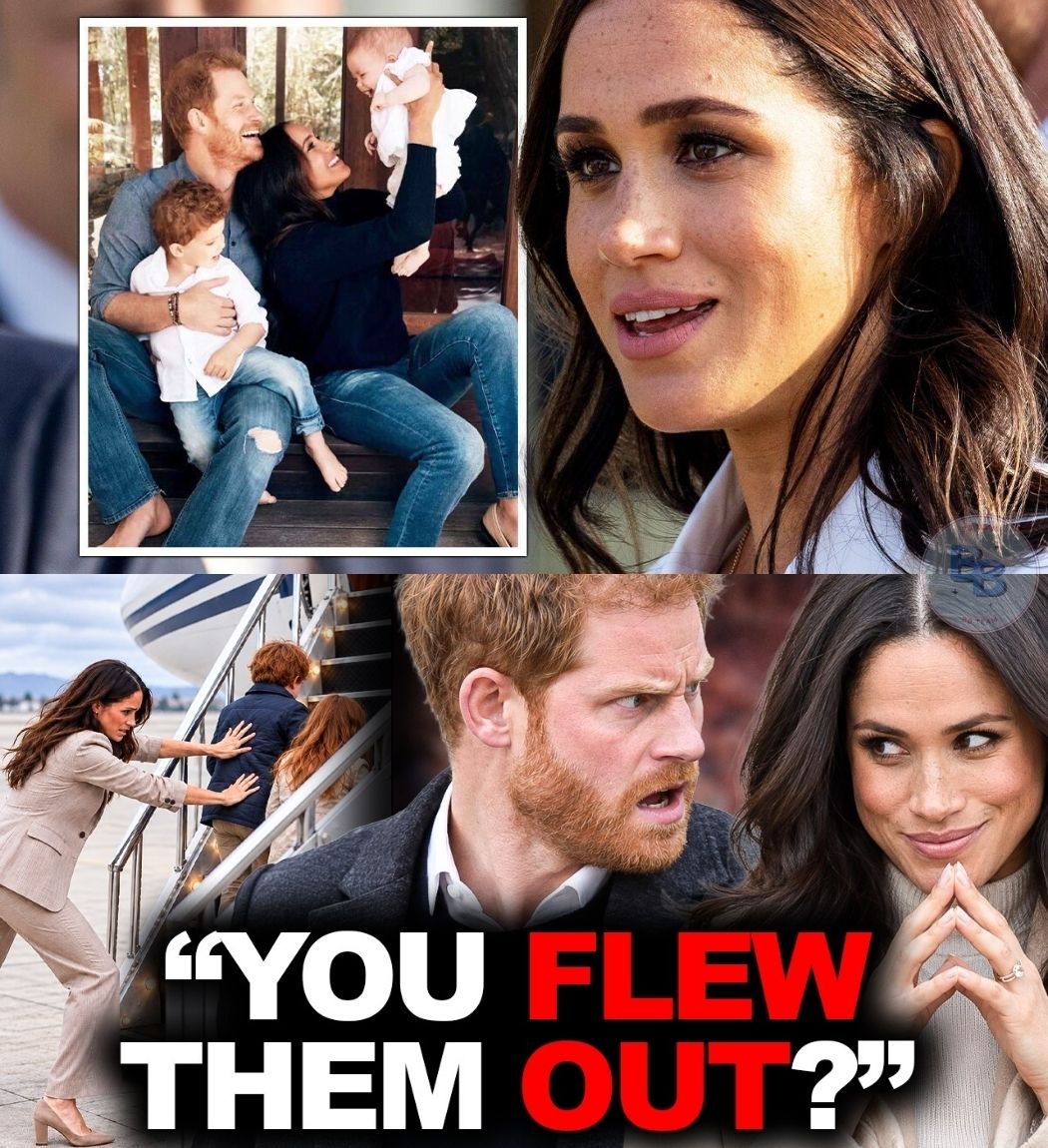
The afternoon sun cast long, amber shadows across the manicured lawns of Montecito, but inside the sprawling, high-security fortress of the Sussex estate, the atmosphere was thick, cold, and calculated. For months, whispers had circulated through the gilded corridors of palace gossip networks, shifting from polite speculation to frantic alarm. The children—Prince Archie and Princess Lilibet—had become ghostly figures in the British consciousness, increasingly detached from their ancestral roots, their British identities quietly dismantled piece by piece. But what the public did not yet know, and what royal insiders had guarded like a state secret, was that this was never a passive drifting away. It was the execution of a meticulous, chillingly clinical master plan orchestrated entirely by Meghan Markle—a strategic erasure designed to sever every remaining tether to the United Kingdom, leaving the British monarchy staring into an unprecedented abyss.
To understand the magnitude of this psychological maneuver, one must look backward to the winter of 2020. When the Duke and Duchess of Sussex announced their dramatic exit from senior royal duties—an event the press swiftly dubbed Megxit—the narrative was framed around personal freedom, mental health preservation, and an escape toxic media intrusion. Yet, behind closed doors, a far more ambitious blueprint was already being drafted. Meghan, a master of narrative control and strategic positioning, recognized a fundamental truth: as long as Archie and Lili remained tethered in the public imagination to British institutions, British titles, and British heritage, the Sussex brand would forever remain subordinate to a crown they sought to transcend. The children were not merely offspring to be protected; they were the ultimate geopolitical leverage in a high-stakes chess match against an institution that refused to bend to their terms.
As the months bled into years, the physical presence of the children in the UK dwindled to absolute zero. Security concerns were weaponized as the ultimate public justification. Every trip back across the Atlantic was weighed against perceived threats, legal battles over taxpayer-funded protection, and the toxic glare of the British tabloid press. But beneath the surface of these justifiable parental concerns lay a deeper, more unsettling strategy. By keeping Archie and Lili strictly confined to the sun-soaked, ultra-exclusive bubble of California, away from cousins, royal traditions, and the cultural osmosis of British life, a generational severing was taking place. The children were being insulated from their heritage, not by accident, but by design. To Meghan, a British childhood meant shared history, public duty, and an inescapable gravitational pull toward the Firm—outcomes she was determined to rewrite.
Insiders close to the couple’s inner circle have begun to leak details of a chillingly systematic approach to the children’s upbringing. Reports suggest that Prince Harry, visibly torn between his fierce loyalty to his wife and a lingering, melancholic nostalgia for his homeland, has found himself systematically outmaneuvered. Every suggestion of introducing the children to British culture—be it traditional literature, visits with British friends, or even basic familiarity with the lineage they represent—is met with swift, psychological resistance. The narrative woven within the Montecito household is one of survival against an allegedly hostile empire. In this version of reality, the UK is not a homeland, but a hostile territory that rejected them. For Archie and Lilibet, growing up under this ideological framework means their entire worldview is shaped by a curated grievance, turning their royal heritage into a distant, abstract concept rather than a living, breathing reality.
The climax of this calculated vanishing act reached a fever pitch when the children’s titles—Prince and Princess—were quietly updated and utilized on their official commercial platforms. This move sparked fierce fury across the Atlantic. Critics pointed out the breathtaking hypocrisy: weaponizing royal titles to bolster American commercial viability while simultaneously stripping the children of any substantive British lived experience. It was a masterclass in modern branding, utilizing the prestige of the British crown as a springboard for Hollywood relevance while keeping the actual institution at arms-length. Yet, for Meghan, this was simply phase one. The ultimate goal has always been self-sovereignty—a clean break where the Sussex name stands entirely independent of Windsor heritage, yet remains infinitely profitable.
The psychological implications of this strategy on Prince Harry are profound and deeply tragic. Observers who have tracked his transformation note a man who has undergone a total ego-dismantling. Once defined by his military camaraderie, his British patronages, and his deeply ingrained place within the royal hierarchy, Harry now exists as a supporting actor in a drama written and directed by his wife. The realization that his children will grow up without a single authentic memory of the land of their birth—that they will view their grandfather, the King, through a screen rather than across a dining table—weighs heavily on him. Yet, any attempt to voice these internal conflicts is reportedly met with emotional brick walls, leaving him increasingly isolated from his past, his family, and his own cultural identity.
Meanwhile, across the ocean, the reaction within Buckingham Palace has shifted from quiet sadness to cold, calculated containment. Courtiers and advisors have realized that attempting to appeal to sentimentality is a futile endeavor. The Sussex strategy relies on constant friction; every perceived slight from the palace is seized upon as oxygen for their global brand. Consequently, the royal family has adopted a policy of icy silence. Archie and Lilibet remain in the line of succession—a constitutional reality that cannot be easily undone—but practically speaking, they are ghosts. They are names on a parchment in London, existing in a parallel universe where their royal status is a commercial asset rather than a constitutional obligation.
What makes this entire saga so deeply unsettling is the cold pragmatism driving it. Families are messy, emotional, and bound by shared grief and history. But the House of Sussex, under Meghan’s guidance, operates like a corporate board room where human relationships are managed as public relations assets. The vanishing of Archie and Lili from the UK is not merely a logistical separation; it is a profound psychological severance designed to rewrite history in real time. It sends a chilling message to the world: that personal ambition and brand protection can successfully override centuries of tradition, bloodlines, and national identity.
As the dust settles over Montecito and London alike, the true cost of this strategy remains to be seen. Archie and Lilibet are growing up in a world of immense privilege, shielded from the pressures of royal duty, yet denied the rich tapestry of their British heritage. When they finally come of age, they will look back at the fractured landscape of their family history and face a difficult reckoning. Will they embrace the Hollywood-manufactured narrative of victimhood and defiance, or will the quiet, undeniable pull of their royal roots draw them back across the Atlantic to reclaim a legacy that was hidden from them?
Until that day arrives, the Sussex children remain the ultimate symbols of a modern royal tragedy—pawns in a high-stakes psychological game where the rules are rewritten daily, and the past is erased with the stroke of a pen. The UK may have lost them physically, but the psychological shockwaves of their vanishing act will reverberate through the halls of Windsor for generations to come, proving that the most dangerous battles are not fought with swords, but with the quiet, calculated rewriting of a family’s soul.
You Might Also Enjoy

“We Thought They Would Negotiate”—What Argentine Soldiers Said When The British Attacked Goose Green

“You’ll Never Finish My Ruck March, Limey” — US Sergeant Who Challenged the SAS, Then Fell Out First






