Britain Sent German POWs to Work in the Lake District – Most Never Wanted to Go Home
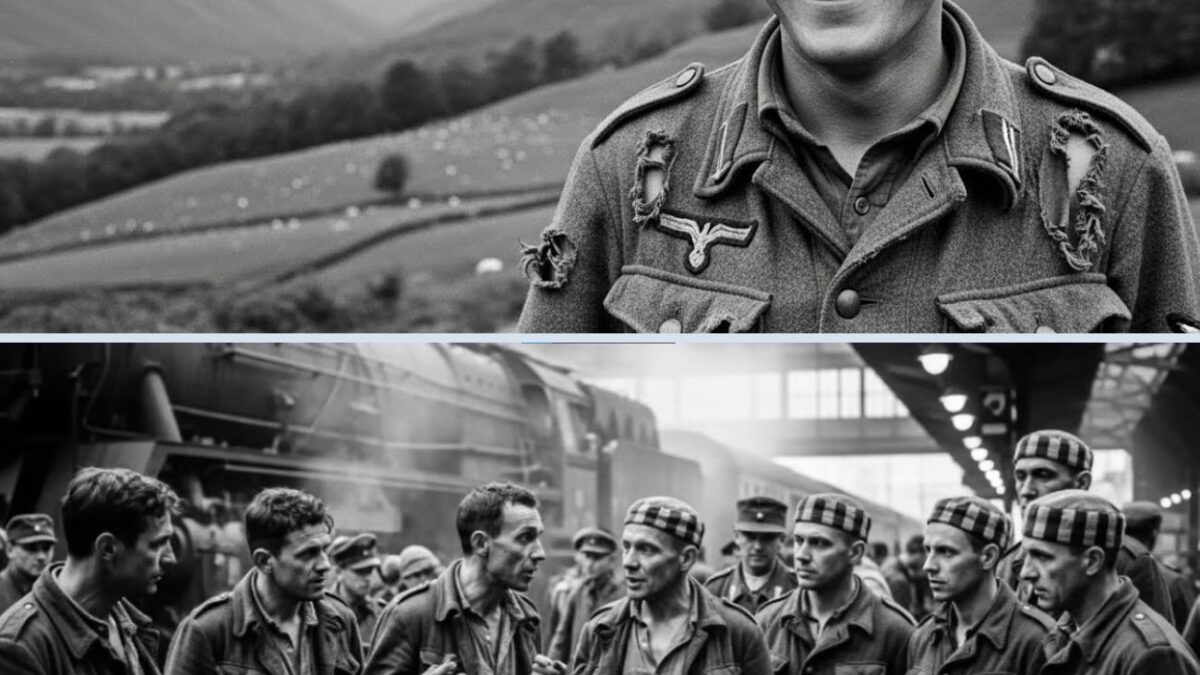
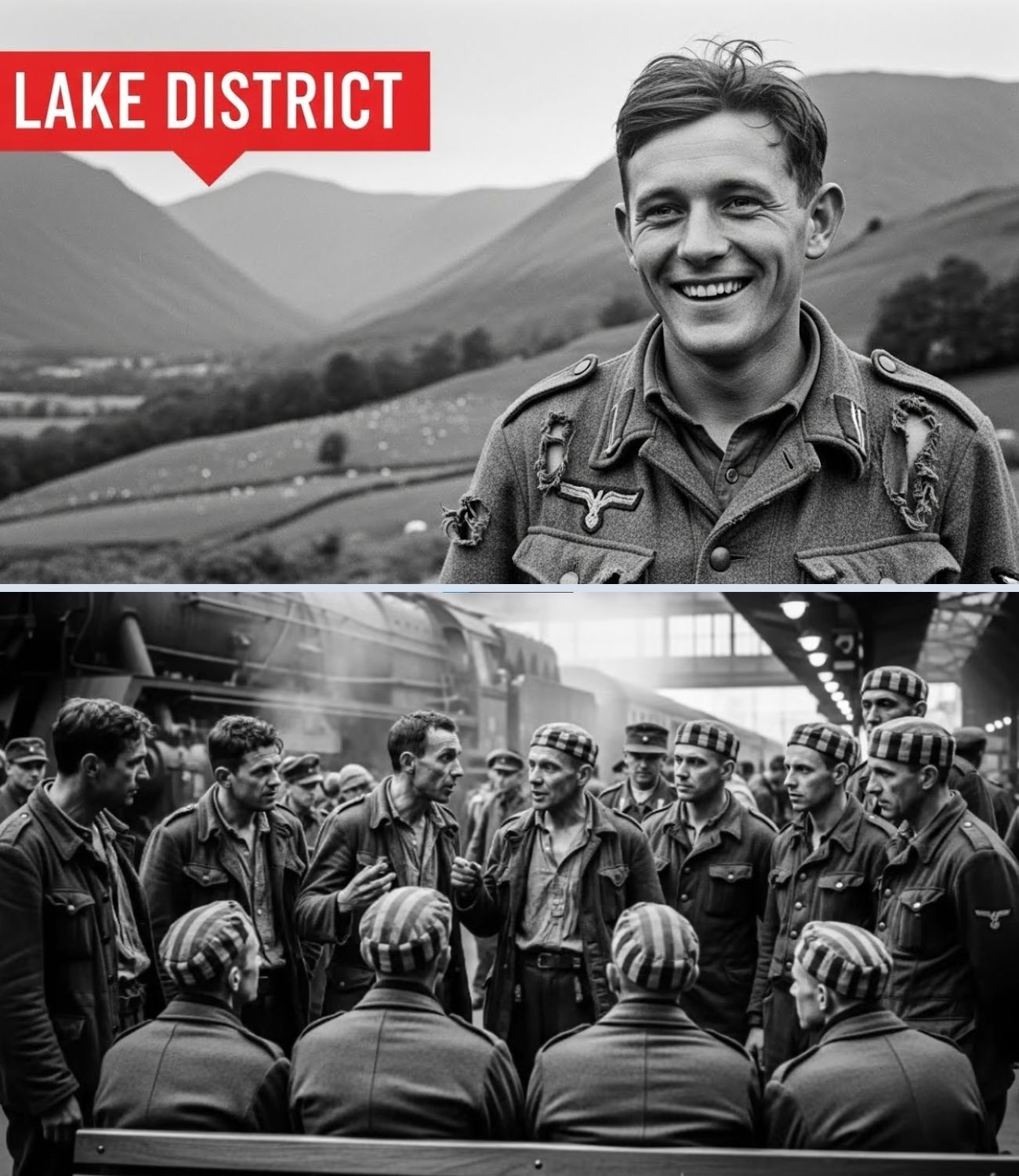
At 6:47 in the morning on June the 3rd, 1945, Sergeant William Patterson stood at the Windermere Railway Station watching 15 German prisoners step down from a train. He had been a guard for 17 months. He had supervised 1,034 prisoners through transport procedures. He had managed 42 work assignments. He had processed 19 disciplinary reports. He had witnessed six escape attempts and now he was escorting enemy soldiers to work on farms in the Lake District because the Ministry of Agriculture needed labor and prisoners were the only workers available. William thought the assignment was a waste of military resources. These men had fought against Britain. They had killed British soldiers. They had invaded Allied nations, and he was supposed to let them live in England’s most beautiful region, earning wages while British farmers struggled with labor shortages.
The guard who helped organize the prisoners was Corporal Thomas Clark from Leeds. Thomas had been assigned to agricultural labor coordination since March 1945. He had placed German prisoners on 73 different farms across northern England. He had supervised their work schedules and monitored their conduct. He had listened to them speak about missing Germany. And he had developed a theory that Germans were fundamentally incapable of appreciating natural beauty. They valued efficiency and productivity. They measured worth through industrial output. Thomas told William that sending Germans to the Lake District was pointless. They would see mountains as obstacles to farming. They would view lakes as drainage problems. They would calculate agricultural yields and complain about terrain unsuitable for mechanized equipment.
William agreed, but orders were orders. The Lake District covered 885 square miles in Cumbria. The region contained England’s highest mountains, deepest lakes, and most dramatic scenery. Wordsworth had written poetry about these hills. Ruskin had painted these waters. Beatrix Potter had made this landscape famous worldwide. In June 1945, the Lake District’s farms desperately needed labor. Young men had gone to war. Older farmers struggled to maintain production. The government authorized prisoner of war labor to prevent agricultural collapse. Prisoners would work on farms, live in converted barns or hostels, earn standard agricultural wages in camp tokens, and remain under guard supervision.
Gefreiter Josef Bauer had been in British custody for 8 months. Before the war, he had been a farmer in Bavaria, dairy, cattle, and wheat. He had been drafted into the Wehrmacht in 1941. He had served in North Africa until British forces captured him near Tunis in May 1943. Josef spent 18 months in camps in Egypt and Scotland before transferring to England in March 1945. He arrived expecting harsh treatment, minimal food, forced labor. Instead, he found adequate rations, medical care when needed, and the promise of paid agricultural work. Joseph did not trust it. He had been told repeatedly that the British would exploit German labor for profit. The comfortable conditions were obviously temporary, designed to extract maximum work before eventual punishment.
Joseph spoke with 14 other prisoners assigned to the Lake District work detail. They compared experiences from previous camps and discussed expectations for agricultural labor. Most assumed they would work under harsh supervision with impossible quotas. In late May, a camp administrator explained the assignment. Prisoners would be placed on individual farms or in small groups. They would work normal agricultural hours, approximately 8 to 10 hours per day, depending on season and weather. They would receive standard agricultural wages paid in camp tokens. They would have Sundays off. Housing would be provided on farm properties or in nearby hostels. The administrator emphasized that good work performance could lead to extended assignments.
Josef discussed the assignment with Obergefreiter Karl Weber. Karl was 28 years old. He had been a farm hand in Westphalia before the war. Karl had fought in France and Italy before capture near Rome in June 1944. Karl had spent 11 months in British camps. Karl told Joseph the work assignment sounded too good to be legitimate. British farms probably needed slave labor to maintain production. The wages were probably propaganda to make exploitation seem voluntary. The Sundays off would probably be cancelled once prisoners began working. Karl said they should expect the worst and remain suspicious of British generosity.
The truck journey from Windermere station began at 0715 hours. The 15 prisoners loaded into the back of an army lorry. Sergeant Patterson and Corporal Clark rode in the cab. The route followed the A591 north along the eastern shore of Windermere Lake. Joseph sat near the open back of the truck, watching the landscape. Mountains rose steeply on both sides of the road. The lake stretched for miles. Dark blue water reflecting morning light. Green fields covered the lower slopes. Stone walls divided pastures. Sheep grazed on hillsides too steep for cultivation. The scenery was extraordinary. Joseph had never seen mountains like this. The Alps were higher but harsher, more dramatic. These mountains were softer, greener, more intimate. They invited rather than intimidated.
Carl sat next to Josef. Carl was also watching the landscape. Carl said quietly in German that the scenery was impressive but probably represented inefficient land use. The steep slopes were unsuitable for mechanized agriculture. The small fields created by stone walls prevented large-scale cultivation. British farming methods were clearly backward compared to German agricultural efficiency. Joseph disagreed. He pointed out that the landscape had been farmed successfully for centuries. The stone walls were evidence of long-term sustainable agriculture adapted to local terrain. Carl said Joseph was being sentimental. Agriculture was about production, not scenery.
The first farm was near Ambleside. Highfell Farm, 140 acres of pasture and woodland on the slopes above Rydal Water. The farmer was Robert Jennings, 58 years old, managing the property alone since his son had joined the RAF in 1940. Robert needed help with sheep farming, stonewall maintenance, and hay production. Three prisoners would be assigned to Highfell Farm, Joseph, Carl, and a younger prisoner named Ernst Hoffman. They arrived at 0803 hours. Sergeant Patterson introduced the prisoners to Robert. Robert explained the work schedule. Morning duties began at 0600 hours with livestock feeding. Daytime work varied by season, currently focused on hay cutting and sheep management. Evening duties ended around 1800 hours with final livestock checks. Sundays were free except for essential animal care. The prisoners would sleep in a converted stable building with three beds, a stove, and basic furniture. Meals would be taken with Robert in the farmhouse kitchen.
Robert’s tone was matter-of-fact, not hostile, but not friendly. He needed workers. Prisoners were available. The arrangement was practical. Joseph examined the stable building. The space was clean. The beds had mattresses and blankets. The stove worked. A window looked out across Rydal Water toward the mountains beyond. The view was remarkable. Joseph had slept in barracks, tents, dugouts, and temporary shelters for four years. This stable building, with its view of mountains and water, was the most beautiful accommodation he had experienced since leaving home. Ernst said quietly in German that the British were either very confident or very naive to give prisoners such pleasant housing. Joseph said perhaps the British simply did not see it as pleasant. Perhaps this was normal for British farm workers.
The work began on June 4th at 0600 hours. Robert woke the prisoners and led them to the sheep pens. Feeding involved distributing hay and checking for injuries or illness. The sheep were Herdwicks, a local breed adapted to mountain terrain: small, hardy, with thick gray wool. Robert explained the breed had grazed these hills for over a thousand years. The sheep knew the land better than any farmer. They required minimal supervision, just seasonal support. Joseph helped distribute hay while Robert examined each animal. The routine was identical to what Joseph had done on his family farm in Bavaria. Same motions, same attention to detail, same quiet morning rhythm.
After breakfast, the work shifted to stone wall repair. One section of wall along the upper pasture had collapsed during winter storms. Robert showed them the technique. Select stones by size and shape. Place larger stones at the base. Fill gaps with smaller stones. No mortar, just careful fitting. The walls had stood for centuries using this method. Gravity and friction held everything together. Carl complained in German that dry stone construction was primitive and inefficient. Modern fencing with wire and posts would be faster and stronger. Robert overheard the complaint. He said in careful English that wire fences lasted maybe 20 years. These stone walls had lasted 200 years, which was more efficient.
Ernst worked next to Josef on the wall. Ernst was 23 years old. He had been a university student in Cologne, studying literature before conscription in 1943. Ernst had fought briefly in France before capture in August 1944. Ernst had no farming experience. He struggled with stone selection and placement. Josef showed him the technique, how to judge weight distribution, how to identify stable positions, how to fill gaps without creating weakness. Ernst learned quickly. By midday, Ernst’s section of wall looked almost professional. Ernst said building something that would last centuries felt different from building temporary military fortifications. This work had permanence.
Lunch was at 1300 hours in the farmhouse kitchen. Robert served bread, cheese, cold meat, and tea. The portions were adequate, not generous, but sufficient. Robert ate the same food. He asked basic questions about the prisoners’ backgrounds through simple English and hand gestures. Where from Germany? What worked before war? Any farming experience? The conversation was functional, but not unfriendly. Robert treated the prisoners as workers, not enemies. The distinction was subtle but important.
The afternoon work involved hay cutting in the lower meadow. Robert operated a horsedrawn mower. The prisoners followed behind using hand rakes to spread the cut grass for drying. The work was physically demanding but not brutal. The rhythm was steady. The meadow overlooked Rydal Water. The lake reflected clouds and mountains. Sunlight moved across the water in patterns that changed minute by minute. Joseph stopped twice just to watch. Carl told him to focus on work. Joseph said he was focusing. He was just also seeing. By 1800 hours, the day’s work ended. Evening livestock check involved counting sheep and ensuring all were secured.
Robert told the prisoners they were free until 0600 hours the next morning. They could walk the property, rest in their quarters, or do as they wished. The only restriction was staying within farm boundaries. Josef, Carl, and Ernst returned to the stable building. Carl immediately lay down on his bed. Ernst stood at the window, watching the sunset color the mountains pink and orange. Josef joined him. Ernst said quietly in German that he had not seen beauty like this since before the war. Not grand beauty like monuments or cathedrals, but quiet beauty, natural beauty that asked nothing from the viewer except attention.
The first week established a pattern. Morning animal care, daytime field work, evening livestock check, meals in the kitchen, free evenings and Sundays. The routine was agricultural, seasonal, connected to weather and animal needs rather than military schedules. By June 10th, Carl stopped complaining about British farming inefficiency. He did not admit the work was satisfying. He just stopped criticizing. Ernst asked Robert for books from the farmhouse. Robert lent him volumes of Wordsworth’s poetry. Ernst read in the evenings by lamplight, occasionally reading passages aloud in German translation he created extemporaneously.
On Sunday, June the 10th, the prisoners had their first full day off. Robert suggested they could walk to Grasmere village, approximately 2 miles away. No guard escort would be provided. They simply should return by evening. The freedom was startling. Joseph asked if they were permitted to walk unguarded. Robert said they were not going to escape. Where would they go? They were on an island. The war was over. Germany was occupied. Trying to escape made no sense. Besides, they were getting paid. They were eating adequately. They were sleeping in decent accommodation. Why would they leave?
Josef, Carl, and Ernst walked to Grasmere. The path followed roads and footpaths through fields and along the lake shore. Other people passed them, hikers, families, cyclists. No one paid particular attention to three men in work clothes. The village of Grasmere was small stone buildings, a church with a graveyard where Wordsworth was buried, shops selling basic goods, a tea room. The prisoners entered the tea room. The owner, an elderly woman named Margaret Price, served them tea and scones without comment. She charged the standard price. Joseph paid with camp tokens Robert had advanced as wages. Margaret accepted the tokens without question.
The normality was disorienting. Enemy soldiers drinking tea in an English village. No one seemed concerned. Carl said in German that British civilians were either very naive or very secure. They showed no fear of prisoners. They treated Germans as ordinary customers. Carl could not determine if this was British confidence or British foolishness. Ernst said perhaps it was British decency. Perhaps they saw three men having tea rather than three enemy soldiers. Joseph said he thought it was British exhaustion. The war had lasted six years. People were tired of treating others as enemies.
The walk back to Highfell Farm took 90 minutes. The path climbed through woods and emerged onto open hillside with views across the entire valley. Windermere Lake stretched south. Mountains rose in every direction. Derwent Water was visible to the north. The landscape was overwhelmingly beautiful. Joseph sat on a stone wall and looked across the valley for 20 minutes without moving. Ernst sat next to him. Ernst said this was what Wordsworth had written about. The peace that came from being in a landscape that had existed long before human conflicts and would exist long after. A landscape that made political struggles seem temporary and small.
By late June, other prisoner work assignments in the Lake District had settled into similar patterns. 12 prisoners worked on farms around Keswick. Eight worked near Coniston. Five worked in the Langdale Valley. All reported adequate treatment, fair wages, reasonable work hours, and remarkable scenery. Camp administrators noticed something unusual. Prisoners assigned to the Lake District submitted no complaints, no disciplinary reports, no escape attempts, no requests for transfer. The Lake District assignments were the most stable in the entire British POW system.
Sergeant Patterson visited Highfell Farm on June 28th to conduct a routine inspection. William found Joseph repairing a gate, Carl mending a roof on an equipment shed, and Ernst helping Robert shear sheep. All three prisoners were working competently without supervision. William asked Robert how the arrangement was functioning. Robert said the prisoners were good workers, quiet, reliable. They learned quickly. Robert had no complaints. William asked if Robert worried about having enemy soldiers on his property. Robert said he worried about getting hay cut before rain. He worried about sheep getting sick. He did not worry about prisoners. They had nowhere to go and no reason to cause problems.
William asked Joseph how he found the work. Joseph said in careful English that the work was familiar. Good work. The farm reminded him of home. The mountains were different, but the farming was similar. Joseph added that the Lake District was very beautiful. William was surprised by the comment. He asked if German prisoners were trained to make polite observations about English scenery. Joseph said no. The observation was genuine. This was the most beautiful place Joseph had seen. William did not know how to respond. He filed a report stating that work assignments at Highfell Farm were proceeding satisfactorily with no issues requiring intervention.
The summer work continued through July and August. Hay cutting, sheep management, stone wall maintenance, woodland clearing, endless small tasks that kept farms functioning. Joseph became increasingly skilled at dry stone walling. Local farmers noticed. Robert mentioned that Joseph’s walls were as good as walls built by professional wallers. Joseph felt pride in the observation. Not pride in being good for a prisoner or good for a German, just pride in doing work well.
Carl gradually softened. He stopped comparing British farming to German agricultural efficiency. He started noticing how the landscape shaped farming methods. The steep slopes required small fields. The stone walls created microclimates that protected sheep. The traditional methods were not backward. They were adapted. Carl admitted to Josef in mid-August that he had been wrong. British farming was not inefficient. It was sustainable. There was a difference.
Ernst spent August evenings writing, not letters home. His family was in the Soviet occupation zone and mail was impossible. Ernst wrote poetry. Attempts to capture the landscape in German verse. Ernst showed some pieces to Josef. Josef said the poems were good but probably impossible to translate. English had Wordsworth, German had Goethe. Each language belonged to its landscape. Ernst agreed but said he needed to write anyway. The act of putting beauty into words helped him remember it was real.
The war officially ended with Japan’s surrender on August the 15th, 1945. VJ Day. The camp administrator visited all Lake District work sites to inform prisoners. Germany had surrendered in May. Japan had now surrendered. The war was completely over. Repatriation would begin soon. Prisoners should prepare for return to Germany.
Josef heard the announcement at Highfell Farm. He felt no relief, no joy, just a quiet dread. He did not want to return to Germany. Bavaria was in the American occupation zone. His family farm had probably been damaged or destroyed. Food would be scarce. Work would be difficult. Germany would be broken for years. Josef said to Ernst that he did not want to leave. Ernst said he felt the same. Carl admitted he was conflicted. He wanted to see his family but dreaded returning to devastation. Ernst asked if it was possible to stay in Britain. Josef said probably not. Prisoners would be required to repatriate. Britain did not want thousands of German men remaining after the war.
Repatriation began in September 1945. Prisoners were processed in stages based on home region and documentation. Joseph was assigned to a transport group scheduled for November. He had four more months at Highfell Farm. Joseph asked Robert if he could continue working.
Robert said, “Of course.”
The farm still needed labor. Sheep still needed care. Winter preparations still required work. Robert had grown fond of the three prisoners. Not friendship exactly, but mutual respect. They worked hard. They learned. They cared for the land and animals. Robert had lost his son to the war, an RAF bomber shot down over Germany in 1943. Robert had spent two years grieving; having Josef, Carl, and Ernst at the farm had helped somehow—not as replacements, just as evidence that life continued, that young men could work land and build walls and care for sheep regardless of which nation they served.
In October, Robert asked Joseph if he wanted to stay in Britain after repatriation. Joseph said he wanted to, but did not think it was possible. Robert said it might be possible. The government needed agricultural workers. If farmers sponsored former prisoners, they could apply for work permits. Robert said he would sponsor Joseph if Joseph wanted to stay. Joseph asked why. Robert said good stone wallers were rare. Also, Robert had gotten used to company. The farm was too quiet alone.
Joseph applied for agricultural worker status in late October. The application required character references from the camp commander and from Robert. Both provided positive assessments. The Ministry of Labor approved the application on November 12th, 1945. Joseph would be released from prisoner status, granted a 2-year work permit, and permitted to remain in Britain as an agricultural worker. Josef told Carl and Ernst. Both were happy for him, both also envious. Carl had applied for similar status but had not yet received approval. Ernst’s application was denied. His lack of farming experience made him ineligible.
The repatriation transports began on November 18th. Ernst was in the first group. He left Highfell Farm on November 17th. Josef and Carl walked with him to the road where the transport truck would collect him. Ernst carried almost nothing: a small bag with personal items, and the books Robert had lent him, which Robert insisted Ernst keep. Ernst said goodbye in German. He thanked Josef for teaching him about stone walls. He thanked Carl for companionship. He said he would remember the Lake District forever. He said it had taught him that beauty still existed, that peace was possible, that landscape could heal damage done by years of war.
Carl received work permit approval on December the 3rd. He would remain in Britain working on a farm near Keswick. Carl and Joseph celebrated with Robert over dinner. Robert served a bottle of whiskey he had been saving. Carl said in improving English that he never expected to want to stay in Britain. But Germany felt like someone else’s country now. The Lake District felt more like home. Robert said home was wherever a person did good work and lived decently. Nationality was just paperwork.
Joseph continued working at Highfell Farm through 1946 and 1947. His work permit was extended twice. In 1948, Joseph applied for permanent residence. The application was approved. In 1950, Joseph became a British citizen. He married a woman from Ambleside in 1952. They had two children. Joseph never returned to Germany. He wrote occasional letters to family members but received few responses. The Soviet occupation had cut off most communication with the eastern zones. Bavaria was recovering, but slowly. Joseph’s family farm had been partially destroyed and later sold. There was nothing to return to.
Robert Jennings died in 1963. He left Highfell Farm to Joseph in his will. Robert had no surviving children. Joseph had worked the farm for 18 years. Robert’s will stated simply that Joseph had earned it through dedication and care. Joseph operated Highfell Farm until his retirement in 1982. He sold it to a young couple from Manchester who wanted to farm traditionally. Josef lived in Ambleside until his death on July the 22nd, 1997. He was 79 years old.
Corporal Thomas Clark returned to civilian life in February 1946. Thomas resumed work as a factory supervisor in Leeds. He married in 1948. He and his wife had one daughter. Thomas rarely discussed his time coordinating prisoner labor. When asked about the war, he mentioned administrative work and logistics. He did not mention the Lake District assignments or the prisoners who chose to stay. The outcome had challenged his assumptions about Germans and nationality. Thomas preferred not to examine those challenges too closely.
In 1978, Thomas received a letter. The letter was from Josef Bauer. Joseph explained he was the former prisoner Thomas had transported to Highfell Farm in June 1945. Joseph wanted Thomas to know that the Lake District assignment had changed his life. Joseph had stayed in Britain for 33 years, had become a citizen, had raised a family, had farmed land he loved. Joseph thanked Thomas for bringing him to the most beautiful place he had ever seen. Thomas read the letter three times. He never responded. He was not sure what to say, but he kept the letter in a desk drawer for the rest of his life.
Ernst Hoffman returned to Cologne on December the 2nd, 1945. The city was destroyed. Ernst’s family had survived, but their home was gone. Ernst found work as a clerk in the Occupation Administration. In 1947, Ernst enrolled at the Reconstructed University to complete his literature degree. He graduated in 1950. Ernst became a teacher, eventually specializing in English literature. Ernst taught Wordsworth to German students for 30 years. He never told them he had read Wordsworth by lamplight in a converted stable overlooking Rydal Water while a prisoner of war.
Carl Weber worked on farms near Keswick from 1945 to 1954. He returned to Germany in 1954 to care for his aging mother. After her death in 1958, Carl considered returning to Britain, but decided against it. He had been away too long. Germany was recovering. Carl found work on a farm in Westphalia. He never married. In letters to Josef, Carl wrote that no landscape he saw in Germany matched the Lake District. But home was complicated. Sometimes you belong to a place, sometimes you just visit it in memory.
Josef Bauer died on July the 22nd, 1997 in Ambleside. He was 79 years old. His obituary mentioned his farming career and his work preserving traditional dry stone walling techniques. The obituary noted he was German but had lived in Britain for 52 years. At his funeral, one of his children told a story. The story of a German prisoner who came to the Lake District expecting punishment and found beauty. The story of a man who chose to stay in the country he had fought against because mountains and sheep and stone walls mattered more than nationality. The story of a prisoner who became British because he understood that home was wherever you did work that made the land better.
You Might Also Enjoy

“We Thought They Would Negotiate”—What Argentine Soldiers Said When The British Attacked Goose Green

“You’ll Never Finish My Ruck March, Limey” — US Sergeant Who Challenged the SAS, Then Fell Out First






