Camilla STUNNED as King Charles FINALLY Confesses the Love of His Life!
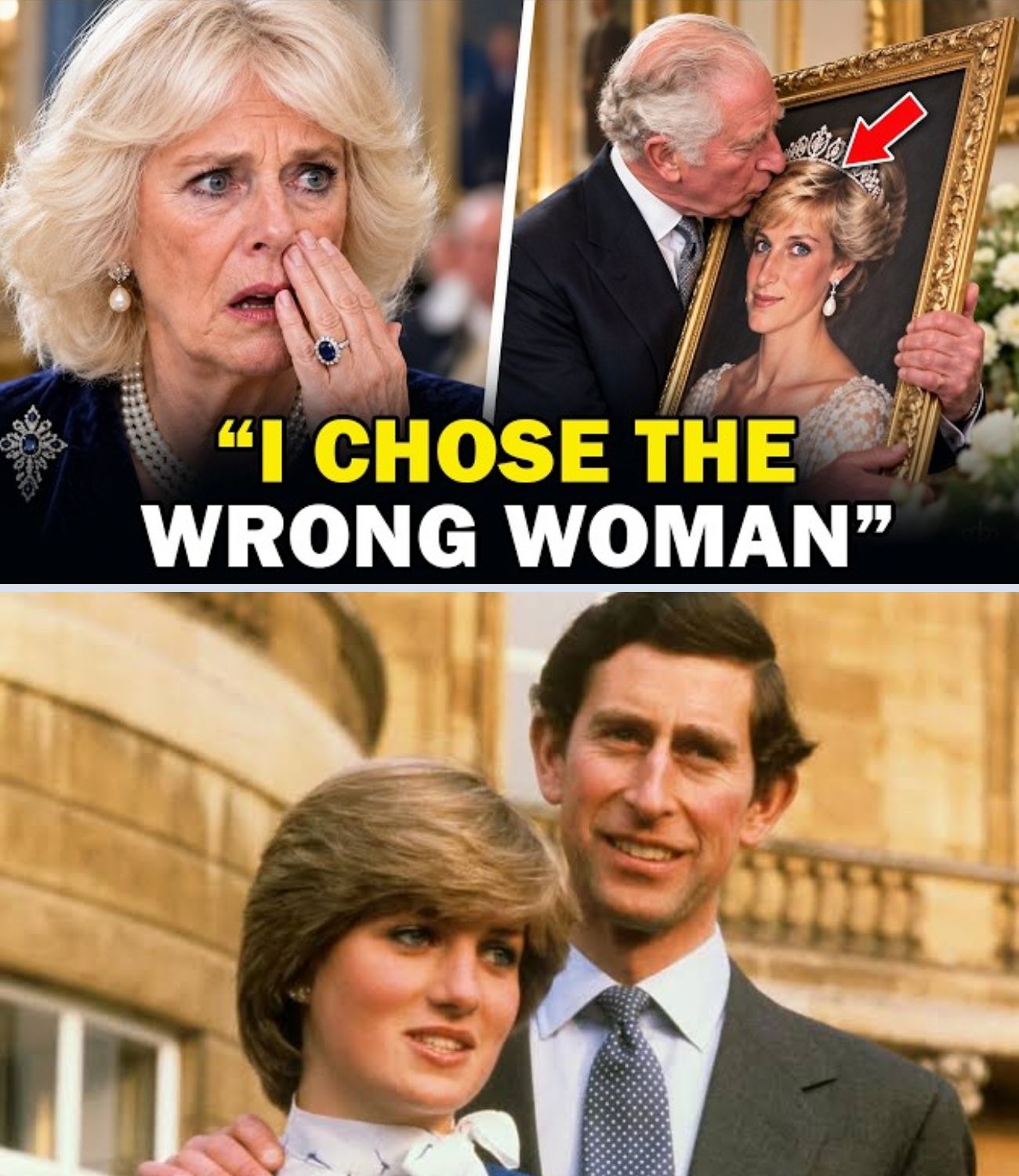
THE MIDNIGHT CONFESSION AT CLARENCE HOUSE: Inside the Shocking Anniversary Dinner Where King Charles Shattered Decades of Protocol by Admitting Diana Remained His True Love
The Night the Stained Glass Froze
There are dinners orchestrated for the public gaze, designed to project an immaculate portrait of stability, and then there are intimate family suppers meant to seal the quiet triumphs of survival. The anniversary celebration inside the private dining rooms of Clarence House was intended to be the latter. The room was bathed in the soft amber glow of antique wall sconces, the silverware gleamed under discreet lighting, and the atmosphere carried the relaxed, unhurried cadence of a couple who had weathered the most bruising tempests of modern British history together.
For Queen Camilla, every milestone represented a ridge successfully climbed. Decades of public hostility, whispered slurs, and institutional resistance had slowly given way to state banquets, acceptance, and ultimately, the heavy velvet of the crown matrimonial. She had earned her place beside her sovereign through sheer resilience and absolute discretion.
Yet, within the space of a single heartbeat, the carefully constructed architecture of their shared narrative dissolved.
According to whispers rippling through the most discreet corridors of royal circles, the evening’s brittle fracture did not begin with a political argument or a petty domestic grievance. It began when King Charles, looking across the polished mahogany table with an expression that struck those present as unnervingly distant, uttered a single name that instantly drained all oxygen from the room.
Diana.
The mention of the late Princess of Wales was not dropped as a casual historical footnote. The confession that reportedly followed went much further, cutting straight to the raw, unhealed nerve of a royal tragedy that the nation had long assumed was safely interred in history. Charles, so the story goes, admitted out loud that despite the decades passed, despite the crown upon his head and the woman seated beside him, Diana Spencer remained the true love of his life.
For Camilla, the blow was catastrophic. The decades she had spent enduring public opprobrium, managing her image, and proving her worth to an institution that had once treated her as an existential threat suddenly felt imperilled by a ghost. But worse than the verbal slip itself was the revelation that had provoked it: a discovery made earlier that week by a palace aide sorting through private archives—a sealed, unmailed letter bearing Charles’s handwriting, addressed to a woman who had been resting beneath the soil of Althorp for nearly thirty years.
The Ghost in the Archive
To understand why a piece of paper could detonate a royal household, one must understand the difference between public performance and private reckoning. Rehearsed speeches can be scrubbed by press secretaries; carefully worded television interviews can be vetted by teams of constitutional lawyers. But a private letter written without the expectation of an audience possesses a terrifying authenticity. It contains the raw, unfiltered truth of a human conscience wrestling with burdens it can no longer share.
The document in question was uncovered quite by accident. While a senior palace aide was reviewing historical documents relating to the early years of Charles’s reign, an unmarked leather folder tucked deep within a secure cabinet yielded a startling find. It was a lengthy, hand-written draft on personal stationery—a letter penned by Charles during one of the darkest, most claustrophobic periods of the 1990s, yet never sent.
It was not a traditional love letter in the romantic sense, nor was it a piece of political correspondence. It was something far more dangerous: an intimate, unsparing act of self-interrogation. Within its folded leaves, Charles had seemingly attempted to put into words what protocol had forced him to keep locked away for a lifetime. He wrote of the crushing weight of institutional expectation, the unbearable friction of a marriage engineered by circumstance rather than affection, and above all, the agonizing realization of a failure to communicate when communication mattered most.
When word of the letter reached Camilla, her reaction was immediate and uncompromising. Recognizing the immense volatility of the document, she reportedly demanded an emergency family meeting, insisting that the matter be tightly contained before word leaked beyond the immediate family circle. She understood better than anyone that the British press and public would seize upon such a document with ravenous intensity, weaponising it to reopen old battle lines that had taken a generation to patch over.
Yet, containing the crisis proved impossible because the document did not merely belong to Charles and Camilla. By virtue of blood and legacy, it belonged equally to the man who would one day inherit the throne.
The Heir’s Dilemma: William’s Burden
Prince William found himself thrust directly into the epicenter of the storm. As Diana’s eldest son and the direct heir to the House of Windsor, William’s relationship with his mother’s memory is sacred, fiercely guarded, and inextricably linked to his own psychological survival. He was the fifteen-year-old boy who had walked behind the black-draped gun carriage through the grieving streets of London; he was the son who had watched the institution chew up and spit out a young woman overwhelmed by the relentless machinery of the state.
When presented with the existence of his father’s unmailed letter, William faced a profound moral and emotional dilemma. On one hand, he is the ultimate guardian of the modern monarchy’s institutional survival—a prince who understands that raking over ancient marital ashes risks destabilising the very crown he is sworn to protect. On the other hand, he is a son whose loyalty to his mother’s dignity remains absolute.
Sources suggest that when William was forced to confront the contents of the document, the confrontation transcended a simple family squabble. It became a generational reckoning. For years, William had watched his father construct a persona of stoic endurance, burying personal turmoil beneath a mountain of red boxes and state duties. But the letter suggested that Charles had spent his entire life carrying an unresolved, bleeding wound—a private conversation with Diana that had been abruptly terminated by the Pont de l’Alma tunnel before closure could ever be achieved.
For William, reading his father’s private reflections on Diana created a jarring psychological dissonance. Here was the man who had caused his mother such profound loneliness during her lifetime, now committing to paper an agonizing retrospective of her isolation, her fears, and her desperate need for validation. It raised an uncomfortable, haunting question: Could a son forgive a father for the past, even when that father was only just beginning to admit the full extent of his own blindness?
Anatomy of a Regret: Inside the Unsent Letter
As the family gathered behind closed doors for the emergency summit, the atmosphere was thick with a heavy, suffocating tension. Camilla sat with an unyielding posture, her frustration palpable, while William balanced between filial empathy and institutional wariness. At the center of it all sat the King, looking not like a sovereign commanding an empire, but like an aging man stripped of his armor.
Charles did not attempt to deny the letter, nor did he try to trivialise its contents as a sentimental relic. Instead, he forced himself—and those in the room—to confront the brutal truths inscribed upon its pages.
According to accounts circulating within palace perimeters, the letter was dominated by a singular, consuming theme: an apology.
Not the sort of sanitised, broadcasted apology designed to appease public opinion, but a raw, agonizing plea addressed directly to Diana. In the text, Charles reportedly acknowledged the immense damage wrought by years of emotional distance, societal pressure, and his own inability to understand the psychological fragility hidden beneath the glamorous public facade of the “People’s Princess.” He wrote of how he had frequently mistaken her desperate, anxious pleas for emotional security as mere defiance or petulance, admitting that he had treated marital conflict as something to be endured and managed through cold protocol rather than understood with human compassion.
The most jarring admission, however, centered on the final years of their fractured lives. Charles had apparently written that after the formal separation and subsequent divorce, he had privately believed there would eventually be time to rebuild a civil, peaceful truce—a quiet space where two parents, bonded forever by their sons, could finally sit down and speak honestly without the deafening roar of tabloid journalism.
That chance had vanished on a humid August night in Paris in 1997.
“I wished I had told her,” Charles reportedly confessed to the tense room, his voice dropping to a fragile whisper, “that her flaws did not make her unworthy, and that my silence was a shield, not a weapon.”
The revelation left Camilla visibly shaken. For years, she had anchored her psychological security in the belief that the past was dead, that her marriage to Charles represented a definitive victory over the ghosts of the 1990s. Hearing her husband describe Diana not merely as a ghost, but as the enduring emotional axis of his life, threatened to reduce her decades of sacrifice and loyalty to a secondary footnote in a grander, more tragic romance.
“Why must she still occupy the center of our lives?” Camilla reportedly challenged him, her voice cutting through the heavy air. “I gave my life to this institution, to you, through every humiliation imaginable. Does none of that earn the right to put the dead to rest?”
Charles’s response offered no comforting illusions. He explained gently, yet firmly, that love and regret are not mutually exclusive commodities. A man can cherish the woman seated beside him in the present while simultaneously grieving the irrevocable loss of an unfinished chapter from his past. He could love Camilla, appreciate her steadfast loyalty, and build a stable reign alongside her, yet still carry to his grave the haunting, unanswerable question: Would Diana ever have forgiven me?
The Unbroken Silence
In the wake of that extraordinary family summit, the palace machinery swung back into its familiar, protective posture of absolute silence. No public statements were drafted; no leaked memos found their way to the front pages of Fleet Street; the sealed letter was returned to its secure archive, locked away from the prying eyes of historians and biographers.
Yet, the emotional landscape within the royal household had undergone a permanent, irreversible shift.
The illusion of a clean, sanitised history had been shattered. For Charles, the burden of his confession was heavy, but it offered a strange, melancholy liberation—the realization that hiding behind the mask of royal duty no longer protected him from his own conscience. For William, the confrontation forced him to view both his parents not as distant, mythic figures of a bygone media era, but as deeply flawed, complex human beings caught in a tragedy greater than themselves.
And for Camilla, the dinner at Clarence House served as a sobering reminder of the limits of power. No amount of titles, coronation robes, or public acceptance could ever completely erase the invisible third presence that had haunted their lives from the very beginning.
As the sun sets over the stone battlements of Windsor and the red dispatch boxes continue their endless, rhythmic journey across the kingdom, the ghosts of the past remain active tenants within the House of Windsor. The unmailed letter remains unread by the world, its ink slowly fading on aged paper. But the words Charles wished he had spoken decades ago now echo through the quiet corridors of power—a haunting testament to the truth that while a king may hold absolute sway over nations, he remains utterly powerless against the quiet, haunting ghost of a word left unsaid.
You Might Also Enjoy

“We Thought They Would Negotiate”—What Argentine Soldiers Said When The British Attacked Goose Green

“You’ll Never Finish My Ruck March, Limey” — US Sergeant Who Challenged the SAS, Then Fell Out First






