“Can’t Handle the Cold, Limey?” — Arctic Instructor Mocked The SAS, Then His Own Course Broke Him
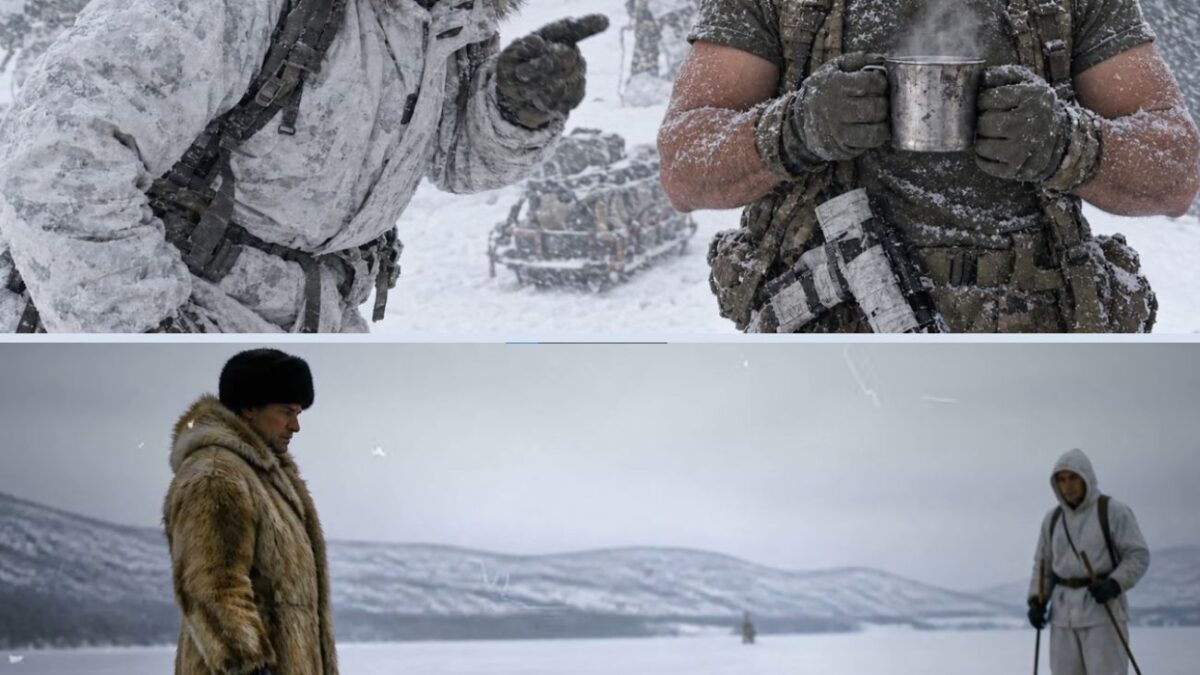
He is standing in a lane of trampled snow with his hood pushed back and his breath coming out of him in a column. And he is pointing at a bearded man drinking tea from a steel mug. And he says it in English so there can be no mistake. “You can’t handle the cold. Limey, your tea drinkers in jumpers up here. The cold decides who you are and it has already decided about you.”
The man he is shouting at does not blink. He takes another mouthful of tea from a mug that has steam coming off it as if the air around them was summer and he lowers the mug and he says nothing because nothing is required of him yet.
You are standing at the edge of a Norwegian training lane in late February, half an hour’s drive north of a place the maps call Bardufas, and you are watching a senior Norwegian instructor with 22 winters on him tell eight men from the British Special Air Service that they are soft. He will remember saying it. He will be made to before last light. On the day of the long traverse, he will put his name in his own hand on a score sheet that reads a number no instructor on this course has ever written down before, and the men he is shouting at this morning will be the men standing behind him when he writes it.
The wind is coming off the Lingen Alps in long, steady lines, pushing drift east along the lane in tongues that stop at the troops boots and go round them. The Norwegian is called Erling Vatne. He is a Fenrich, which is a senior lieutenant in his service, and he is the chief instructor on this bilateral winter warfare package. Three times in the last 5 minutes, he has pointed at the man with the mug, Staff Sergeant Ridian Price, Mountain Troop, B Squadron. Price is standing in a short-sleeved camouflage shirt under his open Parker with his sleeves rolled above the elbow drinking tea in a wind that is cutting a Norwegian trooper’s cheek open 15 m behind him. Vatihole takes this personally. He has decided in the way men who have been right for a long time decide things that the Englishman with the mug is making a joke of his course. He is wrong about that in a specific way. and the specific way will take the rest of the day and the day after and the day after that to be shown to him.
Behind the two men, four shapes in white over whites are leaning into pulk harnesses, pulling sleds along a groomed track in a line that does not waver. One of them is counting his breaths. One of them has an empty finger in his left glove and does not mention it. None of them is looking at the instructor. They have been told what he said. They have decided between themselves in the quiet way the regiment decides things that he will be allowed to keep saying it for exactly as long as it takes to answer him properly. That is what you are about to watch.
Before the fall is worth anything, the man has to be worth something. Erling Vatnihole was. He had come into the Norwegian army at 19 and gone almost immediately into the long cold filter that produces the country’s reconnaissance soldiers, and he had stayed in uniform for 22 years without ever serving in a desert. His winters were the only summers he counted. He had three tours as the chief instructor on this package, and before that he had been an assault group leader in a Jagger Corpse unit, and before that he had done something in a white out on a border in weather he would not describe, for which the Norwegian state had given him a decoration he never wore on the course, because he said the ribbon froze funny. He meant it as a joke. The men who worked for him laughed at it, because they had seen the citation, and knew it was not a joke.
He had a face the wind had been working on for two decades, and a brass thermometer the size of a thumb clipped to the zip pull of his parker, and a habit, when he was about to pronounce on something, of tapping the thermometer with a gloved knuckle, as if consulting it. He had read every Allied doctrine on cold weather operations in two languages. He believed with a certainty his record entitled him to that there were two kinds of soldiers in the world. Those his country produced and those who visited.
The British had been visiting northern Norway for a long time. Royal Marines had been coming up for winter deployment since before Vatol was born. and the regiment and its sister unit from the Royal Navy had been slipping men onto Norwegian packages for almost as long because Heraford had decided decades ago that if its men were going to work in cold places they would learn the cold from people who lived in it. Vatal had taught men from both. He had in general respected the Marines. He had in private told his second instructor that he found the special air service detachments disappointing. Too few of them, too quiet, too prone to doing their own thing in the back of the hut while his lesson was running.
This course was eight of them. The troop commander was a captain called Dominic Alder, a lean officer with a hardbacked notebook he wrote in with a pencil because ink froze. The senior non-commissioned officer was Price, the Welshman with the mug. The others were blades, a corporal called Nile Trefor, who counted his breaths on a long tab. a young trooper called Hayden Oxley, who had come back from a job the previous summer, with most of a left little finger missing, and had been passed fit for cold weather on the grounds that he still had nine, and four more, whose names Vatnihole would learn, and then by the end of the week, declined to say.
The host colonel was called Asand Trigva up from Bardiff, a lieutenant colonel who signed every piece of paper that passed through his office in green ink because he said it stopped him mistaking his own signature for someone else’s. He had met the detachment on the first morning, shaken the captain’s hand with his glove off in a wind that would have taken a civilian’s fingers at the knuckle, and said in careful English, “that his instructor was the best winter soldier he had, and also occasionally a difficult man.”
He had said occasionally, in a tone that meant always, had written the word down in pencil without changing his face.
Vatnull’s second instructor was a sergeant called Gorm Lind, broad across the shoulders, a decent man who had been quietly embarrassed by his boss for three years, and who on the morning after the arrival would brew coffee for the British in their basher without being asked and without saying anything about it.
The British liaison was an older major called Frank Elston, a pipe smoker who kept the pipe cold in his teeth outside because the stem froze to his lip if he lit it. Elaston had served with Vatne twice before. He had told on the drive up from the airfield that the Fenrich was a very good instructor and a worse human being and that the trick was to let him talk.
The talking had started at breakfast on day one. Vatol had come into the mess tent, found the British eating porridge in silence, and announced to the room in English that he had seen the detachment’s kit laid out in the drying room, and that it was, in his professional opinion, inadequate for the week ahead. He had said this, looking directly at Price. Price had kept eating.
By midm morning, Vatnau had worked himself up to the first of what the course would learn to call his speeches, delivered on the training lane, with the wind coming off the Lingan Alps, and the thermometer on his zip reading minus 28. The speech was the line you have already heard. “Tea drinkinkers in jumpers. The cold has already decided about you.”
He said it loud enough for every man on the lane to hear, Norwegian and British. and he said it to a man drinking tea from a steel mug with his sleeves rolled up because the man drinking tea was the one he most wanted to break. Sergeant Lind, standing behind him, looked down at the snow. He had heard the speech before. He had not before heard it delivered to a group that did not react. The lack of reaction, he would later tell a friend in his own language, was the thing that should have warned the Fenrich. It did not.
The training area sat on a bench of high ground above a frozen river, a cluster of insulated huts and a drying barn, and a lane of groomed track that ran out between two lines of black spruce toward open ground. Behind it, visible on clear mornings and invisible on most, rose a long flat topped feature the Norwegians called Himlfell, the sky mountain, a plateau that ran east to west for 38 km above the tree line in open wind with no cover.
Vatol’s course had a traverse of that plateau on its final day. He spoke of the traverse the way other men speak of a river they have crossed. His course record on it carried in his own hand for 3 years stood at 11 hours and 46 minutes with pulks with a live fire shooting stand in the middle by a crew of four of his own trainees. He had posted the time on the wall of the mess tent in a laminated sheet and he tapped it with his glove whenever he passed it.
The detachment had read the sheet on their first evening and said nothing. Price had read it twice. Alder had taken his pencil out and written three figures in his notebook, closed the book, and returned to his porridge. Nobody on the Norwegian staff had seen him do it. The number he had written was his own estimate of what his men could do on that plateau if they went slow, which was the thing the course would spend the week not understanding they intended to do.
The undoing was already visible. if Vatnihol had been looking for it. The British came out of the hut each morning at a pace that was slower than instinct. They dressed in the drying room with the deliberation of men laying out surgical instruments, and they did not sweat.
Price had a rule he enforced without raising his voice. If a man was warm in his base layer before he started moving, he took a layer off and started again. In a cold climate, sweat is a slow poison. It wets the inside of the clothing and then the moment the body stops moving, it freezes the clothing against the skin and the man cools faster than the air can cool him. Norwegians know this. The British knew it in a way that had been argued out of them in the Breen beacons by sergeants who had learned it off Norwegians 20 years earlier. And they practiced it with a patience that looked to Vatne like laziness.
They worked in general slower than the Norwegian trainees around them. They ski marched at a pace a Norwegian corporal would have called pedestrian. They stopped on the hour, every hour, whether the lesson plan allowed it or not, and they took a steel cup of hot water out of a flask and drank it in two swallows and put the cup away. They did not take their gloves off except to shoot and to eat. And when they did take them off, they put them on their chest, inside the parker, and not in a pocket.
They tied their bootlaces with a bow a Norwegian would have thought loose. They greased their rifles with a cold weather lubricant Price had brought in his own kit, decanted into a tin that had once held boot polish, and the rifles worked, and the Norwegian weapons on either side of them, oiled with the training area issue, began to drag in the actions by Wednesday. It was the only piece of kit the detachment had brought that was different from the issue around them. They did not advertise it. They used it.
Vatihole watched them do all of this and read it as softness. He watched Price drink tea in short sleeves on the first morning and read it as a stunt because he had decided in the way he decided things that the Welshman was a showoff. He was wrong about that in a specific way. The sleeves were rolled because Price was carrying a thermos inside his Parker against his ribs, where his body warmth would keep it from freezing in the night, and he had to clear the sleeve to pour. The mug was steel because plastic cracked at these temperatures, and ceramic chipped against the metal of a Bergen frame. He drank in two swallows and put the mug away, because standing still in a wind that was cutting at minus28 was a thing you did for a reason, not for show. Everything about him that looked like performance was function. Vatneal had been in the cold for 22 years and he could not see it because he had decided in advance who the man was.
Trefor was the quietest of the eight. On the second day, Vatnehold took the detachment out on a short reconnaissance tab 4 km uphill through broken forest under pulk and set a pace at the front that was intended to leave them breathing hard at the top. Treyor finished at the back of the Norwegian line, not out of breath, counting under his breath in Welsh. And when Vatnihol asked him in English why he had come up so slow, Trey said, “Without heat, because the lesson was uphill, Fenrich, and we have to come down.”
That Null took that as cheek. Lind listening took it as doctrine and remembered it.
Oxley was the youngest. He was 26 and had been in the regiment for 3 years and in the parachute regiment before that. He wore his left glove with the little finger empty, and he did not advertise the fact. On the shooting lanes on day two, he laid his rifle on the mat and worked the bolt and the magazine release with his right hand only. in a sequence he had drilled in the killing house at Cedenhill until it was shorter than it looked and Vatnihol timing the string on his wristwatch did not notice the glove at all.
Alder stayed quiet. He wrote in pencil in his notebook each evening in handwriting that got smaller the colder the night, and he logged everything. times, weights, the wind off the plateau, the temperature at which the Norwegian rifle oil began to drag, the hour at which Vatnihal delivered his longest lecture, the exact wording of the tearrinkers in jumper’s line in quotation marks. He had an officer’s instinct that this was going to be a course that produced a document, and he intended, when the time came, to have the paperwork ready.
By the end of the second evening, Lind had understood what was in the hut with him. He understood it the way instructors do, by what the trainees did not do. The British did not complain. They did not ask for a change to the schedule. They did not react to Vatol’s speeches, which had by Wednesday morning grown another two lines. They did not look at each other across the fire. They did their jobs with the patience of men who had decided that the course would answer itself. The gun was loaded. Vatihole was still pointing it at his own foot.
The first blow came on the fourth morning on a lesson Vatnihole had taught more than 50 times on a loop he had cut himself over three winters through a cross-country forest east of the huts. The loop was 12 km long. It climbed 600 m over the first eight and lost most of them again in the last four. Trainees moved it under full pulk with belt kit, plate, rifle, and a sealed waterproof bag that held a notional casualties weight. 30 kilos of sand in a dry bag strapped to the sled.
The Fenrik’s standard for pass on the loop was 3 hours and 40 minutes. The best time ever set on it by a crew of Norwegian wrecky troopers two winters earlier was 2 hours 58. He had the time written on the laminated sheet in the mess tent above his own traverse record. The man who had called them tea drinkers in jumpers tapped the sheet with his glove the morning they went out.
He paired the detachment at the start into two sticks of four as the lesson required. And he put himself and Lind on skis at the front to set a pace he said in English would show them what it feels like to work. He did not look at Price when he said it. He did not need to. The whole lane understood.
The British went out behind him in the sequence Alder had quietly set at breakfast, which was Price leading the first stick with Trey in the ski tracks behind him, and Oxley on the pulk, and Alder leading the second stick with the remaining three men. The order they went out in was not the order the course expected. The course expected the officer to lead. Alder had decided without discussion that Price was better on a ski than he was and the captain of mountain troop was not a man who confused a rank slide with physics.
Vatnihol set a hard pace for the first kilometer he was testing. He wanted to see which of the British broke rhythm first so that he could spend the rest of the loop on that man. None of them broke rhythm. Price held station 8 m behind him on the climb. Breathing through his nose with his mouth closed because open mouth breathing in that air stripped the inside of the throat and Trefor behind him was counting una try. Pedoir under his breath in Welsh in time with his poles. Oxley on the pulk was keeping his line clean on the camber and not grunting. The second stick, 40 m back under older, had settled into a pace the captain had chosen to match the first and was holding it.
Vatnihole pushed harder on the second kilometer. He wanted a reaction. He got none. On the third kilometer, climbing through a stand of spruce in deeper snow, Lind looked back over his shoulder and saw the British sticks moving in a steadiness that Lind, in his own professional opinion, had not seen on this loop in 3 years. He did not say so. Vatol was in front of him and would not have listened. Lind was a decent man and knew his place in a decent man’s way.
At the 4 km point where the trace broke out of the trees onto a long open rise, Vatnihol stopped as the lesson plan required and turned to deliver a short speech on managing the pace of the body in the cold. He had delivered the speech 50 times. He delivered it this morning to eight men who were already managing the pace of their bodies in the cold more carefully than he was.
Price listened without expression. When Vatnull finished and said in English, “Any questions, staff sergeant?” Price said, “No, Fenrik. Thank you.” and did not drink from the thermos inside his parker because standing in the wind was not the time.
Vatal took the thanks for sarcasm. It was not sarcasm. Price did not do sarcasm with men who outranked him in another man’s army.
The loop broke them in the way the loop broke everyone in the 9th kilometer where the climb lost its last 200 m in a long controlled descent through pine. The Norwegian lead went down the descent fast as Vatahel always did because he had cut the trace and knew where the ice patches were. The British went down behind him slower than he expected and arrived at the bottom with every man upright and every pulk tracking true.
Two Norwegian trainees in the follow-on group behind the British went over on an ice patch on the same descent 20 minutes later. One of them bent a pole. Vatal would blame the pole.
The clock at the end of the loop was a mechanical stopwatch Vatnel wore around his neck on a bootlace. He stopped it himself when his own ski crossed the line. He read the number out loud in Norwegian to Lind 3 hours and 9 minutes which was 2 minutes over his own best time on the loop and which he was intending to attribute to the pace he had held for the British as a kindness.
Price crossed the line four minutes behind him with Traffor and Oxley on his flanks and the pulk tracking clean. The captain’s stick came in six minutes behind that. Lind holding Vatne’s stopwatch for him while the Fenrich unclipped from his skis looked at the second hand and did the arithmetic in his head and said in Norwegian, “They came in on the pace.”
Fenrich Vatnull said in Norwegian, “They came in in the condition we start in.”
He meant it as a technical observation. Vatnel heard it as the beginning of an argument and shut it down with a look.
The condition the British came in in was the thing Vatnihole could not account for. His own trainees crossed the line sweating and had to be moved immediately into the drying barn before their base layers froze. Three of them that day went straight to the drying stove with their outer shells open and their faces gray.
The British crossed the line, took their skis off, drank from their flasks in two swallows each, reshouldered the pulks, and walked, not shuffled, back to their own hut. Price rolled his sleeves back down inside the drying room, not before, and hung the parker inside out so the sweat lining would face the stove. Vatne watched him do it, and did not understand what he was looking at.
Alder at a corner of the drying room wrote three lines in pencil in his notebook. The lines were in order loop time within 3% of own best. Men in state A at line trainees in state C. State A and state C were his own notation. State A meant ready to go again now. State C meant casualty if asked to. He closed the notebook. He put it inside his inner pocket against the skin where ink would thaw. And he did not say anything to anyone because the week was long and the plateau was still coming, and because the man who had called them tea drinkers in jumpers was still that morning in a position where he could pretend the loop had told him nothing. That was the first time that day he would be wrong. It would not be the last.
The second blow was shooting, and it was shooting at a standard Vatnull had designed himself. He called it the cold stand. A trainee skied 2 km into a cleared firing bay, dropped the pulk, moved onto a mat behind a snowb, engaged four steel plates at 150 m with an unsupported rifle in prone, and then stood and engaged two more plates at 80 m from kneeling with the sling. The clock began when the ski crossed the line into the bay and stopped when the last plate rang. The Fenrik’s pass standard was 90 seconds with all six plates. His course record carried for two winters by one of his own corporals stood at 71.
He ran it on the fifth day in a wind that was gusting off the plateau at 30 knots and pushing powder across the firing bay in low smoky lines. The temperature on his brass thermometer read minus31. He tapped the thermometer with his knuckle before he briefed the detachment. He said in English, “This stand will tell me which of you can shoot and which of you cannot shoot in weather. You are not in a range in Heraford. You are in weather, Haraford the way a man says the name of a place he has only read.”
The British shot in the order nominated. Price went first. He skied the two kilometers into the bay at an unhurried pace that made Lind check his own stopwatch against the Fenrix because the pace looked slower than it was. Price dropped the pulk, moved onto the mat without rushing, settled in prone with the rifle, an L119 carbine with a short barrel upper, cold weather trigger shoe, a magazine kept inside his Parker until 2 minutes before the stand, and shot the four plates at 150 m in a group that rang them 1 2 3 4 in the time it would have taken a careful man to say 1 2 3 4 out loud. He stood, took a breath that fogged white kneelled, engaged the two plates at 80, and the clock stopped at 68 seconds. Lind read the time out loud in Norwegian, and then without being asked in English.
Vatnehole did not react. Price picked up his pulk and skied clear of the bay and did not look at the fenick on his way past. Treyor went second and shot it in 74. Older went third and shot it in 77.
By the time Oxley came up forth, that Nihal had taken off his own glove and put it back on twice, which was a habit he had when a lesson was escaping him. Oxley came onto the mat, settled in prone, and worked the carbine with his right hand doing the fine work, and the left hand doing the hold. The empty finger of the glove flopped minutely in the wind as he reloaded. He shot the four at 150 in a rhythm that was slightly slower than prices and slightly cleaner. Stood, kneelled, took the two at 80, and finished at 72 seconds.
Lind, calling the time, saw the glove and did not understand at first what he was seeing, he asked after Oxley had cleared the bay in English, “Your hand.”
Oxley lifted the glove and showed him the empty finger and Lynn said, “All right, because there was nothing else to say.”
Vatal said in English, loud enough for the lane, “So the Englishman shoots because he has nothing to feel the trigger with.”
He meant it as a joke. Nobody laughed. Price standing by his pulk said in a voice that did not raise, “He is Welsh, Fenrich and he feels the trigger.”
The remaining four British shot the stand in a band between 73 and 81 seconds. Not one of them missed a plate. The lane had six plates and seven targets per shooter, counting the standing re-engagement that Vatnehole had thrown in on his own trainees for honor, and the British shot everything in front of them that rang.
By the end of the stand, Vatnull had stopped calling times out loud and was writing them on a laminated sheet with a chinograph pencil, whose point he had broken twice and sharpened against the stock of his own rifle. His own two senior trainees shot the stand after the British. The first, a corporal with three winters on the course, came in at 84 seconds with a miss on one of the 80 m plates. The second, Lynn’s protetéé, came in at 79 ple. The past standard was 90 seconds. The Norwegians passed. The British had between them lowered the course record by 3 seconds and done it in a wind that had taken Vapnihel’s bare hands to a point where one of them had to be walked back to the drying barn by a corporal to prevent frostbite on the trigger finger.
Vatneal stood on the firing lane for a long moment after the last shooter had cleared. He tapped the thermometer on his zip. He said in Norwegian to Lind, “They have a system we are not reading.”
He said it in the tone of a man who intended to find the floor in the system by lunchtime. Lind said in Norwegian, “In Norwegian, there is no floor. They are reading us.”
Vatal took that the way he had taken Lynn’s observation on the ski loop and shut it down.
In the hut that evening, Alder wrote six lines in his notebook. He wrote the times. He wrote the past standard. He wrote the words Fenrich lost the lane at 74 seconds. He wrote the wording of the Heraford line in full in quotation marks. And he wrote after a pause in smaller handwriting still sgent price composed under instructor pressure. He underlined composed with a single line and closed the book.
Outside the hut, the plateau the Norwegians called the Sky Mountain was still 4 days away, and the man with 22 winters on him was lying awake in his own hut, rehearsing arguments he would not be allowed to make. The second time he had been wrong that week, and it got worse.
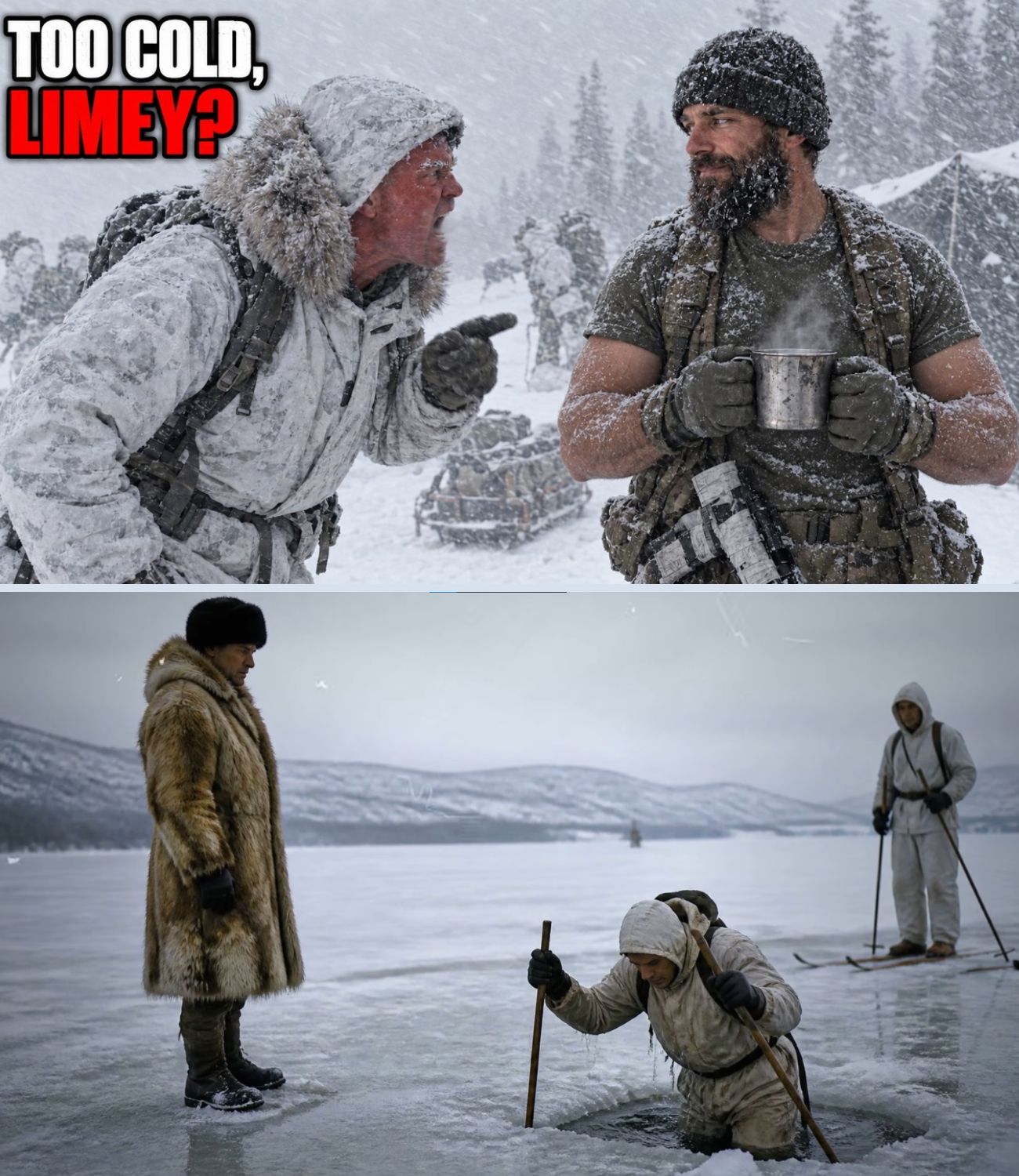
The third blow was ice, and ice is the Fenrich’s own country. He ran the drill on the sixth morning on a frozen lake 20 minutes tab from the huts where he had cut a square hole in the ice with a chainsaw the previous afternoon. The square was 2 m by 2. The ice around it was 40 cm thick. The water under it was black and still and did not move with the wind.
The drill went like this. A trainee tabbed to the hole in full kit. belt, plate, rifle slung, stepped off the edge, went under to the chest, struggled onto his back, kicked, used his poles as improvised iceaxes to climb himself out onto the lip, got clear of the hole, stripped to his base layer, dried and redressed in reserve clothes, carried in a dry bag on the pulk, all inside 8 minutes, which was the Fenrik’s past standard.
The point of the drill was not the swim. The point of the drill was the composure the swim required. A man who panicked in that water burned his heat budget inside 90 seconds and had nothing left when he climbed out. A man who did not panic conserved his heat budget for the 5 minutes that mattered, which were the 5 minutes of stripping and redressing in the open with the wind on him.
Vatnihal had broken Norwegian trainees on this drill. He had famously on his course pulled a Lance corporal out of the water two winters earlier at the six-minute mark with the man’s hands locked white around his own poles and the man weeping without sound. He had told the man afterwards that he had failed the drill because he had failed the water. He meant it kindly. He had been right about the man who had left the course the following week.
He briefed the British on the lip of the hole in English. He said, “This is where your tea gets cold, staff sergeant. This is where we see what the regiment is made of.”
He pointed at Price. Price nodded once and said nothing. The man who had called them tea drinkers in jumpers was still in his own mind the author of the day.
Price went first. He walked to the lip, checked that his sling was clear so the rifle would float free, took a breath that did not fog because he had emptied his lungs before taking it, and stepped off the edge. He went to the chest. He did not gasp. He turned on his back. He kicked slowly because fast kicking burned heat. He drove the butt of his left pole into the ice above his head. hooked, pulled, drove the right pole, hooked, pulled, and came out of the hole flat on his belly with his rifle on his back and his face set. He crawled 3 m clear and stood up. He walked to his pulk without hurrying. He opened the dry bag. He stripped to the skin in a wind that was reading minus 29 on Vatneo’s brass thermometer. He dried himself with a square of cotton. He redressed in a sequence that began with socks and ended with the Parker, and he did all of it in a silence that was almost rude. The stopwatch stopped at 6 minutes and 31 seconds.
Vatneal did not read the timeout. Lind did. Trefor went second, 6 minutes 40. Alder went third, 6 minutes 58. Oxley went fourth. And the thing about Oxley came up again because Oxley had to drive the pole with the hand that was not whole. And he did it on the second strike instead of the first and lost 9 seconds there and came out of the water with a face that had gone from red to gray in the way faces do in the first minute after an immersion and dressed himself inside the 8-minute mark anyway at 7 minutes and 44 seconds.
The remaining four British went through at times between 650 and 720. Not one of them failed. Not one of them panicked.
By the time Price came up to the hole for a second rotation, because the drill was supposed to be done twice by each trainee, and the Fenrich, by not stopping it, was going to have to run it twice on the British as well. Vatnull had taken his glove off twice and put it on twice and tapped the thermometer with the knuckle of the second finger of his right hand, and the knuckle was swollen enough that the second tap hurt.
He let the second rotation go. The British did it in times that were on average 4 seconds slower than the first, because they were tired now, and three of them, Price included, were operating with a core temperature that was 2° below where it had started.
Vatne Ho watched Price come out of the hole the second time flat on his belly, poles driven, rifle on his back, and stand up without staggering. And he said in Norwegian to Lind, “Who taught them this?”
Lind said in Norwegian, “We did, Fenrik, 20 years ago.”
Vatnihol said nothing for a long time after that.
The drill ran to completion. His own two senior trainees went through at the end on the Fenrich’s insistence out of pride, and both passed, but one of them took 7 minutes 58 and spent the rest of the morning in the drying barn with a corporal watching him for signs of a cold related casualty that did not quite arrive.
In the drying barn, Price sat on a bench in his dry layers, and drank from his steel mug. His sleeves were rolled down this time because he was indoors. Oxley sat next to him with the empty finger of the left glove pushed back inside the glove so it was not visible. Treyor sat on the floor against the wall with his eyes closed counting breaths.
Alder wrote in the notebook. He wrote ice drill pass eight of eight average inside pass standard. Fenrik stopped reading times at Treyf.
Vatnihole in his own hut two huts across did a thing he had not done on this course before. He took out his course score sheet for the week. The laminated master he carried in his map case and he read the British column. He read it for 10 minutes without writing anything on it. Then he put it back in the mapcase. Lind coming in with coffee saw him do it and did not say anything about it.
three times. By that evening, the man had been wrong. The plateau was tomorrow.
It is the seventh day. The wind is coming off the plateau at 22 knots, and the temperature on the brass thermometer reads minus 34. The Himlfell traverse begins at a start line cut into the ice at the eastern tree line and finishes at a finish line painted on a wooden post 38 km west above a logging road where a truck will meet whoever reaches it.
In between is open ground. Drift lines run east to west. There is no cover for 29 of the 38 km. The live fire shooting stand sits exactly at the halfway point in a cleared bay with four plates at 150 m and two at 80, which is the cold stand repeated at the point of maximum fatigue.
The Fenrik’s course record on the traverse carried by a crew of his own 4 for two winters stands at 11 hours and 46 minutes. He has posted the number on the laminated sheet in the mess tent. He has tapped the sheet on his way past every morning of the week.
Alder on the morning of the traverse writes a single figure in his notebook at breakfast. He writes 10 colon 0 0. He does not show it to anyone.
The man who had called them tea drinkers in jumpers reads a short speech on the lane before the start that is shorter than any speech he has given this week and he does not look at price while he reads it. Lind standing behind him is holding the stopwatch.
They go off at 7 minutes past 6 in the morning. The British go in two sticks of four. Price leads with Traffor Oxley and a Lance Corporal called Door in the first stick. Alder leads the second with the remaining three. They move at a pace that looks from the start line like the pace of men on a long walk. The pace is deliberate. It is the pace of men who have decided between themselves that they will finish this traverse in a condition that will allow them to finish another one tomorrow if asked.
The first 10 km climb. The British climb them in 2 hours 14 minutes without stopping, except on the hour when each man drinks two swallows from a thermos kept inside his parker against the ribs. At the 10 km mark, they are above the tree line. The wind on the plateau is a different wind to the wind in the forest. It cuts along the direction of travel and takes the heat off a face in seconds. Price has his hood up now. The sleeves are down. The mug is clipped to the pulk and it is not steaming.
At 19 km, they reach the shooting stand. The bay is cleared. A Norwegian corporal is sitting at the back of the bay with a radio and a laminated sheet. The British drop pulks in sequence. Price goes onto the mat first. The carbine comes out of the parker where the magazine has been kept against his body. The first plate rings at 150 m. The second rings, the third, the fourth. He stands. He kneels. The two at 80 ring. He is up and skiing again inside 90 seconds.
Trefor is behind him on the mat. The plates ring. Oxley is behind Trefor. The empty finger of the glove flops once in the wind as he reloads. The plates ring. Older is behind Oxley. The plates ring. The second stick comes through. The plates ring. Nine shooters cross the stand. The eight British plus a sprint up by door who in the first stick re-engages a plate he judged doubtful without being asked. Nine on target. Zero misses.
The corporal with the radio writes the string on his laminated sheet with a chinograph pencil and does not say anything. He is a Norwegian soldier and he has grown up watching his own instructors shoot. He has not seen a shoot like this one on this stand.
They are back on the plateau at 21 km with the chute behind them. The last 17 km are a long controlled descent along a line Price has read off Alder’s map in the hut the previous night. The British move it faster than they moved the climb because the climb bought them the right to. They do not break into a run on the skis. They do not fall. Oxley loses a glove at the 28 km mark for 40 seconds and gets it back on without stopping the stick. Trey, somewhere around the 31st kilometer, counts his breaths and arrives at a number he keeps to himself. Alder’s pencil in the inside pocket is warm against his chest.
The finish line is a wooden post painted red at the top where the plateau falls away onto the logging road. There is a track below it. There is a truck. There is Lind who has come round by road to meet the end of the traverse because that is what the second instructor does. There is the Fenrich who has come round with him because he will not watch the end of this one from the hut.
Price crosses the line first with the first stick in a wedge behind him at 8 minutes 3 in the afternoon. The second stick crosses 9 minutes later at 17 minutes 3. Lind clicks the stopwatch at the moment older ski crosses the line. He looks at the dial. He reads it in Norwegian out loud so the Fenrich hears it, “9 hours and 51 minutes.”
The British Eight stand in a line below the post with their pulks tracking true behind them. They are not sweating. They are not shaking. Price drinks from the steel mug once and clips it back to the pulk. Oxley rolls his left glove off and shakes feeling into the three fingers he has and puts the glove back on. Tour stops counting. Alder takes the hardback notebook out of his inner pocket, opens it to the page where he had written 10 colon 0 0 that morning, and crosses out the zero in the 10 and writes a nine over it in pencil. He closes the book.
The course record on the Himlfell traverse carried in Erling Vatnull’s own hand for three winters stood at 11 hours and 46 minutes. The time on Lynn’s stopwatch reads 9 hours and 51 minutes. The gap is 1 hour and 55 minutes. The gap is bigger than the gap between a passing time and a failing time on his own loop. The gap is bigger than the gap his own best crew ever beat the pass standard by. The gap is the kind of gap you cannot explain by weather because the weather today is worse than the weather on the day the record was set. And the Fenrich knows this because the Fenrich keeps a weather log and reads it every morning. and he has read it this morning, and he knows.
He is standing by the finish post with his gloved hands at his sides and the brass thermometer on his zip reading minus 34 and his mouth slightly open. Lind holding the stopwatch, does not click it off. He wants the Fenrich to see the number on the dial for a few seconds longer. “9 hours and 51 minutes. Zero casualties. Nine of nine on target at the stand. Eight men, two sticks, full pulks in his weather on his plateau under his clock.” He is going to have to sign it.
The signing happened in the mess tent at the training area the same evening because the Fenrich’s own course procedure required it. The school sheet for the week was a single sheet of A3 in a plastic sleeve laid flat on the long table under the laminated record board. The chief instructor signed it at the bottom. The course sponsoring officer signed it under that. The sheet was then photographed, forwarded, and the original filed. The procedure had been in place for 7 years. Erling Vatnehal had written it himself.
He came into the mess tent at 17 minutes 6 in the evening, with his parker open and his hood down and the brass thermometer on his zip, reading an indoor temperature he did not notice. Lieutenant Colonel Amund Trigve had driven up from Bardos in the afternoon on word from Lind that the traverse had gone the way it had gone. He was sitting at the end of the long table with a green pen uncapped and in his hand. Lind was standing behind him. Major Frank Elaston, the British liaison, was standing to one side with his cold pipe between his teeth.
The detachment who had been asked by Alder to attend were standing along the opposite wall of the tent in dry layers. Price was still holding the steel mug. He had refilled it from the messern and had not drunk from it yet.
Vatneal walked to the table. He took the chinograph pencil out of his breast pocket and put it down. He took out his own pen, which was black, and uncapped it. He stood over the sheet. The sheet had the week’s results on it. The ski march loop times, the cold stand times, the ice drill times, the traverse time written out at the bottom in Lynn’s hand in black ink. 9 hours and 51 minutes, eight of eight finishes in condition fit to continue. Nine of nine on target at the live fire stand. Zero casualties, zero misses.
He read the sheet. He read it twice. He tapped the brass thermometer on his zip, which was the thing he did when he was about to say something. And this time he found no comfort there because the thermometer was reading the inside of the mess tent, and the inside of the mess tent did not care what he was about to say.
He signed. He wrote his name in black ink in the box in the bottom right corner of the sheet in a hand that was steady because he was a professional and he had been a professional for 22 years and because whatever else was true in the tent at that moment his signature was not going to be the thing that failed him. Try give signed under him in green ink. The green was the only green on the page in a page of white and black.
Nobody spoke for perhaps 15 seconds. The ern ticked at the back of the tent. Elaston kept the pipe in his teeth and did not light it because it was warm indoors and the stem would not have frozen to his lip. But he did not light it anyway because the moment was not his.
Lind said it. He said it in English so the British would hear him and in a voice that was level because Lind was a decent man and decent men do not perform. He said, “The Fenri’s course did not break them. The Fenri’s course was answered.”
He did not look at his boss when he said it. He looked at the sheet.
The Fenrich heard it. The Fenrich had heard it the moment Lind had said, “We did, Fenrik, 20 years ago,” the previous morning at the icehole, and he had heard it again at the finish post that afternoon, in the 1 hour and 55 minutes of silence between the first stick crossing and his own voice beginning to work again. He heard it now a third time, and he did not reply because there was nothing to reply to that would not make the thing on the table larger than it already was.
He looked up. He looked across the tent at Price. Price had the steel mug in his hand, the sleeves of his shirt were down because he was indoors. The man who had been told at 9 on a morning 6 days earlier in a wind off the Lingan Alps that the cold had already decided about him held the mug and did not raise it and did not lower it and did not smile. He simply looked back. He let the Fenrich look at him for as long as the Fenrich needed to look at him.
He had been told as a young trooper by a staff sergeant who was dead now that there was no reward in rubbing a defeated man’s face in his own words because the words did it to the man without help. He believed it. He stood with the mug.
The fenrich kept his pen. He put it back in the breast pocket. He stepped away from the table and walked in his open parker with his hood down out of the mess tent into the dark. He did not slam the flap. He let it fall.
Elveston took the pipe out of his teeth. He said to nobody in particular, “That will do.”
Trigive, in green ink, drew a small cross next to his own signature in a mark that meant witnessed and archived, kept his pen, folded his hands on the table, and said in careful English, “Thank you, Captain Alder.”
Alder nodded once, and did not take out the pencil.
Outside, the wind was still coming off the plateau. The fenrich was walking back to his own hut. He was alone with 22 winters and a number on a sheet in his own hand that he could not argue with. He had been right about the tea. He had been right that the Welshman with the steel mug had been drinking it in short sleeves in a wind that was cutting a Norwegian trooper’s cheek open 15 m behind him. And he had been right that no instructor on his course had ever seen a man do that before. He had been right about the surface of it. He had been catastrophically wrong about what it meant.
The cold had decided, and it had decided against him, and the men he had called tea drinkers in jumpers had been the ones who read the verdict first.
The score sheet from that week went into the archive at Bardos in a buff folder marked with the date and the course number, and it stayed there. The record on the laminated sheet in the mess tent was not changed. Erling Vatneral let it stand with his own old number on it because the thing that had happened on his plateau was not going to be solved by changing a number on a wall.
He finished the course the next morning. He shook each of the British men’s hands at the gate because the procedure required it and he said good work once in English to Alder and nothing to Price because Price did not need to be told and would not have accepted the telling.
The detachment went out through the gate on a truck and were gone before lunch. They did not look back. They had been taught in the Breen Beacons by sergeants who had been taught by Norwegians 20 years earlier that you did not look back at a man after you had answered him. You left him with the answer.
The regiment does not keep course score sheets on walls. It does not need to. The men who had been on that plateau went on to other work in other weathers, and the time on the Himlfell traverse was never written in any Heraford corridor, and never spoken of out loud by any of the eight who ran it.
Price, back at Credinhill the following week, washed the steel mug once and put it back in his locker. Oxley sewed up the little finger of the left glove along the inside seam so it would not flop in the wind the next time he had to shoot in cold. Trefor asked by a corporal in B squadron whether the Norwegian course had been hard, said it was fair, corporal. It was a fair course.
Alder’s pencil notebook went into a locked drawer in his office. He did not open it again until the following winter.
The man with 22 winters on him kept running the course. He ran it the next year and the year after that. His speeches got shorter. He stopped using the word limey on the lane. He kept the brass thermometer clipped to his Parker zip because it was a useful tool, and he stopped tapping it before he spoke, because he had learned on one afternoon in late February that the thermometer did not confirm him. The cold confirmed in the end only the men who respected it. He had said the cold would decide. The cold had the men who have the stomach for the slow, cold counted work tend to find each other. If that is you, you know where to
You Might Also Enjoy

“We Thought They Would Negotiate”—What Argentine Soldiers Said When The British Attacked Goose Green

“You’ll Never Finish My Ruck March, Limey” — US Sergeant Who Challenged the SAS, Then Fell Out First






