Catherine Shares DEVASTATING Message That Leaves The ENTIRE Royal Family In SHOCK!

The Small Black Speaker on the Tea Table: Inside Princess Catherine’s 11-Minute Audio Ultimatum That Stunned the House of Windsor
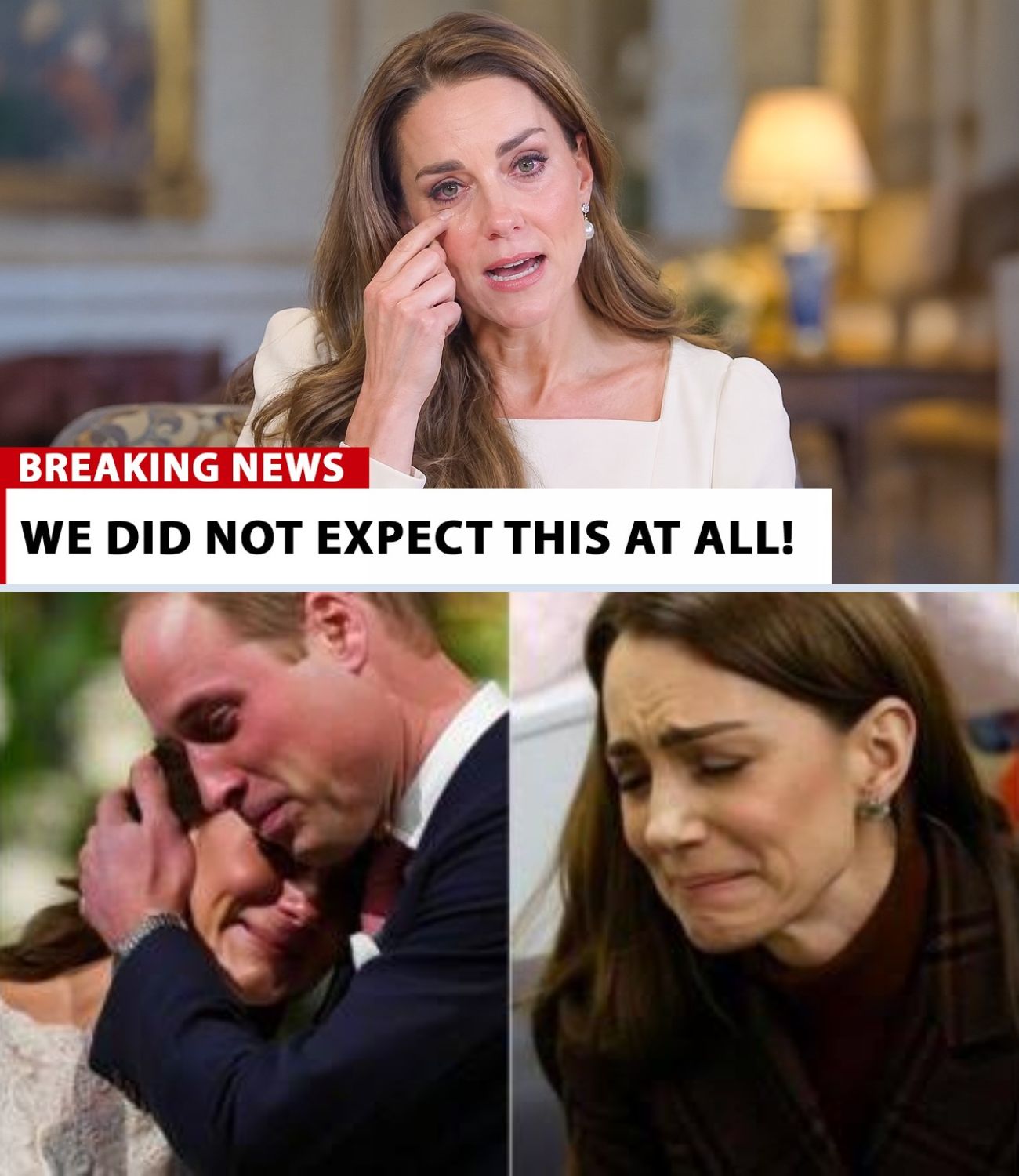
There is a very particular brand of silence that settles over the private apartments of Windsor Castle when centuries of unwritten protocol are broken without a single voice being raised. It is not the silence of polite agreement, nor is it the quietude of respectful contemplation. It is the heavy, motionless vacuum left behind when someone drops an unexploded ordinance into a drawing room and simply walks away.
On a quiet Sunday afternoon late in September, that vacuum filled the air around a silver teapot and a small, unpretentious black speaker.
The woman who had orchestrated this moment was not even in the room. While King Charles III sat stiffly in his armchair, Queen Camilla stared fixedly at the Persian carpet, and Princess Anne stood rigidly by the tall sash window overlooking the lawns, Catherine, Princess of Wales, was back at Forest Lodge, standing by her kitchen tap and washing two clean coffee cups. She had not attended what was technically her own family council. She had not needed to. For months, she had attempted to enter those rooms in person, to sit across mahogany tables and reason with the monolithic machinery of an ancient institution, only to find herself met with the most formidable weapon known to the House of Windsor: absolute, velvet-gloved dismissal.
They had not been cruel to her. Cruelty leaves bruises; it creates friction; it gives the aggrieved party something tangible to push against. What Catherine had endured was something far more insidious, a process she later described to her husband with chilling precision: “They don’t ignore me. They summarize me.”
For years, the desires, concerns, and maternal boundaries of the future Queen had been filtered upward through layers of well-meaning courtiers, private secretaries, and family intermediaries. By the time her words reached the ears of the senior generation, they had undergone a subtle alchemy. They had been rounded at the corners, drained of their urgency, tidied up for the sake of administrative harmony, and handed down as management directives rather than personal requests.
Catherine had reached the end of an exhausting sequence of quiet, civilized failures. The first had come in July, in the sun-drenched aftermath of a Buckingham Palace garden party. Waiting until the lawns had emptied of guests, she had approached an older, trusted family member to express her wish that the autumn and winter schedules for her children—Prince George, Princess Charlotte, and Prince Louis—be discussed with her before plans were carved in stone. The response had been a gentle, patronising hand on her shoulder and a warm dismissal: “Come on, not today, honey. Everything is under control.”
It sounded like comfort. In practice, it was an eviction notice from the conversation.
The second attempt occurred in August at Balmoral, following Sunday church. Amid discussions of what young George would face as he approached his adolescent years, Catherine gently interjected that she and William had not agreed to the proposed trajectory. The relative smiled, waved a hand, and murmured, “Oh, we’re just getting ahead of ourselves.” Another door, closed with a cashmere-soft smile.
The third and final attempt took place on the terrace at Birkhall in early September. Catherine asked simply if she might be present when Christmas arrangements were deliberated, rather than receiving them as a fait accompli via an office memorandum. Queen Camilla had assured her with utmost kindness that everything would be explained in due course.
That was the trap. Every refusal was wrapped in kindness. Every boundary was smoothed over with a smile. If every rejection is presented as an act of benevolent protection, how does one object without appearing ungrateful, hysterical, or fractious?
Prince William had watched these agonizing micro-interactions from the periphery. He had sat in those same meetings, heard the same soothing platitudes, and nodded along, conditioned by a lifetime of royal conditioning to accept that the institution’s convenience supersedes individual agency. But when Catherine told him that she was done writing drafts on paper—t.e.r.ing them up because a written page can be filed away and forgotten—he knew she was serious. When he warned her that the family would take it as an accusation, her reply had been the ice-cold logic that kept him awake through the night: “That’s why I want them to hear me and not your version.”
Thus, on a Thursday evening, while their three children slept soundly upstairs, Catherine sat in her living room with a small digital recorder. She spoke for eleven minutes. She stopped twice to steady her breathing, and once, quite audibly, she cried. She did not re-record the track. She handed the device to William with instructions that brooks no negotiation: play it to them together, in a single room, without intermediaries. And above all, do not tell her who in the room flinched first.
The Playing of the Tape
When William entered the private drawing room at Windsor on that fateful Sunday, carrying the small black speaker and placing it deliberately beside the silver teapot, the atmosphere was already thick with apprehension.
Charles had looked at the device with the wary curiosity of an uninvited guest, asking whether the listening session could not wait until after the grueling autumn engagements had concluded. William’s response was blunt: “She listened for a long time. That was the problem.”
With a press of a button, Catherine’s voice filled the room. It was not the crisp, polished broadcast tone the public hears on feast days or charity videos. It was raw, hesitant, and intimate—the voice of a woman who had run out of diplomatic channels.
“Your Majesty, Camilla, I’m sorry to say this to a speaker,” the recording began, before a brief, heavy pause hung in the air. “I would say it to your face if I could.”
She did not begin with grievances about her children or complaints of isolation. She began with William, and with the heavy, unyielding burden they had both been handed at the altar of the state. “William and I were asked to carry the future. We said yes, we will continue to say yes, but somewhere along the way I became the part that is remembered last.”
In the corner of the room, King Charles’s hand clenched so tightly around the mahogany armrest of his chair that the knuckles whitened—the only visible sign of physical agitation in a man trained from infancy to master his own nervous system.
The genius of Catherine’s deposition lay in its structure. She did not accuse; she described. By framing every critique within an explicit reaffirmation of her devotion to her duty and her marriage, she rendered herself immune to the standard royal counter-offensive of dismissing her as a disgruntled outsider. She was not demanding a higher title, a larger office, or a bigger allowance. She was demanding something far more radical and far more dangerous to an ancient hierarchy: she was asking to be present, in the same room and in the same breath, when the parameters of her own life and children were decided.
Princess Anne’s shoulders, framed against the tall windows, grew tense. Camilla’s eyes remained glued to the floral carpet. The tea in the silver pot cooled.
Then came the passage that struck closest to the bone—her parents, Carole and Michael Middleton. For years, the middle-class Middletons had navigated the labyrinthine snobbery of the upper echelons with a disciplined, silent grace, turning up to every royal function to which they were bidden, sitting wherever they were pointed, and never once offering a public word of complaint. Catherine’s voice dropped an octave, thinning with quiet emotion: “They showed up to every event I invited them to, sat wherever they were told, and never once complained. They don’t know I’m saying this, but I’m tired of seeing them politely thanked and seated as if their role is secondary compared to those who happened to be born into this family… They are the reason our children know what it’s like to be loved without any coercion.”
No one breathed. To elevate the Middletons—warm, grounded, commercial, ordinary people—above the blood-soaked aristocratic pedigree of Windsor snobbery was a breathtaking ideological strike.
Yet it was when she turned to the children—George, Charlotte, and Louis—that the room truly froze. She acknowledged the institutional instinct that governed them: the belief that children born into the line of succession must have their paths pre-mapped, managed, and sanitized before they are old enough to spell their own names. She conceded that this system was born of a desire for protection, of shielding infants from the merciless scrutiny of the global press.
Then came the sentence that likely took the air directly out of King Charles’s lungs: “I’m their mother, and I won’t be told about everything after the fact anymore.”
She outlined her terms with chilling, administrative calm. At the upcoming Christmas summit at Windsor, she would speak for herself. Her household would not be ventriloquized by courtiers. If she and William were bypassed in future planning regarding the children, she simply would not attend. It was not a threat; it was a weather forecast.
Finally, her voice shifted register, addressing Queen Camilla directly. It was perhaps the most psychologically astute maneuver of the entire broadcast. Rather than casting the Queen as an antagonist, Catherine embraced her within the shared tragedy of institutional survival: “Camilla, I want you to know: none of this is directed against you. You were kind to me whenever I needed it. You have inherited these responsibilities as much as I have, and you have borne them with more dignity than anyone had a right to demand. I’m not asking you to stop. I ask you to let me stand by you in this.”
With those four sentences, she stripped away the cartoonish media narrative of the wicked step-grandmother and recast Camilla as a fellow prisoner of the Crown—someone who understood precisely what it meant to be an outsider handed an unmanageable legacy.
As the tape clicked off, silence swallowed the room. Eleven minutes of human voice vanished into the quiet tick of an antique clock on the mantelpiece.
The Fallout and the Broken Protocol
For several long moments, nobody moved. The small black column stood on the tea table like an unblinking magistrate.
It was Charles who broke the silence first, retreating instinctively into the linguistic reflexes of a family terrified of emotional gravity. He addressed his remarks not to his son, but to the cold hearth: “She was upset when she wrote it down.” It was the classic royal maneuver—reducing a calculated, razor-sharp political and personal declaration to a mere hormonal fluctuation or a passing mood.
William would have none of it. “She meant every word,” he said, his voice flat and unyielding.
The King turned his head sharply. “You knew what it said?”
“I knew she was recording something,” William replied, staring down his father without flinching. “She heard it once. She asked me to put this recording on, and I promised. I asked her to wait, and she did. Three times she tried to tell you in person, and three times someone said, ‘Come on, not today.’ I was present during one of those incidents. I didn’t say anything either.”
In a family culture where junior members are expected to absorb institutional slights with a stiff upper lip, for an heir to the throne to stand in front of his sovereign father and confess his own complicity in silencing his wife was nothing short of seismic.
Camilla, whose hands had been trembling so badly she could not initially find her reading glasses, slowly placed them on the mahogany tray. She looked not at William or the King, but at the little black speaker. “Charles, will you allow me?” she murmured softly, before standing up and walking out of the room, closing the door quietly behind her.
What followed was not a shouting match, but a devastating tactical re-evaluation among the remaining men. Charles attempted to defend the traditional protocols, arguing that secrecy around royal children was not control, but necessary armor against a predatory media. “When children’s future is talked about openly, there will always be people ready to turn it into a sensation. A decision made quietly protects them.”
William countered with a phrase that hung in the air like acid: “It was a protection for those who made the decisions. Those affected by these plans were not those being protected. Catherine is not asking you to stop defending them. She asks to be one of those who decides how to do it.”
When William laid out his wife’s three non-negotiable demands—that Catherine speak for herself on Christmas arrangements, that no decisions be made about the children without both parents in the room beforehand, and that Charles personally validate Carole and Michael Middleton as true family rather than tolerated props—the King realized he had run out of procedural loopholes.
Outside in the corridor, Camilla had not fled in anger; she had retreated to a quiet alcove with the recorder to listen to the final minutes once more. Hearing Catherine’s quiet plea—“I ask you to allow me to stand by you in this”—had pierced the armor of a woman who had spent decades guarding her own perimeter. Returning to the drawing room, Camilla delivered the final, fatal blow to the old guard’s resistance: “They didn’t do her a disservice. It’s easier to bring a resume into a room than a living person, but she brought herself to us. No one in this family has ever told us this out loud.”
The King looked at his hands, stood up, and walked to the door. Opening it himself to his son and sister waiting in the hallway, Charles issued a single, decisive directive that signaled the end of an era: “William, call your wife at Forest Lodge.”
The Shift at Windsor
When Catherine received William’s call back at Forest Lodge, she was standing by her kitchen sink. She listened quietly as William relayed the King’s invitation, but she did not rush back like a scolded schoolgirl. She made it clear she would return only on her own terms—not to be thanked, not to be placated, but to occupy her rightful space.
When she arrived at Windsor Castle later that evening, wearing the same plain dark coat she had worn to the school gates, history was quietly made in the drawing room.
As she approached the door, King Charles did something that no reigning British monarch had done for generations: he rose to his feet before she had even crossed the threshold. Defying the ancient rule established by the late Queen—whereby the sovereign remains seated while family members stand—Charles crossed the long room to meet his daughter-in-law.
“Catherine, I heard you,” he said, his voice unusually soft.
“I know,” she replied, meeting his gaze without hesitation. “I am sorry it was over the loudspeaker.”
“Don’t be sorry,” the King murmured, extending his arm with a blend of formal chivalry and genuine vulnerability that left the room spellbound.
What followed was not a bureaucratic compromise, but a total capitulation of the old order. Camilla took Catherine’s hand, promising to invite the Middletons to Windsor for tea on personal terms. Charles gave his solemn word that the children’s schedules would never again be meddled with behind their parents’ backs.
And then, as the evening shadows lengthened across the Berkshire lawns, an astonishing thing happened. The King of the United Kingdom—a man who had never poured a cup of tea for another human being in his private life—stepped over to the silver service, lifted the heavy silver teapot, and carefully poured a cup of tea for Princess Wales, sliding his own chair into the tight circle of family.
The monarchy did not collapse that day. No crowns rolled into the gutter, and no constitutional crisis hit the front pages of the tabloids. Instead, something far more profound occurred. The heavy, immovable furniture of an ancient dynasty shifted an inch, just enough to let a mother sit down at the table where her children’s future was being written. And in a family where tone is destiny, that single inch weighed as heavily as the entire realm.
You Might Also Enjoy

“We Thought They Would Negotiate”—What Argentine Soldiers Said When The British Attacked Goose Green

“You’ll Never Finish My Ruck March, Limey” — US Sergeant Who Challenged the SAS, Then Fell Out First






