Catherine’s New Home Is More SECRETIVE Than You Think
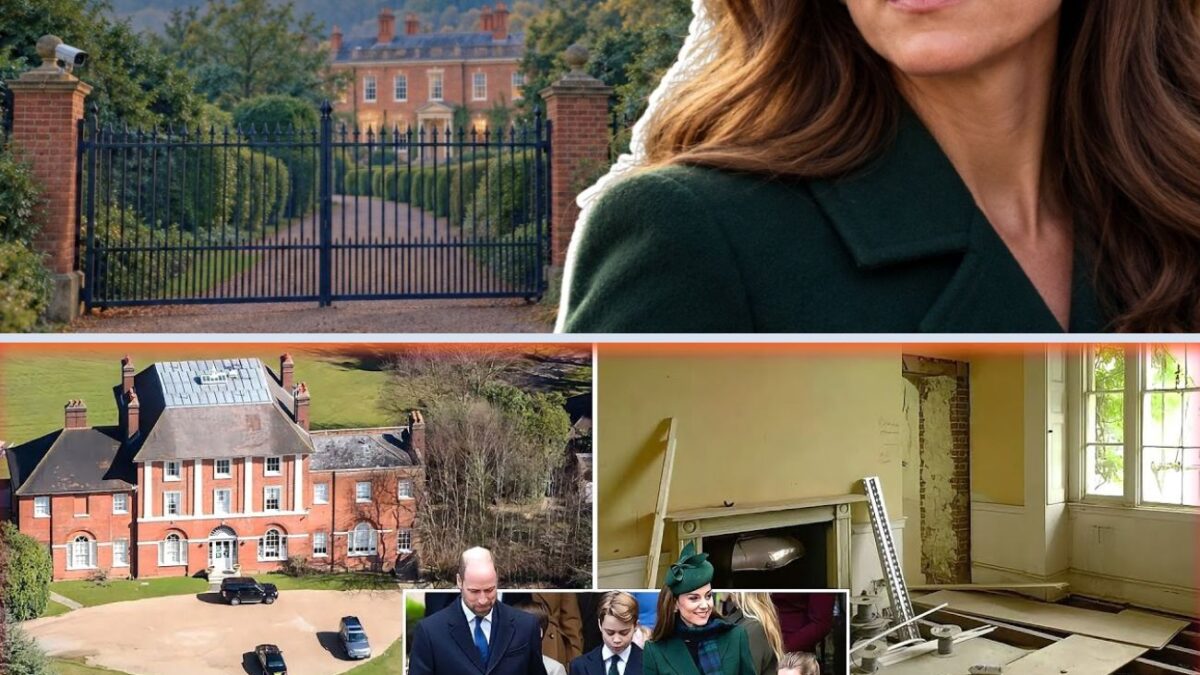
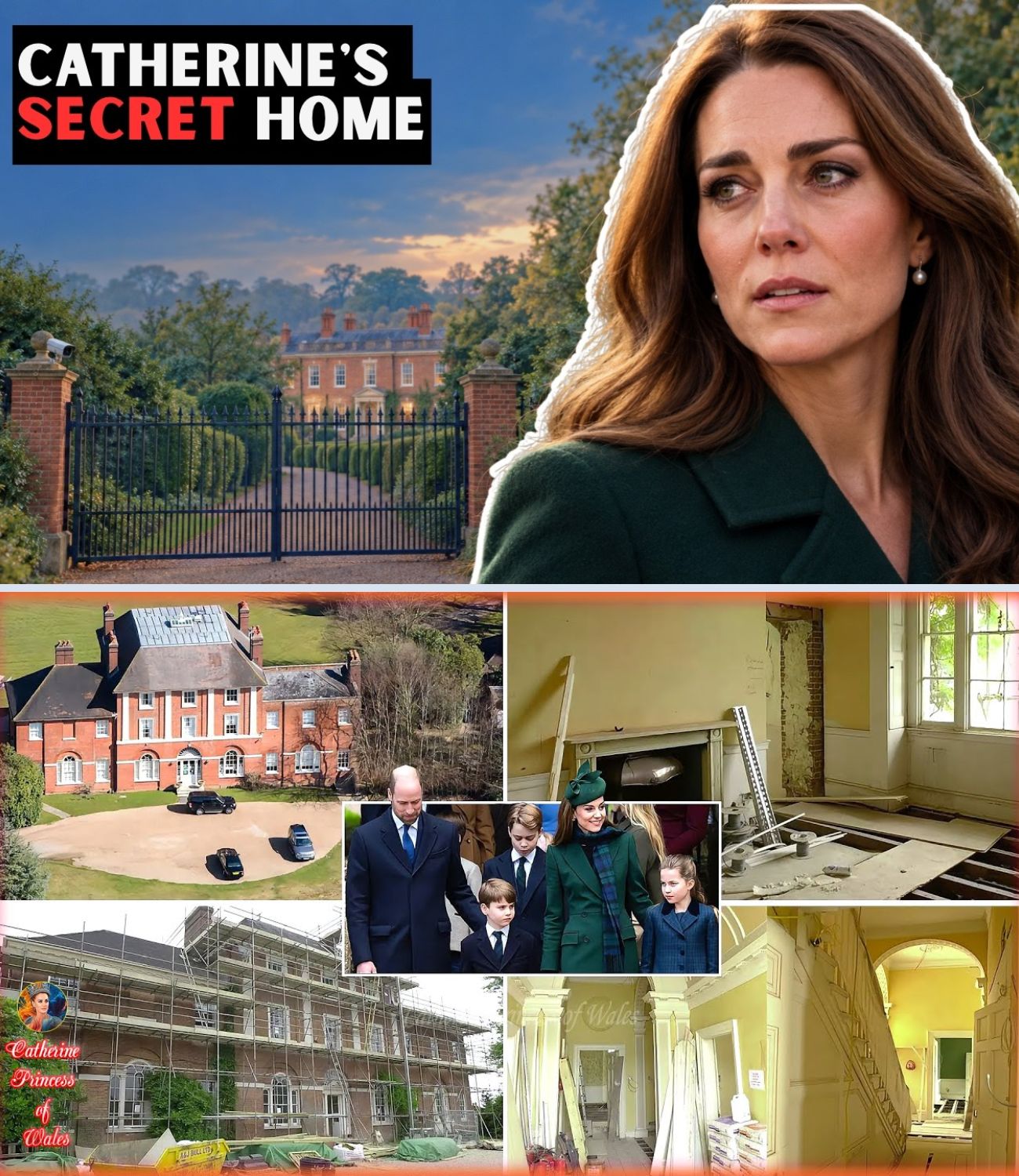
On the 4th of September, 2025, a Home Office Minister named Dan Jarvis signed a statutory instrument and sent it to Parliament. The order sealed 150 acres of Windsor Great Park behind a 2.3-mile security perimeter, closed a public car park, shut down footpaths locals had walked for decades, and made trespassers subject to arrest. Dog walkers who had paid £110 a year for access permits discovered their routes had vanished behind new fencing, cameras, and police patrols. The reason was an eight-bedroom Georgian house most British people had never heard of. The house was called Forest Lodge. Before that, it had been called Holly Grove, a name that was eventually changed after a debate in 1936 and 37, when a member of the royal household reportedly considered Holly Grove distasteful. A property had been standing on the site since at least 1697, tucked deep inside the 4,800-acre expanse of Windsor Great Park in Berkshire, England. The version standing today was designed around 1772 by Thomas Sandby, a man who held the title of Deputy Ranger of the Park, served as a founding member of the Royal Academy of Arts, and left behind, as his principal surviving architectural work, this nine-bay Georgian brick mansion. The very building that would eventually require a government minister to sign formal paperwork and present it to Parliament before a young family could move in. The mansion had Venetian windows, a chandelier-lit ballroom, a paddock, a tennis court, a lake on the grounds, and views that an early historian of the park described as varied and extensive across the forest and the Great Park itself.
For over a century, Forest Lodge served as the official residence of the Deputy Ranger of Windsor Great Park, a position that carried administrative authority over thousands of acres of Crown land. Sir Malcolm Murray was the last person to hold that title. And when he retired from the role in 1937, the house lost its institutional purpose and drifted into a quieter existence. After that, it passed through a sequence of tenants and custodians, underwent a restoration costing 1.5 million pounds in 2001, funded by the Crown Estate, and was subsequently listed on the rental market at 15,000 pounds per month. For years, the future king of England’s forever home had been available to anyone with the rent and the right relationship to the Crown Estate. But the family moving into Forest Lodge in the autumn of 2025 was not looking for grandeur. They were not looking for a ballroom, or a chandelier, or a lake. They were looking for something far more difficult to find inside the machinery of the British monarchy. They were looking for genuine privacy. And they were leaving behind a four-bedroom cottage half a mile from Windsor Castle. A cottage that a respected royal biographer had publicly described as a place of pain, suffering, and sadness. To understand why that cottage could no longer hold them, you have to understand the residential journey that brought them there. And that journey begins not in Windsor, but in central London, in a palace apartment where the question of royal privacy first started to fracture.
Apartment 1A at Kensington Palace had not been substantially updated since Princess Margaret and Lord Snowdon moved in around 1963. By the time William and Catherine were assigned the property following their marriage, the building required extensive structural attention. According to the 2014 Sovereign Grant Report, the renovation cost 4.5 million pounds of taxpayer money. The work included major roof repairs across the four-story structure and the removal of asbestos that had been embedded in the building for decades. William and Catherine paid privately for a second family kitchen to supplement the official working kitchen used for palace events. A Kensington Palace spokeswoman told reporters at the time that the couple have been at pains to keep costs to a minimum and were mindful this is public money. The apartment itself was substantial, roughly 20 principal rooms, though some accounts place the total considerably higher when ancillary offices and storage spaces are included. It had a private walled garden entirely screened from the public. The surrounding neighborhood was London’s Kensington, home to the Victoria and Albert Museum, the Natural History Museum, and a constellation of embassies and celebrity residences. Photographers worked the streets daily. Tourists gathered outside the palace gates every morning, waiting for glimpses of the family or hoping to photograph the building. Every school run, every walk with the children, every trip to a local shop crossed through a landscape where the lens was always somewhere. The palace spokesman said in 2014 that William and Catherine intended to remain in apartment 1A for many, many years to come. They stayed fewer than 10.
Before that apartment, there had been Nottingham Cottage, universally nicknamed Nott Cott, a two-bedroom starter home tucked within the Kensington Palace grounds. It had two small reception rooms, a single guest bedroom, and a compact front garden that barely qualified as outdoor space. Prince Harry had lived there briefly before William and Catherine took over. It was the first married home, the place where the earliest habits of family life were established, and where the tension between their desire for intimacy and the architecture of royal duty first became impossible to ignore. By the time Prince George arrived in 2013, followed by Princess Charlotte in 2015, and Prince Louis in 2018, the family of five was managing across multiple residences. They divided their time among apartment 1A for London life and official engagements, and Anmer Hall on the Sandringham estate in Norfolk for countryside retreats and extended holidays, and the relentless public calendar of two senior working royals raising three direct heirs to the throne. William reportedly wanted to reshape the family’s domestic existence around a different set of priorities. Catherine wanted the children closer to her parents, Carole and Michael Middleton, who lived in Berkshire, under an hour’s drive from Windsor. The solution, when it finally came, looked deliberately and almost aggressively modest. Adelaide Cottage was a four-bedroom property sitting in Windsor Home Park, the 655-acre private royal park that directly surrounds Windsor Castle. The cottage sat half a mile from the castle itself, connected by seven gated entrances and exits, seven private routes through which the family could pass without encountering a single photographer or tourist.
It was classified as a grace and favor residence, a term with centuries of institutional weight behind it. The monarch personally decided who lived there. No application process existed. The home was given at the sovereign’s discretion and could be taken back at the sovereign’s discretion. In the summer of 2022, Queen Elizabeth, who had made Windsor Castle her full-time permanent residence in March of that year, leaving Buckingham Palace behind, made Adelaide Cottage available to William and Catherine. The decision was reportedly one of Elizabeth’s last acts of domestic management within the royal estate system. She died on the 8th of September, 2022, just weeks after the family moved in. The gift and the loss arrived almost simultaneously. Catherine’s children had barely unpacked their bedrooms before the Queen’s funeral procession passed through the same Windsor grounds. The choice of Adelaide Cottage was calculated to avoid every controversy that had recently plagued royal housing decisions. The cottage required no taxpayer-funded renovation. There would be no repetition of the Frogmore Cottage debacle, where Prince Harry and Meghan Markle’s 2.4 million pound refurbishment, funded by the Sovereign Grant, had become such a public embarrassment that the couple eventually repaid the money in full. Adelaide Cottage had already undergone a thorough renovation in 2015, with historical architectural features left intact. It was precisely the right size for a family of five that intended to live without any residential staff whatsoever. No butler, no live-in nanny, no housekeeper sleeping under the same roof. The children, the family made publicly known, would be expected to do chores. The future king of England would drive himself on the daily school run to Lambrook School in Berkshire. A source close to the family told journalists at the time of the move that William and Catherine had no other demands than a pleasant family home close to schools and the Queen.
The cottage was estimated to be worth approximately 2 million pounds on the open market, modest by royal standards, nearly invisible compared to the multi-million pound palace they had left in London. It was, on every visible surface, a portrait of royal normalcy. Intimate, unpretentious, grounded, and self-consciously ordinary. But Adelaide Cottage was not ordinary, and its walls carried far more history than anyone in the family’s communications team was publicly acknowledging. The cottage had been built in 1831 by architect Sir Geoffrey Wyattville as a summer retreat for Queen Adelaide of Saxe-Meiningen, consort of King William IV. It was designed in the fashionable cottage orne style, a decorated cottage meant to appear rustic and charming from the outside, while concealing interiors that had nothing rustic about them whatsoever. The exterior was pale stucco, accented with French windows, a covered veranda, a port cochere for arriving carriages, and delicate gingerbread trim along the roofline. Inside, the principal bedroom ceiling was adorned with gilt dolphins and rope ornament salvaged from the royal yacht HMY Royal George, a vessel built at Deptford Dockyard, launched on the 17th of July 1817 for King George III, used by successive monarchs until 1842, and eventually broken up in 1905. The gilded naval decorations had been stripped from the yacht’s interior and pressed into the ceiling of a Queen’s summer bedroom. Beneath those dolphins, the room also featured a marble fireplace in the Regency Greco-Egyptian style, an ornate piece that had survived nearly two centuries of occupation.
At the time of its construction, a contemporary account described the cottage as chastely elegant, noting two public rooms, a retiring room for the Queen, a pages room, and furnishings taken from the nearby Royal Lodge. Queen Adelaide first used the cottage on her birthday, the 13th of August, 1831. That detail about the Royal Lodge materials carried a particular weight that no one was discussing. The building materials for Adelaide Cottage had come partly from demolished sections of the Royal Lodge, the very same Royal Lodge that Prince Andrew now occupies under a 75-year lease signed in 2003, for which he paid 1 million pounds up front and subsequently spent an estimated 7.5 million on refurbishment. The same 30-room mansion that sits at the center of the bitter ongoing dispute between Andrew and King Charles over whether the disgraced Duke should surrender the property. Catherine’s first Windsor home was physically constructed from the demolished remains of Andrew’s current one. Bricks, timber, decorative elements taken from one royal residence to build another. In the world of Crown property, nothing is ever truly new. Every wall contains the remnants of a family argument that may not have happened yet when the materials were first laid. And those walls had witnessed genuine scandal decades before Catherine or her children ever slept under them.
In the spring of 1945, Group Captain Peter Townsend moved into Adelaide Cottage with his first wife Rosemary and their two children. Townsend was a decorated Battle of Britain pilot who had been appointed personal equerry to King George VI in 1944. His duties included direct personal attendance on the king, accompaniment on royal tours, and the chaperoning of the king’s two daughters, Princess Elizabeth and Princess Margaret. Margaret was a young teenager when she first encountered Townsend. He later recalled her as an unremarkable girl of 14. The romantic relationship between them, according to multiple biographies, did not develop until several years after that, reportedly during the late 1940s and early 1950s. For years, the attachment grew quietly behind the cottage walls, a private world of controlled proximity and impossible desire operating within the formal rhythms of the royal household. Townsend later wrote about Adelaide Cottage in his memoir Time and Chance, complaining about its rudimentary heating and limited amenities. One later account described the cottage simply as an ice box. The man who had flown Hurricanes over the English Channel found the cottage physically inhospitable. But the cottage was also the place where one of the most famous forbidden romances in modern British history took root and flourished in secret.
The secret held until the 2nd of June, 1953, the day of Queen Elizabeth’s coronation. In Westminster Abbey, surrounded by the full weight of British ceremonial tradition, Margaret was seen brushing a piece of lint from Townsend’s uniform, a gesture so intimate and so unmistakable that journalists recognized it immediately for what it revealed. Townsend and Rosemary had divorced in 1952. The press erupted. Margaret was eventually forced to choose between marrying a divorced man and keeping her place in the royal succession and her civil list income or renouncing the relationship and preserving her position within the family she had been born into. She chose the crown over the marriage. The romance ended. Townsend eventually left Adelaide Cottage and the cottage, having absorbed the whole affair through its poorly heated walls, simply waited for the next occupants and the next set of secrets.
What followed was a quiet domestic geography that linked two royal women across half a century without either of them choosing the connection. Princess Margaret eventually moved into apartment 1A at Kensington Palace after her marriage to Lord Snowdon in 1960. The same apartment William and Katherine would later occupy after its 4.5 million pound renovation. Then Katherine moved from that apartment to the very cottage where Margaret’s forbidden lover had lived. The residential path of these two women, separated by 50 years, traced the identical lines through the royal geography of London and Windsor. Palace apartment to Windsor Cottage with the same institutional pressures shaping both trajectories. Public duty, private pain, borrowed houses, and the permanent question of who controls where a royal woman lives and how much privacy she is permitted to have inside those walls.
The cottage’s royal lineage extended even further back. Queen Victoria had visited Adelaide Cottage so frequently for breakfast and tea in the gardens that a private carriage way was constructed specifically so she could arrive without being observed by anyone she preferred to avoid. The Royal Collection Trust holds a watercolor by Caleb Robert Stanley from 1839, catalog number RCIN 919766, showing the cottage garden with what were called Hardenberg baskets, circular flowerbeds ringed with metal hoops and decorative tiles. It was a meticulously maintained retreat that queens had been constructing around this property for the better part of two centuries. After Townsend departed, the cottage passed through a succession of grace and favor residents connected to the royal household. The final resident before the 2015 renovation was Simon Rhodes, son of Margaret Rhodes, who had been Queen Elizabeth’s first cousin and one of her closest lifelong confidants. The cottage never left the family’s orbit. It circulated among people the institution trusted.
When William and Catherine arrived in September 2022, the arrangement seemed to work precisely as intended. The children enrolled at Lambrook School nearby. William drove himself on the daily school run. Catherine walked the children through the park with Orla, the family’s cocker spaniel. Elizabeth was a 10-minute walk away at Windsor Castle, close enough to visit spontaneously, far enough to preserve the boundaries the family wanted. The Middleton parents were under an hour’s drive south. There were no photographers at the gate, no tourists on the footpath. The seven private entrances to Windsor Castle meant the family could come and go with something approaching genuine invisibility. For roughly 18 months, Adelaide Cottage functioned as the shelter it had been chosen to be.
Then came January 2024, and everything the cottage was supposed to protect against came through the walls anyway. On the 16th of January 2024, Catherine underwent what Kensington Palace described as planned abdominal surgery at the London Clinic in Central London. The palace said the surgery was successful, that the condition was believed to be non-cancerous and that Catherine would not resume public duties until after Easter. William was photographed driving himself away from the hospital the following day. Catherine returned to Adelaide Cottage to recover in the four-bedroom house with no live-in medical staff, no resident nurse, and three children under the age of 11. Then, the silence began. For weeks, the palace released almost nothing. No photographs, no updates beyond the initial statement, no timeline for return. The silence was intended as privacy. It produced precisely the opposite.
Conspiracy theories multiplied within days. Where was Kate? What had the surgery actually been for? Why was the information so aggressively controlled? Social media speculation turned frantic, then paranoid, then cruel. Tabloid journalists staked out every angle of the Windsor estate. Paparazzi tried to photograph the cottage from public footpaths. The four-bedroom house, surrounded by 655 acres of private parkland, was supposed to offer protection. Instead, it became the epicenter of the most intense media scrutiny Catherine had ever experienced. Not because information was leaking out of the cottage, but because nothing was coming out of it at all.
On the 10th of March 2024, Kensington Palace attempted to break the cycle. A Mother’s Day photograph was released showing Catherine smiling with her three children. The image looked natural, warm, deliberately ordinary. Within hours, it was destroyed. Multiple international news agencies, including the Associated Press, Reuters, and Agence France-Presse, withdrew the photograph after identifying clear signs of digital manipulation. Alignments were inconsistent. Elements had been altered. The image had been edited in ways that professional news organizations could not overlook. Catherine issued a brief personal apology saying she occasionally experiments with editing. The result was catastrophic. The attempt to project normalcy from inside Adelaide Cottage had not only failed, it had confirmed the suspicion it was designed to dissolve. The manipulated photograph proved more effectively than any tabloid accusation that something real was being concealed behind the cottage walls.
12 days later, on the 22nd of March 2024, Catherine told the world what it was. In a pre-recorded video released across social media platforms, she revealed that tests following her January surgery, which had initially been expected to address a non-cancerous condition, had discovered cancer. She was undergoing preventative chemotherapy. She described it as a huge shock. She said she and William had been doing everything we can to process and manage this privately for the sake of our young family. She asked the public and the media for understanding, for space, and for respect.
The announcement came just weeks after King Charles had disclosed his own cancer diagnosis in February. An unspecified form of cancer discovered during treatment for an enlarged prostate. The heir to the throne and the heir’s wife were both undergoing cancer treatment at the same time. The British monarchy had never faced this particular configuration of institutional vulnerability. The BBC later described it simply as a challenging 18 months.
Catherine spent the spring and summer of 2024 recovering inside Adelaide Cottage. Chemotherapy administered while the golden dolphins from a dismantled royal yacht watched from the bedroom ceiling and a Greco-Egyptian marble fireplace anchored the downstairs room. Cancer treatment inside a house built from the demolished walls of Prince Andrew’s residence, where Peter Townsend had complained about the rudimentary heating and conducted a romance that cost Princess Margaret the love of her life. Recovery in a house that a dying queen had personally assigned to her grandson’s wife, a gift delivered just weeks before that queen’s own death.
The cottage had been designed in 1831 as a summer retreat. It was now functioning as a medical recovery facility, a protective barrier against global media scrutiny and the place where a mother of three explained her illness to children aged 10, 8 and 5. Catherine’s first public appearance came at Trooping the Colour on the 15th of June 2024. She attended Wimbledon in July. On the 9th of September, she announced that her chemotherapy was complete.
“Doing what I can to stay cancer-free is now my focus,”
she said.
“Although I have finished chemotherapy, my path to healing and full recovery is long and I must continue to take each day as it comes.”
In January 2025, she announced her cancer was in remission. In July 2025, speaking to patients at a hospital in Essex, she described the aftermath of treatment as a roller coaster. Royal biographer Sally Bedell Smith, speaking to People magazine, rendered the verdict the palace could not issue itself. Adelaide Cottage was a place of pain, suffering and sadness. The family needed to leave. Not simply for more space, for psychological survival. And Forest Lodge, 4 miles deeper into Windsor Great Park, eight bedrooms instead of four, screened behind ancient woodland on the far side of the estate, had been quietly available.
Its history carried its own peculiar layers. Thomas Sandby had designed the original house for Colonel John Deacon, Groom of the Bedchamber to the 2nd Duke of Cumberland, a man whose income, according to historical records, was partially connected to sugar plantations in British Guiana, including the Lusignan, Cane Grove, and Annandale estates, though the precise ownership chain requires careful historical verification. Sunbury himself was the Deputy Ranger of Windsor Great Park, the man whose entire professional purpose was managing and preserving the park’s public landscape. The house he built for the park’s administrator would, 250 years later, become the house that closed part of the park to the public. After Deakin departed in 1783, the property changed hands several times. In 1792, Lady Jennings Clark purchased the estate and hired Humphry Repton, one of England’s most fashionable landscape designers, to reimagine the building as an Indo-Chinese fantasy villa in the style of the Brighton Pavilion. Repton produced elaborate plans. They survive today in the Royal Collection as a pencil, pen and ink, and greywash drawing, catalog number RCIN 917462, showing an ornamental eccentricity that the current residents of Forest Lodge would find unrecognizable. The plans were rejected. The house remained Georgian. King George IV bought the estate in 1829, and for the next century, the house served as the Deputy Ranger’s official residence until Murray’s retirement ended that tradition in 1937.
The 2001 restoration cost 1.5 million pounds. The property was put on the rental market at 15,000 pounds a month. Then, in 2025, it was offered to a princess who could no longer bear the cottage she was living in. William and Catherine signed a 20-year lease on Forest Lodge in July 2025. They paid for the renovations privately. No taxpayer contribution, no sovereign grant involvement, no living staff, the same principle that had governed Adelaide Cottage. The eight bedrooms would house a family of five and a cocker spaniel. The estimated market value of the property ranges between 16 and 21 million pounds, though the figure is theoretical. The house belongs to the Crown Estate and cannot be sold on the open market. Sources close to the family described the move as a fresh start and a new chapter. The family relocated in November 2025, earlier than originally planned.
And then, the machinery that makes royal privacy possible became visible to everyone. Before the family arrived, locals had watched the landscape transform. Miles of new fencing materialized along familiar trails. Signs reading “No public entry” appeared on paths that had been open for decades. CCTV cameras went up on posts and trees. Trenches were dug around the perimeter of the property. Hedges were planted to block sightlines. A police presence appeared in an area that had never previously required dedicated law enforcement. Then, on the 8th of September, the formal legal apparatus was revealed. The statutory instrument Dan Jarvis had signed 4 days earlier was laid before Parliament. A security exclusion zone covering approximately 150 acres of Windsor Great Park with a 2.3 mile perimeter was officially established around Forest Lodge. Trespassers within the zone were liable for arrest under Home Office orders. A car park used daily by dog walkers, horse riders, and families was permanently closed. Public footpaths and riding trails were sealed. An educational center that reportedly operated within the newly restricted zone was shut down.
The public reaction was immediate, personal, and bitter. A local resident identified only as Tina, who lives directly opposite Forest Lodge, told journalists that the closure had affected thousands of people from miles around. Fellow dog walkers, she said, had been reduced to tears by the loss of routes they had walked for 15 years or longer. She called it clearly a selfish act, allowing a huge amount of public land to be closed, expecting other families to be evicted, and increasing public costs so they have sufficient security living in an area which didn’t have police protection before. She pointed out that while the exclusion zone was officially described as covering a limited 2-mi radius, in practice, the closure blocked the primary access routes into the wider park, making thousands of additional acres effectively unreachable. Other residents were more measured.
“It’s clear this car park closure has not come from them,”
one local said,
“but it’s down to security concerns.”
Kensington Palace, as it does on all security matters, declined to comment. A spokesperson for the Crown Estate confirmed that the boundary had been introduced by the Home Office and Thames Valley Police to support enhanced protective measures. The contradiction was now impossible to overlook. In 2022, the family had chosen Adelaide Cottage specifically to avoid public controversy. No taxpayer-funded renovation, no extravagant property, no visible excess. That strategy had worked. The cottage cost the taxpayer virtually nothing. But the move to Forest Lodge, despite being privately funded and privately renovated, required something Adelaide Cottage had never demanded: a formal act of government, drafted by the Home Office, signed by a minister, presented to Parliament, enforced by police, and imposed upon 150 acres of publicly accessible Crown land. The family had avoided the cost of a renovation. They could not avoid the cost of the security their position demanded.
The philosophy of having no living staff survived the move completely. Inside Forest Lodge, the family manages much as it did at Adelaide Cottage. No butler, no residential nanny, the children expected to contribute to domestic life. But outside the house, the institutional apparatus is larger and more visible than it has ever been. The domestic modesty is genuine. The machinery required to protect it is the opposite of modest. The servants have been replaced by a security perimeter. The palace household has been replaced by Home Office statutory instruments. The personal privacy is real. The public cost of maintaining it is borne by everyone except the family living behind the fencing.
There is a final irony embedded in the architecture that no one in the family chose, but that history delivered regardless. Thomas Sandby designed Forest Lodge for the Deputy Ranger of Windsor Great Park, the person whose entire purpose was to manage, protect, and ensure public access to the park. 250 years later, the family living in that house has closed part of the park to the public. The architect’s intent and the building’s current consequence now face in precisely opposite directions. The family intends to stay indefinitely. Royal aides have described Forest Lodge as the residence William and Catherine will occupy even after William ascends the throne, potentially making it the first time in modern British history that a reigning monarch’s primary family home is a private lodge inside a park, rather than a state palace or castle. The 20-year lease signed in July 2025 would carry them through the transition from Prince and Princess of Wales to King and Queen Consort.
Their professional offices remain at Kensington Palace in London. Apartment 1A still functions as a base for official events. Anmer Hall in Norfolk remains the family’s countryside retreat. But Forest Lodge is where the family sleeps, eats breakfast together, supervises homework, argues about chores, walks the dog through sealed woodland, and attempts to build something resembling a private domestic existence inside an institution that was never designed to permit one.
Back at Adelaide Cottage, the interior presumably remains as it was. The gilt dolphins from HMY Royal George, a vessel launched on the 17th of July 1817 and broken up in 1905, still cling to the ceiling of the principal bedroom. The Greco-Egyptian marble fireplace still anchors the main room. The pale stucco exterior, the French windows, the gingerbread trim along the roofline, the covered veranda where Queen Adelaide sat on her birthday in 1831, all of it survives. The cottage is a Grayson Favor property. Eventually, the crown will assign it to someone else. Another trusted figure from the family’s orbit will move in and sleep under gilded naval ornaments in a bedroom built from the demolished walls of a duke’s mansion, inside a house that has already absorbed Queen Adelaide’s retreats, Queen Victoria’s private carriage way visits, Peter Townsend’s forbidden romance with Princess Margaret, Simon Rhodes’ quiet tenancy, and Catherine’s cancer treatment. The cottage does not distinguish between the celebrations and the suffering. It simply holds them all equally in its walls.
For nearly 200 years, queens and women close to the crown have come to this corner of Windsor searching for the same thing. Queen Adelaide needed a summer retreat and had a cottage built from the ruins of a nearby lodge. Victoria needed a private carriage way so she could visit without being observed. Margaret needed a place where proximity to Townsend appeared incidental and official. Elizabeth needed her grandson’s family close enough to walk to in the final months of her reign. Catherine needed walls thick enough to hold a family through surgery, cancer, chemotherapy, media frenzy, and the particular cruelty of a world that demanded to see her face while she was trying to survive. The buildings changed, the distances grew, the machinery expanded. Victoria’s carriage way was a gravel path through a cottage garden. Catherine’s exclusion zone is 150 sealed acres, a 2.3 mile fenced perimeter, CCTV cameras, trenches, a closed car park, sealed footpaths, and a home office statutory instrument signed by a government minister and laid before the Parliament of the United Kingdom.
The impulse that drives a queen to seek privacy has not changed in two centuries. The cost of achieving it has simply become visible to everyone who used to walk through the park. The dolphins remain in the ceiling of a bedroom no one sleeps in anymore. Half a mile from a castle. Inside a park that keeps getting smaller.
You Might Also Enjoy

“We Thought They Would Negotiate”—What Argentine Soldiers Said When The British Attacked Goose Green

“You’ll Never Finish My Ruck March, Limey” — US Sergeant Who Challenged the SAS, Then Fell Out First






