Charles EXPLODES Over Camilla’s 35-Year SECRET MAN — Anne EXPOSES Hidden Divorce Deal!
The Ghost on the Royal Train: A 35-Year-Old Enigma
History is rarely written in grand declarations; sometimes, it rests quietly inside a dark brown envelope buried deep within a forgotten oak drawer. On a misty Tuesday in early October 2026, aboard a retired archive carriage once attached to the royal train, Princess Anne stumbled upon an archival relic that would send shockwaves straight through the heart of the British monarchy.
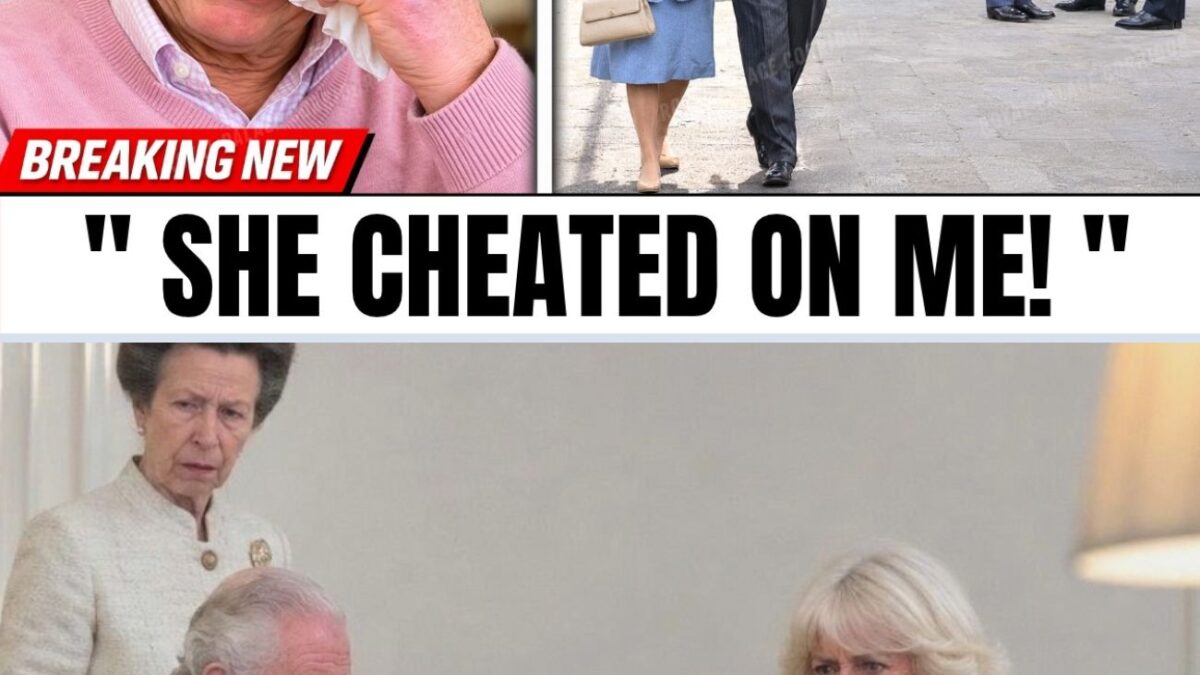
The photograph itself was unassuming at first glance, captured on June 18th, 1991. Prince Charles stood a few paces away, engaged in conversation with visiting dignitaries, while Camilla—then far removed from her future title of Queen—stood nearby. But right beside her stood a man whose presence had been completely scrubbed from official logs, press summaries, and biographical timelines. Every other face in the frame had been meticulously catalogued. Everyone, that is, except the sharply dressed stranger sharing the immediate frame with Camilla.
For Princess Anne, whose dedication to the institutional integrity of the Crown borders on the fanatical, an unidentified figure lingering in the inner sanctum of the royal train was not a mere curiosity; it was a security breach and a historical anomaly rolled into one. Within hours of the discovery, Anne initiated a quiet, rigorous inquiry, setting off a chain reaction that would unearth a web of clandestine financial arrangements, backdated contracts, and a contingency plan years in the making.
Tracking the Ghost: Who is Sir Adrien Witmore?
To unravel a secret buried for three decades, Anne turned to the men and women who had lived through the era. She tracked down a retired carriage manager living in the quiet Wiltshire countryside—a man who had spent twelve years tending to the royal train during its most discreet journeys. When the enlarged photograph was placed before him, the retired employee studied the unfamiliar features for a long moment before a name slipped from his lips: Sir Adrien Witmore.
Witmore was no accidental wanderer who had strayed past a velvet rope. In the early 1990s, he was already an influential City of London financier, controlling a sprawling labyrinth of commercial enterprises, private trusts, and high-stakes investments across the British financial sector. According to the carriage manager’s recollections, it was Prince Charles himself who had casually introduced Whitmore to Camilla during a reception on that very evening in June 1991, viewing him then as a respectable patron capable of bolstering charitable and community initiatives.
Yet, as Princess Anne’s researchers began cross-referencing decades of guest lists, charity committee rosters, and private calendars, a far more persistent pattern emerged. Far from being a fleeting acquaintance from a bygone summer, Whitmore’s footprint remained visible across the intervening years. In the five-year window leading up to October 2026, informants and former aides whispered of discreet encounters at private members’ clubs in Mayfair, exclusive art exhibitions, and secluded charity dinners—gatherings deliberately omitted from the official Court Circular.
While these meetings did not, in isolation, constitute proof of a romantic liaison, they begged an uncomfortable question: Why had a high-powered financier maintained such a close, unpublicised alliance with the future Queen Consort for over thirty years?
The Ashcom Lodge Entanglement
The investigation took a darker, more alarming turn when Anne shifted her focus from social interactions to asset management. Reviewing the charitable funds and heritage conservation projects under Camilla’s patronage, a single property name caught her eye: Ashcom Lodge.
Nestled deep within the Gloucestershire countryside, Ashcom Lodge is a historic estate privately owned by King Charles himself. For years, its stone walls and sprawling outbuildings had sat largely neglected, the mounting maintenance costs presenting a persistent logistical headache for the sovereign. In early 2026, a formal proposal had crossed the desk for review: a long-term lease of the estate at a nominal cost to a rural heritage conservation trust operating under Camilla’s patronage.
The project was brilliantly packaged. It promised to transform the dilapidated lodge into a thriving hub for cultural preservation, historical research, and community education—an initiative seemingly tailored to King Charles’s lifelong environmental and architectural passions.
However, when Anne examined the fine print regarding the financial backing, a jarring reality materialised. The entire multi-million-pound restoration budget was not coming from traditional heritage grants or philanthropic donations. It was being underwritten entirely by an investment syndicate controlled by none other than Sir Adrien Witmore.
Realising the immense legal and political implications of her findings, Anne brought the dossier directly to Prince William, whose legal acumen and protective instincts regarding royal assets made him the ideal partner to dissect the contract.
Forensic Auditing: William and the Curious Clause C4
Prince William did not hesitate. He instructed his personal legal counsel to pull every draft, appendix, and financial minute associated with the Ashcom Lodge lease agreement. Working from his office, William pored over technical jargon that initially read like standard administrative boilerplate.
Then he hit a roadblock: a 30-year commercial exploitation clause granting corporate entities linked to Witmore exclusive rights to monetise large swaths of the surrounding land and outbuildings. Why would a purely philanthropic heritage restoration project demand decades of commercial control for a private financier?
Deeper inspection of the appendices revealed an even more unsettling provision labelled C4.
Buried in the documentation pertaining to the northeastern corner of the Ashcom Lodge estate, Clause C4 outlined plans for an isolated property completely segregated from the rest of the grounds. It featured independent perimeter security walls, a dedicated private entrance, and a self-contained operational setup. Most strikingly, the provision stipulated that the property was to be designated as a long-term residence for an individual appointed directly by the trust, without requiring the occupant’s name to be entered into public records.
When pressed for an explanation, Camila maintained that the building was intended strictly to house visiting agricultural experts and project managers. She argued that the estate desperately required investment and warned that bureaucratic delays would scupper the entire restoration. But neither Anne nor William bought the narrative. They demanded to know who had authored the residency clause, who held the ultimate designation power, and why such a significant carve-out had been hidden from the King.
The Belgravia Revelations and the 2024 Blueprint
To uncover the true origins of Clause C4, the investigation expanded beyond palace walls and into the exclusive enclave of Belgravia. Through a network of financial contacts, Anne connected with a former private banker who had managed trust structures within Witmore’s corporate umbrella before abruptly resigning in late 2025.
What the banker revealed shattered any remaining illusion that Ashcom Lodge was merely a heritage project.
According to the source, the blueprint for a secure, independent retreat had been commissioned as early as mid-2024—nearly two years before the Ashcom Lodge proposal was ever formally presented to King Charles. Whitmore’s legal advisers had been explicitly instructed to design a sanctuary featuring high-grade security dressing rooms, walled gardens, and discreet parking designed to bypass public scrutiny.
The purpose of the facility was chillingly clear: it was engineered to serve as a fully independent estate for a high-status individual stepping back from royal duties or navigating a sudden separation from the Crown.
Furthermore, the Belgravia meetings had allegedly discussed astronomical financial guarantees—an independent annual income stream running into millions of pounds, backed by Witmore’s business network, alongside a dedicated public relations and communications unit designed to safeguard the individual’s public image independently of the palace press office.
The Backdated Addendum and the Windsor Confrontation
Armed with testimonies, architectural blue-prints, and financial disclosures, William and Anne prepared their final dossier. But the opposition was moving just as quickly.
Sensing the net closing, Camila had covertly reached out to Witmore through a back channel. Within 24 hours of that communication, the legal department received a revised version of the Ashcom Lodge agreement. In this newly minted draft, Appendix C4 had been miraculously scrubbed of its residential designation, replaced instead with dry language repurposing the northeast wing as an “agricultural research and community archive centre.”
William, possessing a forensic eye for institutional deception, demanded the creation timestamps and digital metadata. His cross-reference proved that the replacement addendum had been clumsily backdated to mimic the original filing date. The original C4 document—explicitly detailing the private residential rights—remained locked in a secure legal drawer bearing official stamps.
The stage was set for a high-stakes showdown. On a crisp afternoon in mid-October 2026, the historic library at Windsor Castle played host to a confrontation that would test the limits of royal loyalty.
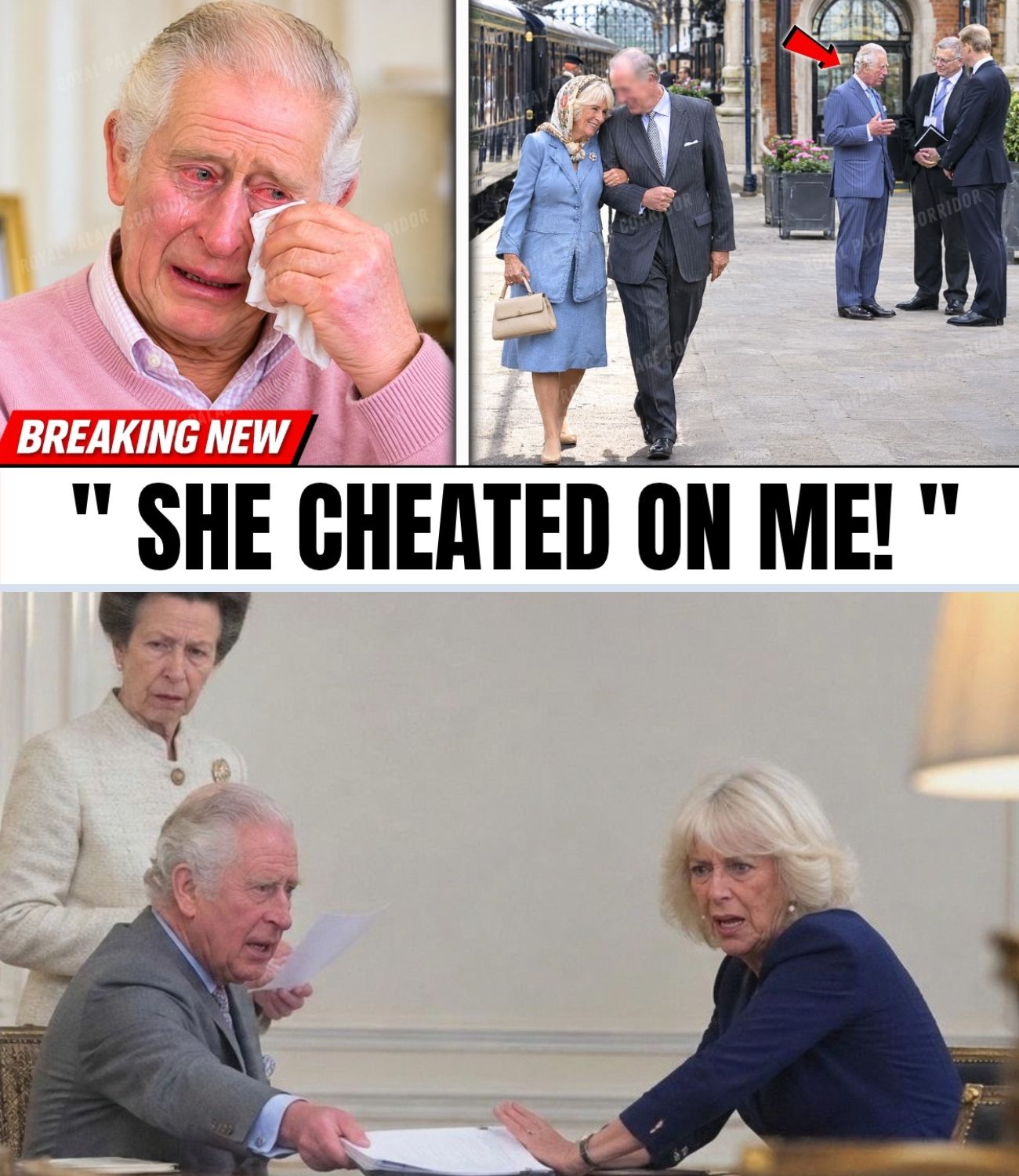
King Charles sat at the head of the long oak table, flanked by a chief legal adviser. Opposite him sat Camilla, maintaining a composed exterior though visibly strained. Princess Anne and Prince William laid out their meticulously organised files: the 1991 photograph, the chronology of unlisted meetings in Mayfair, the blueprints of the secure Gloucestershire retreat, the Belgravia financial pledges, and the side-by-side comparisons of the backdated Appendix C4.
Anne laid out the facts without weaponising emotional accusations of infidelity. Her core argument was institutional: personal financial benefits and independent exit strategies had been secretly woven into contracts involving the sovereign’s private property without his knowledge or consent.
When Charles turned to his wife for an explanation, Camilla defended her actions as prudent self-preservation. She argued that her royal status offered no absolute guarantee of permanence and that she had merely sought a safety net against an uncertain future, denying any desire to abandon her marriage or orchestrate a betrayal.
Yet, as William placed the two conflicting versions of Appendix C4 before his father, highlighting the deliberate deception of the backdated documents, a heavy, suffocating silence descended upon the Windsor library.
The King’s Verdict: Principles Over Personal Bonds
King Charles faced the most agonizing decision of his reign. He understood human vulnerability, but he could not countenance the weaponisation of his private assets behind his back.
With quiet, absolute finality, the King delivered his verdict. He affirmed that while personal friendships were a private matter, no individual—regardless of rank—was permitted to exploit royal assets or execute secret legal agreements without total transparency.
The consequences were swift and absolute. The Ashcom Lodge project was terminated on the spot. All commercial exploitation rights earmarked for Witmore’s syndicates were revoked, and contractors were given 48 hours to clear their machinery from the Gloucestershire estate. Sir Adrien Witmore formally withdrew from the venture, closed his Mayfair representative office, and retreated into self-imposed exile at a private villa near Lake Geneva.
For Camilla, the ruling marked a devastating loss of autonomy. Though no formal separation or divorce was announced, King Charles decreed that she would be permanently stripped of any decision-making authority regarding his private estates and trusts. Furthermore, all charitable organisations operating under her patronage were ordered to submit to rigorous independent oversight mechanisms spearheaded by Princess Anne and Prince William.
The following morning, the old brown envelope containing the 1991 photograph was quietly returned to the royal train archives. The blank space in the caption now bore a definitive name: Sir Adrien Witmore.
A 35-year mystery had finally been solved, but the deeper fracture remained wide open. While legal contracts can be torn up and development projects can be cancelled with a single signature, there is no legal clause sophisticated enough to repair trust once it has been shattered to its foundations.
You Might Also Enjoy

“We Thought They Would Negotiate”—What Argentine Soldiers Said When The British Attacked Goose Green

“You’ll Never Finish My Ruck March, Limey” — US Sergeant Who Challenged the SAS, Then Fell Out First






