Cotswolds Landlord Kicks HARRY And MEGHAN Out As Close Friend Publicly Sides With WILLIAM!
THE GREAT LOCKOUT: How Harry and Meghan’s Secret UK Return Exploded Into a Royal Exile, a Stolen Polo Scandal, and Total Isolation!
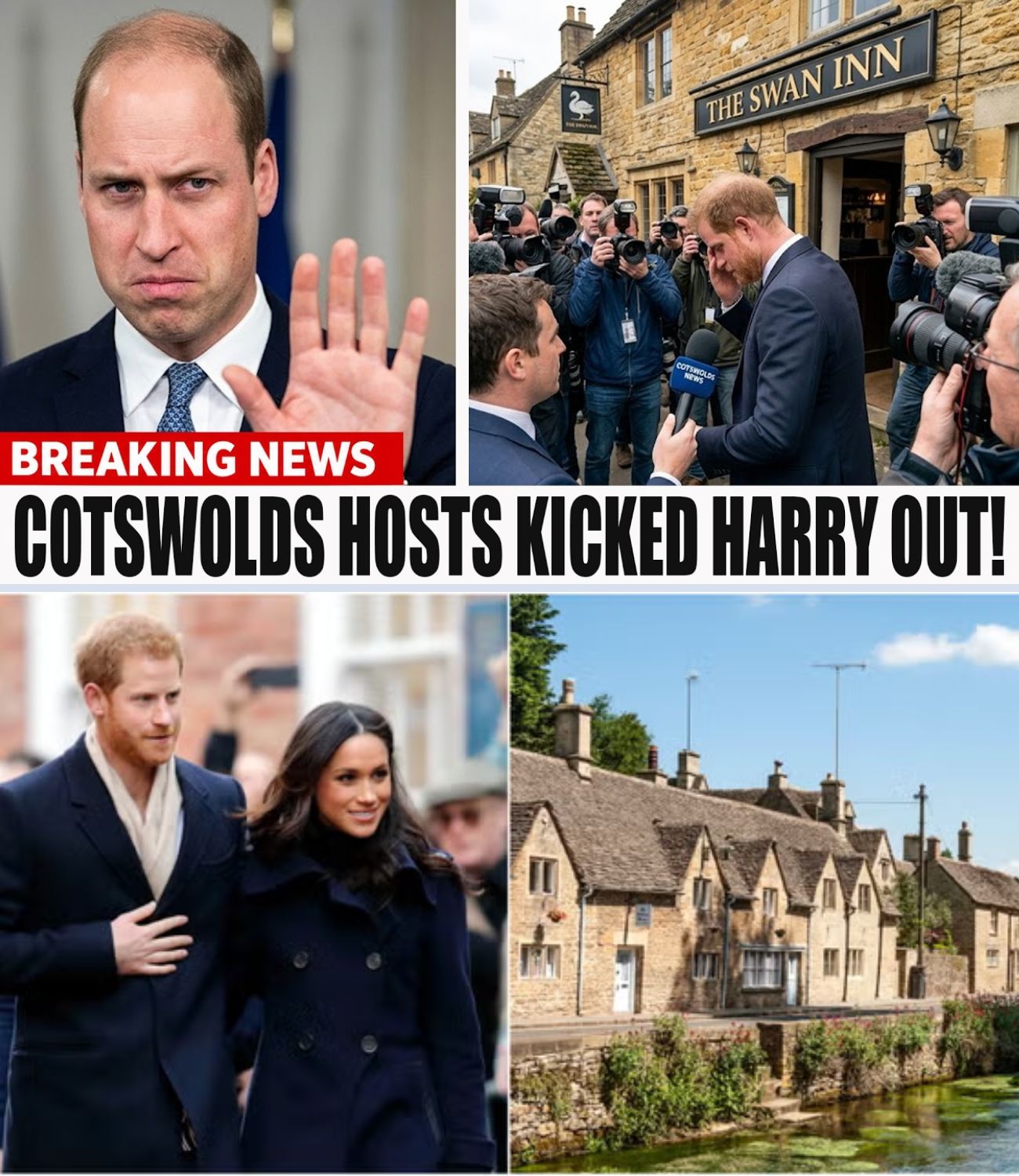
The Great Lockout: Inside the Spectacular Collapse of the Sussex UK Comeback
For the past four years, the narrative pushed across international streaming platforms and glossy American media profiles has been one of defiant triumph. According to this carefully curated script, Prince Harry and Meghan Markle were thriving in their sun-drenched Montecito sanctuary, soaring above the archaic constraints of the British establishment while maintaining an effortless, influential footprint back in the United Kingdom whenever it suited their schedule.
Yet, beneath the glittering veneer of California philanthropy and multi-million-dollar production deals lies a stark, unvarnished reality that became impossible to hide during their recent, unannounced sojourn on British soil. What was intended to be a strategic masterclass in reclaiming their royal prestige instead unraveled into an unmitigated disaster—a humiliating cascade of evictions, social ostracisation, corporate rejections, and absolute institutional stonewalling from the highest levels of the British crown.
If you peel back the layers of PR spin, the picture that emerges is not one of powerful global players dictating terms to an ancient monarchy, but rather of a couple entirely adrift in their own homeland, discovering too late that when you burn every bridge behind you, the drawbridge is raised for good.
The Cotswolds Chaos and the Couch-Surfing Crisis
To truly comprehend the depth of the crisis, one must examine where the Duke and Duchess of Sussex were actually laying their heads just weeks before the headlines began to circulate. While royal watchers speculated about grand homecoming tours and luxurious private estates, the behind-the-scenes truth was far more pedestrian and, frankly, deeply embarrassing for a couple who frequently lecture international audiences on their monumental success.
They did not own a home in Britain. Since King Charles formally requested the return of the keys to Frogmore Cottage—their Windsor sanctuary—Harry and Meghan had been left with no permanent legal base, no country cottage, and no secure foothold in the country of Harry’s birth. With millions tied up in sprawling American mortgage payments and ongoing, high-stakes legal battles against the London tabloid press, surplus cash for a fortified British country house simply was not sitting in their bank accounts.
Consequently, their return began with a quiet period of couch-surfing in a borrowed country estate in the Cotswolds, relying on the hospitality of a wealthy acquaintance. But within days, the idyllic country retreat turned into an unmanageable circus. Blacked-out sport utility vehicles tore up private gravel driveways, teams of private bodyguards demanded specialized clearances, and local photographers began staking out the front gates every single morning.
The local neighbors in Oxfordshire grew increasingly vocal in their complaints, the estate staff were completely overwhelmed, and the property owner quickly realized that playing host to the Sussex camp meant turning a peaceful sanctuary into a rolling international media battleground. Without ceremony or hesitation, the owner pulled the plug, informing Harry and Meghan that their welcome had officially expired and demanding their keys back.
Suddenly, with suitcases packed and nowhere to go, a profound panic set in. The social safety net of British aristocracy that Harry had relied upon his entire life was vanishing before his eyes. Dinner invitations quietly evaporated, phone calls went straight to voicemail, and the looming humiliation of being visibly cast out onto the British streets triggered a desperate scramble inside the Sussex camp.
The Royal Fortress Slams Shut
Facing the horrifying prospect of public exposure, Harry bypassed standard protocol and took a step that sent shockwaves through palace corridors. He picked up his phone and reached out directly to royal officials in Scotland, where King Charles was in residence at Balmoral.
What Harry demanded was not a modest, tucked-away two-bedroom cottage on the edge of the Sandringham estate, nor was it a temporary guest suite while he figured out his next steps. Instead, Harry brazenly demanded a full, permanent grace-and-favour residence inside one of the primary fortress palaces of the British crown—specifically naming Windsor Castle, Kensington Palace, or St. James’s Palace in the heart of London.
His justification? He argued that his children, Prince Archie and Princess Lilibet, could not legally or physically be protected unless they resided behind fortified castle walls under the watch of armed metropolitan police officers. Furthermore, he attempted to frame the request as a generous olive branch, suggesting that welcoming them back into a royal estate would demonstrate the King’s forgiveness, unify the monarchy, and take intense public pressure off Prince William and Catherine.
It was an astounding display of tone-deaf entitlement. Grace-and-favour apartments are historic, multi-million-pound state properties funded by British taxpayers and maintained by the Crown Estate, reserved exclusively for working royals who dedicate their lives to cutting ribbons, visiting hospitals, and carrying out hundreds of public engagements annually. Harry and Meghan spent four years publicly denouncing the institution as a toxic prison while profiting off tell-all memoirs and television interviews. To demand a luxury penthouse inside the very institution they vilified was nothing short of a hostile takeover of royal prestige.
The response from Scotland was swift, cold, and absolute. King Charles, surrounded by trusted advisors like Sir Clive Alderton, did not grant a 15-minute audience over tea. He refused to see him entirely.
Through formal written channels, the palace delivered a devastating institutional directive: neither Prince Harry nor Meghan Markle would ever be granted a lease, a grace-and-favour apartment, or any official residential footprint on Crown Estate land. Windsor was closed. Kensington was closed. St. James’s was closed. Furthermore, the Home Office and the Government Security Committee reaffirmed that private commercial visits to Britain would receive zero taxpayer-funded armed police protection. The sovereign trap had snapped shut.
The Charity Shop Betrayal
To understand why the royal family and their inner circle met Harry’s demands with such icy unyieldingness, one must look at the quiet, devastating erosion of the very last bridges they had left within the House of Windsor.
For years, royal commentators pointed to Princess Eugenie and her husband, Jack Brooksbank, as the solitary bridge remaining between California and London. While the rest of the family slammed their doors, Eugenie remained in touch, visiting them in America and defending them in private conversations.
However, a bizarre and painful discovery in a secondhand English charity shop shattered even that illusion beyond repair. A customer browsing through bargain bins stumbled across a pristine copy of Meghan’s children’s picture book, The Bench. Opening the front cover, they discovered a personal, handwritten inscription in Meghan’s signature stylized handwriting, addressed warmly to Princess Eugenie and Jack Brooksbank, signed with affection by the Duchess herself.
Within days, that exact presentation copy was being flogged on eBay with an asking price of nearly £20,000. This was not a spare copy picked up at WHSmith; it was a personal, dedicated gift from one royal family member to another. Yet, rather than being preserved on a bookshelf or safely stored in a Portuguese villa, it had been unceremoniously tossed into a cardboard box of unwanted junk, dropped off at a charity shop, and dumped online for quick cash.
When a member of an aristocratic circle cannot even be bothered to keep a signed personal gift in their storage closet, it is not an oversight—it is a quiet, deliberate purging of one’s existence. Prince William watched this pattern unfold with the historical perspective of a seasoned monarch, recognizing the uncanny parallel to King Edward VIII and Wallis Simpson in 1936. Just as the Queen Mother once stood firm against half-in, half-out royal compromises, William’s institutional steel ensured that no backdoor entries would ever be permitted.
Seven Brutal Words on the Polo Pitch
While the palace gates remained bolted shut, Meghan turned her attention outward, seeking a wealthy target whose career could be quietly hitched to the Sussex wagon. This brought about the most explosive personal fallout of the entire trip: the complete rupture of Harry’s 17-year brotherhood with Argentine polo icon Nacho Figueras.
Nacho, widely heralded across the sporting world as the “David Beckham of Polo,” was preparing for a massive corporate milestone—a premier Ralph Lauren Black Label anniversary event on a private ground outside Windsor, celebrating two decades of global partnership. Harry was not in the contract; Meghan was not in the contract.
Seeing an instant commercial shortcut to project an image of aristocratic British grace without answering awkward questions, Meghan urged Harry to make the ask. What followed was a relentless barrage of phone calls and messages proposing that Nacho’s private brand activation be turned into a joint Sussex appearance, complete with customized arrival lanes, dedicated staging areas for photographs, and syndicated media content for American streaming networks.
It was an attempted corporate hijacking reminiscent of the previous season, when a different luxury brand canceled a £5 million polo series after Meghan demanded individual appearance fees and exclusive broadcast rights. This time, Nacho drew a hard, unyielding line in the sand. Sitting in his saddle at the end of a practice chukker outside Windsor, looking at his advisors and facing yet another aggressive pitch memo circulated to British fashion journalists behind his back, Nacho uttered seven brutal, definitive words to his team:
“Keep her out of my Ralph Lauren deal.”
He was officially done being used as a stepping stone. To compound the finality of the split, Nacho subsequently accepted an invitation to play in an elite British charity polo tournament organized in partnership with Prince William’s household, sharing the field and laughing openly with William’s cousin, Zara Tindall. When Harry caught wind of the photographs in the morning papers, he placed a furious, frantic call accusing Nacho of betrayal. Nacho’s calm, ice-cold response shattered Harry’s delusions once and for all: the real betrayal was Harry’s absurd entitlement in believing a grown man’s professional calendar required permission from Monteceto.
Fish, Chips, and Total Indifference
Cornered, isolated, and desperately needing to project an aura of blissful, effortless rural integration, the Sussexes resorted to a piece of pure theatrical staging that left veteran royal commentators shaking their heads in disbelief.
They executed an unannounced lunch date at a centuries-old village pub called the Fauconberg Arms in Great Tew, Oxfordshire—just down the road from David and Victoria Beckham’s estate. The very next morning, exclusive telephoto photographs mysteriously appeared across British tabloid front pages, accompanied by glowing accounts of how the Duke and Duchess were head-over-heels in love while tucking into £18.25 battered haddock and chips with mushy peas, alongside a £17.95 ham and leek pie.
Veteran royal biographer Angela Levin tore the spectacle apart on national television, pointing out the absurdity of professional paparazzi randomly hiding in the bushes of a quiet Oxfordshire village on a Thursday afternoon. The Sussex PR machine had tipped off friendly editors, coordinated the arrival time, and handed over the story on a silver platter.
Yet, the most tragic aspect of the stunt was the reaction of the actual patrons inside the pub. There were no mobs for selfies, no cheers, no autograph requests. The British locals simply looked up, ignored them completely, finished their drinks, and returned to their private conversations. To Meghan, that cold, crushing indifference was infinitely worse than being booed—it was the stark realization of total irrelevance in her own adopted homeland, underscored even further by the baffling commercial rollout of a £112 luxury advent calendar containing a mere 12 pieces of chocolate.
Prince William’s Iron Shield
With all external avenues exhausted, Harry’s final desperate maneuver targeted the one person he believed he could still pressure: Catherine, Princess of Wales.
As a coordinated wave of sympathetic commentary flooded media outlets suggesting that a recovering Catherine had a “moral duty” to extend an olive branch and invite the Sussexes over for a family summit, Prince William watched with quiet, protective fury. Having carried the childhood trauma of watching his mother hounded by cameras, William had made a sacred vow never to let external forces or media bullies break his wife—especially as she bravely navigated preventive chemotherapy and rebuilt her physical strength after a terrifying health crisis.
Without shouting matches or emotional public debates, William contacted King Charles directly and laid down an uncompromising ultimatum: Catherine’s peace of mind, health, and recovery took absolute precedence over any public relations compromise.
William ordered his private office to sever every remaining line of communication. Incoming letters and legal petitions were rerouted straight to solicitors and filed away unopened; direct telephone lines at Adelaide Cottage were permanently disconnected. William drew an impenetrable institutional shield around his family and locked the gate from the inside.
The Iron Gate is Closed Forever
The wreckage of this British expedition marks the definitive historical collapse of the Sussex illusion. Harry and Meghan arrived in London convinced that their American celebrity star power gave them the leverage to dictate terms to a thousand-year-old monarchy. They gambled away their historic birthright in exchange for transient Hollywood cachet, and they returned to California with empty hands.
There are no royal castles, no crown security, no working patronages, and no loyal brotherhood left to exploit. The British public has moved on with quiet unity, high society has locked its doors, and the prince who once walked beside Harry through grief has built a wall of unbreakable institutional steel. The royal book is permanently shut, the drawbridge is raised, and no amount of royal blood will ever open that gate again.
You Might Also Enjoy

“We Thought They Would Negotiate”—What Argentine Soldiers Said When The British Attacked Goose Green

“You’ll Never Finish My Ruck March, Limey” — US Sergeant Who Challenged the SAS, Then Fell Out First






