“Cut Your Hair or Get Arrested” — The SAS Laughed When US Generals Issued the Order
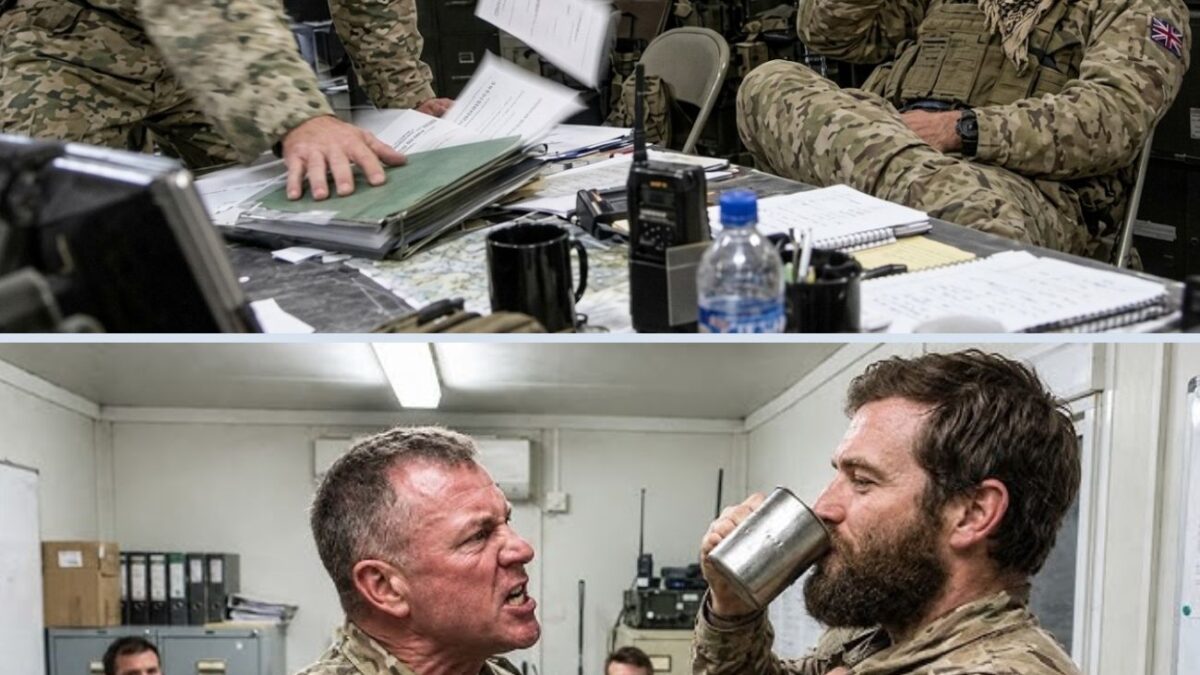
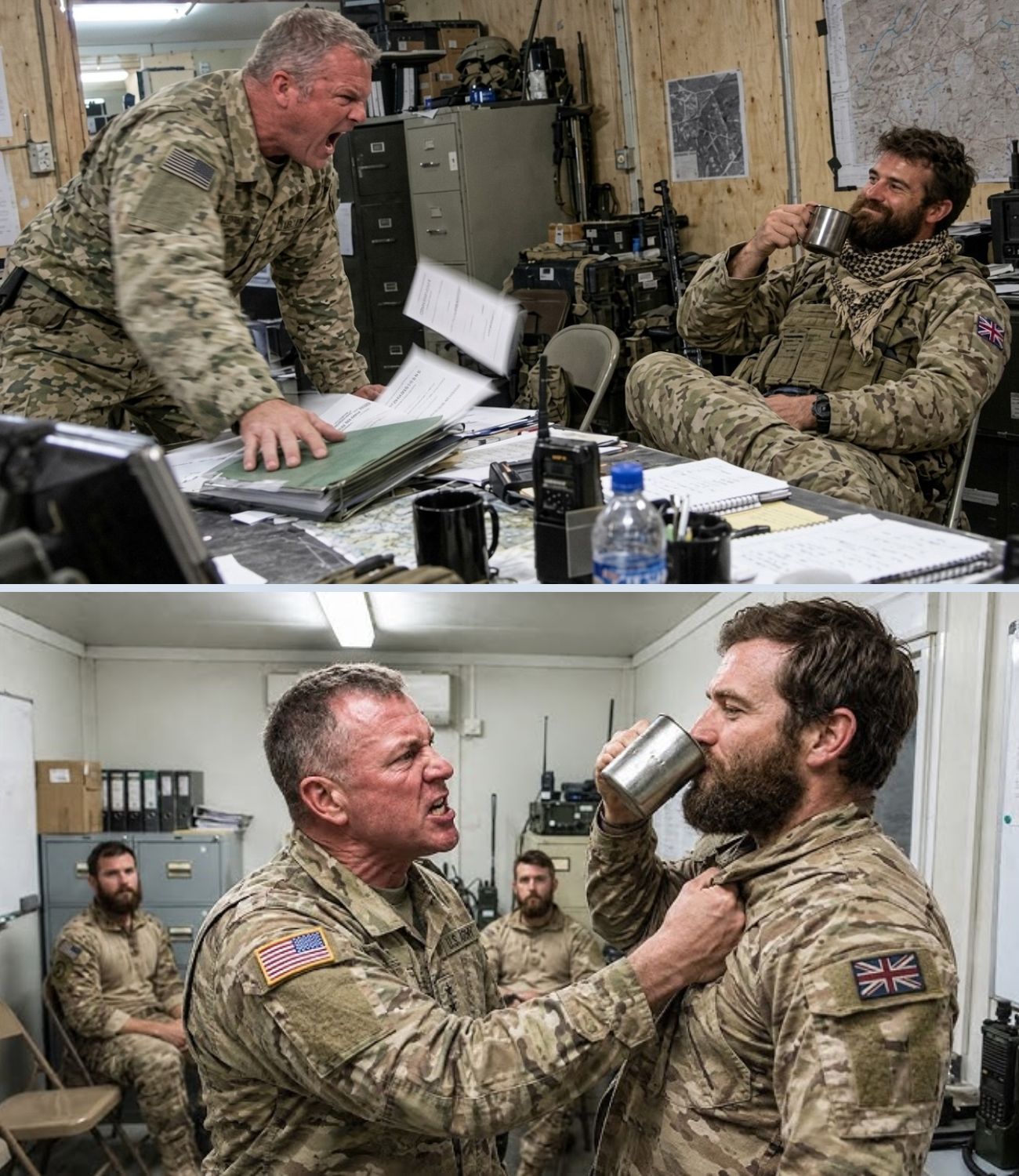
There is a line an American brigadier general said out loud in front of his own staff and in front of the six British soldiers he had just been introduced to at a forward operating base in western Iraq in the spring of 2005. Every man in the tent heard it.
“Shave or you’re under arrest. I don’t care what regiment you think you are. In my task force, you look like a soldier or you get out. You’re not elite. You’re tearing amateurs playing dress up in my war.”
He was Brigadier General Wendel R. Hollis, United States Army. And he was not a fool. He had a ranger tab, a silver star from Mosul two years earlier, and a reputation for being a shooters general, a man who ran his task force the way a good sergeant runs a rifle company, close and hard and by the book.
He had earned the right to be listened to, and he knew it. When he tapped the West Point ring on the outside of his glove against the edge of his mapboard that morning, his own staff went quiet before he had said a word. The six men in front of him did not go quiet because they had been quiet the whole time. They were British Special Air Service D Squadron, a half troop under a captain called Evo Marat.
In that morning, off a 5-day operation in the Western Desert, sleeves rolled, beards two weeks past regulation, plate carriers worn over pale local shirts, no unit flashes on any of it. To a man who read soldiers the way Hollis read soldiers, they looked like slack, a discipline problem, tea drinking amateurs playing dress up in his war.
He would remember saying it. He would be made to. He would remember it that evening and again the following night when a major on his own staff put a stopwatch face down on a plywood table and would not pick it up. And again the morning after that when a man he had told to shave walked past him carrying a prisoner he himself had signed a warrant for and did not look at him.
Nothing about what was coming for Hollis was quick or loud. The correction would arrive on a stopwatch in a body count and in a single number he would be made to read out loud in front of the officers who had watched him say the word amateurs. He said it at 9 in the morning. By the following night, the debt had come due and every witness in the tent knew whose it was.
Wendell Hollis had come up the way American generals of his generation were supposed to. West Point, class of 82, two tours with the third infantry division, one ending with him carrying his own radio operator half a kilometer through a Mosul street in April 2003 where the silver star came from and where the reputation came from.
He had commanded a ranger company before that and wore the tab the way some men wear a wedding ring without thinking about it. By spring 2005, he ran a joint special operations task force out of a forward operating base in Alanbar. And he had sincere, aggressively defended opinions about what a soldier was supposed to look like standing in front of a general at 9 in the morning.
His opinions were not in the abstract unreasonable. He believed discipline was visible before it was anything else, that a man who couldn’t be trusted to shave couldn’t be trusted to keep his weapon clean, and that a man who couldn’t keep his weapon clean would get somebody killed on a stack. He had watched more than one unit that thought itself elite decay into a costume, and he had learned to smell that decay from across a briefing tent.
The morning the British walked in, he smelled it. What he saw was six men in local shirts, beards, hair longer than his own daughters, weapons carried loose, plate carriers over what looked like pajamas. What he did not see, because his contempt had already formed the sentence before his eyes finished reading the room, was that all six had come off a job through three towns and two checkpoints without a shot fired, and that the reason they dressed that way was that it had worked.
Somewhere behind their eyes was a country he had never seen. Pontrias in Hereford in the hills and Wales where men who wore beards had been sorted one from another in weather that didn’t care what class you were from. He didn’t see that either. He walked the length of the tent, tapped the ring twice against the mapboard, and set his line slowly with the small tight smile of a man enjoying a catch.
Command Sergeant Major Perry Liddell at his shoulder with a mouthful of sunflower seeds made the small snort senior enlisted men make when a general says something they’ve been thinking. Major Denon Fairbrother, the operations officer, looked at his boots and didn’t disagree. Two American captains laughed. Master Sergeant Sirill Bookout, running protection from the entrance, did not.
He’d done a joint course at Fort Bragg with a Welshman who wore a beard just like the one on the man nearest Hollis, and he was already reconsidering the morning, but he was junior, and he kept his face closed. The British did not react. Marant looked back at the general exactly as long as courtesy required, then passed him to the map.
Warrant Officer Class 2 Elgen Truscuit the D Squadron Sergeant Major said quietly, “Understood, sir,” and nothing else. Staff Sergeant Ran Padet shifted his weight. Sergeant Kez Downing scratched once under his plate carrier strap. Corporal Milo Thrrell whistled two bars of something and stopped. Trooper Ash Velikott, the youngest, kept his eyes on a fixed point on the tent wall and didn’t blink.
The room waited for one of them to answer. None did. The silence that followed was the first thing about them Bookout noticed and the first thing Hollis did not notice at all. The base sat at the western end of a meddled road running to the Syrian border. Hollis’s task force had the eastern half, plywood ops room, hangers, motorpool, rows of hard sheltered tents.
The British had the western corner, one hanger with a canvas partition and a dust strip Marant’s men called the yard. The two halves didn’t talk much that morning. The unpacking took an hour, and it was, to any American who wandered past to look, the most boring hour of the day. The Six Blades laid their kit out on ground sheets in the shade of the hanger and went over every piece of it without speaking, because they had done this together enough times that speaking would have been noise.
Downing stripped his L119 A2 down to its component parts on a green cloth and cleaned each one in order without looking at his hands. Thrail checked his breaching charges, counted them twice, and packed them back into their pouches with the primers facing the same way. Padet, the sniper pair lead, opened the case on his L115 A3 and did not touch the rifle, only looked at it the way a man looks at a wristwatch to check the time without picking it up.
Velikott, the youngest, sat cross-legged in the dust and threaded fresh cordage through the grommets on his belt kit. And while he did it, he was reading a paperback with the cover torn off, propped on his knee. Command Sergeant Major Liddell walked past the open hangar door on his way to the mess and stopped for a full 10 seconds to watch, chewing his seeds.
What he saw, he told Bookout later that evening was a bunch of guys sitting around like they were on a fishing trip. What he did not see was that in 10 seconds of watching, not one of the six men had said a word, and every man’s hands had been moving the entire time. That afternoon, Marant took the troop to the small arms range to zero.
The half hour before them had been Hollis’s Ranger platoon, loud and clean, a corporal counting cadence. The British half hour was silent. Marant didn’t speak. Truscuit didn’t speak. The six zeroed in pairs with hand signals, a tap, two fingers, a chin lift. Velicott put five rounds into a 2cm cluster and said nothing.
When it ended, they picked up every casing and walked off in single file. From the tower, Bookout counted 42 rounds fired and 42 casings recovered. The Rangers before them had left seven on the deck. He wrote a small tick in his log and didn’t tell Liddell. That evening’s joint ops brief covered the target the task force had chased for months.
A facilitator known as Phallic, who moved men and money along the Euphrates in war. In every surveillance photo, a cheap Casio watch. Three options were built around a helicopter assault with a Ranger platoon on the entry and the British on the outer cordon. Hollis liked them. Marant asked said quietly the British would prefer to run the entry themselves with the Rangers on the cordon the way a man asks for a second cup of tea.
Hollis laughed, asked if Mar understood the target set, and said the entry would be run by rangers because that was what rangers were for, and the British could hold the cordon, which was what men and beards were for. Liddell snorted. Fairbrother wrote something down. Marant said, “Understood, sir,” and didn’t argue. Bookout leaving noticed the British had come into the tent with suppressors on, chambers empty, safeties on, muzzles down. None had scraped a chair. Truscuit hadn’t spoken above a murmur through the whole brief. Silence was already on the range card. Hollis had walked past it three times that day and not seen it once.
Two mornings later, Fairbrother put a joint rehearsal on the schedule, a mock compound built from shipping containers and Hessen, same footprint as Fall, an outer wall, courtyard, two-story building, six ground floor rooms, four upstairs. He’d built it himself, left-handed, writing run times on his own wrist in permanent marker because he lost notebooks.
Hollis came to watch from a small platform he could see over the outer wall from Liddell beside him with his seeds book out at the base with the protection detail. Marin’s half troop stood in a loose group under the shade of an ISO container doing nothing Hollis glancing over could call standing too. The Rangers went first.
22 men, two chalks, a platoon leader and platoon sergeant, and ran it clean and loud. Breached the gate with a shotgun on the hinges, flow into the courtyard, split the stack, one element to the ground floor, one up the stairwell, room by room, calling clear as they went. By any professional measure, it was good work, and the platoon sergeant’s voice carried across the whole footprint.
The clock read 6 minutes 12 seconds when the last room called clear. Fairbrother wrote it on his wrist. Hollis clapped once and loud enough for the British under the container to hear, “Cal called 612 the standing task force best and said anyone who thought he could beat it was welcome to try.”
Marant walked over to Fairbrother and asked in the same quiet voice he had used in the ops tent whether he could have the compound reset. Fairbrother said yes.
The rangers cleared out. The mannequins were repositioned and Marant did not brief his men where Hollis could see him. He walked back to the container, said four words to Truscuit, and Truscuit nodded. The six men moved into position without speaking. Downing and Thrail, the assault pair, took the gate.
Padet and his number two took a low position on a burm 40 m out that gave them a line onto the courtyard and a partial line onto the upper windows. Marant and Velikott held the second stack. There was no verbal count. There was no radio traffic that Hollis could hear from the platform. When they started, Hollis nearly missed it because there was no shout, “No, go go go.”
Thrill simply placed a breaching charge on the gate hinge, stepped back three paces, turned his shoulder, and the gate went. The loudest thing that happened in the next 4 minutes and 11 seconds. Everything after it was quieter. The two pairs flowed through the gap without speaking. Downing was in the first room before the dust from the breach had settled and the paint mark on the mannequin’s forehead was already there when Fairbrother watching from the corner blinked on the stairwell.
Velicott went up on the outside of the treads to keep his weight off the risers and Marott went up on the inside and neither of them spoke and the only sound from the first floor for the next 40 seconds was the double tap double tap double tap of a suppressed rifle being fired indoors on the ground floor. Thrill cleared three rooms in a corridor and marked each of them with a small strip of luminous tape on the door frame.
And Downing behind him did not need to be told which rooms had been done. Hollis on the platform couldn’t read the clearance the way he usually could. No calls, no cadence, almost nothing. He told Liddell the British were slow. Liddell, who’d stopped chewing his seeds 90 seconds earlier, didn’t answer. The last room went clear at 4:11.
Though Fairbrother didn’t say it aloud yet, he looked at his wrist, wrote 411 under 612, and didn’t look up for 10 seconds. Bookout said quietly, “Well, Jesus, the first blow of the day,” though it hadn’t landed on Hollis yet, who was still waiting for a noise that had already stopped half a minute earlier.
Hollis asked the time, heard it, and said, “Run it again. Different compound,” tapping his ring once. The British were already walking back, weapons on safe, without a word. Marant passed the platform without looking up. He didn’t have to. Bookout understood watching him go that this was not a fluke and that it was only the first time that day Hollis would be wrong.
There was a benchmark on the base that Hollis was on any other day proud of. The task force had 12 weeks earlier built a killing house at the back of the motorpool, two adjoining rooms with paper targets on tracks, a control booth with a stopwatch and a scoring sheet and a fixed scenario for hostiles, two hostages, a rescue and a withdrawal.
The standing task force best on that scenario was 6 minutes and 12 seconds held by a ranger element out of the same platoon that had run the mock compound. That 612 had been on the whiteboard in the ops tent since January, and Hollis had more than once called it the number to beat. The morning after the mock compound, he had Fairbrother the killing house and told Marant in front of Liddell and half the ops staff that if the British thought they were as good as their run yesterday said they were, they were welcome to put a stack through the scenario and see what number came out the other end.
He said it in the same tone he had used at the map board two days earlier, though quieter now, because a man does not shout at soldiers he has just watched clear a compound faster than his own platoon. He said also that the killing house scenario was harder than the mock compound because it had hostages and that hostages were where the amateurs, as he had called them, would show.
He used the word once, glancing at the beards, and then he did not use it again that morning. Downing took the stack this time. Marant sat in the booth with Fairbrother because he wanted to watch. The scenario ran on a bell and when the bell rang, Downing was already on the door. What followed in the next 3 minutes 48 seconds wasn’t on any level Hollis could immediately articulate faster than his Rangers. It was different.
The Ranger run at 612 had been clean, loud, controlled, every target down with a double tap. Every hostage identified with a shouted call. Downing’s run was almost silent and the silence made the watching Americans lean forward.
In the first room, he engaged two hostiles and passed a hostage target without slowing down because Velikott on his shoulder had already made the identification and given the tap. In the second room, Thrrell took a hostile at the extreme left of the doorway with a single round from a caned rifle because the geometry of the room meant a squared shot would have crossed a hostage’s line.
He’d seen that geometry from the corridor without breaking stride. A red paint stress mark had been planted on a hostage target to see if the stack noticed. Velicott coming through third said quietly, “Read on the civ front room.” Downing said, “Seen it,” ended at 348. Every hostile down both hostages alive. The marked hostage untouched.
Fairbrother wrote 348 under 411 under 612 and this time looked up because he couldn’t professionally not. Hollis watched them walk out without a word, then told Liddell that training scenarios weren’t combat and any element could eventually post a fast time on a familiar house. The confident, unhurried voice of a man who decided how the morning would be read before it was over.
Liddell nodded, still loyal to the version of the general who’d been right at the map board. Bookout, who’d shaved that morning as he shaved every morning, said nothing, thinking instead about a 19-year-old calling a paint mark from a doorway he hadn’t yet entered in a voice that never rose. Tea drinking amateurs, Hollis had called them, and the amateurs had just beaten his own scoring sheet by 2 minutes 24 seconds.
The marker on Fairbrother’s wrist did not wash off in the desert air. That afternoon, Hollis disappeared into his quarters until the evening brief. When he emerged, he told Marant in front of Fairbrother, Liddell, and Bookout that the raid on Fall Compound was replanned. The British would run the entry. The Rangers would hold the cordon.
He said it flatly without looking at Marant, taking back nothing he’d said at the map board, rationalizing his way to a new plan, without conceding the ground it stood on. Marant said, “Understood, sir,” and left. The worst blow was still ahead because the British hadn’t yet shown in front of the general, the thing they were actually best at.
That evening, Fairbrother ran a final calibration on the long range 900 m, a moving plywood silhouette on a scavenged motor rig he’d built himself and privately loved. The American sniper pair engaged the moving target at 400 m and hit it on the third pass. Hollis called that inside the doctrinal envelope, tapping his ring. Satisfied, Padet walked out onto the range with his spotter.
A Corporal Marant simply called Jim and said nothing out loud for the next 12 minutes. He lay down on the sand and set his bipod. Jim on his left set up the spotting scope and read the wind off the mirage boiling up from the range floor. A crosswind of about 12 knots, gusting to 15 from left to right and picking up as the sun dropped.
Jim tapped Padet twice on the outside of the left arm, the pair’s signal for wind hold, and Padet adjusted his reticle without lifting his head from the stock. Fairbrother told the safety officer to run the target out to 800 m. Hollis made a small sound in the back of his throat that wasn’t quite a laugh. 800 m on a moving target in a crosswind wasn’t in his professional experience.
A cereal you set for a check. It was a cereal you set to embarrass a man. The target moved. Padet held on the first pass, held on the second. On the third, Jim tapped twice and Padet fired. At that range, the shooter and spotter know before anyone else because the round is airborne over a second and the strike sound lags behind that.
They were already resetting before the silhouette registered the hit. It cracked cleanly where the throat would have been at a point Fairbrother would later measure at 812 m because he’d built the rig and knew its geometry. Nobody spoke for a three count. Hollis said, “Run it again.” Fairbrother said, “Sir, that was one round.” Hollis said, “I heard you. Run it again.”
Jim read a two knot shift and gave a new hold. The target went out to 850. On the second pass, Padet fired again. Chest height cracked plywood. No adjustment needed from the first shots position. Padet collected both cases and walked back unhurried, not looking at the bay. In the bay, Hollis didn’t move, didn’t tap his ring, just looked at the range card twice and said nothing.
Fairbrother added 812 and 850 to his wrist under 411 and 348 and closed the marker. Liddell finally spoke, “General, we should get to the brief,” giving his officer a way out of the room. Hollis nodded without looking at him and walked out. Bookout at the door understood he was the second man after Fairbrother to see that the coming brief was a formality.
The raid would happen. The British would run the entry and the general who’d called them amateurs three mornings earlier would have to stand in his own tent and hear a number read aloud. The debt was unpaid, but the interest by last light on the long range had become the only thing worth counting. They went in on foot.
There is no helicopter in this part of the story because Marant had asked in the final brief for a walk-in from a drop off point 4 km east of the compound and Hollis who had by that point stopped arguing with anything Marant asked for signed off on it. The task force flew the British half troop to the drop off in two black hawks and the Blackhawks left and the six men walked.
The Rangers in a separate serial held the outer cordon from a position 2 km south of the compound which was the position they would move into on a signal from Marant. The walk-in took 2 hours and 11 minutes. Nobody on the British side spoke. Padet and Jim split off at the 1-hour mark to occupy a firing position on a low ridge to the north of the compound.
And the four remaining men, Marant, Truscuit, Downing, Thrail, Velikott, closed the last kilometer on their bellies using a dry wadi that ran to within 80 m of the outer wall. Truscuit at the rear was the quietest of the five, and the four in front of him had over years learned to move at the pace of his silence.
At the 80 m mark, Marant went up onto the lip of the wadi with a monocular and marked the sentry on the roof. There was one sentry. He was walking a pattern corner to corner on the flat roof of the two-story building carrying a Kalashnikov on a sling and on his right wrist, though Marant could not see this from the wadi, a cheap Casio watch.
Marant sent the mark to Padet on the ridge and three clicks on the troop net. Padet clicked twice back. Truscuit in the wadi tapped Downing on the ankle and Downing tapped Thrail and the stack without a word began to close on the outer wall. There is a shot now that the afteraction report will later record as the round that opened the door on the raid.
Padet on the ridge is 840 m from the sentry reading a wind he has been reading for the last 40 minutes. He breathes out. Jim taps twice. Padet fires. The round is in the air for one and a fraction seconds. And while it is in the air, the sentry takes two steps towards the north corner of the roof and the round meets him at the base of the neck and he goes down without making a sound the men in the wadi can hear.
The suppressor eats the report. Jim watches the sentry fall through the spotting scope and clicks once on the net. Marant in the wadi clicks once back. Truscuit at the outer wall is already moving. They breach the outer wall not through the gate but through a section of the wall itself. Thrail places a small linear charge on the mud brick at a point Marant has picked because it puts them into a blind courtyard on the north side of the building out of line of the ground floor windows. The charge goes the wall opens.
The stack flows through. They are inside the outer wall at time zero. Downing was on the main door at 9 seconds through it at 13 after Thrail’s second charge. The first room held two sleeping men who never woke. Velikott taped the room. Thrail cleared two more sleeping rooms down the corridor.
Neither firing a shot. At 41 seconds, Truscuit was on the stairwell, Marant on the inside of the treads, Velikott on the outside. Upstairs for rooms, the far north one held Phallic for 6 weeks of intelligence with two guards outside and one within. Marant and Velikott dropped the two outside guards at 119, neither clearing his own sidearm.
Downing took the closed door on its hinge with a shotgun round at 131. The inside guard went down at 133. Phallic 32 on a mattress and gray shirt and trousers, the cracked Casio on his wrist, raised his hands, and said nothing. Truscuit cuffed him. He made a small sound that wasn’t a word. The rest of the floor cleared empty in 90 seconds.
Marant called the compound clear at 3:58. By 4:11, the stack was back on the stairwell with Phallic between Downing and Truscuit, and the Rangers were signaled in to secure the Xville point. They found nine dead men on the ground, one live man cuffed, and a British half troop standing quietly on safe.
In the ops tent, Fairbrother had held the stopwatch for the full 4:11, waiting one extra second to be sure before clicking it. He put it face down beside 3:48, 8:12, and 8:50 on his wrist and reported to Hollis, “Compound clear for 4 minutes 11 seconds. Nine enemy killed in action. One prisoner, no friendly casualties.” His voice hadn’t changed from 2 hours earlier. Reporting, not celebrating.
Brigadier General Wendel Rar Hollis, West Point 82, Silver Star, did not in that moment make his mouth work. The Xville came an hour before dawn. Two black hawks in a dust cloud. Hollis waited at the strip. Liddell behind him. Fairbrother behind Liddell. Bookout at the tent door having been the one to suggest they come watch.
The British came off in the order they’d left. Marant. Truscuit. Downing with Phallic on a lead. Thrail. Velikott. Then Padet and Jim picked up off the ridge. Seven soldiers, one prisoner. Unhurried. None of them looking at the general. They didn’t have to. He counted them the way a man counts change he’s been shorted.
Velikott passed with his paperback tucked into his plate carrier. Thrail stopped whistling as he passed and didn’t start again. Downing didn’t slow with Phallic. Truscuit gave a single nod. Not deference, just the nod a sergeant major gives an officer he doesn’t need to acknowledge. Marant didn’t look at him at all. Their beards were dust gray at the tips.
And the men he told to shave didn’t seem to remember he had. Hollis followed them at a distance back to the ops tent because there was nothing else to do inside. A trestle table held what had come off Phallic. A phone with the sim pulled, a green cloth notebook, a roll of dollars, a folded Arabic document, and the cracked Casio watch placed deliberately at the near end by an intelligence sergeant doing his job.
Hollis looked at it and didn’t pick it up. Fairbrother read the numbers aloud a second time as an operations officer does. Once off the net. Once at the afteraction. His voice unchanged, “Compound clear for 4:11. Nine KIA. One HVT secured. Zero friendly casualties.” Hollis said nothing. He didn’t ask a question.
He stood with his glove on the plywood, the ring on the outside of it, and didn’t tap it. Liddell didn’t eat a seat. The tent was quieter than the range. Bookout at the door said the sentence that would be quoted for years by men who’d been there and men who’d heard about it, “Sir, those are the numbers.”
Flat, no weight on any word. The flatness was what made it land. He was senior enlisted, entitled to say almost nothing, and said it anyway. Hollis heard it, didn’t turn, looked instead at the watch, the document, the stopwatch, and said none of the words he’d said three mornings earlier at the map board. He didn’t take them back. He didn’t need to.
The room had already done it for him. He left. The British had already gone. The next morning was ordinary for most of the base. PT at 5, powdered eggs at 6. Phallax interrogation starting at 7. Hollis stayed in his quarters until 9. Then took the long way to the ops tent through the motorpool, avoiding the western hanger, and for the rest of the rotation never addressed the British half troop directly again.
He’d been right about the tea. Padet drank his without milk, Downing with two sugars, Truscuit black. He’d been right about the beards, the rolled sleeves, the missing flashes, the local shirts. He’d been right about the surface. He’d been catastrophically wrong about what it meant. “In my task force,” he’d said, “you look like a soldier or you get out.” He’d read the shave and missed the men who didn’t need one and paid the debt in front of every officer he cared about in a number he was made to hear twice.
The watch stayed on the evidence table two more days. The stopwatch went back in Fairbrother’s drawer. The marker on his wrist took most of a week to fade, and he didn’t scrub it any harder than he had to. He wasn’t sentimental, but he built the compound and the rig and held the watch, and those numbers were the truest thing he’d written all year.
That morning, in the Western Hanger, Velikott read his torn paperback. Thrail whistled two bars of an unnamed hymn. Downing ran a rag through his rifle without looking and Truscuit said nothing because he never needed to. That’s the whole of it.
A general with a silver star called six men tea drinking amateurs at a map board in western Iraq. And by last light on the third day, those six men had cleared a compound in 4 minutes 11 seconds, taken a facilitator alive, and walked past him on a dust strip without a glance. He wasn’t converted. He wasn’t redeemed. He was corrected.
The surface a general reads is never the soldier underneath it. And the correction when it comes is delivered by the men he underestimated in a silence he can never quite fill.
You Might Also Enjoy

“We Thought They Would Negotiate”—What Argentine Soldiers Said When The British Attacked Goose Green

“You’ll Never Finish My Ruck March, Limey” — US Sergeant Who Challenged the SAS, Then Fell Out First






