Diana’s HONEYMOON Was Much Darker Than You Think
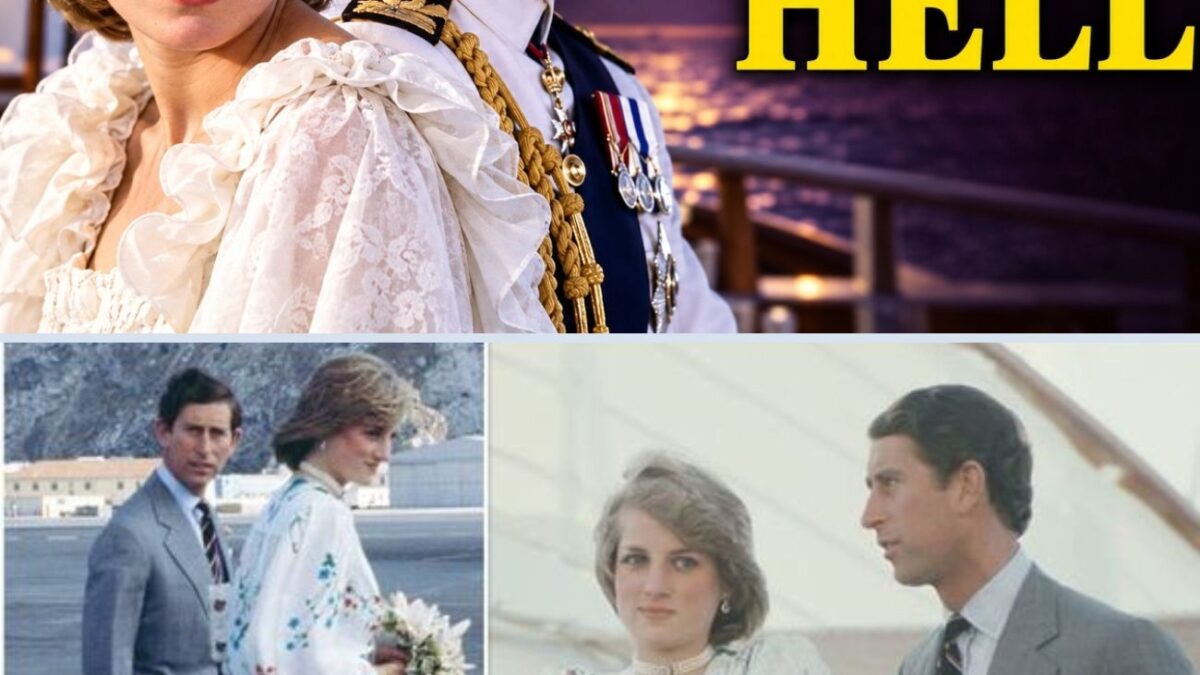
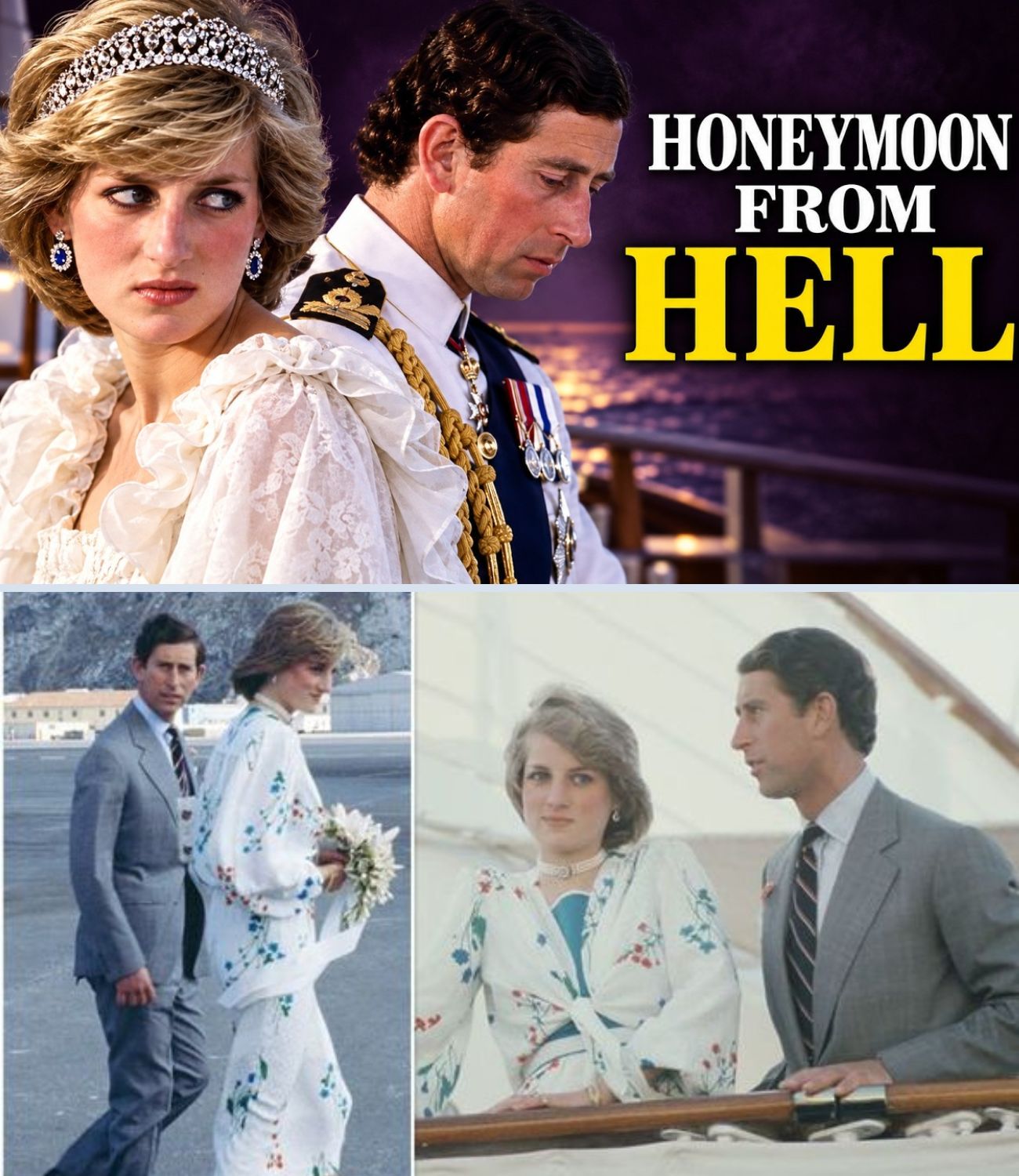
Somewhere in the Mediterranean in the first week of August 1981, the most famous bride in the world looked down at her husband’s wrists and stopped speaking. Outside, the sea was flat and bright. The decks were polished. Officers moved through their routines. 300 ft of royal yacht carried the newest couple in the world away from a wedding that hundreds of millions of people had watched. And Diana was staring at two small gold letters. She had seen them before, just not on him. What she said next, barely into her marriage, became the question she would still be asking 15 years later. Not whether her husband loved someone else. Something colder than that, whether he had ever intended to stop.
This is what actually happened aboard the Britannia. Because the honeymoon has survived in public memory as a postcard. Blue water, white uniforms, a shy 20-year-old waving from a railing. The photographs are real. They were also by Diana’s own account taken during one of the loneliest stretches of her life. There were the books she counted. There was a name she had been warned about and married anyway. There was a bracelet engraved with two initials that she found before the wedding and what she said to her sisters when she found it. And there was the place they went next after the Mediterranean that she would later describe in terms far darker than anything that happened at sea.
Let’s start where the world stopped looking. They boarded at Gibraltar. The itinerary ran through Tunisia, Sardinia, Greece, and Egypt. 11 days at sea on the royal yacht Britannia, a vessel built for a monarchy, not for newlyweds. That distinction matters more than it sounds. Britannia was grand. It was also a working royal environment with a crew of over 200. Officers were nearby. Protocol shaped the meals. Protocol shaped the movement between decks. Privacy existed aboard that ship, but it was never ordinary privacy. It was privacy with staff standing just outside the door. Diana was 20 years old. She had been a kindergarten assistant 18 months earlier. Now she was surrounded by naval formality, by people who had served her husband for years, and by a schedule that already knew what she would be doing at 4:00. She wasn’t only learning a husband, she was learning a system, and the system had been there first.
Charles was 32. He had been formed by naval service, by country houses, by intellectual interests, by a circle of friends who had known him since before Diana could read. His habits were settled. He liked reading. He liked painting. He liked long stretches of quiet conversation about ideas. Diana wanted something simpler and much harder to provide. She wanted attention. She wanted reassurance. She wanted evidence that she had become the center of someone’s emotional life for the first time. Neither of those is the wrong thing to want. They just collided within days. And the first thing she noticed, the detail she would still be repeating years later into a tape recorder was a stack of books.
Diana said Charles brought eight books by the South African writer Laurens van der Post on their honeymoon. Eight. The number is the point. Not because eight is unreasonable for a long voyage. It isn’t. The number matters because she counted them. Because she remembered counting them. Because years later, when she was asked to explain how the marriage began, that was the image she reached for first. To Charles, packing books for weeks at sea was probably nothing at all. It may not have registered as a decision. To Diana, each volume was a closed door. She had not married a private man who could take two years to learn her rhythms. She had married the heir to the throne after a courtship she later described as consisting of only a handful of meetings. The honeymoon wasn’t supposed to be a holiday. In her mind, it was supposed to be the moment the uncertainty finally ended. Instead, she found herself competing with books, with routine, with memory, and with a woman who was not aboard that ship and somehow could not be left behind.
The cufflinks were gold, engraved with two intertwined letter C’s. In Diana’s account, Camilla Parker Bowles had given them to Charles, and Diana noticed him wearing them on their honeymoon and asked him about it. Think about what that conversation actually is. A new wife is not asking about jewelry. She is asking whether the wedding changed anything. She is asking whether there is a boundary now that didn’t exist before. She is asking a question she cannot ask directly because the direct version—”Do you still belong to her?”—is unaskable 11 days into a marriage watched by the entire world. And in her telling, Charles didn’t understand why it was a problem.
That’s the part that did the damage, not the gift, but the incomprehension. Because there are arguments in a marriage that aren’t about the object on the table. The object just makes an invisible thing visible for a moment. Two letters on a man’s wrist became the proof Diana had been afraid of since before the wedding. Afraid since before the wedding, because this was not the first time. To understand why a pair of cufflinks could do that much, you have to know what she had already found and what she had already tried to do about it.
Diana knew about Camilla before she was engaged. Camilla and her husband at the time, Andrew Parker Bowles, were part of Charles’s established world. Old loyalties, private jokes, shared history going back years. Diana was not walking into an empty emotional landscape. She was walking into one that was fully furnished and nobody handed her a map.
Then came the engagement interview on the 24th of February, 1981. A reporter asked whether they were in love. Diana said yes.
Charles said, “Whatever in love means.”
Some listeners heard a shy, awkward man deflecting a personal question on camera. Others heard something colder. What matters here isn’t how the country took it. It’s what Diana said it did to her. She was struck by it. The engagement was minutes old, and the two people at the center of it were already speaking different emotional languages in public.
Then, in the weeks before the wedding, she found the bracelet. According to the account Diana gave to Andrew Morton, Charles had commissioned a piece of jewelry for Camilla engraved with the initials G and F. Diana understood them as Gladys and Fred, private nicknames she associated with the two of them. Other explanations for those letters have been offered over the years, but explanations arrived too late. Diana had already experienced that bracelet as evidence, not as a parting gift, but as proof that something she feared was still alive.
And so, days before the most watched wedding in history, she told her sisters she couldn’t go through with it. Their answer has outlived almost everything else said that week. Her face, they told her, was already on the tea towels. It sounds like a joke. It was a description of a cage. Britain was not preparing for a wedding. Britain was staging a national event: commemorative china, street parties, television rights, a public holiday. By that point, the machinery was simply too large for a frightened 20-year-old to stop without triggering a constitutional crisis and humiliating the monarchy in front of the world. So, she didn’t stop it.
On the 29th of July 1981, she walked into St. Paul’s Cathedral in ivory silk taffeta with a 25-ft train. The global television audience has often been estimated at around 750 million. Bells rang. Crowds filled the streets. Commentators reached for fairy tale language because nothing smaller seemed adequate. There was a small slip at the altar. Diana reversed part of Charles’s names: Philip Charles Arthur George instead of Charles Philip Arthur George. Charles stumbled over his own wording too. People have treated those as omens ever since. They weren’t. Weddings produce nerves, and royal weddings produced them at a scale most people will never experience.
The darker material wasn’t in a misplaced name. It was in what happened once the cameras pulled back and two people had to live inside promises that a global audience had just applauded. Their first stop was Broadlands in Hampshire, the home associated with Lord Mountbatten, Charles’s great-uncle, who had been murdered by the IRA two years earlier. His loss still sat heavily on Charles. So the marriage began in a house full of grief and expectation. He arrived carrying a past that was still emotionally present. She arrived hoping that marriage would finally make her feel safe.
Then Gibraltar, then the yacht, then the cufflinks, and then the part of this story that almost nobody talks about because the Mediterranean wasn’t the end of the honeymoon. After 11 days at sea, Charles and Diana went to Balmoral to join the rest of the royal family in Scotland for the remainder of the summer. For Charles, Balmoral was the happiest place in his world. Outdoor life, early starts, long walks, fishing, shooting, family custom running back generations—a rhythm he had known since boyhood and never had to think about.
For Diana, it was an examination that nobody formally announced. She had enjoyed country life before. This was not that. Royal Balmoral ran on unwritten rules, and newcomers were expected to simply absorb them. What you wore mattered, when you appeared mattered, enthusiasm for the correct activity at the correct hour mattered. The family could be genuinely warm, and it was also self-contained in a way that made an outsider’s needs feel like an imposition.
Diana arrived there already emotionally raw from a honeymoon that had not reassured her, stepping into a house where asking for extra reassurance was the fastest way to be labeled difficult. In the recordings she later made, she described that period as one of deep unhappiness, crying, feeling misunderstood, and experiencing recurring nightmares involving Camilla. Whether every one of those dreams is recalled in perfect order is beside the point. The emotional record is consistent and points in one direction. The honeymoon did not settle her fear; it confirmed it. And her distress didn’t stay inside her head.
Diana spoke openly later about bulimia, which she said began around the time of her engagement and intensified under emotional pressure. She connected it to low self-esteem, to shame, to emotional pain, and to the strain of the marriage itself. It would be wrong to reduce a serious illness to one cause or one person, and she never did. But this is the point where the honeymoon stops being a story about a disappointing holiday. A bad holiday can be forgotten. A young woman whose body starts carrying what she cannot safely say out loud—that is something else entirely.
She was not simply bored because her husband liked to read. She was coming apart inside a new identity that had handed her global visibility and left her unsure who in the world she could trust. And the yacht made it worse for a reason that’s easy to miss. There was nowhere to go. At home, two unhappy newlyweds can separate for an hour. One goes to work, one calls a friend, one walks around the block until the heat drops out of it. On Britannia, the horizon was beautiful and the space was sealed. The crew followed routine, staff knew their places, and Diana had to perform the role of a contented bride at dinner in uniform surroundings in front of people trained never to see anything.
Which raises the obvious objection, and it’s a fair one, because there is a letter written from Britannia in August 1981 where Diana told a friend that the honeymoon had given her a chance to catch up on sleep. Other early letters from that period sound perfectly cheerful. So which Diana is telling the truth? Both of them. People write warm notes from inside painful weeks. They protect their privacy. They reassure the people who worry about them. They feel relief at 11 in the morning and despair by 6:00 in the evening. A sunny letter does not cancel a later account any more than a smiling photograph cancels a marriage.
The young Diana writing on royal stationery still hoped it would work. The older Diana speaking into a tape recorder years later already knew where it had gone. One was describing the weather on a particular day. The other was describing the climate of an entire marriage. That contrast isn’t a flaw in the evidence. It’s the whole shape of the story.
And it’s worth saying clearly where the private account comes from because the provenance is unusually strong. Andrew Morton’s 1992 book, Diana: Her True Story, appeared to be built from friends and palace sources. It wasn’t. Dr. James Colthurst carried questions to Diana and recorded her answers, and those tapes became the backbone of the book. At the time, her direct involvement was concealed. After her death, the book was republished, acknowledging her cooperation. That matters. The honeymoon passages aren’t attributed to an unnamed observer; they are Diana answering questions in her own voice, edited and shaped into a biography, but hers. And in those recordings, the honeymoon isn’t a random anecdote dropped into a longer story. It’s her explanation for how fast hope turned into fear.
Charles told it differently through Jonathan Dimbleby’s authorized biography and 1994 television interviews. He said his relationship with Camilla resumed in 1986 after the marriage had, in his view, irretrievably broken down. He presented himself as a man who had entered the marriage intending to make it work. Diana’s side understood the sequence completely differently. In their reading, Camilla had never left the emotional center of Charles’s life at all, and the 1986 date describes only when something already present became physical. That disagreement became one of the defining battles of the entire marriage.
When did emotional infidelity become actual infidelity? When did a struggling marriage become a dead one? And who decides? The honeymoon can’t settle that argument. But it explains completely why Diana never believed a word of the later reassurances. If a bride sees a bracelet commissioned for another woman before her wedding and then sees that woman’s initials on her husband’s cuffs during her honeymoon, every explanation that arrives afterwards is landing on ground that is already cracked.
By 1989, she stopped waiting for explanations. At a birthday party for Camilla’s sister, Annabelle Elliot, Diana confronted Camilla directly. She later described telling her plainly that she knew what was happening. Camilla’s reported reply pointed at everything Diana already had: two sons, the adoration of the public. What more, in effect, could she possibly want? That exchange survives through Diana’s account rather than an agreed transcript, but it captures the arithmetic she had been refusing since Britannia, because that was the arithmetic of the honeymoon, too.
On that yacht, Diana had everything a spectator could see: the title, the beauty, the privilege, the Mediterranean, a future king for a husband. What she believed she did not have was the one thing everybody watching assumed she already possessed: being chosen completely by one person.
And the gap between how it looked and how it felt only widened as she got better at the job. She learned to walk into a hospital ward and lower the temperature of a room. In 1987, she shook the hand of a man living with HIV without wearing gloves at a time when public ignorance was producing real cruelty, changing the conversation in a single photograph. She held children. She crouched to eye level. She listened in a way that read as personal rather than ceremonial. The nervous bride became one of the most effective public figures in the world. And that changed the balance inside the marriage again in a direction nobody had planned for.
The crowds started coming for her. Her warmth translated instantly through a camera lens. Charles’s causes were serious and often years ahead of their time, but his public manner was formal, and the comparison was relentless, unfair, and completely unavoidable. So the insecurity that began on a honeymoon now sat right beside extraordinary public success. She was no longer only asking to be valued. Millions of people were visibly valuing her. It didn’t heal anything. In some ways it made the private contrast sharper because the contradiction became impossible to ignore: adored by a nation, unreassured at home.
They separated in 1992. The divorce was finalized in August 1996. Diana kept the style Diana, Princess of Wales, and lost the designation of Her Royal Highness. She kept working, most famously on the campaign against landmines, while trying to build a life that belonged to her. Charles and Camilla eventually appeared publicly as a couple and married in 2005. History moved on. The 1981 photographs never lost their grip. And it’s worth asking why. It isn’t nostalgia. It’s that in those images, Diana is standing in the last moment before she knew. On the balcony, she still appears to be standing at the edge of something possible. By the end of the honeymoon, she had started collecting the evidence that hope could not answer.
Here’s the part people get wrong about this story. The tragedy is not that Diana missed the warning signs. She didn’t miss a single one. She found the bracelet. She heard the engagement answer. She counted the books. She saw the cufflinks. She tried to stop the wedding. She was 20 years old, and she read the situation almost perfectly. The tragedy is that noticing changed nothing. She had no freedom, no standing, and no support to act on what she already knew.
Her sister’s answer, the national spectacle, the yacht’s protocol, the family’s instinct for endurance—every single force around her pointed the same way: keep going. And she did. She produced an heir and a spare. She completed the tours. She smiled on the balconies. She became the most photographed woman alive. But continuing is not healing. It’s only continuing.
There was one more force working against her, and it wasn’t a person. The royal household’s deepest instinct is to preserve function. If a couple appear at engagements, produce an heir, and avoid open scandal, the institution keeps moving. Emotional trouble is treated as a private matter to be contained quietly, and that approach had carried the monarchy through difficult marriages before. With Diana, it failed for two reasons: her pain was visible even when she said nothing, and the press attention around her was unlike anything the family had ever had to manage.
Photographers worked out that a worried expression sold papers. Editors worked out that comparing Diana with Camilla sold more. Friends on both sides briefed journalists. By the late 80s, the marriage wasn’t just troubled; it was being narrated in public by two competing camps. Which is exactly why the 1981 material still carries so much weight. The cufflinks, the books, the tears, the silence after an argument—none of that needed a leaked phone call or a front page. It belonged to the marriage itself before anyone had taken sides.
And this is where I’d argue the darkest detail isn’t the cufflinks at all. It’s the books. Jewelry can be blamed on carelessness. A gift can be dismissed as thoughtless. Books look harmless. A man reading quietly beside his wife is not a crime in any marriage. But to Diana, eight books meant a husband who was physically present and emotionally somewhere else. She wasn’t asking to be entertained every hour of the day. She was asking for proof that this marriage mattered to him in the same consuming way it mattered to her. Charles may have genuinely believed that companionship can include separate reading, separate thought, separate quiet. Diana heard withdrawal.
Neither reading alone explains what happened next. What destroyed them was the absence of any shared translation between the two. And by the time each of them understood what the other had actually been asking for, resentment was doing the translating. That’s also why she connected so powerfully with strangers later. She knew exactly what it feels like to be looked at constantly and never once feel seen. When she sat with an AIDS patient, took the hand of a leprosy patient, or listened to someone describing a loss, she was giving the specific form of attention she had spent years asking for and not receiving. Her public gift grew, at least partly, out of a private deprivation. That doesn’t make suffering necessary for compassion; it shows what she did with hers. She turned it into something the world could use.
The honeymoon didn’t create the woman she became. It exposed the loneliness that shaped every choice she made afterwards. So, was it really darker than you think? Yes, but not for the reason the thumbnail version suggests. It wasn’t one terrible scene. There was no screaming row on deck, no single cinematic catastrophe. It was accumulation: a stack of books, a pair of cufflinks, a wrong answer about love, a bracelet, a nightmare at Balmoral, a body breaking down under pressure that nobody around her was willing to name. And every one of those warnings was treated as something she should absorb quietly. That’s the darkness. Her distress became the problem to be managed. The conditions producing it stayed exactly where they were.
That pattern followed her for the rest of her life. When she struggled, people asked whether she was stable. When she succeeded, people asked whether she was eclipsing her husband. When she spoke, they questioned her motives. When she stayed silent, other people filled the silence for her. The honeymoon was simply the first place she learned the cost of having every privilege in the world except control over her own story.
Today, the wedding is remembered through the dress, the balcony, and the crowd. The marriage is remembered through Camilla, the interviews, and the divorce. The honeymoon sits between those two public memories like a locked room. Open it, and the whole story changes shape. You see a 20-year-old trying to ask the most ordinary question any newlywed asks: “Am I actually the person you chose?” You see a man who may have believed that duty and affection could be arranged more neatly than they can. You see a household trained to keep moving no matter what. And you see how fast a private wound deepens when everyone surrounding it is invested in the appearance that nothing is wrong.
Repair was possible. That’s the hardest part of this. Marriages survive terrible honeymoons all the time. Young spouses do learn each other’s language. Nothing about a stack of books or a pair of cufflinks automatically decides 15 years. But repair would have required Charles to understand that those cufflinks were not neutral objects to his wife. It would have required Diana to feel safe enough to describe fear without it escalating into catastrophe. It would have required the people advising them to treat emotional support as part of the duty rather than a threat to it. None of those conditions held—not reliably, not for long.
So the question she asked on that yacht never got answered, and every later sighting, every separate bedroom, every whispered call, every public comparison returned her to it: “Was there ever room in that marriage for only two people?” The Mediterranean was blue. The yacht was magnificent. The photographs were real. So were the tears.
You Might Also Enjoy

“We Thought They Would Negotiate”—What Argentine Soldiers Said When The British Attacked Goose Green

“You’ll Never Finish My Ruck March, Limey” — US Sergeant Who Challenged the SAS, Then Fell Out First






