Diana’s Therapist Broke Her Silence in 2018 — One Session Changed Everything
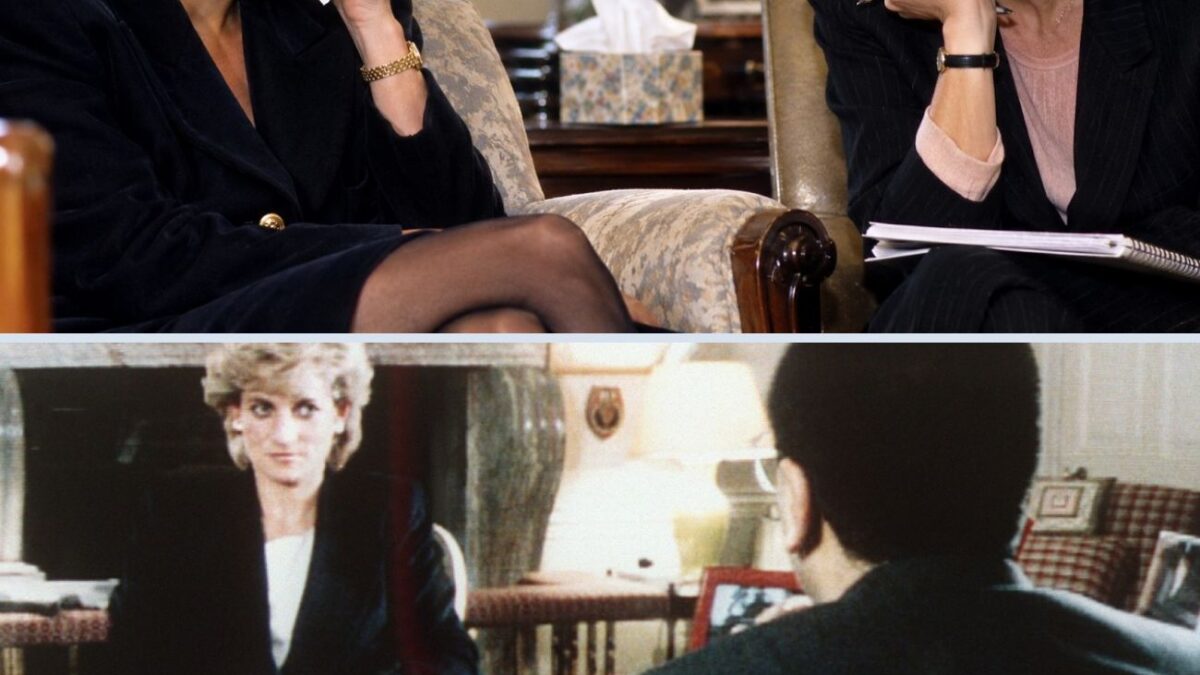
There is a building in North London where for about 2 years in the mid 1990s the most photographed woman on earth went to tell the truth. Not a palace, not a drawing room with staff outside the door, a consulting room with two chairs in it, and the photographers found it. They learned the address. They worked out the days. They stood on the pavement and waited. And they photographed every single person who walked through that door, including patients who had nothing to do with Diana at all. People in the middle of their own worst year, who had come there for the same reason she had. That is what it cost her to get one private hour.
The woman in the other chair was Susie Orbach. And for more than 20 years after Diana’s death through the memoirs, the tapes, the anniversary specials, the former staff with book deals, Orbach said nothing about what happened in that room. Then in 2018, she spoke publicly again. And what she said has been badly misunderstood ever since because people were listening for the wrong thing. They wanted a confession, a sentence from the couch, the one disclosure that would explain Diana. What Orbach actually gave them was more useful than that and considerably harder to hear.
Because here’s the thing almost nobody notices about those two years. You can’t read the transcript. There isn’t one you’ll ever see, but you can watch what Diana did in public before she walked into that building and what she did in public afterwards. And the difference is so stark that it functions as evidence all by itself. Before, her story was told by other people: friends, biographers, a husband’s camp, her own words arriving through intermediaries in secret on tape. After, she stood in front of the world and said it herself. Something happened in the middle. We can trace exactly when. We can trace exactly what changed, and the reason the therapist never explained it is in the end the most revealing detail in the entire story.
Let’s start with what Diana carried into that room. In 1981, Diana Spencer was 19 years old, and the entire British press had decided her appearance was public property. Her clothes, her shyness, her hair, her weight, all of it measured, photographed, and discussed by adults who had never met her. She later recalled a remark Charles made about her weight around that period that wounded her badly. Within months, she said, the bulimia had begun, and here’s what made it so difficult for anyone to see. Her weight stayed within a range nobody questioned. A broken arm brings people running. An illness like hers can stay completely invisible inside a well-dressed life, which is exactly why it lasted as long as it did.
Diana herself later explained the mechanism plainly. Sufferers often despise themselves and feel deep shame, and shame is what stops them telling anyone. Now place that inside the royal household. An institution built on discretion. A family culture that valued endurance, composure, not making a fuss. A world where emotional difficulty was something to be contained rather than discussed. Diana became extremely skilled at appearing composed while suffering completely out of view. She had to. The alternative was being a problem.
The wedding made all of it worse because the wedding turned her body into national property fitted, photographed, assessed, converted into a symbol roughly the size of a country. Then came the engagements which she had been given almost no emotional preparation for. She learned where to stand, when to speak, how to accept flowers, how to move through a crowd of 10,000 people without faltering. Nobody taught her how to survive the loneliness she described afterwards.
Pregnancy brought real joy and it didn’t fix anything. She later described a period of acute despair and episodes in which her distress became physically visible. Retellings have exaggerated and rearranged specific scenes over the years, but the underlying testimony is consistent and it’s hers. She felt unheard, overwhelmed, and desperate enough that pain stopped staying inside. And here is where the trap closes. The family saw behavior that frightened and confused them. Diana saw signals that nobody was answering. Charles saw a marriage getting harder to manage. Three readings of the same event, all of them sincere, all of them pushing in the same direction further apart.
But something else was happening at the same time. And this is the part that makes her story genuinely strange. The exact qualities being dismissed as oversensitivity inside that household turned out to be extraordinary in public. She noticed who was uncomfortable in a room. She walked towards the people everyone else was avoiding. She crouched to eye level with children instead of looming over them. She touched patients at a time when fear had taught the entire public to stand back.
In April 1987, at the opening of Britain’s first purpose-built HIV and AIDS unit at Middlesex Hospital, Diana shook the hand of a man living with HIV without wearing gloves. The gesture was medically informed. HIV cannot be transmitted by ordinary touch, and she knew it. But public fear had made basic human contact look dangerous. And that photograph went around the world in a day. Everyone calls that moment compassion. Look at it again. It was authority. Diana had worked out that one gesture could overturn a thousand frightened headlines and that she didn’t need a speech to do it. She needed to put her hand somewhere the cameras could see it and notice what she used: her own body. The body that had been inspected, measured, criticized, and controlled since she was 19. She turned it into the instrument that told a terrified country it was safe to touch somebody.
She could do that for other people in public. In 1987, she could not yet do it for herself in private. That gap is the whole story, and it kept widening. By the early 1990s, the marriage had stopped being a private difficulty and become a national conflict fought through the press. Both sides were briefing friends, staff, and advisers were being used as sources. They formally separated in December 1992. And that same year, Andrew Morton’s book detonated. Diana’s bulimia, loneliness, and distress were suddenly public property. Her recorded answers had reached Morton through Dr. James Colthurst, though her cooperation wasn’t acknowledged openly until later.
Now, that book did something genuinely contradictory, and it’s important. It exposed her pain. It also gave her a voice for the first time. But it put her suffering in front of the entire world without her name openly attached to it, which meant millions of strangers were now debating her illness. And her, while she was unable to speak directly about either. Was she brave, unstable, manipulative, ill, honest? Everyone had an opinion. She had none of the microphone. Diana had never been more famous in her life and she had rarely been less protected.
That is the exact moment Susie Orbach enters this story and it matters enormously who Orbach was because she was not a palace fixer and she was not chosen for discretion. Susie Orbach was a psychotherapist and a writer whose 1978 book Fat is a Feminist Issue had attacked one of the most comfortable assumptions in western medicine that disordered eating is a failure of willpower. Her argument was that the body is where fear, social pressure, power and identity get tangled together. That what somebody does with food is very often a language for something they cannot say in words. For most readers in the 70s that was theory. For Diana, whose appearance had been inspected since adolescence and whose illness had become a subject of national argument, it wasn’t theory at all. It was a description of the ground she stood on every day.
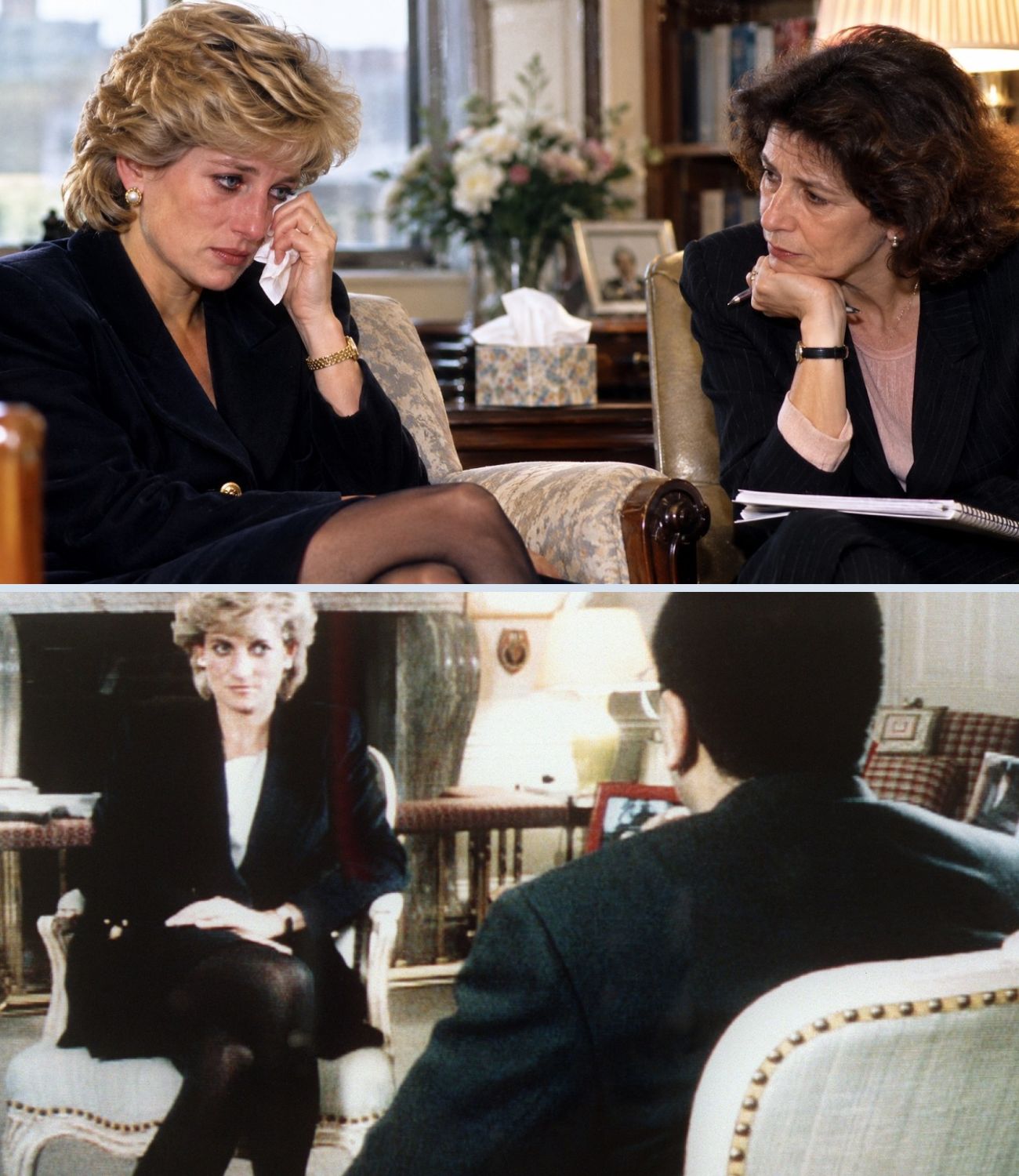
Contemporary profiles reported that Diana saw Orbach for around 2 years, starting about 1994. Some accounts said the sessions could happen more than once a week. So, picture what that actually required. Week after week across London, knowing the cars might be waiting, knowing that the act of asking for help would itself be photographed, printed, and interpreted by people who had already decided what her mental state was. Reporters gathered on that street. Neighbors were disturbed. People with no connection to Diana at all were reportedly harassed simply for attending appointments at the same address. Even seeking help became evidence. And despite all of that, the room held. Which raises the question this whole story turns on. What was actually happening in there that was worth that much?
Orbach’s approach was built on one idea that sounds simple and is not. She did not treat a woman as a set of symptoms to be disciplined. She asked a different question entirely: What is this symptom doing for this person? Because if a behavior is providing relief, however briefly, however destructively, then standing over somebody and demanding they stop does absolutely nothing to the terror underneath it. You’ve removed the only coping mechanism they had and left the cause completely untouched. The work was to find the need underneath and build something safer that could meet it.
Now apply that to Diana specifically. Her body had become a messenger. When words failed, and words failed constantly, the body spoke instead. It carried the tension of state banquets, of cameras, of marital betrayal, of public comparison, of private shame. Nobody around her had the vocabulary to receive it. What therapy offered was translation, a place where the message could be turned back into language before it had to be carried physically. But here’s the problem with telling this story honestly. Nobody can hand you the session. There is no transcript. There never will be. Anyone who offers you the sentence that fixed Diana is making it up.
What can be traced precisely with dates is everything that happened around those two years. And that record is remarkable. Start just before. On the 27th of April 1993, Diana stood in front of an eating disorders conference in London and attacked the assumption that anorexia and bulimia are expressions of vanity. She described them instead as responses to much deeper problems. She talked about the pressure created by a culture obsessed with perfection. And notice what she did not do. She didn’t announce her own diagnosis. Not in that room. Not that day. She did something far more strategic. She took knowledge she had earned the hardest possible way and used it to make other sufferers visible without putting herself on the table. A woman whose illness had been exposed without her full public acknowledgement stood in front of a room of clinicians and reframed the entire subject with her dignity intact.
So she already had the beginnings of a public language for pain. What she did not yet have was permission to make it personal. Then in December 1993, 8 months later, she announced she was reducing her public duties. The speech at a charity lunch was calm and completely firm. She said she needed time and space. Think about who was saying that. A woman whose schedule had been managed by other people, whose body had been managed by other people, whose marriage, image, staff, and public role had all been arranged around institutional need. She stood up and asked for space. That isn’t retreat. For her, it was the first boundary she’d ever successfully set in public. And it exposed a question nobody around her had an answer for: not what the palace expected, not what the newspapers demanded, not what the public wanted. What did Diana want her role to be? A consulting room cannot answer that question for anyone. What it can do is create conditions quiet enough that a person finally hears her own answer.
Which brings us to 1994 and the beginning of the two years that changed the register of everything she said afterwards. That year, the marriage narrative shifted again. Charles acknowledged adultery in a television interview tied to Jonathan Dimbleby’s authorized biography, saying it had happened after the marriage had irretrievably broken down. Diana appeared that same evening at a dinner at the Serpentine Gallery in a black dress the press immediately named the revenge dress. The label came from outside. She never used it. What the image actually shows is control. She arrived through the front. She held her posture. She let the cameras record a woman who was not going to disappear quietly on the evening her husband explained their marriage to the nation.
Clothing had been something other people measured on her body since she was 19. She had just used it as speech. And now understand what Orbach brought to that specific situation because this is the part that makes the pairing so unusual. Orbach had spent her entire career examining how women are taught to treat their bodies as projects requiring public approval, how shrinking physically, emotionally, politically gets rewarded. Diana lived that at a scale no case study had ever covered. A dress size became news. A tired face became evidence. Weight loss became gossip. Motherhood became competition. And a private appointment with a therapist became a photo opportunity for men standing on a pavement.
In that context, confidentiality stopped being professional etiquette. It became the only protection she had. And look at everyone else who claimed that word. Protection officers guarded her body. Palace staff guarded the institution. Lawyers guarded the legal position. Publicists guarded the reputation. Orbach guarded something nobody else was guarding at all: the one space where Diana’s words didn’t have to serve somebody else’s purpose. That’s the distinction that explains the whole relationship. Diana’s life was full of audiences. What she had almost none of was a witness. An audience reacts. It applauds, condemns, consumes, and moves on to the next thing. A witness stays with the complexity. A witness doesn’t demand a cleaner story than the person can honestly tell. She had millions of the first. She needed one of the second.
And then in November 1995, the world heard the result. The Panorama interview with Martin Bashir is now permanently complicated and it has to be said clearly. The methods used to obtain it were later found to involve deception. Prince William has said those failures contributed significantly to his mother’s fear, paranoia, and isolation. That finding is real, and it cannot be waved away. The interview cannot be presented as a clean act of empowerment. But the words Diana spoke that night were still hers. And when she spoke about bulimia, she described it as a secret illness bound up with low self-esteem, something that brought a brief sense of relief and then a wave of self-disgust. She said she had not discussed it with the royal family because the shame itself was what made concealment possible. Millions of people heard an illness explained from the inside for the first time. Not as vanity, not as greed, not as weakness, but as an attempt to soothe a feeling that had become unbearable.
Now listen to how close that is to the framework Orbach had been arguing for since 1978. It would be far too much to credit one clinician with every word. Diana had lived it. She had read, listened, talked to other sufferers and built her own understanding over 15 years. But watch the grammar change. She was no longer saying, “I am shameful.” She was saying, “This is what shame made me do.” That is not a small adjustment in phrasing. That is a person separating her identity from her symptom, which is more or less the entire objective of the work. A woman who can do that becomes very hard to control, and a lot of people had been relying on being able to control her.
Because the consequences of that interview came fast. The Queen wrote to both Charles and Diana urging an early divorce. The marriage ended legally in August 1996 and divorce removed one structure while creating enormous new uncertainty. Diana lost the style Her Royal Highness. She remained Diana, Princess of Wales and the mother of a future king. She had to reorganize staff, security, finances, work, and identity simultaneously. The world knew her as a princess. She was now trying to work out who she was without the marriage that had produced the title.
And here’s where you can actually see the effect of 2 years of therapeutic work in her diary. She narrowed. Instead of trying to satisfy every expectation placed on her, she focused on a small set of causes: homelessness, HIV and AIDS, leprosy, cancer care, and landmines. Look at what those have in common. Every one of them centers people who had been stigmatized, avoided, ignored, or physically marked as different. Diana knew exactly what it was like for a body to become public property and be judged for it. She spent her last years giving dignity back to other bodies.
In January 1997, she went to Angola with the British Red Cross and walked through a cleared lane in a minefield in protective gear. A government minister reportedly called her a loose cannon, though he later disputed how the phrase had been presented. The criticism was that she was interfering in politics. She answered by saying she was a humanitarian figure rather than a political one and kept the focus exactly where she wanted it on civilians still losing limbs years after the fighting stopped. And there’s one detail from that day that tells you more than any speech. She walked the lane twice. Camera equipment failed to capture the first pass, so she did it again. That was not vanity. She understood precisely what the photograph was for. If the image could move public opinion toward a ban, she was willing to walk back into a minefield to get it.
Compare that woman to the one who stood at an altar in 1981 and had absolutely no idea what any of this was for. The ability to stay with your purpose while being publicly mischaracterized is one of the hardest forms of emotional regulation there is. Diana didn’t manage it every time. In Angola, she managed it completely. And in June 1997, Christie’s in New York auctioned 79 of her gowns, raising more than $3 million for AIDS and cancer charities. William, still a teenager, was widely reported to have encouraged the idea. Think about what those dresses were. They were the wardrobe of a marriage that had ended. Garments that had been required to prove she was princess enough. Photographed, assessed, discussed, worn under instruction, she turned them into funding for people facing illness and let them go. For a therapist whose life’s work was the meaning carried by bodies and what we put on them, the symbolism would have been impossible to miss.
But this is exactly where the story has to stay honest because the tidy version is a lie. None of this was a cure. Diana remained vulnerable to rejection and badly frightened by betrayal. Friends described real emotional intensity. The press never stopped. Palace relationships stayed strained. She made impulsive decisions. Her last years contained fresh entanglements, security worries, loneliness, and relentless pursuit. Therapy did not remove a single one of the conditions that hurt her. And the popular fantasy of what happens in that room is wrong in a specific way worth naming. The myth says one brilliant sentence unlocks the patient and everything changes. Real work is far slower and much less cinematic. A patient says something, retreats, tests whether the listener will punish her for it, comes back, risks slightly more truth.
The breakthrough is usually invisible from outside. It might be the first time she notices a feeling before acting on it. The first time she declines a humiliating arrangement. The first time she believes her own experience deserves words. Two years is not a montage. It’s a repeated commitment made in the rain with photographers on the pavement. There’s also something that has to be said about her sons because leaving a painful marriage doesn’t dismantle the emotional system built inside it. Diana still had to co-parent with Charles. She still lived at Kensington Palace, still attended royal events, still read coverage pairing her name with Camilla’s and treating every gesture as a contest. William and Harry were not supporting characters in an adult drama. They were children moving between two parents while the newspapers explained their family to the nation.
She wanted them to have ordinary pleasures and to see lives outside the gates. She took them to amusement parks, fast food restaurants, shelters, hospitals, and she sometimes involved William in her emotional life in ways that have rightly raised concern since. William has spoken about the weight of seeing his mother’s sadness. Love and blurred boundaries can exist in the same house. A truthful portrait doesn’t make her a perfect mother or a damaged one. It shows a woman trying to give her children the emotional openness she’d never been given while still learning where a child’s responsibility has to stop. That’s exactly the kind of separation the work can help with. A son should not have to become a confidant. A confidant should not have to become a therapist. The clearer each relationship gets, the less pain spills into the wrong place.
And Diana’s fear of abandonment did not begin with Charles. Her parents’ divorce and the contested custody that followed marked her childhood badly. The royal marriage activated those wounds. It didn’t invent them. That context is harder and much more compassionate because if every hurt is blamed on one husband and one institution, the patient stays dependent on that husband and that institution to repair it. She can only heal if they admit everything first. If the older pattern is recognized, she gets choices back. She could not force Charles to become the partner she’d wanted. She could negotiate a divorce. She could not stop every photographer. She could cut her engagements and restructure her staff. She could not change her childhood. She could reconsider how much emotional weight belonged on her sons. That’s what agency looked like for her, not control: a series of smaller distinctions, each one available because she’d learned to see it.
Which finally brings us back to 2018 and what Orbach actually did. By then, the appetite for revelation had been running for 20 years. Former staff had written books. Friends had given interviews. Recordings had surfaced every anniversary, producing a new promise about what Diana had really thought. Orbach had the single most valuable unpublished account of Diana’s interior life in existence. She never released case notes. She never reproduced a session. In 1999, an interviewer called her Diana’s therapist and tried to open the subject. She acknowledged the horror of the press siege around the treatment and went no further. By 2018, speaking publicly again, the line hadn’t moved an inch. She could discuss what bodies mean, why shame becomes physical, how the work actually functions. She never had to expose Diana to explain any of it.
And that is the real answer to the question this story asks because there’s a reason beyond professional ethics and it’s the most important thing here. Diana’s psychological history has been used for 40 years as a weapon against her credibility. If she expressed fear, they called it paranoia. If she got angry, they called her unstable. If she changed her mind, they called her manipulative. A therapist who published private material, even sympathetically, even carefully, would have handed that habit a lifetime supply of ammunition. She’d have turned Diana permanently into a case rather than a person. Orbach refused to make that trade, because she understood something the tabloids never did. Symptoms carry meaning. They do not erase judgment. Diana could be unwell and perceptive at the same time. She could suffer from bulimia, accurately recognize betrayal. She could need help and still possess formidable political instinct. She could be emotionally intense and ethically serious. Used well, the language of therapy expands a person. Used carelessly, it’s just a more respectable way of dismissing her.
There’s one more reason that privacy mattered, and it’s the one I find hardest to argue with. A therapy session is where a person is allowed to say the wrong thing, to contradict herself, to exaggerate, minimize, get it wrong, and try again tomorrow. Publishing that process would freeze unfinished thoughts into permanent evidence. Diana had already spent her entire adult life in a culture that treated every stray sentence as a verdict, a leaked tape, a secret recording, a photographed embrace, a published letter. That hour gave her something she had almost nowhere else on earth: the right to revise.
So did one session change everything? Not in the way the phrase suggests. There’s no secret scene, no decisive line, nothing to dramatize for anybody’s entertainment. But if one session mattered more than the others, it was probably the first one in which Diana said something genuinely difficult and discovered that the person listening would neither leak it nor leave. That’s the hinge. From there, trust can be rebuilt an hour at a time. Not trust in the palace, not trust in the press, trust in her own perception. Everything else depended on that.
And look at what the photographers on that pavement actually got. They got the car door, the time she arrived, the minutes until she came out, a face to sell, and a mental state to speculate about. What they could not photograph was the only thing that was happening: the slow transfer of authority from shame to speech. We heard the results in fragments over 4 years. We heard it in December 1993 when she asked for space. We heard it in 1995 when she described her illness in her own voice with her own name attached in front of the entire country. We saw it in 1996 when she negotiated a life after the divorce instead of simply receiving one. We saw it in 1997 in a minefield in Angola and in 79 dresses that became $3 million for people who were sick. Every one of those acts carries the same message underneath it: This body, this voice, and this attention are mine to direct. That was the authority she had been looking for since she was 19 years old.
There is real pain in knowing it ended in August 1997, just as she was finally building a life she had chosen. Therapy cannot protect anyone from external danger. Insight doesn’t stop a car or a photographer or somebody else’s catastrophic decision. All it can do is help a person live more fully in the time they actually have. Diana got four years. And the final thing worth saying is about the shape of her story as we normally receive it. Diana’s life is almost always told through breaches: a leaked tape, a secret recording, a deceptive interview, a published letter, a stolen photograph, every door into her forced. The therapy is the one part of it where the door stayed shut. And it’s the part that holds up best precisely because of that. We know the meetings happened. We know roughly when and roughly for how long. We can trace every public change that happened around them. And we know the person who could have sold it chose not to.
For over 20 years, through every anniversary and every offer, the missing transcript isn’t a gap for anyone to fill with invention. It’s the thing that allowed the work to matter in the first place. Diana was never evidence of Susie Orbach’s importance. Orbach was one witness in Diana’s attempt to become fully herself and the only one who understood that the way to honor it was to keep her mouth shut. That’s not silence as absence. That’s silence as discipline.
You Might Also Enjoy

“We Thought They Would Negotiate”—What Argentine Soldiers Said When The British Attacked Goose Green

“You’ll Never Finish My Ruck March, Limey” — US Sergeant Who Challenged the SAS, Then Fell Out First






