“Drop Half That Kit, Mate.” — The SAS Warning a US Ranger Ignored on the Mountain.
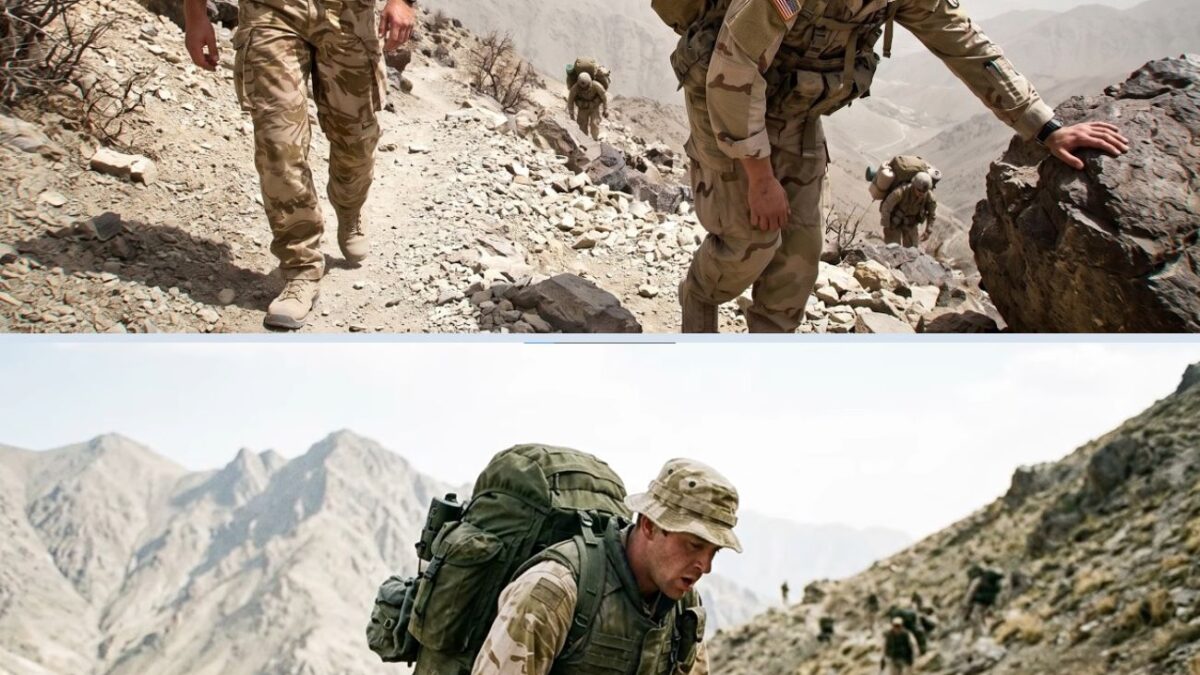
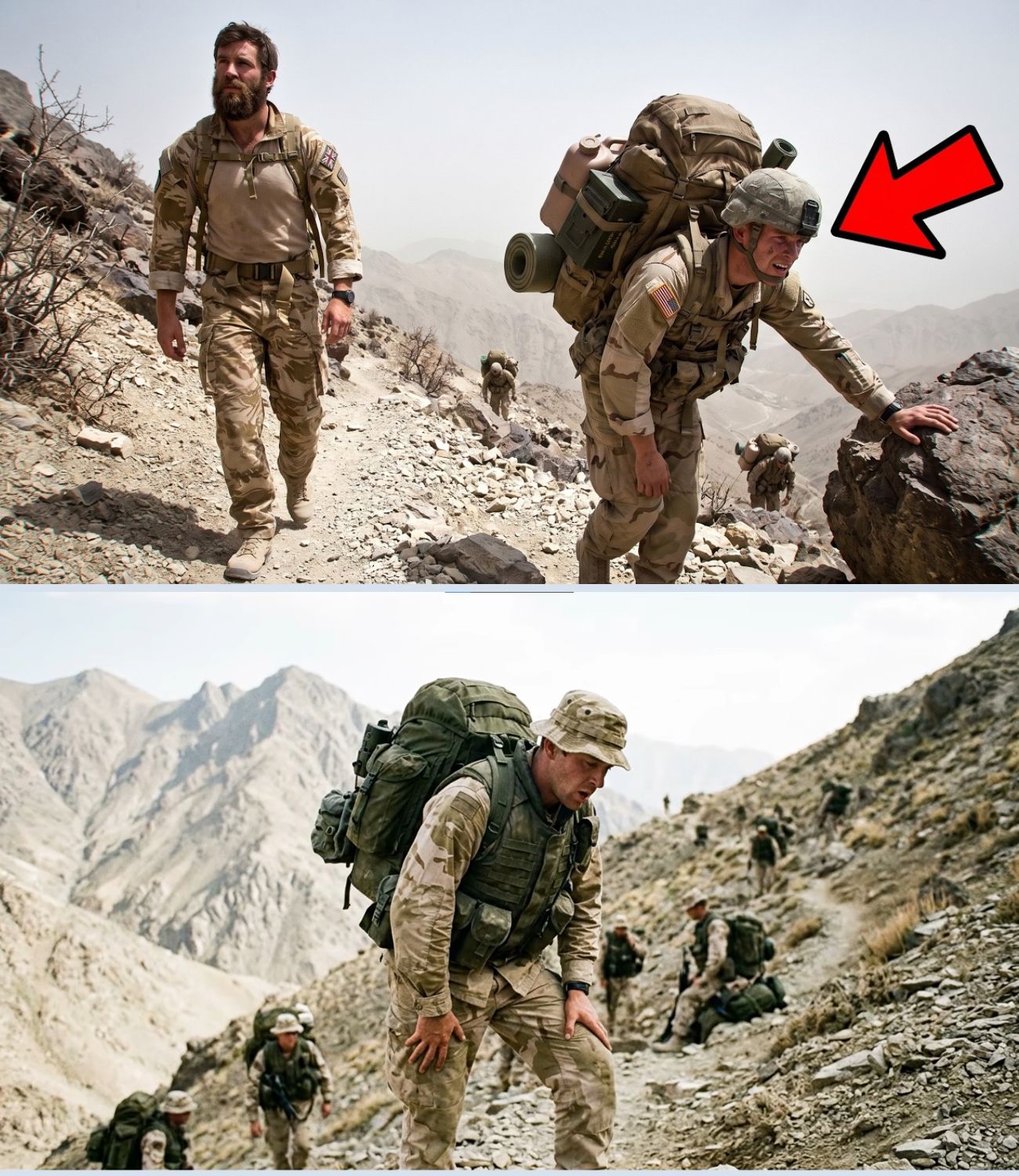
At 2,600 m in the Shah-i-Kot Mountains of Paktia Province on the morning of the 12th of March 2002, Sergeant Rob Tyack crouches beside a stack of US Army rucksacks laid out on the snow and does the arithmetic in his head a second time. Each pack weighs close to 45 kilos, body armor, extra mortar rounds, cold weather layers nobody had told the Rangers to leave behind.
Beside him, Staff Sergeant Jake Doran checks his rifle’s action against the cold and waits for the climb order. Tyack looks up at the ridge another 600 m above them, thin air already burning in his own lungs, and says it plainly,
“Drop half that kit, mate, or the mountain will do it for you.”
Operation Anaconda had begun 3 days earlier as an attempt to clear a concentration of al-Qaeda and allied fighters from the Shah-i-Kot Valley, a bowl of high ground ringed by ridgelines that reached above 3,000 m in places and offered defenders commanding fields of fire onto anyone moving below.
The operation’s planners had underestimated both the terrain and the numbers holding it, and by the time a Special Air Service reconnaissance patrol under Captain Iain Merchant was tasked to establish an observation position on a ridge the Americans had marked on their operational graphics as Objective Talon, the valley floor below had already absorbed 2 days of contact heavier than the initial planning assessments had allowed for.
Merchant, 34 and on his third operational deployment with the regiment, had spent the previous 18 months split between selection cadre duties and a short attachment to a mountain warfare instructor course in Wales, a background that made him, almost by accident, one of the few captains in the whole coalition force with any formal grounding in what altitude actually did to a loaded soldier’s body.
He had argued before the operation began for a longer acclimatization window for any unit tasked above 3,000 m and had been told by the planning staff that the operation’s compressed timeline, driven by intelligence suggesting the valley’s fighters might disperse if the assault was delayed further, left no room for it. An answer he understood even as he judged it likely to cost somebody somewhere in the valley more than the delay itself ever would have.
He accepted the answer without much argument on the grounds that arguing further would not buy his own patrol the days it would have needed either. Merchant’s patrol, four men including Tyack and Corporal Danny Ferris, had been in position on a shoulder of high ground since the operation’s opening night, tasked with early warning against fighters moving along a goat track that linked two of the valley’s fighting positions.
The fourth man, Trooper Cole Spight, carried the patrol’s only trauma kit as well as his own rifle and had spent the better part of the second night treating Ferris for a mild case of frostnip on two fingers, caught early enough that it cost the patrol nothing beyond a change in who carried the heavier optics for the rest of the task.
Their own approach had taken 11 hours on foot from a helicopter landing zone chosen deliberately short of the objective on the calculation that a closer landing would announce the patrol’s presence to anyone watching the ridgelines with the kind of optics the operation’s own intelligence assessment already suspected they possessed.
The patrol had climbed slowly, deliberately, carrying loads trimmed to the specific demands of altitude and cold rather than any fixed loading table. Water rationed to what the body actually needed at 8,500 ft rather than what habit dictated at sea level. Ammunition weighed against the near certainty that any contact at that altitude would be short and close rather than sustained.
Marchant had made the loading decisions himself, item by item, 2 days before insertion, discarding a second radio battery Spight had wanted to carry as insurance, and cutting the patrol’s ration scale to what four men could plausibly eat cold over 3 days, rather than the fuller scale the quartermaster stores would otherwise have issued.
Tyack had queried the ration cut at the time, more from habit than real objection, and Marchant’s answer had stuck with him since, that a hungry man moved slower than a tired one, but a man crushed under unnecessary weight moved slower than both, and at that altitude, the third condition would arrive long before the first two became a real problem.
A composite element of the 75th Ranger Regiment, providing a blocking position on the same ridge system to prevent fighters escaping east once the valley floor assault began, arrived at a staging point below Marchant’s patrol on the operation’s third morning, delayed from their original insertion window by a helicopter engine problem that had grounded one of the two Chinooks tasked to lift them forward.
Doran, a staff sergeant leading one of the Ranger squads, met Tyack briefly at the staging point while both units waited on final movement orders, and it was there that Tyack, watching the Rangers’ rucksacks being checked and rechecked by their own quartermaster sergeant, made the observation about weight that would come to matter more than either man expected that cold, still morning.
The Rangers’ loads reflected a doctrine built for sustained operations at lower altitude, where a platoon might need to hold ground for days without resupply. Full body armor plates, spare mortar rounds distributed across the squad, rather than carried by a dedicated crew, cold weather layers packed in addition to what each man already wore, and water carried at a volume calculated for exertion rates that made sense at 1,000 ft rather than 8,500.
Tyack’s own patrol had learned over 3 days on the ridge that the same physical effort at that altitude cost nearly double what it cost at sea level, and that the body’s appetite for water dropped even as its actual need for it climbed, a trap that caught soldiers unfamiliar with the mountain into carrying too much of everything except what mattered.
The staging point itself sat in a shallow bowl a little below the tree line that had once existed on that slope before decades of fighting and firewood cutting had stripped it back to scattered stunted growth. Snow lay knee-deep in the shadowed hollows and barely ankle-deep on the wind-scoured rises between them, and the temperature that morning, recorded by Spight on a small thermometer clipped to his webbing more from habit than any operational need, sat 11° below freezing before the sun had cleared the eastern ridge and would not climb much past freezing itself even at the day’s warmest hour.
An unforgiving margin for men working hard enough to sweat and then stopping long enough to chill. It was cold enough that batteries drained faster than any manual predicted, and water bottles, carried against the body rather than in outer pouches, still needed occasional shaking to keep from freezing solid.
Doran’s own squad numbered nine, a composite grouping drawn from two platoons of the same company after an earlier reorganization had thinned both to cover unexpected commitments elsewhere in the valley, a patchwork arrangement that meant several of the men climbing together that morning had trained side by side for barely a fortnight before the operation began.
He had led men in mountainous terrain before in exercises stateside at far lower elevation, but never at an altitude that made simple movement itself the primary adversary rather than the enemy holding the high ground. His quartermaster sergeant, a career soldier named Pruitt with strong opinions about standardized loading, had built the squad’s kit list from the same table used for the regiment’s lower altitude taskings elsewhere in the country on the reasoning that consistency across the company made resupply and casualty replacement simpler than tailoring every squad’s loadout to its specific ground.
An assumption that had held up well enough on every previous tasking that spring and gave him little reason on the morning of the climb to expect this particular ridge, this particular squad to prove any different from every other tasking that had come before it.
Pruitt himself stood a few paces off during the exchange between Tyack and Doran, close enough to hear most of it and offered his own view once Tyack had moved off to rejoin his own patrol that a British sergeant with no authority over an American squad and no responsibility for its resupply had no real standing to second-guess a loading plan built and approved through the proper channels, whatever his own patrol’s experience on that specific slope.
Doran did not fully share the view, but he did not overrule it either. Caught between a warning that felt increasingly credible the longer he turned it over and a chain of responsibility that ran through Pruitt and upward rather than sideways to a foreign sergeant he had met 20 minutes earlier, Doran heard Tyak out and by his own later account did not dismiss the advice so much as find it impossible to act on inside the time available.
His squad had been given a movement order that placed them on the ridge crest within 4 hours, a timeline set by a headquarters two valleys away working from a map rather than the ground itself. And there was neither time nor authority at Doran’s level to strip a loading plan that had been approved further up the chain before the operation even began.
He told Tyack as one such exchange reportedly went that he appreciated the warning, but that his own sergeant major would have his head if half the squad’s mortar rounds were left sitting at the staging point when the position needed defending. Tyack did not press the point further. He had said what he judged needed saying once, and the decision belonged to men who did not answer to him.
He did, before rejoining Marchant’s patrol for the climb to their own observation position, quietly pass Ferris’s spare water bladder to a young Ranger private who had been struggling visibly even with the pack still on the ground. A small transfer that cost the patrol nothing and drew no comment from either side, but that Ferris remembered clearly enough to mention unprompted in the debrief 2 days later.
The climb began within the hour, and it went badly from very near the start. The Rangers’ first casualty to the mountain itself, rather than to enemy fire, came less than 90 minutes in when a private in Doran’s squad collapsed with symptoms his own medic recognized within minutes as acute mountain sickness, a pounding headache, disorientation, and a stumbling gait that had nothing to do with the loose scree underfoot.
The squad had covered barely a third of the planned distance. Doran made the call to redistribute the man’s pack among four others rather than leave any of it behind. A decision that added another 6 kilos to men already laboring, and the squad’s pace, already well behind the 4-hour timeline, slowed further still.
Corbin, the squad’s medic, assessed the stricken private as unfit to continue under any load at all. His coordination degraded enough that a further climb risked a fall on ground that offered no margin for one. The private was left reluctantly with a single escort at a sheltered fold in the rock roughly a third of the way up to await evacuation once a helicopter could be spared.
A decision that cost the squad two men from its fighting strength before the ridge had even come properly into view above them. The pair left behind wrapped in whatever spare layers the rest of the squad could spare from packs already stripped once that morning. Doran radioed the change to his own company headquarters, who acknowledged it without comment, already absorbing similar reports from other elements scattered across the valley that same morning.
Marchant, watching the Rangers progress from his own observation position higher on the ridge, relayed the delay to the operations forward headquarters within the hour, flagging that the blocking position would not be established inside the window the ground assault below was counting on. It was the first of several problems the day would produce that no amount of planning at any level had accounted for, and each one narrowed the options available to men already carrying more than the mountain wanted from them.
Radio communication, patchy from the start given the terrain’s effect on line of sight, failed almost entirely for a stretch of nearly 40 minutes that afternoon when a battery pack in the squad’s primary set froze hard enough in the thin sub-zero air to drop below the voltage the radio needed to transmit. Doran’s signaler carried the battery inside his own jacket against bare skin for 20 minutes before it recovered enough charge to raise the net again, a fix that cost the squad a further stretch of daylight it could not afford to lose, and left Marchant’s patrol 400 m above unable to confirm for most of that window whether the Rangers below them were still moving at all.
Spight, watching the same dead ground through his own optics from the observation position, suggested to Marchant that the patrol center runner down to physically confirm the squad’s status rather than rely on a radio net that had already failed once and could fail again at the worst possible moment.
Marchant weighed the risk of exposing a fifth man on ground already watched by fighters on the far ridge against the value of the information and chose, in the end, to wait the radio out rather than move anyone, a decision he later described as the harder of the two choices precisely because it required doing nothing while men he could not see struggled below him.
The route itself narrowed further when the planned line along the goat track proved to be holding wind-loaded snow deep enough in two separate gullies to raise a real risk of a slab avalanche if the whole squad crossed together. Doran’s platoon sergeant, consulted by radio once communication returned, ordered the squad to cross one man at a time rather than as a body, a decision that added perhaps 20 minutes to the crossing, but avoided a slope that Tyack, watching from above through his scope, had already flagged as unstable on the patrol’s own report 2 days earlier.
A report that had reached the rangers’ higher headquarters, but had not, in the confusion of a compressed planning cycle, reached Doran’s own squad before they set off. The failure to pass that single piece of ground information down the chain became, in the debrief held 2 days later in a cramped tent lit by a single lantern, a source of quiet frustration for Marchant more than for anyone on the American side.
His patrol had filed the avalanche assessment through the correct coalition liaison channel the previous day, expecting it to reach any unit tasked to move through that ground, and instead it had sat, by the account given afterward, in an intelligence summary two headquarters removed from the men who actually needed it, arriving in time to be read, but not in time to be acted on before boots were already crossing the slope it described.
It was the kind of gap Marchant noted, without much heed in his own report, that cost nothing when the ground happened to hold, and could have cost a great deal more had it not. Surveillance pressure from the fighters holding the upper ridgelines made itself known shortly after 3:00 in the afternoon when a burst of heavy machine gun fire from a position roughly 800 m to the east forced Doran’s squad to ground in a shallow depression that offered barely enough cover for the men lying flattest against it.
The fire was not accurate. The range and the angle worked against the gunners as much as for them, but it pinned the squad in place for the better part of 40 minutes, burning daylight that the delayed climb could not spare and forcing every man to lie still under the full weight of a pack he had not been able to shed even for the duration of the contact.
It was during that 40 minutes lying exposed with machine gun fire cracking overhead that Doran later admitted the weight of his own kit first became something more than an inconvenience. A soldier flattened against frozen scree with 45 kilos on his back cannot move quickly if the position is compromised further, and Doran’s own attempt to reposition 6 m to a marginally better piece of cover took him nearly a full minute of labored crawling that would have taken a tenth of that time unloaded. He did not mention Tyack’s warning to anyone in that moment. He remembered it anyway.
The gunfire itself came from a heavy machine gun position dug into a rock outcrop that Merchant’s patrol had already noted on their second day, logged in the same report that had flagged the avalanche gully and cross-referenced against a thermal signature picked up briefly the previous evening before cloud cover had rolled back in and obscured it.
Ferris, tracking the position through the patrol spotting scope once the firing began, confirmed two distinct muzzle flashes rather than one, suggesting a second weapon co-located with the first, information Merchant passed down to the pinned squad within minutes precisely because his patrol’s earlier unhurried observation of that exact outcrop meant there was nothing left to work out in the moment itself, only a grid reference already fixed and waiting to be read off the map.
Water became the next constraint to bite, and it bit harder than the planners’ tables had anticipated. The squad’s medic, a specialist named Corbin, began treating a second case of altitude sickness shortly after 4:00. This one compounded by dehydration brought on by men rationing water they had ironically carried in near excessive quantity but drunk too little of, distracted by cold exertion and contact from the simple discipline of drinking on a schedule.
Corbin’s fix was blunt and immediate. He stopped the squad’s movement for 10 minutes and made every man drink 400 ml whether he felt thirsty or not. A delay that cost more daylight but that Doran by then several hours behind a timeline already abandoned in all but name no longer had the luxury of resisting.
Corbin’s own reasoning explained to Doran in a short clipped exchange while the squad sat drinking on his order was that a dehydrated man made worse decisions than a thirsty one who had simply not yet drunk and that the squad had already spent the day paying for decisions made under exactly that kind of impairment.
He had watched two men stumble on ground that should not have troubled them and put both incidents down at least in part to bodies running on too little water rather than too little skill or too little courage. It was not a popular order in the moment with men who wanted to keep moving rather than sit still under a sky that had already shown it held fighters watching, but Corbin held the line for the full 10 minutes regardless.
The compressed timeline collided by late afternoon with a political restriction neither Doran nor Marchant had any power to alter. Coalition rules that spring required positive visual confirmation before close air support could engage the ridge position firing on the squad. A standard that made sense against the risk of striking friendly forces scattered across a valley already thick with confused reporting, but that cost the pinned Rangers a further 25 minutes while an aircraft overhead worked to establish exactly what Marchant’s own patrol watching from a superior vantage point had already confirmed within the first five.
Marchant’s report, relayed at that point directly rather than through the longer chain, broke the impasse. His patrol’s fixed position on the ridge gave a clean line of sight onto the firing point that the pinned squad below could not achieve for itself. And the coordinates he passed, cross-referenced against his own earlier reconnaissance of the same ground, were accepted inside minutes rather than the half hour a fresh confirmation from the air alone would likely have required.
The strike that followed neutralized the position, and Doran’s squad moved again within the quarter hour, though by then the blocking position they were meant to establish before dusk would not be reached before full dark had fallen instead.
The last of the day’s daylight was already gone by the time the squad regained its feet and resumed the climb. Night movement at that altitude carried its own hazard. One Marchant’s patrol had already learned to respect over three days of watching the ridge in darkness. Rock underfoot that held firm by daylight loosened unpredictably once temperatures dropped and refroze whatever moisture had crept into its cracks during the day, turning a stable-looking scramble into a slope that shifted without warning.
Doran ordered his squad to rope together in pairs for the final approach, a precaution that slowed the movement further but that Ferris, watching through night optics from above, judged the only sensible choice on ground that had already claimed enough of the day’s margin in other ways.
Extraction odds, considered from the staging point that morning as a formality to be worked out later, had by evening become the day’s most pressing arithmetic. The two altitude sickness casualties needed evacuation, and the helicopters available for it faced the same thin-air performance penalty that had already grounded one Chinook that morning.
At that altitude, with the day’s temperature and the load of a litter case aboard, a single aircraft could safely carry barely half what it managed at lower elevation, meaning two casualties required two separate lifts rather than one, doubling the exposure time for aircraft already operating at the edge of what the mountain would allow them to do.
The first lift requested for the private left at the sheltered fold that morning was delayed by nearly 3 hours while the second Chinook, the one not grounded by the earlier engine fault, completed a higher priority casualty evacuation from further down the valley where a firefight on the valley floor had produced wounds that could not wait.
Doran’s escort with the private endured the delay in the open, sheltering as best they could behind a low outcrop, the private’s condition worsening slightly with every hour that passed at altitude rather than improving with rest until the aircraft finally arrived a little after dark, threading a landing between two rock spurs in a space its crew judged by their own later account barely adequate for the rotor clearance the maneuver required.
The second lift for the man injured later in the same climb waited until the following morning, by which point his own case had stabilized enough that the delay cost discomfort rather than any further deterioration. Both evacuations were logged in the operations’ wider casualty accounting as non-battle injuries, a category that drew less attention in the after-action reporting than wounds from enemy contact.
Though the men who carried the extra packs up that mountain understood well enough which category had actually shaped the day’s events most. The blocking position was finally established a little after 9:00 that night, 5 hours behind the original plan and with a squad reduced by two men to litter team escort duties, but established nonetheless in time to intercept and turn back a small group of fighters attempting exactly the eastward movement the position had been cited to prevent.
The contact that followed lasted barely 4 minutes, resolved without American casualties once the squad’s remaining seven men brought disciplined fire to bear from prepared positions rather than the exposed scramble that had characterized most of the day’s earlier movement.
Marchant’s patrol, watching from above through night optics, confirmed three fighters turned back and withdrawing north rather than pressing the position, sparing the exhausted squad below a longer engagement that few of them by that point in the day had much appetite left to sustain.
Doran credited the outcome afterward to the simple fact that his men, however late and however depleted, had arrived with enough strength still in their legs to dig in properly rather than collapse where they stood, a distinction he attributed directly to the weight Corbin and circumstance had stripped from their packs over the preceding 9 hours, whether by design or by the mountain’s own insistence.
Doran’s own account of that contact, given afterward without much embellishment, credited the squad’s eventual position more to the men who had kept moving despite the weight on their backs than to any tactical brilliance in how the ground was finally held. And he said so plainly to anyone who asked without dressing the night up as anything grander than it had actually been.
It was in the debrief 2 days later, held in a tent at the forward operating base with Marchant, Doran, and both units’ senior non-commissioned officers present, that the morning’s exchange at the staging point came up again, this time without any operational urgency attached to it.
Doran said, plainly and without defensiveness, that Tyack had been right about the weight and that he had known it within the first 90 minutes of the climb, long before the machine gun fire or the avalanche gully or any of the day’s later problems had given him further reason to agree. He asked Tyack, half seriously, how the British reconnaissance patrols managed to travel so light on ground that punished every extra kilogram so precisely.
Tyack’s answer was unglamorous, that his own patrol had spent three days on that exact mountain before the Rangers arrived, learning by feel what the body needed and did not need at that altitude, and that the Rangers had been asked to do in four hours what his own patrol had taken three days to work out on a loading table drawn up by people who had never stood on the ground it was meant for.
Pruitt, present for that part of the debrief as well, offered a more measured account of his own reasoning that morning at the staging point, conceding that the standardized loading table had not been built with a ridge-like objective Talon specifically in mind, but defending it as the only workable answer available to a quartermaster sergeant responsible for provisioning an entire company across ground that varied wildly in altitude from one tasking to the next.
He asked, not unreasonably, what alternative existed short of tailoring every squad’s kit list individually before every mission, a level of granularity his own small staff, stretched thin across a company scattered over several ridgelines, could not sustain given the pace of the operation.
Marchant’s answer, offered without any triumph in it, was that his own regiment solved exactly that problem by pushing loading decisions down to the patrol commander on the ground rather than up to a table built for the average case, a difference in method rather than in resources, and one that cost nothing extra to adopt beyond a willingness to trust the judgment of the man carrying the pack.
Marchant’s own written report on the reconnaissance task made only glancing reference to the exchange, focused instead on the ridge’s tactical value, the guard rotations noted along the goat track below, and the firing position his patrol had helped neutralize. It was Doran’s own after-action account, filed through Ranger channels rather than British ones, that preserved the moment in more detail, noting for the record that a British sergeant’s advice on kit weight, given informally at a staging point and initially set aside for want of time to act on it, had described with some precision every problem the squad went on to face over the following 9 hours.
Doran’s report ran to just under three pages, considerably shorter than Marchant’s own patrol log for the same period, and it dwelt more on the two altitude casualties and the delayed evacuations than on the contact that had finally secured the blocking position. A choice of emphasis Doran defended afterward on the grounds that the contact had lasted 4 minutes and the mountain had lasted the whole day.
He wrote plainly in a closing paragraph, his own company commander later quoted approvingly in a wider lessons learned circulation, that the squad’s greatest adversary that day had not been the fighters holding the ridge, but the arithmetic of weight, cold, and thin air working against men who had done nothing wrong except trust a loading plan built for ground other than the one beneath their boots.
The note did not recommend a change to any loading table. It recommended more modestly that reconnaissance elements already acclimatized to specific ground be consulted before movement orders were finalized rather than after casualties began accumulating for want of it. The recommendation moved slowly through the Ranger regiment’s own review process as such recommendations usually do, competing for attention against a dozen other lessons the campaign in Afghanistan was producing that same season.
Filed alongside reports on vehicle armor, radio range, and casualty evacuation timelines from other valleys entirely, it surfaced again, more formally, in a wider review conducted later that year, cited alongside similar reports from other units that had struggled with altitude across the same mountain range, and by the time the regiment’s cold weather and mountain training had been substantially revised.
The exchange between a British sergeant and an American staff sergeant at a snow-covered staging point had become one small tributary among several feeding a much larger change, its origin barely traceable in the final training material beyond a single anonymized case study buried in an instructor’s reference folder.
The 75th Ranger Regiment’s own mountain and cold weather training expanded in the years that followed Anaconda to include altitude acclimatization and load management specific to operations above 8,000 ft drew in part on lessons collected from actions across the Shah-i-Kot that March, this one among them, filtered anonymously into training material the way most hard lessons from that campaign eventually were.
Its origins reduced over time to a single line in an instructor’s brief about a squad that learned the hard way what a British sergeant had already worked out for free. Doran rotated home later that year and posted to a training role himself within two more. Used the story without names attached, the way instructors do, to make a single point to every new class of Rangers passing through his course, that a man who tells you to drop half your kit on a mountain is rarely wrong about the mountain, whatever rank he holds or doesn’t.
He kept in his own instructor’s kit bag for years afterward a single steel carabiner recovered from the roped section of that night climb, worn smooth at one edge from the rock it had dragged against on the final approach, and used it as a prop in his own classes whenever a new Ranger asked why the course insisted on cutting so much weight from a standard mountain loadout before letting anyone near a real slope.
Ferris, for his part, remembered the private left shivering at the sheltered fold in the rock more clearly than any of the day’s later contacts, and it was that image, rather than the firefight or the avalanche gully, that he carried into his own later career as an instructor on the regiment’s own selection cadre, where he made a habit, whenever a candidate’s pack looked heavier than the terrain justified, of asking a single question before anything else, whether the man in front of him had weighed his own load against the mountain, or simply against what the last course had told him to carry.
Corbin’s 400 ml rule, imposed on a pinned exhausted squad against its own instinct to save water rather than drink it, became a smaller footnote to the same lesson repeated by more than one medic who served alongside Rangers in the mountains of eastern Afghanistan in the years that followed. Corbin himself, asked once why he had chosen that specific figure rather than any other, admitted it was closer to an educated guess drawn from a single cold weather physiology lecture years earlier than any figure written into a manual, and that he had trusted his own memory of that lecture over the squad’s understandable urge to keep moving.
A bet that happened to pay off on a day when very little else had. He kept no souvenir of the day beyond the memory of 10 minutes spent arguing with exhausted men to drink water they insisted they did not want.
The two Chinooks involved in the day’s evacuations, both flying at the edge of their rated performance for most of the operation, were withdrawn briefly from the valley the following week for engine inspections after a third aircraft suffered a compressor stall on a similar high-altitude approach. A problem the operations aviation planners had anticipated in general terms before Anaconda began, but had still, by more than one account, underestimated in its actual frequency once the fighting settled into the valley’s higher ground rather than the floor the original plan had emphasized.
Tyack himself, asked about the exchange long after his own service had ended, remembered less the words he had used at the staging point than the sound of Doran’s boots on the scree 600 m below him hours later, slower with every step than they should have been, carrying weight that had been optional that morning and was, by the time the ridge was finally held, simply the price already paid.
Marchant’s own patrol was extracted from Objective Talon 4 days after the exchange, once the operation’s broader clearance of the valley floor had reduced the ridge’s tactical value enough that a standing observation post was no longer judged necessary, the fighting below having moved on to ground the ridge no longer commanded in any useful way.
The four men walked back down to a different landing zone than the one they had climbed from, carrying loads lighter than they had arrived with, having eaten and drunk their way through most of what they had brought, moving faster on the descent than the climb up had ever allowed. And it was on that walk down, by Spight’s own account, that Tyack mentioned the private left shivering at the fold in the rock, and wondered aloud whether the man had made it off the mountain in one piece.
He had. Word reached the patrol through the same casualty reporting channel a week later, a single line confirming a full recovery, filed without ceremony alongside dozens of other lines from the same difficult season on that mountain. Doran’s carabiner outlived every official recommendation the exchange ever produced, the way small physical things usually do, outlasting the paperwork built around them.
Neither man ever met the other again after that deployment. The carabiner itself sat, worn smooth on one edge, in a drawer of Doran’s classroom desk for the rest of his teaching posting, passed hand to hand around a room of new Rangers each time the story of that mountain came up until one class after another had turned it over so many times that the smooth edge had worn a shade brighter than the steel around it, brighter than the day it came off a rope on a ridge in the Shah-i-Kot.
You Might Also Enjoy

“We Thought They Would Negotiate”—What Argentine Soldiers Said When The British Attacked Goose Green

“You’ll Never Finish My Ruck March, Limey” — US Sergeant Who Challenged the SAS, Then Fell Out First






