Edward VIII ABSOLUTELY Despised His Brother George VI, Here’s Why
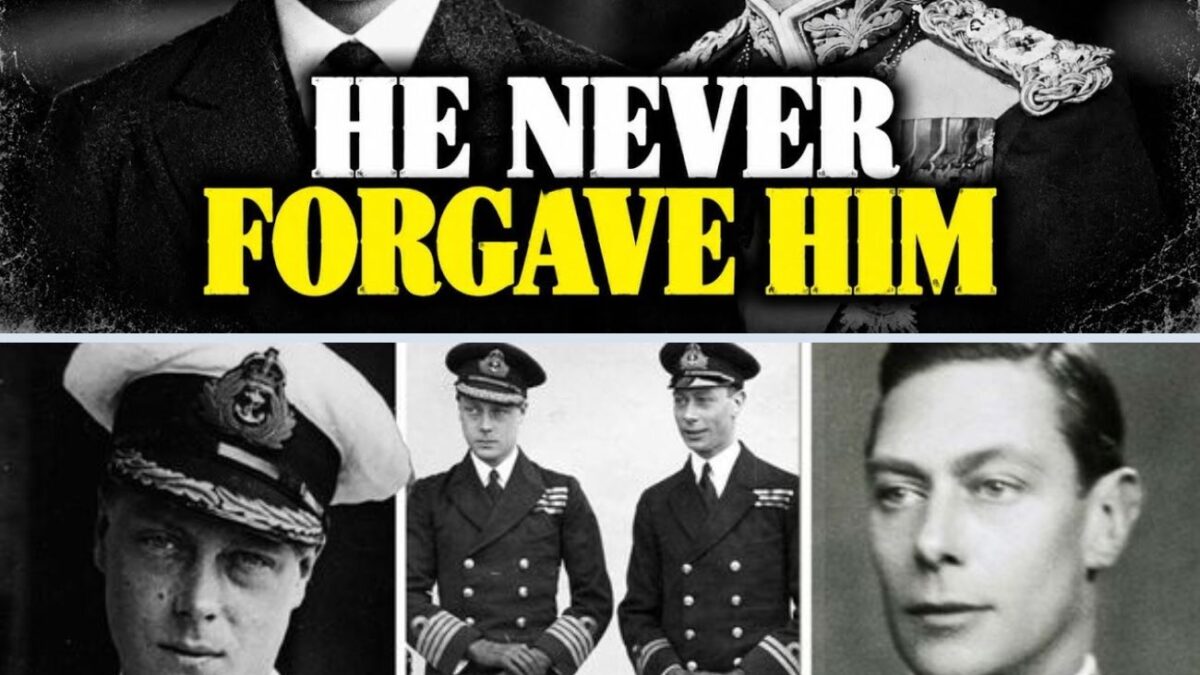
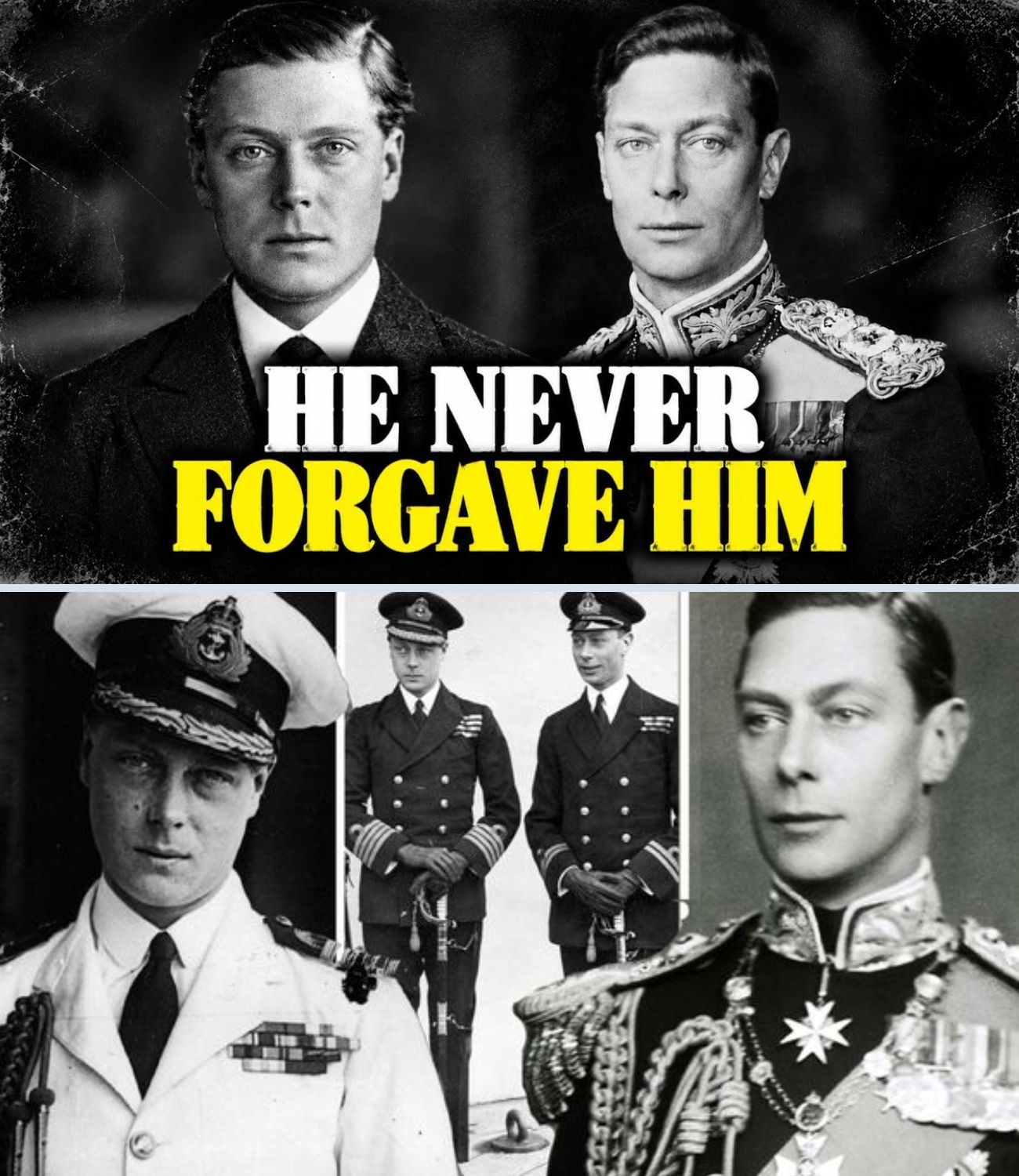
Open the guest book at Sandringham Palace, Norfolk. The date printed at the top of the page is January 1936. A little lower, hastily written in the hand of a court clerk: Edward Albert Christian George Andrew Patrick David, Prince of Wales, aged 41, arrives at the family estate because his father, King George V, is dying in the chambers upstairs.
Now look at the next column. Albert Frederick Arthur George, Duke of York, known to all who mattered as “Bertie,” the second son, whom no one had groomed for the throne, the one who stuttered, wore corrective braces on his legs since childhood, feeling the constant pressure of his more charismatic older brother on everything he undertook.
Two names on one page, two brothers in one house, and somewhere between those two inked notes, invisible to the clerk and even to the men themselves, are hidden the coordinates of an offence so specific, so meticulously documented, and so persistent over 35 years that it eventually took government intervention to hide it from the public.
Here’s a detail that most sources skip. Years after the abdication, the man who was the most famous royal in the world learned that his younger brother George VI—the shy Bertie who cried like a baby when he learned the throne would go to him—had signed a legal document designed to strip Edward VIII’s wife of her royal title.
That George VI forbade all members of the royal family from attending Edward VIII’s ceremony. That George VI issued a secret military directive forbidding the showing of classified documents to the former King of England—a man who had once received full intelligence as monarch—and that George VI’s most trusted private secretary, in a secret memo now held at the Churchill Archives Centre in Cambridge, advised the government to treat Edward VIII as “a fussy baby.”
Edward VIII spent the rest of his life knowing about all this. George V died at Sandringham on 20 January 1936 at 11:55 pm. Lord Dawson of Penn, his physician, recorded the exact time.
Now, thanks to Dawson’s private diaries, which were classified until his death and later examined in scholarly works, we know that he administered a lethal mixture of morphine and cocaine to the king to hasten his death and allow time for the report to be published in the morning edition of The Times, rather than in the less important evening editions.
David, Edward’s given name, became King Edward VIII within an hour. The throne came to him without preparation and without grace. The next morning, the red government boxes with documents were already waiting at York House in St. James’s Palace, where the new king had decided to remain, rather than moving to Buckingham Palace.
Cabinet briefings, intelligence reports, diplomatic cables, and the Wallis Simpson issue, pressing from all sides. An American woman, twice divorced, whom Edward met in social circles in the early 1930s. Completely unacceptable to Prime Minister Stanley Baldwin, the higher clergy and, secretly and with devastating disappointment, the royal court.
Bertie watched from the sidelines at every meeting that January. He said almost nothing. He didn’t need to. In 11 months, Edward would be gone.
The crown would pass to Bertie, who would take the name George VI and spend the rest of his reign trying to rebuild the institution that his brother had nearly destroyed in a single year. And Edward VIII, now Duke of Windsor and living in perpetual exile in France, would spend the next three and a half decades building, with the patient precision of a man with nothing left but time, a case against the brother who now occupied his throne.
This is not a story about renunciation. This is the story of what happened over the next 35 years. And the specific details, if you read the primary sources, turn out to be more methodical than anyone who heard the official version would have known.
The resentment did not arise at the moment of renunciation. It started much earlier. And to find its roots for sure, you need to look into York Cottage—not the main house in Sandringham, but a secondary residence on the estate. A cramped and unremarkable building where George V and Queen Mary housed their six children and effectively gave them to the servants to raise.
George V and Queen Mary appeared before the children twice a day. Morning and afternoon. The time between these appearances belonged entirely to the nannies assigned to the household. One of these nannies, whose name survives in contemporary accounts researched by biographer Frances Donaldson for her 1974 authorised study, deliberately abused the two older boys.
Pinch-flicks, deliberate destabilisation, sustained emotional cruelty directed at David and Bertie within the walls of their own home. George V and Queen Mary ignored this for years. This took place under a roof that they operated with the mechanical precision of a military barracks. Both boys emerged from that shared experience with markedly different emotional wounds.
David, golden, restless, made to be captured, channelled pressure outward and learned to overcome it through play. Bertie was guiding him inside. His natural left-handedness was corrected by force. Steel splints were attached to his legs to correct a slight deformity, an intervention accompanied by prolonged physical pain, without any consultation and without a drop of warmth from the father who ordered it.
His pronounced stammer, exacerbated by George V’s barely concealed impatience, defined his public life until the Australian speech therapist Lionel Logue began working with him in October 1926 in a practice on Harley Street in London. That’s what’s important to this story. Before Wallis, before the abdication crisis, before all of this, the two brothers shared something that briefly created a real secret bond between them.
Throughout the early 1920s, both David and Bertie navigated relationships that required institutional restraint. David—with Frieda Dudley Ward, Bertie—with Frieda’s close friend Sheila Child, Lady Loughborough. Their circle of friends informally called themselves the “four duos”: two princes and two women leading parallel private lives within a system that would not approve of any of it.
This shared experience of a dual existence under palace protocols gave the brothers, for a time, something very close to true solidarity. She dissolved the moment their paths diverged. Bertie married Elizabeth Bowes-Lyon at Westminster Abbey in April 1923.
His life stabilised, his public commitments expanded, and his stuttering gradually diminished thanks to Logue’s guidance. David’s private world narrowed year after year around one person—Wallis Simpson. By 1935, surveillance of the heir to the throne had become almost total.
When Edward VIII ascended the throne after the death of George V in January 1936, his private secretary, Alexander Hardinge, actively supervised the channels of correspondence. The king’s movements between York House and Fort Belvedere, a neo-Gothic residence on the Windsor Estate, where he spent weekends in the company of Wallis Simpson, were recorded by the household servants.
Sir Alan Lascelles, who served as Edward VIII’s assistant private secretary in the early 1920s, concluded by 1927 that the future king was fundamentally unsuited to the role. He recorded in his diary that the king’s first question regarding any official duty was invariably:
“Can I somehow avoid this?”
Government folders of documents sometimes lay open on tables at Fort Belvedere, but remained unread. Their content was discussed at dinner tables, among the guests of which were individuals whose presence caused concern to the Ministry of Foreign Affairs.
On November 13, 1936, Alexander Hardinge wrote a letter directly to the King at Buckingham Palace. This letter is kept in the Royal Archives at Windsor Castle. It made it clear that the British press would break its silence on the Simpson affair within days, that Prime Minister Stanley Baldwin’s patience had run out, and that the path ahead had narrowed to one solution.
Edward VIII read the letter. He told Hardinge directly that he was angry. Three weeks later, on the morning of December 10, 1936, he entered the octagonal drawing room at Fort Belvedere and signed the instrument of renunciation. His brothers Albert, Henry and George have signed below as witnesses. Pen touched paper at approximately 10 am.
The next morning, before the ink on the document had even had time to fully absorb into the paper fibres, George VI’s apparatus had already set in motion a mechanism that would determine his brother’s discontent for the next three and a half decades. Legal consultations regarding the Wallis Simpson title have begun. Edward VIII did not learn of the result for another five months. When it happened, his closest ally described his reaction as that of someone who felt he had received news of a verdict, not a settlement.
Let’s pause for a moment in historical analysis to speak frankly. I spent a few hours looking at these files today. Hardinge’s letters, Lascelles’ diaries, telegrams from Churchill’s archives, Wallis’ correspondence. And I want to say something straight before we continue. There is a special, cumulative fatigue from reading the paper trail of a person being pushed out of their own life.
Every message Edward VIII received after December 1936 passed through intermediaries before reaching him. Every request he sent up was filtered, delayed, or redirected. His mail was checked. His phone calls were tapped during the crisis months. His movements through Austria and France in the weeks following his abdication were monitored by British intelligence officers, who reported up a chain that ended inside his brother’s palace.
When you read enough of these documents in a row, you feel this pressure. The man who was King of the United Kingdom for 11 months is now forced to send letters knowing they will be opened before they reach the recipient. Whatever you think about his choice, the paper trail of what was done to him afterwards is truly difficult to accept.
The abdication broadcast came from Augusta Tower at Windsor Castle at 10 p.m. on December 11, 1936. Lord Reith of the BBC introduced him as His Royal Highness Prince Edward—the same form of address George VI used in his written instructions to Reith. This was an unintended confirmation of the royal style, which George VI’s own letters patent formally settled 6 months later.
David’s voice reached every corner of the British Empire. He said he found it impossible to carry out the duties of a monarch without the woman he loves by his side. He then crossed the English Channel before dawn aboard HMS Fury and did not return to Britain for 7 years.
George VI told his mother, Queen Mary, that when he finally realised the irreversibility of the abdication, he broke down and sobbed like a child. This testimony is documented in contemporary correspondence. The grief was real, but the actions that followed it were another matter entirely. George VI had been king for only 6 days when his lawyers began working on the document that would define his brother’s life in exile.
The legal issue on the agenda was title. The new king’s advisors held two incompatible positions. One argument was that Edward VIII retained his royal rank automatically, because as a prince of the blood he had received the title “His Royal Highness” from birth, and no act of abdication could deprive him of it. The counterargument was more straightforward. A king who abdicates loses all royal rank and must henceforth be called simply Mr. Edward Windsor.
George VI resolved this ambiguity on his own. On May 27, 1937, he issued letters patent. The document officially confirmed the title “His Royal Highness” for the Duke of Windsor personally. He then added a second condition, drafted with surgical precision by the Attorney General, Sir Donald Somervell, revised by the Home Secretary, Sir John Simon, and personally signed by the new king.
This title did not extend to his wife. It also did not extend to any descendants. One sentence of printed legal language. Wallis Simpson will never become “Her Royal Highness.” Edward VIII received news of this before the ceremony.
Testimonies from guests present at the Château de Candé, a substantial 16th-century estate in the Loire Valley owned by Franco-American industrialist Charles Bedaux near the city of Tours, describe his reaction as barely contained rage. To one person he corresponded with, he called this rejection:
“A nice wedding present.”
Wallis had already foreseen this outcome. In private notes in December 1936, she referred to George VI by his former family title with undisguised disdain.
“I think we’re going to have a title problem for poor me, because York, I assume, won’t make me Royal Highness.”
She was right, he didn’t do it. There were 16 guests at the ceremony at Candé Castle on June 3, 1937. No member of the British royal family appeared. George VI issued a strict ban on any of them being present. Edward VIII specifically requested the presence of his brothers, the Dukes of Gloucester and Kent, and his cousin, Lord Louis Mountbatten.
The refusal was absolute and non-negotiable. The only Anglican priest who agreed to perform the ceremony was the Reverend Robert Anderson Jardine, vicar of St Paul’s Church in Darlington, County Durham, who did so despite the express prohibition of his church leadership. As a direct consequence of this decision, Jardine lost his ecclesiastical rank in England. He emigrated to California.
The photograph of Edward VIII and Wallis leaving Candé Castle that day—he in a business suit, she in a blue crepe dress by the American designer Mainbocher—captured two people who were already quite aware of the terms of their exile. At the castle, and later at the Villa Windsor in Paris, the household staff began to informally address Wallis in French: “Son Altesse Royale”—Her Royal Highness.
A title that her husband’s brother even created a special legal document to prohibit. This detail—a French title privately used by servants in a house borrowed from the city of Paris, across the English Channel from a family that had refused to grant it—was preserved continuously from 1937 until Wallis’s death in 1986, a period of 49 years. George VI’s advisors knew about this all along. No official objection was ever recorded.
Now let us consider the financial dimension, for it is here that Edward VIII’s resentment took its most acute form. The post-abdication agreement, negotiated through Edward VIII’s personal advisor Walter Monckton and lawyer George Allen, established a private annual allowance from George VI of £21,000.
In return, Edward VIII transferred ownership of Sandringham Palace and Balmoral Castle to the Crown. Edward VIII inherited both estates personally from George V. They were private property, not part of the official royal estates, and therefore he could sell them or keep them at his own discretion. George VI had to buy them back. He did it with borrowed money.
In the following years it emerged—examined in detail by historian Alexander Larman for his 2023 work The Windsors at War and confirmed by Sally Bedell Smith’s research during a three-month stint at the Royal Archives at Windsor Castle—that Edward VIII had deliberately misrepresented the state of his private finances during those negotiations.
The Duke had significantly more liquid capital than he disclosed to his brother’s representatives at the time. George VI discovered this discrepancy. This added a very concrete, documented level of financial betrayal to a relationship that was already suffering under the weight of a title dispute, exile, and the accumulated institutional pressure of a new reign that was partly built on the ruins of the previous one.
In October 1937, 10 months after his abdication, Edward VIII and Wallis travelled to Nazi Germany. The trip was organised by Charles Bedaux, their host at Candé Castle, a man whose connections with the German industrial elite were known to British intelligence. The Duke and Duchess arrived at Adolf Hitler’s mountain residence, the Berghof, on October 22, 1937.
Biographer Frances Donaldson, drawing on contemporary testimony in her 1974 study, recorded that Edward VIII gave a full Nazi salute during the meeting. A German newsreel documented the visit, and it was widely distributed. The British press covered it extensively and almost unanimously critically.
Winston Churchill, who was among Edward VIII’s most prominent defenders during the months of abdication, personally wrote to the Duke, urging him not to make the trip. Edward VIII left despite everything. The reaction within George VI’s court was restrained, measured, and final.
Queen Elizabeth, the wife of George VI, who never hid her opinion that the abdication placed an unfair burden on her husband, has since referred to the Duchess of Windsor privately as:
“That woman.”
This phrase appears in many individual contemporary testimonies from people close to the royal court. It has never been softened and has never been withdrawn. Here, September 1939, Britain entered World War II.
From 4 September 1939, the day after war was declared, to 4 November 1946, George VI’s personal diary in the Royal Archives contains 50 separate entries about his brother. Historian Sally Bedell Smith, who spent three months reading those war diaries at Windsor Castle, described the Duke of Windsor in those pages as a chronic bother, making unrealistic demands and complaints that, in the king’s estimation, were often trivial.
Among the documented restrictions placed on the Duke during his role as military liaison to France was a secret directive, recorded by General Edmund Ironside, Chief of the Imperial General Staff, that Edward VIII was not to be shown classified documents. The man who, less than 3 years earlier, had received full intelligence briefings as the reigning British monarch, was now operating in a military environment with clearance restrictions imposed by his own brother’s government.
And then, there is the memorandum. Stop here and read this carefully, because this is the very document that official history has never fully assimilated. On July 20, 1940, John Peck, assistant private secretary to Winston Churchill, submitted a memo to the Colonial Office. It is held at the Churchill Archives in Cambridge under reference number GBR/00014/CHAR 20/9A 85.
The note summarised the views of Lord Lloyd, Secretary of State for the Colonies, and two senior advisers on how the British government should respond to the incessant stream of demands and complaints from the Duke of Windsor from Lisbon, where he was delaying his departure for the Bahamas. The two advisors who expressed their opinion were Lord Lascelles and Sir Walter Monckton.
Lascelles, a man who once served as Edward VIII’s private secretary and later became the most trusted person at the court of George VI. Monckton, a lawyer who was Edward VIII’s closest personal advisor throughout the abdication crisis. The man Edward VIII trusted more than anyone else, his intermediary with the palace, his channel of communication with his brother, who now wore the crown.
Both of them, writing in a secret government document, advised treating the Duke of Windsor like a capricious infant. Not behaving carefully, not acting with prudence. Like a capricious baby. These are documented words. Monckton, his most loyal ally. This is what Monckton wrote when he was writing for an audience that the Duke did not include.
This document lay in Churchill’s archives for decades before historians made it public. Edward VIII, being in exile in France, then in Nassau, and then back in France, almost certainly never saw him. The assignment to the Bahamas took place in August 1940. Churchill arranged this with the express purpose of sending the Duke to a place where he was geographically irrelevant to the European theatre of operations.
The government house in Nassau was comfortable, adequately staffed, and located about 4,000 miles from everything important. Edward VIII accepted this appointment. In private correspondence with Monckton, his characterisation of this role was unmistakable. He once received diplomatic messages from all territories of the British Empire. He now ruled a Caribbean colony of 70,000 people and attended tropical ceremonial events in full dress.
In the summer of 1940, before the assignment to the Bahamas was finalised, German intelligence agents, acting on direct orders from Joachim von Ribbentrop, attempted to approach the Duke and Duchess’s intermediaries while they were in Portugal. The operation was codenamed “Willi”.
Its purpose was to prevent the Windsors from leaving the Iberian Peninsula, to position the Duke as a potential mediator in peace negotiations, and in the event of a German military breakthrough in Britain, to make him available as a figurehead for restoration to the throne on German terms. The files found at Marburg Castle in May 1945—60 key documents hidden among 400 tons of German Foreign Ministry papers near the Harz—documented in specific telegrams what German officials believed they had heard from the duke’s entourage.
One document claimed that the Duke had made it clear to a trusted person that a prolonged aerial bombardment of Britain would force the government to come to the negotiating table. German operational notes also described an attempt to convince the Duke that his own brother, George VI, was plotting his assassination. Historians still debate whether the Duke expressed these thoughts, or whether he was the object of excessive optimism by German intelligence about what they could gain from him.
What is not in dispute is the actions of George VI when the files fell into British hands in 1945. He ordered them to be classified. The Marburg documents were moved to Whaddon Hall in Buckinghamshire in 1948. Churchill subsequently wrote to President Dwight Eisenhower seeking American consent to prevent their publication.
The files were not released in any partial scholarly form until 1957, and full historical research did not take place until the late 1990s. The resentment that Edward VIII carried away from Nassau in 1945 was, by that time, compounded by six separate documented wrongs inflicted by his brother’s administration.
The refusal of the title “His Royal Highness”, the expulsion, the financial frauds later discovered, the permanent impact of the visit to Germany on his reputation within the family, the directive prohibiting the showing of secret documents, and the appointment to the Bahamas. He returned to France with all six problems, and new grievances awaited him.
This is where the official version wants you to believe in a softening of the story: that the Duke and Duchess of Windsor settled into their rented Paris residence, attended parties, travelled to the south of France, and lived a quiet, albeit more modest, retirement. It seemed as if the hostility had gradually subsided. It was as if time had done what it usually does to grievances between brothers.
Private files tell a completely different story. The house at 4 Route du Champ d’Entraînement, on the edge of the Bois de Boulogne in Neuilly-sur-Seine, offered to the couple by the city of Paris for a symbolic rent, became the Villa Windsor. They also purchased “Le Moulin de la Tuilerie,” a converted 18th-century mill in the Chevreuse Valley southwest of the city, as a weekend cottage.
Life was luxuriously arranged. Wallpaper was expensive. The silver was polished according to a set schedule. And beneath every surface of this refined French life, a register of specific grievances continued to accumulate interest. In October 1945, Sir Alan Lascelles, who was George’s principal private secretary at the time, arrived to meet the Duke.
The meeting is recorded in Lascelles’ own diary and is mentioned in reports researched by Philip Ziegler. Lascelles directly urged Edward VIII:
“Stop pressuring George VI about the Wallis title. Stop demanding an official role. Stop the flow of complaints and unrealistic requests that distract the King during a period of national reconstruction. Accept these terms. Leave your brother alone.”
The Duke refused to do any of this. There’s a reason the resentment hasn’t subsided. Edward VIII understood, with the clarity of one who had spent nine years tracing every mechanism of his exclusion, that every grievance he had could be traced to a deliberate decision made in his brother’s house—not to circumstances, not to public pressure, not to government action, but to the specific decisions of the person who had sat on the throne that Edward VIII had vacated.
Some historians, notably Vernon Bogdanor in his assessment of the Monckton Papers, have argued that many of the decisions Edward VIII attributed to George VI were in fact made by ministers and advisors in the light of wider considerations, with the king acting only as a formal authority for institutional choices that he did not always initiate.
This argument makes sense in certain cases. However, he does not explain the letters patent dated May 27, 1937. This document, which stripped Wallis of the automatic rights of the wife of a royal duke, was personally studied, finalised, and signed by George VI. The legal mechanism that kept the Duke and his wife out of Britain was a creation of George VI, built by his hands and maintained by his silence.
A lock, the key to which was his brother’s signature. In 1939, before the war finally consumed everything, Edward VIII wrote to his mother, Queen Mary, in language that rejected all diplomatic restraint. The letter, cited in many authorised historical studies, informed her that her last written message:
“Destroyed the last remnant of feelings I had for you and made further normal correspondence between us impossible.”
He was reacting to her continued refusal to accept Wallis into her company, her refusal to press George VI on the issue of the title “Royal Highness”, and her long institutional silence on the treatment of the woman for whom Edward VIII had abdicated the crown. Queen Mary did not give in. George VI did not give in.
One modern historian, in an article for the journal History of Royal Women in January 2020, directly stated that George VI acted illegally in denying Wallis the title of Royal Highness. That by the settled rules of English common law the wife of a royal duke automatically assumed the rank of her husband, and that the letters patent issued to repeal this convention exceeded the ordinary legal authority of such an instrument.
Whether all legal scholars agree with this conclusion is a debatable question. What is undeniable is that George VI made a concerted effort to create a legal document that stripped Wallis of the title that would have been hers by default. He didn’t just not give her anything. He actively deprived her of that before she could even claim the title.
The personal and institutional consequences of this choice were evident in everything that happened afterward. Edward VIII repeatedly stated throughout the 1940s and 1950s that he would not return to Britain permanently until Wallis was officially recognised as “Her Royal Highness.” George VI knew about this. Queen Elizabeth, who later became the Queen Mother and referred to the Duchess of Windsor as “that woman,” knew about it too.
The abandonment of the title of “Royal Highness” was not simply a matter of protocol. It was a mechanism by which two people were permanently isolated on the other side of the English Channel, and a political instrument served as a geographical barrier.
George VI died at Sandringham on February 6, 1952. In September 1951, he underwent lung surgery, later appearing to recover, but died of coronary thrombosis early Thursday morning. He was 56 years old. The war, the consequences of the abdication, the constant pressure of a government he was not ready for and never sought. It exhausted him.
The Duke of Windsor was in New York when he received the news. He returned to England for the funeral alone. The Duchess was not invited. The court of the new Queen Elizabeth II, daughter of George VI, had no intention of beginning her new reign by raising issues that her father had kept secret for 16 years.
The Duke stood in the nave of St George’s Chapel in Windsor alongside the family who had guided his life since 1936. That same week, he returned to France without his wife and without any resolution to the issues that had defined every private letter he had written over the past 15 years.
In June 1953, the coronation of Queen Elizabeth II took place at Westminster Abbey. The Duke was not present. He was not invited. The additional question of whether Wallis could come in some limited format, in a place that would recognise some of her status, was not even seriously considered. Any such appearance would require the palace to publicly address the issue of the title, which they have refused to discuss for 16 years.
He watched the coronation on television at the Villa Windsor in Paris. The 58-year-old, who was King of the United Kingdom and Emperor of India for 326 days, sat in his rented French home and watched his niece be crowned in the abbey his family had occupied for centuries.
The Monckton papers, donated to the Bodleian Library in Oxford after Walter Monckton’s death in 1965, contained correspondence between the two brothers from 1936 to 1951. When journalists were granted limited access in March 2000, box number 24 was not in the collection. Bodleian Library archivists denied any responsibility for the disappearance. One of the employees suggested that the removal took place back in the 1970s.
The palace acknowledged that certain materials from the Monckton treasury had been transferred to the Royal Archives at Windsor Castle for, as was officially stated, preservation. Historian Andrew Roberts then publicly noted that these documents were unlikely to be released before 2037. Box No. 24 from the Monckton collection was never published. Any correspondence between Edward VIII and George VI during their 15 years of joint reign remains classified somewhere in the Windsor Castle archive system at the time of writing this script.
The Marburg files were partially published in 1957. The full scientific context of these 60 documents was not properly explored until the late 1990s. Churchill had already written to Eisenhower, seeking American consent to conceal them. George VI personally insisted that they not be made public when they arrived at Whaddon Hall in 1948.
His memoirs, A King’s Story, appeared in 1951; ghostwritten, commercially successful, and, according to every attentive reviewer, almost entirely devoid of direct accusations against anyone in the royal family. This was the work of a man who understood that any public accusation would encounter institutional resources that it could not match. Private correspondence, which he could not control, told a different story.
The Duke’s health began to decline in 1971 due to inoperable throat cancer. Queen Elizabeth II visited him at the Villa Windsor in Paris on May 18, 1972, during a planned state visit to France. He received her in his office upstairs. He looked noticeably weak.
He died 10 days later, on May 28, 1972. He was 77 years old. His body was taken to England. He lay in St. George’s Chapel for two days. More than 57,000 people passed by the coffin.
The Duchess came from Paris for the funeral and during her short stay lived at Buckingham Palace—the first time she had spent the night within those walls. Those who attended the chapel service noted that she had the appearance of a frail woman who at times barely knew where she was.
She died on April 24, 1986, at the Villa Windsor in Paris—the house that still bears his name. She was buried beside him in the Royal Cemetery at Frogmore, within sight of the castle that bore their title and held their sealed correspondence. She never received the title of Her Royal Highness. Not by George VI, nor by the governments or institutions that came after him, nor by the royal family that outlived them both.
The staff at the Villa Windsor referred to her as Her Royal Highness from 1937 until her last breath in 1986. 49 years of a title granted privately, in French, in someone else’s home by people who cleaned rooms and set the table, because the only ones who could make it a reality decided in a single provision of a printed legal document signed in May 1937 that she would never have it.
Edward VIII held a grudge against George VI for reasons that are not a matter of interpretation. This is not a dramatisation. These are not the retrospective feelings of biographers who see emotions in the distance.
This is documented in archival records, letters patent, ceremonial prohibitions, financial concealment later discovered, a directive prohibiting the display of secret documents, exile to Nassau, a secret note in which his closest ally described him in terms he would never have accepted, 50 war diary entries from his brother who called him a chronic nuisance, sealed box number 24, the hidden Marburg papers and a television at the Villa Windsor tuned to a coronation to which he was not invited.
This outrage was not hearsay. This was not a dramatic conclusion. This was documented.
You Might Also Enjoy

“We Thought They Would Negotiate”—What Argentine Soldiers Said When The British Attacked Goose Green

“You’ll Never Finish My Ruck March, Limey” — US Sergeant Who Challenged the SAS, Then Fell Out First






