Edward VIII Was Literally Insane
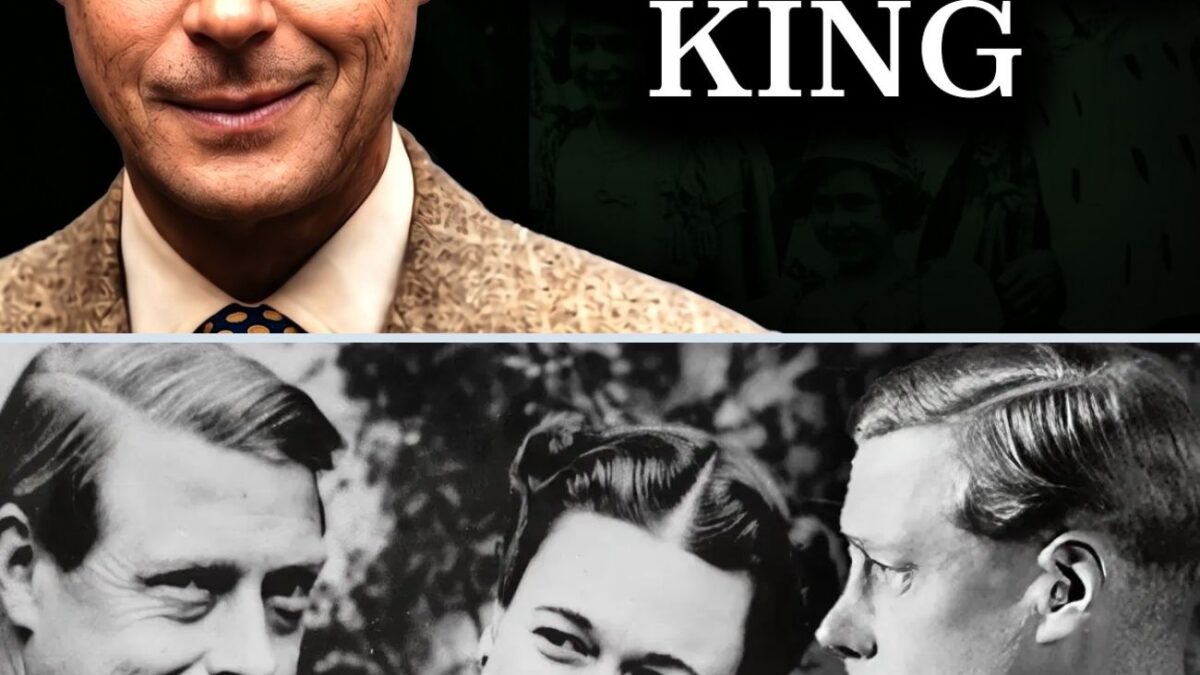
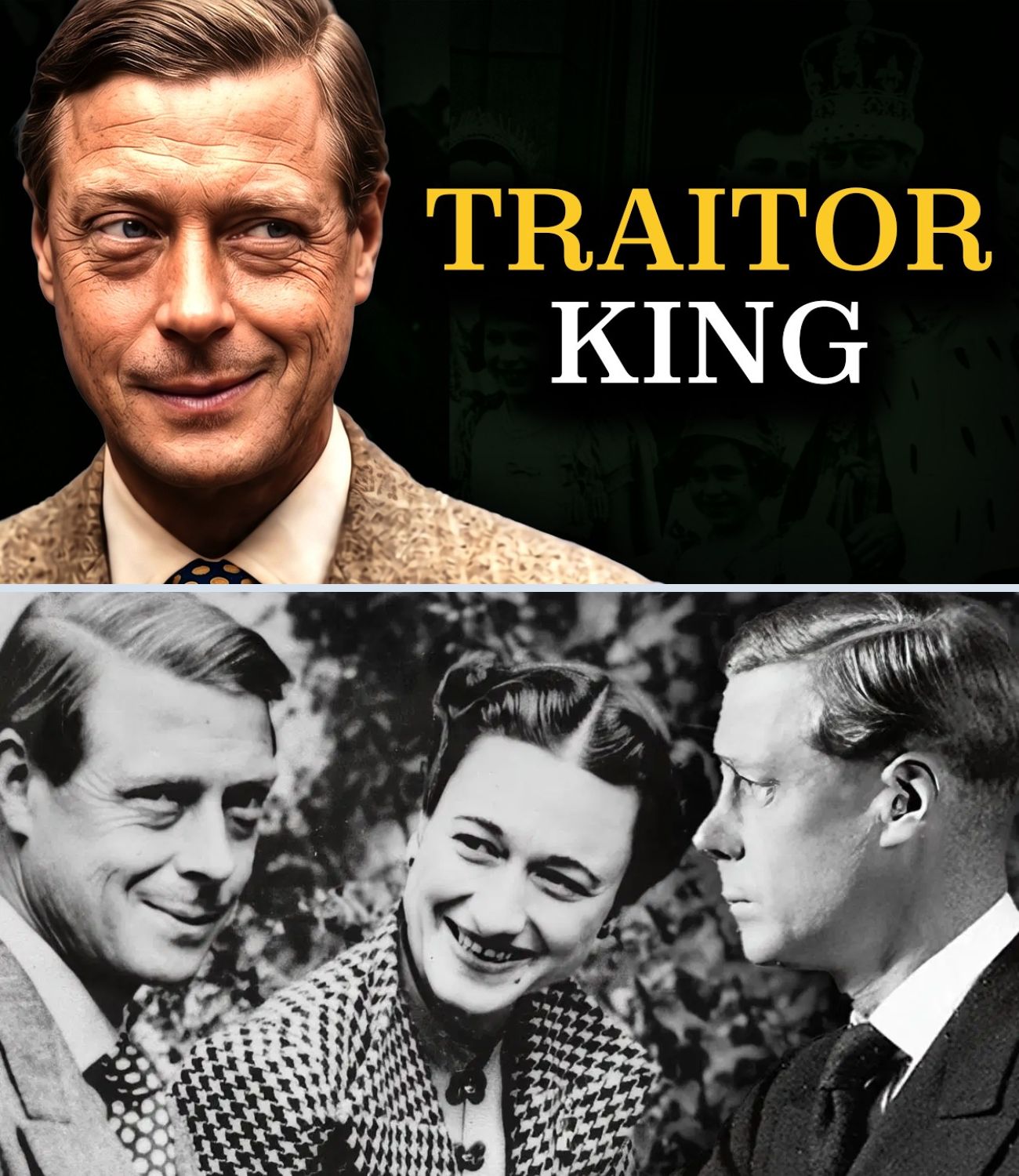
Let me tell you about a man who at one point ranked as the most popular royal on earth. A man who charmed entire continents, who drew crowds that rivaled movie stars, who modernized the image of the British monarchy almost single-handedly, and who then threw it all away for an American divorcee he’d known for about 5 years.
He claimed to value love above power, yet spent his exile cozying up to Adolf Hitler, and he inspired a generation with his common touch while treating the women who loved him with a cruelty that would make your stomach turn. Contradictions don’t begin to cover it. Edward VIII, King of Great Britain and Ireland and the British dominions beyond the seas, emperor of India, held that staggering collection of titles for a grand total of 326 days.
A reign so short it barely qualifies as a footnote. Let that sink in. You probably know the version that sounds like a fairy tale: the king who surrendered his throne for the woman he loved, which sounds romantic, even cinematic. Until you realize it covers maybe a quarter of the actual story, it falls apart fast.
Because the longer you spend with Edward reading his letters, tracing his relationships, watching the paper trail of his political sympathies, the less romantic it becomes and the more uncomfortable you feel. Not because he behaved like a monster exactly, though some historians come close to calling him one, but because he embodied something almost harder to reckon with, a person who contained so many opposing impulses that nobody could ever quite pin him down.
His own father, George V, predicted it with eerie precision. In 1935, the year before he died, George told Prime Minister Stanley Baldwin: “After I am dead, the boy will ruin himself in 12 months.”
Nobody laughed. That prediction came from a father who’d watched his eldest son for four decades, and recognized with a kind of exhausted clarity that the charm and the recklessness ran inseparable, that you couldn’t strip one from the other.
So yes, this amounts to a love story sort of and also a story about power, self-destruction, cowardice, obsession, and what happens when a man raised to rule an empire turns out to be completely unsuited for the job and knows it on some level and still can’t bring himself to admit it until the very last moment.
No clean moral weights at the end, just a man, a woman, a throne, and a mess that took decades to clean up and arguably never fully resolved itself at all. Bear with me.
Edward Christian George Andrew Patrick David—because the Windsors never met a name they couldn’t pile onto a baby like luggage on a cart—entered the world on 23 June 1894 at White Lodge, Richmond Park, the eldest child of the Duke and Duchess of York, who would later become King George V and Queen Mary. His arrival meant one thing above all else: he carried the weight of the heir, and from the day he drew his first breath, his life belonged to the institution.
His childhood, by most accounts, unfolded without much warmth, which is hardly unusual for royalty, given that the British monarchy has never earned a reputation for producing emotionally available parents. Warmth didn’t sell. George V ran his household like a naval ship, which tracked, given that he’d spent years in the Royal Navy, and never quite shed the habit. Discipline came first, and affection didn’t really come at all, with the old king addressing his children with the same clipped authority he once reserved for subordinates on deck.
Queen Mary, for her part, projected a formality and emotional remoteness that even the standards of Edwardian aristocracy found a bit much, loving her children in the abstract, distant way that the late Victorian upper classes considered appropriate, which is to say she loved them at arm’s length and expected them to appreciate the gesture.
Edward would later reveal relatively little about his early years, but biographers have filled in the gaps with a picture of a boy who craved affection and approval from parents constitutionally incapable of providing either. That detail matters. Keep it in mind because we’ll circle back to it. The adult Edward’s romantic behavior, the desperate, almost infantile clinging to dominant women, starts looking less like a lifestyle choice and more like a wound that never closed when you realize it mirrors the childhood pattern almost exactly. A boy who craved his mother’s warmth and never received it grew into a man who sought that warmth elsewhere in progressively more destructive forms.
Tutors educated him in isolation, cut off for all practical purposes from anyone his own age, before he entered Osborne Naval College in 1907 at 13, and two years later transferred to the Royal Naval College at Dartmouth. It never suited him. The Navy didn’t match Edward’s temperament, to put it mildly, but what he wanted didn’t matter, because what the monarchy required overrode everything, and the monarchy required a prince who looked the part.
Then came the war. In 1914, Edward joined the Grenadier Guards, and to his credit—a detail that complicates any simple reading of the man—he desperately wanted to fight, not in the ceremonial, wave-from-a-balcony sense, but with genuine urgency. He yearned to reach the front lines, to face the same danger as the men he’d trained alongside. But Secretary of State for War Lord Kitchener refused him flatly and repeatedly, reasoning that if the heir to the throne fell captive or died on a French battlefield, the propaganda disaster for Britain would prove catastrophic.
Kitchener wouldn’t budge. The request kept coming, and so did the refusal, each time with the same immovable logic, and Edward remained behind the lines, close enough to the horror to see it and smell it, but never close enough to share in it fully, a spectator at a slaughter he desperately wanted to join, forbidden by the very status he’d one day try to abandon.
Historians disagree on how this affected him. Some interpret it as a genuine source of guilt and frustration, a young man denied the chance to prove himself in the one arena that mattered to his generation, while others read it as the beginning of a lifelong pattern: Edward wanting to appear brave, modern, and self-sacrificing without ever actually following through when it counted. Both readings probably carry a measure of truth, and we’ll come back to that later when the pattern repeats itself in far less sympathetic circumstances.
Whatever you think of Edward’s later years, his time as Prince of Wales amounted to a phenomenon by any measure. The public loved him. Invested at Caernarfon Castle in 1911, 17 years old, barely old enough to shave, he spent the next two decades becoming arguably the most photographed man alive, a walking PR campaign for the British Empire at a moment when the empire desperately needed one.
During the 1920s, he conducted imperial tours that qualified by the standards of royal engagements as genuine triumphs, visiting Canada, India, and Australia, and chatting with ordinary people everywhere he traveled in a way that felt natural. And that naturalness drove the trick. Previous royals stuck to the stiff wave, the formal address, and the regal distance. But Edward leaned in, remembered names, and looked like he actually enjoyed meeting the public, which may have been true in those early years before cynicism crept in.
Press and public alike adored him, turning him into a symbol of a modernizing monarchy, a prince for the jazz age, effortlessly stylish in a way that suggested the Windsors could evolve beyond starch and protocol. That adoration hid a growing problem behind the charm, and this involves the part where the fairy tale starts to curdle. Edward already stirred serious anxiety among the people who actually ran things, with his father, George V, finding his casual dress insufferable, his slang embarrassing, and his taste for nightlife unbefitting a future king.
Those counted as surface complaints, and underneath the concerns ran deeper and darker. Alan Lascelles, who worked as Edward’s private secretary, left behind some of the most devastating assessments of any royal in modern history, documenting what he perceived as emotional immaturity, so extreme it bordered on arrested development, a grown man who threw tantrums, sulked when contradicted, and displayed a stubborn refusal to engage with constitutional responsibilities.
The picture looked grim. At one point, Lascelles grew so alarmed that he confided his concerns to other members of the establishment, convinced that Edward’s temperament posed a genuine threat to the institution. And Stanley Baldwin, the prime minister, shared these worries privately and repeatedly, though the diplomatic language of the era tends to obscure what they actually meant. So, let me translate: the people closest to the machinery of government believed the future king of England lacked in a fundamental way the fitness for the job.
And here we hit one of the stranger ironies in Edward’s story. The very qualities that dazzled the crowds—the informality, the easy laugh, the willingness to break with protocol—looked entirely different when viewed from behind the curtain. To the public, he appeared modern. To the officials who dealt with him daily, he appeared reckless, bored by paperwork, dismissive of advice, and allergic to any duty that interfered with his social calendar—two versions of the same man, separated by nothing more than a palace wall.
And then there arrived the matter of women. Now, royal mistresses hardly counted as a novelty. The British monarchy’s relationship with marital fidelity has always been, shall we say, flexible, but Edward’s pattern didn’t resemble a prince sewing wild oats. It ran far more specific and far more alarming than garden-variety royal infidelity. He carried on affairs almost exclusively with married women, and the relationships followed a disturbingly consistent script: total emotional dependence, obsessive devotion, an almost childlike need for maternal approval, and then, when a newer obsession arrived, a sudden, brutal severance.
Let’s go through them. Marguerite Alibert, also known as Maggie Meller, met Edward in Paris in 1917. During the war, she worked as a French courtesan, which amounts to a polite way of saying she operated as a professional in a world where Edward performed as an enthusiastic amateur. The affair ended in 1918, but the fallout stretched far longer. Edward penned her letters—indiscreet ones, the kind that give royal advisers ulcers—and in 1923, when Alibert shot and killed her husband, Egyptian businessman Ali Kamel Fahmy Bey, at the Savoy Hotel in London, those letters became a problem. A jury acquitted her of murder, and some biographers argue that the royal family intervened behind the scenes to steer the verdict, though historians writing for the Oxford Dictionary of National Biography remain skeptical of the blackmail theory, while other biographers entertain it as plausible. Messy all around, the episode established a pattern: Edward’s romantic life generating dangerous loose ends that other people cleaned up.
Then came Freda Dudley Ward. And Freda occupies in many ways the saddest chapter in this particular story because she seems to have genuinely cared for him, and the feeling appeared mutual. They met in early 1918 in a London doorway during a Zeppelin raid, and she remained Edward’s primary mistress for 16 years, from 1918 to 1934. Married throughout to William Dudley Ward, a Liberal MP, it represented the longest and most stable attachment he sustained until Wallis Simpson. Both high society and the press knew about it, but kept quiet because that reflected how things worked in the 1920s and 1930s.
And how did it end? With an act of extraordinary callousness, which is saying something even by royal standards. In 1934, Edward, by now completely consumed by his infatuation with Wallis Simpson, simply instructed the Buckingham Palace switchboard to refuse all of Freda’s calls. Sixteen years of intimacy, 16 years of being his confidante and emotional anchor, collapsed at the hands of a telephone operator following orders. One day she could reach him; the next the line fell silent. Freda, by all accounts, never fully understood what occurred or why; she kept trying to call while the switchboard kept refusing her, and nobody explained anything because Edward didn’t think an explanation counted among his obligations. That pattern—the almost surgical capacity to cut off someone who loved him once a newer attachment took hold—tells you something about Edward that the fairy tale version conveniently omits.
Between Freda and Wallace, there appeared Thelma Furness, Viscountess Furness, married to Marmaduke Furness, 1st Viscount Furness, who met Edward around 1926 and began the affair properly in 1929. She hosted him frequently at her country home, Burrough Court in Leicestershire, and for a few years the arrangement seemed comfortable enough. But her most consequential act—and she couldn’t have known it at the time—came in 1931, when she introduced Edward to Wallis Simpson, performing what she considered a gesture of social courtesy that, from the perspective of everyone else involved, sparked the beginning of a catastrophe.
The irony is almost unbearable. Thelma’s own relationship with Edward collapsed in early 1934 when she left for a trip to America and returned to discover that Wallis had in her absence entirely supplanted her. The displacement happened with astonishing speed, reducing a prince’s companion to an irrelevance overnight.
Now, biographers Philip Ziegler and Michael Bloch among them have spent decades trying to explain Edward’s compulsive attachment to domineering, often maternal women, with rumors circulating in the 1930s about physical dysfunction, about submissive or masochistic sexual tendencies, about some hidden answer that would unlock the mystery of why this man who could have pursued anyone kept choosing women who controlled him. The evidence doesn’t hold up. None of this finds confirmation in primary medical evidence; it’s speculation, much of it rooted in the amateur psychoanalysis that biographers love and historians rightly distrust. But what we can say with confidence is that Edward’s emotional wiring struck contemporaries as unusual, that his need for a certain kind of woman stretched beyond preference into compulsion, and that when Wallis Simpson walked into his life, she fit the pattern so perfectly that everything and everyone else disappeared.
Bessie Warfield arrived on June 19, 1896, in Blue Ridge Summit, Pennsylvania—not exactly a name that screams future duchess. She married Earl Winfield Spencer Jr., a US Navy pilot, in 1916, divorced him in 1927, and married Ernest Simpson, a British-American shipping executive, in 1928. Nothing in that biography suggested royal destiny. By the early 1930s, the Simpsons lived in London, moving in social circles that orbited at a comfortable distance the fringes of royal life.
Wallace and Ernest met Edward on January 10, 1931, at Thelma Furness’s home, and the details of their early encounters remain foggy, filtered through decades of memoir writing and score-settling. But what emerges clearly is that by early 1934, with Thelma conveniently abroad, the relationship crossed from social acquaintance into something far more consuming. The infatuation turned total. Edward grew entirely dependent on her approval, showered her with money and jewels, and displayed a devotion so intense that even people sympathetic to the couple found it unsettling.
We need to talk about why this woman attracted such fierce opposition as a potential queen of England. Because it didn’t come down to snobbery alone, though plenty of that circulated; the objections ran structural, constitutional, and, from the perspective of the British establishment, genuinely irreconcilable. The religious problem came first and probably cut deepest. As king, Edward would serve as supreme governor of the Church of England, which at that time strictly forbade the remarriage of divorced persons whose former spouses still lived. And both of Wallis’s ex-husbands, Spencer and Ernest Simpson, remained alive and breathing, meaning a king who married a twice-divorced woman would preside over a church that officially condemned his own marriage.
The political problem ran parallel, with Prime Minister Stanley Baldwin and the cabinet flatly refusing to accept Wallace as queen consort. Baldwin viewed her as an American adventurer—a phrase that crops up repeatedly in the documents—who lacked the dignity and discretion the role demanded, and his position never budged. Nobody blinked. Beyond Britain, the Dominion governments compounded the opposition. Australia, South Africa, and Canada under Prime Minister Mackenzie King explicitly stated they would not accept a divorced woman as queen, while New Zealand remained largely passive, and the Irish Free State treated the entire crisis as a gift, an opportunity to further distance itself from the crown and accelerate its own constitutional independence.
And then there swirled the rumors, the ones that clung to Wallace specifically and that I need to handle carefully because some of them remain genuinely unverified. MI5 investigated; declassified files show that British intelligence looked into Wallace, looking into allegations of an affair with German Ambassador Joachim von Ribbentrop and the possible transmission of state secrets. But the investigation produced no conclusive evidence for either claim. The carnation story—that Ribbentrop sent her 17 daily—remains widely considered unverified gossip by modern historians. And separately, biographer Anne Sebba explored a theory that Wallace possessed a disorder of sex development which might explain her lack of children and certain physical characteristics, though this too remains medically unverified and should be treated as biographical hypothesis rather than fact.
What we do know is that Wallace, whatever her secrets, inspired in Edward a devotion that no previous woman commanded—not Freda, not Thelma, not Marguerite, nobody. Perhaps she simply arrived at the right moment when his psychological need reached a pitch that nothing short of total surrender could satisfy. Or perhaps, as some biographers quietly suggest, the specific thing Wallace offered defied easy categorization: a combination of control, validation, and emotional architecture that no other woman could replicate.
Remember what I mentioned about Edward’s childhood? The craving for approval, the emotional void left by parents who treated affection as a weakness. Every biographer who examines the Wallace relationship lands sooner or later on the same observation: Edward didn’t merely love her, but needed her in the way a child needs a parent’s permission to exist. And the devotion looked romantic from the outside, while resembling from the inside a dependency so complete that it swallowed everything—duty, family, empire, common sense, all of it vanished.
Spoiler: the surrender approached fast. George V died on January 20, 1936, and Edward acceded to the throne as Edward VIII, the clock ticking immediately on what would become the shortest reign of any British monarch since Lady Jane Grey lost her head in the 16th century. For a few months, the machinery of state ground forward as normal, or at least appeared to, while behind the scenes, the crisis that would consume the monarchy already gathered force.
On October 27, 1936, Wallace Simpson received a decree nisi from Ipswich dissolving her marriage to Ernest Simpson and clearing her legal path to remarry. The intention looked unmistakable. Though the decree wouldn’t become absolute for six months, Edward harbored no plans to let her newfound availability go to waste. On November 16, 1936, Edward invited Prime Minister Stanley Baldwin to Buckingham Palace and informed him in terms that left no room for diplomatic fudging that he intended to marry Wallace Simpson, and if the government, the church, and the dominions would not accept her as queen, he stood prepared to abdicate.
Baldwin, to his credit, kept his composure, or at least maintained the appearance of composure, and a week later, on November 25, Edward floated an alternative: a morganatic marriage, under which he would remain king while Wallace became his wife, but not queen, and their children would not inherit the throne. It sounded almost reasonable on paper, anyway. Baldwin carried the proposal to the cabinet and the Dominion prime ministers. The answer came back on December 2: No. The morganatic option met unanimous formal rejection, and Edward’s options narrowed to two: give up Wallace or give up the throne.
The very next day, the dam broke. For months, the British press maintained what amounted to a gentleman’s agreement of silence about the king’s relationship. While American and European papers churned out the story for weeks and Fleet Street held the line—partly out of deference, partly out of genuine uncertainty about how the public would react—that silence shattered on December 3, 1936, when a vague sermon by the Bishop of Bradford, A.W. Blunt, commenting on the king’s need for divine grace, supplied the provincial papers just enough cover to begin printing what everyone in political London already knew. And within hours the national press followed.
The crisis spilled into public view. Press barons Lord Beaverbrook and Lord Rothermere briefly tried to marshal support for Edward, rallying sympathetic editors and floating the idea that the king deserved the right to marry whomever he chose, framing the whole affair as a question of personal liberty rather than constitutional propriety. It didn’t work. The establishment press—the Times, the Telegraph—backed the government heavily and without ambiguity, and the editorial tone shifted from careful neutrality to something closer to controlled alarm within days.
While public opinion ran divided, but tending toward unease, with some sympathizing with Edward, but a larger, quieter majority instinctively grasping that a king who defied his own ministers, his own church, and his own dominions for a twice-divorced American woman posed a constitutional emergency—the kind of emergency that, if left unresolved, threatened to crack the monarchy itself.
Edward, faced with the collapse of every compromise and the unblinking opposition of every institution that could have rescued him, chose Wallace. The fight drained out of him. Whether that choice came from love, obsession, cowardice, or some tangled knot of all three depends on which biographer you read. What nobody disputes is that by early December, Edward stopped fighting for the crown. Some accounts describe a man who seemed almost relieved, as though the weight of kingship turned out to be precisely the burden he always suspected he couldn’t bear.
On December 10, 1936, at Fort Belvedere, his beloved country retreat in Surrey, Edward signed the instrument of abdication—a strikingly ordinary-looking document of a few paragraphs, a signature, and the witness marks of his three brothers. It took minutes. Parliament passed His Majesty’s Declaration of Abdication Act the next day, formalizing what the penstroke had already accomplished, and 326 days of kingship dissolved into history.
That evening, December 11, 1936, Edward sat before a microphone at Windsor Castle and delivered a radio broadcast that would become one of the most quoted speeches of the 20th century. Written with the help of Winston Churchill, who never could resist a dramatic moment, the address landed with precision: dignified, emotional, and built around a single line that struck like a hammer: “You must believe me when I tell you that I have found it impossible to carry the heavy burden of responsibility and to discharge my duties as king as I would wish to do without the help and support of the woman I love.”
Romantic, absolutely, and sincere, almost beyond question in the sense that Edward believed what he uttered at the moment he spoke it. But the broadcast also pulled off something cleverer than most people realize. It reframed everything. It reframed the abdication from a constitutional failure into a personal sacrifice, from a crisis of duty into a triumph of feeling. Edward didn’t admit defeat, but instead, in his own telling, chose love. And that narrative proved so powerful that it has survived nearly a century of revisionist history, contradicting evidence, and biographical demolition.
Two days later, on the Sunday following the abdication, the Archbishop of Canterbury, Cosmo Gordon Lang, delivered his own radio broadcast, and the contrast couldn’t have cut sharper. Lang pulled no punches. He opposed the marriage fiercely, publicly, and without the slightest interest in diplomatic ambiguity, condemning with the full moral authority of the church a man who’d abandoned his sacred duty for what Lang clearly regarded as a squalid personal indulgence—a rebuke so pointed that Edward’s remaining sympathizers fumed while his critics delighted, and both men performed for an audience, with neither proving entirely honest.
On December 12, the day after the abdication broadcast, the new King George VI—Edward’s younger brother, Bertie, the stammering, reluctant second son who never expected the crown—announced that Edward would bear the title Duke of Windsor. The title came with a sting. In May 1937, George VI issued letters patent granting the duke the style of Royal Highness, but expressly denying it to Wallace and any future children—a deliberate, personal, and permanent exclusion that carved a wound lasting decades.
From Edward’s perspective, his family stripped the woman he loved of the one honorific that would have placed her as his equal in royal terms, a calculated humiliation designed to punish them both. He never stopped fighting it. Letters flew back and forth across the Channel, arguments flared during rare family visits, and back-channel negotiations through intermediaries produced nothing but frustration. The palace line held, and Wallace remained in the eyes of the institution simply the duchess, never Her Royal Highness.
From the family’s perspective—particularly Queen Mary, who reportedly refused to receive Wallace until the end of her life, and Queen Elizabeth, the new queen consort, who never forgave the burden her brother-in-law dropped onto her husband’s reluctant shoulders—the denial represented the bare minimum of institutional self-defense against a woman they considered unworthy and a brother they considered a traitor.
Edward and Wallace married on June 3, 1937, at the Château de Candé in France, a borrowed estate lent by a sympathetic friend because the couple lacked a home of their own. The ceremony attracted press attention from around the world, but from the Windsor family, it attracted nothing, with not a single member of the British royal family attending. The absence spoke louder than any wedding toast.
Now, if the story ended there—a sad, bitter exile, a couple living out their days in French luxury, nursing their grievances in private—it would already function as a cautionary tale about the gap between romantic narrative and grubby reality. It didn’t.
In October 1937, Edward did something that biographers have argued about ever since: he toured Nazi Germany. Against the explicit wishes of the British government, the duke and duchess traveled through Germany as semi-official guests of the regime, touring factories, attending events staged by Nazi officials, and meeting Adolf Hitler at his Berghof retreat in Berchtesgaden, where by all accounts the former king charmed and flattered a dictator who returned the favor with the kind of pomp and deference that Edward no longer received from his own family.
Edward appeared in photographs giving full Nazi salutes—not the awkward, half-hearted wave of a man caught off guard, but the full arm extension of someone who understood what the gesture meant. The damage proved irreversible. Whatever goodwill Edward retained from the abdication broadcast evaporated in the flash of a camera shutter, and the British establishment now faced a considerably more dangerous problem: a former king who appeared to be auditioning for a role in the Nazi propaganda machine voluntarily and with enthusiasm.
To be fair, and I will be fair even when it’s difficult, there exist multiple ways to read Edward’s behavior during this period. Nuance matters here. One reading casts him as a naive fool, a political illiterate seduced by the flattery the Nazi regime happily lavished on a former king, while another reading—advanced most forcefully by Andrew Lownie in Traitor King—runs darker: that Edward’s pro-Nazi, anti-Semitic views operated as sincere, long-held convictions stretching far beyond naive appeasement into something closer to active collaborationist intent.
During the Second World War, while residing in Spain and Portugal, Edward voiced defeatist and pro-fascist sentiments that intelligence agencies on both sides recorded. And German diplomatic cables—the so-called Marburg files captured after the war—revealed a Nazi plot designated Operation Willy which aimed to kidnap the duke and potentially reinstall him as a puppet king of a defeated Britain. The plot existed. Whether Edward participated willingly, benefited passively, or simply blundered along as a useful idiot remains one of the most bitterly contested questions in modern British history.
Winston Churchill, displaying the same instinct for damage control that helped him craft the abdication broadcast, solved the immediate problem by appointing Edward Governor of the Bahamas in 1940—in effect, a gilded banishment, parking him somewhere warm, distant, and constitutionally irrelevant for the duration of the war, far enough from Berlin and Madrid to prevent further embarrassment, and close enough to America to keep a quiet watch on him.
The Bahamas suited the purpose perfectly, and the distance suited everyone else even better. Edward occupied the post until 1945, performing without particular distinction, but more importantly without causing further scandal, administering a colonial outpost that nobody in Whitehall particularly cared about while the rest of the empire fought for its survival—a role so minor it amounted to a kind of royal storage facility, keeping the duke on a shelf until the danger passed. Quiet governance proved all Churchill needed.
After the war, the couple settled in Neuilly-sur-Seine, a wealthy suburb of Paris, and lived out the remaining decades in the peculiar limbo of voluntary exile: technically free to return to Britain, practically unwelcome, socially active but politically neutered, hosting dinner parties and attending galas while cultivating an image of glamorous melancholy that played well in American magazines and French society columns, but convinced nobody who knew them well.
The great romance, stripped of its constitutional drama, turned out to look a lot like two people rattling around a large French house with nothing much to do except resent the family that refused to welcome them back. And the couple that once captivated the world’s attention now struggled to fill the hours. Not exactly a fairy tale. Edward busied himself with gardening, golf, and the occasional memoir project, while Wallace reportedly nursed a private bitterness about the life she never asked for and couldn’t escape—a bitterness that, according to multiple accounts, deepened with each passing decade, until what remained of the love story resembled habit more than passion.
Wallace, according to biographer Anne Sebba, bore far less resemblance to the ruthless predator of popular imagination than to a woman trapped by Edward’s obsessive, suffocating devotion. The reframing surprises people. Sebba’s argument cuts against the grain: Wallace felt genuinely terrified of the abdication, tried to escape the relationship before the crisis reached its peak, and became a prisoner of Edward’s psychological needs rather than their architect. Whether you find that persuasive depends, I think, on how much agency you’re willing to grant Wallace and how much sympathy you’re willing to extend to a woman who lived in extraordinary luxury for the rest of her life. Because both things can be true and often are.
Frances Donaldson’s 1974 biography Edward VIII established the modern critical consensus, portraying Edward as intellectually limited, superficial, and unfit for the throne. While Philip Ziegler, writing the official biography in 1990 with access to royal archives, painted a more nuanced but ultimately damning portrait of a man cursed with exceptional charisma and complete self-obsession. The diagnosis never changes. Lownie’s Traitor King, published in 2021, pressed the case further still, documenting what he characterizes as extensive evidence of near-treasonous conduct during the war years—not naive appeasement, not foolish indiscretion, but active, knowing collaboration.
And yet George V’s other prediction, the one less frequently quoted, hangs over all of this like a cloud. Speaking to Lord Derby in 1935, the old king declared that he prayed to God his eldest son would never marry and have children, and that nothing would come between Bertie and Lilibet and the throne. He received his wish. It arrived in the worst possible way. Bertie became George VI, Lilibet became Elizabeth II, and the line of succession held. While Edward—David, as his family called him—spent 36 years growing old in a country that wasn’t his, married to a woman whose famous remark about their life together, often attributed but never definitively sourced, may capture the actual shape of their great romance more honestly than any biographer ever could: “You have no idea how hard it is to live out a great romance.”
If she spoke those words—and the quote circulates widely, though no biographer has pinpointed exactly when or to whom she originally addressed them—they read less like a boast than a confession. The romance became a prison. The love story became a life sentence, with the man and the woman at the center of it stuck with each other and stuck with the narrative they’d chosen, or that chose them, long after the passion curdled into routine and the glamour wore thin.
Edward died of throat cancer on May 28, 1972, in Paris at 77. His body returned to England for burial at the royal burial ground at Frogmore in Windsor—the same Windsor where 36 years earlier he’d sat before a microphone and told the world he couldn’t reign without the woman he loved.
So what do we make of him? That’s the question every biographer tries to answer, and none of them quite manage because Edward resists the clean verdict. He projected charm while carrying hollowness underneath, craved the chance to fight in the First World War and then recoiled from every responsibility that followed, and showed genuine warmth towards strangers while inflicting vicious cruelty on the women who loved him most. The pattern never breaks.
Donaldson calls him a disaster averted. Ziegler frames him as a tragedy of wasted potential. Sebba redirects the sympathy toward Wallace. And Lownie, most damningly, labels the whole exile a slow-motion act of borderline treason, building a case that, if even half correct, reframes the abdication from a love story into something closer to a national security failure.
All four biographers work from the same facts, the same letters, the same photographs, and arrive at different people. Maybe the contradiction isn’t a puzzle to solve, but a portrait to sit with: the portrait of a man who never quite figured out who he carried inside himself, who mistook neediness for love and stubbornness for principle, and who surrendered the most powerful position in the English-speaking world because he genuinely could not imagine living without one specific person’s approval.
The fairy tale version persists. It always does because people still invoke the abdication as a love story, still reference it at weddings and in tabloid headlines, still treat it as proof that romance can conquer duty. And maybe it can in theory. But what the fairy tale never mentions is that the conquering left wreckage on every side: a brother who never wanted the throne and died exhausted by it at 56; a mother who never forgave her eldest son and carried the wound to her own grave; a wife who may never have wanted to be the prize in a game she didn’t choose; and a man who drifted through 36 years of exile with nothing left to do and nowhere left to belong.
His father thought he’d ruin himself in 12 months. He managed it in just 11.
You Might Also Enjoy

“We Thought They Would Negotiate”—What Argentine Soldiers Said When The British Attacked Goose Green

“You’ll Never Finish My Ruck March, Limey” — US Sergeant Who Challenged the SAS, Then Fell Out First






