Every Elite British Special Forces Unit Explained
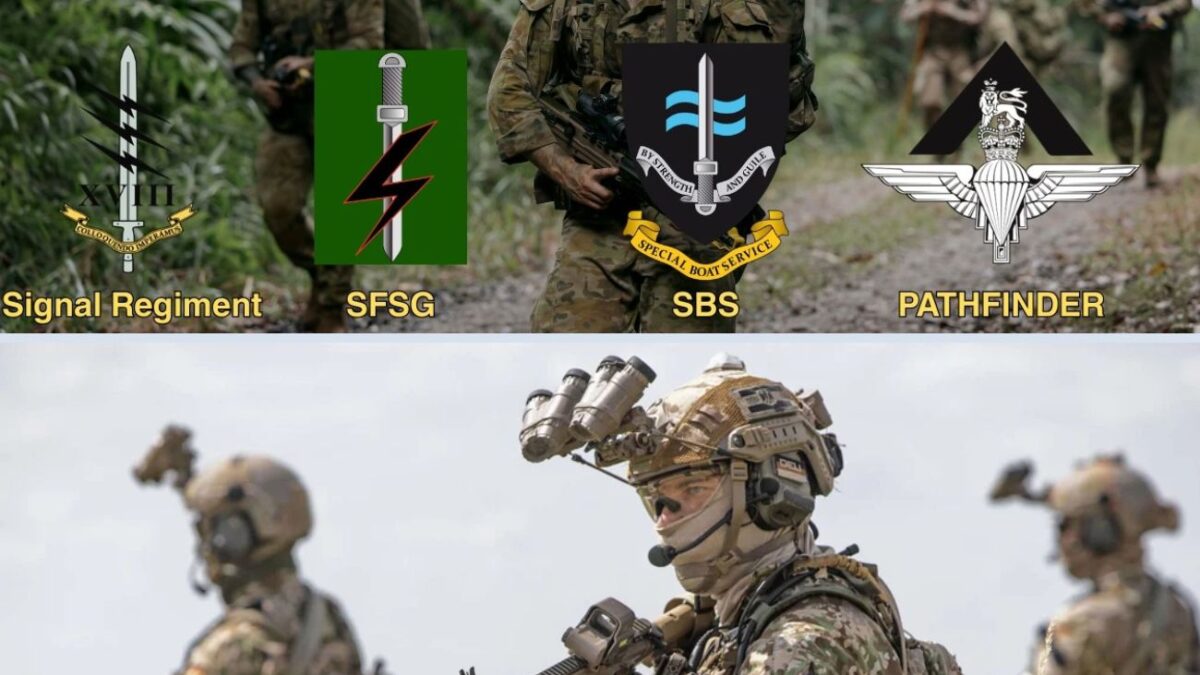
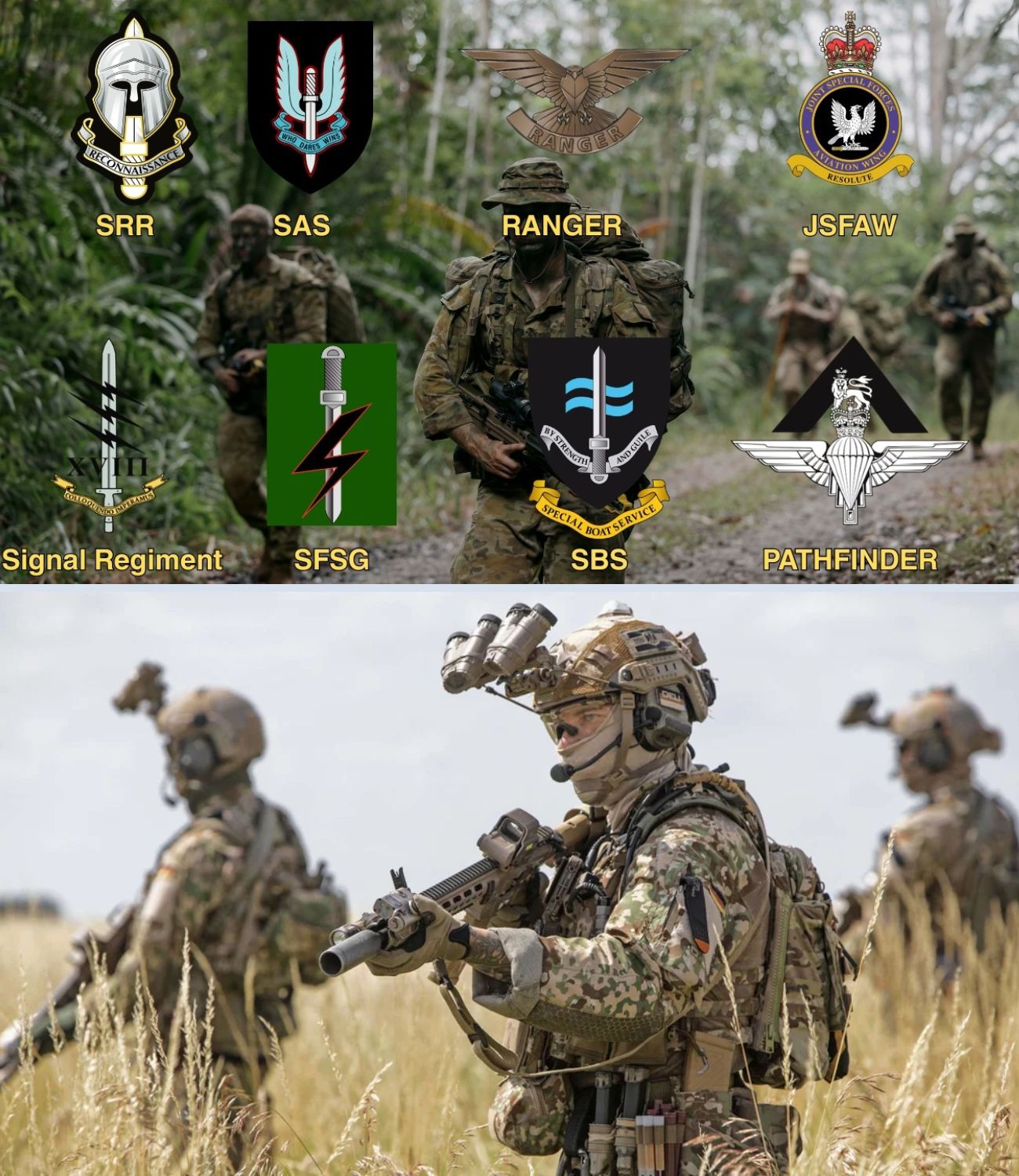
Every country with a special forces unit owes a debt to Britain. Britain did not just build the first modern special forces, it built the blueprint every other nation copied and still cannot match. This is every elite British special forces unit explained, from the regiment that rewrote the rules of warfare to the shadow units the government will not even confirm exist.
The Special Air Service was born in 1941. David Stirling, a 6-ft 5 Scottish officer on crutches from a parachute accident, talked his way past security at Middle East headquarters in Cairo and pitched a general on an idea so reckless it sounded like a joke. A handful of men dropped behind Rommel’s lines in North Africa could destroy more aircraft than a full bomber squadron.
He was right. Their first parachute mission was a disaster. 55 men jumped into a sandstorm and only 21 made it back. But one month later, SAS teams attacked three airfields by land and destroyed over 60 enemy aircraft using nothing but time-delay explosives and sheer nerve. The name itself was a bluff.
Special Air Service was chosen to trick the Germans into believing Britain had a full airborne regiment it never actually had. The deception worked so well that the phantom unit became real and never stopped fighting. Today, 22 SAS is headquartered at Stirling Lines in Credenhill, Herefordshire.
The regiment fields four Sabre squadrons, A, B, D, and G, each divided into specialist troops. Air troop handles freefall parachuting. Boat troop covers amphibious work. Mobility troop drives armed Land Rovers across deserts. Mountain troop climbs things most people would not look at without getting dizzy.
Getting in is the hardest military selection on Earth. It takes place in the Brecon Beacons of South Wales, a range of hills that seem purpose-built to break human beings. Candidates carry Bergens weighing over 25 kg across distances reaching 64 km navigating by map and compass while the Welsh weather assaults them from every direction.
The hills phase lasts 4 weeks and builds to a final test called endurance. 40 miles across the beacons, carrying everything you own, in under 20 hours alone. No encouragement, no criticism, just checkpoints and silence. From an average intake of around 125, roughly 10 survive. Some years, nobody passes at all.
Then after the hills come 14 weeks of weapons and demolitions training, 6 weeks in the jungles of Brunei or Belize, and a final escape and evasion phase where candidates endure days of interrogation, sleep deprivation, and stress positions. The whole ordeal lasts about 5 months. Those who finish earn the sand-coloured beret, the winged dagger badge, and the motto ‘who dares wins’.
The regiment went from military secret to household name on the 5th of May, 1980. Six armed men had seized the Iranian Embassy in South Kensington taking 26 hostages. For 6 days, police negotiators talked while the SAS planned. When the gunmen killed a hostage on day six, the government handed control to the military.
What happened next interrupted the World Snooker Championship on live BBC television and black-clad troopers abseiled down the Embassy facade, smashed through windows, and cleared the building in 17 minutes. 19 hostages rescued, five of six gunmen killed. Operation Nimrod turned the SAS into a global legend between tea time and the evening news.
Since then, the regiment has fought in the Falklands, Northern Ireland, the Balkans, Sierra Leone, Iraq, Afghanistan, and dozens of places the British government will cheerfully never confirm. If the SAS is the unit the world has heard of, the Special Boat Service is the one that prefers you have not. Founded during the Second World War as the Special Boat Section, these were the men who paddled canoes into enemy harbours at night to strap explosives to warships.
Whether that qualifies as bravery or insanity is academic. The ships exploded either way. The SBS is headquartered at Royal Marines Barracks in Poole, Dorset and holds equal Tier 1 status with the SAS. Same calibre of missions, same level of funding, same capacity to operate anywhere on Earth. The difference is specialism. The SBS owns anything involving water, coastlines, ships, submarines, and oil platforms, which, given that Britain is an island surrounded by critical maritime infrastructure, makes them quietly indispensable.
Candidates endure the same Brecon Beacons selection as the SAS, but earning a place in the SBS demands an additional trial called the swimmer canoeist course. Advanced combat diving in zero visibility, long-distance kayaking, underwater demolitions, beach reconnaissance. The SBS needs people as comfortable 50 ft beneath a black ocean as they are breaching a compound at 3:00 in the morning.
They deploy by submarine, helicopter, parachute, or rigid inflatable boat. In the Falklands, SBS teams paddled ashore on South Georgia in freezing conditions to conduct covert reconnaissance before the main landings, continuing a tradition of arriving quietly by water that back to the Second World War. In Iraq, they ran high-tempo raids as part of Task Force Knight.
In Libya, they were among the first Western forces on the ground. About 40% of all UK special forces recruits come through the Royal Marines, a pipeline of commando trained candidates already comfortable being cold, wet, and thoroughly miserable. For the SBS, that is not a drawback. That is the entry requirement.
Imagine watching a house for 3 weeks from a hole in the ground in a foreign city under a false identity without being noticed by a single person. That is what the Special Reconnaissance Regiment does for a living. Formed in 2005, the SRR is Britain’s dedicated covert surveillance and intelligence gathering unit, built for denied environments where being spotted means being killed.
The regiment grew from 14 Intelligence Company, known within the military as the Det, during the Troubles in Northern Ireland. Det personnel, both men and women, ran undercover surveillance against IRA and loyalist paramilitary targets in some of the most dangerous urban terrain imaginable. They drove unmarked cars through Republican strongholds, lived under assumed identities for months, and gathered intelligence that dismantled dozens of planned attacks.
Several were killed in the line of duty. And in at least one incident, a female operator was shot during an undercover operation in West Belfast. The unit was barely acknowledged for decades. When the war on terror created a global demand for that capability, the military formalised it. The SRR recruits across all three services and is the only UK special forces unit that has always placed women in front-line roles alongside men.
When your primary weapon is the ability to vanish into a crowd, demographic diversity is not politics. It is operational necessity. Candidates pass the Brecon Beacons hills phase, then branch into specialist courses in advanced surveillance, covert communications, and long-duration undercover work. The regiment works closely with MI5, MI6, and GCHQ.
When the SAS smashes through a door at 4:00 in the morning, it is usually because the SRR spent weeks silently identifying who was behind it. When an SAS raid needs more firepower than a handful of men can carry, the call goes to the Special Forces Support Group. Formed in 2006, the SFSG exists to bring infantry-scale muscle to Tier 1 missions, filling the gap between a small assault team and the full-scale response that complex targets demand.
Its core is drawn from 1st Battalion, the Parachute Regiment, reinforced by Royal Marines from 43 Commando and gunners from the RAF Regiment. Their job is everything that surrounds the moment of contact. Outer cordons that lock down a target area. Quick reaction force when plans collapse.
Suppressive fire when a quiet job goes spectacularly loud. They also serve as the hunter force during UKSF escape and evasion exercises, which means they are the ones chasing selection candidates across the Welsh hills in the dark. In Iraq and Afghanistan, the SFSG deployed under Task Force Maroon, holding outer perimeters under fire while intelligence was gathered inside target buildings.
They maintain specialist training in chemical, biological, radiological, and nuclear threats. Everyone remembers the unit that kicks the door in. Nobody remembers the unit that sealed off every exit first. That is the SFSG. 200 miles behind enemy lines, a four-man patrol needs to reach London without anyone listening.
A surveillance team needs to transmit live intelligence from a country that does not know they exist. A boarding team beneath a ship needs communications that work underwater, in the air, and on a hostile deck, all within the same 60 seconds. That is the problem 18 UKSF Signal Regiment solves every single day. Formed from 264 SAS Signal Squadron and other specialist units, 18 Signal Regiment provides the communications and signals intelligence backbone for every British special forces deployment.
Their people are trained in satellite communications, high-frequency radio, electronic warfare, and signals intercept. They embed with every patrol, every raid team, every surveillance cell. During the campaign in Iraq, the regiment enabled the rapid targeting cycle that let assault teams hit multiple objectives in a single night.
Their electronic warfare teams disrupted insurgent networks by intercepting enemy signals and turning them into actionable intelligence within minutes. And strip away the communications and British special forces are just extremely fit men with no way to coordinate. 18 Signal Regiment is the reason that never happens.
Flying at treetop height, at night, in a rainstorm, with no lights, carrying a team of men who officially do not exist. That is a normal shift for the Joint Special Forces Aviation Wing. Formed in 2001 by merging elements of the Royal Air Force and the Army Air Corps, the Aviation Wing provides dedicated helicopter and fixed-wing support to every unit under the UKSF Directorate.
The backbone is RAF 7 Squadron, flying specially modified Chinook helicopters fitted with enhanced defensive systems and avionics built for conditions that would ground any civilian crew alive. 658 Squadron of the Army Air Corps flies Dauphin helicopters on covert tasks in direct support of 22 SAS. While Merlin helicopters handle SBS maritime operations, these pilots train to fly metres above terrain using night vision goggles, inserting teams by fast rope or landing in spaces most aviators would refuse to park a car.
In 2011, during the Libyan Civil War, their Chinooks flew from Malta deep into the Libyan desert to covertly deliver MI6 officers and their escorts to a rendezvous with rebel commanders. The flight distance alone made it one of the most audacious helicopter insertions in recent British military history. When the aircraft touches down in a place it should not be at a time nobody expected, the aviation wing has earned its keep.
James Bond has a team. He just does not know their name. E Squadron, formerly known as the Increment, is a small cell of the most experienced UK special forces personnel handpicked to work directly for the Secret Intelligence Service, MI6. This is where military operations end and espionage begins. The unit was formalised around 2007, though the arrangement between MI6 and the SAS stretches back decades.
To qualify, personnel must have a minimum of 5 years in special forces and hold at least the rank of sergeant. They undergo further vetting by MI6, training in advanced tradecraft, sabotage, covert insertion, and agent protection. E Squadron members operate under non-official cover, false identities, civilian passports, no military documentation.
They escort MI6 intelligence officers into hostile territory, secure agent meetings, and carry out deniable tasks in countries where the mere presence of British military personnel would trigger a diplomatic crisis. The unit became public in January 2012 when a BBC investigation revealed that MI6 officers and their E Squadron escorts had been flown by Chinook from Malta into the Libyan desert to establish contact with anti-Gaddafi rebels.
The team was promptly detained by suspicious rebel fighters who had not been told they were coming. Deeply embarrassing. Ultimately, effective. E Squadron sits in the gap between warfare and espionage. When something needs doing that cannot be traced, explained, or officially acknowledged, they are the ones who never did it.
Before the main force arrives, someone has to go in first. That is the Pathfinder Platoon. Attached to 16 Air Assault Brigade, the Pathfinders are the elite reconnaissance element who parachute into hostile territory ahead of everyone else, locate the enemy, mark drop zones, and guide the follow-on forces in.
Selection comes through a demanding cadre testing endurance, navigation, and the ability to function independently behind enemy lines for extended periods. Pathfinders are trained in high altitude low opening and high altitude high opening parachuting, inserting by military freefall from above 25,000 ft.
They work in four-man patrols, surviving for weeks without resupply in territory where capture means death. In 2006, Pathfinders were among the first British troops in Helmand Province, conducting advance reconnaissance before the main battle group deployed. During the siege of Musa Qala, a small team of pathfinders and Gurkhas held a district centre against sustained Taliban assault for weeks, massively outnumbered, running low on ammunition, and refusing to yield.
Well, in any other country that would have become a film, in Britain, it mostly became a classified report. The pathfinders prove you do not need a UKSF beret to fight at the highest level. You just need to be willing to jump into the worst place on the map with four mates and a radio. Most wars are not won by a single spectacular raid.
They are won by years of patient, invisible work, building relationships, developing local forces, operating in the grey space between peace and open conflict. That is the purpose of the Ranger Regiment. Formed on the 1st of December, 2021, the Rangers are Britain’s newest special operations unit, part of the Army Special Operations Brigade, built to fill the gap between conventional infantry and Tier 1 Special Forces.
The concept mirrors the American Green Beret model. Instead of conducting raids, our Rangers embed with partner nation forces in high threat environments, training them, advising them, and fighting alongside them. The regiment was built from four existing infantry battalions, re-rolled for the task. Its soldiers undergo specialist training in languages, cultural awareness, and the difficult art of earning trust from foreign troops while under fire together.
Rangers have already deployed to over 20 countries from sub-Saharan Africa to Eastern Europe to the Middle East. While the SAS handles the crisis that makes the headlines, the Rangers are quietly working to prevent the next one. If they succeed, nobody will ever know their names. That is the point. 32 weeks of recruit training, the longest basic infantry course in NATO.
A 9-mile speed march in 90 minutes. A 30-mile yomp across Dartmoor in 8 hours carrying full kit, weapons, and whatever the moor decides to throw at you. An assault course called the Tarzan course, and an endurance course through flooded tunnels, waist-deep mud, and obstacles designed by someone with a personal grudge against comfort.
That is what it takes to earn the Royal Marines Commando Green Beret. The Commandos are Britain’s elite amphibious force and the single largest feeder into the UK special forces pipeline. Within the Commando Force, the Fleet Contingency Troop in 43 Commando handles maritime counterterrorism and ship boarding.
Mountain leaders are considered among the finest Arctic and mountain warfare specialists anywhere, trained from Norwegian fjords to Afghan peaks. And the 2025 Strategic Defence Review confirmed the Commando Force’s expanded role in special operations, working on high-risk missions just below the Tier 1 threshold.
For decades, the Royal Marines have insisted that every Commando is already special. Their operational record suggests they are not exaggerating. Beyond the regular units, Britain maintains something most people do not realise exists. Special Forces Reserves. 21 SAS and 23 SAS are the two reserve SAS regiments, recruiting civilians and former soldiers who pass a modified version of the same brutal Brecon Beacons selection.
They are not weekend warriors playing dress-up. 21 and 23 SAS are fully integrated into the UKSF Directorate, tasked at the highest level, and have deployed on real-world operations including in Iraq and Afghanistan. The SBS also maintains a reserve component, the SBS Reserve, whose candidates must pass the same course selection and then complete the additional maritime and diving qualifications.
Signal support comes from 63 UK SF Signal Squadron. These reserve units exist because special forces demand a depth of experience and manpower that a small regular force alone cannot sustain. When Britain needs to surge its special operations capability, the reserves are not an afterthought. They are the plan.
The United Kingdom Special Forces Directorate ties all of this together under a level of secrecy that makes every other Western Special Operations Command look like a press conference. The Director Special Forces, a major general, reports directly to the Prime Minister and the Defence Secretary, bypassing the normal chain of command altogether.
Serving members sign a lifelong confidentiality contract. The Freedom of Information Act specifically exempts Special Forces from disclosure. While the Americans produce memoirs, films, podcasts, and congressional hearings about their operations, the British produce silence. The SAS has been fighting since 1941, and the official government position remains that they can neither confirm nor deny the thing everyone already knows happened.
That is every elite British special forces unit. The SAS and SBS at the tip of the spear. The SRR watching from the shadows. The SFSG providing the muscle. 18 Signal Regiment keeping them connected. The aviation wing flying them in and out. E Squadron operating where espionage meets warfare. The Pathfinders going in first.
The Rangers playing the long game. The Royal Marines feeding the entire machine. And the reserves standing ready to reinforce them all. Britain invented modern special forces. 80 years on, the rest of the world is still trying to catch up.
You Might Also Enjoy

“We Thought They Would Negotiate”—What Argentine Soldiers Said When The British Attacked Goose Green

“You’ll Never Finish My Ruck March, Limey” — US Sergeant Who Challenged the SAS, Then Fell Out First






