FIFTEEN SECONDS OF COLD RAGE: William Confronts Laura Lopes In Front Of Foreign Ambassadors!
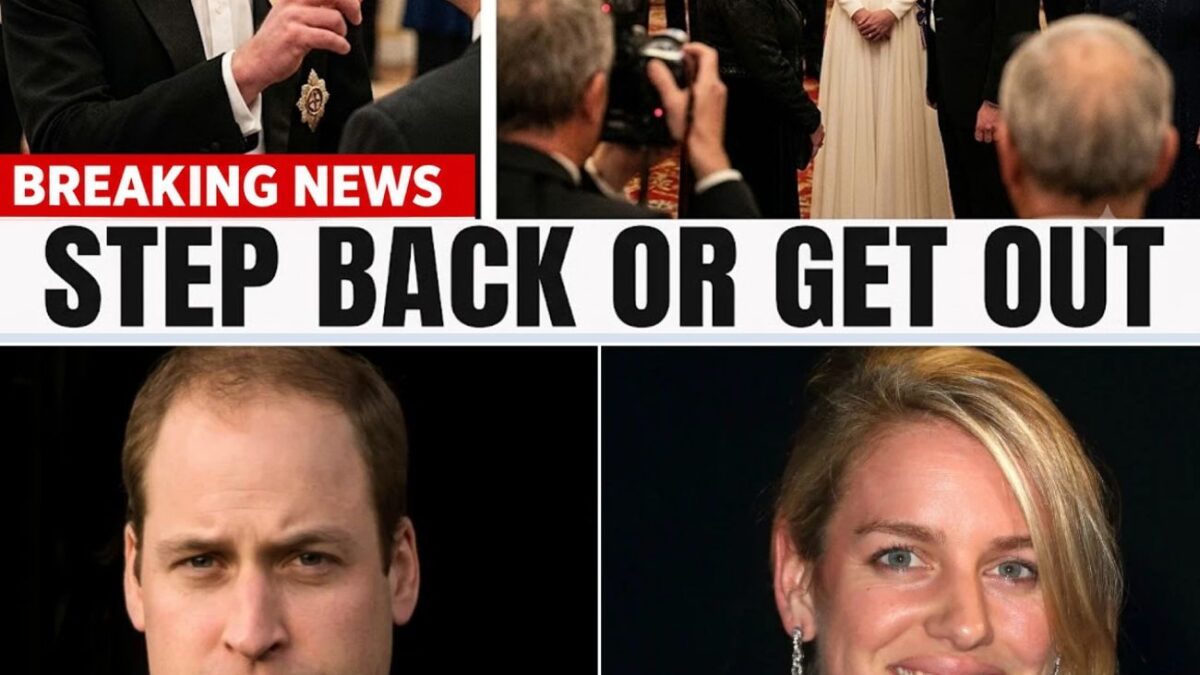
The White Drawing Room War: Inside the Royal Power Play That Shook Buckingham Palace
The white drawing room inside Buckingham Palace is designed to be the most controlled, serene environment on earth. On the glittering evening of an October state banquet, foreign ambassadors smooth out their formal sashes, senior court officials check their chronometers down to the exact second, and visiting heads of state wait in hushed anticipation for the grand double doors to swing open into the ballroom. It is an arena built entirely upon centuries of unyielding protocol, where voices are never raised above a polite murmur and unscripted movements simply do not happen.
Yet, roughly thirty minutes before the dinner bells chimed, that pristine illusion shattered. What unfolded in the private apartments was not a minor domestic disagreement over table settings or seating charts; it was an explosive factional collision that brought the British monarchy to the brink of a constitutional earthquake. At the centre of the storm was Laura Lopes, Queen Camilla’s daughter, who had bypassed standard civilian perimeters entirely to confront the future Queen over a multi-million-pound piece of royal history.
And standing directly in her path was Prince William, executing a masterclass in institutional defence that left no doubt as to who truly holds the levers of power within the House of Windsor.
Protocol Breached: The Confrontation in the Inner Circle
Under every standard protocol document governing state occasions, private family members enter through secondary garden entrances and take their assigned seats in the civilian galleries long before the sovereign or senior working royals make their appearance. Laura Lopes, however, had other ideas.
Ignoring two hovering equerries, she walked straight across the polished parquet floor of the white drawing room and planted herself directly in front of the Princess of Wales. Witnesses nearby froze as Laura dispensed with pleasantries. She demanded to know why her name had been quietly scrubbed from the official state procession ledger that very morning—and why a specific, priceless antique brooch she had requested for the evening was pinned securely to Catherine’s own ivory gown.
The sheer audacity of the demand left surrounding diplomats transfixed. Standing in the sovereign’s residence during a historic diplomatic visit, a private citizen was openly accusing the future Queen of deliberately sabotaging her social standing.
Catherine, maintaining absolute composure, kept her hands folded across her gown and offered a cool, measured response. She pointed out that official state processions are legally reserved for working royals representing the British government, noting firmly that a diplomatic banquet is a state ceremony rather than a private venue for settling familial grievances.
Laura, entirely uninterested in administrative explanations, cut her short. She declared that being married to the heir did not give Catherine the right to treat the Queen’s own flesh and blood like unwanted interlopers.
That was the exact moment the heir apparent entered the fray.
The Heir Steps In: Fifteen Seconds of Absolute Ice
Prince William did not wait for an usher to intervene. He did not summon his father’s private secretary or look around for guidance from palace staff. Instead, he stepped directly into the space between Laura and Catherine, positioning his broad frame squarely in front of his wife.
Witnesses later described the look in William’s eyes as absolute ice. When he spoke, his voice did not boom; rather, it cut straight through the opulent room like a blade.
William reminded Laura that she was standing inside Buckingham Palace during an affair of state, not lounging in her mother’s private home. He informed her bluntly that her mother’s marriage to the King did not confer a royal title, did not grant her precedence, and most certainly did not give her permission to address the Princess of Wales with a shred of disrespect.
Before Laura could recover from the verbal blow, William delivered the sentence that sealed the evening: he instructed her to step back, find her assigned seat in the civilian gallery at the back of the ballroom, and await palace security escorting her out of the gates if she could not comply.
Queen Camilla stood frozen in stunned silence nearby as William calmly escorted Catherine away, leaving the surrounding courtiers in a state of collective shock.
The Stakes of the State Banquet: More Than Just a Dinner Party
To understand why William reacted with such cold, calculated fury, one must look beyond personal animosity and examine the mechanics of a royal state banquet. These evenings are not merely upscale social gatherings; they are the single most significant diplomatic showcases the British state puts on all year.
Inside that ballroom, approximately 170 guests sit at a massive horseshoe table that takes days to measure and arrange. Every visiting ambassador, prime minister, and foreign dignitary is trained to read the room like a geopolitical map. They scrutinise who sits where, who walks in what precise order, and, crucially, what historic jewels are being worn.
In the British system, the royal procession carries immense symbolic weight. Before dinner is served, the monarch leads a strictly defined group of working royals into the room. That line of people is the visual embodiment of sovereign authority. When international television networks broadcast those images across the globe, they are projecting the legitimate line of succession.
Had Laura Lopes walked in that procession, the visual message sent to the world would have been devastating: that Queen Camilla’s private children had quietly acquired semi-royal status, blurring the vital constitutional line between a taxpayer-funded public institution and a private blended family.
The £3 Million Catalyst: The Prince of Wales Feathers Brooch
Then there was the matter of the jewellery itself—a point of profound personal and historical sensitivity for Prince William.
Public perception often assumes that royal women simply raid a private vault to pick whatever matches their evening wear. In reality, these pieces belong to the Royal Collection Trust, legally held in trust for the nation and protected by strict constitutional guidelines. State heirlooms can only be loaned to working royals performing official public duties.
Laura Lopes is a private art curator. She carries no royal title, performs zero public engagements, and receives no public funding. Handing her a historic crown heirloom to wear at a diplomatic banquet was not merely bending protocol; it was an outright violation of the legal boundary separating sovereign heritage from private privilege.
Worse still, the piece Laura demanded was not a random trinket. It was the Prince of Wales Feathers Brooch—an antique diamond masterpiece featuring three ostrich feathers emerging from a gold coronet, accented by twenty-four round-cut diamonds and a dangling emerald pendant. Valued at well over three million pounds, its historical resonance is priceless.
Originally a wedding present to Princess Alexandra of Denmark in the nineteenth century, it became globally iconic because Princess Diana wore it as her signature piece throughout the 1980s. When Charles married Camilla, Camilla had the brooch modified into a pendant—a move that deeply offended Diana’s loyal supporters. Upon Elizabeth II’s passing, the heirloom returned to the vaults so that Catherine, as the new Princess of Wales, could rightfully wear it.
For William, watching Camila’s daughter attempt to claim his mother’s most distinctive emblem was not an administrative dispute; it was a deeply visceral, emotional provocation. It was a future monarch drawing a permanent line in the sand.
The Long Fuse: Westminster Abbey and the Non-Curtsy
This October confrontation did not materialize out of thin air. It was the boiling point of a silent civil war that had been quietly raging inside the palace since the coronation of King Charles in May 2023.
In the months leading up to the crowning, Queen Camilla’s office had lobbied aggressively to give her private family unprecedented prominence. When the final seating plans were unveiled, Camilla’s children, Tom Parker Bowles and Laura Lopes, occupied front-row seats alongside royal dukes, while her three grandsons served as official pages of honour.
Meanwhile, Catherine’s parents and siblings—the Middletons, who had supported the institution loyally for over a decade—were allotted just four tickets tucked away several rows back behind stone columns.
Catherine saw the arrangement for exactly what it was: a calculated maneuver by Camilla to elevate the Parker Bowles name at everyone else’s expense. And she answered it publicly.
As King Charles and Queen Camilla processed out of Westminster Abbey, every senior royal bowed or offered a deep curtsy. Catherine stood completely upright, her eyes fixed forward, refusing to bend her knee or bow her head. Millions watched live. While commentators attempted to blame camera angles, everyone inside the palace walls knew the truth: that non-curtsy was a deliberate, icy rejection of Camilla’s newfound domestic dominance.
Laura Lopes never forgot that moment. Believing her family had earned their place in the royal sun after decades in the shadows, she viewed Catherine’s chilliness as an intolerable insult.
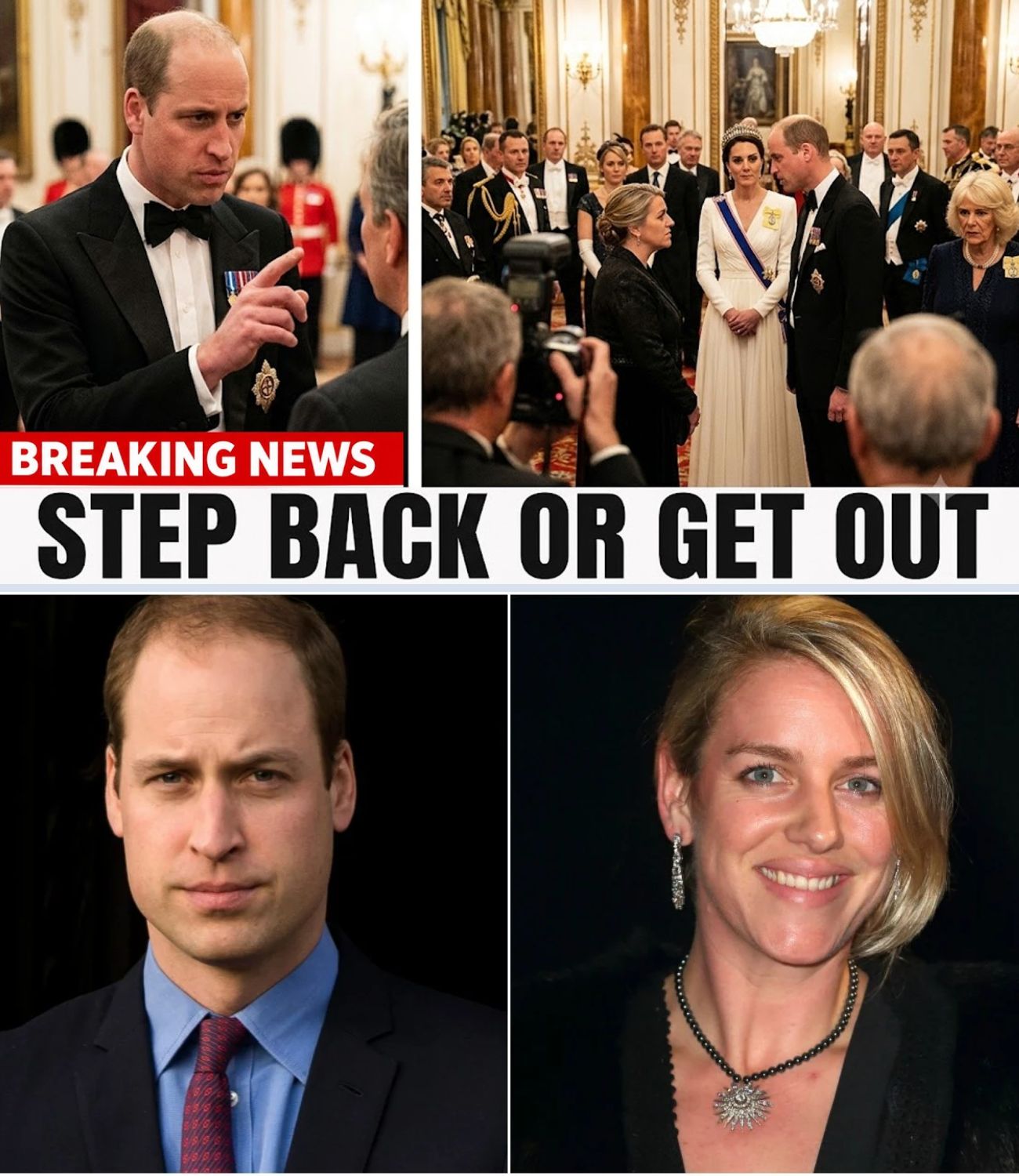
The Bureaucratic Heist: The Secret Balmoral Memorandum
Behind the scenes, Laura’s ambition went far beyond a mere grudge. In late September, she initiated a sophisticated, three-stage bureaucratic operation designed to bypass the traditional royal hierarchy entirely.
A formal request routed through Clarence House landed in the Lord Chamberlain’s office, asking for two seats in the inner diplomatic enclosure for Laura and her husband. Attached to it was an official requisition slip addressed to the Royal Collection Trust for the Prince of Wales feathers brooch.
The paperwork cleared the first two bureaucratic desks without raising a red flag. Officials saw the Clarence House stamp, assumed the King had privately blessed it, and prepared the orders. Laura was literally one pen-stroke away from pulling off the most audacious coup in modern palace history.
Then, forty-eight hours before the banquet, the file landed on the desk of a senior collections registrar who pulled the provenance ledger—and discovered something explosive attached to the inner sleeve.
It pointed to a sealed, private administrative codicil dated August 2022, signed at Balmoral Castle just weeks before Queen Elizabeth II passed away. Anticipating the immense pressure to blend the two families upon Charles’s accession, the late Queen had drawn an ironclad legal barrier with her own fountain pen.
The memorandum explicitly stated that sovereign heirlooms within the Royal Collection Trust could under no circumstances be loaned, gifted, or worn by non-working family members or step-descendants at state events. It expressly barred private relations from participating in formal sovereign processions.
Yet, at the bottom of that document sat a second signature: that of Charles, then Prince of Wales, formally witnessing and agreeing to the condition.
King Charles knew the rule existed. He had signed his name to it. Yet, when Camila’s office pushed the request through, Charles had chosen silence, hoping officials would wave it through to avoid a domestic row.
William’s Checkmate: The Power of the Pen
When the file was forwarded to Kensington Palace for final royal clearance, Catherine saw the document with her own eyes and handed it to William. The moment William saw his grandmother’s signature right beside his father’s, his strategy crystallized.
With less than twenty-four hours remaining, William acted with clinical precision. He did not call a family summit or leak to the press. Instead, he exercised his constitutional authority as a principal trustee of the Royal Collection Trust and co-signer of the ceremonial precedence registry.
Within thirty minutes, William took two decisive actions:
He formally revoked the requisition slip for Laura Lopes, instructing the Keeper of the Jewel House that the Prince of Wales feathers brooch was exclusively reserved for the Princess of Wales.
He struck Laura’s name from the inner diplomatic enclosure, reclassifying her seat to a standard civilian table near the back of the ballroom, entering through the garden doors like any ordinary guest.
Because Charles had witnessed Elizabeth’s document, he was completely boxed in. He could not publicly overrule William without admitting he had tried to break his late mother’s written command.
Table 12 and the Silent Aftermath
When the grand double doors swung open at 8:00 PM that evening, the visual message was brutally clear.
Leading the procession behind the King and Queen were William and Catherine. Catherine looked breathtaking, wearing Queen Mary’s Lover’s Knot tiara—and pinned prominently over her yellow silk royal family order sash was the Prince of Wales feathers brooch, glowing like a beacon under the chandeliers.
Forty yards away sat Laura Lopes at Table 12, positioned near the back corner of the civilian seating block. Wearing a simple dress and ordinary personal jewellery, she was forced to sit under the gaze of foreign diplomats, watching Catherine wear the very heirloom she had tried to claim. Throughout the evening, William did not cast a single glance in her direction.
Before midnight, Camila’s communications team scrambled to draft a sympathetic media narrative framing William as cold and exclusionary. But Kensington Palace delivered a devastating counter-message: if a single anonymous briefing appeared in the press, William would release the entire paper trail—including the requisition form, the late Queen’s memorandum, and King Charles’s own incriminating signature.
The threat was absolute checkmate. All planned briefings were instantly cancelled. Laura Lopes quietly left London the following afternoon, retreating to her Wiltshire residence without a word of protest.
Codifying the Realm: Closing the Loophole Forever
Unsatisfied with merely winning a single battle, William ensured it could never happen again. Exactly two days after the banquet, he summoned the Lord Chamberlain and the chief executive of the Royal Collection Trust to Kensington Palace.
Placing the August 2022 Balmoral Memorandum on the table, William ordered them to codify the late Queen’s directives directly into the permanent master ceremonial protocol handbook of the royal household.
The new clause inserted into the constitutional bible was absolute: access to royal heirlooms, historic tiaras, and crown regalia is legally restricted exclusively to individuals holding royal titles created by letters patent who actively carry out accredited public duties. Private family members, extended step-descendants, and non-working relations were permanently and legally barred from the vaults.
When the document crossed Charles’s desk, the King signed it immediately without objection.
Within two weeks, Catherine stepped out wearing another historic vault piece—the late Queen’s Diamond Maple Leaf Brooch—with total, effortless authority. Clarence House went completely silent, the vault doors remained locked, and Prince William permanently cemented the boundaries of the British crown for generations to come.
You Might Also Enjoy

“We Thought They Would Negotiate”—What Argentine Soldiers Said When The British Attacked Goose Green

“You’ll Never Finish My Ruck March, Limey” — US Sergeant Who Challenged the SAS, Then Fell Out First






