French Designer EXPOSES How Meghan Intercepted Bespoke Gowns Meant For Catherine
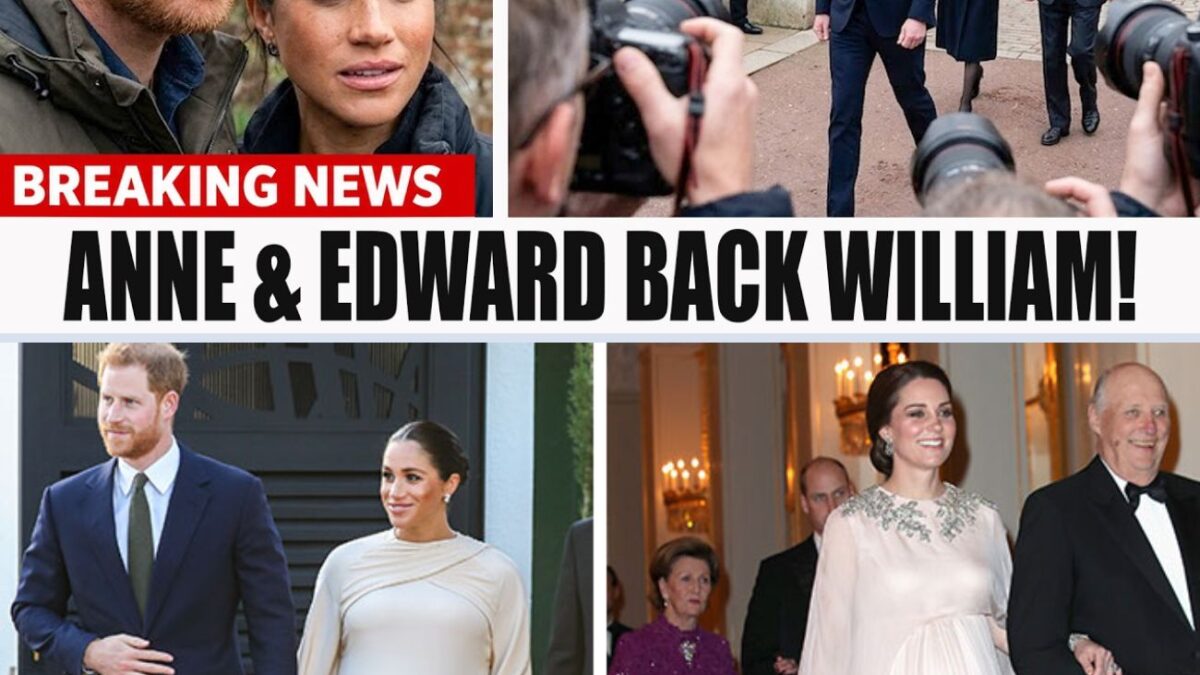
The Iron Gate: Inside Prince William’s Brutal Windsor Protocol That Sealed Prince Harry and Meghan Markle’s Permanent Exile
For months, the mainstream media peddled a tired, predictable fantasy: that given enough time, Prince William would eventually soften his stance, extend an olive branch, and welcome his younger brother back into the royal fold. Commentators on morning television broadcasts routinely chattered about how the Prince of Wales should be the “bigger man,” putting aside past grievances for the sake of familial harmony. But while the press corps was busy manufacturing that comforting narrative, an event unfolded behind closed doors in the tranquil depths of Norfolk that shattered the illusion once and for all.
Prince Harry attempted a tactical maneuver right in William’s private backyard—the rural sanctuary of Anmer Hall, where the future king, Princess Catherine, and their three young children retreat to live away from the public eye. Harry’s team had tried to coordinate an unannounced appearance at a military engagement in the region, clearly betting that a public setting would trap the heir to the throne into an awkward, camera-ready reconciliation.
It was a classic Hollywood play: force a public encounter, manufacture a sentimental headline, and let the cameras record a handshake that could be spun into a PR triumph.
Only, William refused to flinch. According to senior palace insiders, the response from Kensington Palace did not arrive as an emotional phone call, a frantic text, or a plea for calm. It came through official channels as a cold, blunt, unequivocal rejection. The door was not simply closed; it was bolted shut from the inside. There was no negotiation, no private rendezvous, and absolutely no room for discussion.
When someone screams at you in public, they are still engaged in a dynamic. When someone goes completely silent, changes the locks, and blocks your calls, the relationship is dead. Prince William is entirely convinced that the Sussexes must be kept at a permanent, unbridgeable distance. In William’s eyes, his brother crossed an unforgivable threshold by monetising private family pain for commercial cash. Once that foundational trust is shattered, there is no way back.
This was not merely an irritated older brother brushing off an annoying sibling. This was the future king drawing an immovable line in the sand, coordinating directly with top-tier constitutional advisers to ensure the Sussexes possess zero official standing left in Britain. The Norfolk ambush proved that Harry fundamentally misjudged the man his brother has become. William is no longer reacting with youthful anger or defensive fury; he is executing a cold, calculated strategy designed to protect his wife, shield his children, and secure the survival of an ancient institution.
The 1936 Blueprint: History as a Weapon
To understand why Kensington Palace operates with such surgical efficiency, one must look at the historical mirror William is holding up to his brother. Modern royal watchers often reduce institutional conflict to petty tabloid gossip, but inside palace walls, history is treated as binding legal precedent. And the precedent William is leaning on right now is the 1936 abdication crisis.
When King Edward VIII chose to abandon the British throne for an American divorcee named Wallis Simpson, the establishment did not simply sigh, shrug, and move on. They recognised an existential threat to the crown and acted with ruthless precision. King George VI and Parliament passed His Majesty’s Declaration of Abdication Act 1936, stripping Edward of the crown overnight. But that was merely the opening salvo of a systematic dismantling of his royal identity.
First, Edward was forced into a de facto exile across the English Channel, explicitly barred from setting foot on British soil without the written permission of the sovereign. When the Second World War erupted, they packed him off to govern the Bahamas simply to keep him thousands of miles away from European political intrigue.
Second, through Letters Patent issued in 1937, King George VI delivered a personal blow that cut Edward to the quick: Wallis Simpson was permanently denied the style of Her Royal Highness. Edward could keep his ceremonial title, but his wife would never be acknowledged as royal by the family.
Third, Parliament cut him off from the Civil List, ensuring not a single penny of taxpayer money funded his lifestyle.
Finally, they locked him out of the official red boxes, stripping him of state secrets, diplomatic cables, and government business entirely.
Today, Prince William is not inventing a new wheel. He is dusting off the Windsor protocol, applying the exact same pillars in real time to the Duke and Duchess of Sussex. They have already lost their official residence at Frogmore Cottage, completing their physical exile from royal grounds. Their access to state-funded security through the RAVEC committee was permanently severed. Their military appointments and patronages were stripped and redistributed to working royals. And under the Counsellors of State Act 2022, Parliament quietly bolstered the roster with Princess Anne and Prince Edward, ensuring Harry can never act as a substitute monarch.
William understands an unshakeable truth: a constitutional monarchy cannot survive if members can walk away, weaponise the press against the crown for millions of dollars, and still retain the glittering privileges of royal status.
The Infiltration of Soho House
To truly grasp why William’s reaction is so unyielding, one must trace the timeline back to the hidden social networks that predated the royal romance. The public was sold a modern fairy tale of an innocent blind date in a London pub in July 2016. But the real launching pad for this saga took place behind the reinforced mahogany doors of Soho House.
Founded by Nick Jones in 1995, Soho House was designed as an ultra-discreet sanctuary for the global elite, where strict privacy rules kept prying paparazzi at bay. Membership vetting was notoriously brutal; superstars like Beyoncé and Kim Kardashian were reportedly turned away because fame alone was not enough. You needed institutional access and an insider holding the master key.
Enter Marcus Anderson. Starting as a humble waiter at the London club, Anderson steadily climbed the ranks to become the global membership director. He was the ultimate gatekeeper, deciding which high-society figures made the cut. When Meghan Markle moved to Toronto to film the cable drama Suits, she was an unknown actress with zero social clout in Canadian high society. Through her close friendship with Anderson, however, she gained unprecedented access as his personal guest across clubs in London, Miami, and Istanbul.
Following her divorce from producer Trevor Engleson in August 2013, Meghan made her social ambitions remarkably clear. British television personality Lizzie Kundy recalled attending a dinner with Meghan in London during which the actress openly confessed she was actively searching for a famous, wealthy Englishman.
The social ladder-climbing was executed with tactical brilliance. Meghan first attached herself to Corey Vitiello, a top celebrity chef in Toronto, who provided the credentials to walk into the city’s Soho House opening night. Through that circle, Anderson introduced her to Ben and Jessica Mulroney, who sat at the absolute summit of Canadian political society. From there, the dominoes fell: an introduction to fashion designer Misha Nonoo, whose husband had attended Eton alongside William and Harry, quickly integrated an American cable actress into the private orbits of Princess Eugenie and the British aristocracy.
By the summer of 2016, the trap was fully set. When Harry walked into a private room at Soho House in London that July, he believed he was experiencing spontaneous romantic chemistry. But investigative authors and former friends point to a deeper reality: detailed dossiers had been studied, personal vulnerabilities mapped out, and networks activated long before the first pint was poured.
The Intercepted Gowns and Suppressed Archive
As if the calculated courtship wasn’t alarming enough, subsequent revelations exposed breaches that went far beyond social ambition. According to leaked details from an upcoming autobiography by a prominent French fashion designer, a scandalous deception had occurred within palace supply lines.
The renowned Parisian couturier had crafted exclusive, bespoke haute couture garments intended specifically as a private gift for Catherine, Princess of Wales. Yet, behind closed doors, a brazen interception took place. Meghan’s team reportedly intervened in the delivery chain, providing incorrect contact details and rerouting internal Kensington Palace channels. Meghan allegedly misrepresented herself, claiming ownership of these luxury creations that were never meant for her wardrobe.
The truth only spilled out when the French design team contacted Catherine’s stylist directly to ask why the garments had not yet undergone fitting. When Catherine’s office confirmed no such shipment had ever arrived, an internal inquiry uncovered a paper trail leading straight to senior courtiers connected to the Sussexes. It was an astonishing breach of ethics—an act of staggering entitlement that left Catherine and her staff appalled.
Compounding this was a suppressed photographic archive from Soho House. While the public was fed the narrative of a spontaneous blind date, photographs from December 2014 and June 2016—taken just one month before she met Harry—showed Meghan wrapped intimately around Marcus Anderson, their body language reflecting a deep, established history.
When William connected the dots between the intercepted designer gowns, the suppressed photographs, and the calculated seduction of his brother, the picture became horrifyingly clear. This was not a fairy-tale romance; it was an orchestrated infiltration.
The Firewall of Windsor
Recognising the gravity of the threat, William did not throw tantrums or leak stories to Sunday newspapers. He did what a sovereign-in-training is trained to do: he consulted the crown’s senior legal minds, flanked himself by Princess Anne—the absolute enforcer of royal discipline—and Prince Edward, and built an impenetrable institutional firewall.
Through quiet parliamentary amendments and the strict enforcement of historical instruments like the 1917 Letters Patent, they slammed the door shut on commercialising the HRH style. They ensured that duty is not a part-time hobby to be balanced against lucrative Netflix contracts in California. The paperwork was signed, the constitutional traps were sprung, and a trapdoor opened beneath Harry’s feet before he even realised the floorboards had shifted.
The public signal of this exile was delivered with breathtaking icy precision. When Harry landed on British soil, there were no royal fleet vehicles waiting on the tarmac, no senior courtiers offering formal greetings, and no Metropolitan Police outriders clearing traffic. There was nothing. Absolutely nothing. He navigated his schedule in total isolation like any ordinary tourist, while the gates of Anmer Hall remained bolted and silent.
Meanwhile, Princess Catherine emerged from her grueling health battle radiating quiet resilience, grace, and authentic public warmth, contrasting sharply with the clumsy, manufactured paparazzi strolls staged in the Cotswolds. High society in rural Britain saw right through the performance; the aristocratic circles they desperately sought to infiltrate wanted nothing to do with a reality television circus.
The Final Slam
With their American media empire beginning to buckle under the weight of unfulfilled content promises, falling brand valuations, and departing talent managers, a wave of panic swept through Monteceto. Desperate attempts to signal a desire for peace were immediately unmasked as PR traps designed to paint William as the cold villain.
The Prince of Wales refused to bite. Instead, he executed the final, definitive administrative blows.
The keys to Frogmore Cottage were formally surrendered, packed into wooden shipping crates, and dispatched across the Atlantic. Harry’s military honours—including his cherished role as Captain General of the Royal Marines, handed down by his grandfather Prince Philip—were revoked permanently. When the High Court in London dismissed Harry’s legal challenges regarding taxpayer-funded security, confirming that RAVEC had acted with complete lawful authority, the reality of British justice crashed down upon him.
When the royal family gathered at Sandingham and stood side by side on the Buckingham Palace balcony for Trooping the Colour, the visual confirmation was absolute. The space once occupied by the Sussexes had closed up naturally, filled by dedicated working royals who turn up every single day to serve their country.
History will record this era not as a petty domestic spat between two quarreling brothers, but as an existential battle for the soul and survival of the British monarchy. While King Charles often hesitated out of parental affection, Prince William proved he is forged from entirely different steel. He rules with a cold head and an unyielding commitment to duty.
The boy who walked behind his mother’s coffin with a bowed head at fifteen years old is now the most formidable leader in Britain. He has secured the perimeter, locked the ancient oak doors from the inside, and ensured that whatever storms may come, the crown endures untouched.
You Might Also Enjoy

“We Thought They Would Negotiate”—What Argentine Soldiers Said When The British Attacked Goose Green

“You’ll Never Finish My Ruck March, Limey” — US Sergeant Who Challenged the SAS, Then Fell Out First






