“Get a Haircut, Sergeant”: Why the British SAS Laughed at a US General’s Inspection
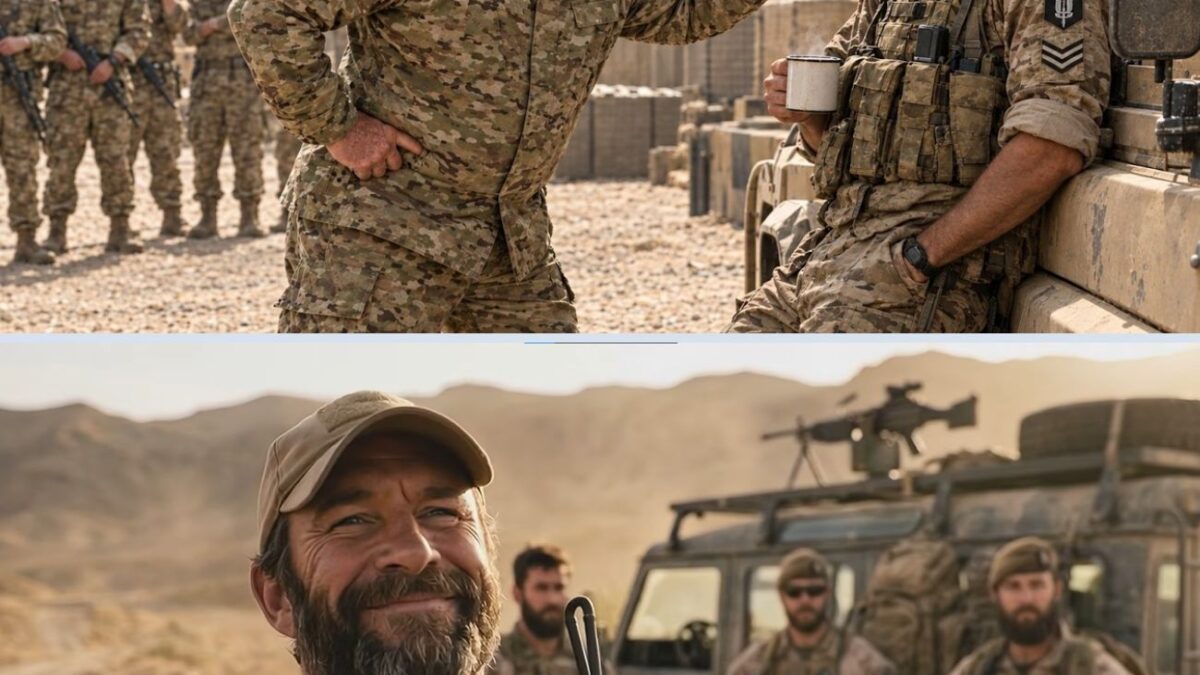
There is a forward strip in the western Iraqi desert in the summer of 2006 where a two-star general stops 10 paces from a man he has never met and says, loud enough for every soldier within 40 m to hear him,
“Get a haircut, Sergeant. You are not elite. You are a joke in fancy dress.”
He says it in daylight, in front of his own aide, in front of five of his own Rangers, and in front of six British men he has flown in to inspect. He says it because the sergeant in question has hair past his collar and a beard that reaches his chest and is standing on an American airstrip drinking tea out of a chipped white enamel mug while an American general is talking to him. The general’s name is Maynard Thorn. His people call him Buck. He has three rows of ribbons on his chest and two silver stars on his collar and a voice that has been shouting since 1973. He has flown into this strip because the task force under his command has tried to hit a particular compound twice in the last 9 weeks and has not come away with what it went in for and someone above him has told him, quietly, that a British detachment is going to be given the problem instead. He has come to look at them. He has come to decide with his own eyes whether these people are serious. The man he is pointing at is called Dara Pell, Staff Sergeant, 22 Special Air Service B Squadron, Air Troop. He is 36 years old. He has been in the regiment for 11 of those years. He is holding the mug in his left hand and his carbine muzzle down in his right and he is listening to the general the way a farmer listens to weather he already knew was coming. He does not straighten. He does not shift his feet. The mug does not move. Behind the general, his aide looks at the ground. Behind Pell, five more bearded men in mismatched plate carriers and local scarves watch without expression. One of them, a Welshman called Trevalian, is smiling very faintly, the way men smile when they have already decided how a thing is going to end and are waiting for the other party to catch up. He would remember saying it. He would be made to. In 36 hours, he would be standing in a plywood briefing room on this same strip, holding a single sheet of paper, reading one number off it, and he would not be able to make his mouth do the next sentence. The men he had called a joke in fancy dress would be the reason the number existed, and the sergeant with the long hair and the mug would still, somehow, be drinking out of the same mug. That was the beginning. That, and the fact that he had said it where he could not take it back.
Maynard Thorn was not a fool, and this is important. A clown’s humiliation is cheap. His was not. He had joined the United States Army in the autumn of 1973, which is to say, he had joined it in the exact month the country stopped wanting to talk about the war it had just lost, and he had kept his mouth shut and done the job. He had gone to Vietnam as a lieutenant late in the thin bitter end of it, and had come home with a Bronze Star nobody wanted to pin on him in public. He had been in Panama. He had commanded an armored battalion in the First Gulf War, and had taken it across the berm and up through the burning oil fields without losing a vehicle. And he had come home from that with a Silver Star that he had earned on a particular afternoon outside Basra that he never afterwards discussed. There was a Legion of Merit. There were two divisional command tours. There were the two stars on his collar and the laminated card in his breast pocket from his years as a drill sergeant at Fort Benning, the card with the grooming standards printed on it in black type, which he had carried in the same pocket for 29 years.
He believed in the card. He believed in it the way a man who has rebuilt himself out of discipline believes in the thing that rebuilt him. He believed that an army that could not keep its own hair in order was an army that was lying to itself about everything else, and he had seen enough of armies lying to themselves about everything else to feel that this was not a small point. He had come to Iraq to run a task force that had the hardest targeting mission in Al Anbar, and in the last 9 weeks that task force had rolled on a particular compound twice and had come away both times without the people it had been sent for, and the second time it had come away with two of its own men wounded and one of them dead. He was angry about that in a way he could not say out loud at the embassy in Baghdad. He had come down to this strip to look at the men he was now humiliatingly being asked to let have the problem instead.
They were, when he arrived, not what he had expected. He had expected soldiers. What he found was a half dozen men in local scarves and sand-colored plate carriers he did not recognize, carrying carbines he half recognized and half did not, with hair down their necks and beards down their chests, standing around a plywood table under a camouflage net with mugs of tea in their hands. One of them was reading a paperback with the cover torn off. One of them was humming. The officer, when the officer was pointed out to him, was a lean captain in his early 30s who looked more like a graduate student than a troop commander, and who said,
“Morning, sir.”
in a voice so quiet Thorn had to lean toward him to catch it.
Thorn walked the line. Sergeant First Class Oren Vickers, his senior aide, walked a half step behind him with a clipboard he did not open. Five Rangers from the general’s protection detail stood at the end of the strip, parade rest, chins up, hair shaved to the skin above the ears, and they watched. Thorne stopped at the second man and asked him his name, and the man told him. He stopped at the fourth and asked him when he had last shaved, and the man said pleasantly that he could not remember. He stopped at Pell. He took the laminated card out of his breast pocket, held it up as if it were an identification, and said the line that he would, before the sun went down twice, wish very much he had not said,
“Get a haircut, sergeant. You are not elite. You are a joke in fancy dress.”
Nobody on the British side moved. The paperback did not turn a page. The humming stopped for one bar and started again. Vickers, behind him, looked at the ground. The Rangers at the end of the strip did not laugh because the Rangers at the end of the strip were professionals, but one of them, a man called Castano, who was not actually a Ranger at all and was wearing their uniform for reasons that would matter later, did something with his face that was not quite a smile and not quite anything else. He was the only American on that airstrip who had worked with the regiment before. He was the only American on that airstrip who understood that the general had just made a mistake he was going to be able to measure in hours.
Thorne turned away. He walked back toward his vehicle. He said to Vickers, in a voice pitched to carry,
“Get a haircut, sergeant. Did you hear what I said to him, Orin? A joke in fancy dress.”
Vickers said,
“Yes, sir.”
He did not say anything else. He had been with the general for 2 years, and he knew when the general was for agreement and when the general was asking to be left alone to be right, and he knew which this was. The convoy pulled off the strip in a plume of pale dust. The men under the camouflage net watched it go. Nobody said anything for a long moment. Then Pell took a sip of his tea and said mildly,
“Right then.”
And the thing began.
The strip, after the convoy left, was quieter than before, but it was not quiet in the way men are quiet when they have been embarrassed. It was quiet in the way a well-run kitchen is quiet during service. Men moved. Kit moved. The Welshman who had been humming carried a case of rifle ammunition from a crate under the netting to a second table that had been set up in the lee of a Pinzgauer, and he set it down without a sound. And he went back for another case, and he set that one down without a sound, either. The captain with the paperback closed the paperback and put it face down on the table with the cover side showing, so that any of his men who glanced across would see nothing of what he had been reading. The man who had said he could not remember when he had last shaved rolled a cigarette with one hand while he unbuckled a bergen with the other, which is a thing that is harder than it looks, and he did it without appearing to be concentrating on either.
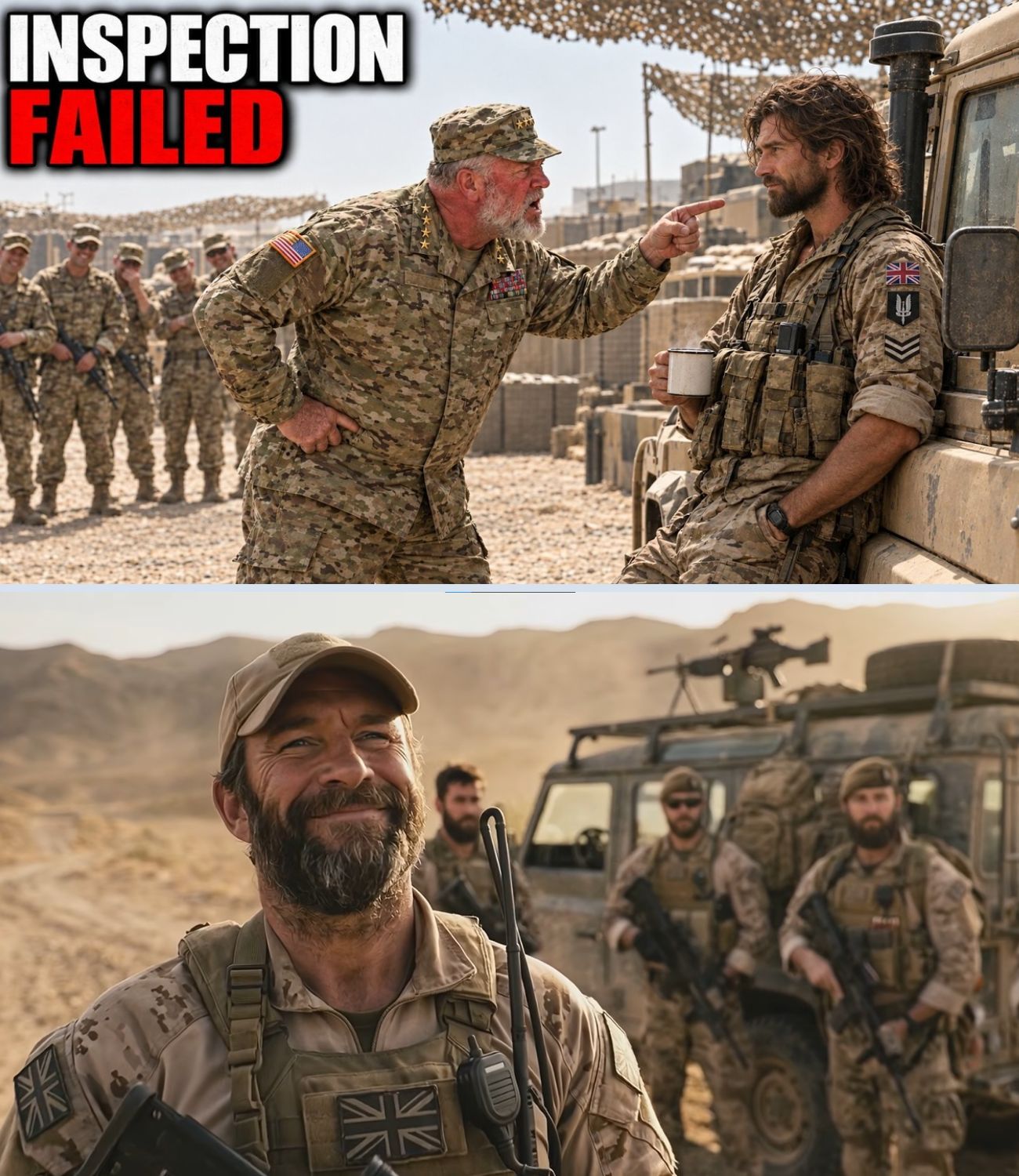
A sand-colored Toyota pickup, the kind of truck that in that part of Al Anbar outnumbered every other kind of vehicle by a factor nobody had ever bothered to count, sat behind the Pinzgauer under its own strip of netting. In its bed were two local blankets, a battered jerrycan, a plastic crate of oranges, and nothing that identified it as military at all. The men who were going to drive it in a day and a half were not going to look military, either. That was the point. That had always been the point. The hair that Thorn had decided was slackness was hair that had been grown deliberately over months by men who had been told to grow it. Because in western Iraq in the summer of 2006, a clean-shaven neck and a high and tight haircut were a billboard that could be read from a quarter of a mile away. The beards were not vanity. The beards were, in the vocabulary of the trade, a soft profile. They were a form of camouflage worn on the face. On the right road, in the right truck, at the right speed, with a shemagh wrapped the right way, a man with Pell’s beard could drive past a checkpoint that would have shot a man with Vickers’ haircut off the seat.
Captain Freddy Ainsworth was 29 years old and had been the troop commander for 7 months. He was, in the private taxonomy of the regiment, a Rupert, which is to say an officer, which is to say a man whose job it was to be told things by sergeants and to pretend to have come up with them himself in time to brief them back up the chain. Ainsworth was good at this. He had been good at it since Sandhurst, where he had learned to listen more than he spoke, and he had been good at it in his first attachment, where a squadron sergeant major with 20 years in had told him, over the course of one afternoon in a vehicle hide outside Basra, that an officer in the regiment who tried to be the loudest man in the room would simply find himself alone in the room. Ainsworth did not try. He read his paperbacks with the covers torn off. He wrote the orders. He let the sergeants do the thinking out loud.
The squadron sergeant major on the strip that day was a warrant officer called Lennox Beattie, and Lennox Beattie had not raised his voice to a man he was angry with since 1997. He did not need to. He stood behind Ainsworth’s left shoulder most of the time, and when he spoke, he spoke at a volume that forced the person being spoken to to lean in, which was itself a kind of weapon. He had watched Thorne’s inspection without expression and had said, after the convoy left, exactly one thing, which was,
“Right, let’s get on.”
The men got on.
Marcus Castano was a master sergeant in the United States Army, which was true, and he was also, which was less widely advertised, attached to this British troop as the liaison from a unit that was not formally in the task force’s order of battle at all. He wore the Ranger patch on the strip because the strip was being inspected, and the strip was not where he lived. He had done two rotations with the regiment, one in Afghanistan and one here, and he had drunk tea out of the same chipped mugs as every man in A troop, and he knew what was about to happen to Thorne because he had seen a version of it happen to a lieutenant colonel at Bagram in 2003. He had not warned Thorne. It was not his job to warn Thorne. It was his job, as he understood it, to be in the room when the thing happened so that there would be an American witness who could speak the following week in a different room about what he had seen.
On the plans table, under a stone that was holding it down against the breeze, was a brown card folder, and inside the folder were three sheets of paper and six photographs. The photographs were of a walled compound on the edge of a village, 64 km west of the strip. The three sheets were, in order, an intelligence summary with the name of a man on it, a casualty summary from the two previous assaults with the names of two Americans on it, and a hostage list with four names on it, three men and a woman, all of them taken from a convoy nine days earlier. The folder sat on the table, and the breeze moved its corner against the stone, and nobody on the strip opened it while the sun was high because nobody on the strip needed to. They had read it the night before. But they were waiting for one more piece of information from a source Hadi Al-Jubouri, the interpreter, had developed over four months before they went.
They were going to go when they went in the Toyota and in two more trucks like it down a road the task force had used twice and lost on twice. Past a checkpoint the task force had never been able to approach because the task force could be seen coming for 20 minutes. They were going to go through that checkpoint with their faces uncovered in daylight drinking from plastic bottles of water with the oranges rolling in the bed. The thing that was going to let them do it was the thing Thorne had pointed at and called a joke. He had not seen the gun pointed at him. The gun was already loaded.
Thorne came back at 0740 the following morning, which was earlier than the men on the strip had expected him. He came back because he had been told in a secure call the night before from his operations chief Colonel Hollis Wrath that the British troop was going to go against the compound in less than 30 hours and he had decided, because he was a two-star and because this was now officially happening under his command whether he liked it or not, that he would sit in on the brief and he would make his view felt. He came in his vehicle with Vickers. He left the five Rangers at the vehicle. He walked into the plywood briefing room with his hat in his hand because he was a thorough professional and the briefing room was indoors and he sat down at the back and he watched.
Ainsworth gave the brief. Beattie stood behind his left shoulder. Pell was at the map. Trevallyan was on a camp chair with his carbine across his knees. Hadi Al-Jubouri, the interpreter, was on a second chair, further back with his hands folded. The brief took 11 minutes, and it was given in a voice no louder than conversational, and it covered, in order, the route, the three vehicles, the dress, the actions on the checkpoint, the actions on the compound wall, the breach plan, the hostage lift, the extraction, and the contingency if any one of six things went wrong. There were no slides. The map was a 1 to 50,000 with grease pencil marks on an acetate overlay. The acetate had been drawn by Pell at 4:00 in the morning.
Thorne, when it was finished, stood up. He had been in the army for 31 years. He had briefed brigadiers. He had been briefed by brigadiers. He said,
“Captain.”
And Ainsworth said,
“Sir.”
And Thorne said,
“You are putting a six-man team through a checkpoint I have lost men at, in daylight, in civilian trucks, without armor, without air on station. You are going to drive up to that gate with oranges in the back of a truck, and you are going to expect the people on that gate not to recognize you. I have taken that gate twice in the last 2 months. The second time I did it with a striker, and I lost a kid from Pennsylvania, and I came away with nothing. You are telling me you are going to drive up to it in a Toyota.”
Ainsworth looked at Pell. Pell did not move from the map. Pell said,
“Yes, sir.”
Thorne said,
“You are telling me that?”
Pell turned around. In his left hand was his chipped enamel mug. In his right was a grease pencil. He said,
“Pleasantly, sir, the reason your striker was recognized at that gate is that it is a striker. The reason we are not going to be recognized at that gate is that we are not. There is a specific vehicle on that road, in that village, 22 times a day between 0600 and dusk. It is a white Hilux. The one in the vehicle shed is a white Hilux. The men on the gate have been counting those trucks for 18 months. They do not stop them. They look at the hair of the driver, and they look at the beard of the driver, and they look at whether the driver waves, and if the driver waves and the hair and the beard are right, they wave back. We have the right hair, sir. We have the right beard. That is what we are selling them.”
There was a silence in the briefing room that was 5 seconds long, which is a very long silence in a briefing room. Vickers, at the back, had his pen on his clipboard and was not writing. Hadi, further back, was looking at his hands. Thorne said,
“You are telling me the hair is the plan.”
Pell said,
“The hair is part of the plan, sir. The plan is to be the thing they are not looking at.”
Thorne said,
“That is not a plan. That is a costume.”
And Beattie, behind Ainsworth’s left shoulder, said in a voice no louder than Pell’s,
“Sir, with respect, you have assaulted that gate twice. We would prefer not to.”
That was the sentence that ended the argument, not because it was clever, not because it was loud. It was ended because it was true, and because Beattie had said it at the volume he said everything at, which was the volume a man uses when he is not asking you to agree with him.
Thorne did not reply. Ainsworth said,
“If there are no further questions, sir, we will proceed.”
Thorne said,
“Proceed.”
And he sat back down. Outside, afterwards, when the convoy had reformed and Thorne was walking to his vehicle, Vickers walked behind him and said nothing. In the margin of his clipboard, beside the schedule of the day, Vickers wrote four words in blue ink. He wrote,
“He was right.”
Gen. Rommel. He underlined it once. He did not show it to Thorne. He had been with Thorne for 2 years. He knew how it was going to go for the next 30 hours. And he did not want to be caught in the course of it pretending he had not seen the moment it had started. The general who had called them a joke in fancy dress had just been told by a sergeant with a mug that his two previous attempts had been the problem. And it was true. That was the thing that made it unsurvivable. It was true. And that was only the first time that day he would be wrong.
Thorne did not leave the strip he had been going to after the brief, but the operations chief Rath had asked him on the net to stay for the afternoon. Because the detachment was going to zero rifles against a berm at the far end of the strip, and Rath thought, carefully, that it would be useful for the general to see the detachment zero rifles. Rath did not say why. Rath did not need to say why. Thorne stayed. The five Rangers stayed with him. Vickers stayed with him. Castano, who had taken off the Ranger patch now that the inspection was done, and had put on a plain plate carrier with no insignia at all, stayed because Castano had been going to stay anyway.
The berm was 800 m from the firing point. In the base of the berm, Pell had set up three paper plates. One at 400, one at 600, one at 800. The breeze was from the west at perhaps six knots. The light was flat. The Rangers, invited by Ainsworth to shoot first, which was courtesy and which was also a trap, though they did not know it, put a Ranger sniper team on the firing point with an M-24, which is a good rifle. And the Ranger sniper, a staff sergeant from Georgia with 12 years in, did his job well. He hit the 400 first shot. He hit the 600 second shot. He put two rounds into the 800. The second one center, which is a creditable afternoon for any shooter on any range in the world. And the Rangers around the firing point made the small sounds men make for a man who has done his trade well in front of guests.
Thorn nodded. He said, loud enough to carry,
“That is shooting. That is professional shooting.”
The Ranger packed up his rifle. Trevelyan and his number two walked out onto the firing point. They were both in local dress now, tan shirts, loose trousers, shemaghs around their necks, their beards full. Trevelyan was carrying an L115 bolt action in a drag bag over his shoulder, and his number two was carrying nothing but a spotting scope and a folded range card and a bottle of water. They did not lie down on the mat the Rangers had been using. Trevelyan looked at the mat and said something quiet to his number two, and the number two laughed once, and then they walked past the mat and set up 15 m further back on bare gravel. Because the mat was downwind of a diesel generator and the heat shimmer off the exhaust was going to put a wobble into the scope they did not want. Thorne watched them do this. Thorne did not understand what they were doing. Castano behind him did and said nothing.
Trevelyan lay down. He did not take his boots off, which snipers sometimes do, because he was not planning to be there long. He hummed very quietly a bar of a hymn his grandmother in the valleys had taught him when he was six. And he settled behind the scope. His number two gave him the range to the 800 plate, which Trevelyan already knew, and the wind, which Trevelyan had already read off the dust at the base of the berm, and the elevation, which Trevelyan had already set. Trevelyan said,
“On.”
His number two said,
“Send.”
Trevelyan sent. The 800 plate came apart in the middle, not the edge, the middle. Trevelyan worked the bolt. He did not look up. His number two said,
“Target,”
which is what a spotter says when the target has been served. Trevelyan said,
“Next.”
His number two gave him a range he had not been given yet, which was 1,100 m, which was a second plate the number two had walked out and placed in the base of the berm 40 minutes earlier when nobody was watching, specifically so that this would happen. Trevelyan found it in the scope. Trevelyan sent. The 1,100 plate came apart.
The ranger sniper at the back of the firing point said under his breath,
“Jesus.”
He did not say it unkindly. He said it the way one craftsman says it about another. Thorne said loudly,
“Lucky.”
He said it before he had thought about saying it. He said it because the thing he had just watched had arrived in him at the same time as the knowledge that the man who had done it had hair down his neck and had been humming a hymn, and the two facts could not sit in the same room in his head without one of them having to be made smaller. He said it a second time. He said,
“Lucky shot.”
Vickers behind him did not write anything on the clipboard this time. He did not need to. Castano, quietly in a voice only Vickers could hear, said,
“He has done that four times out of four, sir, in the last 6 months. In Helmand, he did it at 1,300.”
Vickers said,
“Thank you, Master Sergeant.”
Thorne, who had heard, pretended he had not. The schoolgirls, he had almost said to Vickers in the vehicle the day before, and now the schoolgirl was walking back from the firing point with the drag bag over his shoulder, humming a hymn, and Thorne did not say anything at all for the next 6 minutes.
The second blow was not loud. It did not need to be. The confirmation came at 22:40, which is to say at 20 minutes to 11:00 in the evening, which is to say long after Thorne should have been in his bed at the forward operating base 90 km east, and was instead still on the strip because Wrath had asked him again to stay, and because something in him that he was no longer able to name had decided that he was going to see this through.
Hadi Al-Jubouri, the interpreter, came out of the signals tent with a single folded piece of paper in his hand and gave it to Pell without saying anything. And Pell read it, and Pell said to Ainsworth,
“He is there. He arrived at 19:30. He is in the second room on the first floor of the west building. The hostages are in the cellar of the east building. Four of them. All alive at 18:00.”
Ainsworth said,
“Good.”
Hadi, who had worked for the detachment for 4 months and who had a brother the regiment had extracted from Ramadi in 2004, and who had never mentioned the fact to anybody on the strip because it was not the kind of thing he mentioned, nodded once and went back into the signals tent.
Pell went to the map. He did not call Thorne over. Thorne came over anyway. On the map, Pell put a grease pencil cross on the second room of the west building and a second cross on the cellar of the east building, and he drew a line from the compound’s north wall to a specific point in the north wall that was 11 m west of the main gate. He said to Ainsworth,
“We go in there, not the gate.”
The task force went for the gate both times. Ainsworth said,
“Why there?”
Pell said,
“The wall is single brick there for a stretch of about 4 m. The task force intelligence had it as reinforced on both previous occasions. It is not. Hadi’s source walked it last week.”
Thorne, in the half-light under the lamp, looked at the cross. He said,
“You are telling me we hit the wrong place twice.”
Rath said,
“Yes, sir.”
He said it quietly. He had been Thorne’s operations chief for 14 months. He had been quietly against the inspection the day before and had said so once in the vehicle and had been told to be quiet and had been quiet. He said it now because Pell had asked him a question with a map and because the honest answer, the one Rath had not been able to make himself say out loud in 9 weeks, was that both previous assaults had gone against a wall the task force had been told was reinforced because the task force’s source, a different source, a man Hadi did not trust and had said so, had told them it was. And because nobody above Rath had been willing to question him. The kid from Pennsylvania had died because of a bad source and a bad wall. Rath knew it. Thorne, until this moment, had not.
Thorne did not speak for a long moment. He looked at the map. He looked at the cross on the wall, 11 m west of the gate. He said slowly,
“You are going in through a wall I was told was reinforced.”
Pell said,
“Yes, sir.”
Thorne said,
“On the word of an interpreter?”
Pell said,
“On the word of an interpreter who has given us 19 pieces of information in 4 months, 17 of which we have been able to independently confirm and two of which we have not been able to confirm, but have not been able to disprove. Yes, sir.”
Thorne said,
“And you are confident?”
Pell said nothing else. He walked away from the map. He walked to the edge of the camouflage net, and he stood with his hands behind his back for perhaps 3 minutes, and nobody on the strip walked over to him because Beattie had said very quietly to the men nearest him,
“Leave him.”
And the men had left him.
When Thorne came back, he did not sit down. He said,
“Captain, your mission.”
He said it in a voice that was not quite the voice he had used the day before. He went and sat on a camp chair at the back of the briefing area, and he did not speak again that evening.
“A joke,” he had said. He did not say it now. The troop went to kit up. Trooper Idris Lowder, who was the troop’s demolitions man, and who was 24 years old, and who had a 4-year-old daughter at home in Hereford, took a piece of paper out of a plastic sleeve in his breast pocket and unfolded it and looked at it, which was a drawing his daughter had made of a yellow house with four windows and a sun in the top corner that had seven points instead of the usual five, and he refolded it four times along the creases that were already there and put it back in the sleeve and buttoned the pocket. He did this at the start of every operation. He had done it for 3 years. He did not show it to anybody and he did not say what he was doing because he did not need to. Pell drained his mug. He set it on the plans table beside the folder. He did not wash it. He did not take it with him. It would be there when he got back. That was the point of it being there in the first place.
It is 04:42 in the morning. Three white Hiluxes are driving west on the single tarmac road out of the forward strip. Lights on at the exact speed the local traffic drives at that hour, which is a shade over 60 km an hour. In the first truck, Pell is driving and Trevelyan is in the passenger seat with his carbine on the floor between his knees under a blanket. In the second truck, Ainsworth is driving and Lowther is in the passenger seat with a demolition charge in a canvas bag under his feet. In the third truck, Beattie is driving and Castano is beside him, which is a thing that will matter in the after action because Castano will be able to say next week in a different room that he was in the third truck. There are oranges in the beds of all three. There are blankets. There is nothing visible that identifies any of them as other than what they appear to be, which is three local men driving to the next village before the sun comes up.
The checkpoint is 22 km west of the strip and it is the checkpoint Thorne has lost men at. There are three men on it. They have an elevated position with a PKM on a tripod and a length of rebar across the road as a barrier. The first truck slows. Pell lifts his left hand from the wheel in the particular half wave the drivers of white Hiluxes give in this district at this hour. The man at the barrier lifts his own hand in the particular answering half wave the men on this gate give to drivers of white Hiluxes at this hour. The man looks at Pell’s beard. The man looks at Trevelyan’s beard. The man lifts the rebar. The three trucks drive through. The whole exchange takes 11 seconds. Nobody on the gate turns a head to look at the beds of the trucks. The gun on the elevated position does not swing. The road opens.
They drive another 41 km west. They pull off the road 300 m short of the compound into a wadi and they leave the trucks with Castano and Beattie, who will bring the trucks up on the codeword. The other four go in on foot. The sky is beginning, barely, to lighten in the east behind them, which is why they have come at this hour, because the men on the compound walls are at their lowest between 0400 and 0500, and because the men on the compound walls have been on the compound walls for 9 weeks waiting for the task force and have not learned yet that the task force is not coming this time. The wall is where Hadi’s source said it is. Pell runs a gloved hand along it at the 11-m point, and the brick is single skinned, and the mortar is old, and Lowther sets the charge. Trevelyan is on one knee, 30 m back with the L115, covering the rooftop of the west building, in which he has already seen, through the thermal, two sleeping men. He is humming very faintly into the stock the same bar he hummed on the range.
The charge blows at 0507. The wall opens. The four of them are through the gap in 2 seconds. The man on the rooftop who starts to rise is dropped by Trevelyan before he has his rifle to his shoulder. The second man on the rooftop does not rise. He is dropped before he has thought about rising. The two men in the courtyard do not reach the courtyard. Pell takes one, and Ainsworth takes the other, and the suppressors on their L119s cough twice each, and the thing is done.
The west building, second room, first floor. Pell goes up the stair. Lowther goes behind him. The man they have come for is awake. He has his hand on a pistol on the mattress beside him. He does not reach it in time. Pell says afterwards that he had the man’s wrist before the man had the grip, which is probably true and probably not quite the whole truth. And they bring him down the stair bound.
Ainsworth and Trevelyan are at the east building. The cellar door is a steel door with a padlock on it, and Trevelyan shoots the padlock off with his Glock 17, because the Glock will do that, and the carbine will not. And Ainsworth goes down the steps with his torch under his carbine, and he says the one sentence they have rehearsed in English and in Arabic, which is,
“We are British soldiers. Stay where you are. We are taking you home.”
There are four people in the cellar, three men, one woman. They are all alive. The woman is the first to understand what has just been said to her. She does not cry. She stands up. She says, in English,
“Thank you.”
Ainsworth says,
“Not yet, ma’am. In an hour.”
They are on the ground 41 minutes. They come out of the wall in the order they went in, with the hostages between them, and the trucks come up at the code word. And the four hostages go into the beds of the trucks under the blankets, and the trucks turn around in the wadi, and the trucks drive east.
They go through the same checkpoint in daylight at 06:24. The man on the gate lifts the rebar. The man on the gate waves. The three trucks drive through. The gun does not swing. The hostages under the blankets do not move. Pell lifts his left hand from the wheel.
At the forward strip at 07:50, Colonel Hollis Wrath reads the after-action brief in a plywood room, with General Thorne sitting at the back, and Vickers beside him, and Castano standing against the wall, and Beattie behind Ainsworth’s left shoulder. Wrath reads it as it is written. He reads,
“Objective taken at 05:07. Primary extracted. Four hostages recovered alive. Enemy KIA six confirmed. Friendly casualties zero. Time on target 41 minutes. Compound previously assessed by task force as hardened. Wall at grid point 27308 breached single charge single skin brick as advised by regiment source.”
He reads it in the voice a professional reads a report in. He does not look at Thorn while he reads it. He does not need to.
Thorne did not stand up when Wrath finished reading. He sat on the camp chair at the back of the plywood briefing room with the sheet of paper in his hand. Wrath had passed it to him when he had finished and he read the number on the fourth line again and he read it a third time. Four hostages recovered alive. Friendly casualties zero. Time on target 41 minutes. He read the second to last line which was the one about the wall. He read it twice. He did not say anything. His mouth for perhaps nine or 10 seconds worked at the beginning of a sentence that did not come. Vickers beside him looked at the floor. Vickers had been with him for two years and knew what it looked like when the general was trying to make his mouth do a sentence it could not do because he had seen it once before in Washington in a different room after a very different briefing.
The door of the briefing room opened and the men came in. They were not in local dress now. They had changed out of the shirts and the shemaghs on the drive back but they had not shaved and they had not cut their hair because the shaving and the hair cutting were not scheduled for that week and there was no reason to do either. Pell came in first. He walked past the general at the back of the room without looking at him which was not a snub because Pell did not do snubs but was simply the fact that Pell was walking into the room to put the report on the plans table and the general was not in his line of sight on the way to the plans table. He put the report on the plans table. He put his mug beside it. He went back out. Trevelyan came in behind him. Lowther, Ainsworth, Beattie came in last.
Beattie, as he passed the general, did not stop. Beattie did say one thing. He said, at the volume he said everything at,
“Good morning, sir.”
It was not a jibe. It was not cold. It was the greeting of a squadron sergeant major to a two-star general in a plywood briefing room on a forward strip at 8:00 in the morning. And that was all it was. And that was why it was unbearable.
Thorne said,
“Sergeant Major.”
Beattie went past. Castano, from the wall, said, in a voice pitched to the room,
“Sir.”
Thorne looked up. Castano said,
“You asked me 2 days ago whether these men were serious.”
Thorne said,
“I did not ask you that, Master Sergeant.”
Castano said,
“You asked it in the vehicle, sir.”
Thorne said, after a moment,
“I was in the vehicle. I did.”
Castano said,
“They took a compound this morning that we have lost on twice. They took it without losing a man. They took it because they looked, from the outside, like men who were not coming. They looked that way, sir, because you called them a joke in fancy dress yesterday, which is the exact thing they were trying to look like. That is what the fancy dress was for, sir. It worked.”
Thorne did not answer him. Castano said,
“That is all, sir.”
And he went back to looking at the wall.
Wrath, standing by the map, said carefully,
“General, if you would like to add anything to the brief, sir.”
Thorne shook his head. He said,
“No.”
He said,
“Thank you, Colonel.”
He stood up. He was holding the sheet of paper. He walked to the plans table. He put the sheet of paper down beside the mug. He looked at the mug for perhaps 2 seconds, which was the first time in 36 hours he had looked at anything on the strip as if it were not an irritation, but a fact. He turned round. He walked out of the briefing room. His hand did not go to his breast pocket. The laminated card inside the breast pocket had been there for 29 years and had not been taken out since the morning before when he had taken it out to hold it up at the man with the mug. It stayed where it was. It had, in the end, decided nothing. The mug on the table had.
Vickers following him out did not open the clipboard. He had already written 2 days earlier the four words in blue ink that were all the clipboard was going to need. He did not add to them. There was nothing more that needed to be said.
He had said, standing on an airstrip in the western Iraqi desert in the summer of 2006,
“Get a haircut, Sergeant. You are not elite. You are a joke in fancy dress.”
He had said it in daylight, in front of his aide, in front of five of his own men, and in front of six British men he had been sent to inspect. He had been right about the dress. The clothes they were wearing were not uniform in any sense his 31 years had taught him to recognize. The hair was long. The beards were full. The man he had pointed at had been drinking tea out of a chipped enamel mug while a two-star general told him he was not serious. All of that had been true. He had been right about the surface and he had been catastrophically wrong about what the surface was for. The fancy dress was the plan. The hair was the plan. The thing he had called a joke was the thing that drove in daylight through a gate he had lost men at, past a man with a machine gun on a tripod who waved them through because the hair was right and the beard was right and the wave was right. The joke, when it came back through that gate at 20 past 6:00 in the morning, had four people in the beds of its trucks who had not expected to see their families again.
Maynard Thorne did not become a convert. He did not spend the rest of his career telling that story at Fort Benning. He flew back to Baghdad the following afternoon in the same aircraft he had flown in on and he did not sit at the back of a plywood briefing room on that strip again. He retired 18 months later at the same rank he had held that morning. The laminated card went with him. He had, as far as anyone on the strip ever knew, never taken it out of his pocket again.
Pell washed the mug that evening. He put it back on the plans table upside down to dry. In the morning, when he picked it up for his first brew of the day, there was a fine layer of desert dust on the rim, which he wiped away with his thumb and the thing began again. Somewhere east, in a plywood office at a forward operating base, a two-star was signing a report he had not written and would not discuss. Somewhere west, four people were sleeping in beds. The men who had put them in those beds were drinking tea at 6:00 in the morning in the clothes they had worked in, with the hair they had worked in, in the arena where the surface was always carefully the opposite of what it meant. Right about the tea, wrong about the men who drank it.
You Might Also Enjoy

“We Thought They Would Negotiate”—What Argentine Soldiers Said When The British Attacked Goose Green

“You’ll Never Finish My Ruck March, Limey” — US Sergeant Who Challenged the SAS, Then Fell Out First






