“Get Off My Grass, Tourist” — The Drill Sergeant Who Mocked the SAS, Then Broke His Own Course
“Get Off My Grass, Tourist” — The Drill Sergeant Who Mocked the SAS, Then Broke His Own Course
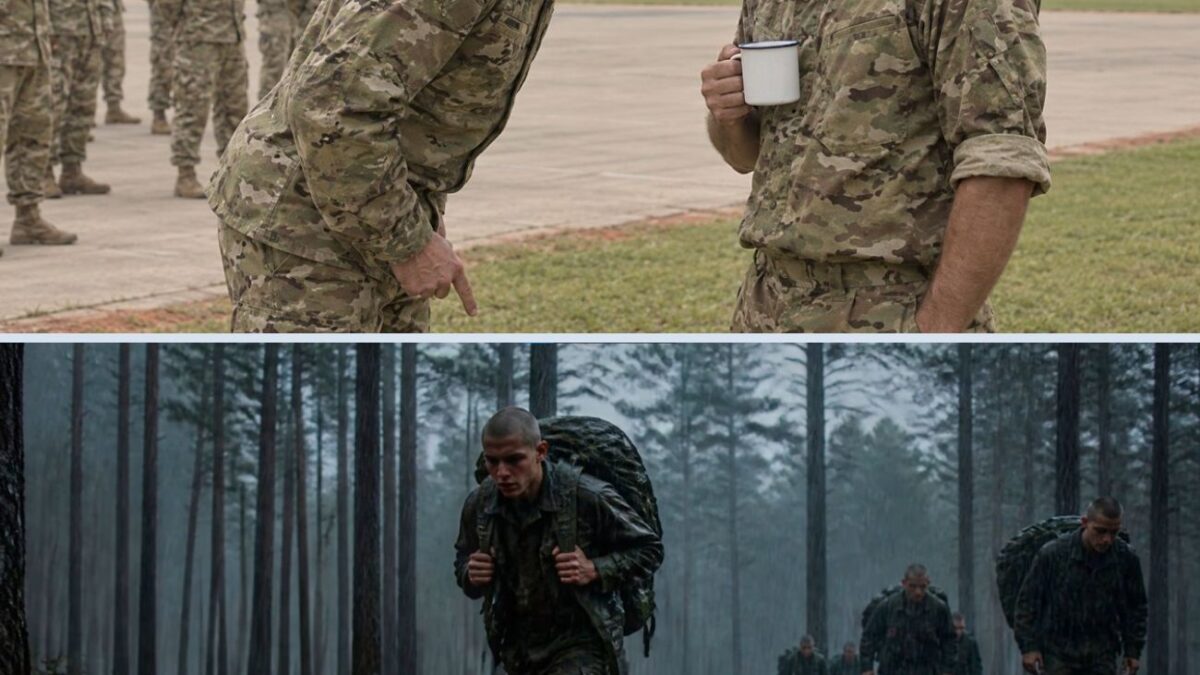
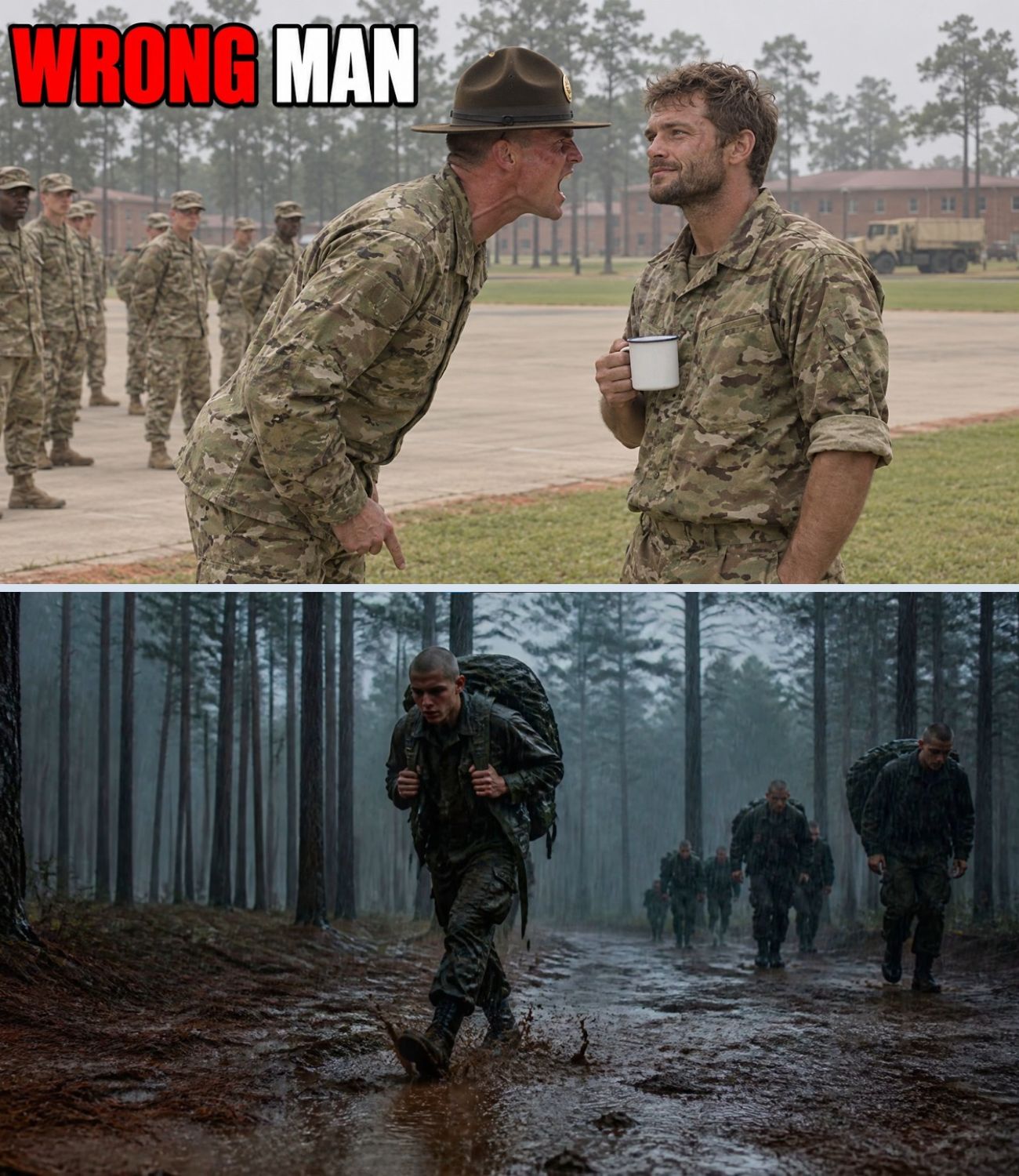
There is a line a man can shout on a parade square at Fort Benning that he will spend the rest of his career wishing he had swallowed. And on a gray hazy morning in late September, senior drill sergeant Dale Rididgeway shouted his he stood 6 in from a bearded staff sergeant with a chipped white enamel mug in his left hand jabbed a finger down at the pavement and said it loud enough that the pine trees at the edge of the strip gave him a second of echo.
“Get off my grass, tourist. You are not elite. You are a joke with a beard and a teacup.”
The trainees behind him, a company of United States Army infantrymen, fresh out of a morning run, chests still heaving, did not laugh exactly. They did the thing soldiers do when a senior man is making a scene. And the smart play is to look straight ahead and let the weather pass.
The bearded man did not look at him. He was a shade over 6 ft, medium build, scruffy brown hair, two days of beard, dirt still on his face from whatever he had been doing before breakfast, and he was holding the mug the way a man holds a thing he has carried a long time. His sleeves were rolled above the elbow.
His gaze was not on Rididgeway’s eyes. It was on something past Rididgeway’s shoulder, somewhere in the middle distance between the brick classrooms and the motorpool, where a truck was reversing. His mouth moved very slightly at one corner, and that was the only part of him that answered. Beside him stood a British captain in the same pattern-shifted camouflage, pencil in her left hand, a notebook open against her thigh.
She wrote one word in it and underlined it twice. The man with the mug was Staff Sergeant Ewan Predk of 22 Special Air Service B Squadron Mobility Troop 3 weeks into a six-month cross-training exchange at the United States Army Infantry School. And he had not come to Benning to argue with anyone.
He had come to use their ranges, run their obstacle course, and send a report back to Heraford about how the Americans did it. The man shouting at him had until that moment been a name on a schedule. He would remember shouting it. He would be made to everything that followed in the next six days. The stress shoot that went wrong in front of his own cadre.
The night on the land navigation course when the rain came in and the records in Master Sergeant Vele’s Green Ledger were rewritten by a man who did not own a head torch past mile 3. The morning on the Derby Queen, when a staff sergeant from Omar Quills sectioned cramped on the slide for life and had to be carried off, the four doors and the stopwatch at the end of it, all of it hinged on one line, delivered on wet concrete at 9:00 in the morning in front of a company of men who had not asked to see it. He said it.
The record will show he said it, and the record will show with a time on it exactly what it cost him to have said it. To understand what was about to happen to Dale Rididgeway, you have to understand that he was not a fool, and no one at Fort Benning thought he was one. He was a senior drill sergeant at the United States Army Infantry School, 19 years in uniform, with a Ranger tab he had earned in a winter class at the age of 24, and had never once stopped mentioning.
He had done three combat tours, two in Iraq and one in Afghanistan. And he wore a bronze star with valor device on his class A uniform for an afternoon in Sarda city in 2004 when he had pulled two wounded soldiers out of a stalled Humvey under small arms fire. He was by every honest measure the army had a competent and dangerous man, and the cadre who worked under him would have told you so without flinching.
Sergeant First Class Luis Beranger, who had been his junior on that second tour and still called him Dale when no one was listening, would have told you first. He also believed with the full weight of 19 years behind the belief that the United States had the finest light infantry on earth and that everyone else was at best playing catch-up with a national myth to lean on.
He had seen visiting foreign operators before. He had seen French marines who could not pass a basic rifle marksmanship test the way Benning taught it. He had seen a pair of German fall sheragger who had quit a road march on day two. He had seen more than once exchange officers from a dozen countries who turned up with impressive sounding unit patches and then struggled with the sheer grinding tempo of the infantry school’s run of ranges.
His conclusion delivered in various forms to various audiences over a decade was that reputation was a thing nations gave their soldiers so the soldiers would not have to earn it twice. He was a large man, not in height but in presence. His neck was thick. His forearms were marked with the kind of veins that stand out when a man is already angry at 7 in the morning.
His face flushed red when he raised his voice, which was often. The brown campaign hat sat level on his closecropped head, and he adjusted it left hand to the brim before he spoke to anyone he intended to address formally. In the breast pocket of his uniform, he kept a laminated card, his ranger school run times, his road march times, his best score on the army’s physical fitness test, the year he had been named top of his class, and he tapped the pocket twice out of habit.
Whenever he was about to make a point, he had tapped it before he spoke to Preduk. The chain of events that put the two men on the same strip of grass was ordinary and administrative. The British army for 40 years had rotated small numbers of soldiers through United States military schoolhouses, and the Americans had done the same at Heraford and at Credinhill.
Predur had arrived on a Thursday with a half-filled kit bag, a cross-training brief signed by his squadron commanding officer, and Captain Marin Oakshot from the liaison office to run interference on the paperwork. He had been in the country 11 days. He had already run two ranges with the Cadre, had said almost nothing, and had drunk tea slowly out of the enamel mug he carried in his Bergen.
Rididgeway, who had been off station for a week on leave, had come back on the Monday morning, had been told at the Cadre meeting that a British special air service staff sergeant was walking his ranges and had walked out onto the strip with a specific intent in mind. He had chosen his moment.
A full company of trainees had just finished a run. Behringer was at the edge of the formation. Major Russ Toliver, Ridgeway’s direct superior, was in his office across the parade square with the blinds down. Captain Oakshot was present as a witness because that is what liaison officers are for. And Preduk, who had wandered over to the edge of the strip with his mug because he had been told the morning’s range was running late, was standing on grass that by the fence line and the local law belonged to Senior Drill Sergeant Rididgeway.
Ridgeway tapped the pocket. He adjusted the hat and then he said the thing he said, and he said it the way a man says a thing he has been rehearsing in his head for a week. Behringer, three paces behind him, closed his eyes for a half second and opened them again. He did not sigh.
He had the sense even then that something had just gone wrong that his senior had not yet noticed. You can learn more about a man in the 24 hours after he has been insulted than you can in the 24 hours before. And the 24 hours after Ridgeway’s line on the strip, taught Behringer something that his senior would not learn for another 3 days.
Predk, who had been publicly called a tourist, a joke, a man with a teacup, did nothing. He drank the rest of what was in the mug. He walked at the pace he had been walking before. He went back to the room he had been assigned in the junior offic’s quarters, laid his kit out on the floor the way he always laid his kit out, and read a book, a thin paperback copy of a Welsh language poetry collection that Oakshot had seen on his nightstand the day they arrived for 40 minutes before he slept.
He wrote nothing down. He did not phone Heraford. He did not mention Rididgeway’s name in Oakshot’s hearing, then or ever. In the morning, he was in the armory 40 minutes before the range opened. The weapon he had been issued for the exchange, an L1192, the regiment’s primary carbine. In the configuration he preferred, 10 and a halfin barrel suppressor, a plain red dot, and a flipup magnifier he almost never used, was already stripped on the bench in front of him when Behringer came through the door with two coffees.
He had not been told to be there early. He had simply been there early, and Behringer watched him put the carbine back together with the economy of a man who had done it in the dark more times than he had done it in the light. There was no theater to it. There was no muttering. He loaded four magazines, laid them in a row, and placed the mug, chipped white, blue rim, half full of tea, on the far corner of the bench, where it would not be in the way.
The schedule for Predurch’s week at Fort Benning was by coincidence or by Ridgeway’s hand or by Major Toiver’s quiet amusement the four events on which the infantry school made its hardest reputations. On Tuesday afternoon, the Cadre would run a live fire stress shoot on the known distance range, a timed scored course that Behringer himself usually taught, in which a shooter engaged steel at four distances between 25 and 300 m under a shot clock after a sprint and a magazine change.
On Wednesday night, under whatever weather the Georgia Pines decided to deliver, Master Sergeant Theron Vale would run the senior land navigation exercise, a six-point night course across broken ground that had broken plenty of Ranger candidates in its time. Thursday morning was the Derby Queen, the long, cruel obstacle course that for 60 years had taught infantrymen what their lungs were for.
And on Friday morning, in a windowless concrete building at the far end of the contonement, Captain Hollis Marou would run a four-door shootouse drill against a timed par and a cold video camera with Major Toiver standing behind the glass with a clipboard. Ridgeway had helped design two of those four events. He had set the records on one of them long ago, and the record was still in Vale’s green ledger, held together with a rubber band.
Pred had been handed the schedule on his first day. He had read it in the time it took him to finish a mug of tea, and he had folded it into quarters and put it in his back pocket. He had not asked any questions. On that Tuesday morning, before the stress shoot even began, Behringer walked him down to the 25 m line for a zeroing session.
The sun was out for once, the pines were still. Predk set up prone in the position that Heraford had been teaching for 40 years. Elbows wide, cheek weld firm, the suppressor’s weight sitting the barrel heavy and steady. He fired three rounds slow with four or 5 seconds between each. He walked down range with Behringer and they looked at the paper.
Three holes, all of them touching, one ragged shape the size of a British penny dead on the point of aim. Predurk nodded once and said: “That will do.”
He picked up the targets, and walked back to the firing point. He did not fire another round at the zero. Behringer made a small face when Predurk’s back was turned.
Not surprise exactly, but the face a Cadre makes when a visitor has done cold and quietly. A thing their trainees are usually arguing about on round nine. across the strip in the open bay where the day’s chute would run. Ridgeway was already addressing the card ray. He was tapping the laminated card in his breast pocket.
He was explaining loudly that the course had never been cleaned by a visitor and would not be cleaned by one today. Captain Oakshot, standing near the back fence with Pridok, flipped a page in her notebook and wrote two more words. She underlined one of them. She did not show it to anyone. She did not have to. The stress shoot at the infantry school was not a complicated event. It was a mean one.
The shooter started at the 200 m line, prone with an empty chamber and a loaded magazine in his vest. on the buzzer. He engaged a steel at 200 m, sprinted to the 100 meter line, engaged a smaller steel there, sprinted to 50, dropped to a kneel, performed a mandatory magazine change, engaged two paired steels at 25 m, and finished with a transition to pistol on a single plate at 7.
Any missed steel added a 5-second penalty. Any missed re-engagement added another five. The course record on the Cadre board set as everyone was reminded that morning by a ranger instructor in 2017 was 29 seconds flat clean. Ridge Rididgeway had selected the demonstration shooter himself. He was a staff sergeant from Behringer’s section, a competition grade shot who had placed in the top 10 at the previous year’s Army smallarms meet and he was by every reasonable measure one of the three best shooters on the post. He ran the course
first as the demonstration so that the trainees watching from the bleachers would understand what good looked like. He engaged the 200 clean. He engaged the 100 clean. He sprinted to 50, dropped, changed magazine and on the 25 m pair he rushed the second shot and the plate did not ring.
He re-engaged it, hit it, transitioned to pistol, dropped the final plate and his time came in at 49 seconds. Two steels dropped on the first attempt, one at 25, one on the pistol with a re-engage on each. The Cadre scored it at 59 with penalties. Clean. It would have been 38. It was not clean. Ridgeway nodded, said something short about pressure making even good shooters do stupid things, and gestured at the bleachers.
He did not look at Preduk when he gestured. He said loud enough for Behringer to hear: “Let’s see what tourism looks like.”
Predurk walked to the 200 meter line without hurrying. He laid the carbine down. He checked the magazine seat. He put his face in the dirt the way Heraford had taught him to put his face in the dirt, elbows wide, suppressor resting, breath even.
He did not glance up at Rididgeway. He did not glance at Behringer. He waited for the buzzer the way a man waits for a kettle he knows will boil. The buzzer went. He fired one round at 200, and the steel rang out across the pines. He was on his feet inside a second, and the sprint he ran was not the sprint of a man who had anything to prove.
It was level, economical, the long stride of a man who had carried a Bergen through the Black Mountains in the dark. At 100, he dropped to a half knee, fired one round, and the smaller steel went. He kept moving. At 50, he dropped, and his magazine change happened as part of the drop. The empty magazine was out of the well before his knee was down, and the fresh one was in before his elbow found the dirt.
On the 25 m pair, two rounds, two rings in a rhythm Behringer would later describe to Veil as the sound of someone counting. He transitioned to the Glock 17 with the thumb release Heraford had been drilling into blades for a decade and the final plate at seven dropped before he had entirely finished standing up. He safed the carbine.
He walked back to the firing point. He picked the enamel mug off the bench where he had left it before the course started, and he took a sip of tea. Captain Marin, standing beside the shot clock with the laminated time card in his hand, cleared his throat before he read the time: “31 seconds. Clean, no miss, no re-engage.”
The bleachers were quiet in a particular way. The cadray were quiet in a different particular way. Behringer looked at Rididgeway’s back and then at Rididgeway’s hat, and then at the brim of Ridgeways hat, and he did not say anything. The man who had called him a tourist did not turn around.
Predark had put down the mug. He was already walking back toward the armory. carbine over his shoulder because the next thing on the schedule was a weapons clean and he was as always 40 minutes early for it. And that was only the first time that day Rididgeway would be wrong. The senior land navigation exercise at Fort Benning was Master Sergeant Theren Veils and had been the Veils for 11 years.
He ran it, scored it, and kept its times in a green canvas ledger with a rubber band around the cover. The ledger lived on the second shelf of a filing cabinet in his office and came out by tradition only on course nights. Six points across the broken ground of the training reserve, each a plate on a numbered post, each worth a stamp in the stamp card every candidate carried.
Candidates started staggered after last light with a map, a compass, a red filter head torch, and a time limit of six hours. The course record for a six-point clean run, all stamps correct order, was 2 hours and 19 minutes, set in 2015 by a Ranger instructor whose name the current Cadre still said with a little wait. The Wednesday night Pred was due on the course.
The Georgia Sky had been doing the thing Georgia skies do in late September, which is to say it had been considering rain all afternoon, and had decided on it an hour before last light. By the time the first candidates stepped off, the rain was coming through the pines in long, cold sheets, the kind that find the gap between collar and neck inside 30 seconds, and settle in to stay.
Vi stood at the start point in a gorex that was already losing the argument, and watched his candidates set off into the dark. He had put Predk in the last start slot of the night, partly out of courtesy, and partly because he wanted a look at him going in. Ridgeway had come out to watch. He had not been scheduled to be there. He had come anyway.
He stood under the tin awning at the start point with his hands behind his back, the brim of his campaign hat shedding water in a line, and he said to Vi loud enough for Beringer to hear: “The Welsh had hills, but they did not have Georgia pines in the dark, and a man would see soon enough what tourism cost on broken ground.”
The man who had called them tourists on the parade square tapped his breast pocket twice as he always did. Pred stepped off at 2243. He went into the trees at the angle Vi had expected and then 100 m in at an angle Vi had not expected, and the beam of his red filter head torch was gone from view inside a minute.
By midnight the rain had thickened. By 1:00 in the morning, three candidates had come back to the start point, having failed to find their second point. By two, Vele had seven candidates still out and no sign of any of them nearer than 4. What the Cardre reconstructed later, from Pred’s stamp card and his own quiet account to Oakshot, and from one brief encounter with another candidate near 5, was this.
He had used the head torch for the first three miles and then switched it off. He had read the map by holding it a hands width from his face under the lip of his smok with the red filter cuped in his palm against the rain. He had walked, not run, the long legs, and he had moved at a trot on the short legs between points, and he had not once needed to backtrack.
He had found two in the dark by the smell of the water in the gully beside it. He had found 5 in his own later telling to Oakshot because it was where it should be. He had taken a brief sit out of the wind in the lee of a fallen pine, and he had drunk the lukewarm tea from a thermos he had taken out of his smok pocket, and then he had walked on. He came in at 0436.
4 hours and 7 minutes elapsed. All six stamps. Correct order. Vale stood under the tin awning in the rain and looked at the stamp card for a long moment. He said one word that was not for the record. He pulled the rubber band off the green ledger. He turned to the page he had been using for 11 years.
He wrote in pencil in his own hand a new line under the old record, and the old record was no longer the record. The next candidate came in at 0517, 41 minutes behind. Ridgeway, standing at the edge of the awning in a wet gorex, said to no one in particular: “Any man could have a lucky night with the weather, and the Welsh had been born in rain, so this proves nothing in particular.”
Oakshot, who had come out to the start point at midnight and had stayed, wrote the sentence down verbatim in her penciled hand. She did not underline it. She did not need to. The joke with a beard and a teacup, he had called him. The second blow had landed, and the man who had thrown the first was still swinging at the air.
The Derby Queen is a mile and a half of mud, timber, rope, wire, cargo nets, and the kind of obstacles that stop making sense around the 12th minute. When a man’s lungs are telling him he has made a serious category of error, it has been breaking infantry men at Fort Benning for 60 years. Its current senior non-commissioned officer in charge was Staff Sergeant Omar Quill, who had been a competitive swimmer at Fort Hood before he enlisted, and still swam 2 mi most mornings in the post pool, and who ran his section on the course with the
particular pleasure of a man whose job it was to show other men what their lungs were for. He had two days earlier asked Behringer whether the Welshman was going to run the queen or walk it, and Behringer had said he had no idea. Thursday morning came clear and warm, the ground still soft from the Wednesday rain.
Pred arrived at the start of the course with the enamel mug finished and left on the bench by the pavilion, and he did a slow set of mobility work with his hips and shoulders while the cadre set the clock. Corporal Ennis Trethawan, who had come down with him from Heraford for part of the visit, and who had lost most of his left little finger to a vehicle door in Oman, and joked about it most mornings, was at the fence line with Oakshot.
Ridgeway was at the finish line under a sunwashed sky. He was not a man who ran the queen anymore, not at 19 years in, and no one would have expected him to. What he was doing was standing with his arms folded, campaign hat level, watching the start, waiting for the thing he was certain he was about to see, which was a visiting operator with a reputation finding out what Georgia obstacles did to Welsh legs.
Pred’s pace through the first third of the course was not fast. It was not slow. It was the pace of a man who had been in mobility troop for six years, and had learned a long time ago that the first third of any grinding thing was a trap for the vein. He cleared the low wall, the horizontal ladder, the belly crawl under wire, the rope climb in a steady, unimpressive rhythm, and he was in the middle of the field at the halfway split.
Quill, running one of his own staff sergeants on the course two minutes ahead of Predur as a pace runner, nodded once and said to his junior at the clipboard that the Welshman had settled in to run a solid 30. What happened on the slide for life was not Pred’s doing. The slide for life is a long rope descent across a ravine with a single wooden handle, and the staff sergeant who was pacing had cramped on the rope climb a minute earlier and had carried the cramp into his grip.
15 ft off the ground, both calves locked up on him at the same time. His right hand slipped on the handle, and he came off the rope badly, landing on his side in the pit at a bad angle, and did not get up. He rolled onto his back with his jaw clenched and his hands at his thigh. And the sound coming out of him was the sound of a man who is going to be on light duty for a week.
Pred who had just started the slide for life 2 seconds behind him, dropped off the handle at the 10-ft mark, landed in a shoulder roll, and was on his feet beside the man inside. 3 seconds he talked to him. The cadre at the pit heard the word: “Mate” and the word: “Breathe” and something in Welsh that none of them translated and he put a thumb into the inside of the thigh and worked the cramp hard for a slow count of 10.
The staff sergeant tried to stand. He could not stand. Pred did not argue with him. He got a shoulder under his hip, took him in a fireman’s lift, the way the regiment had been teaching fireman’s lift since Malaya, settled him, and walked out of the pit toward the next obstacle. He finished the course carrying him.
He crossed the finish line at 34 minutes and 11 seconds, Cadre on his shoulder, Cadre breathing, Cadre alive and clenched and furious at his own calves. and he laid him down in the shade by the pavilion as carefully as a man lays down a sleeping child. Quill was at the finish line by then. So was Behringer. So was Oakshot. So was Ridgeway.
And the red had come up his neck in the particular way it came up his neck when he was about to shout. And the veins were standing in the places they always stood. and he opened his mouth, and then, and this was the thing Behringer would remember longest, and would tell Vile about months later in a bar off post, he closed it again.
He did not say anything. He turned and walked back toward the parade square, and he tapped his breast pocket once as he walked, and the tap was not the tap of a confident man. The third blow had landed, and the man who had thrown the first was still losing the argument with himself. The infantry school shoot house sat at the far end of the cantonment in a windowless concrete building whose outer wall was marked with the scrapes of 20 years of simunition and door breach exercises.
Inside four rooms, four doors, a corridor, two closets, and a mock stairwell. For Friday morning, Captain Hollis Marin had set it up to a course the Cadre used for senior assessment. Nine threat targets in various positions, three non-combatants in positions designed to make a careless shooter kill them, a part time of 3 minutes 30, and a hard fail on any non-combatant hit or any missed threat.
Live ammunition L11 92 for the visitor. The Cadre’s demonstration shooter would run it with his M4A1. Transition to pistol permitted. A video camera in each room. A stopwatch at the door. Maron at the door with the stopwatch on a bootlace around his neck. Major Russ Toiver standing on the catwalk above with a clipboard and a pencil and the quiet attention of a man whose signature would be on the result.
Ridgeway was at the catwalk rail. He had not spoken since the Derby Queen. He had come to the chute house because he had been detailed to come to the chute house, and because the alternative was conceding something he was not yet ready to concede, and because the course was his, and the records were his, and he still believed that in his house, on his doors, something would go the way it had always gone.
The demonstration shooter went first. He was a good man. He put nine of nine threats down. He put one of three non-combatants down as well. A female mannequin target in the second room with a cradled child. And in the half second of door entry, his second round from a double tap flew high and clipped her.
His time read off the clock at the end was 3 minutes and 49 seconds. Par missed. Hard fail on the non-combatant hit. Maron recorded it on the sheet and did not comment. To the catwalk wrote a short note and did not look up. Preduch stacks on the door. Carbine up. Suppressor forward. Mug on a chair in the corridor behind him. Half empty. Finished.
Captain Oakshot standing 6 ft behind him with her pencil and her notebook. Marin’s hand on the stopwatch. Marin says: “Go door one.”
He is through it in a half second and his weapon is already indexing the far corner. Two threats, one left, one right. Two rounds, two drops. He does not fire a third at either. The non-combatant in this room is a seated civilian mannequin against the back wall.
He clears past it without the muzzle crossing it. Door two is the room that killed the demonstration shooter. He goes through it low, moves right, and the female mannequin and the cradled child are the first thing he sees. His muzzle is on the ground. He steps past her. The threat in this room is in the back right corner, half hidden behind a tipped table. One round drop.
Door three is the longest room. Three threats in a staggered line. He fires three rounds in the time it takes him to cross the threshold, and the three threats drop in the order he crossed them. One of the three has a non-combatant two feet to his left. The round that drops him passes between the threat’s shoulder and the non-combatant’s temple, and the non-combatant does not fall.
Door four is a two room sequence with a short corridor between. Three threats, one non-combatant. He takes the first threat on the corridor turn. He takes the second through a doorway at an angle, kneeling. He transitioned to the Glock 17 for the third. A closeup at under 2 m because the carbine is bound against the door frame and the pistol is faster from that angle. One round.
He safes the carbine against his shoulder. He does not step over the non-combatant. He goes around her. He walks out of the final door and he lowers the weapon and he says in a conversational voice to Marin: “Clear.”
Marin clicks the stopwatch. He looks at it. He looks at it again. He unloops the bootlace from his neck as if the lanyard were in the way of the number. And he reads it out so that Toiver on the catwalk can hear it and so that Ridgeway at the catwalk rail can hear it: “2 minutes 47 seconds. Clean, no miss, no re-engage.”
Toiver on the catwalk writes it down. He looks at the sheet in his own hand. He writes a second line under it. Nine of nine threats. Zero of three non-combatants. Zero misses. He underlines the last number. Read that number again. The hall is very quiet. Behringer is in the hall. His face is doing a thing it does not do often, which is to say nothing at all. Oakshot at the back wall, opens her notebook, writes a single word, and underlines it with a kind of pencil pressure that leaves a mark on the next three pages. The word is in Welsh.
Predurge, who sees it over her shoulder as he walks past, allows himself a quarter of a smile and does not say anything. He picks the enamel mug off the chair in the corridor and takes a sip of the cold tea. Ridgeway at the catwalk rail, does not move. Major Russ Toiver read the numbers aloud in the hall of the shoot house because that was the procedure and because the procedure that morning happened to serve a purpose beyond itself.
He stood at the front of the group of cadre and candidates and visitors with the clipboard flat in his left hand and the pencil behind his right ear and he read the demonstration shooters result first. 3 minutes 49 seconds, nine of nine threats, one of three non-combatants hit hard fail in the flat voice of a man who was neither angry about it nor interested in softening it.
Then he read Predurk’s result. He read it twice because the second reading was for the record and the first had been for the room. 2 minutes 47 9 of nine zero of three zero misses. He wrote his signature across the bottom of the sheet with the pencil and he put the pencil back behind his ear. Rididgeway was standing in the front rank of the cadre at parade rest campaign hat level.
The red had gone out of his face. The veins at his neck had gone back to wherever they lived. He was not tapping the breast pocket. His hand held behind his back was flat against his belt, and the knuckles of that hand were white in the way knuckles are white when a man is holding on to something he is not going to let anyone see him holding on to.
Behringer at Ridgeways right shoulder said one line. He said it quietly in the direction of Ridgeways ear and not in the direction of anyone else. and he said it in the tone of a junior who had earned the right to say it on a second tour in Sarda City in 2004 and had not used that right since: “That is the man you called a tourist, Dale.”
He did not say anything else. He stepped back into the rank. Ridgeway did not answer him. Across the parade square at the change of shift. The trainees from Monday morning, the company he had been shouting in front of, when he had said the line about the grass and the beard and the teacup, were running past the armory in formation.
They had been told, in the way these things travel on a post, what had happened in the chute house. They passed Ridgeway at a formed up double time, eyes forward, and not one of them turned his head in the army. That is a particular silence. The man who had been loudest in front of them on Monday was quietest in front of them on Friday, and they left him there in the quiet.
Pred walked out of the chute house with the carbine over his shoulder and the enamel mug in his left hand. He walked past Ridgeway in the hall. He did not look at him. Rididgeway did not say anything to him. There was no handshake. There was no concession speech. There was no moment of grace in which the ranger tabbed senior drill clasped the staff sergeant with the mug on the shoulder and said he had been wrong about him and there was not going to be one.
The man had said what he had said on the Monday. The record now said what it said on the Friday. The two things were going to live in the same post in the same cadre’s memory for as long as the cadre lived. Oakshot walked out behind Pred, notebook closed, pencil pocketed. On the strip outside the shoot house in the warm Georgia sun, the trucks in the motorpool were reversing again the way they had been reversing on Monday morning.
The pines at the fence line were still. The grass under their boots was by the fence law senior drill sergeant Rididgeway’s grass, and the tourist on it was going to his debrief. And that was the end of the matter. Tuliver on the catwalk closed the clipboard. He put the pencil in his breast pocket. He went down the stairs and out of the shoot house without saying anything to Ridgeway on the way past.
Ridgeway stood in the hall for a long moment. The hat stayed level. The hand stayed flat. He did not tap the pocket. He did not that day or that week or in any week Behringer could remember afterwards tap the pocket in the same way again. He had been right about the tea and the beard, and he had been wrong about the man who drank the one and wore the other.
And the gap between those two things turned out to be the entire difference between a senior drill sergeant with a ranger tab and the staff sergeant, he had decided on wet concrete at 9:00 in the morning to call a joke. He had been right that the man had a mug. He had been right that the man was not loud. He had been right that nothing in the man’s bearing announced itself.
He had been wrong about everything that mattered under those three things, and the course he had helped build had told him so, in his own hall, in front of his own cadre, with his own major’s pencil on the sheet. The loudest man on the field is almost never the most dangerous one.
It is a thing that armies learn and relearn, and it is a thing that senior drill sergeants with laminated cards in their breast pockets sometimes forget until a visitor with a teacup walks onto their grass and reminds them. 6 weeks later, in a brick room at Cedenhill, Staff Sergeant E1 Prid sat at a desk in B Squadron’s lines and wrote the last page of his exchange report.
The chipped white enamel mug with the blue rim was on the desk beside him. The tea in it was cold. Captain Oakshot at the next desk was writing hers in pencil, left-handed in the notebook with the cracked spine. Neither of them mentioned senior drill sergeant Rididgeway in the body of their reports. There was no need to.
The numbers were in the annexes. The Ledger in Georgia had the new record in pencil in the master sergeant’s hand under a rubber band. The man who had called them tourists was still a senior drill sergeant at the infantry school, still competent, still dangerous, still 19 years in, and would not for the rest of his career say the word tourist out loud to a visitor on his grass again.
You Might Also Enjoy

“We Thought They Would Negotiate”—What Argentine Soldiers Said When The British Attacked Goose Green

“You’ll Never Finish My Ruck March, Limey” — US Sergeant Who Challenged the SAS, Then Fell Out First






