Grace Kelly’s MARRIAGE Was Much NASTIER Than You Thought
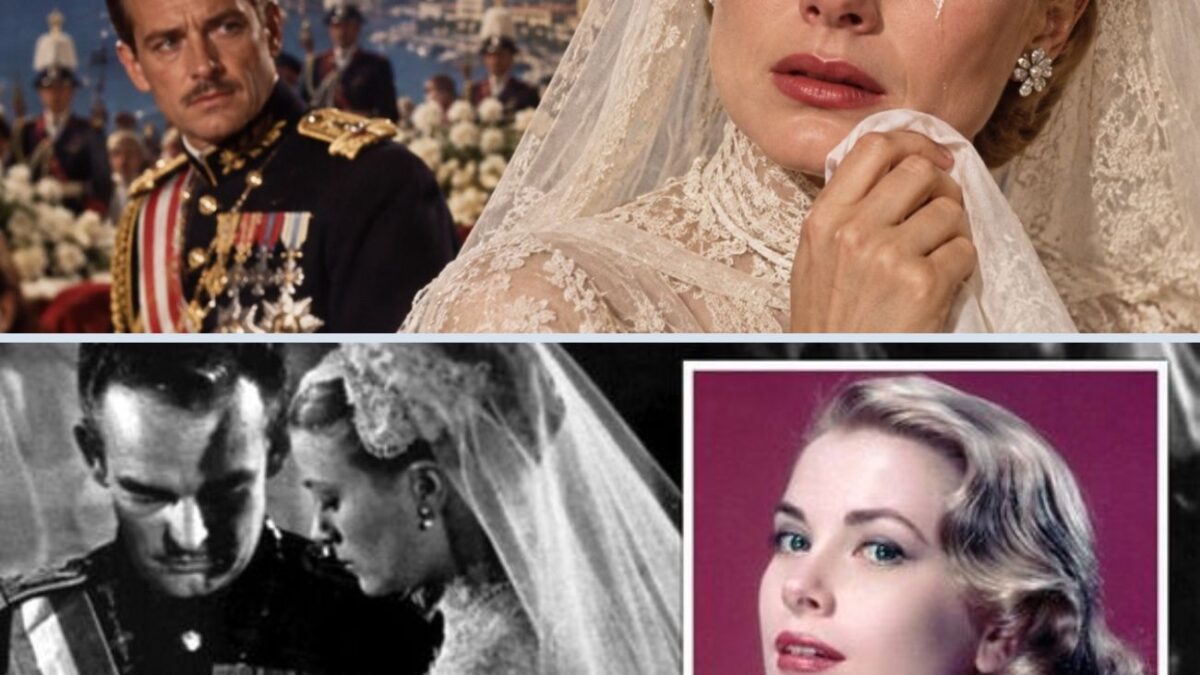
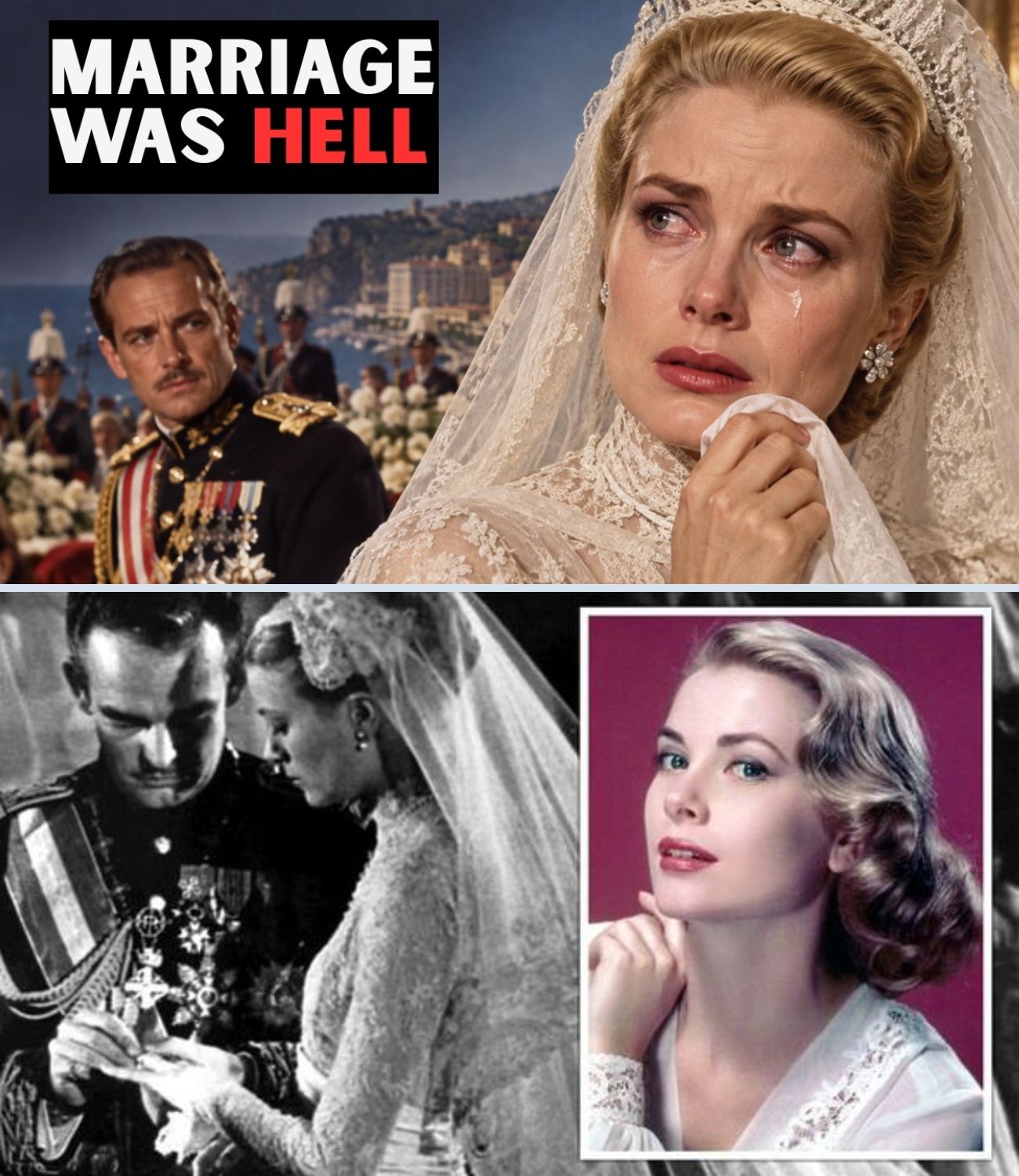
Inside the Philadelphia Museum of Art, behind glass, there is a wedding dress, 25 yards of silk taffeta, 100 yards of silk net, antique Brussels lace purchased from a museum already more than a century old when it was stitched into the bodice. Thousands of tiny seed pearls. It was not designed by a European couturier. It was built by Helen Rose, a costume designer at Metro-Goldwyn-Mayer, the same Hollywood studio that had employed the bride. 30 million people watched the woman wearing it walk into a cathedral in Monaco. She never walked out. The dress went home to America. She did not.
The dress arrived at the Philadelphia Museum of Art in 1956, the same year Grace Kelly wore it. She donated it herself. Not the palace, not the principality, not the Grimaldi family. Grace Patricia Kelly personally sent the most famous wedding dress of the 20th century back to her home city before the first anniversary had passed.
The object that was supposed to represent the beginning of her royal life was already separated from the place where that life was supposed to happen. That single decision made quietly while the rest of the world was still enchanted by the fairy tale tells you more about what Grace Kelly understood about her own marriage than any biography published in the decades since. She knew what she had walked into. The dress at least could leave.
To understand why it left and she did not, you have to look past the cathedral, past the cameras, past the 30 million viewers and into the political machinery underneath. Monaco is not a kingdom. It is not an empire. It is a principality roughly 500 acres in size. For comparison, Central Park in New York City covers 843 acres. Grace Kelly left a career that spanned continents, that took her from soundstages in Hollywood to locations across Europe for a sovereign territory smaller than most municipal parks. She could walk across her entire new country in under an hour.
But Monaco’s physical size was never the point. What mattered was a treaty. In 1918, France and Monaco signed the Franco-Monegasque Treaty and buried inside its provisions was a clause that functioned like a legal time bomb. If the reigning Grimaldi prince died without producing a legitimate heir, Monaco would effectively fall under French control as a protectorate, not merged through negotiation, not allied through diplomacy, subsumed, the principality would simply cease to exist as an independent state, folded into the French sphere like a village swallowed by a city that had been waiting patiently at its borders for centuries.
By the early 1950s, Prince Rainier III was approaching his late 20s, unmarried and heirless. His father, Prince Pierre, had been stripped of his Monegasque titles following a bitter divorce from Rainier’s mother, Princess Charlotte, who had herself renounced her right to the throne in Rainier’s favor in 1944. The Grimaldi family tree was already fractured by abdication, divorce, and legal drama. And above everything hung the treaty. Monaco’s survival depended entirely on one man’s ability to find a suitable wife and produce a legitimate child before fate, accident, or illness could intervene.
Suitable did not mean beloved. It meant Catholic. Because Monaco’s constitution and the Grimaldi succession law required it absolutely. It meant capable of bearing children. Because the treaty gave the marriage a biological deadline that no amount of wealth or ceremony could waive. It meant famous because Rainier understood with considerable shrewdness that Monaco’s economy depended on the Casino de Monte-Carlo and international tourism, and a globally recognized bride would put the principality on the front page of every major newspaper in the Western world. And it meant politically uncomplicated because a bride entangled in European dynastic rivalries might bring commitments Monaco could not afford. An American actress, Catholic by birth, beautiful, famous on every continent, carrying no royal baggage, and backed by a wealthy family willing to pay for the privilege of the match, checked every box.
The introduction was not accidental. Father Francis Tucker, an American Catholic priest who served as Rainier’s personal chaplain, reportedly encouraged the relationship and according to some accounts played a role in bringing Grace and Rainier together. Grace Kelly was already scheduled to attend the Cannes Film Festival in May of 1955. A visit to the Palais Princier was arranged through Pierre Galante of Paris Match magazine, ostensibly for a photographic feature. The palace needed publicity. The magazine needed glamorous content. Grace arrived at the palace wearing a floral dress and met Rainier in a drawing room. They walked through the palace gardens while photographers captured every angle. It looked spontaneous. It looked like the opening scene of a romance. It was closer to a carefully managed introduction whose participants each had something specific to gain. The fairy tale from its very first published photograph was a production.
Rainier began a transatlantic courtship. He visited the Kelly family in Philadelphia during the Christmas season of 1955. Jack Kelly, Grace’s father, was a self-made millionaire who had built a fortune in the brickwork and construction business. He was a three-time Olympic gold medalist in sculling, a politically connected figure in Philadelphia Democratic circles and a man who understood a transaction when he saw one. Margaret Kelly, Grace’s mother, was a former physical education instructor and the first coach of women’s athletics at the University of Pennsylvania, a woman who had raised four children with the same discipline her husband applied to business. The Kellys were wealthy, Catholic, socially ambitious, and proud. The match looked advantageous from every direction.
But the contract that formalized the engagement made the arrangement’s commercial nature visible in ways neither family would have chosen to publicize. According to multiple biographers, Jack Kelly was required to pay a dowry of approximately $2 million to the Grimaldi family. He reportedly resented the demand. One account attributes to him words to the effect that he did not see why he should have to pay for the privilege of his daughter marrying some prince. The money flowed from Philadelphia to Monaco, not the other direction. The bride’s own family was subsidizing the royal house that needed her fame, her fertility, and her international visibility far more than she had ever needed a title.
Jack Kelly, the self-made man who had pulled himself from the brickyards of East Falls to the top of Philadelphia society, was writing a $2 million check so that his daughter could become a princess in a country smaller than the neighborhood where she had learned to ride a bicycle. The marriage contract reportedly contained other provisions that have never been made fully public. Among the most striking was a clause cited across independent sources that reportedly allowed for annulment if Grace proved unable to produce an heir. The 1918 treaty made this provision existential. Without a child, the marriage would fail not only as a private relationship, but as a matter of state sovereignty. Monaco would face absorption into France and the Grimaldi principality would end.
The romance that 30 million people were about to watch on live television was underneath the silk taffeta and the antique lace and the seed pearls, a reproduction agreement carrying sovereign consequences. Love may have been present, but love was not sufficient. Fertility was the contractual minimum. And then there was the contract itself. Grace retained her American citizenship. She held dual nationality for the rest of her life. But the practical terms of the marriage stripped away the independence that citizenship was supposed to guarantee. She had agreed to give up her career, to relocate permanently to a fortress on a Mediterranean rock, to submit to a fertility examination before the engagement was even announced, and to accept that any children of the marriage would remain in Monaco in the event of a divorce. She kept her passport. She lost almost everything a passport is supposed to protect: the freedom to work, to earn, to choose where and how to live. On paper, she was still an American. In practice, she had signed away every meaningful dimension of her autonomy. That reality, invisible to the 30 million people who would watch the wedding, would govern the next 26 years of her life. She would never be able to reverse it.
In April of 1956, Grace boarded the SS Constitution in New York Harbor. Reportedly, 80 pieces of luggage accompanied her across the Atlantic. She was bringing her entire American life with her, packed into trunks and hatboxes and garment bags. Her parents sailed with her. Her bridesmaids sailed with her. The press sailed with her. When the liner finally docked in Monaco’s small harbor, the principality was waiting. Crowds lined the waterfront. The civil ceremony took place on April 18th inside the throne room of the Palais Princier. The religious ceremony followed on April 19th. Inside the Cathedral of Our Lady Immaculate, a stone church perched on the ancient rock above the harbor, its nave filled with dignitaries and cameras, the Cartier engagement ring on her finger held a 10.47 carat emerald-cut diamond. The wedding dress constructed by MGM’s wardrobe department was heavy enough to make movement difficult. 30 million people around the world watched what looked like a woman walking into a dream. She was walking into a contract. And the most famous object from the ceremony would be sent back to Philadelphia before the year was over.
The palace Grace entered after the honeymoon was a sprawling complex of state apartments, ceremonial galleries, and private quarters. The Palais Princier sat on a clifftop above the harbor, white and imposing, a fortress that had served as the seat of Grimaldi power since the 13th century. It was also the working seat of government for a micro-state whose daily operations Prince Rainier controlled with near absolute authority. Grace discovered almost immediately that the palace was not a home she could shape. Multiple accounts describe how Rainier resisted her attempts to redecorate rooms. Monegasque court protocol governed her daily schedule. Her public appearances were managed by palace staff. Her social obligations were fixed by tradition. She was expected to attend National Day ceremonies, host diplomatic receptions, appear at charity galas and state dinners, and represent Monaco at every function with flawless composure. She was expected to be visible, gracious, perfectly dressed, and absolutely silent about anything that contradicted the fairy tale narrative the principality was selling to the world. She was not expected to have independent professional ambitions. She was a princess. Princesses did not audition for film roles.
The Monegasque elite did not embrace her. Several accounts describe how established local families viewed the new princess as an outsider who had purchased her way into a world she did not understand. Her American accent, her Hollywood background, her global celebrity, and her unfamiliarity with Monegasque customs made her an object of intense fascination to the international press, but a source of quiet suspicion inside the court. Grace reportedly cultivated a small circle of expatriate friends on the Riviera. But she told those close friends in conversations documented by biographers that genuine companionship was painfully scarce. The palace was grand, the principality was glamorous, and she was profoundly structurally alone. She was surrounded every day by servants, by protocol, by ceremonial duties, by hundreds of rooms, and by almost no one who treated her as a complete human being rather than a function of the Grimaldi succession plan.
Caroline was born on January 23rd, 1957, nine months after the wedding. The speed was not coincidental. The treaty’s biological deadline had been ticking from the moment the cathedral doors closed behind her. Caroline’s arrival diffused the most urgent crisis. The principality had a potential heir. Prince Albert followed in March of 1958, and with a male heir secured, the succession was no longer an existential emergency. Monaco would survive. Princess Stephanie arrived in 1965, completing the family. Three children. The contract was fulfilled. The dynasty was safe. France would not absorb Monaco. The dowry of $2 million had purchased exactly what it was designed to purchase. But fulfilling the contract did not liberate Grace. If anything, it diminished her remaining importance. She had produced the heirs. The succession was secure. Her biological utility was exhausted. She continued to perform her ceremonial duties. She hosted palace events, represented Monaco at functions, managed the children’s education within the rigid protocols of the Monegasque court system, and maintained the public smile that the fairy tale narrative demanded.
And she watched from behind the palace walls as the career she had voluntarily abandoned at 26 years old continued without her. The films she might have made were made by other actresses. The directors she had worked with moved on to new partnerships. The entire industry she had dominated for six extraordinary years between roughly 1950 and 1956 did not wait for her return. It simply forgot she might ever come back. 6 years. Her entire Hollywood career lasted approximately 6 years. In that span, she had appeared in 11 films, won the Academy Award for Best Actress for her performance in The Country Girl in 1955, and worked with Alfred Hitchcock on three of the most celebrated suspense thrillers of the era: Dial M for Murder, Rear Window, and To Catch a Thief. She was not a minor talent trading on beauty. She was one of the most critically acclaimed actresses of her generation, a performer whose intelligence and control on screen had earned her the respect of the most demanding directors in the business. And she walked away from all of it, at 26 years old, entering a marriage that would consume another 26 years of her life. She spent four times as long inside the principality as she had spent building the career she was required to leave behind. The ratio is the biography.
Rainier loved her. Biographers generally agree on that. The affection between them, particularly in the early years, appears to have been genuine. But his love operated inside a system he had built, he controlled, and would not bend for anyone, including the woman he loved. Multiple accounts describe Rainier as deeply uncomfortable with Grace’s Hollywood past, particularly her previous romantic relationships with co-stars. He reportedly demanded that she limit or entirely end contact with certain former colleagues whose names reminded him of the life she had lived before becoming his wife. Her pre-marriage existence, the very life that had made her famous enough to rescue his principality from French absorption, was not treated as a foundation to celebrate or honor. It was treated as something embarrassing, something threatening, something to be carefully managed, systematically minimized, and gradually erased from the official narrative of their partnership. The prince, who had specifically sought and selected the most famous actress in the world because her international celebrity could save his country from political extinction, could not tolerate the daily reminder that she had actually been a working actress. The contradiction was not incidental or accidental. It was structural, woven permanently into the foundation of everything they had built together.
Grace reportedly told close friends that she felt like a prisoner inside the walls of the palace. That specific word prisoner appears across multiple independent biographer accounts attributed to different friends during different periods of the marriage. She attended every function she was asked to attend. She smiled for every camera pointed at her face. She wore the appropriate clothing, followed the appropriate protocols, met the appropriate dignitaries, and represented the principality with impeccable public grace at every single appearance. And in private, behind the closed doors of the Palais Princier, she confided to the small number of people she genuinely trusted that she was desperately lonely, that the Monegasque elite treated her as a permanent and slightly unwelcome outsider, that the French Riviera social world was interested in her title and her fame, but not in her mind or her actual company, and that the magnificent palace perched above the harbor felt like a beautifully decorated series of prison cells from which there was no dignified escape.
Then in 1962, six full years into the marriage, her old world reached back for her directly. Alfred Hitchcock, the director who had shaped three of her finest and most celebrated performances, who understood and valued her artistic talent more deeply than almost anyone else in the entire film industry, offered Grace the lead role in his next major motion picture, Marnie. The role was complex, psychologically layered, emotionally demanding, and specifically chosen with Grace Kelly in mind. She wanted to accept. By several credible accounts, Rainier initially gave what appeared to be conditional approval, perhaps recognizing that his wife’s visible unhappiness was becoming a problem in its own right. For a brief electric moment, it seemed genuinely possible that the most famous princess in the world might actually step back in front of a camera.
But when word of the potential return reached the Monegasque press and the general public of the tiny principality, the reaction was immediate and overwhelmingly hostile. The idea that their princess would go back to Hollywood, would stand in front of cameras performing scripted emotions for studio money, would resume the very profession she had supposedly left behind forever on the day she accepted a Grimaldi ring, was treated as a direct affront to the dignity and carefully cultivated image of Monaco itself. Palace advisers raised strong objections. Monegasque public opinion hardened rapidly. Rainier, who may have been privately ambivalent from the very start, allowed the pressure to build and intensify until Grace had absolutely no realistic option remaining. She declined the role. It went to Tippi Hedren. Alfred Hitchcock, reportedly hurt and deeply disappointed, never offered Grace another part for the rest of his career. Neither did any other major director working in Hollywood. The industry understood the message with perfect clarity: she was permanently gone. The door did not close gently or gradually. It was sealed from the inside by the very institution that owed its entire international visibility to the career it had just finished systematically destroying.
The Marnie rejection was not simply a missed professional opportunity that could be replaced by the next interesting script to arrive in the mail. It was the single clearest, most undeniable moment where the full operational machinery of the marriage became visible to anyone willing to look carefully past the fairy tale. Grace Kelly had been offered her art back, delivered personally by the greatest director she had ever worked with in a role specifically designed for her particular abilities, and she had to refuse it. Not because she lacked desire, not because she lacked talent or professional commitment, not because she had genuinely lost interest in the craft that had defined and elevated her entire 20s, but because the principality that had purchased her fame with a $2 million dowry and a fertility clause and a contract that made her career legally impossible would not permit its princess to be a working actress. The title that was supposed to elevate her above ordinary limitations had in daily practice permanently removed the single thing that had made her extraordinary. The crown gave her status. It took her work. The trade was final and irreversible.
Inside the palace walls, the extended family dynamics surrounding Grace offered no compensating warmth or refuge whatsoever. Princess Antoinette, Rainier’s elder sister, reportedly resented Grace from the very beginning of the marriage. Under the Monegasque succession law in force, which followed the principle of agnatic primogeniture, Antoinette could not inherit the throne herself, regardless of her birth seniority. But multiple biographers report that she allegedly maneuvered persistently behind the scenes to position her own son as a potential rival claimant to the Grimaldi succession, cultivating allies and sympathizers within the small Monegasque political establishment and creating a persistent undercurrent of hostility and suspicion beneath the ceremonial surface of official family unity. The specific details of these alleged maneuvers vary considerably across different biographical sources, and some accounts may well exaggerate the severity or the sophistication of the rivalry. But the underlying pattern of family hostility is consistent enough across independent investigations to take seriously as a genuine part of Grace’s lived daily experience inside the palace. She was not simply managing a controlling marriage in a beautiful Mediterranean setting. She was navigating a politically hostile extended family inside a sovereign state so physically small that every personal grudge, every whispered alliance, every private resentment carried potential governmental consequences. 500 acres. And inside those ornate, surveiled, protocol-governed rooms, Grace Kelly, the woman who had won an Academy Award and charmed Alfred Hitchcock, had almost nowhere that felt genuinely safe.
The years accumulated slowly and heavily. The Oscar she had won for The Country Girl in 1955 existed somewhere in her personal history, a golden monument to a professional identity that had been systematically and permanently removed. In its long absence, Grace channeled her considerable creative intelligence and her genuine artistic sensitivity into the only outlets the principality actually permitted her to pursue. She created pressed flower collages, meticulous and often genuinely beautiful compositions carefully crafted from dried botanical specimens which were exhibited publicly in galleries in both Paris and Monaco. She gave poetry readings to appreciative audiences. She dedicated enormous personal energy to charitable work and to the development and cultivation of Monaco’s art scene, championing performing artists through the cultural organizations and patronage networks she built across the principality. These were not trivial activities. They were serious, carefully considered, and they provided genuine and meaningful support to artists who truly needed it. But they were also unmistakably the creative wreckage of a brilliant career that had been forcibly and irrevocably ended. An Academy Award-winning actress, one of the most talented and respected screen performers of her entire generation, was arranging carefully dried flowers behind glass frames and reading other people’s poetry aloud to polite audiences, because those were the only forms of artistic expression her royal title actually permitted her to practice. The flowers were lovely. The gap between what she was doing and what she was capable of doing was vast, visible, and permanent.
Some biographers, including Wendy Leigh, in her detailed account of Grace’s later life in Monaco, have reported that Grace increasingly turned to alcohol during her final years inside the principality. This particular claim is disputed by family-aligned sources and by palace loyalists who maintain that such accounts are significantly exaggerated or fabricated, and it should be treated with appropriate caution and without definitive judgment. What is far less disputed across nearly every serious biographical account of her life is the emotional architecture of her daily existence as the years wore on. She attended every function expected of her. She fulfilled her ceremonial obligations with characteristic professionalism. She raised three children inside a system that scrutinized their behavior, their education, their friendships, and their emerging romantic lives with the same relentless institutional protocol that had governed her own experience since the April afternoon she first stepped off the SS Constitution onto Monegasque soil. She watched her children grow up and begin to pull away toward their own lives. She watched herself age inside a principality that had always valued her public image far more than her intellect, and that carefully maintained image was, by the ordinary cruelties of passing time, inevitably diminishing. She was in her early 50s. She had been a princess for nearly a full quarter of a century. She had been a working actress for 6 years total. The contract had been biologically fulfilled decades earlier. The performance apparently was expected to continue without pause or end.
On September 13th, 1982, Grace got into a car at Roc Agel, the Grimaldi family’s private country estate nestled high in the steep hills above Monaco. Roc Agel was a retreat, a place the family went specifically to escape the palace and its relentless protocols and ceremonies. Stephanie, then 17 years old, sat in the passenger seat beside her mother. The road from Roc Agel winds steeply down the mountainside through a series of sharp and narrow turns with limited guardrails and restricted forward visibility. At some point during the descent, Grace lost control of the vehicle. The car left the road and plunged down a steep, rocky embankment into thick vegetation far below. Stephanie survived with serious injuries. Grace was extracted from the wreckage, transported to a nearby hospital, and placed on life support. She died the following day, September 14th, 1982. She was 52 years old.
The official medical determination attributed the accident to a stroke that Grace suffered while driving, which caused her to lose control of the car on the steep descent. Conspiracy theories have persisted in the decades since, fueled by tabloid speculation and by the inherently dramatic circumstances of the crash, but none have ever been substantiated by credible medical or forensic evidence. What remains beyond dispute is the devastating aftermath. Rainier was reportedly shattered, visibly broken by a loss he had never anticipated or prepared for. Despite the visible fractures that had accumulated in their relationship over 26 years, Monaco entered a period of formal official mourning. The principality that had spent 26 years constraining, controlling, profiting from, and depending utterly upon Grace Kelly’s fame and physical presence, now had to confront her sudden and permanent absence. She was buried inside the Cathedral of Our Lady Immaculate, the same stone cathedral perched on the same ancient rock above the same glittering harbor where she had been married on April 19th, 1956. She entered that building as a 26-year-old bride wearing a costume made by a Hollywood studio wardrobe department. She returned to it in a closed coffin at 52. The building held both ceremonies. She never left it.
Rainier never remarried. He reportedly kept Grace’s private rooms in the palace largely unchanged for years afterward, preserving the personal spaces of a woman whose public image had been controlled with mechanical precision for more than two full decades. He continued to rule Monaco alone for another 23 years after her death. He died in April of 2005 and was interred beside Grace in the cathedral crypt. Prince Albert II succeeded him, fulfilling the dynastic succession that the 1918 treaty had demanded, and that the entire marriage had been specifically and deliberately designed to guarantee. The contract, examined coldly at the level of state survival, had worked exactly as intended. Monaco remained independent. The Grimaldi bloodline continued unbroken. The biological clause was satisfied completely. The $2 million dowry had purchased exactly what it was originally meant to purchase.
The three children Grace raised inside the palace went on to live adult lives that strongly suggested the Grimaldi system did not merely consume one generation and then gracefully retire. It replicated its pressures and its peculiar damage across the next. Caroline’s marriages, divorces, and relentless tabloid exposure echoed the painful patterns of public performance and private strain that had defined her mother’s entire existence inside the principality. Stephanie’s relationships and public struggles attracted the same invasive scrutiny, the same appetite for royal scandal, the same casual reduction of a living human being to a convenient tabloid narrative. Albert’s own complicated personal life generated years of international headlines and speculation. The machinery that had consumed Grace Kelly did not stop operating when she died. It continued grinding forward, processing the next generation through the same combination of privilege, visibility, protocol, isolation, and institutional control that had defined and diminished the remarkable woman who built the modern international image of the family.
Monaco thrives today. The tourism economy and international tax haven infrastructure that Grace Kelly’s global fame helped construct and supercharge is now worth billions of dollars annually. The Casino de Monte-Carlo still operates behind its ornate Belle Epoque facade. The harbor fills with enormous private yachts every summer. The Palais Princier is partially open to tourists who walk through polished ceremonial rooms and admire gilt mirrors and family portraits and sweeping harbor views without understanding the private cost of the lives those beautiful rooms once contained. Grace Kelly’s image is still used prominently in Monaco’s official tourism marketing materials and international branding campaigns. In death, precisely as in life, she serves the state. Her face sells the principality she entered at 26 and was never permitted to leave. The fairy tale still generates revenue. The woman who lived and suffered inside it is buried beneath the cathedral floor.
And in Philadelphia, the dress remains. 25 yards of silk taffeta, 100 yards of silk net, thousands of hand-stitched seed pearls, antique Brussels lace that was already more than 125 years old when Helen Rose at MGM carefully incorporated it into the finished design. It was built by a movie studio’s wardrobe department for a ceremony broadcast to 30 million television viewers around the world. It was, from its very first stitch to its very last, a costume. The wedding was the production. The production ran for 26 years. The actress did not survive the final act. The dress went home to the city where Grace Patricia Kelly was born and it has remained there ever since, 3,000 miles from the cathedral where the woman who wore it is buried. The dress is free. The woman never was. The cathedral sits on the rock above the Mediterranean, white and quiet and enduring. The principality survives. The tourists come every year. The fairy tale holds. And in Philadelphia, behind museum glass, the costume waits, lovely and empty. The most honest artifact of a marriage that was always from its very first stitch a performance that no one involved was ever allowed to stop.
You Might Also Enjoy

“We Thought They Would Negotiate”—What Argentine Soldiers Said When The British Attacked Goose Green

“You’ll Never Finish My Ruck March, Limey” — US Sergeant Who Challenged the SAS, Then Fell Out First






