Harry And Meghan LOSE IT After William Is Tipped To Strip Them The Day He Becomes King
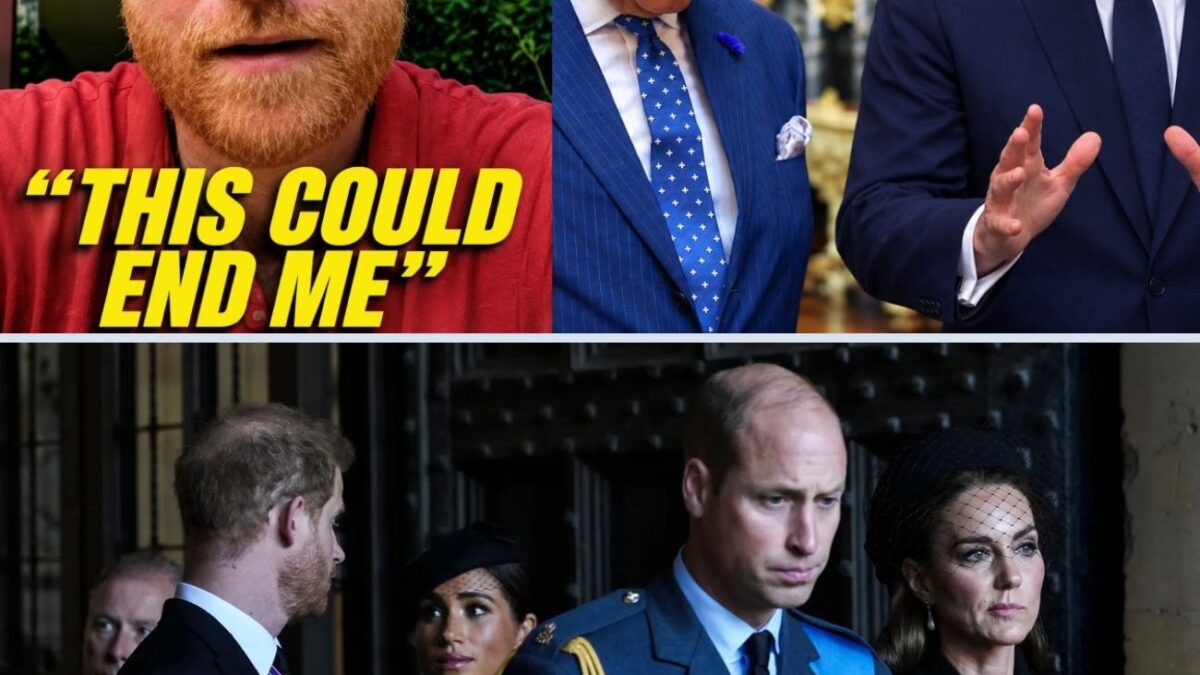
Anatomy of a Palace Crisis: The Clock is Ticking on King Charles’s Weakest Hour
Behind the gilded gates of London and the sun-drenched corridors of Montecito, a quiet, terrifying countdown has begun. When Prince Harry and Meghan Markle packed up their lives and returned to British shores at the tail end of August, it was packaged for the global press as an olive branch—a weary son seeking solace, a father battling cancer, and an innocent desire to let grandchildren reconnect with aging roots. But beneath the carefully choreographed PR veneer, the reality playing out across both sides of the Atlantic is far darker, far more calculating, and infinitely more dangerous to the survival of the British monarchy.
According to senior security chiefs, veteran royal commentators, and historians who have spent decades dissecting the anatomy of the House of Windsor, Harry’s return is not a homecoming; it is an opportunistic infiltration. With King Charles fighting illness and managing reduced medical treatments, and with Prince William standing like an unyielding wall at the gates of the future, the Sussexes have spotted what they believe to be a fatal window of vulnerability. They are circling a weakening crown, attempting to force a dangerous “half-in, half-out” arrangement before a far more ruthless reign slams the iron door shut forever.
And the alarm bells are no longer being rung by anonymous courtiers. The men who once took a bullet for the royal family are now stepping forward to demand that the King do the unthinkable: strip his own son of his titles, and he must do it today.
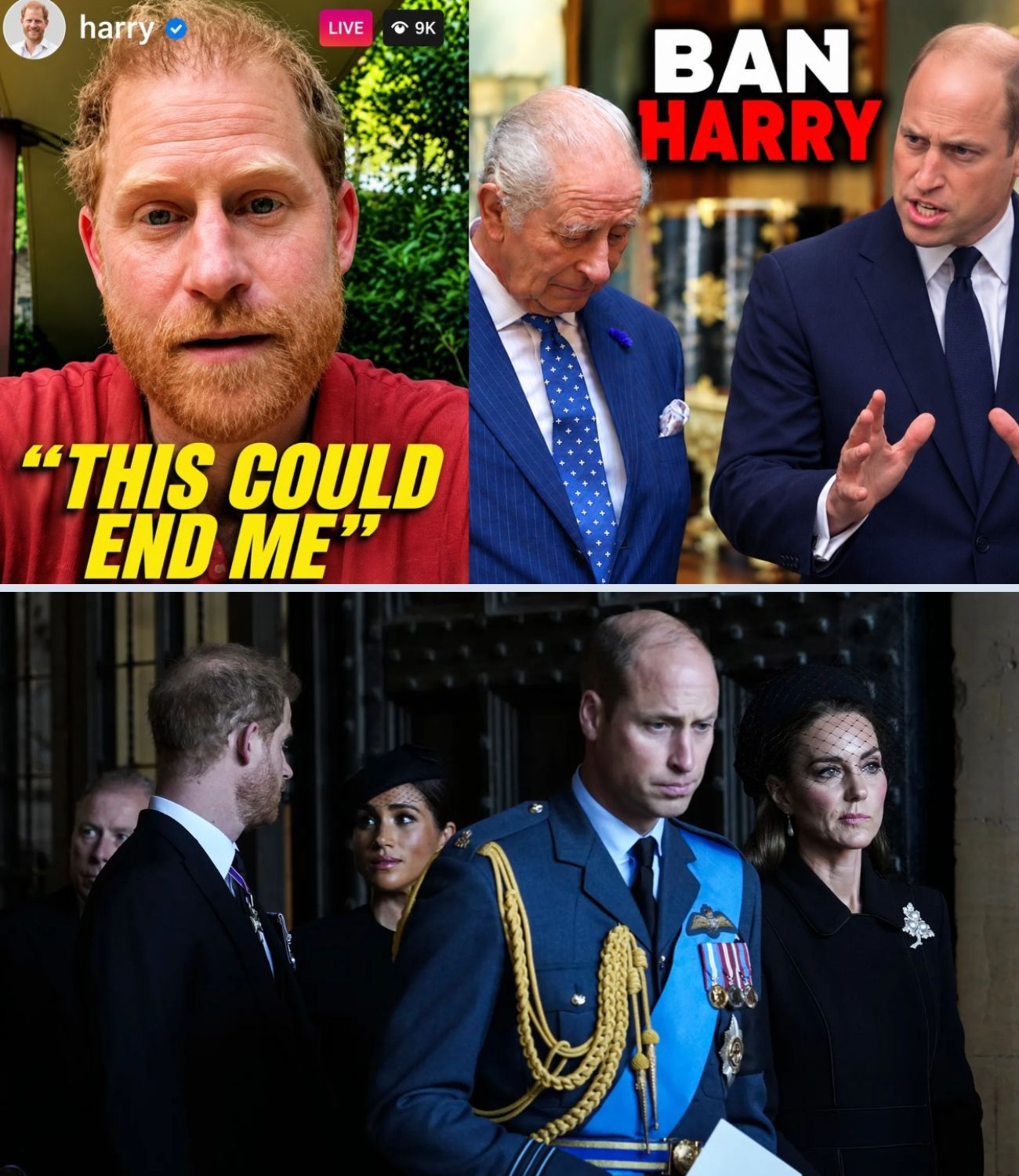
The Scotland Yard Warning: Why the Grief Must Land on the Father
To understand the sheer urgency of the current standoff, one must listen to the men who understand royal security better than anyone alive. Dai Davies spent years running royal protection at Scotland Yard, shepherding members of the Firm through public adulation and covert danger alike. When Davies looks at the current landscape, he does not see a heartwarming family reunion. He sees a manipulation of an elderly, ailing monarch.
Speaking candidly on the unfolding crisis, Davies dismantled the narrative of Harry’s benevolent return with clinical precision. As far as official records show, the prince who flew across the ocean demanding reconciliation has made no meaningful effort to privately visit his father. Instead, his return has been marked by high-profile public appearances, orchestrated crowds, and walkabouts that look remarkably like a rival royal court setting up shop on British soil.
Davies issued a stark, public challenge to the monarch, arguing that the burden of discipline cannot be kicked down the road to the next generation. If King Charles attempts to shield himself from familial fallout by leaving the dirty work for his eldest son, he is committing a catastrophic strategic error.
“The first thing I would do if I was a strong king is not to put this on the future king, William. I would take action now because then I would get the grief and not my son,” Davies warned bluntly.
It is a chilling calculus. If King Charles acts now, the public backlash falls upon a father dealing with an errant son. But if he stalls, hesitates, or hides behind a wall of polite administrative silence, that burden transfers directly to Prince William the moment he ascends the throne. And William, as insiders well know, has zero intention of tolerating passenger status, gossip, or external sabotage.
The Ghost of 1936: History Repeats Itself in Downing Street and Windsor
History rarely repeats itself without a sense of grim irony. To historian Andrew Lownie—author of definitive exposés on Edward VIII and Prince Andrew—the playbook Harry is running today is lifted almost verbatim from the darkest chapters of royal history.
When Edward VIII abdicated the throne in 1936 to marry Wallis Simpson, an American divorcee, his family spent the remainder of his life keeping him at arm’s length. Yet, following the Second World War, the exiled Duke of Windsor returned to Britain expecting a prominent role. Convinced that his brother might die early, Edward envisioned himself stepping in as a regent, exploiting a weakened establishment to claw his way back into the machinery of power.
Lownie notes an eerie parallel in how Harry views his father’s current medical battles. Just as Edward and, later, Prince Andrew viewed reigning monarchs as weak figures ripe for exploitation, Harry sees an aging, cancer-stricken King Charles as an open door.
“They all see an opportunity to use the king and take advantage of him before I suspect a more ruthless reign,” Lownie observed during a panel breakdown. The parallels are staggering. Decades ago, Edward complained bitterly that his family did not understand him, that he was badly parented, and that his siblings were terrible. Today, Harry echoes those exact sentiments through tell-all memoirs, television interviews, and calculated media leaks.
And they are not operating in a vacuum. Figures like Sarah Ferguson have similarly drifted back into the orbit of Sandringham and royal estates, blurring the lines between private enterprise and royal proximity—promoting commercial products one week and attending family gatherings the next. It is the insidious creep of the “half-in, half-out” model, designed to monetise a royal surname while discarding its duties.
The Title Trap: Why Stripping the Dukedom Might Backfire
Yet, demanding that the King pick up a pen and strip Harry of his titles is far more legally and constitutionally complex than armchair commentators realise. According to the late Queen Elizabeth’s former press secretary—a man who spent decades speaking for both the sovereign and Charles himself—taking titles away requires a legally defensible reason. Unlike Prince Andrew, whose catastrophic fall involved police investigations and formal legal disgrace, Harry’s offenses—writing cash-grab books, granting explosive interviews, and whining on global television—are profoundly ugly, but they are not crimes.
Furthermore, Harry was born a prince of the blood; no monarch can erase birthright. That leaves the Dukedom of Sussex as the only tangible target. But herein lies a devilish trap that virtually nobody shouting for blood has considered.
If the King strips Harry of the Sussex dukedom, what happens to Meghan?
According to constitutional protocol, stripping the ducal title does not render her plain Mrs. Harry. In strict historical and legal practice, she would revert to being styled as Princess Henry of Wales (or Princess Meghan in the American vernacular).
Consider the sheer irony of that headline. The very punishment the British public is screaming for could inadvertently hand the Duchess of Sussex the exact shiny, regal title America has been calling her all along. Do the British people really want to swap a Duchess for a Princess? The palace is acutely aware that executing a clumsy stripping of titles could backfire spectacularly, transforming a perceived demotion into a triumphant American re-branding.
The Denmark Blueprint and the Palace’s Silent Strategy
If a direct, headline-grabbing stripping of titles carries too many political and legal landmines, how can the Crown neutralize the threat? Lownie points to a quiet, elegant precedent established across the North Sea by Europe’s modern bicycling monarchies.
When the Queen of Denmark stripped four of her own grandchildren of their royal titles with a single sweep of a pen, she did not frame it as a petty punishment or a family feud. She framed it as a sweeping administrative reform designed to slim down the monarchy for the modern age.
A similar maneuver in Britain—removing working royal status and titles from anyone who is not an active, frontline servant of the Crown, including peripheral figures like Beatrice and Eugenie alongside Harry and Meghan—would completely defang the Sussexes. It would be executed as a cold, bureaucratic modernization rather than a targeted vendetta, rendering any claims of personal victimhood utterly hollow.
Yet, why hasn’t the palace picked up the pen?
Because, for now, the strategy operating out of Buckingham Palace is one of icy, deafening silence. The King’s office formally codified their status in September by declaring them to be private citizens. No royal funds, no official transport, no diplomatic cover, and no institutional endorsement. The late Queen made her definitive ruling during the historic Sandringham summit in January 2020: you cannot commercialize the crown while abandoning its service. King Charles has simply reinforced those ironclad boundaries.
William’s Wall: Why the Heir to the Throne Will Show No Mercy
While King Charles navigates the delicate tightrope of fatherhood and constitutional duty, Prince William is looking toward the horizon with unshakeable clarity. The crown William will inherit is not an inheritance of sentimentality; it is an institution of service, survival, and absolute trust.
And trust is precisely what has been entirely incinerated. As royal journalists note, no one in William’s inner circle can sit across a table from Harry anymore without the persistent, paralyzing fear that every private conversation, every shared sentiment, and every family nuance will be beamed directly into an American podcast or transcribed into a forthcoming paperback chapter.
William’s priority is singular: protecting his wife, Catherine, shielding his children, and safeguarding the future of the British monarchy. The attacks launched by the Sussexes did not merely bounce off palace walls; they struck at the heart of the royal family during its most fragile moments. When William becomes king, there will be no space for passengers, no patience for manufactured drama, and zero tolerance for gossip. The slimmed-down monarchy he envisions is razor-sharp and fiercely protected.
The Ticking Clock on Two Windows
As the autumn rain dampens the pavements of London, the entire crisis boils down to a race against two closing windows.
Harry’s window is his ailing father. He is pressing his advantage now, trading on emotional guilt, family duty, and the spectacle of a sick king, hoping to carve out a permanent foothold before the guard changes.
The King’s window is right now—today—while it is still his name inscribed upon the sovereign papers, and not his son’s.
Dai Davies’s plea echoes across the kingdom with stark clarity: get some backbone, shoulder the grief as a father, and protect the future of the crown so that William does not have to inherit a toxic battlefield. The British public is utterly exhausted by the endless soap opera of self-serving grievances. They are waiting for the final gate to lock from the inside.
The warning has been issued, the legal parameters are drawn, and the clock is ticking down to the final second. When the ultimate transition of power arrives, the illusion of the royal soap opera will meet the unyielding wall of British reality. And as history has repeatedly proven, when unearned entitlement collides with institutional duty, the crown always wins.
You Might Also Enjoy

“We Thought They Would Negotiate”—What Argentine Soldiers Said When The British Attacked Goose Green

“You’ll Never Finish My Ruck March, Limey” — US Sergeant Who Challenged the SAS, Then Fell Out First






