He Called the SAS Part-Time Pub Soldiers. Then They Cleared His Shoot House Faster Than His Team.
“They’re part-time pub soldiers, weekend warriors with better accents. Send them in first and we’ll see how long the accents last.”
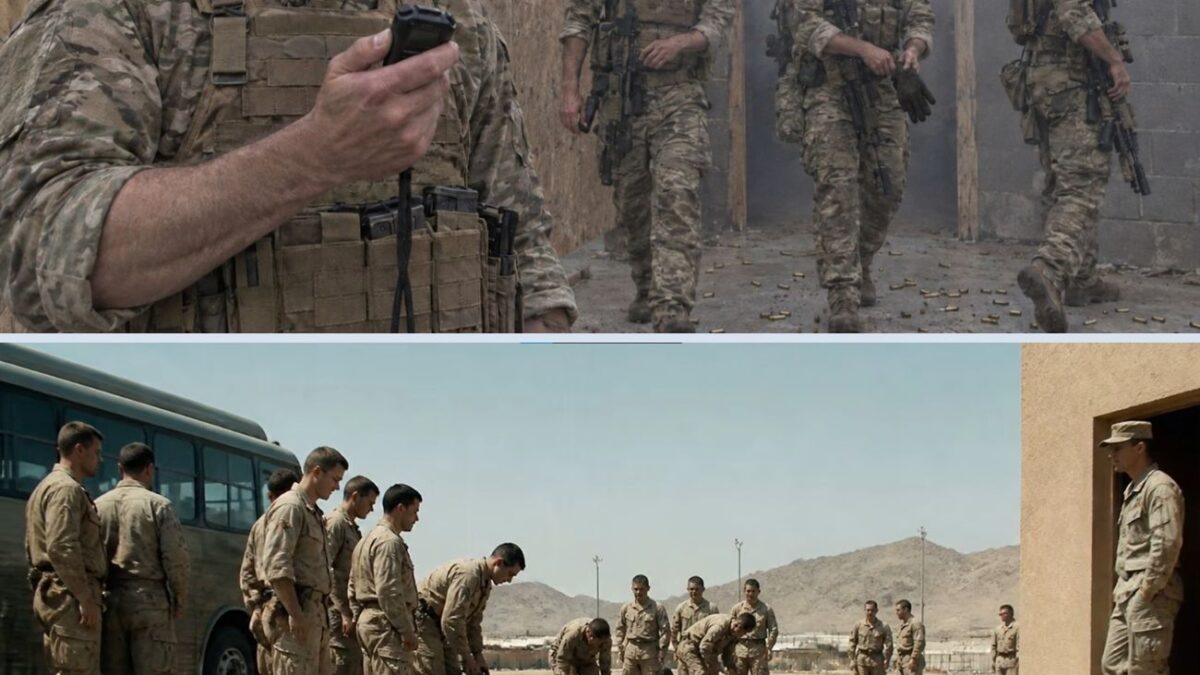
Sergeant Major Dalton Reese said all of it in one breath in a briefing room in the American Southwest in the spring of 1998 with a door propped open and 19 other men inside it to hear him say it. He said it loud enough that the colonel in the second row did not pretend not to hear. He said it slow enough that the two British officers at the back of the room could count the words. He said it with a stopwatch on a black lanyard tapping against the front of his shirt. And he smiled on the last syllable the way a man smiles when he is already sure of the answer. Three of his own instructors laughed. One of them, the quiet one in the corner, did not. The British major at the back opened a green notebook on his knee and wrote something left-handed down the margin and did not look up. He would remember saying it. He would be made to. He had meant it. He had not said it to be clever. He had said it the way a man says a thing he has believed for a long time and is now finally getting to say to the faces it concerned. He had said it in the room he had built with his own hands, a room with a glass gallery along one wall and a 12-room concrete house on the other side of that glass and a scoring loft above it where every time any team had ever run that house had been written down in grease pencil for 19 years. He knew his own numbers. He knew what fast was. He had never been shown faster and he had decided, before the British had taken off their rucksacks, what the British were. He had said no team of theirs would clear his primary house inside his own house record. He had said it twice. He had said it to the colonel and he had said it to his own number two and he had tapped the stopwatch against his sternum the way a man taps a Bible, and the stopwatch had tapped back. By last light, the stopwatch would be in another man’s hand. The number on the board would not be his number. The man in the tan cap at the edge of the strip would be looking down at the device he carried on his chest, and his mouth would be slightly open, and nothing would be coming out of it. And the men he had called pub soldiers would be walking past him with their weapons slung and their hearing defence around their necks, not one of them meeting his eye because they did not need to. He had said it in front of 19 men. He was about to be proven wrong in front of all of them.
Dalton Reese was not a fraud, and that is the thing to understand before you watch him fall. He was 19 years in. He had come up through the 75th Ranger Regiment and been selected into 1st Special Forces Operational Detachment Delta before he was 26. He had two Silver Stars, one of them from a street in Mogadishu that other men do not talk about, and he did not either. And a Bronze Star with a V Device from somewhere else that no one wrote down. He had rebuilt the facility’s close quarter programme after an accident on the old range in ’92, and the 12-room house on the other side of the glass had been drawn on graph paper on his kitchen table by his own hand. He had timed every team that had ever walked through its front door. He knew the geometry of every room. He knew where the light fell at 10:00 in the morning and where it fell at 4:00. And he had designed the primary house so that one of those two angles was always wrong for the stack. He was, by any measure anyone in his own army would recognise, exactly what he was being paid to be. And he had seen a lot of foreign liaison visits. He had seen national units arrive with cameras instead of ammunition. He had seen a European reconnaissance team shoot his primary house in 6 minutes 40 and leave two of their shoot no shoot targets scored as hits on civilians and go back to their embassy for lunch. He had, in his own private accounting, decided that the word elite was mostly a passport stamp. When the signal came through that 22 men from G Squadron of the Special Air Service were coming through on a 2-week close-quarter exchange. Their officer, a major, their senior non-commissioned officer, a Welsh staff sergeant with no decorations he could see on the file. He had read the file and looked up and said to Master Sergeant Caleb Varga,
“Pub soldiers.”
Varga had written it down in pencil because he hated having to score through ink and had not answered.
The briefing room was long and narrow and had bad air conditioning. Reese stood at the front with the stopwatch on its black lanyard tapping against his sternum. Colonel Harlan Beauchamp sat in the second row with his sunglasses still on because he had worn them in from the car and had not thought to take them off. Major Edmund Hollis and Captain Marcus Quill sat at the back. Hollis had his green notebook open on his knee, the spine broken flat so the pages lay down the way he liked them, and a pencil held left-handed. Quill had two pens in his breast pocket because he had lost one at Sandhurst in 1989 and had decided, in a way he would never explain, that he would not be caught short again. Reese ran through the 2-week programme, range familiarisation on day one, static shoot on day two, walk-throughs of the primary house on day three, a timed run on day four.
“A timed run,”
he said,
“against our house record, which stands at 3 minutes 9 seconds, set by Sergeant First Class Troutman and his team 18 months ago in this facility.”
He tapped the stopwatch against his chest. He said it twice. He said it the way a man says a thing he does not expect to be contradicted. Then he said the sentence that would be in Hollis’s notebook that night and in a US Army after-action report six months later. He said the pub soldiers line in full and he said it slowly. Three men laughed. Beauchamp behind the sunglasses did not laugh and did not stop it. Trautman in the corner did not laugh. Varga wrote something in pencil. Hollis did not look up from the notebook. Quill looked at Hollis and Hollis did not look at him. And so Quill looked at his own hands. The thing Beauchamp said next was the pivot that none of the Americans in the room understood yet. He said,
“Fine. Then they run the house day four timed in front of the facility.”
He said it mildly. He said it the way a man says a thing he has decided on. Reese grinned because he had been handed what he wanted and tapped the stopwatch twice against his sternum and the stopwatch tapped back. Hollis at the back closed the notebook with his left hand and put the pencil behind his ear. He did not say anything in the briefing room. He did not say anything in the corridor afterwards. He said one thing in the car park to Price who was waiting there with the boiled sweet in his cheek. And what he said was,
“They want us on day four.”
Price swallowed the sweet.
“Good,”
he said.
That was all either of them said about it that night.
The facility sat in the dry country west of the mountains, a flat scrape of hardpan with a cluster of low concrete and plywood buildings in the middle of it and a single tarmac strip running out to a hangar at the far end. The 12-room primary house was the heart of it. Three corridors, two staircases, a central hub room with four doors, a cellar fitted with a mock stairwell, and a long side room built narrow on purpose so that two men abreast could not comfortably work it. A glass gallery ran down one long wall at head height so that observers could watch any team through any room. And above the gallery, a scoring loft held the clock and the grease pencil board where every team’s run time had been written down for 19 years. Reece had drawn it on graph paper at his kitchen table. The house, in 1998 dollars, had cost more to build than the regiment’s entire training budget for the year it opened. And that is the only time that number is going to come up.
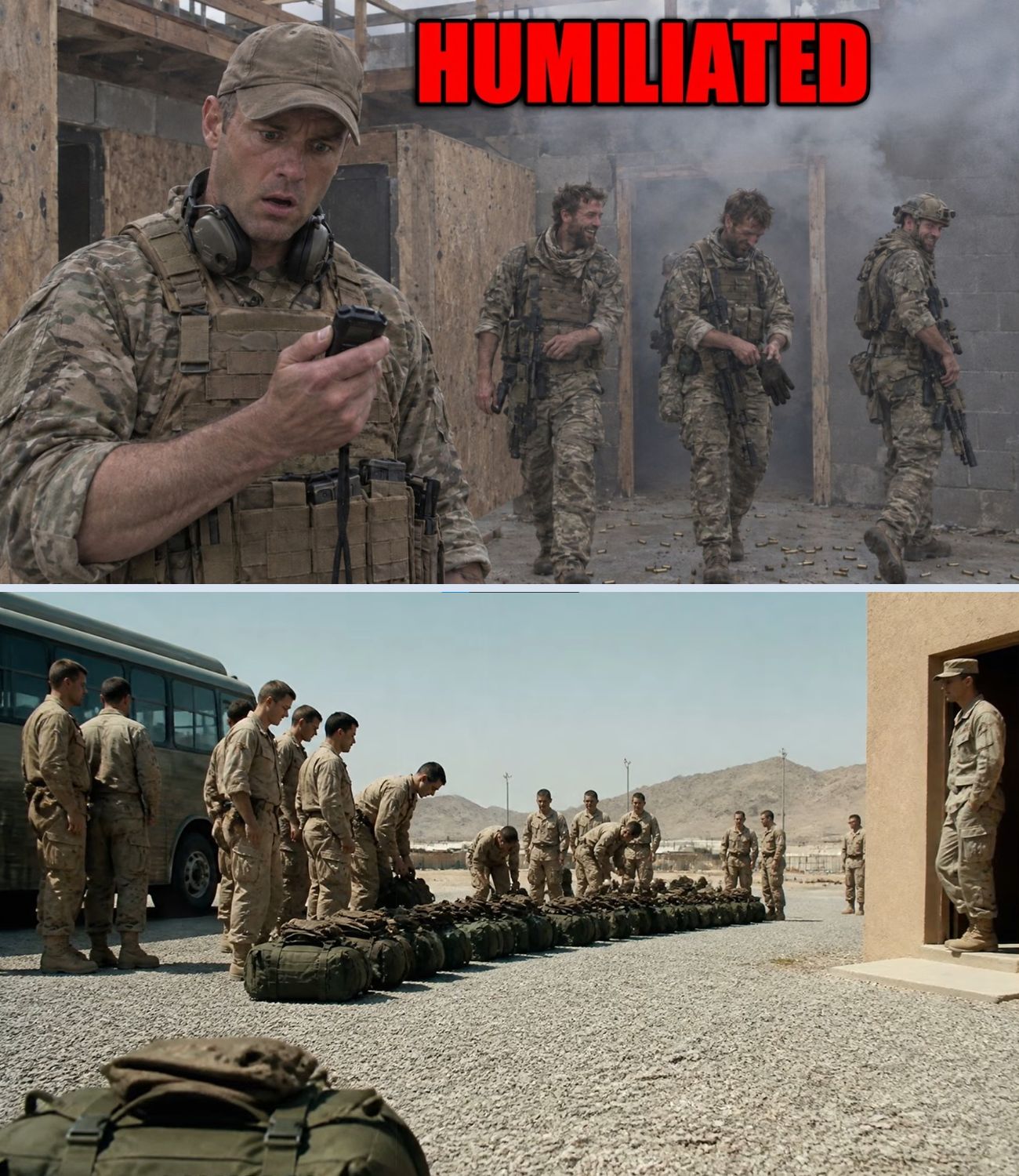
The British came in on day one on a bus from the airfield. 22 men, no camera, no dress uniform. Bergens off, stacked by the admin tent in a straight line because Price had put the first one down straight, and the rest had followed. Belt kits on top of the Bergens, weapons in cases, L119A1 carbines, the Diemaco guns the regiment had settled on, with suppressors in separate pouches, Glock 17 side arms in the belt kit. Staff Sergeant E1 Price stood at the end of the line with a boiled sweet in his left cheek and did not speak. He never spoke until he had swallowed the sweet. The Americans on the gallery watching the arrival through the window took that for shyness. It was not shyness. It was that Price had worked out a long time ago that a man who is sucking a sweet cannot say anything stupid. Sergeant Ross Kieveney, the breacher, sat on his Bergen and taped his wedding ring to the inside of his helmet with a short strip of green cloth tape. He did it the way other men lace boots. Corporal Niall Faulkner opened a weapon case and took out a toothbrush, a soft one, grey bristled, that he had carried through selection in 1991, and ran it through the receiver of his rifle before he had even said hello to the American armourer. Trooper Brennan Shaw, 24 years old, 2 years badged, patted his left thigh pocket twice, where the sealed plastic bag held his mother’s rosary, and did not look at anyone when he did it. None of this was for show. None of it was visible from the gallery as anything other than men unpacking.
Day three was the cold walk-through. No ammunition. No clock. Hollis took the brief in the loft from Reese, who ran through the primary house with his stopwatch tapping on his chest, and then Reese and Varga and Troutman and the colonel in his sunglasses went up to the gallery to watch. Price took the stack through the door. Four men. Price, Kieveney, Faulkner, Shaw. They moved slowly. That was the thing Reese noticed first and could not account for. They moved so slowly through the first corridor that Varga beside him muttered,
“Is he hurt?”
Reese did not answer. He was watching Price. Price did not sweep his muzzle through doorways he was not about to enter. He did not call corners that the man behind him had already called. He did not step across the back of the man in front of him. When he reached the hub room and the four doors inside it, he stopped, fully stopped, for the length of one breath, and then the stack went through all four doors in a sequence that nobody above the gallery had seen signalled. There had been no signal. The sequence had been in the brief. Each man knew which door was his and in what order. Nobody called it twice.
“They’re walking,”
said Reese on the gallery, and he said it in the voice of a man who has decided what he is looking at.
“They’re walking it. They’re not even running.”
Varga did not say anything. Varga had seen it. Varga had seen that in 40 metres of corridor, nobody’s weapon had crossed another man’s back, that Price had reloaded coming out of the second doorway without anybody, including Varga, who was looking for it, hearing a magazine drop, and that Shaw, the youngest man, had cleared the narrow side room on his own from the hip without snagging his sling once on the frame that Reese had built narrow on purpose. Varga wrote something in pencil in a notebook he kept in his back pocket and did not share it. Up in the loft, the clock had not been running. Reese would say later that he had not thought to start it because it had been a walk-through. That was not quite true. He had not started it because he had looked down at Price and decided that whatever the stack was doing, it was not something that needed timing. He had seen slow men before. He had never seen slow men who were about to be fast.
“Slow is smooth,”
said Hollis, down in the gallery doorway to nobody in particular, closing the green notebook on his thumb.
“Smooth is fast.”
He said it the way a man says a thing he has said so often he does not hear himself saying it anymore. Reese, on the gallery two floors up, did not hear him. Varga, closer, did and wrote that down, too.
By the end of day three, the Americans had decided among themselves what the British were. They were careful. They were polite. They moved like men who had been told, somewhere, not to break anything. The stopwatch on Reese’s chest tapped twice against his sternum when he walked back to his office, and the stopwatch tapped back, and Reese told Varga, in the doorway,
“Three nines stands. They won’t touch it.”
Varga, who had seen the reload nobody heard, said,
“Yes, Sergeant Major.”
He did not say the rest of it. He had been in the room long enough to know that there were things you did not say to a man who had already decided.
Day four opened cold and clear. The British were on the 100-metre range at 6:00 in the morning because they had asked to be. The American range officer, a staff sergeant called Petrie, whose job was to run cold zeros on visiting weapons, had set out six steel plates at 100 metres and six paper figures at 25, and he had expected, as he told Varga over coffee,
“A bit of a shambles, honestly. You know how foreign guns are.”
He had set out two spare plates in case anybody wanted to brag. Price lay down on the 100-metre firing point with a boiled sweet in his left cheek and did not speak. He had the L119A1 on a folded jacket. He had the sweet because he was going to shoot and because he was not going to speak until he had swallowed it. He put five rounds into one plate, no suppressor, in the time it took Petrie to walk back from the butts and stand up straight. The plate rang five times. Petrie stopped. The men behind Price, Kieveney, Faulkner, Shaw, six others, did not look at the plate. They were already loading their own.
“Group,”
said Petrie into his radio,
“up to the loft. 100 metres. Plate one. Call it.”
The call came back after a long pause.
“Five rounds. One hole, centre of mass. One hole, Petrie, I’m telling you.”
Price swallowed the sweet.
“Zeroed,”
he said.
It was the first word he had spoken on the range that morning. He stood up and walked off the firing point, and the next man lay down. Reese in the loft was looking at the plate through the spotting scope and he was not saying anything. One hole was not possible at 100 metres with iron sights and a cold barrel except that one hole was what he was looking at. He adjusted the scope. The hole did not move. He adjusted it again. The hole was still a hole. Varga, behind him, said nothing. Varga was writing in pencil in his back pocket notebook. Trautman in the corner of the loft was looking at Varga’s hands and not at Reese’s face.
“Lucky,”
said Reese after a long time taking his eye off the scope.
“First one of them, lucky.”
The second one was Faulkner. Faulkner put six rounds through the second plate in a group a man could cover with a two-pence coin. The third was Kieveney who put four through the third plate and a fifth deliberately low because the plate was hung on a single hook and the low round rang it a second time off the backstop and made it swing and Kieveney looked up at the loft and did not smile. The fourth was Shaw, the youngest man who had the rosary in his left thigh pocket. He put five rounds through the fourth plate in a group that was smaller than Faulkner’s. He was 24 years old. He had been on the regiment 2 years. He stood up and walked off and did not look at the loft at all. By the sixth plate, Reese was no longer saying “Lucky.” He was not saying anything. He had stopped tapping the stopwatch against his chest. Varga, beside him, closed the notebook and put it in his back pocket and said, carefully into the quiet of the loft,
“Sergeant Major, that’s seven for seven. First round cold. No warm-up.”
“I can count, Varga.”
“Yes, Sergeant Major.”
The thing nobody on the loft was willing to say out loud Varga would write down in pencil that night, is that none of the Brits had reloaded on the firing point, and nobody above the loft had seen a magazine drop. In fact, Price had reloaded. Price had reloaded going from the five-round group to the zero check, and dropped the first mag into his dump pouch mid-stand, swapped a fresh one in before his heel had touched the dirt behind the firing point, and had done it without the sound of the mag release reaching the loft. Varga had been listening for it. Varga had not heard it. Varga had been in close-quarter rooms with Delta operators for 11 years, and he had never not heard a reload. He wrote that in pencil. He underlined it once.
Down below, Price walked back past the admin tent with the empty case of his first magazine already stripped and dropped into his Bergen’s side pouch, and did not say anything to anybody. Hollis, standing by the tent flap with the green notebook open on his forearm, did not say anything either. He wrote, left-handed, down the margin, “Seven for seven cold.” He did not write anything about the reload. He had not needed to see it to know Price had done it.
Colonel Beauchamp took his sunglasses off for the first time all week. He put them in his breast pocket. He said to nobody and to Reese both,
“The timed house is at 1400.”
He did not say the rest. He did not need to. Reese was still looking at the plates through a scope that would not make the holes any smaller. Reese tapped the stopwatch once against his sternum out of habit, and this time the stopwatch did not seem to tap back. He glanced down at it. It was the same stopwatch. He put his hand over it. That was the first time that day he would be wrong. It was not going to be the last. The part-time crack, as Varga would come to call it in a sentence he would never say in Reese’s presence, had cost Reese nothing at 9:00 the morning before, and it was going to cost him something now, incrementally, through every event the house ran that day, until it cost him the house record itself. He did not know that yet. The men who were about to do it to him did not need him to know yet.
Here is the question the room was holding without saying it. How badly, exactly, was the man with the stopwatch about to be made to eat the sentence he had put in the air the morning before? Not whether. By 4:00 on day four, the weather was gone. The weather had died on the 100-metre range at a quarter past six. The how badly was still open, and the how badly was what the afternoon was for.
The noise room was Reese’s. He had built it himself after a trip to a European counter-terror course in ’94, where he had decided their stressor drills were not stressor enough. The noise room was a single 6×4 plywood box with a mock hostage, three shoot no shoot targets, and four speakers in the ceiling wired to a mixing board in a side cupboard. The mixing board held tracks of recorded gunfire, screaming, a baby crying, a woman shouting in Arabic, and the low industrial grind of a cement mixer. All four played at once at a volume that made the plywood walls hum. The lights were on a dimmer. The dimmer was on a cycle. The cycle was random. A team entering the noise room was expected to clear three targets, extract the hostage, and come out with no round on the wrong figure. Delta’s own standing time through the noise room was 41 seconds. The best foreign team Reese had ever run through, it had taken a minute 52 and put a round in the hostage.
Trautmann’s team ran it first that afternoon as a benchmark because Reese wanted the Brits to see what the number looked like. Trautman went in with three men, 44 seconds. No round on the hostage. Two of the three shoot no shoot targets correctly scored. One scored as a hit on a civilian, a woman in the Arabic recordings language, as it happened, which Reese took as a hazard of the design and not of the shooter. Varga wrote 44. Beauchamp, sunglasses still off, nodded once. Reese tapped the stopwatch against his chest.
Price swallowed a boiled sweet in the corridor outside the noise room and walked in with Kievaney, Faulkner, and Shaw. Four men instead of three. Reese had asked and Hollis had answered,
“We work in fours.”
And that had been the end of the conversation. Hollis stood in the gallery with the green notebook closed. Varga stood at the mixing board. Varga did not touch the dials. Varga had been told not to touch the dials by Reese, who wanted the Brits to get the same tape at the same volume Trautman had got. And Varga had agreed with his face and left the Arabic woman on the loudest channel. The dimmer went to black for a count of two and came back.
Price went through the door. 28 seconds. No round on the hostage. Three shoot no shoot targets correctly identified and only two engaged because the third had been Kievaney’s. And Kievaney had seen through the strobe that the figure’s right hand was empty and had held his trigger. Had held it the whole way through the clear. Had come out of the room with the round still unfired and had stripped the magazine out at the door and put it in his dump pouch without looking down. Faulkner had extracted the hostage. Shaw had come out with the sweet already in his cheek again. 28 seconds.
Varga wrote it. Varga said it up to the loft into his radio.
“28 clean. One round saved.”
“Say that again,”
said Reese.
“28 Sergeant Major. Clean sheet. Breacher held his round.”
Reese was quiet for the length of three breaths.
“They’ve been through this before,”
he said.
“Someone’s shown them the room.”
Nobody had shown them the room. Varga knew nobody had shown them the room. Trautman in the loft knew nobody had shown them the room because Trautman had asked Price two days before whether they wanted a walk-through of the stressor drills and Price had taken the sweet out of his cheek to answer and had said,
“No, Sergeant First Class. Thank you.”
and had put the sweet back in and said nothing else.
The schoolgirls, Reese had called them in a sentence that was by now the pub soldiers, he had called them loud enough that half the facility had heard it. And the number on the board next to the noise room read 28 seconds and underneath that was the 44 seconds Trautman had put up 30 minutes before and underneath that was the house’s standing noise room record of 41 seconds that Reese had set himself in ’96 with a team of his own picking and nobody in the loft was looking at anybody else in the loft. Hollis wrote in the margin of the green notebook, “28 clean.” He wrote it the way a man writes a shopping list.
Down in the corridor, Price said one thing to Shaw who had come out with the back of his neck wet. Price said,
“All right?”
Shaw nodded. Price said,
“Good lad.”
That was the whole conversation. Hollis in the gallery closed the notebook with his thumb inside it to keep the page. The ratchet for Reese had moved another click. He did not say anything out loud. He put his hand over the stopwatch because he had noticed now that he was tapping it, and he had decided, the way men decide these things, that he was not going to tap it anymore.
Reese added a night serial that nobody had asked for. He added it at 20 past 4:00 in the loft after the noise room board had been written up and nobody had wanted to look at it. He added it the way a man who has lost one argument moves immediately to a different one. The night serial would be the cellar, he said. The cellar stairwell on night vision suppressed live. Trautman’s team had been through the cellar on night vision four times and had never gone under 2 minutes 40. Because the cellar stairwell was a double dogleg with a false landing that Reese had built for exactly this purpose. Nobody above the gallery was expecting the Brits to be shown the cellar on day four. Reese told Varga to tell them.
Price swallowed a sweet in the admin tent at 2200. He put a fresh one in. He did not speak. Kievaney taped the ring to the inside of his helmet, tapped the helmet twice with his gloved knuckle because he always did, and put it on. Faulkner ran the toothbrush once along the top of his bolt carrier and put the toothbrush in his breast pocket. Shaw put his hand flat over the left thigh pocket, three fingers through the fabric, and did not look at anybody while he did it. They screwed suppressors on. They dropped night vision. They walked in a line across the hardpan to the cellar door, where Hollis was waiting with the green notebook and did not say a thing to any of them except Price, to whom he said one word, which was
“Right,”
and Price nodded.
Reese was in the loft on the thermal feed because the gallery was no use on night vision. Varga was beside him. Trautman was in the corner with the clock. The clock was Varga’s clock, not Reese’s. Reese had, at some point in the afternoon, not put the stopwatch back on. The lanyard was there. The stopwatch was in his breast pocket. Nobody had asked.
The British went through the cellar door at 2 minutes past 2300 and were in the stairwell before the first beat of the thermal picture had resolved. The thermal picture resolved into four shapes moving in a line down a dogleg that was supposed to break a stack. The stack did not break. Price took the first dogleg. Kievaney took the false landing, stepped onto it with his left foot, saw the drop, did not stop, pivoted off his right, and the stack flowed through him like water through a slot. Faulkner cleared the first cellar room, which contained two shoot targets and one shoot no shoot in a chair with a pillow in its lap that Reese had put there in ’96 to see who would shoot a sleeping man. Faulkner did not shoot the sleeping man. He did shoot both standing figures. Shaw cleared the second cellar room, which contained a mirror. The mirror was Reese’s cruellest piece. More men had shot their own reflection in that mirror than had cleared the stairwell cleanly. Shaw saw the reflection. Shaw did not shoot. Shaw cleared the room past it and came back on Faulkner’s shoulder in time to take the back angle of the third room, which was Price’s.
The thermal feed showed them come out of the cellar door into the hard pan 1 minute 51 seconds after they had gone in. Varga was holding the clock. Troutman was looking at Varga. Reese was looking at the thermal feed. Nobody in the loft spoke for a long time. Then Varga said, into the quiet,
“1:51. No hostage down. No reflection shot. Sleeping man alive.”
Reese did not answer. Reese was looking at the number through the thermal picture, which was now the picture of nothing because the four men who had gone in and come out of the cellar were already stripping suppressors in the dark outside, and nobody was moving the camera. Reese reached up to his chest to tap the stopwatch, and the stopwatch was not there. His hand closed on his shirt. He left his hand down. Varga wrote in pencil in the back pocket notebook, “Cellar 1:51. Clean on night vision suppressed.” He wrote under it, “The man who built the house has not spoken for 4 minutes.” He underlined that, too. Trautmann from the corner said,
“Sergeant Major, the primary house is at 10:00 tomorrow.”
Reese nodded. He did not look up. He had the Weekend Warriors line in his head. Varga would say later, in a room with no Brits and no Colonel in it, over coffee 2 months later, because of the way he was moving his lips without opening them, the way a man moves his lips when he is listening to his own sentence being read back to him, and understanding properly what the words meant. The primary house was in 11 hours. The number on the board would be by then a number Reese would not be able to argue with, and would not be the one calling.
Day five, 10:00 in the morning, the sun is high enough already to put the 10:00 shadow across the primary house exactly where Reese designed it to fall, and the dust in the hard pan is up to ankle height along the strip because a wind came in overnight, and nobody has swept. The gallery is full. The Colonel is there. The Colonel’s sunglasses are in his breast pocket. Varga is in the loft. Varga is holding the clock. The clock is Reese’s clock. Reese is on the strip at the edge of the primary house in a tan baseball cap, in a camouflage combat shirt, in a tan tactical vest with olive hearing protection around his neck, the stopwatch is on its lanyard against his chest. Reese is not touching the stopwatch. Reese is holding in his right hand a black ruggedised handheld device, the facility’s score tracker wired to the loft because Varga is holding the clock and Reese has to be holding something.
The stack sets outside the primary house door. Price swallows the sweet. Kievaney taps his helmet twice with his gloved knuckle. Faulkner has already put the toothbrush away. Shaw puts the flat of his hand on the left thigh pocket, three fingers through the fabric. Hollis, inside the gallery, closes the green notebook, turns it face down on the handrail, and puts his pencil behind his ear. Varga, in the loft, says,
“Set.”
Varga says,
“Three, two, one. Go.”
Price goes through the door. The stack enters the first corridor and does not slow. Price calls the right-hand room by not calling it. The man behind him takes it as his own because the brief has said so, because it was his door on the walk-through, because nobody is going to call a corner twice today. Kievaney takes the left. The two doors open to the same beat. Four rounds in the first room, two in the second. Both shoot targets down and the shoot no shoot in the first room. A child, Reese put a child in on purpose, standing untouched. The stack flows through. Varga, in the loft, is watching the clock and nobody else in the loft is watching the clock. They are watching the stack.
They come into the hub room, the four-door room, and they do not stop. On the walk-through two days ago, Price stopped for one breath here because the brief had told him to so that each man would set his door. Today the breath is already taken. The stack hits the hub room at a run and the four doors go in a sequence nobody above the gallery can pass except that the sequence is right. Kievaney goes left, Faulkner goes forward, Shaw goes right, Price behind them all takes the fourth door himself which is the one Reese designed with a mirror on the far wall. Price does not shoot the mirror. Price shoots the figure in the chair behind the mirror through the open corner of the mirror’s frame because he has worked out in the one breath he did not take where the figure must be if the mirror is where it is. The round goes through the open corner. Varga in the loft flinches.
The narrow side room is Shaw’s. Shaw goes in from the hip, his sling tucked his elbow in. He does not snag. He clears two shoot targets and does not engage the third because the third is a woman with her hands at her sides and he can see in the fractional light that falls at 10:00 in the morning through the window Reese built on the wrong wall that her hands are empty. He comes out backwards onto Faulkner’s shoulder. He is 24 years old. He has not spoken yet in the house. The cellar is Kievaney’s. They are through the cellar in 41 seconds. The sleeping man is still asleep. The mirror is still intact. Price’s suppressor hot now does not touch the plywood frame of the stairwell because Price has angled his body 6 inches off the dog leg the way he angled it on the walk through. The stack comes up out of the cellar and takes the last three rooms in a sequence that even Hollis in the gallery does not fully see. He hears it instead through the plywood the way a man hears a familiar piece of music through a wall. Each note where it should be and no note repeated.
The stack comes out of the primary house door. Price comes out last. He has the sweet in his cheek. He has already put a fresh one in. Varga says, into the loft radio, and his voice is level but not quite his voice.
“2 minutes 41 seconds, 12 rooms clean, no shoot no shoot engaged, no reflection shot, sleeping man alive, civilians intact.”
Trautman in the corner of the loft says, and this is the thing Varga will remember when he writes it down an hour later.
“Say it again, Varga.”
“2:41 clean.”
Varga walks to the grease pencil board on the loft wall, the board where every team’s run has been written down for 19 years. The standing record on the board reads 3:09, Trautman’s team, 18 months ago, in black grease pencil, in Reese’s own handwriting. Varga writes underneath it in his own hand, in black grease pencil, 2:41, he writes beside it. 22 SAS G. Skewen, S/Sgt. Price. He puts the pencil down on the shelf under the board.
Reese down on the strip has not moved. He is still holding the black handheld device. His mouth is slightly open. His eyes are wide. He is looking down at the device, at the number on the device, which is the same number Varga has just put on the board above him. The lanyard is around his neck. The stopwatch is against his sternum. His hand goes up to the stopwatch and stops short of it. His hand hovers there in the air, an inch from his own chest, and does not land. The accents, he had said, we’ll see how long the accents last.
The four of them came off the strip in the order they went in. Price first, Kievaney behind, Faulkner, Shaw. They walked past Reese on the hardpan. Price did not look at him. Kievaney did not look at him. Faulkner was already peeling the glove off his left hand to put the toothbrush back in his breast pocket because the toothbrush had moved during the run and had worked loose and he was looking at the glove and not at Reese. Shaw, the youngest who had not spoken in the house, walked past Reese with his hand still at his thigh pocket and his eyes forward. Not one of them met his eye. They did not need to. They had done the thing. The thing was on the board. They walked past and behind them the smoke from the primary house was still coming out of the second floor windows in slow plumes because the first floor to a British eye was still the floor above the ground and the hardpan was scattered with brass. Faulkner, past Reese, shifted the glove, adjusted his grip on the rifle and smiled, a small smile down at nothing, and kept walking. The man in the tan cap behind him was looking at the handheld device in his own hand with his mouth slightly open.
Reese walked up to the loft. He walked up the metal stairs slowly. He stood in front of the grease pencil board. He read the number. He read his own handwriting above it from 18 months ago, 309, and he read Varga’s handwriting under it, 241, and he read the words beside Varga’s number, which were 22 SAS G SQN S/Sgt. Price. He stood in front of the board for a long time. He did not speak. He put his hand up to the lanyard. He took the stopwatch off the lanyard. He put the stopwatch in his breast pocket. He did not look at Varga. He did not look at Trautman. He turned around and walked out of the loft. Varga, after the door closed, said to Trautmann in a voice that was not loud, but was not whispered either,
“That’s the fastest run this house has ever had.”
He said it the way a man names a thing because somebody has to. Trautmann nodded. Varga wrote in pencil in the back pocket notebook, “Fastest run of the house, 19 years.” He underlined it. He did not add anything else. He did not need to. “19 years of it” is what he thought, because that was how long the house had been standing, and that was how long Reese had been timing it. 19 years, and the man who built it was not looking at the board anymore.
Down in the gallery, Hollis opened the green notebook. He took the pencil from behind his ear. Left-handed, down the margin, he wrote the time. He wrote under it, “Clean.” He wrote nothing else. He closed the notebook. He put the pencil back behind his ear. He did not say anything to Quill, who was standing beside him with the two pens in his breast pocket. Quill did not ask. Quill had worked out by now that Hollis was not going to talk about it, and that there was nothing in the notebook that would mean anything to him if he opened it, because the shorthand was Hollis’s own, and only Hollis read it.
The after-action brief was in the same room the first briefing had been in. The air conditioning was still bad. Colonel Beauchamp sat in the second row with his sunglasses in his breast pocket. Varga read the morning’s figures off a clipboard. He read them in order. He read the primary house time last. He said,
“2 minutes, 41 seconds, 12 rooms, clean sheet, no shoot no shoot engaged, no civilian engaged, fastest run in the facility’s history.”
Reese was at the front. Reece was not standing where he had stood yesterday. Reece was standing by the door. The stopwatch was in his breast pocket. Reece did not speak during the brief. Reece was asked by Beauchamp whether he had anything to add to the figures, and Reece said,
“No, sir.”
That was all Reece said. Beauchamp nodded. Beauchamp said to the room, not to Reece, to the room,
“We’ll be inviting G Squadron back next year to run the full programme. I’d like the figures from this week included in the facility report. Sergeant Major Reece will prepare it. Thank you, gentlemen.”
Reece did not answer. He did not need to. He walked out of the briefing room ahead of everybody else because he was nearest the door, and he did not look at the back of the room where Hollis and Quill were sitting because he had worked out, finally, that there was nothing in that direction that was going to help him.
By last light, the primary house was empty. The smoke had gone. The brass had been swept. The grease pencil board in the loft still read 241 above the line that read 22 SAS G S Q N S/Sergeant Price. And underneath that was the old 309 that nobody had crossed out because nobody wrote over the record on this board. They only wrote underneath it. And the two numbers sat one above the other the way a verdict sits above an argument. The lights came on along the strip. The hardpan cooled. The wind dropped. Somewhere in the admin tent, a staff sergeant with a boiled sweet in his cheek was cleaning a rifle he would not need to clean again until morning. And a trooper with a plastic bag in his left thigh pocket was sitting on his Bergen and not saying anything because he did not need to say anything because the thing had already been said by the board.
He had said it in the briefing room on day one. He had said,
“They’re part-time pub soldiers, weekend warriors with better accents. Send them in first and we’ll see how long the accents last.”
He had been right about the accents. The accents had not changed. The accents had been exactly what they always were, flat Welsh, flat Yorkshire, flat London, flat County Down, and the men attached to them had cleared his house in 2 minutes 41 seconds in front of 19 witnesses, and nothing about any accent had lasted or not lasted. The accents were not the point. The accents had never been the point. The men were the point, and the man with the stopwatch had looked at the men and had seen the accents instead. Competence does not announce itself. That is the thing worth taking away from a hard pan in the American Southwest in the spring of 1998. It walks in slowly. It does not reload loudly. It keeps a sweet in its cheek until it has swallowed it. It writes the number on the board after it has done the thing, not before. And when it is called pub soldiers in a briefing room by a man with two silver stars and a stopwatch on a lanyard, it does not answer. It waits for day four. It clears the house. It walks past the man on the strip without looking at him because by then the looking has already been done, and the number is already on the wall. The man in the tan cap put the stopwatch in his breast pocket that afternoon, and nobody at the facility saw it on the lanyard again.
You Might Also Enjoy

“We Thought They Would Negotiate”—What Argentine Soldiers Said When The British Attacked Goose Green

“You’ll Never Finish My Ruck March, Limey” — US Sergeant Who Challenged the SAS, Then Fell Out First






