He Mocked the SAS for Being Too Old. Then the ‘Old Men’ Carried His Team Off the Mountain.
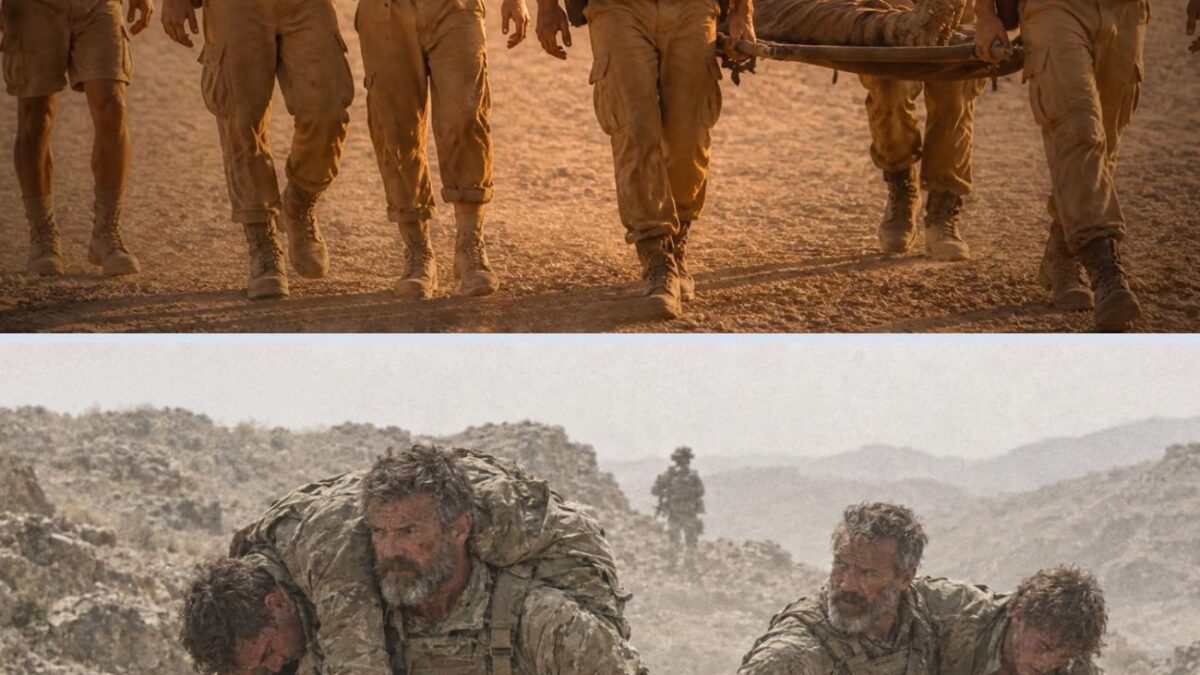
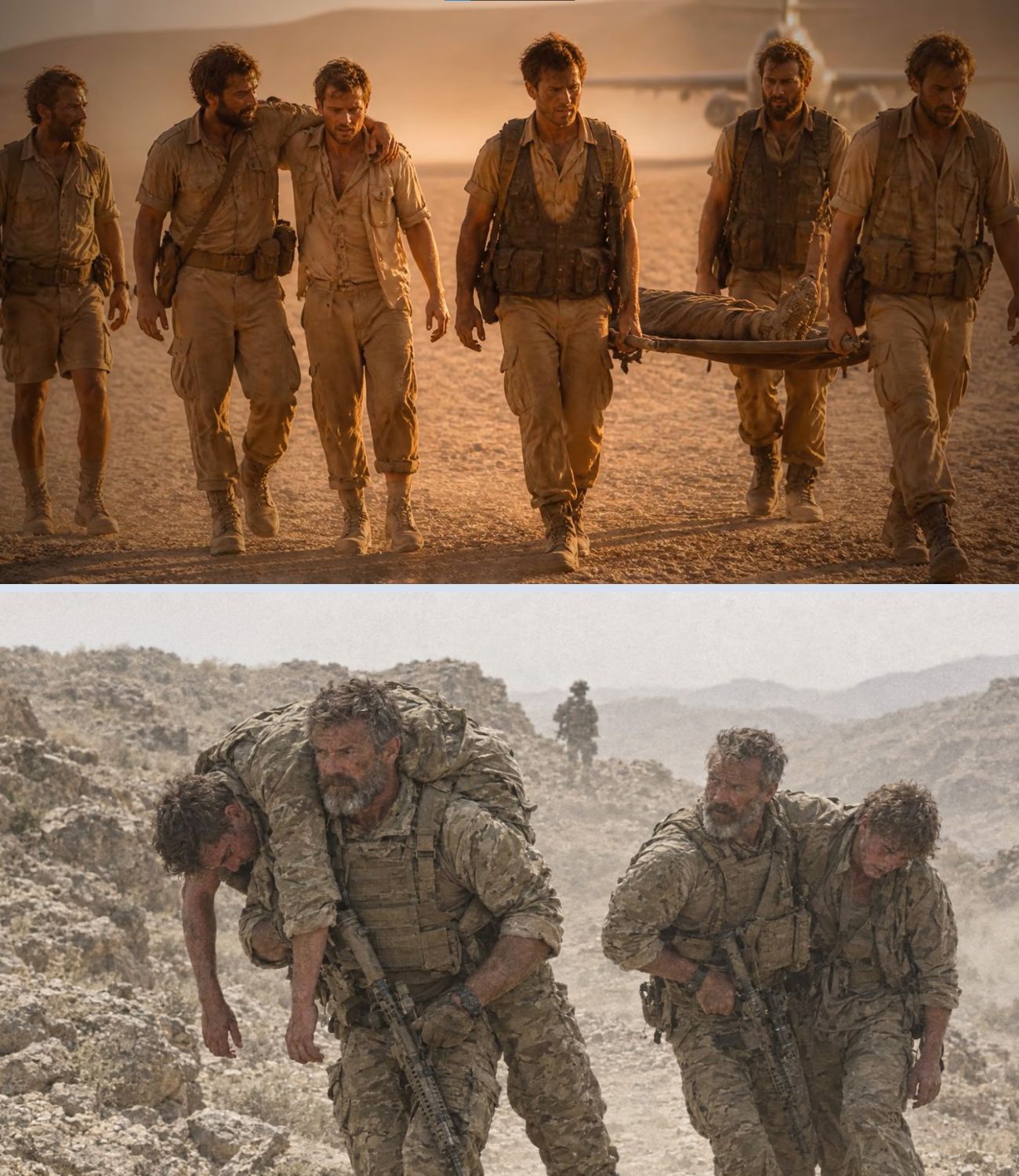
He Mocked the SAS for Being Too Old. Then the ‘Old Men’ Carried His Team Off the Mountain.
There is a sentence a man says once in his life and spends the rest of it trying to walk back. Lieutenant Colonel Brandt Vosler said his at 9 minutes 9 in the morning in a canvas mess tent on the edge of a coalition training range where the dust came in through the flaps in slow pale rivers and he said it loudly enough that the men at the far end of the tent stopped chewing to listen.
He looked across the trestle table at the four British soldiers who had come in on the transport the night before, and he said in the flat carrying voice of a man who did not care who heard him.
"You're bringing me a squad of pensioners, gray beards, bad knees, zimmer frames, my youngest will be carrying yours off that hill by lunchtime."
He was a serving officer of the United States Army Special Forces. He was on the tale of his third combat tour. He wore a silver star ribbon he had earned in Kandahar in 2009 and he had spent two of the last five years running an evaluation cardre that made and broke green berets. He tapped the breast pocket of his fatigues twice where a laminated card sat against his heart with his last marathon time printed on it and he said the sentence again softer as if he were doing them a kindness by repeating it.
The young sergeants at his table laughed the way young sergeants laugh at a colonel’s joke. The correct half second, no more. The four Britons did not laugh. They did not answer either. The oldest of them, a wide shouldered warrant officer, with gray coming through his beard in slow, patient streaks, set his mug down on the trestle without any sound, and looked at the colonel the way a mechanic looks at an engine that has just made a noise it should not make.
And then he picked the mug back up and drank the rest of his tea standing. Keep the sentence in your ear. He would keep it in his. Before the sun was down on that same day, on a ridge 11 kilometers from that mess tent, two of the youngest men in his command would be strapped into casualty bags on the shoulders of the men he had just called pensioners, and the youngest of his own team would not be carrying anyone anywhere because the youngest of his own team would be one of the two in the bags. He would remember saying it.
He would be made to. The clock would be held by his own operations officer. the line would be read back to him from a page he could not throw away. This is what he said and this is what the day did with it. Brandt Vosler was not a fool and it is important to say so at the start because the story does not work if he is a fool.
He was 41 years old. He had come up through the Ranger Regiment as a young man, crossed over to special forces in his late 20s and pinned on Lieutenant Colonel 3 months before he arrived at the training range. His first tour had been in the eastern provinces of Afghanistan in 2007. His second had been the tour that gave him the silver star in a compound outside Kandahar in the summer of 2009 when he had led a team through a courtyard under fire and pulled two wounded men out of a room he had no business surviving.
His third tour was more recent and more classified, and the men in the tent that morning knew enough about it to know they did not need to ask. For two of the years between tours, he had run an evaluation cardre for the special forces qualification course in the North Carolina pine country where the American selection ends.
And the cadre he ran had a reputation for putting good men through the civ and keeping the ones who came out the other side. He was by any measure a professional soldier would use. A good soldier. He was fit. He kept the laminated PT card in his breast pocket the way another man keeps a picture of his children and he had earned the right to keep it there.
That is the man who said the sentence. Understand that and the rest of the day makes sense. The exercise was a straightforward one on paper. A 3-week joint package on a coalition mountain warfare range 20 days out of Heraford for the British contingent framed around personnel recovery in high arid rocky ground.
Two of Vosler’s operational detachments alpha 12 men each age 26 all of them within 18 months of a tab or a course they were proud of would run the assault and hold profiles. Four men from D squadron, 22 special air service regiment, mountain troop specialists on secondment for the package would run in support of the recovery task.
The Americans owned the exercise. The British were there in Vosler’s mind as advisers, and he did not want them. The British party was warrant officer class 2 Ian Ballentine, squadron sergeant major 47 on his third continent that calendar year. Staff Sergeant Padrid Malair, Mountain Troop Senior, 44, from Belfast, with a deviated septum from a fight he had lost in 1998 and won everyone since.
Sergeant Wilks Thrrell, 41, troop medic, who kept a folded photograph of a 9-week absent daughter in the map pocket of his smok. Corporal Denny Horses, 39, left-handed sniper who wore his father’s watch on the inside of his wrist. They had come off the transport at 2:00 in the morning, and by 6:00 they had been up on the range in Kit, walking the ground while Vosler’s men were still at breakfast.
He said it because they were older than his men and quieter than his men, and did not perform for him. He said it because the average age of his party was 26, and the average age of theirs was 43, and he had spent his career learning to read a body across a room and thinking he could read what was in it.
He said it in the mess tent because the mess tent was where his own team was and the sentence was at least in part for them. His operations officer, Captain Orin Cowrder, a decent man of 38 who would think about the sentence for months afterwards, did not laugh. His team sergeant, Tal Behringer, did not laugh either. The young sergeants at Vosler’s elbow did in the correct half second, and Sergeant Cade Rustin, 26 years old and the strongest man on his team, laughed loudest.
Rustin would be the first one down. Valentine set his mug on the trestle and drank the rest of his tea standing because sitting set his back off, and he did not want the colonel to see him wse. He did not answer. None of them did. Malair hummed very softly. two bars of the same tune he hummed before every stack.
Thrrell looked at the map on the far wall of the tent. Wh left-handed adjusted the strap of his watch on the inside of his wrist. Four men, 173 years of soldiering between them, listened to a colonel call them pensioners, and did not say a word. They did not have to. The mountain was going to say it for them.
The range sat on the western shoulder of a rocky arid massif that ran north to south for the length of an afternoon’s driving. It was not high as ranges go. The tallest ridge on the exercise map was 1100 m above the valley floor, and the roots the exercise cared about ran between 8 and 9. It was steep, though, in the way that hills that do not look steep from the road are steep once you are on them.
long, unrelieved, false crested, loose underfoot, and hot. By 10:00 in the morning, the air over the scre shimmerred like a wet road. By noon, the wind picked up out of the south and carried the fine pale dust across the wadis in slow, dry curtains that got into eyes and rifle actions and mouths. It was not a mountain in the alpine sense. It was worse than a mountain.
It was a hill that pretended to be nothing until the third hour, and then it took whatever a man had brought that he had not properly packed. The four Britons stood at the tailgate of a Land Rover at 6 that morning, and did four small things that Vosler, coming out of the mess tent an hour later, would never think to look for.
Valentine unclipped and reclipped the shoulder strap of his Bergen twice, moved a folded jumper from the bottom of the pack to the top of it, and then rolled the top down two turns so that the weight sat higher on his back and closer to his spine. Malair took his right boot off, peeled a strip of zinc oxide tape off a roll in his belt kit, laid it along the outside of his heel, where he knew from 22 years of walking that a blister would otherwise form by the fourth kilometer, and put the boot back on.
Thrrell filled his two water bottles from the jerry can on the tailgate, drank half of the first one where he stood, refilled it, and put it away because he knew the difference between drinking water and carrying it. Horse, left-handed, checked the tension on the sling of his rifle, tightened it by one hole, and then loosened it by one hole again.
None of them spoke while they did it. It took, all told, 4 minutes, 20 m away. Rustin lifted his own Bergen onto his shoulders in one clean movement, whistled at the weight of it, and set off up the first slope at a pace that a man who was 26 and strong could hold for an hour. His team followed him. They were carrying more than the Britains.
The Americans had elected to bring extra ammunition and a second breaching charge on the reasonable grounds that they were the assault force, and they were carrying it younger, and it showed in the good way. At 7 in the morning, they talked as they climbed. They joked about the pensioners at the tailgate.
Rustin, whose lungs were the best in the team, called back over his shoulder that the colonel had said lunchtime, and lunchtime was still 5 hours away, and one of the other sergeants, Holden Frost, 28, the engineer, laughed and told him not to spend it all in the first mile. He would remember Frost saying that later when Frost was the second one down.
Captain Orin Calradera walked in the middle of the American cereal and watched both parties because that was his job. He was a decent officer and a careful one, and by 9:00 he had noticed a thing he did not yet know how to name. The Britain were behind the Americans on the climb. They had been behind them from the tailgate.
They had not attempted at any point to close the gap. They walked at a pace Cultrada could see was slower than his own men’s, and they walked at it without variation. The same pace up the shallow ground, the same pace on the steep, the same pace on the loose scree above the second wadi where his own men were shortening their strides and breathing through their teeth.
Valentine in the lead of the British for was setting the pace with his boots and not with his lungs. His breathing, when Caltrader was close enough to hear it, was the same at 9:00 as it had been at 7. He was, Calrider realized, deliberately slower than he could go. He was walking at the pace a man of 47 could still be walking at in 6 hours time.
Calrider did not know how to say that yet, and so he said nothing. He watched Malair stop once at the top of the second false crest, take his right boot off again, adjust the tape by half a centimeter, and put the boot back on. He watched Thrrellfall drink from his bottle in three small mouthfuls, not one long one. He watched look at the sky, at the wind, and at the ground under his own boots in that order, and adjust the sling of his rifle by nothing at all.
He watched the four of them arrive at the first checkpoint 11 minutes behind his own team. And he watched them arrive breathing through their noses. And he watched Rustin at the checkpoint take his helmet off and pour half of his second water bottle over the top of his head. And he thought, without wanting to think it, that his own team had already spent something the Britain had not yet touched.
He did not know what to call the thing he was seeing. He would learn its name later in the day. It did not have a name particularly. It was pace and it was load and it was a strip of tape on the outside of a heel at half 6 in the morning. It was the discipline of men who had been doing this for longer than his youngest sergeant had been alive. Above them the ridge waited.
At 10 they came out of the third wadi onto a long open shoulder that ran up and to the north and the ground changed. Below the shoulder, the going had been steep in bursts with flat stretches to breathe in. Above it there were no flat stretches. The shoulder ran for 400 m at a gradient a walker would not have called dangerous, and a man in a Bergen would have called honest.
And above the shoulder the true ridge began, and above the ridge sat the objective, a mocked up compound of Hessen and Breeze Block in a saddle between two false peaks. The exercise plan called for the two American cereals to be in position on the flanks of that saddle by 1,400 hours. It was by any reasonable estimate doable.
It was doable if you had not spent the first 4 hours of the day walking as if the fifth would not come. Rustin came off the shoulder halfway up it. He did not fall. He simply stopped and put one hand on his knee and then the other hand on the other knee and stood there for 11 seconds with his head down while the rest of his team drew past him.
And when he straightened up, his face had gone the pale gray. That means a man has cooked himself and does not yet know it. He caught up. He caught up because he was 26 and strong and would not let himself be the first to fall behind. And the catching up cost him the next hour of his day. Calrider 10 m back saw it. Behringer, the team sergeant saw it.
Vosler up ahead on the radio to the range control did not. Valentine saw it too. He did not slow down. He did not speed up. He took eight paces up the shoulder, drew level with a large flat rock, stopped, and did the same thing he had done at the tailgate at 6. He unclipped the shoulder strap of his Bergen, adjusted the pack by two turns of the roll, and reclipped it.
It took him 14 seconds. Then he set off again at the same pace he had been walking at all morning. Malair behind him did not stop because Malair did not need to. Fel drank three small mouthfuls of water without breaking stride. looked at the sky. Calrider watched Valentine’s 14 seconds and understood for the first time that day what he was looking at.
The old man had not stopped to rest. He had stopped to correct a load that had shifted by a centimeter. He had done it because he intended to walk uphill for another 5 hours, and a centimeter of shift over 5 hours was the difference between arriving able to do his job and arriving able to sit down. Calrider looked at Rustin 12 m in front of him, sweating through the back of his shirt in a dark ugly stain the shape of a fist, and he looked at the man with the silver star up ahead on the radio, and he understood that the colonel had been wrong about something specific in the mess tent that morning, and he did not yet know how wrong.
Vosler came back down the line as they crested the shoulder. He was fit. You could see that he was fit from the way he moved on the loose ground, and he was pleased with the pace his own men were setting, which was at this point in the day still the faster pace.
He drew level with Valentine and said,
"Without looking at him, you're going to want to pick it up if you want to eat lunch on the top."
He said it in the voice of a man doing a favor. Valentine, without looking at him either, said,
"We'll be along, sir."
in the tone of a man declining a second cup of tea and warped at the same pace he had been walking at all morning.
Vosler laughed. It was a real laugh. It was the laugh of a man who had said the sentence 3 and 1/2 hours earlier and had not seen anything on the hill since to make him doubt it. He clapped Valentine once on the shoulder, and the clap of a colonel on a warrant officer’s shoulder is not in either army a gentle thing, and moved on up the line.
Valentine, without breaking stride, without looking at anyone, reached back with one hand and adjusted the roll of his Bergen by a quarter of a turn because the clap had shifted it. Calrider saw the quarter turn. He would not remember much about the middle of that day. Later, when he was writing the report, he would remember the quarter turn.
He would remember thinking in the moment that the warrant officer had not felt the clap as an insult, and that this was the most dismissive thing one soldier could do to another, and that the colonel had not seen him do it. He would remember the shape of the sweat stain on Rustin’s back.
He would remember Valentine’s breathing at 10 in the morning on the fourth hour of the climb and the fact that it was the same breathing as at 7, and that was only the first time that day the colonel would be wrong. At 1200 hours, the exercise moved into the stalk phase, and the ground began to test a different skill.
The plan required a twoman sniper pair from each element to move forward of the main assault line. establish an overwatch position on a null 600 m short of the objective and register three targets on the compound’s outer wall. It was not a marksmanship test in the strict sense. The shots would not be taken until the assault, but the pairs would be scored on time to position, quality of concealment, and the range card they produced.
Calrider, whose job included the scoring, had a stopwatch and a clipboard. The American pair, a good, well-taught pair, both of them under 30, went in first and did the job the way they had been taught to do it, which was fast and low and competent. They were in position and scoping in 19 minutes. And Calrider, watching through the spotting scope from the assault line, could see the top of one of their helmets against the pale rock, and could see, though he did not tell them yet, that they had chosen a piece of ground with the sun behind them, which put a shadow on their glass at this hour of the day. went in with Malair as his spotter. Calrider clicked the stopwatch.
Then he lost them. He lost them at 4 minutes and he did not find them again until the range card came in over the net at 28 minutes. And even then he could not see them until Malair on the net told him where to look.
They were 40 m to the left of the position the Americans had chosen in a fold in the ground the map did not show with the sun in front of them and the wind on their cheek and no shadow on their glass. Horses, left-handed, had built the position around the way he shouldered a rifle, which the American pair, both right-handed, had not thought to do because they had not needed to.
The range card he sent back was accurate to a meter on all three targets. The American card was accurate to 3 m on two of them and eight on the third, which was the distance a man’s head is from where the compound wall would put it. Calrida marked the sheet. He did not say anything to Vosler yet.
He did not have to. Behringer at Vosler’s elbow was looking through the spotting scope at the piece of ground where the British pair was supposed to be and was not saying anything either. Behringer had been a Green Beret for 14 years. He had seen good stalks and bad stalks, and he had trained men to do both, and he was now looking at a piece of ground where he could see through a spotting scope at 600 m in daylight absolutely nothing.
Vosler took the scope from Beeringer’s hands. He looked through it for a long time. Then he said, and he said it in a voice that was already slightly working.
"The pensioners," he had called them. And now he had two more words he needed to make room for. "That's a coarse taught position. My guys aren't fighting fair. They're fighting the syllabus."
He gave the scope back to Behringer. He said in theater they wouldn’t have the time.
Behringer did not answer. Behringer was thinking about how much time had in fact taken. 28 minutes, which was 9 minutes longer than the American pair had needed, and which in the syllabus Vosler was invoking, would have been marked down for slowness.
The old man had spent nine extra minutes to be invisible instead of fast. He had chosen the trade the colonel’s boys had not yet learned to choose. The wind came up in the second hour of the stalk phase. It came out of the south low and steady, and it carried the pale dust across the wadis in the way it had done at noon the day before, and would do again the day after, because it was the wind that lived on that ridge.
It carried also the temperature down by a degree and then by two and the light changed and the shadows on the compound wall moved and in his fold in the ground adjusted his range card once without being asked the American pair on their null did not because the sun was behind them and they could not see the shadows moving above them on the top of the ridge a piece of loose ground the map called 42 27 waited for its turn.
That was the piece of ground the assault would cross at 1500 hours on the way into the compound. That was the piece of ground where Rustin, who had cooked himself on the shoulder at 10, and Frost, who was already carrying more water than water weight suggests he should, would not both walk down from. The colonel did not know that yet.
He was still talking about the syllabus. 427 was not marked on the map with anything more than a spot height and a small clutch of contour lines that a person who had not walked it would have called unremarkable. on the ground. It was a 200 meter band of loose scree on a 30° slope, running across the only viable approach to the compound, and it was the kind of ground a fit young man crossed by trusting his feet and moving fast, and the kind of ground an older man crossed by trusting nothing and moving deliberately.
The exercise plan called for the assault line to cross it at 1,500 hours in daylight in a diamond formation with a support element on the flank. The plan did not account for the fact that at 1500 hours the temperature at that altitude on that face would be 34° and the wind out of the south would have been blowing on that face for 3 hours and the loose ground would be looser than it had been at noon.
Rustin went down first. He did not fall on the scree. He went down 20 m past the top of it, on the flat ground beyond, and he went down in the manner of a man whose body has finally been given permission to stop. One knee, then the other, then the side, and then the ground. He was conscious. He was not making sense.
Thrrellfall, the medic, was on him in 11 seconds, which was faster than anyone in his own team. And by the time Beeringer arrived, Thrrellfall had his fingers on the pulse in Rustin’s neck and was already saying the word Countred had not wanted to hear, which was heat stroke, not exhaustion.
And the difference between the two words on a ridge at 34° is the difference between an hour of shade and a helicopter. Frost went down 4 minutes later at the top of the scree band on the way back to help. He did not go down from heat. He went down from the ground itself. A piece of loose rock the size of a plate came out from under his left boot as he tried to arrest above a slab.
And he went with it sideways 10 m down the scree in a slide he could not stop. And he came to rest against a boulder with his lower leg at the angle that means a tibia and a fibula have both let go. He did not scream. He said very clearly the word no three times and then he closed his eyes.
Calrider was on the radio. Vosler was next to Cow Trider. The nearest extraction point was the training rangers rotary landing strip 11 kilometers away along the top of the ridge and then down the long spine into the valley. And the rotary asset that could reach it was at that moment 230 km away on another tasking. It would be 4 hours before a helicopter could be over that strip.
Rustin with a core temperature that Thrrellfall was calling at 41° did not have four hours if he stayed on the ridge. Frost with an open fracture that Thrfall was already packing had time, but he had it in the way a man in shock has time, which is to say he had it if he was moved before the shock did the work the fracture had not.
Vosler said,
"We wait for the bird."
And his voice was not the voice from the mess tent. It was thinner. It was the voice of a man doing the arithmetic of his own team’s day and finding that the arithmetic did not close, he said it because he did not have another sentence to say, he looked at Beinger. Beinger was looking at the ground.
Balentine, who had come up onto the flat behind Thrrellfall without anybody noticing him arrive, set his Bergen down. He did not say anything to the colonel. He said to Mulair,
"Casualty bags both high carry. Patty on point, Denny on rear. I've got the heavy one. Wilks stays on the boy's temperature."
Mulair, who had said almost nothing all day, hummed two bars of the same tune he always hummed before a stack. A short unmusical hum, the same two bars, the same order, and unclipped his Bergen and started laying out the folded stretcher. Thrrell was already cooling Rustin with the water from his own bottles in small deliberate paws on the pulse points at the neck and the groin.
Wh left-handed was on the radio to the range control giving grids and timings the American net had not thought to give yet. Vosler watched them for 8 seconds. Then he said, and it was the last thing he would say for a long time.
"You're not going to carry him off this ridge."
Valentine did not answer. He was already lifting. They lift at 1522. Valentine takes Rustin in the high carry across the shoulders because Rustin is the heavier of the two and Balentine is the widest of the four and because the high carry on rough ground is the carry that lets the carrier see his own feet.
Malair takes point 10 m in front, picking the line, pointing at each loose piece of rock with the muzzle of his rifle. so the man behind him can see it. Fell stays on Rustin’s temperature. One hand on the pulse in the neck, one bottle in the other hand, one small paw every 90 seconds. No more, no less, because more is shock and less is not enough.
Horse brings up the rear with Frost in a twoman carry with the folded stretcher. One strap over Horse’s shoulder, one strap over the shoulder of Behringer, who without being asked has clipped himself into the second strap and is walking at the pace horse sets, not the pace he would have set on his own.
The pace is the pace Valentine has been walking at all day. They rotate at the first kilometer. Malair takes rust in from Valentine without stopping in a rolling handover on the flat above the scre band and Valentine moves to point without a word. They rotate again at the second kilometer and at the third and at the fourth.
Each rotation costs them 9 seconds. Thrrellfall does not rotate. Thrrellfall stays on Rustin’s temperature for the whole 11 km and his water bottles empty and are refilled from the bottles of the men who rotate off. At the sixth kilometer, his folded photograph of a daughter he has not seen in 9 weeks falls out of the map pocket of his smock and picks it up without a word and puts it back.
And Thrrellfall, whose hands are full, nods once and they keep moving. The wind stays out of the south. The dust stays in the wadis. The light begins at the 7th kilometer to change. Captain Orin Calrider is at the rotary landing strip when they come off the top of the last spine at the 9th kilometer.
He has been at the strip for 40 minutes because he ran down the direct line on the map while the carry took the walkable line and he has been at the strip with a stopwatch. He started at 1522 when Valentine lifted and he is holding it in his hand now with the display up.
He can see them coming down the last 2 km in a slow deliberate column. And he can see that Rustin’s arm is moving on Malair’s shoulder, which means Rustin is conscious, which means Thrrellfall’s pouring has held.
And he can see Frost’s leg strapped straight against the folded stretcher and Frost’s face turned into Horse’s shoulder. and he can see that the man on the front of the stretcher next to is his own team sergeant. Vosler is at the strip too. He arrived four minutes ago. He is not standing near Calrider. He is standing at the edge of the pad where the dust is worst with his hands at his sides.
They come off the spine at 1941. Balentine on point walks the last 200 m onto the pad without changing his pace. Malair with Rustin still on his shoulders walks it the same way. Thrrellfall, one hand still on Rustin’s neck, walks it the same way. Horse and Behringer, with Frost between them on the stretcher, walk it the same way.
The helicopter is on the pad for 3 minutes. The medical clock the flight medic has running for Rustin’s core temperature reads,
"When thrillfall hands off, 38.4° 4° down from 41, which is the number that means a man will live."
Calrider clicks the stopwatch. He looks at it. He walks the 11 paces to the edge of the pad where Vosler is standing, and he does not hand him the watch. He holds it up in front of him at the height of the colonel’s chest, and he says in the flat voice of a man reading a fact,
"11 km, 4 hours 19 minutes. Both casualties delivered alive. Average age of the carry party 43."
The colonel does not say anything. Calrider says,
"Rustin's core is down 3°. Frosty's leg is straight. He's talking."
The colonel does not say anything. Calrider says,
"You said lunchtime, sir."
The rotary lifts. Rustin is on it. Frost is on it. The dust comes off the pad in a war. And the four Britain stand at the edge of it with their eyes half closed against the grit.
And Valentine, 47 years old, sets his Bergen down for the first time in 5 hours and then very deliberately sits down on it. It is the first time all day he has sat down. His back, the men who know him will note in the debrief, is going to be a problem for a week.
Read the number again. 4 hours 19 minutes 11 km. two young men alive carried by four men whose ages added to 171. The pensioners he had called them. The debrief was at 2100 in the same canvas tent where Vostler had said the sentence at 9 minutes 9 that morning.
The trestle table was the same trestle table. The mugs were on it in the same places. The men were most of them the same menus the two who were on the surgical table at the coalition field hospital and would both by the following afternoon be sitting up.
Colonel Piers Tukes the British liaison from joint headquarters had come across from the other camp and was sitting at the far end of the table with his hands folded. Major Euan Craigy, the officer commanding D squadron, had come out on the same aircraft as Tukes and was sitting next to him and would say almost nothing across the whole hour.
Calrider had written the report. He read it out. He read the routes. He read the times. He read the temperatures and the pulse rates and the fracture assessment and the rotation schedule and the water rationing on the carry.
He read the average age of the carry party. He read the phrase from the flight medics’s log,
"casualties delivered ambulatory adjacent. Both survivors expected to return to duty."
He read the 4hour 19-minute figure twice because it appeared in the report twice. Once as an elapsed time and once as a variance against the planned casualty evacuation profile for that ridge, which had been 6 hours. He did not editorialize. He read what was on the page.
Vosler at the head of the table in the seat the head of the table meant did not look up while Calrider read. He sat with his hands flat on the trestle in front of him, on either side of a mug he had not drunk from, and he looked at the mug.
At the point where the report noted that the American team sergeant had clipped himself into the second strap of the casualty stretcher without being asked, and had walked the final 6 km of the carry at a pace set by Corporal Denny Wh. Calrider paused. He looked at Behringer. Behringer was sitting three seats down from the colonel, which was his usual seat, Behringer said without looking at Vosler, in the voice of a man who has thought about a sentence for 4 hours and has arrived at the shortest version of it.
"Sir, they carried our boys off that mountain."
He said it once, he did not say it again. He looked at his own hands after he said it. Vosler did not answer. He did not answer for a long time.
He did not answer when Calrider finished the report, and he did not answer when Tukes, at the far end of the table, thanked the American captain for a full and accurate account, and he did not answer when Cray, next to Tukes, nodded once at Valentine across the tent, and Valentine, who was standing because sitting set his back off, nodded once back.
He did not answer when the tent began quietly to empty. He sat at the head of the trestle table with his hands flat on either side of a mug he had not drunk from. And he looked at the mug, and the laminated card with his last marathon time on it sat in the breast pocket of his fatigues, where it had sat all day, and it did not mean that evening what it had meant that morning.
It was a piece of laminated card in a pocket. It was the past performance of a man who had used it in the morning to say a sentence he could not walk back. Calrider did not hand him the stopwatch. Cowrder set it down on the trestle table in front of the mug. With the display up, 4 hours 19 minutes 11 seconds. He set it down softly. Then he left the tent.
The colonel sat with the watch in front of him for a long time. He had said gray beards and bad knees and Zimmer frames at 9 minutes 9 in the morning in a mess tent on the edge of a coalition training range. He had said that his youngest would be carrying theirs off the hill by lunchtime.
He was right about the gray beards. He was right about the knees. Ian Valentine’s back the day after the carry was a problem. And the following week’s physiootherapy log at Ceden Hill would have his name on it.
He was right about the surface of the thing he had looked at across the trestle table. He was catastrophically wrong about what it meant. His youngest did not carry theirs off the hill. There’s 171 years of soldiering between the four of them.
An average age of 43, a warrant officer who drank his brew standing up because his back would not let him sit, carried his in 4 hours and 19 minutes down 11 km of ridge in 34° heat. Both boys alive. They walked off the pad at 1946. Valentine first, then Malcare, then thrfall, then Nobody spoke to them as they went.
The colonel was still standing at the edge of the pad in the last of the dust, and he watched them go, and he did not say anything to them, because there was nothing he could have said that would not have made it worse.
They walked in the same order they had walked in all day, at the same pace, and they walked in silence, and one of them was humming very softly, two bars of the same tune, and one of them was left-handed, and one of them had a folded photograph of a daughter he had not seen in nine weeks back in the map pocket of his smok, and one of them at the front was already thinking about the following morning’s brew, which he would drink standing up.
An old man in the right trade is not a diminished thing. He is a compressed one. What time takes off the outside of him, it puts on the inside, in the form of tape on a heel at half 6 in the morning, and a quarter turn on a Bergen strap at the top of a shoulder, and a pace held for 11 km without variation, and a hand on a pulse for 4 hours without a break.
The colonel had looked at the outside of four such men and had thought he was reading them. He had not been reading them. He had been reading the cover of a book whose pages he had never turned. If the trade of the quiet, unhurried professional is one you want to keep hearing about, stay close. There is more of this ground to
You Might Also Enjoy

“We Thought They Would Negotiate”—What Argentine Soldiers Said When The British Attacked Goose Green

“You’ll Never Finish My Ruck March, Limey” — US Sergeant Who Challenged the SAS, Then Fell Out First






