How American Generals Reacted To Britain Fighting Alone For Two Years
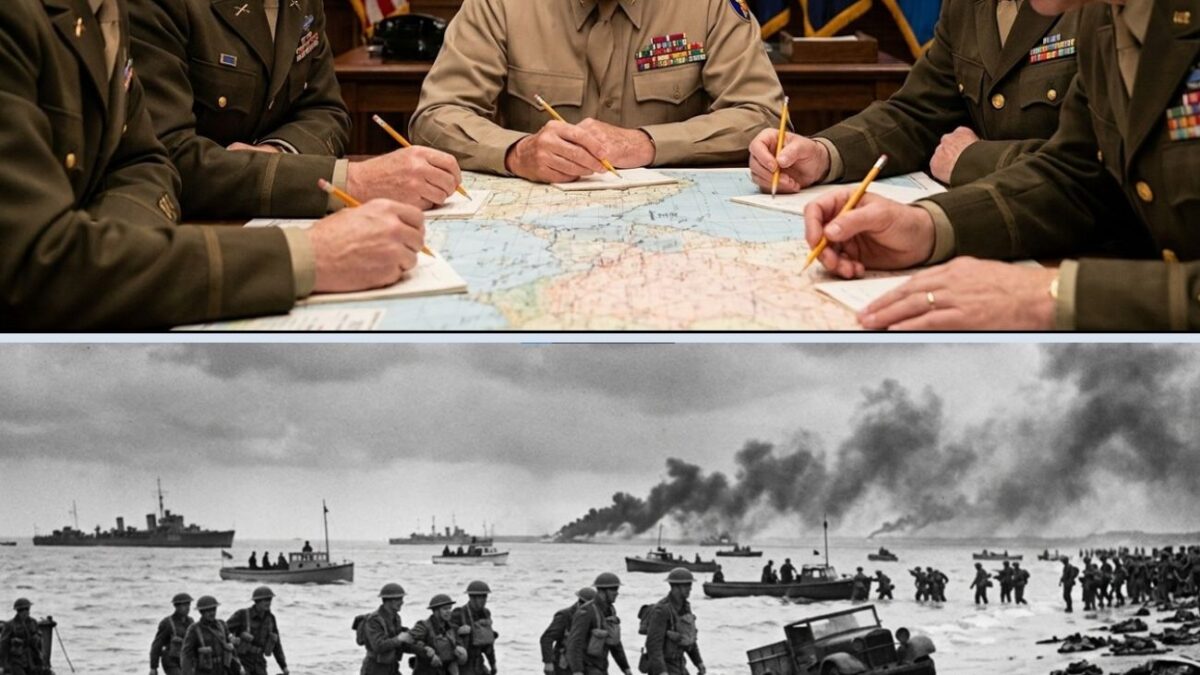
General Douglas MacArthur was not the only American officer who assumed Britain was finished. He was simply the most quotable. In a private assessment circulated among senior war department planners in July 1940, MacArthur’s staff described the British position as strategically untenable, a phrase that would have embarrassed him a year later. He was not alone in that judgment. Across the Army and Navy planning boards in Washington, the consensus in the summer of 1940 was blunt. France had fallen in six weeks, Poland in four, and there was no military logic by which an island with its army’s equipment abandoned on a beach at Dunkirk would hold out longer.
General George Marshall, newly installed as Army Chief of Staff, put the calculation in writing to a Senate committee that August.
“Britain’s survival,” he said, “could not be assumed, and American planning had to proceed on the basis that it might not happen.”
That single sentence, cautious on paper, radical in its implications, became the quiet operating premise of American strategy for the next 18 months. If you want to understand how deeply that assumption shaped what came next, and how long it took the men who held it to admit they were wrong, stay with this, because the record they left behind is more revealing than anything written after the fact.
The reasoning was not born of contempt for Britain. It came from two separate institutional cultures inside the American military that, for once, agreed with each other. The Army, under Marshall, thought in terms of land power and continental logistics. An island nation with no army worth the name after Dunkirk was, in army terms, a nation without the capacity to project force back onto the continent that had just swallowed it. Without that capacity, in Marshall’s view, the war in Europe was already decided, and American resources sent to prop up a losing position were resources stolen from the Pacific, where Japan’s ambitions were treated as the more immediate danger.
The Navy, under Admiral Harold Stark, thought differently, but arrived at a similar caution. Stark understood the Atlantic as a contested sea lane rather than a fixed line on a map, and he worried less about Britain’s collapse than about what would fill the vacuum if it happened. Neither man was foolish. Both were extrapolating from precedent, and the precedent, as of July 1940, was undefeated German momentum.
The gap between what these officers assumed Britain’s fate would be and what was actually happening on the ground in England began to open that same summer, and it would take a year and a half to close completely. The first crack appeared in September 1940. The Royal Air Force, which American intelligence had rated as certain to be destroyed within weeks, was still flying. The Luftwaffe’s daylight raids over southern England were being met, contested, and in a growing number of engagements, defeated outright.
Marshall received the casualty figures from British sources with open skepticism. He told a colleague that bravery in the cockpit did not change the arithmetic of aircraft production, and that England could not replace pilots and machines at the rate Germany could throw them into the fight. He was, on the numbers alone, not entirely wrong, but the invasion he expected to follow the air battle never came.
Hitler postponed Operation Sea Lion indefinitely that same month, a decision Washington did not immediately register as significant because the postponement was read as tactical delay rather than strategic failure. It would take historians decades to fully credit how close that autumn came to being the hinge of the entire war. In the moment, American planners treated it as a pause before the inevitable.
The destroyers-for-bases agreement, signed in early September 1940, is often remembered as the first real American commitment to Britain’s survival. It deserves a more honest reading. Marshall supported the trade not because he believed the 50 aging destroyers would materially change the naval balance, but because it cost the United States naval bases it wanted anyway in exchange for ships it considered close to obsolete. In an internal memorandum, he described the vessels bluntly as “insufficient to alter the outcome of the war.”
He was, again, technically correct. The ships were old. Several needed extensive refitting before they could be used, and their military value was marginal. What Marshall underestimated was the signal the transfer sent both to the British public, who took it as proof that America had not abandoned them, and to the German naval command, who now had to account for the possibility of deepening American involvement.
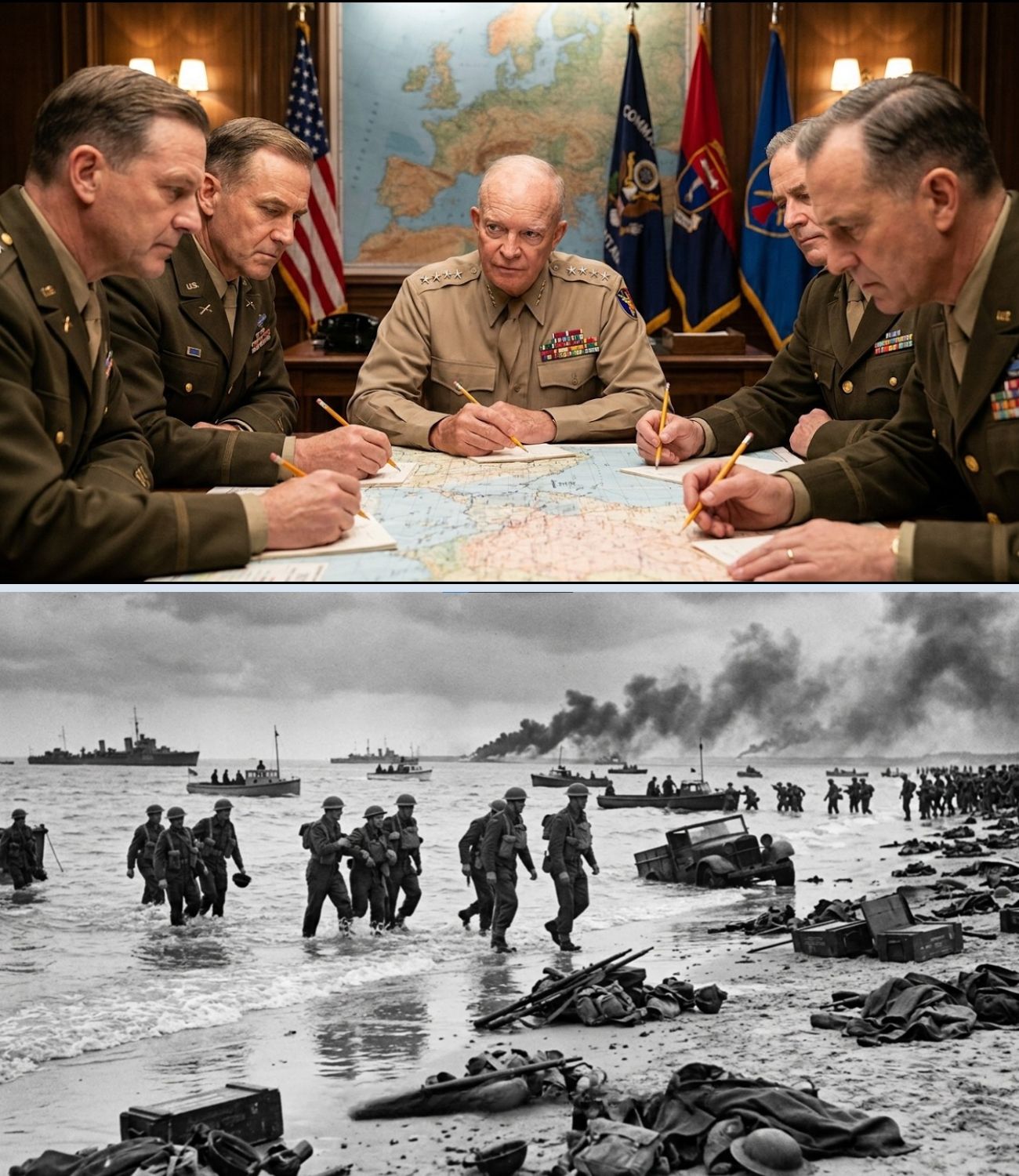
The Wehrmacht’s own naval planners noted the transfer in their assessments that autumn as evidence that the United States intended to keep Britain in the fight by whatever indirect means neutrality law allowed. The Americans who dismissed the ships as symbolic were not wrong about the ships. They were wrong about what symbols do.
By November 1940, Admiral Stark had produced a document that history remembers as Plan Dog, a memorandum arguing that the Atlantic, not the Pacific, was the theater on which the war would actually be decided. If Britain fell, Stark argued, the United States would face a hostile coalition controlling both oceans, and no amount of Pacific preparation would offset that catastrophe.
It was a direct challenge to the assumptions Marshall and much of the army staff still held, and it did not win the argument outright. What it did was open a formal split inside American military planning between officers who still treated British collapse as the working baseline, and officers who had begun, cautiously, to plan around British survival. That split did not resolve quickly. It persisted through the winter, shadowing every appropriations debate and every argument over how much material could be spared for lend-lease.
The evidence that should have forced a reassessment arrived from an unlikely theater. In February 1941, British and Commonwealth forces in North Africa routed an Italian army roughly five times their size, taking well over a hundred thousand prisoners in a matter of weeks. This was not a symbolic skirmish. It was a conventional military victory of a scale that should have registered in Washington as proof that British forces, properly led and resourced, could still win.
Marshall read the reports. He did not revise his public testimony. Later that same month, before the House Appropriations Committee, he repeated almost verbatim the caution he had voiced the previous summer:
“Britain’s survival could not be assumed and American defense planning had to proceed independent of that hope.”
The British ambassador in Washington cabled home that Marshall’s testimony had done real damage to morale in London, where officials had hoped that a year of resistance and a decisive battlefield win might finally shift American assumptions. It had not. The gap between what American generals believed and what British forces were actually achieving on three continents had, by the spring of 1941, become difficult to explain by anything other than institutional stubbornness.
Then came the intelligence nobody in Washington wanted to trust. In the spring of 1941, reports reached American channels, filtered through British sources with access to decoded German signals traffic, that Hitler intended to turn east and invade the Soviet Union.
Marshall’s reaction was dismissive. He told his staff that no rational German command would open a second front while Britain remained undefeated in the West, and that the intelligence smelled of British wishful thinking—an attempt to convince Washington that pressure on Britain would soon ease. He was, in this instance, simply wrong. And he was wrong for a reason worth sitting with: the assumption that Britain’s defeat was strategically necessary for Germany had become so ingrained that evidence suggesting Germany itself might act otherwise was treated as suspect rather than as information.
On June 22nd, 1941, Germany invaded the Soviet Union. The shock in Washington was not that the invasion happened, but that American planners had spent months discounting the possibility because it did not fit their model of what a rational adversary fighting an undefeated Britain would do.
Money, not morale, nearly ended the British war effort that same winter. By early 1941, the cash-and-carry arrangement that had allowed Britain to purchase American war material had drained the country’s dollar and gold reserves close to zero. Without a new mechanism, British purchasing power would simply stop. Roosevelt’s answer, the Lend-Lease Act, passed Congress in March 1941 after a bitter debate in which isolationist senators warned it would drag the United States into war by the back door.
Marshall’s private reaction to the bill’s passage was ambivalent rather than triumphant. In notes he kept for himself, he wrote that “a line had been crossed that could not be uncrossed,” that Lend-Lease made eventual American entry into the war more likely, not less, and that this was true whether or not Britain ultimately survived.
He still doubted, as late as the spring of 1941, that the aid would arrive in time or in sufficient volume to matter. The Atlantic, at that point, agreed with him more than he wanted. German U-boat wolf packs were sinking Allied merchant shipping faster than British and American yards could replace it, with monthly tonnage losses climbing past half a million tons that spring.
Convoys carrying the very Lend-Lease material Congress had just approved were being sent to the bottom before they reached British ports. The generals who had assumed British collapse now faced a different but related problem: the aid existed, the ships to carry it did not survive the crossing reliably, and the gap between American production and American delivery was being decided by a handful of German submarine captains operating with near impunity in the mid-Atlantic gap where air cover could not reach.
The response was gradual, and it moved faster than Marshall’s public statements suggested. Roosevelt extended American naval patrols deep into the Atlantic that spring. American warships began escorting convoys to a mid-ocean handoff point, and by June, American forces had occupied Iceland to provide bases for anti-submarine patrols.
Marshall, who had resisted these steps as premature entanglements only months earlier, privately told Secretary of War Henry Stimson that “the United States was already at war in the Atlantic in every respect except the formal declaration.” Stimson recorded in his diary that Marshall’s tone had changed, that he now saw the drift toward war as unavoidable rather than merely possible. The institutional deadlock inside the American military had not broken because of a single dramatic event; it had eroded under the accumulated weight of a year of evidence that refused to match the model.
The evidence stopped being abstract on the last day of October 1941. The destroyer USS Reuben James, one of the very ships transferred to Britain the year before under the bases agreement, but retained in American service for Atlantic escort duty, was torpedoed west of Iceland by a German U-boat while shepherding a British-bound convoy. The ship broke apart and sank within minutes. Of the crew aboard, more than 100 sailors died. They were, months before Pearl Harbor, the first American combat deaths of the war.
When the report reached the Navy Department, Admiral Stark reportedly walked directly to Marshall’s office and told him plainly:
“The war has arrived whether Washington has declared it or not.”
Marshall did not argue the point. He had spent the better part of a year insisting, at least in testimony, that Britain’s fate remained uncertain and that America’s involvement remained a matter of choice. The sinking of an American warship, crewed by American sailors, protecting supplies bound for a Britain that had now outlasted every prediction made about it in the summer of 1940, closed the gap between assumption and reality more completely than any single piece of intelligence had managed to do.
What is easy to lose in the strategic narrative is the arithmetic of what Britain had actually absorbed while American generals debated whether the country was worth the wager. By the end of 1941, the Blitz had killed tens of thousands of British civilians. The Battle of the Atlantic had claimed tens of thousands of British merchant sailors—men with no weapons of their own, sailing unarmed cargo ships through waters patrolled by an enemy that gave no warning before firing.
The British Army’s losses in North Africa, Greece, and Crete ran into the tens of thousands more. A London auxiliary firefighter, recording his own private account of the first anniversary of the Blitz that September, wrote simply that “the city had been burning for a year, that friends and homes and sleep had all been lost in that time, and that the fact American help was finally arriving felt, to people who had waited that long, almost beside the point.”
That kind of private testimony rarely made it into War Department memoranda, but it is the ledger against which Marshall’s caution has to be measured. Britain was not asking American generals to believe in her chances; she was simply still standing month after month while the men responsible for American strategy waited for proof that never stopped arriving and never quite seemed to be enough.
Pearl Harbor, when it came on December 7th, 1941, did not resolve the debate between the Army’s Pacific-first instincts and the Navy’s Atlantic-first argument so much as it made the debate briefly irrelevant. Four days later, Hitler declared war on the United States—a decision some American planners had not fully priced into their assumptions on the theory that Germany had no strategic reason to invite a two-front conflict with an industrial giant it had not yet defeated.
The declaration meant that the war Marshall had spent 18 months hoping to avoid, or at least postpone, had arrived regardless of what Britain’s survival had or had not proven. But it also meant something more specific for the men who had doubted that survival. Britain had now held for two and a half years. It had absorbed the worst the Luftwaffe could throw at its cities, kept the Royal Navy fighting in three seas at once, forced a diversion of German strength eastward that no American planner had believed would happen, and done all of it without the material or manpower reserves that had allowed France to at least contest its own collapse for six weeks before surrendering.
Marshall wrote to Winston Churchill in the days after Pearl Harbor in language notably different from the guarded testimony he had given Congress a year before. He told the Prime Minister that “the two nations were now in the fight together, that the British people had demonstrated to the world what endurance actually required, and that it was now America’s obligation to match that endurance with production and manpower.” It was, for a man who rarely allowed sentiment into official correspondence, a striking admission.
When Churchill traveled to Washington that December for the Arcadia conference, the two men met, not as a skeptical American general and a desperate British Prime Minister, but as co-belligerents planning a shared campaign, with the question of Germany-first versus Japan-first strategy dominating the discussion instead of the question that had consumed the previous 18 months.
In a private exchange during that conference, Churchill reportedly asked Marshall directly:
“Did American planners genuinely believe Britain would fall in 1940?”
Marshall’s answer was unadorned:
“Yes, they had believed it, and they had been wrong.”
That admission is the actual center of this story, more than any single battle or convoy or committee vote. For 18 months, some of the most capable military planners in American history built strategy around an assumption that the available evidence contradicted with increasing regularity, and they did not abandon that assumption because of any one decisive proof. They abandoned it only when the accumulated weight of contrary evidence—an air battle that should have been lost and wasn’t, a desert army that should have been overwhelmed and wasn’t, a nation that should have sued for peace and never did—became impossible to hold against without simply refusing to look at it.
Marshall, in his own postwar reflection, wrote that every military precedent in 1940 had suggested Britain would break, that Britain had not broken, and that the debt owed to the men and women who held the line during those two years while American planners hedged their bets was, in his words, “incalculable.”
It is a rare thing for a general to put his own miscalculation in writing. Marshall did because, by the time the war ended, there was no longer any use pretending the ledger read any other way.
You Might Also Enjoy

“We Thought They Would Negotiate”—What Argentine Soldiers Said When The British Attacked Goose Green

“You’ll Never Finish My Ruck March, Limey” — US Sergeant Who Challenged the SAS, Then Fell Out First






