How ‘Never Complain, Never Explain’ Finally Fell Apart for the Royal Family
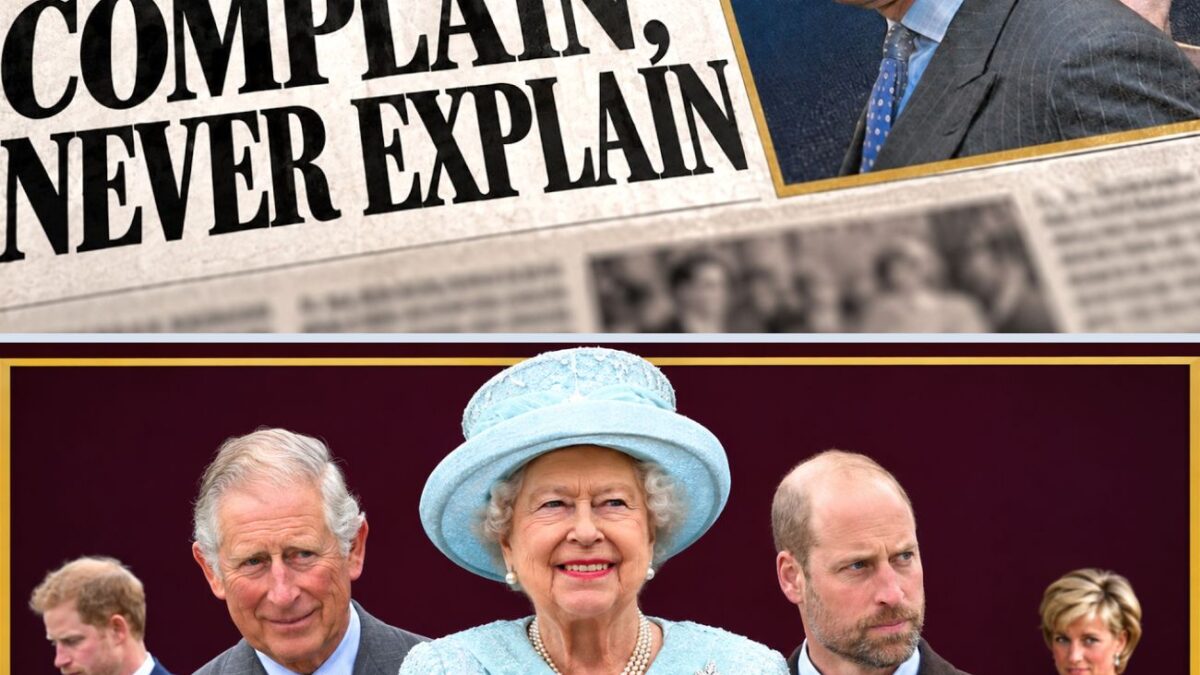
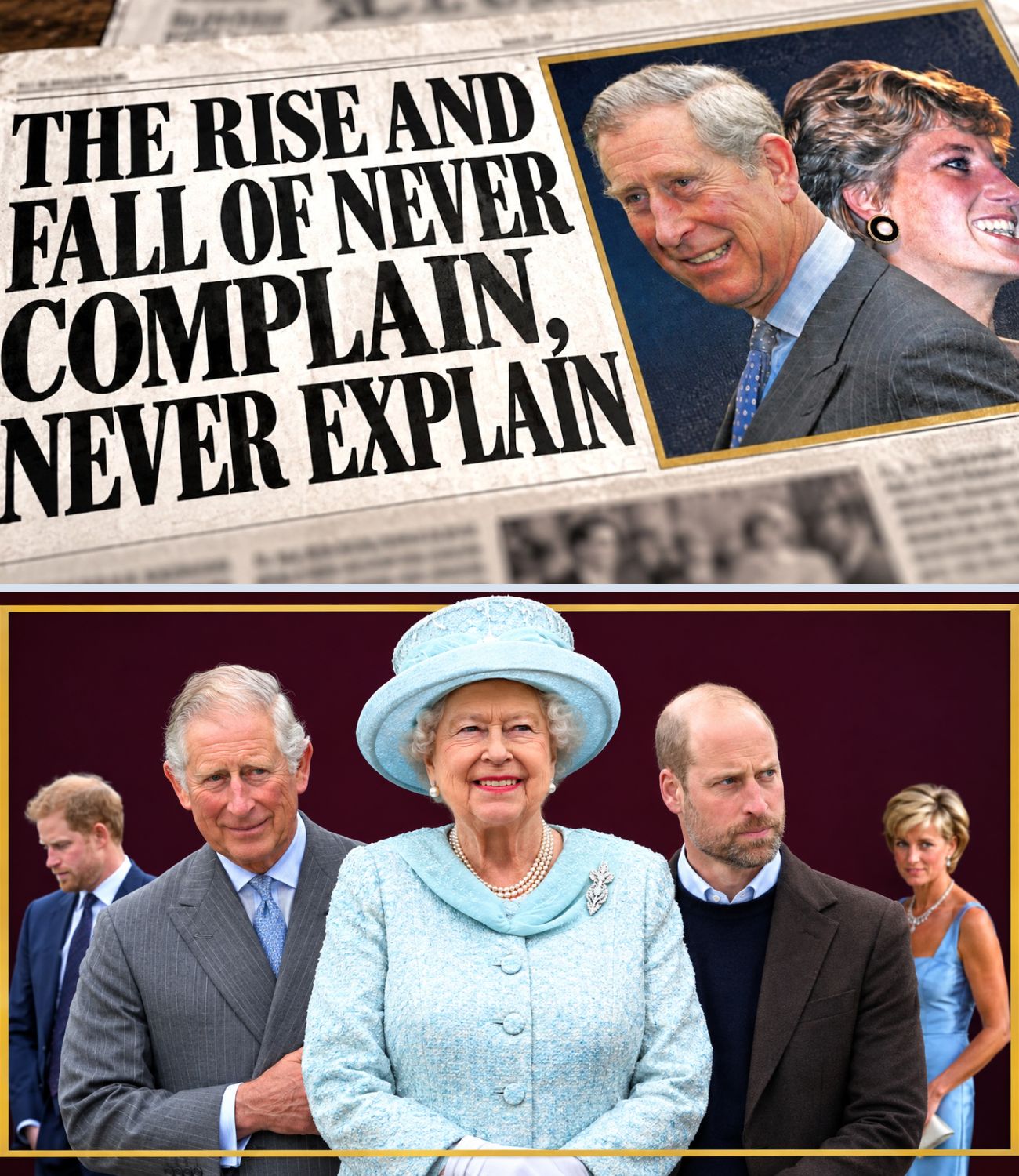
Some memories may differ, but the family will sort this out privately. Never complain, never make excuses. For generations, this has been considered one of the main rules of the royal family. Don’t respond to every accusation.
“Listen, we…we’re brothers. We…we will always be brothers. We are definitely on different paths now, but I will always be there for him, and I know he will always be there for me.”
Don’t get involved in every argument. Divorce? Never mentioned. Never mentioned. Whoever it is. And above all, don’t make excuses. Reports that the royal family could be represented in Tokyo next month have sparked a wave of criticism from lawmakers of all parties. The Queen, who hosted Emperor Hirohito during a state visit in 1971, has already sent a message of condolences to his widow.
Many believe that this gesture is enough.
“This is the end of a man who took an active part in the torture and murder of British prisoners of war in the Far East. And just because of that memory, it is not right or appropriate for a member of our royal family to travel to represent this country at that ceremony.”
The anger is fueled by the royal family’s decision not to attend the Lockerbie memorial service last week.
But it wasn’t actually the royal motto. The phrase originated in Victorian political thought, and was associated with Benjamin Disraeli, before becoming closely associated with the Queen Mother and later the reign of Elizabeth II. She is reported to have commented on the beauty of the painting and its uncanny resemblance to her daughter during a conversation with artist Frank Slater.
By Elizabethan times, this had become something of a working principle.
“I declare before you all that my entire life, whether long or short, will be dedicated to your service and to the service of our great Imperial family to which we all belong. But I will not have the strength to carry out this decision alone unless you join me in it, as I now invite you to do.”
“I know your support will be unwaveringly loyal. May God help me fulfill my vow, and may God bless all of you who are willing to share it.”
However, Elizabeth’s own path to the throne was defined by one of the greatest modern crises of the monarchy. In 1936, her uncle, Edward VIII, abdicated to marry Wallis Simpson, unexpectedly making Elizabeth’s father king and placing her first in line to the throne. It was an early lesson in what can happen when a private royal choice turns into a public crisis and when silence is no longer enough. For some, it was the greatest love story of the century. But for others, it was a shameful episode in the history of the British monarchy, when the king put himself above his country.
“Finally, I can say a few words from myself.”
“I have realized that it is impossible to carry the heavy burden of responsibility and fulfill my royal duties as I would like without the help and support of the woman I love.”
Eventually, 6 months later, they got married in France. Edward became the Duke of Windsor, she the Duchess, but she was not allowed to have the title “Her Royal Highness”, which became a constant insult to both of them. And their decision to visit Hitler against all advice only deepened the rift with the royal family in England. It was a visit that the Nazis took full advantage of. When the war finally broke out, they received the ultimate humiliation—no work in their homeland. Instead, the Windsors were sent to rule Bermuda. Reconciliation with the royal family was slow. But in 1967, the Queen invited them to attend the unveiling of a plaque to the Duke’s mother, Queen Mary. And in 1972, shortly before the Duke’s death, the Queen interrupted an official tour to visit him one last time. When the Duke’s body was flown to England, the Duchess was officially greeted by the Queen’s representative, Lord Mountbatten. The Duke was buried at Frogmore near Windsor Castle, apparently with the assurance that the Duchess would be able to be buried next to him.
The institution at the top of the British state is a family affair. Known even to some of its members as “The Firm”. And at its heart is partnership.
“For our family, it’s fundamental, because without him everything would be, um, completely different.”
He naturally saw the Queen as the head of the Firm, and himself as a kind of chief executive officer. This is the untold story of the reign, how significant his contribution was behind the scenes. Silence was part of the mystique of The Firm. For most of the Queen’s reign, this approach worked. It was her sister, Margaret, who showed how far this sense of duty could go. Having abandoned plans to marry Peter Townsend so as not to risk conflict with the monarchy and the government.
Princess Margaret’s personal message, released from Clarence House, began with these words:
“I want it to be known that I have decided not to marry Colonel Peter Townsend.”
The announcement was preceded by months of speculation in newspapers and among the people of Great Britain, and around the world. Princess Margaret’s service to her country is best illustrated by her tour of the Caribbean.
And now she says:
“Given the church’s teaching that Christian marriage is indissoluble, and conscious of my duty to the Commonwealth, I have decided to place these considerations above all others.”
“The love, affection, compassion and understanding of the nation and the Commonwealth are with Princess Margaret in her courageous decision.”
Newspapers could make assumptions. Commentators could comment. Meanwhile, the royal family has largely remained out of the controversy and out of sight. By the 1990s, the relationship between the royal family and the media had changed. And it became increasingly difficult to remain silent. In 1992, Andrew Morton published the book “Diana: Her True Story.” It later emerged that Diana herself had secretly helped provide materials for the book.
“Tonight the Sunday Times is publishing claims that the princess attempted suicide five times.”
Behind the smiling, elegant public image, the princess was allegedly locked in a loveless marriage. There is one dramatic episode that involves a huge argument between the two of them, a verbal altercation at Sandringham. She stood at the top of the stairs and said:
“If you, if you, if you leave, I will kill myself.”
“I want this issue resolved.”
Charles walked away. Princess Diana rushed down the stairs. The Queen Mother found her. At that time, the princess was three months pregnant with her second child. The details of what happened that day at Sandringham are revealed in a book due out next week. Andrew Morton’s “Diana: The True Story” argues that this is not just fabricated gossip or the chatter of disgruntled servants. Is this an attempt by the princess to bring her own story to the public?
Buckingham Palace says “no.” Experienced royal observers say yes.
“I think she has a basic strategy—to finally let the world know about the suffering and despair she has experienced.”
ITN contacted representatives of the royal circle. The princess’s sister, Lady Sarah, declined to comment. Lady Jane stated that she had nothing to do with this book. Diana’s grandmother’s stepmother, Barbara Cartland, changed her mind about the interview. She said the book seemed to have met with Diana’s approval. Of the princess’s friends, Lady Tryon, known as Kanga, said she would like to help but could not. And Lady Camilla Parker Bowles, to whom an entire chapter is dedicated, did not respond to ITN’s answering machine.
According to a poll into the royal crisis tonight, the majority of people blame Prince Charles for not spending enough time with his family.
“One of the reasons for giving her the opportunity to object was so that she would not be left in a hopeless situation. So that at some point she and Prince Charles could say to each other, ‘Listen, yes, I’ve had a tough 10 years.’ Prince Charles could say: ‘Yes, I had a mistress.’ And they could try to work something out together.”
So that was also the whole purpose of the possibility of denial. This gave them a chance to get closer. Of course, this did not happen, because they realized that their differences were irreconcilable.
Two years later, Prince Charles publicly spoke about the breakdown of his marriage in a television interview with Jonathan Dimbleby. If the prince had seen the morning papers, he showed no sign of reacting to them. Meeting officials near Tower Bridge to mark its 100th anniversary, he chatted affably with visitors. While the appropriateness of his candor was openly questioned, new details of the princess’s infidelity emerged. And despite some shyness in front of the media, his press office confirmed that he does not regret participating in the film or admitting his adultery. It seemed that the Prince of Wales had seen a rough cut of the film before it was broadcast. And he was generally pleased with the result. He expressed displeasure at certain points, but made it clear all the time that he would never say:
“Please don’t use this or you can’t use this.”
Partly because he wasn’t allowed to do so anyway under the terms of our agreement, and partly because he believes, as he says—and sometimes it gets him into arguments—he believes in the creative freedom to do what you do.
Then, in 1995, Diana gave her now-famous Panorama interview to Martin Bashir. Her interview was watched by the majority of the British adult population—21 million people, and probably ten times that many around the world. In Australia, it was the most watched program in history. In Devon, at the home of Major James Hewitt, a former cavalry officer with whom Diana admitted she had an affair, commentators seeking his reaction to the interview were left disappointed. The police reported that he is at home, but today he is doing only two things: he is not going out and he is not talking to anyone.
Unlike Diana’s biographer Andrew Morton, who applauded what he called her sincerity.
“Well, I admire her courage. I admire her honesty. I also see her flaws, and there are many contradictions in this interview. This is a manifestation of self-pity. It’s almost sentimental at times, but it also shows a very strong, very calm and very determined young woman. A woman full of contradictions even today. A woman who really needs to deal with the present and the past before she can move into the future.”
The royal family was no longer just written about. Its own members began to explain themselves. Charles and Diana’s marital problems cast a shadow over the royal family. Now the Queen decided to escalate the situation by advising them to divorce. Part of the Queen’s concern is due to the lasting impact on Princes Harry and William of their parents’ family problems, which were so poignantly and publicly highlighted in the Princess’s Panorama interview. It has been reported that Prince Charles, who was recently seen with his sons at Eton, shares his mother’s view that divorce is now desirable. Yesterday, the Prime Minister visited the Princess’s home, Kensington Palace, for a meeting. Downing Street did not disclose details, but after the Queen’s letter, divorce was almost certainly being discussed. The prince and princess were married 14 years ago, but as they both made clear in a television interview, most of the 11 years they spent together were unhappy. There were hopes of reconciliation this summer, but the Queen’s intervention seems to have definitively ruled out that possibility.
And after Diana’s death in 1997, the limits of royal silence became even clearer. It was near Diana’s house that the first flowers were laid. Messages of sympathy alongside memories of happier times. The shock felt by the entire capital as it woke up this morning was clearly reflected by those who came to Kensington Palace.
“I still can’t believe it, in a way. I just still can’t believe it. And so I…my friend and I wanted to come here to honor the memory and, you know, show how we feel. That a great light has gone out not only in this country, but throughout the world. I think we will miss her. And thank God she had a few years with those boys to instill in them how normal people live and care. And I hope they remember that. I’m sure they remember.”
As thousands of people gathered outside the royal residences and criticism mounted over the family’s reaction, the silence itself became part of history. For the past 5 days, most of the royal family, including the Queen, have been 521 miles away at Balmoral, leaving the palace empty without a flag flying. Opinions are divided here, but today the anger, which was initially directed at the paparazzi, is increasingly focused on the royals themselves. This morning, emotions were running high.
“I find their behavior extremely shameful. Very shameful.”
“What do you think, ma’am?”
“I find it disgusting that they didn’t show up and didn’t say a word about it.”
“Well, they must be very callous if they didn’t raise the flag. I consider this a disgrace to the entire royal family. I am really upset. I really can’t understand why the Queen did this. No.”
Such strong opinions may explain today’s photoshoot at Balmoral and the radical changes to the Queen’s schedule announced by Buckingham Palace. She will fly to London tomorrow to address the nation.
“The Queen has asked me to say that the Royal Family has been hurt by suggestions of their indifference to the country’s grief over the tragic death of the Princess of Wales. The princess was a popularly beloved figure, but she was also a mother deeply missed by her sons. Prince William and Prince Harry themselves want to be with their father and grandparents at this time in the quiet retreat of Balmoral.”
It was also announced that from tomorrow, when the Queen returns to London, contrary to protocol, the national flag will be flown at half-mast over the palace.
Ultimately, the Queen had no choice and addressed the nation. It was a significant moment.
“Following the devastating news last Sunday, we have witnessed an outpouring of grief across Britain and around the world over Diana’s death. We all tried to cope with it in our own way. It is not easy to express feelings of loss, as the initial shock is often followed by a mixture of other feelings: disbelief, incomprehension, anger, and concern for those left behind. We have all felt these emotions over the past few days. So what I say to you now, as your Queen and as a grandmother, I say from the bottom of my heart. First of all, I want to personally honor the memory of Diana. She was an exceptional and talented person. In good times and bad, she never lost her ability to smile and laugh, and to inspire others with her warmth and kindness. I admired and respected her for her energy and dedication to others, and especially for her love for her two sons. This week at Balmoral we have all been trying to help William and Harry come to terms with the devastating loss they and all of us have suffered. No one who knew Diana will ever forget her. Millions of others who never met her but felt they knew her will remember her. Personally, I believe that lessons can be learned from her life and from the extraordinary and moving reaction to her death. I share your determination to preserve her memory. This is also an opportunity for me, on behalf of my family, and especially Prince Charles, William and Harry, to thank all of you who brought flowers, sent messages and paid tribute to such an extraordinary person in various ways. These acts of kindness have been a tremendous source of help and comfort. Our thoughts are also with Diana’s family and the families of those who died with her. I know they were also drawing strength from what happened last weekend, trying to heal their grief and then face the future without their loved one. I hope that tomorrow we can all, wherever we are, join in expressing our grief at the loss of Diana and our gratitude for her all-too-short life. This is a chance to show the world a British nation united in grief and respect. May those who died rest in peace. And let each of us thank God for the man who made many, many people happy.”
Over time, the old mantra never completely disappeared. However, more and more often this became not a rule, but rather a matter of personal discretion. Prince Harry’s troubled past was never mentioned.
“A spokesman for Prince Charles said the matter is currently closed.”
But Prince Harry, pictured here at his father’s country estate, Highgrove, may not have heard the last word on the matter yet. It was in this pub near the estate that the 17-year-old boy was said to have been drinking alcohol and smoking cannabis.
“Local police say they will consider any evidence provided to them. These are serious allegations, and one of the newspapers has already stated that it is prepared to provide us with what they describe as a dossier.”
“Well, I’d like to see what’s out there, because if there’s evidence that we can act on, we will.”
Questions also arise about how Prince Harry managed to obtain alcohol and drugs under the constant supervision of his police guards.
“Well, I think they are responsible for his physical safety. They are not responsible for his moral upbringing, etc.”
Harry’s School, Eton, which has a strict drugs policy with random testing and expulsion for any pupil caught using them at school, said today:
“If there is any or suspected drug use during the holidays, we expect parents to deal with it, as has been done this time. The school does not comment on the behavior of an individual student, as this is a private matter between the school, the student, and their family.”
Support for how Prince Charles has handled this latest crisis in the royal family came today from his mother. Buckingham Palace said the Queen shares his view of the seriousness of Prince Harry’s behavior and supports the measures taken. A palace representative said she now hopes the case can be considered closed.
When should the palace remain silent? And when does an accusation become too weighty to leave unanswered? This calculation became especially evident in 2021, after the Duke and Duchess of Sussex were interviewed by Oprah Winfrey.
“The Firm” is a loaded term often used to describe the core of the royal family.
“So, to cut short 20 seconds of Meghan’s speech, she effectively stated that those at the center of the family were deliberately spreading lies about the Queen’s grandson and his wife. This accusation could not be stronger. In the statement Meghan made last night, it is abundantly clear that she is attacking either the royal family or the royal court, or perhaps both. And I don’t think there’s any way they can be justified. I could be wrong, but I don’t think that’s the case.”
Buckingham Palace released a statement regarding their claims, and one sentence became famous in its own right.
“A Buckingham Palace source says their investigation into the alleged harassment will look into all claims. And regarding mental health, they pointed to the Queen’s statement yesterday, where she said memories may differ, but the family would decide this privately.”
It was a very royal response: concise and carefully worded. But it was still an answer.
And then Prince Andrew appeared. Faced with mounting questions about his relationship with Jeffrey Epstein, the old instinct to remain silent gave way to explanations. Now, with new developments, the scrutiny is only intensifying.
“MPs who were previously cautious are now openly calling for him to be stripped of his titles, raising questions about Andrew’s whereabouts and even proposing a parliamentary inquiry.”
All of this reflects a broader shift: society has become less subservient and more demanding of accountability. The pressure is obvious. Prince William faces questions during visit to Saudi Arabia.
“How much do you think the royal family has done enough regarding the Andrew and Epstein issue?”
“The king was booed as he walked. Charles, how long have you known about Andrew and Epstein?”
Everything they do now will be overshadowed by the figure of Prince Andrew.
“And I think, at the very least, we can expect that over time we will have to see calls for greater transparency in the institution of monarchy.”
A state institution that has been shrouded in mystery for so long. Every time he has appeared in public in recent years, Prince Andrew has somehow managed to get to the front rows. Even during his last appearance, at the funeral of Queen Elizabeth’s cousin, the Duchess of Kent, he was seen trying to speak to family members. Some responded, but others, like Prince William, clearly would have preferred Andrew to be elsewhere. The prince continued to use the title Duke of York and his knighthood, even though he had resigned as a member of the royal family. This week, however, his brother, the king, decided he had had enough.
So what does this mean? He will no longer call himself a knight. He was a Royal Member of the Order of the Garter, and although Andrew had not been photographed in robes and feathers for several years, he retained the title. Similarly, he will no longer be known as the Duke of York. His mother, the late Queen, bestowed this title on her son on his wedding day. It will remain with him, as only a change in the law can take it away, but Andrew will no longer use it. Indeed, enough is enough, and something had to be done. And this is the king’s decision, supported by Prince William. They could no longer allow the Duke of York’s behavior to undermine the monarchy’s reputation. This also means a categorical “no” to any further participation in the royal Christmas celebration at Sandringham. He is simply an unwelcome guest there, although it was clearly stated that his daughters Beatrice and Eugenie are still welcome. As for his ex-wife, who still used the title of Duchess of York, she will now only use the name Sarah Ferguson.
Paul Burrell was one of Diana’s closest confidants, but after her death his increasingly frequent public revelations about her private life tested the old royal instinct to remain silent. In 2003, William and Harry decided that some claims could not go unanswered, accusing Burrell of cold and blatant betrayal of their mother.
“And what I said in the book is inappropriate for publication. That’s right. I have a letter in which the princess wrote that she thought she would die in a car accident. What do you think I should do about this? Do you think I have… William?”
“Well, William wasn’t old enough to accept it at the time. He was like this even before the book was published.”
“He was, but it is appropriate for it to become public domain. If there was an afterlife and she could somehow see it, what do you think she would think?”
“Just say: stand on my side and be proud of it. And that’s exactly what I do.”
“With that, Paul. I ask you, wouldn’t she have done that?”
“I would. This is your opinion.”
“We cannot believe that Paul, who was trusted by so many, could abuse his position in such cold and blatant betrayal. This is deeply painful not only for both of us, but for everyone else affected. And that would have made our mother very sad if she were alive today. And if you will allow us, we believe we can speak for our mother better than Paul. We ask Paul to please stop these revelations.”
William also made it clear through his advisors that he was willing to meet with Burrell if it would convince him to put an end to this. This week William read the newspapers in St. Andrews with growing irritation. He believed that because of his former close relationship with Burrell, he was the only one in the family who could do something about it.
Tonight, Paul Burrell said his book is a tribute to the princess.
“I would also like to point out that since the conclusion of my trial at the Old Bailey last year, no one from the Royal Family has contacted me or apologised for the unnecessary ordeal that my wife, I and my sons have been put through. And I will not apologize for writing this book, of which I am immensely proud.”
Will this revelation stop it? Not in the short term, but it could exhaust public sympathy for Paul Burrell.
And now, another deeply personal account of royal history has brought attention back to that old slogan. In all the years that have passed since that moment in 1997, when the whole world watched the events on the streets of London, there have been discussions about the role that Princess Diana’s young sons played that day. Should Princes William and Harry have followed her coffin? Diana’s younger brother now claims he argued about it with then-Prince Charles before the funeral. Spencer’s new book about his sister comes out next week, and its serialization has already begun. In a piece published in the Daily Mail, Spencer writes:
“He, Prince Charles, spilled out over the phone what I always took to be his pent-up disdain for Diana, and his horror that the world was so stunned by her death. Be assured, we will soon forget about her.”
This is an inflammatory statement from a man who promised the world during his speech at Diana’s funeral that he would always take care of her sons.
“I pledge that we, your birth family, will do everything we can to continue the creative and loving path you have led these two exceptional young people.”
There’s a tendency, when you reach a certain age, to start reevaluating your life, and certainly that was a huge part of his life. And having written a memoir about the early period of his life, I think he reached another very painful moment and is reevaluating it. King Charles was in Scotland today, in the Cairngorms National Park, thanking those fighting the wildfires. This book brought both Charles back to a fire from 30 years ago that they had never extinguished.
The palace’s reaction to the book tonight was as unusual as it was harsh.
“His Majesty remembers that the pain of fraternal grief can cloud the mind, affect judgment, and distort memories in ways that others do not realize even many years after such a loss.”
Next week there will be new excerpts and an interview with Earl Spencer. This suggests that King Charles may face even more awkward moments in the coming days. The palace questions Spencer’s recollection, suggesting that grief can affect both judgment and memory. Spencer, in turn, defends his version, although both the book and his memoirs have drawn criticism in other circles.
“True or false, you were working at the Mirror when the newspaper published those incriminating photos of Princess Diana in 1993.”
“Well, that’s the most easily debunked inaccuracy imaginable, because it wasn’t a big secret in the UK media. When I came to the Daily Mirror, I moved from the News of the World. It was a big story in the media at the time, and it happened in late 1995, 2 years after the scandal involving Diana’s gym photos, after which the Mirror paid her a million pounds. So, it happened, but I had nothing to do with it.”
“You said you were going to sue. Are you going to do this, or did you just say it to create publicity around it?”
“No, I’m furious about it. I mean, he made a horrible series of defamatory statements about me that had nothing to do with me. And, okay, he apologized. He admitted that he was wrong, but that’s not enough. Sorry, but this book is already out. It will sell in large quantities. He is going to make millions and millions of pounds around the world by selling his story about his sister, although, by the way, he swore he would never do that. And we are sending a legal letter today. I instructed the law firm Schillings to send him and his publishers, Penguin, a letter demanding that they refute these already-found false claims about me in the book. And, you know, honestly, I’m probably not the only one, because if he did this to me—and I only found out after I checked my records—who else did he do this to? But I don’t think this book should be allowed to continue to be sold if it contains an admitted defamatory lie.”
More than a century after the phrase “Never complain, never explain” first came into use, the world around the monarchy looks very different indeed. Royal stories no longer live for one day on the front page of a newspaper. They spread instantly through television, social media, and the internet, potentially reaching millions of people around the world. Silence is still part of the royal arsenal. Sometimes it remains the most powerful response available. But this is no longer an automatic reaction to criticism directed against the royal family.
“1992 is not a year that I will remember with unconditional pleasure. In the words of one of my more sympathetic correspondents, it turned out to be an ‘annus horribilis’ (horrible year).”
Because when Buckingham Palace decided that Charles Spencer’s version of history could not be left unanswered, the palace provided an explanation.
You Might Also Enjoy

“We Thought They Would Negotiate”—What Argentine Soldiers Said When The British Attacked Goose Green

“You’ll Never Finish My Ruck March, Limey” — US Sergeant Who Challenged the SAS, Then Fell Out First






