How the Royal Marines Actually Fight (Deadlier Than Expected)
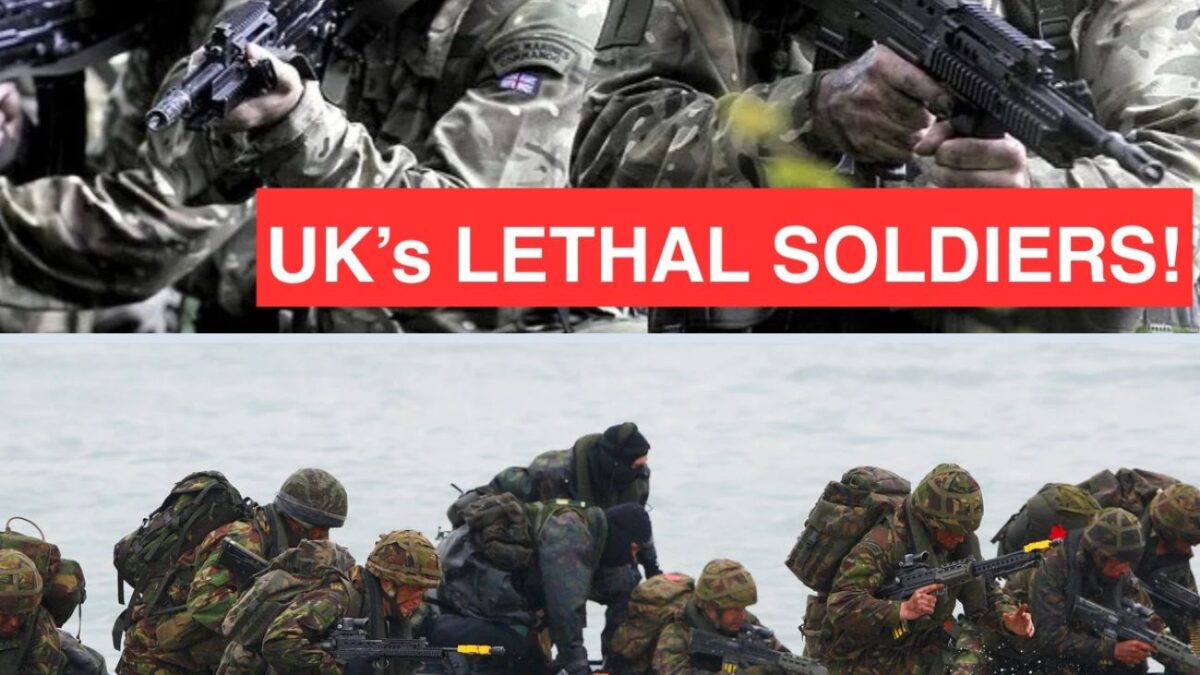
Green berets, muddy assault courses, and a reputation forged in the Falklands. That’s what most people think of when they hear Royal Marines. But in 2026, the corps fights nothing like it did 40 years ago. The units are smaller, the technology is sharper, and the firepower a single commando company can call on would have been unthinkable a generation ago. Over the past 5 years, the Royal Marines have quietly rebuilt themselves from the ground up. New doctrine, new weapons, new structures, and a new philosophy that treats every four-man fire team as an autonomous fighting unit capable of operating independently when communications go dark. Drones now fly at section level. Loitering munitions give small teams the ability to destroy armored vehicles without calling in a single fast jet. And electronic warfare specialists deploy alongside riflemen, not just alongside generals. None of this happened by accident. The Royal Marines watched what was killing soldiers in Ukraine, and in Nagorno-Karabakh, and across a dozen smaller conflicts, and they adapted faster than almost any comparable force in NATO.
Today, we’re breaking down exactly how the Royal Marines fight, from the four-man fire team to the weapons they carry, the technology they deploy, and where they’re operating right now. This is the modern commando force, and it is deadlier than you think. The Royal Marines number roughly 7,700 personnel. For context, the United States Marine Corps fields around 170,000. But the Royal Marines have never been designed for mass. They’re built for speed, precision, and the kind of high-readiness response that gets boots on hostile ground before most forces have finished their briefings.
The formation centers on 3 Commando Brigade. Within it sit three commando units, 40 Commando, 42 Commando, and 45 Commando, each with its own character and specialization, but all trained to the same commando standard. Backing them up are 29 Commando Regiment Royal Artillery, 24 Commando Royal Engineers, and the Commando Logistic Regiment. Every single person in those supporting units has passed the All Arms Commando Course. The cooks, the signalers, the gunners, all of them.
Since 2021, the Future Commando Force program has reshaped how these units organize and deploy. The old model of three broadly similar infantry battalions is gone. In its place, each commando unit now generates Littoral Response Groups, essentially tailored, task-built packages that can deploy independently at short notice. Think of it as the difference between sending a battalion and sending a scalpel. A Littoral Response Group, built around a commando company with attached artillery observers, engineers, drone operators, and intelligence specialists, can be on a ship and moving within days.
The logic is straightforward. Large formations are easy to find and easy to hit. A dozen small dispersed teams spread across a wide area, each capable of calling in precision fires from artillery, naval guns, or fast jets, present an entirely different problem. The enemy has to find them first. And by the time they do, those teams have already moved, struck, and dispersed again. This isn’t a concept that lives in a PowerPoint presentation. It’s been exercised repeatedly in Norway, the Mediterranean, and the Indo-Pacific. It drives how Marines are trained, how they’re equipped, and how they think about every operation from the fire team up.
The smallest tactical unit in the Royal Marines is the fire team, a four-man element. This is where combat actually takes place, where rounds go downrange and decisions are made in fractions of seconds. Everything above the fire team exists to support what happens at this level. A standard Royal Marines fire team consists of a team leader, typically a corporal or a lance corporal, and three Marines. The team leader carries the SA80A3, the latest iteration of the L85 assault rifle, which has been significantly improved from the troubled early versions that gave the weapon such a poor reputation in the 1980s and 1990s. The A3 variant, upgraded by Heckler & Koch, is reliable, accurate, and fitted with a full-length Picatinny rail system that accepts a range of optics, laser aiming devices, and foregrips. The standard optic is a variable magnification Elcan sight that allows rapid transition between close quarters and mid-range engagements. Most fire team leaders also carry an infrared laser designator for use with night vision equipment.
One Marine in each fire team is designated as the light machine gunner, carrying the L110A3, the British designation for the FN Minimi Para. This weapon fires the same 5.56 mm NATO round as the SA80, but is belt-fed and capable of sustained automatic fire. The Minimi gives the fire team its suppressive capability. When contact is made, the light machine gunner’s job is to put enough rounds onto the enemy position that the rest of the team can maneuver. The gunner typically carries between 600 and 800 rounds, with additional ammunition distributed among the other team members.
The remaining two Marines are riflemen, but that term understates their role considerably. One will often carry an underslung grenade launcher, the L17A2, fitted beneath the SA80. This fires 40 mm grenades out to around 350 meters and gives the fire team an indirect fire and area effect capability that pure rifle fire cannot provide. High explosive, smoke, and illumination rounds are all carried, and in urban environments the grenade launcher becomes exceptionally valuable for engaging targets behind cover or inside structures.
Two fire teams make up a section, which is the Royal Marines equivalent of a squad. The section is commanded by a corporal who leads one fire team, while a lance corporal leads the other. This eight-man section is the basic maneuver element, and it operates using a simple but effective principle: one fire team suppresses while the other moves. This fire and maneuver drill is practiced until it becomes instinctive, and it works whether the section is advancing, withdrawing, or fighting through an ambush.
What separates the Royal Marines from most infantry forces is what happens when things go wrong—communications jammed, section leader down, plan in pieces. In most armies, that’s when units stall. In the Royal Marines, every Marine, down to the newest member of the fire team, is trained to keep pushing toward the objective on their own initiative. The corps calls it mission command. You understand the intent and you find a way to achieve it regardless of what breaks around you. That’s not a line from a recruitment poster. It’s drilled relentlessly in Norway at minus 30, in the jungles of Brunei at plus 35, and across every major exercise the corps runs.
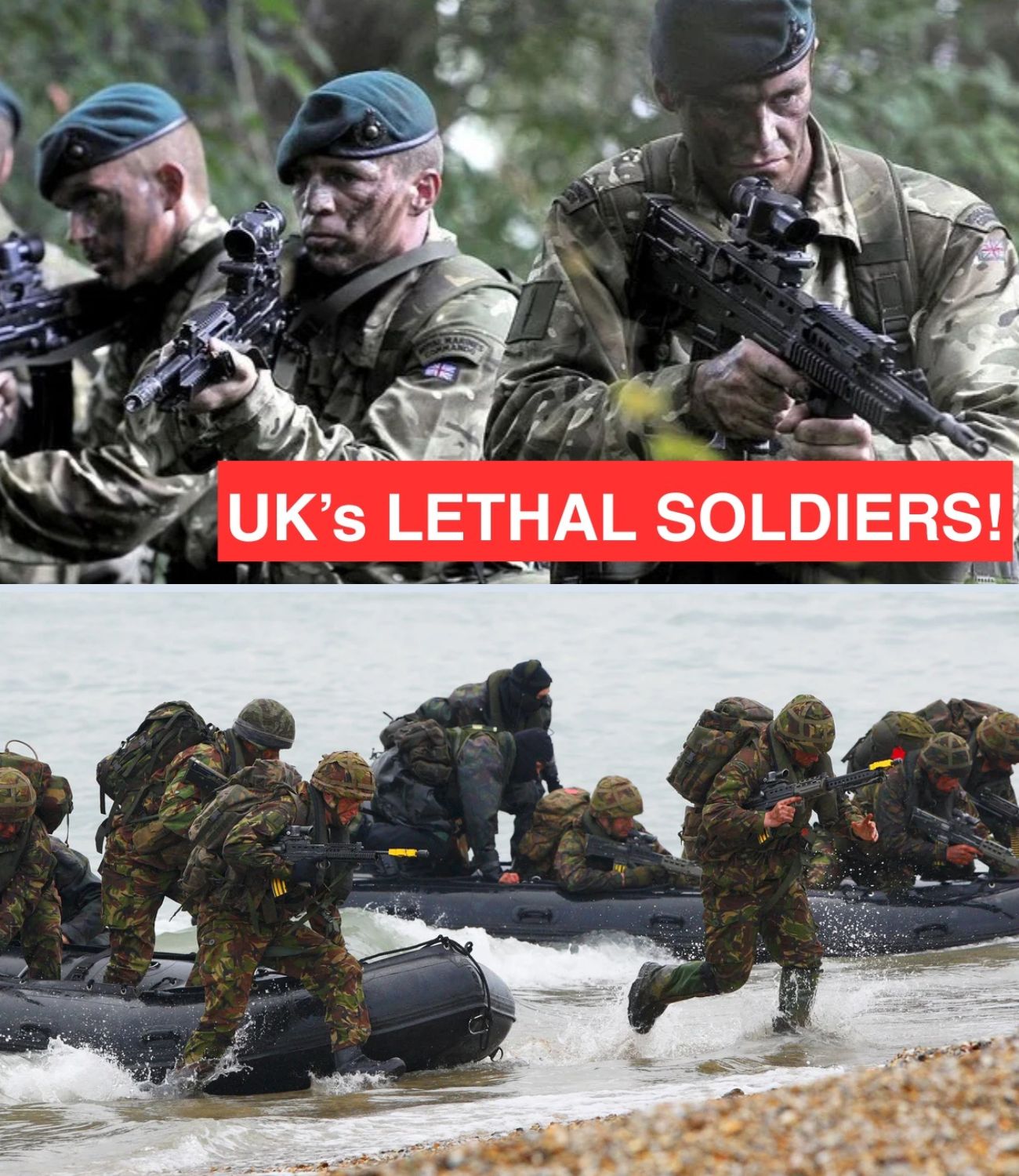
Medical support at section level follows the same philosophy of distributed responsibility. There is no dedicated medic in every section, but every Marine completes combat first aid training, and at least one per section qualifies as a team medic with advanced trauma skills, including tourniquet application, airway management, and hemorrhage control. At troop and company level, dedicated combat medical technicians provide a higher tier of care capable of stabilizing casualties for evacuation.
A troop in the Royal Marines consists of three sections plus a troop headquarters element, giving roughly 28 to 32 personnel depending on the specific task organization. The troop is commanded by a lieutenant or a second lieutenant, with a troop sergeant, typically a sergeant, serving as his second-in-command. The troop sergeant is often the more experienced of the two and plays a critical role in managing logistics, casualty evacuation, and ammunition distribution that keeps the troop fighting.
At troop level, heavier weapons begin to appear. The troop can be reinforced with a General Purpose Machine Gun, the L7A2, which fires 7.62 mm NATO and provides significantly greater range and penetration than the Minimi. The GPMG, affectionately known as the Gimpy, has been in British service since the 1960s, but it endures because it works exceptionally well. In the sustained fire role, mounted on a tripod with a C2 sight, it can engage targets reliably out to 1,800 meters. In the light role, carried by a single Marine and fired from the hip or shoulder, it provides devastating firepower at section and troop level. Most Royal Marines troops will have at least two GPMGs available, and in defensive positions, that number can increase substantially.
Anti-armor capability at troop level comes from the NLAW, the Next Generation Light Anti-tank Weapon. This is a single-shot disposable missile system jointly developed by Sweden and the United Kingdom, and it became globally famous after its extensive and highly effective use by Ukrainian forces against Russian armor from 2022 onward. Ukraine confirmed what British forces already knew: the system works. The NLAW uses a predicted line of sight guidance system, meaning the operator tracks the target for a few seconds before firing, and the missile calculates an intercept trajectory. It’s effective against main battle tanks at ranges up to 800 meters and can be employed from enclosed spaces, which makes it exceptionally useful in urban combat. Every Marine is trained to use it, and troop-level anti-armor specialists carry multiple rounds.
For heavier anti-armor threats, the Javelin missile system is available at company level and can be pushed down to troops when the situation demands. The Javelin is a fire-and-forget system with a range exceeding 2,500 meters, and its top attack flight profile means it strikes the thinnest armor on top of a tank, where protection is weakest. It’s heavy, roughly 22 kg for the complete system including the command launch unit, but it lets a commando troop kill virtually any armored vehicle in existence. British stocks of Javelin have been replenished following donations to Ukraine, and the system remains a cornerstone of anti-armor capability.
A company, or commando company, consists of three troops plus a company headquarters, bringing the total to around 100 to 120 personnel. The company is commanded by a major and represents the primary building block for operations. In the Future Commando Force model, companies are designed to operate semi-independently as the core of a Littoral Response Group supported by attachments from artillery, engineers, intelligence, and logistics. A Royal Marines company doesn’t deploy as bare infantry. It travels with forward observers who can call in naval gunfire and airstrikes, electronic warfare operators who can detect and jam enemy communications, drone teams, combat medics with trauma surgical training, and an intelligence cell processing live feeds. 100 Marines with that package attached can hold ground, strike targets, and sustain themselves in austere terrain for extended periods without external support. That’s not a company; that’s a self-contained task force.
Beyond the core weapon systems already mentioned, the Royal Marines carry a range of equipment that reflects their role as a technologically advanced commando force. The standard sidearm is the Glock 17 Gen 5, which replaced the venerable Browning Hi-Power after decades of distinguished service. The Glock is lighter, more reliable, carries 17 rounds of 9mm Parabellum, and requires substantially less maintenance. It’s issued primarily to officers, vehicle crews, and specialists, but in certain roles, and particularly close protection and room clearance, it’s carried more widely.
For designated marksmen, the L129A1 Sharpshooter Rifle provides precision fire at ranges beyond what the SA80 can effectively cover. Chambered in 7.62mm NATO and fitted with a Trijicon ACOG or similar magnified optic, the L129A1 allows a trained marksman to engage individual targets reliably out to 800 meters. At least one designated marksman is typically embedded in each troop, giving the unit the ability to pick off enemy commanders, radio operators, and machine gunners at extended range. The weapon proved itself in Afghanistan and is now deeply embedded in commando tactics.
Sniper capability is held at commando level and comes in the form of the L115A3 long-range rifle, chambered in .338 Lapua Magnum. This weapon, manufactured by Accuracy International in Portsmouth, holds some of the longest confirmed kills in British military history and is effective to ranges exceeding 1,500 meters. Royal Marine snipers undergo one of the most demanding sniper courses in the world, and their skills extend well beyond marksmanship to include observation, stalking, fieldcraft, and the discipline to remain concealed in a single position for days at a time. In certain scenarios, the L121A1, a .50 caliber anti-materiel rifle, is also deployed for engaging targets such as vehicles, radar equipment, communication arrays, and fortified positions at extreme range.
Night fighting capability is a major advantage for the Royal Marines and one that separates them from the vast majority of potential adversaries. The standard issue night vision device is increasingly being supplemented, and in some cases replaced, by systems that fuse thermal and image-intensified imagery, allowing Marines to see through smoke, dust, foliage, and complete darkness simultaneously. Helmet-mounted night vision, combined with infrared laser aiming devices on weapons, means that a Royal Marine section fighting at night has an enormous advantage over adversaries who lack equivalent technology. This isn’t reserved for special forces; it’s standard across every commando unit. The Royal Marines own the night, and they train extensively to exploit that advantage.
Body armor has evolved significantly in recent years. The Virtus load-carrying system, which replaced the older Osprey body armor, is modular and allows Marines to scale their protection depending on the threat and the mission profile. For amphibious ops or long patrols, Marines strip down to a plate carrier with minimal pouches. For deliberate operations in high-threat environments, additional armor plates, ballistic collars, and pelvic protection can be added. The system integrates with a central power distribution unit, charging radios, GPS, and electronics from a single source.
Camouflage follows the Multi-Terrain Pattern, or MTP, designed to work across a range of environments without requiring troops to carry multiple sets of clothing. MTP blends greens, browns, and tans in a pattern that breaks up a Marine’s silhouette in woodland, desert, and urban terrain. For Arctic operations, dedicated snow camouflage over-whites are issued. The pattern replaced the older DPM in 2010 and has proven effective across every environment the Royal Marines have operated in since.
Communications deserve special mention because they are arguably the single most important enabler the modern commando carries. Royal Marine sections now operate with tactical radios that provide encrypted voice and data communication, allowing them to share targeting information, GPS coordinates, and even drone feeds in real time. The Bowman communication system, long the backbone of British military communications despite its well-documented frustrations, is being replaced by the Morpheus program, which provides higher bandwidth, better encryption, greater resilience to jamming, and integration with allied NATO systems. For a small unit operating behind enemy lines or on a remote coastline, reliable communications are a lifeline, connecting them to artillery, naval guns, air support, and extraction assets scores of miles away.
If one area defines how the Royal Marines have changed, it’s unmanned systems. The integration of unmanned systems into commando operations has been one of the defining features of the Future Commando Force transformation. Ukraine proved that forces without drones die. Nagorno-Karabakh proved it again. The Royal Marines drew those conclusions early and started integrating unmanned systems at every level of the force.
At section and troop level, Royal Marines now deploy small tactical drones for reconnaissance and surveillance. These lightweight systems, some small enough to fit in a cargo pocket, provide overhead surveillance that was previously available only from helicopters or dedicated reconnaissance aircraft. A Marine can launch a small drone in minutes, fly it over the next ridge or around a building complex, and feed live video back to the section commander’s handheld screen. Instead of sending scouts forward on foot and waiting 30 minutes, the section gets eyes on the objective in seconds without exposing anyone.
At company and commando level, larger and more capable systems are being fielded. The Royal Marines have been actively trialing and deploying loitering munitions—essentially kamikaze drones that can orbit an area for extended periods before being directed onto a target with precision. These weapons, some of which weigh less than 15 kg, give small units an organic precision strike capability that previously required calling in fast jets or attack helicopters, assets that might never arrive at all. A commando troop on a Norwegian fjord or a contested Mediterranean island can now destroy a command post or an armored vehicle without a single call to higher command.
The Royal Marines have also invested in counter-drone technology, recognizing that what they can do with drones, their adversaries can attempt as well. Electronic warfare systems capable of jamming drone control links and GPS signals are being integrated at increasingly low levels, giving even small units a fighting chance against the drone threat that has proven so lethal in recent conflicts. Electronic warfare more broadly is another area of rapid development within the commando force. Dedicated electronic warfare teams can detect enemy radio communications, identify command nodes and headquarters by their electromagnetic signatures, and in some cases jam or spoof enemy signals to create confusion and degrade their ability to coordinate. In a conflict with Russia or China, the electromagnetic spectrum is a battle space in its own right. Controlling it, or at least denying an enemy free use of it, can be as decisive as holding a hilltop or a river crossing.
For all the new technology, the Royal Marines remain at heart an amphibious force. No other British unit can match their ability to project combat power from sea to shore. The primary means of delivery is the Landing Craft Utility and the Landing Craft Vehicle Personnel, operated by the Royal Marines’ own landing craft branch, a capability that is unique within the British military. These vessels can carry troops, vehicles, and equipment directly onto a beach or into a port. The Offshore Raiding Craft, a fast rigid-hulled assault boat, allows smaller teams to conduct covert insertions at night, approaching a coastline at speed with minimal radar and acoustic signature.
HMS Albion remains the backbone of this capability. HMS Bulwark has sat in extended readiness for years with no confirmed return to service, effectively leaving the Royal Marines with a single dedicated assault ship. The Multi-Role Support Ship program, or MRSS, is supposed to fill the gap, but timelines and specifications have shifted repeatedly. It’s a genuine vulnerability. But regardless of which platforms carry them, the Royal Marines’ ability to arrive from the sea, bypass defended land routes, and strike where the enemy least expects remains one of the most valuable assets in Britain’s military arsenal.
In northern Norway, the Royal Marines train annually in temperatures below minus 30 degrees Celsius. Every commando unit rotates through. Arctic warfare isn’t a specialization in the corps; it’s a baseline expectation. Marines ski with full combat loads, build shelters in lethal conditions, and operate weapons with frozen hands. Most NATO soldiers would be casualties within hours. The Royal Marines treat it as routine. That matters more now than it has in decades. Russian submarine and surface activity around the Greenland-Iceland-UK gap has pushed the High North back to the center of NATO planning.
On land, the Royal Marines’ primary mobility platform is the BVS 10 Viking, an armored all-terrain vehicle built to operate in terrain that would stop wheeled vehicles dead. It runs on twin articulated tracks, handles deep snow, swamp, steep gradients, and can swim across water obstacles without preparation. Each Viking carries up to 12 Marines with full equipment. The vehicle has proven itself in Afghanistan and Norway and remains central to commando operations where roads don’t exist, which for the Royal Marines is most of the time.
The Royal Marines also maintain a jungle warfare capability with regular training deployments to the Jungle Warfare Training School in Brunei. The jungle remains one of the most demanding environments on Earth for infantry operations, and the skills learned there—close-range navigation, immediate ambush drills, survival, and the mental resilience required to operate in extreme heat and humidity for weeks on end—translate to other complex terrain environments.
The Royal Marines don’t fight alone. What makes them genuinely lethal is what they can call on when the shooting starts. 29 Commando Regiment Royal Artillery provides dedicated fire support and is itself commando-trained. Every gunner in the regiment has passed the All Arms Commando Course. Their primary weapon system is the L118 light gun, a 105mm towed howitzer that can be underslung beneath a Merlin or Chinook helicopter and airlifted into positions that wheeled or tracked artillery simply cannot reach. The light gun fires high explosive, smoke, illumination, and precision-guided rounds out to ranges of 17 kilometers, and with rocket-assisted projectiles somewhat further. A battery of six guns can deliver a devastating concentration of fire within minutes of receiving a call from a forward observer embedded with the commando troops. The sound of those guns opening up is something no enemy wants to hear.
Naval gunfire support is another asset that is relatively unique to the Royal Marines’ amphibious role and one that is often underappreciated. Royal Navy Type 45 destroyers and Type 23 frigates provide responsive fire support to troops ashore using the 4.5-inch Mark 8 naval gun. When the Type 26 frigates replace the aging Type 23s, they’ll bring the larger 5-inch Mark 45, extending naval gunfire range even further. A single warship can deliver sustained fire at ranges exceeding 20 kilometers, and unlike artillery, it doesn’t need to be transported overland, supplied by road, or protected by ground forces once it sails into position offshore and fires on call. In an amphibious operation, naval gunfire can be the first fires to arrive, suppressing enemy positions on the beach while landing craft are still incoming.
Close air support comes from multiple sources. The Royal Navy’s F-35B Lightning II, operating from the Queen Elizabeth-class carriers HMS Queen Elizabeth and HMS Prince of Wales, provides stealth strike capability and can deliver precision-guided munitions in support of troops on the ground. The F-35B’s sensor fusion and data sharing capabilities mean it can detect and identify targets that other aircraft would miss and share that information across the entire force in real time. The Wildcat helicopter, operated by the Commando Helicopter Force, provides armed reconnaissance and can carry Martlet lightweight missiles for engaging small boats, light vehicles, and other targets, as well as door-mounted machine guns for suppressive fire during troop insertions. The Merlin helicopter provides heavy lift, moving troops, ammunition, and supplies into forward positions. And the Chinook, though operated by the Royal Air Force, is frequently assigned to support commando operations and can carry an entire troop with full equipment in a single lift, making it invaluable for rapid insertion and extraction.
It would be incomplete to discuss the Royal Marines’ fighting capability without acknowledging their deep relationship with the United Kingdom’s special forces community. The Special Boat Service, the SBS, is drawn predominantly from the Royal Marines and is arguably the most elite maritime special operations unit in the world. While the specifics of SBS operations are classified, it is publicly known that they specialize in maritime counterterrorism, underwater operations, covert reconnaissance behind enemy lines, and direct action raids. What most people don’t realize is how tightly the SBS and conventional commando units work together. Under current doctrine, the line between special operations and commando operations is deliberately blurred. SBS teams feed intelligence and targeting data to commando units in real time. Commando companies provide outer cordons, extraction support, and diversionary operations for SBS direct action missions. The two forces train together, deploy together, and in many scenarios fight as a single integrated system. While specific SBS equipment remains classified, their operations are inseparable from the wider commando force.
43 Commando Fleet Protection Group Royal Marines also deserves particular mention. This unit is responsible for the security of Britain’s nuclear deterrent, guarding the Trident submarine base at HMNB Clyde in Scotland, and providing force protection for the deterrent submarines themselves. The role demands extreme fitness, marksmanship, constant vigilance, and psychological resilience. Personnel in 43 Commando operate under the strictest security protocols in the British military, and while their mission receives very little public attention, its strategic importance could hardly be overstated. The credibility of the entire British nuclear deterrent depends in part on the Marines who guard it.
So, where are Royal Marines actually operating in 2026? The short answer is everywhere that matters. The most visible commitment is the Littoral Response Group. At any given time, at least one LRG is deployed, typically built around a commando company of roughly 200 personnel with attached specialists embarked on Royal Navy amphibious shipping. These groups rotate through northern Europe, the Mediterranean, and the Indo-Pacific on deployments lasting around 4 to 6 months. Their job is crisis response, partner training, and demonstrating that Britain can project commando forces to a contested coastline at short notice.
In Norway, the Royal Marines maintain a persistent presence around Bardufoss and the Troms region, training alongside Norwegian, Finnish, and Swedish forces. Since Finland and Sweden joined NATO in 2023 and 2024, Arctic cooperation has expanded significantly. Exercises like Cold Response and Joint Viking now involve larger allied formations, and the Royal Marines sit at the center of NATO’s northern flank planning. The corps contributes to the NATO Allied Reaction Force, where commando elements form part of the UK’s high-readiness contribution. Parts of 3 Commando Brigade can deploy within days of activation, making them among the fastest-responding conventional forces in the alliance.
In Ukraine, Royal Marines have provided training in infantry tactics, combat medicine, and mine clearance. But the relationship runs both ways: lessons on drone integration, electronic warfare, and urban fighting have flowed back into commando doctrine faster than almost any other feedback loop in recent British military history. In the Caribbean, Marines deploy annually for Atlantic Patrol tasking, delivering hurricane relief and conducting counter-narcotics operations. Other rotational deployments and exercises take personnel to the United States alongside the US Marine Corps, to the Middle East, East Africa, and the Asia-Pacific. With 7,700 personnel, they cover an extraordinary amount of the map.
You Might Also Enjoy

“We Thought They Would Negotiate”—What Argentine Soldiers Said When The British Attacked Goose Green

“You’ll Never Finish My Ruck March, Limey” — US Sergeant Who Challenged the SAS, Then Fell Out First






