Kensington Palace Reveals STUNNING Succession Update! Royal Family BRACES For Massive Change!

The Midnight Protocol: How Prince William Executed a Bloodless Coup to Redefine the British Monarchy
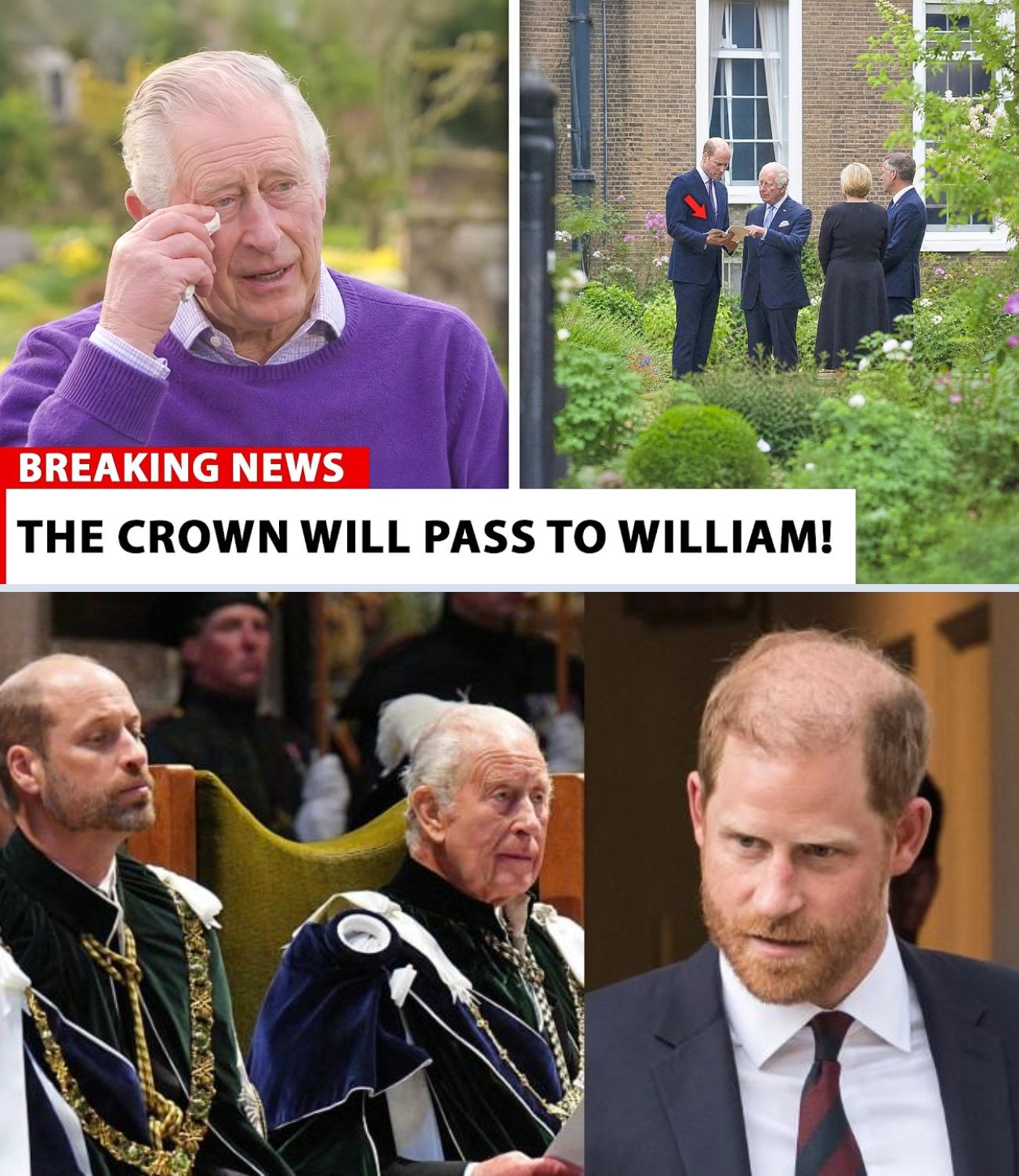
History rarely arrives with the theatrical crash of falling masonry or the roar of angry crowds. More often than not, it slips through the letterbox of Whitehall departments at midnight on a wet Thursday, bundled in legal parchment and sealed with an unyielding finality that leaves traditional power structures blinking in the dawn light.
That was precisely how the British establishment learned that the operational architecture of the House of Windsor had been permanently altered. While the political class slept and the Fleet Street press corps slumbered through the damp autumn air, a heavy, leather-bound document was quietly dispatched not from the storied gates of Buckingham Palace, but from the sharply modernised offices of Kensington Palace. Titled simply the Kensington Palace Transition and Succession Protocol, the document carried no explanatory cover note, no deferential bow to traditional courtiers, and no invitation for debate.
It was an operational takeover. In a single, legally binding stroke, Prince William had bypassed centuries of palace bureaucracy, sidelined his stepmother, secured absolute domestic sovereignty for his wife, and insulated his eldest son from the predatory machinery of modern media. And, perhaps most significantly, it was executed while King Charles III—facing his own formidable medical battles—was forced to look on, recognize the inevitable, and quietly hand over the watch.
To understand the sheer earthquake that this protocol represents within the ancient geography of British royalty, one must first grasp the unwritten rules that have governed the sovereign’s court for generations. For centuries, Buckingham Palace has functioned as the gravitational centre of British public life. It is where the red dispatch boxes are stacked, where prime ministers come to kiss hands, and where the grand, ponderous machinery of state grinds forward according to deeply entrenched habits. Kensington Palace, by contrast, has long been viewed as a secondary residence—important, certainly, but fundamentally subordinate to the sovereign’s central command.
When the new protocol dropped into government inboxes late last week, however, the geographic hierarchy vanished overnight. Senior government officials reading through the opening paragraphs were met with a stark reality: all future operational decisions regarding working royals, sovereign duties, and the strategic direction of the Crown would no longer be routed through King Charles’s private office at Clarence House or the traditional administrative offices of Buckingham. Instead, they would be directed, managed, and, where necessary, fiercely vetoed by the Prince and Princess of Wales.
For an heir to the throne, formalising influence to this degree is entirely unprecedented. Standard royal protocol dictates patience. An heir waits in the wings, cuts ribbons, unveils plaques, and maintains a respectful, subservient silence while the reigning monarch holds the reins. Yet William, shaped by a lifetime of observing the toxic institutional infighting that fractured his parents’ lives, decided that waiting was a luxury the monarchy could no longer afford.
The vacuum created by the King’s cancer treatment had inevitably invited the usual circling of courtiers, factional manoeuvring, and quiet positioning for the next reign. Rather than allowing the palace corridors to become a battleground for competing interests, William took the keys, locked the doors from the inside, and rewrote the constitution of his own household.
The Parallel Court and the Speed of Whitehall
The structural changes enacted by the protocol are vast. Historically, the Prince of Wales played a purely supporting role—visible, dutiful, but functionally toothless. The new framework establishes William as a co-sovereign administrator in all but name. He now receives the identical classified red boxes delivered to the King, maintains direct, unmediated communication channels with the intelligence services, and wields absolute command over the Duchy of Cornwall’s vast financial resources to fund his own strategic initiatives.
Crucially, the pipeline between Downing Street and the royal household has been violently redirected. Under the old regime, government departments dealing with ceremonial assent or procedural approvals coordinated almost exclusively through the Lord Chamberlain and the private secretary’s office at Buckingham Palace—a notoriously sluggish apparatus that frequently moved at a glacial, deliberative pace.
The new arrangement establishes a direct liaison between Whitehall and Kensington Palace. Government insiders report that William’s team operates with an astonishing, almost corporate efficiency, answering inquiries within hours rather than weeks and cutting through procedural red tape that has choked royal administration for decades. For a modern government desperate to project stability amidst economic volatility and public scepticism, that speed is intoxicating. It has instantly made Buckingham Palace look like a stately relic of a bygone era. Once that perception hardens among senior civil servants, it ceases to be mere palace gossip and becomes hard political reality: the people who actually get things done now sit in William’s office.
Catherine’s Absolute Supremacy: The Mother’s Shield
Yet, if William’s own elevation is striking, the transformation of Catherine’s position within the firm is nothing short of revolutionary.
For years, certain snobbish corners of the British aristocracy and traditional courtier class viewed the Princess of Wales with condescending skepticism. She was scrutinized, whispered about, and occasionally treated as an outsider who had lucked into her station. Through every trial, Catherine maintained a disciplined, uncomplaining silence, anchoring the family’s public image through sheer personal resilience.
The new protocol formally acknowledges that reality by designating Catherine as the supreme matriarch of the royal household. The phrase itself is seismic. Within the new administrative framework, Catherine holds absolute, unchallengeable veto power over the public schedules, media appearances, educational milestones, and photographic representations of all minor royal children.
No longer can a traditionalist courtier schedule a public appearance or a press secretary release an official image of George, Charlotte, or Louis without Catherine’s explicit written authorisation. This is not merely parental oversight; it is hard institutional power that extends far beyond the nursery. During the King’s ongoing medical leave, major domestic patronages have coalesced around Catherine, positioning her effectively as Queen in all but name. The courtiers who once whispered behind her hands must now seek her audience to reach the future king.
This shift is intensely personal for William. As a child, he watched his mother, Diana, Princess of Wales, get isolated, stripped of institutional protection, and treated as a disposable decorative asset rather than a vital partner. He witnessed the slammed doors, the cold silences, and the frantic panic of flashbulbs in dark London streets. When he married Catherine, he made a private vow that the machinery of the state would never be permitted to chew up his wife.
Today, that private vow has been codified into constitutional law. The people who once dismissed Catherine as a commoner must now address her as the operational head of the household’s domestic agenda. She is not simply filling a temporary gap; she is defining the role on her own terms, backed by the full legal weight of the Crown.
Protecting George: The Ironclad Media Blackout
Nowhere is this protective instinct more fiercely displayed than in the protocol’s treatment of Prince George. The line of succession is an unforgiving, cold master; it extracts duty from infants before they have learned to spell their own names. William remembers too well the cameras thrust into his face as a toddler, the relentless pursuit by paparazzi, and the agonizing walk behind his mother’s coffin at just fifteen years old in front of two billion television viewers.
The new protocol draws a thick, permanent line in the sand around the Wales children. It establishes an absolute media blackout radius, legally prohibiting the royal communications office from scheduling any official solo public engagements for Prince George until he reaches full legal maturity. It bars courtiers from deploying the young prince as a public relations prop to boost flagging popularity ratings.
Predictably, traditionalists within the Buckingham Palace old guard were reportedly horrified by these clauses. They argued vehemently that the British public demands visual access to the future king and that hiding the heir creates a dangerous disconnect between the monarchy and the people.
William’s response was characteristically blunt. He made it clear that his son’s mental health, safety, and fundamental right to a normal childhood supersede any considerations of public entertainment. According to insiders, he warned that any individual within the palace apparatus who leaked stories about George or attempted to manipulate him into an appearance would face immediate professional eradication.
Furthermore, the protocol restricts the release of public photographs of the Wales children to exactly four official images per year—carefully curated moments controlled entirely by Catherine’s office. The era of impromptu school-gate ambushes, staged walkabouts, and invasive telephoto lens shots has been officially brought to an end. William has decided that his children will not grow up as hunted animals, and the public, exhausted by decades of tabloid excess, has rallied behind him with overwhelming polling support.
The Clarence House Lockout
If the protocol represents a triumph for Kensington Palace, it signals an unmitigated disaster for Clarence House and the faction surrounding Queen Camilla.
For years, Camilla’s private office had been quietly consolidating influence, cultivating loyal journalists, promoting her charitable works, and constructing a shadow court designed to maintain substantial executive power even if King Charles became incapacitated. Her supporters fully expected the transition protocol to enshrine a permanent advisory role for her, complete with potential co-regency powers and protected taxpayer-funded infrastructure.
When the document finally landed on their desks, however, Camilla’s private secretary searched its pages in vain. Her name is conspicuously absent from the operational chain of command. She holds no veto power, commands no primary advisory seat during state transitions, and is entirely excluded from the inner circle of the Regency Council.
It is a total, unadorned institutional lockout.
William did not launch a public tirade against his stepmother, nor did he leak malicious gossip to the newspapers. He simply wrote her out of the future. While she retains the ceremonial privilege of wearing crowns and attending state banquets, she has been decisively excised from the actual business of running the monarchy.
For the network of advisers, press officers, and old friends who orbited Clarence House believing they had secured a permanent foothold in the royal ecosystem, the effect has been devastating. Telephone calls to Kensington Palace now go unreturned; invitations to exclusive private briefings have evaporated; and relationships cultivated with newspaper editors over decades suddenly hold zero currency. In the rarefied air of court politics, access is the only coin of the realm—and when access vanishes, influence turns to dust. Some aides are already quietly hunting for exit strategies, while others scramble to rebuild bridges with William’s team, desperately trying to salvage their careers through belated demonstrations of loyalty.
The Passing of the Watch
Perhaps the most poignant chapter of this entire transition, however, unfolded behind closed doors in the King’s private study at Windsor.
The protocol was not delivered impersonally by a courier or a junior secretary. William walked into his father’s study alone, carrying a single leather-bound folder. Charles sat in his wingback armchair, visibly fatigued from his grueling medical treatments. As his eyes fell upon the familiar seal embossed on the leather, he understood instantly what was resting on the mahogany table before him.
This was the moment he had to confront the unpalatable truth that his reign—an epoch he had waited over seventy years to inherit—was effectively being curtailed. There was no shouting, no dramatic confrontation. The silence in the room was heavy with a sorrowful realization.
Charles reached out a thin hand and gently rested his palm upon the folder without lifting the cover. He looked up at his eldest son, recognizing not the rebellious boy of past decades, but a hardened man fully prepared to carry the immense weight of the institution.
With a quiet breath, the King whispered, “It is yours. You have the watch.”
William did not celebrate. He felt the crushing gravity of the moment settle squarely onto his shoulders. Reaching forward, he placed his own hand over his father’s and replied softly, “I have it, Pa. Rest now.”
In that single, unceremonious gesture, the transfer of power became complete. The personal frictions, the historic misunderstandings, and the painful ghosts of the past dissolved in the quiet of the room. A father who had spent a lifetime preparing for a long, transformative reign was letting go far sooner than he ever imagined; a son who once despised the very existence of the Crown was now stepping forward to hold it together.
The Road Ahead
As the dust settles across the royal estates, the new operational reality of the House of Windsor is firmly established. Prince William controls the machinery of state; Catherine commands the domestic and maternal high ground; Prince George is shielded from the toxic media circus; and Queen Camilla’s shadow court has been effectively dismantled.
Yet, the old guard will not surrender their privileges without a whimper. The traditionalists, the discarded courtiers, and the factions locked out of the new dispensation are watching closely for any sign of weakness. They will test the new structure, look for administrative cracks, and whisper in the ears of sympathetic journalists.
William is acutely aware of these lingering threats—which is precisely why his protocol was drafted with such meticulous, unyielding legal precision. He is not staging a theatrical coup; he is quietly laying down a new concrete foundation for an institution fighting desperately for survival in a skeptical modern world.
The next reign has not formally begun on paper, but its operating system is already humming smoothly beneath the surface of palace life. And as everyone inside the ancient stone walls of Windsor and Kensington now knows with absolute certainty, the future king has arrived—and he is not waiting for anyone’s permission to lead.
You Might Also Enjoy

“We Thought They Would Negotiate”—What Argentine Soldiers Said When The British Attacked Goose Green

“You’ll Never Finish My Ruck March, Limey” — US Sergeant Who Challenged the SAS, Then Fell Out First






