King Charles ABSOLUTELY Despised His Brother Prince Andrew, Here’s Why
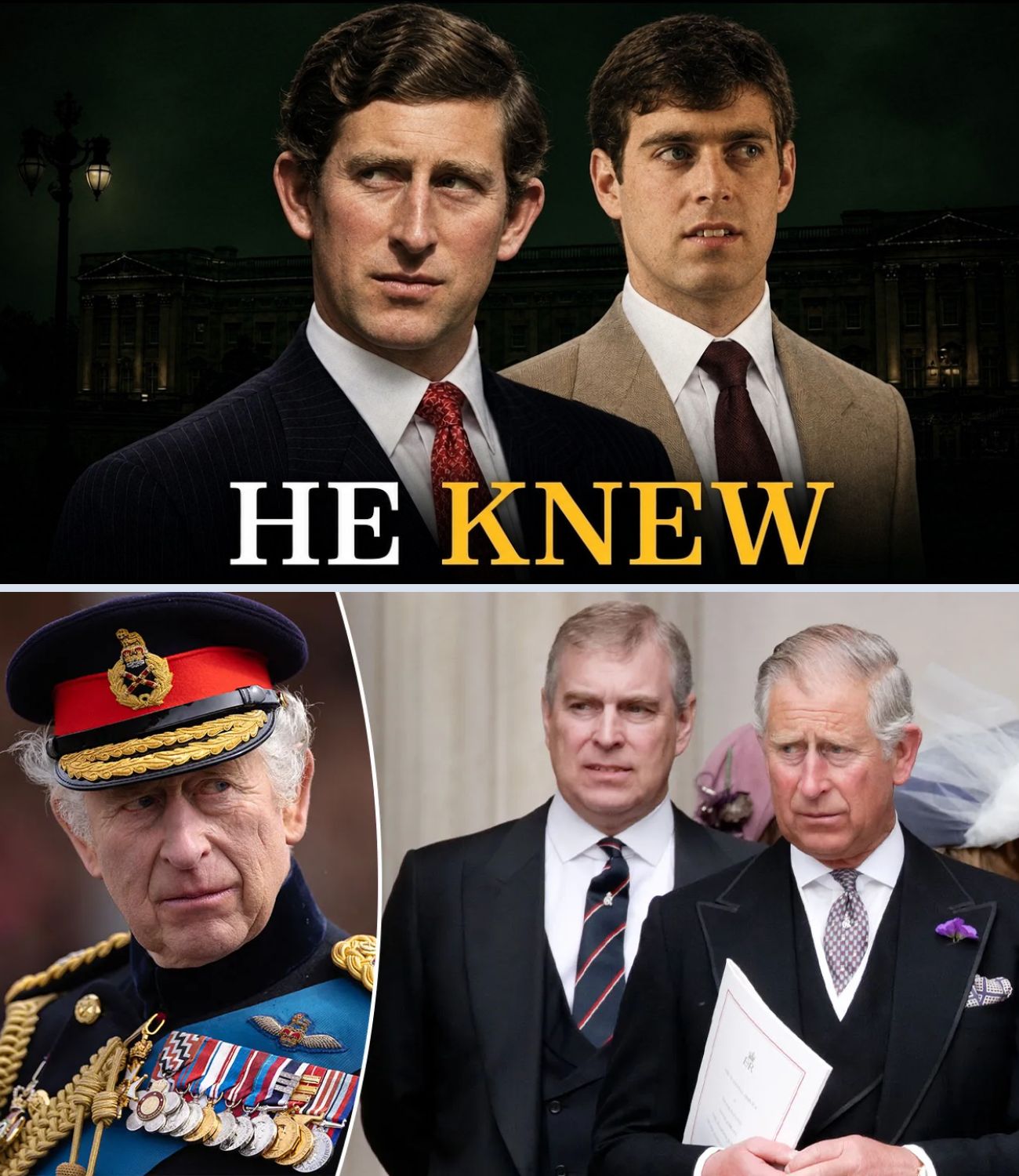
On October 30, 2025, Buckingham Palace struck out one person’s name. Andrew would no longer be a prince. He would become Andrew Mountbatten-Windsor and leave Royal Lodge. Most people took this as the king finally losing patience with his inconvenient brother. This interpretation is erroneous. Charles has been trying to evict him since 2019, but to no avail.
He cut his maintenance. He canceled security funding. Andrew stayed because he had something his brother didn’t have: a lease. Their mother signed it and continued to protect it until the day she died in 2022. Let’s start with what the statement actually says, because the wording itself is the crux of the story.
The palace did not announce that Andrew had resigned, stepped back from duties, or agreed to step back further. It said the king had begun the formal process of stripping Prince Andrew of his style, titles and honorary ranks. This is the language of an institution that recognizes that it cannot simply give an instruction to a family member and expect them to follow it.
This was to be accomplished through letters patent. His name had to be struck from the list of peers—a clerical act that looks like a note but acts like a complete erasure. And the clause about property was written separately, because it was negotiated separately. Andrew will give up his lease on Royal Lodge and move to another private residence on the Sandringham Estate.
He will give it up, he will not release it, he will not submit. A word used when the other party has something they have to part with. Let’s go back 11 months, to the previous winter. In December 2024, a British immigration tribunal heard the case of a Chinese businessman, known in court documents as H6 and later named Yang Teng Bao, who had been banned from entering the UK on national security grounds and who, according to the court’s decision, had unusually close ties to the Duke of York’s office.
Documents cited in the decision showed that Yang was authorized to act on Andrew’s behalf with potential Chinese investors. Whatever it was, it was definitely not the behavior of someone who had sincerely retired from public life five years ago. The reaction was swift, and by royal standards, brutal. Andrew did not go to Sandringham for Christmas.
It was widely reported that the King had made it clear that he was unwelcome there, and Andrew’s absence from the Christmas walk to St Mary Magdalene Church was the most visible sanction the family has ever received. A photo with one person missing. Media reports at the time, which rarely agree on royal matters, also described the cessation of private maintenance payments that Charles had been making to his brother from the income of the Duchy of Lancaster—reportedly around a million pounds a year—and the cancellation of Charles’ funding for Andrew’s personal security. These figures have never been officially confirmed. Take these as credible reports, not official reports.
Here’s the part that should stop you. All this happened, and Andrew didn’t move. He remained in a 30-room Grade II listed house in Windsor, 3 miles from Windsor Castle, where he had lived since 2004 and where his ex-wife Sarah Ferguson also lived after her own home on the estate became unaffordable.
Divorced in 1996, they shared the same address for most of the two decades thereafter. Whatever you call this arrangement, it was stable, it was theirs, and the King of the United Kingdom could not break it because of a document signed in 2003. The Crown Estate has finally released the 2025 lease agreement under constant pressure, and it is worth understanding exactly what it entails.
75 years, a one-off payment of £1 million, an obligation for Andrew to spend around £7.5 million on renovating the house, which had fallen into disrepair after the death of the Queen Mother, who lived there until 2002. Instead, the annual rent thereafter was effectively zero—a symbolic amount paid only on demand.
The Crown Estate, the body that manages the sovereign’s property but transfers surpluses to the Treasury, granted the Queen’s second son a legally protected lease until 2078 on the house, from which he could not be evicted as long as he complied with the conditions. He followed them.
That’s the whole point. Andrew was not a squatter. He was a tenant in rights, and his landlord was not his brother. So when people say that Charles despised Andrew, they usually mean something petty and personal: the older brother considered the younger one vulgar, greedy, or demeaning to his surroundings. This is reported in various forms by people who have spoken to both sides, but this belittles what actually happened.
These weren’t just two men who didn’t like each other at Christmas dinner. It was a 40-year argument about what a monarchy was for, in which one brother was raised to believe in his own immutability, while the other spent his adult life plotting to make people like his brother unnecessary. To understand why Andrew believed he could not be removed, we must return to the circumstances of his birth, and to them alone, for they are the reason it lasted 22 years.
Andrew was born on February 19, 1960, at Buckingham Palace, becoming the first child born to a sitting British monarch since Queen Victoria’s youngest daughter in 1857. Elizabeth had been on the throne for eight years. She gave birth to Charles and Anne as a young princess, with a naval officer husband and an ailing father, and after 1952, with a job that completely absorbed her.
Contemporary accounts and later biographies are unanimous about what it looked like. Charles was raised mostly by nannies, sent to Cheam and then to Gordonstoun—a school he sincerely disliked and wrote home about with unhappiness. Andrew found himself in a different atmosphere. The Queen made time. By all accounts from within the court, she was noticeably warmer with her second son.
This is not gossip about favoritism. This is a fundamental fact of everything that happened later, as affection in this family was directly converted into property, money, and protection. And it was she who distributed these things, not the heir. And then 1982 gave Andrew something that no amount of maternal affection could buy.
He was 22, a Sea King helicopter pilot aboard HMS Invincible, and the government of the day would have preferred to keep him out of the South Atlantic. The Queen reportedly insisted that he set off with his ship. It carried out anti-submarine missions and casualty evacuations, and its aircraft was used as a decoy for Exocet missiles, hovering in the air to become a radar target that could divert the missile away from the ship.
When the Invincible returned to Portsmouth in September, he came ashore with a rose in his mouth, and the country loved him for it. For a time in the early 80s, Andrew was the most popular man in the family. Not an heir, but a “spare”. “Randy Andy”—that’s what the tabloids called him. And they meant it as a compliment.
Charles had just married a 21-year-old girl at the time, whose fame was beginning to eclipse his own and who, within a few years, had made his private life a subject of national entertainment. Remember this comparison, because the reputations of the two brothers soon went in opposite directions and never recovered. Charles’ idea of a “lesser monarchy” did not emerge from the moment he ascended the throne.
It has been documented since the 1990s, discussed in his circle, and periodically leaked to the press for three decades. Fewer working royals, fewer public figures living off public funds, and a core limited to a direct line of succession. Several biographers who have spoken to both camps, including Robert Hardman and Valentine Lowe, describe Andrew’s reaction not as a political issue but as a personal demotion.
And he was right. In any version of a reduced monarchy, the monarch’s second son and his two daughters are the very people who are reduced. So, the struggle for status was going on even before the scandal broke. Andrew wanted his daughters to be working members of the royal family with public duties and funding. Charles had no intention of making them like that.
Andrew wanted the Duke of York to be an important figure, a sales representative, a man with an office and a portfolio of responsibilities. Charles’s people considered this entire apparatus a liability that was about to lead to disaster. In the narrowest sense, they were both right, and it poisoned the relationship long before Jeffrey Epstein’s name was associated with it.
What complicates the simple interpretation—jealous king, disgraced brother—is that Charles’s position was limited in a way that seems almost absurd when put bluntly. As Prince of Wales, he had the Duchy of Cornwall, a vast private income, his own court, and influence over what was reported to the press. He had no power over his brother.
Andrew’s house belonged to the Royal Estate. His annual allowance came from the Queen’s personal treasury, the Duchy of Lancaster. His police protection was a matter for the Home Office and the Metropolitan Police, with the Queen’s known preference carrying weight. His naval rank, honorary colonelcy, and status as a state counselor—all of this came from his mother, and none of it passed through her eldest son.
The heir to the throne had a title and his own opinion. His brother had a landlord, a benefactor, and a protector, and all three were the same 96-year-old woman. There is one more thing to establish before we move on to the collapse, and that is the point at which the two courtyards became formally separate structures.
On July 23, 1986, Andrew married Sarah Ferguson at Westminster Abbey. 500 million people watched it. That morning he received the title of Duke of York, traditionally given to the second son of a monarch, and it came with all that a dukedom means in terms of permanence. Sarah was fun, easygoing, loud, and for about 18 months the press adored her for being everything Diana was not allowed to be.
Then they changed, as they always do, and the York marriage was publicly torn to pieces with a brutality that accompanied the slower disintegration of the Welsh marriage. The Yorks separated in 1992, the annus horribilis, and officially dissolved their marriage in 1996. And then they did something that no one in this family had ever done before.
They continued to live together. Not right away and not at the Royal Lodge. After the divorce, Sarah kept a house on the Windsor estate called Birch Hall, and they moved from one place to another for years, while the press endlessly described the arrangement as amicable co-parenting. Beatrice was born in 1988, Eugenie in 1990.
Both parents have repeatedly officially stated that they made a mistake with the divorce, but have maintained their friendship. Years later, Andrew told an interviewer that they were the happiest unmarried couple in the world. This phrase has been repeated so often that it has lost all meaning. So let’s see what the price was.
Sarah’s finances were in a miserable state almost from the moment she left. She did not receive the concessions that the Duchess could have counted on. According to reports at the time, the divorce settlement was around £600,000 with a trust fund for the girls, and she was expected to earn her own living. She did this through books, television, and advertising contracts, and also accumulated debts that reportedly ran into the millions.
In 2010, a Sunday tabloid filmed her on video allegedly offering access to her ex-husband for half a million pounds. She apologized publicly and sincerely. Andrew’s office said he knew nothing about it. This episode is important here for one reason. This was the first time the York family publicly demonstrated that their money and access to the royal family were inseparable.
The family business had a branch with cash flow problems, and this branch traded the brand. Charles’ entourage had long since decided that Sarah should not be taken back. Numerous courtier testimonies, including Valentine Lowe’s accounts of palace staff, describe her as effectively excluded from the Prince of Wales’s orbit for many years.
She was not invited to important events or photographed at large family gatherings. She was absent from William and Catherine’s wedding in 2011 and publicly admitted how much it affected her. Andrew left, his daughters left wearing hats that became a meme. Their mother watched it on TV. So by the time we got to the house, there were already two warring households within one family, and the question of who lived where became the most obvious measure of who mattered.
Andrew’s first family home was Sunninghill Park in Berkshire, a new build from the 1980s, given to the couple by the Queen for their wedding, which the press instantly dubbed “South York” because it looked like a ranch from a soap opera. After the divorce, he lived there alone, and in 2007 he put the house up for sale.
The house could not be sold for a year for 15 million pounds, and then it was bought for 15 million—3 million more than the price at the time—by a company associated with Timur Kulibayev, the son-in-law of the president of Kazakhstan. Kulibayev never settled down. The house stood empty and was eventually demolished.
This sale has been discussed for 15 years. No wrongdoing was ever proven, and Andrew’s office always denied any connection between the sale and his official role, but it became the first serious question in parliament and the press about whether the Duke of York’s public duties and his private finances were going in the same direction.
Remember this, because this is the same question that arises again in 2024, but with another foreign country. By then he had already moved to Royal Lodge. This house belonged to the Queen Mother for half a century. She died in March 2002, and the property reverted to the Royal Estate. What happened next was a decision, and like most decisions in this family, it was made by the woman in charge.
Royal Lodge was offered to Andrew. He signed a lease in 2003 and moved in in 2004. Look at the conditions again, knowing who lived in the house before him and who decided that he should live there. 75 years of lease, £1 million upfront, £7.5 million for renovations as rent, after which the lease becomes symbolic.
A 75-year lease on a 30-room house on royal land, held not by the will of the monarch but by property law. The National Audit Office audited this deal in 2005 and concluded that the Royal Estate had received a benefit, which is true in a narrow accounting sense but has little to do with the substance. In fact, the Royal Estate turned the act of royal patronage into a contract.
Patronage can be canceled. Contracts—no. His mother gave him a house that no one could take away from him. Whether she was aware of this is one of the things the surviving records do not tell us. The rest of the mechanisms around it were more flexible, and that’s why they could be eliminated later. Andrew’s annual income as a working member of the royal family came through the Queen, from the private purse of the Duchy of Lancaster, and was said at various times to be around £250,000 a year, plus a Royal Navy pension.
His armed police protection was funded from the budget, and this matter was decided by the Home Office and the Metropolitan Police, not the palace, although the sovereign’s known wishes were not entirely unimportant. Its official role was determined by the government. In 2001, he was appointed as the UK’s special representative for international trade and investment—a job that saw him fly planes, visit embassies, and meet people he would not otherwise have seen.
Note that Charles controlled this list. Nothing. This is the design flaw at the heart of this whole story. The British monarchy is an institution in which the heir has no employer power over anyone until he becomes an employer himself. And by that time, the contracts had already been signed by someone else.
Now about the photo. On February 13, 2011, the Mail on Sunday newspaper published a photograph taken in Central Park two years earlier. Andrew, in a dark coat, walks with Jeffrey Epstein. In 2008, Epstein pleaded guilty in Florida to soliciting a minor for prostitution and was released in July 2009. The picture was taken in December 2010.
The Duke of York, the United Kingdom’s trade envoy, traveled to New York and stayed at the home of a registered sex offender. This photograph did something that documents rarely manage to do. She made this relationship undeniable. And made them visible. And the press service cannot control a tangible thing the same way as paper evidence.
By that time, a second photograph had also appeared in circulation. A photo taken at Ghislaine Maxwell’s London home shows Andrew putting his arm around the waist of teenager Virginia Roberts. It first appeared in 2011. Andrew would later deny its authenticity, using arguments that changed over the years. His accusers never hesitated about her.
Expert photographers contacted by news organizations found no evidence of manipulation. He never provided the original or offered an alternative explanation that would stand up to scrutiny by all the other evidence. The position of trade envoy also did not survive. Throughout the spring of 2011, criticism intensified. Labour MPs in the House of Commons, editorials, the issue of selling assets in Kazakhstan resurfaced.
And on July 21, 2011, it was announced that Andrew was stepping down. Buckingham Palace presented this as a joint decision made with the government. It was here that the war between the brothers first became visible in the press. Numerous reports from the period describe a campaign against Andrew by people in the Prince of Wales’ entourage.
The assumption, made by loyal journalists, that the Duke of York’s activities are exactly what a reduced monarchy should eliminate. Andrew’s team responded with a counterattack. Courtiers who were there described this period as an open war between the two courts, waged through newspapers, as there were no other channels.
And it yielded almost nothing. Andrew lost his job of 10 years. He retained the title of Duke. He retained his rank in the Royal Navy and honorary positions. He left behind alimony from his mother. He left behind police protection. He left the house behind. He remained an advisor to the state, which meant that if the queen was unable to perform her duties, he would be one of the few who could legally replace her.
He continued to appear at the Trooping the Colour ceremony, on the balcony, and in family photographs. The heir could deprive his brother of his functions. He could not deprive his brother of his position, because this position was not given to him by the heir. This is the first retraining, and it’s worth saying about it directly.
Until 2011, this could be described as a rivalry between two brothers with different views on civil service. After 2011, it became something colder—a problem of containment. Charles was managing a risk he had no authority to eliminate, within a family where a mother’s love served as a legal shield. Over the next eight years, this state of affairs persisted, looking almost normal from the outside.
Andrew participated in fewer activities, but he did them. He launched Pitch at Palace, an entrepreneurial program at St. James’s Palace, which brought him back into contact with wealthy people and gave him his own project. He appeared at weddings and anniversaries. Eugenie married in Windsor in October 2018 in a ceremony that was reportedly controversial within the family due to its scale and cost to the public purse, with Andrew insisting on more and the Prince of Wales’ side on less.
The reception was held at the Royal Lodge. Then, on July 6, 2019, Epstein was arrested in New Jersey on federal sex trafficking charges. He died in a Manhattan cell on August 10. Declassification of documents in related civil cases began almost immediately, and testimony materials, flight logs, and address books began to leak into British newspapers gradually, something that no royal press service could hide.
By the fall, Andrew was asked about it everywhere he went. His own office, led by his personal secretary Amanda Thirsk, concluded that the only way to put an end to this was to answer everything immediately, in detail, on camera. Senior palace communications officials were allegedly against it. The Queen’s private secretary was allegedly against it.
There are conflicting accounts of who knew what, and whether the Queen herself gave permission during the conversation at Buckingham Palace, which some describe as a 15-minute meeting, while others deny. What is undisputed is that Andrew’s entourage acted to circumvent the wider institution to make this happen, and that the wider institution was unable to stop him.
Emily Maitlis and the BBC Newsnight crew were granted access to Buckingham Palace. The interview was recorded in the South Living Room on November 14, 2019, and aired two days later. Charles was 10,000 miles away, on an official visit to New Zealand. The interview lasted 50 minutes. Most people remember three things from it.
The claim that he couldn’t sweat due to an adrenaline rush during the Falklands War, Pizza Express in Woking and the line:
“It was just a normal shooting weekend.”
This concerned a visit to Epstein’s New York home in December 2010, which he described as a visit to end the friendship gracefully. Almost no one remembers the phrase that actually did the most damage.
And it had nothing to do with Virginia Roberts. Maitlis asked if he regretted the friendship. He replied,
“The opportunities I’ve had to learn, whether because of him or through him, have actually been very beneficial.”
Then, regarding living in the home of a convicted sex offender after his release:
“it was a comfortable place to live.”
This is the person who explains the transaction and expects it to be understood. The reaction was not what it usually is to royal news. Within 72 hours, Pitch@Palace’s corporate sponsors began withdrawing their support. Standard Chartered, Barclays, KPMG, AstraZeneca, universities that collaborated with this program.
This is the part that changed everything, and it had nothing to do with family. Andrew’s independent project, the only thing he created himself, was dismantled by his own sponsors in a week. The charity Outward Bound Trust, of which he was a patron, asked him to resign. This situation was repeated in dozens of organizations.
He was becoming, in the most direct commercial sense, unsponsored. On November 20, 2019, he announced that he was stepping back from public duties for the foreseeable future, with the Queen’s permission. See who was where that week. Charles was in Auckland and Wellington. Reports from several publications, including The Sunday Times and The Telegraph, described how he received instructions on the aftermath in New Zealand and spoke to the Queen on the phone.
And they described this decision as actually his own. Andrew’s side never confirmed this. It is officially known that the Prince of Wales was out of the country when his brother’s public life ended. And that he didn’t fly home. And then there was that statement. For the near future. Lawyers write this phrase when no one wants to say the word “forever.”
Here’s something that should have been obvious at the time, but wasn’t. Neglecting public duties sounds like a punishment. Materially, it meant almost nothing. He retained the title of Duke, rank, honorary military ranks, position as a State Counselor, a maintenance from the Duchy of Lancaster, police protection and a house. He lost his office at Buckingham Palace and his schedule.
Amanda Thirsk left his service in early 2020. Operation Pitch at Palace was withdrawn from the palace and continued to exist in private form. He moved to the Royal Lodge almost full-time, and Sarah, whose own home in Windsor had long since become unaffordable, was there with him. Two divorced people, both in their 60s, in a 30-room house for a nominal fee, while the world around them was noisy—that was the arrangement for 2 years.
What destroyed it wasn’t the palace. This was a court filing in the Southern District of New York. On August 9, 2021, Virginia Giuffre, née Roberts, married Giuffre, filed a lawsuit against Andrew under New York’s Child Victims Protection Act, which opened a limited window for lawsuits that had expired. The lawsuit alleged that she was given to him by Epstein and Maxwell when she was 17 years old.
Andrew denied this and continued to consistently and categorically reject everything. His legal strategy for some time was to argue that the court had no jurisdiction to hear the case. There were attempts to challenge the delivery of documents in the Royal Lodge. The argument was that the 2009 settlement agreement between Giuffre and Epstein, which exempted unnamed potential defendants from liability, applied to him.
On January 12, 2022, Judge Lewis Kaplan dismissed this and allowed the case to move forward. This was now a live civil suit against the Queen’s son, with a procedure for the discovery of evidence and the possibility of sworn testimony. 48 hours later, Buckingham Palace released a statement of about 40 words.
The Duke of York’s military ranks and royal patronages were restored to the Queen. He will no longer use the style “His Royal Highness” in any official capacity. He will defend himself in the case as a private individual. This is a statement from January 13, 2022. And this is the first time in this history that an institution has taken something real from him.
10 honorary military appointments, including a colonel of the Grenadier Guards, the regiment that wrote to the Queen asking for his removal, along with more than 150 veterans who signed a separate letter. The city council stripped him of his honorary citizenship of York. The promotion in the Royal Navy, to which he was entitled before his 60th birthday in 2020, has already been quietly postponed.
Look who approved it. Not Charles. The statement said: Queen. Reports later described a meeting in Windsor involving the Queen, Charles and William, characterising it as a joint family decision, particularly insisted on by the heir apparent and second in line to the throne. Several sources claim that William was the most steadfast of the three.
None of this was officially confirmed, and the palace’s own wording placed the decision solely on his mother. Take the reported version as trustworthy, and the official one as the one the institution has decided to publish, and note that this discrepancy is intentional. It had to come from her. Anything else would look like the heir eliminating his brother while the monarch is still alive.
The case was closed five weeks later. On February 15, 2022, an application to terminate the case was filed. Andrew was to pay an undisclosed amount to Giuffre and a charity supporting victims’ rights. There was no admission of guilt. A cover letter from his lawyers stated that he never intended to tarnish Ms. Giuffre’s reputation, that he recognized her suffering as a proven victim of abuse, and that he regretted his association with Epstein.
Reports in the following days in the Telegraph and other publications estimated the total at around £12 million. This figure has never been officially confirmed. Take this as widespread but unverified information. It is money that turns this story into a story about family, not a lawsuit. Andrew had no obvious means to pay this amount.
He had the proceeds from the sale of Sunninghill in 2007, a Swiss chalet in Verbier that he and Sarah had purchased in 2014 and which was in legal dispute over the unpaid balance, as well as income from his mother. Numerous publications reported at the time that the Queen had contributed to the settlement, with some suggesting that the money came from the private treasury of the Duchy of Lancaster. The palace declined to comment.
It has never been confirmed, it has never been denied, and it remains the most significant unconfirmed fact in this entire story. Because if that happened, it means that within 5 weeks of his military titles being stripped, his mother paid for his legal problem to go away. This is not a contradiction in her behavior.
This is completely in line with her style. Publicly, she strengthened the institution. Privately, she defended her son. And Charles, who had advocated for a monarchy with fewer members for 30 years, watched as family money paid for the man he was trying to remove.
He didn’t have to wait long for a more visual demonstration. On March 29, 2022, a memorial service for Philip was held at Westminster Abbey, postponed from last year due to the pandemic. The Queen was 95 years old and had trouble moving around. She missed the grand opening of parliament. There were serious doubts whether she would be able to come at all.
She arrived through the entrance to the Poets’ Yard, arm in arm with her second son, and he escorted her to the venue in front of 1,800 people and television cameras. This image was no accident, and no one in the family pretended it wasn’t. It was immediately reported that this was the Queen’s decision, that she herself had called Andrew, and that other family members were unhappy with this.
Charles was at Westminster Abbey. William and Catherine were at the abbey. The man accompanying the monarch was the same man who settled a sexual assault lawsuit six weeks ago. Whatever Charles thought as he watched it, and the records are silent about it, the meaning of the picture was unambiguous.
His mother had just answered the question of who was the head in her own family, publicly, in church, at her husband’s memorial service. This was the high point of Andrew’s defense, and it lasted for five months. Elizabeth II died at Balmoral on September 8, 2022. Andrew was on a Scottish estate. He walked with his brothers and nephews behind the coffin up the Royal Mile in Edinburgh in a dark suit with medals, not in uniform, because non-working members of the royal family do not wear uniforms.
Then a little thing happened that says more about Charles than any briefing. An exception was made for the grandchildren’s night vigil in Westminster Hall on September 17. Andrew was allowed to wear his naval uniform for this one event in recognition of his service. Harry received the same permission. Buckingham Palace confirmed this.
It was the king’s decision. He was not obligated to do this. Two weeks into his reign, given public sentiment, allowing his brother to stand in uniform at his mother’s coffin was a choice that did not benefit him in any way. The chronicle of the following year is full of such things, and they significantly complicate a simple story.
Andrew was at the funeral in the front row of the family. He was reportedly offered Frogmore Cottage in Windsor—the house Harry and Meghan moved out of—as an alternative to Royal Lodge: smaller, cheaper, still in Windsor, still private. He refused. He appeared with his family during the Christmas outing at Sandringham in December 2022 and 2023, and was photographed alongside the King.
He was at the coronation on May 6, 2023, sitting in the abbey wearing the robes of the Order of the Garter, remaining a Knight of the Order, as it is the monarch’s personal prerogative and Charles did not exclude him from it. For about 2 years, Charles treated his brother’s case as a family issue, not a constitutional one.
He offered him a house. He allowed him to wear the uniform. He continued to pay him. There is a logical explanation that it was a mercy, and an equally logical one that it was simply the cheapest option, and the two are not mutually exclusive. It is documented that the king initially chose a soft path, despite certain political losses, but his brother refused all this.
The rejection of Frogmore became decisive. It was a negotiation, and Andrew won it. And he won them thanks to a document in the Crown Estate archives, the validity of which expired only in 75 years. This refusal put Charles in a situation that no monarch has ever found themselves in, and it is worth noting how strange it was.
As a constitutional monarch, he was the principal owner of the Crown Estate. But he couldn’t evict the tenant from there. The entire legal architecture of the estate exists so that the monarch cannot interfere in the commercial management of the land. Such was the agreement of 1760. Revenues go to the treasury, management to an independent council.
And this barrier, created to protect the public from royal influence, now protected Andrew from the king. So Charles used what he could control. The Duchy of Lancaster, which finances the monarch privately, was now in his hands. The security costs he was reportedly paying for were now up to him. Christmas in Sandringham too, because Sandringham is the private property of the monarch, not the state.
He started with money. Throughout 2023 and early 2024, The Times, The Telegraph, and The Mail reported that the king was reducing and then ending his private allowance to his brother. The amount was usually stated to be around a million pounds per year, which covered the costs of maintaining the Royal Lodge and a small staff of staff.
This data is not reflected in the Sovereign Grant reports, as private income from the Duchy does not require detail. This is convenient for all parties, and it means we rely on media reports rather than documents. However, the direction of movement was confirmed by visible changes. Andrew’s police protection was cancelled and he reportedly hired private security at his own expense.
The purpose of depriving the money was not cruelty. It was arithmetic. Maintaining the 30-room, Grade II listed house and 100-acre garden requires money for heating, insurance and repairs, and the lease required Andrew to keep it in good condition. Reduce his income and eventually the building itself will force him to leave. He found another way.
In 2024 and 2025, there were reports of financial support from unknown sources, insurance payments, and business deals. Specific details have never been established. Published Crown Estate reports and evidence before Parliament in 2025 confirmed that Andrew had fully complied with the terms of the lease.
He carried out the reconstruction. He paid what he owed. The Crown Estate confirmed it had no reason to act against him. The king restricted his brother’s income for two years, but he did not budge. Then, on December 13, 2024, the Immigration Tribunal’s decision regarding Yang Tingbo was published. In 2023, the Home Secretary banned Ian from entering Britain on national security grounds.
He appealed and lost. The ruling described documents found on his devices, including a letter from Andrew’s senior adviser Dominic Hampshire informing Ian that he was in a trusted position and had access to the Duke, and a memo from a 2020 meeting stating that Andrew was in a desperate situation and would do anything. It was mentioned that Yang was authorized to act on Andrew’s behalf with potential investors in China.
Ian denied any wrongdoing and said he had done nothing to harm Britain. Andrew’s office said he stopped all contact as soon as concerns arose and that no confidential matters were ever discussed. Put aside the spy context and look at what the documents say about the brothers. Five years after stepping back from public life, cut off from royal money, Andrew ran a private international fundraising operation using the remnants of his royal identity.
This was something Charles had been warning about for 30 years. This has now been recorded in a published court decision. The reaction came within 48 hours. Andrew announced that he would not attend the pre-Christmas family lunch at Buckingham Palace. He didn’t go to Sandringham. He wasn’t in the Christmas Day photo, and he hasn’t appeared in any of them since.
This absence is a sanction in its purest form. In this family, being in a photo is a job. And that still didn’t make him leave home. This is a moment to clearly define what “disdain” actually means in this context. Because we already have enough evidence to say something more powerful than a feeling. There is no letter in which Charles expresses hatred for his brother.
There is no recorded statement. There is a documented pattern of behavior, spanning 15 years, in which the heir apparent, and then the king, used every lever at his disposal —briefings, politics, money, security funding, invitations, family events—to distance himself from Andrew, while Andrew used every lever at his disposal to stay close.
The contempt was real. It was also the result of something more humiliating. For most of those years, Charles simply couldn’t win. In 2025, it was not the king’s determination that changed, but the evidence. On April 25, 2025, Virginia Giuffre died in Western Australia at the age of 41. Her family confirmed that it was suicide.
She had spent the previous decade as the most prominent of Epstein’s accusers, and her death had eliminated any chance of her recanting, softening her words, or being discredited under cross-examination. It also ensured that the memoirs she finished would be published exactly as she wrote them. In August, a biography of Andrew by Andrew Lownie titled “Andrew” was released.
It was hostile, detailed, and based in part on Freedom of Information requests and court records. It became a bestseller and kept the story on the front pages of newspapers throughout the summer. Then, in October, two things happened within a few days of each other. The first was the document. Emails between Andrew and Epstein, obtained by the Mail on Sunday and published on October 12, 2025, showed correspondence dated February 28, 2011—the day after Andrew publicly announced through his office that he had stopped communicating with Epstein in December 2010.
Andrew wrote to Epstein:
“We are in this together, and we will have to rise above this.”
That single line did what four years of pressure couldn’t do. It wasn’t an accusation. It wasn’t a photo he could deny. It was his own dated sentence, which contradicted his own public version and the version he gave to Emily Maitlis in that room in Buckingham Palace 6 years ago.
A story about a weekend hunting trip, a noble breakup —this email put them in a spotlight they couldn’t handle. Watch the interview again. It was supposed to be what would save him. It became a document that condemned him, because he voiced the timeline on camera, and then a piece of paper appeared that didn’t match it.
On October 17, Andrew announced that, with the consent of the King, he would cease to use the title of Duke of York and his remaining honorary titles. At that point, he was still a prince, remained at home, and was still a knight of the Order of the Garter. Three days later, Giuffre’s memoirs, entitled “Nobody’s Girl,” were published posthumously.
This was discussed in detail in her report, and it was discussed everywhere. Then Parliament took up the matter, and that was what finally put an end to it. The Public Accounts Committee has announced that it will examine the Royal Lodge lease agreement. Members of Parliament began to ask for the full terms of the contract.
The Crown Estate, the government body responsible for its management, was now due to answer before a special committee why the king’s brother was living free in the Grade II listed mansion until 2078. The lease was Andrew’s defense precisely because it was a commercial contract, not a service. As soon as Parliament began to consider it a matter of public interest, this protection turned into the opposite.
A commercial contract can be examined line by line in the committee room. No service. What made him untouchable became what turned him into an item on the parliamentary agenda. On October 30, a palace statement was released. Now go back and read it, knowing what came before it. His Majesty today began the formal process of stripping Prince Andrew of his style, titles and honours.
From now on, Andrew Mountbatten-Windsor will be known as such. Then the property clause: giving up the lease, moving to another private residence in Sandringham, privately funded by the king. And the last sentence, unusual for royal messages in its directness. Their Majesties wish to state clearly that their thoughts and deepest sympathy have been and will remain with the victims and survivors of all forms of violence.
Four things happened in that document, and only one of them was punitive in the sense that the headlines suggested. He lost the princely title he had received from birth. He lost the Order of the Garter and other honors bestowed by the monarch, lost the house he had received under the contract, and received a new one, paid for personally by his brother.
This last part is a detail that almost everyone has overlooked. Charles didn’t kick him out. He settled him at his private estate of Sandringham in Norfolk, 110 miles from London, on land owned by the king, in accommodation paid for by the king. Reports indicated that Andrew would also receive private assistance from his brother.
The king finally solved the problem, and the solution was to become a landlord for his brother. Everything Andrew had that Charles couldn’t reach was gone. Name from mother, house from Crown Estate, income from duchy. In return, he received a roof over his head and a living wage —both of which can be revoked at will—all from the same man in Britain who spent 40 years arguing that people like him should not exist at the taxpayer’s expense.
Sarah Ferguson didn’t go with him. Reports in late 2025 indicated that she was going to leave separately. Her own standing collapsed that September when emails emerged in which she wrote to Epstein in 2011, calling him her “best friend” after publicly denouncing him. The remaining charities she supported severed ties with her within a week.
They both lived at the same address for 21 years after their divorce. This arrangement ended not because of a decision by either of them, but because the house they lived in was rented out. It’s tempting to stop there, with trucks of stuff and a closed case. This would be to miss the true essence of the last act, which is not punishment.
This is control over history. Think about what Andrew didn’t do on October 30th. He did not issue a rebuttal. He did not provide comments to the friendly publication. He did not file a lawsuit. On October 17, when he renounced the dukedom, he issued a brief statement reiterating that he denied the allegations, and after the final announcement, there was no reaction.
No interview, no book, no legal action against the Mail on Sunday over the letters. Silence from a person who insisted on going on air in 2019 despite the advice of every professional around him. This silence was almost certainly a matter of negotiation. You can see its outline in the structure of this agreement.
He voluntarily surrenders the lease, sparing the Crown Estate a contentious lawsuit, and Parliament the spectacle of the prince being evicted by the state. In exchange, he receives a house and lifelong maintenance. No one has published the terms, but a man with a valid lease until 2078 doesn’t just give it away, and a king who hasn’t been able to influence his brother for six years doesn’t suddenly succeed just through moral persuasion.
The word used in the statement was “surrender”. In a commercial sense, it was also a sale, which leaves the question that it all came down to: who now owns the version of events that will be remembered? Look at what each side controls. Andrew has his pleas, unchanged since 2019, never retracted, never tested in a courtroom because the case was settled and the accuser died.
It’s not just nothing. A civil settlement without a plea of guilty is legally worthless, and he will point that out for the rest of his life. What he no longer has is a platform, a title, an income he controls, a house in his name, or any institutional means to present his version of the world with authoritative weight.
Charles has everything else. The letters patent, the register of peers from which Andrew’s name was struck out, the royal archives at Windsor, closed to researchers at the discretion of the monarch, a court circular retrospectively defining what was considered an official event, the Sandringham estate where his brother now lives at his expense, and the statement itself, which is now the official, permanent, primary account of what happened, written entirely by the victors.
It also has the one thing that makes a record last: the absence of rebuttal from the other side. Their mother’s role in this record is less clear-cut, and it is this that historians will debate for the longest time. The Queen has never spoken publicly about her son’s behavior. Everything we attribute to her comes from the actions of the institution, carried out in her name, and from the reports of people informed by courtiers who have their own loyalties.
She stripped him of his military ranks in January 2022, and in March entered Westminster Abbey, leaning on his hand. Both facts are documented. Whether she paid his settlement is unknown and may never be, as private income from the Duchy of Lancaster does not require detailed reporting, and no one in the family is willing to disclose it voluntarily.
What can be said with certainty is narrower and clearer. Every structural defense Andrew had came from her, and Charles could not dismantle any of them while she was alive. No house, no maintenance, no rank, no name. Eight days after her death, the king allowed his brother to stand at her coffin in naval uniform.
Three years and six weeks later, he took away his title of prince. Such a sequence is not the behavior of a person acting out of hatred. This is the behavior of a person conducting asset clearing. So, did Charles despise him? The honest answer is that the word is too narrow and too lukewarm for what the evidence suggests.
Hate is an emotion between equals. This was closer to how a company treats a subsidiary that it cannot legally liquidate. She stops funding, stops mentioning her, removes her from the main site and waits for the contracts to expire. The question of commitment is one that will never be resolved.
There is no letter, no recorded remark, no reliable witness to a private conversation between them over the past decade. Everything we know about their relationship after 2011 comes through briefings, and briefings are a form of warfare. We know about the 12-year age difference, the different childhoods, the Falklands hero and the unpopular heir, the plan for a smaller monarchy that Andrew took as a personal sentence. We know that in September 2022, Charles made an exception for him, which cost the new king public favor but gave him nothing.
We know that he wrote a check for a house in Sandringham. Mercy and ruthlessness in this family are not opposites. It’s the same tool used at different distances. Now let’s take one last look at the lease agreement, because its meaning has changed three times in 22 years. And this last change—and that’s the whole story.
In 2003, it was a gift. The grieving queen gave the Queen Mother’s house to her beloved son. 75 years of security for a man who had just turned 43, whose marriage had broken up and whose military career was over. Generosity, fixed by lawyers forever. By 2019, it had become armor. What meant the loss of his job, patronages, corporate sponsors, and public role could not but affect his housing.
Any other sanction was a loss of favor. And the house was a right. When Charles suggested Frogmore Cottage, Andrew wasn’t just being fussy. He refused to change the contract out of courtesy, which, frankly, is logical. By October 2025, it was the last asset he had left and the only thing he could sell. He sold it. Instead, he received a house in Norfolk that he did not own, on land owned by his brother, paid for from income controlled by his brother, with no lease, no terms, and no protection whatsoever.
Here’s the twist the headlines missed. The story was never about the king finally punishing his brother. And that for 22 years, a piece of paper signed during his mother’s reign was more important than the heir to the throne, and the only way to change that was to buy it back. He is 65 years old. He lives in a house on the Sandringham estate a few miles from the church his family attends at Christmas.
He is not in the joint photo. The name that was removed was the one he was born with. On that day in February 1960, when the reigning queen gave birth to her first child in over a century, and the entire country was told that it was a matter of national importance. His mother gave him a house that no one could take away. It turned out that someone could.
All that was needed was to wait for her death and then pay.
You Might Also Enjoy

“We Thought They Would Negotiate”—What Argentine Soldiers Said When The British Attacked Goose Green

“You’ll Never Finish My Ruck March, Limey” — US Sergeant Who Challenged the SAS, Then Fell Out First






