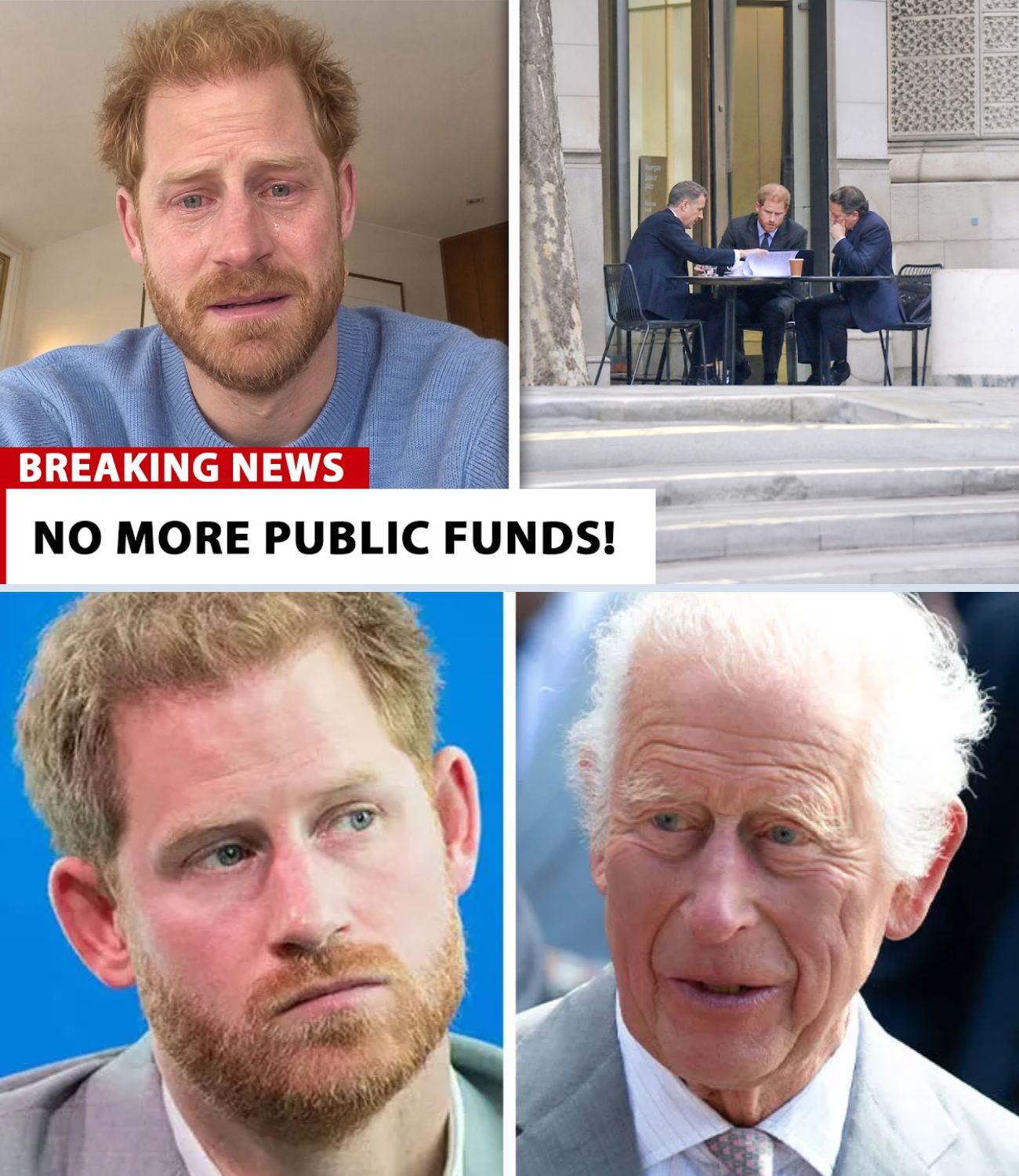
King Charles CRUSHES Harry! High Court BANS Public Funds For Legal Bills!
THE MONTECITO MORTGAGE MELTDOWN: How Tyler Perry Pulled the Plug, King Charles Sealed the Vault, and the Sussex Empire Collapsed!
For over half a decade, the narrative emanating from the sun-drenched avenues of Montecito was carefully polished to perfection. We were told a modern fairy tale of two independent royals who had walked away from the ancient, dusty confines of a thousand-year-old monarchy to forge a self-made, commercially triumphant empire in Southern California. Every red-carpet appearance, every streaming contract, and every glossy magazine spread was designed to reinforce a single, powerful word: independence.
Yet, beneath the manicured hedges and high-security gates, a very different arithmetic was unfolding—one written not in glamorous press releases, but in cold, unyielding bank ledgers. When the foundational pillars of that illusion finally gave way, the shockwaves did not start in a royal palace across the Atlantic. They started when a luxury real estate listing went live, revealing a truth that the Sussex camp had spent years keeping carefully obscured from the public eye.
The Man Behind the Deed
The revelation began with a quiet property transfer that sent tremors through the exclusive enclaves of Santa Barbara. Prince Harry and Meghan Markle were watching a $16.7 million Montecito estate get listed for sale—except the person signing off on the transaction wasn’t the Duke of Sussex. It was Tyler Perry.
To industry insiders and local property brokers, that single detail unravelled six years of mythology. From the moment the couple touched down in California in 2020, fleeing the turbulence of royal life, the world was led to believe they had purchased their sprawling sanctuary with the proceeds of their multi-million-dollar corporate deals. But the paperwork told an entirely different story. The legal authority to sign the sale contract rested squarely with the man who had written the initial cheque.
Tyler Perry had acted as the primary financial anchor on that title deed from day one. While the Sussexes were permitted to live inside the grand public illusion of absolute ownership, Perry retained the legal mechanism that survives long after the flashbulbs fade. For years, the Hollywood mogul had absorbed deferred carrying expenses, covered emergency legal retainers, and backed the estate’s staggering overheads under the assumption that these were temporary bridge funds.
But generosity has a finite horizon. Real estate records confirmed that Perry had simultaneously listed his own massive Beverly Hills residence for $57 million as he prepared to pivot his life toward Puerto Rico. He wasn’t tidying up his portfolio out of malice; he was executing a cold, unsentimental financial exit. He had never signed up to be the permanent, invisible bank account for a household whose annual burn rate easily breached $4 to $5 million just to keep the front gates locked. When a formal Whitehall directive slammed shut the possibility of any future royal bailouts, Perry pulled the plug. The invisible benefactor had officially called time.
The Whitehall Directive
To understand why Tyler Perry’s patience evaporated so abruptly, one must look at the quiet administrative earthquake that struck London just days prior. For six years, royal watchers debated whether King Charles might eventually soften, opening the royal purse strings or quietly reinstating security details during family summits.
Those speculations were permanently extinguished when the King authorized a legally binding royal directive issued through the Lord Chamberlain’s office. Unlike a personal, emotional letter between father and son—which could be leaked, debated, or spun on American television networks—this was a constitutional instrument transmitted directly to the Cabinet Office, the Home Office, the Metropolitan Police, and British diplomatic missions across the globe.
When Harry’s legal representatives finally inspected the document, they were looking at an institutional eviction notice containing three devastating clauses:
The Private Citizen Reclassification: The directive established in unequivocal administrative language that the Duke and Duchess of Sussex are non-working members of the royal family. While their titles remain in obeyance on paper, they are legally prohibited from using them in any commercial venture. Furthermore, civil servants and foreign dignitaries were instructed to receive them strictly as private citizens, stripping away all diplomatic courtesies.
The Absolute Financial Firewall: An ironclad ban was placed on the couple receiving any taxpayer funding from the Sovereign Grant, private allocations from the Duchy of Lancaster, or institutional subsidies. Any public body receiving a funding request connected to the Sussex household was instructed to forward it directly to Buckingham Palace for immediate, standardized rejection. The royal bank wasn’t just closed; the vault doors were welded shut.
The Security Cut-Off: The Home Office and the RAVEC committee were formally notified that Harry held no automatic entitlement to state-funded armed protection. If he wanted police guards on British soil, he would have to petition as a private foreign individual, prove an imminent threat, and cover every penny from his own dwindling private reserves.
The financial safety net had vanished overnight. With American media contracts sputtering—symbolized most notoriously by Spotify cancelling their podcast deal after just twelve episodes—the stark reality of their balance sheet caught up with them.
The Cotswolds Ambush and the Pub Disaster
Cornered by mounting overheads and a benefactor demanding his money back, the Sussex camp devised an audacious, high-stakes gambit to force the King’s hand. If they couldn’t secure financial relief from afar, they would create an inescapable physical fait accompli on British soil.
Late in August, plans were quietly set in motion to lease an idyllic rural property in Oxfordshire, nestled deep within the wealthy Cotswolds enclave. The location was chosen with tactical precision, placing them alongside influential media allies while quietly initiating enrolment inquiries for Archie and Lilibet at an ultra-exclusive local prep school. The public relations spin was carefully choreographed: the children needed to connect with their English heritage, and Harry wished to be close to his aging father during a vulnerable season of his reign.
The underlying mechanics, however, were purely strategic. By planting their feet on British soil and bringing two royal grandchildren into the domestic jurisdiction, they calculated that the Home Office and Metropolitan Police would face catastrophic public backlash if any security vulnerabilities arose. Once state protection was reluctantly restored under domestic pressure, Harry intended to use that official status to reopen negotiations for an annual bridge subsidy from royal estate revenues.
Harry placed emotional calls to the King’s private office, speaking of family unity, schools, and how a photograph of Charles with his grandchildren would heal global public wounds. But the trap failed to spring. The Whitehall directive had already neutralized the strategy before the moving vans even rolled.
The disastrous reality of their diminished standing manifested brutally during a public outing in Oxfordshire. Arriving at a traditional 500-year-old village pub, the Three Horseshoes, Meghan swept in alongside high-profile friends, expecting the warm deference and cleared spaces of a high-society establishment. Instead, reality bit hard.
Four heavily armored security vehicles choked the narrow country lane, blocking farm tractors and delivery trucks, sparking immediate fury among local villagers. Inside the pub, staff met the entourage with icy, flat indifference, refusing to alter normal operations or offer special VIP treatment. Local parents trapped in traffic made their displeasure known, and within forty-eight hours, the school enrolment trial for the children quietly collapsed amidst community resistance.
In British society, an empty table and cold service at a local pub tell a definitive story. Without the institutional authority of the Crown, an excessive security detail does not project royal majesty; it projects the awkward overreach of a Hollywood production imposing on a quiet rural community.
The Iron Spine of the Firm
How did the monarchy maintain such an unyielding, watertight front? The answer lay in the resolve of the two individuals who manage the operational engine of the modern institution: Prince William and Princess Anne.
Left entirely to his own devices, King Charles might have wrestled with paternal guilt, perhaps offering a discreet, informal cash allocation through private duchy accounts to avoid a messy public spectacle. But William and Anne viewed the situation through the lens of long-term institutional survival.
Princess Anne, universally respected as the iron spine of the Windsor family, delivered a blunt warning during a private summit at Balmoral. Having spent five decades executing hundreds of unglamorous public engagements every year without complaint, Anne made her philosophy crystal clear: royal status is a consequence of public duty, not a birthright meant for private commercial exploitation. She warned the King that bailing out a rogue prince who monetised attacks on the family while demanding public upkeep would trigger an open revolt among working royals like Prince Edward and the Duchess of Edinburgh, who bore the heavy lifting of public service.
Prince William’s intervention was even more decisive. Having endured years of calculated betrayals—from televised interviews during Prince Philip’s final days to memoirs broadcasting private family conversations—William drew an absolute constitutional line. He made it clear that his future reign would not be mortgaged to clean up his brother’s financial debris.
More importantly, William ensured the decision was irreversible. By converting a private family disagreement into an official administrative order distributed across Whitehall, he created an airtight legal and financial barrier. If Charles ever attempted to quietly funnel money to California, it would trigger an immediate government leak and a public constitutional crisis. William protected the Sovereign Grant strictly for those who actually served the realm.
Locking the Vaults Forever
With the administrative firewall erected, the final pieces of the institutional puzzle clicked into place. On a crisp autumn morning, Prince William executed a quiet, surgical clearance that severed the last remaining operational tethers linking the Sussexes to the British state.
The formal reallocation of Frogmore Cottage was authorized, removing the Windsor property from any future residential availability. For years, that retained lease had served as Harry’s legal anchor in court battles for state protection and a symbolic foothold keeping the illusion of a temporary leave alive. With a single stroke of a pen, the physical tether was severed. Honorary military appointments and patronages were quietly redistributed to working royals who maintained steady public trust.
Meanwhile, the working royal family presented an image of unbreakable, serene unity. While headlines buzzed over California real estate auctions and pub snubs, King Charles, Queen Camilla, Prince William, Catherine, and Princess Anne stepped out together for a routine state appearance in London, radiant and entirely absorbed in the duty of the day. They didn’t acknowledge the media storm across the Atlantic, reinforcing the foundational truth of the British crown: the institution does not pause its constitutional responsibilities for the emotional grievances of those who abandon their post.
In Montecito, the high-powered surveillance cameras mounted along the perimeter walls have gone dark. The dawn delivery vans and idling escort vehicles have vanished from the driveways. Rob Lowe and his fellow residents can walk their quiet lanes without confronting armed guards demanding identification. There is no celebration or malice—just the unscentimental relief that follows an exhausting circus packing up its tents and departing.
Prince Harry and Meghan Markle sought a grand narrative of self-made freedom, believing that the emotional currency of Princess Diana’s memory and the threat of difficult headlines would permanently insulate them from the reality of a balance sheet. Instead, they discovered that when you attempt to monetize a crown while dodging the ledger, the bill for independence eventually comes due. And in the unyielding archives of Whitehall, the gate remains bolted from the inside.
You Might Also Enjoy

“We Thought They Would Negotiate”—What Argentine Soldiers Said When The British Attacked Goose Green

“You’ll Never Finish My Ruck March, Limey” — US Sergeant Who Challenged the SAS, Then Fell Out First






