King Charles DENIES Harry Immunity In Fifty Fifty Split! Meghan LEFT STUNNED As Marriage COLLAPSES!!
The Constitutional Guillotine: Inside the Secret Legal War Threatening the House of Windsor
For years, the public narrative emanating from the sun-drenched avenues of Montecito was painted with the brush of modern triumph—a high-stakes fairy tale where love conquered the rigid, dusty corridors of ancient British tradition. We were fed a steady diet of glossy magazine covers, prime-time streaming exposes, and carefully curated victimhood narratives designed to keep global attention firmly locked on America. Yet, beneath the polished veneer of celebrity wellness brands and multi-million-dollar corporate frameworks, a profound and brutal reality has finally broken through.
Prince Harry has been officially designated as an ordinary private citizen by his own flesh and blood, stripped of royal financial shields and left completely exposed to a cross-border legal reckoning. But the truly catastrophic element of this unfolding drama is not merely the title or the lost allowance; it is the silent, merciless legal trap that was sprung in London while the world was looking the other way. What Harry’s legal team quietly orchestrated on English soil in late August represents the exact nightmare scenario that Meghan Markle spent six long years praying would never materialize.
The Late August Extraction: When Silence Replaced the Spotlight
To understand how the ground shifted so violently beneath the Sussex empire, one must return to the final week of August. A private jet touched down quietly on a desolate English runway, bearing two young children in the cabin and a woman wearing dark sunglasses who refused to pause for a single camera lens. There was no choreographed arrival photograph on the terminal steps, no joint statement from the Sussex communications office announcing a late-summer holiday, and no exclusive glossy feature in an American periodical explaining what returning to Britain meant after half a decade away.
For anyone who has tracked this couple since their May 2018 wedding at Windsor Castle, that profound silence was deafening. For more than six years, every milestone in their shared public life had been meticulously timed and executed down to the very second. Prime-time television interviews were scheduled for maximum global impact, blockbuster streaming series were dropped with military precision, and bombshell memoirs hit bookshelves precisely when the media spotlight burned hottest.
Yet, this quiet late-August arrival was not a joyful family holiday or a nostalgic homecoming; it was an extraction. According to well-placed sources moving within their immediate social circles, the marriage had reached its breaking point, functioning as a union in name only while the final legal paperwork awaited completion. The phrase circulating among insiders was simple: conscious uncoupling. The physical separation was already an established fact. Prince Harry had reached the conclusion that his future belonged back in England, reconnecting with his oldest childhood friends and establishing a permanent base close to his roots. Meanwhile, Meghan remained anchored to California, fiercely determined to build her commercial lifestyle empire four thousand miles away.
Think upon the profound magnitude of that fracture for a moment. We are not discussing a routine rough patch between two Hollywood celebrities; we are witnessing two individuals who built their entire public identity on the premise that their romance triumphed over the British monarchy, now living on opposite sides of the Atlantic Ocean. For six years, their primary defensive weapon was aggressive deterrence—silence through intimidation. If an investigative journalist asked an uncomfortable question, threatening letters arrived from high-priced legal counsel; if a publication refused to toe the line, blacklisting followed swiftly. That playbook worked wonders within the hyper-sensitive ecosystem of Los Angeles, but it is utterly useless against an international jurisdictional war.
The Habitual Residence Trap: Why California Rules No Longer Apply
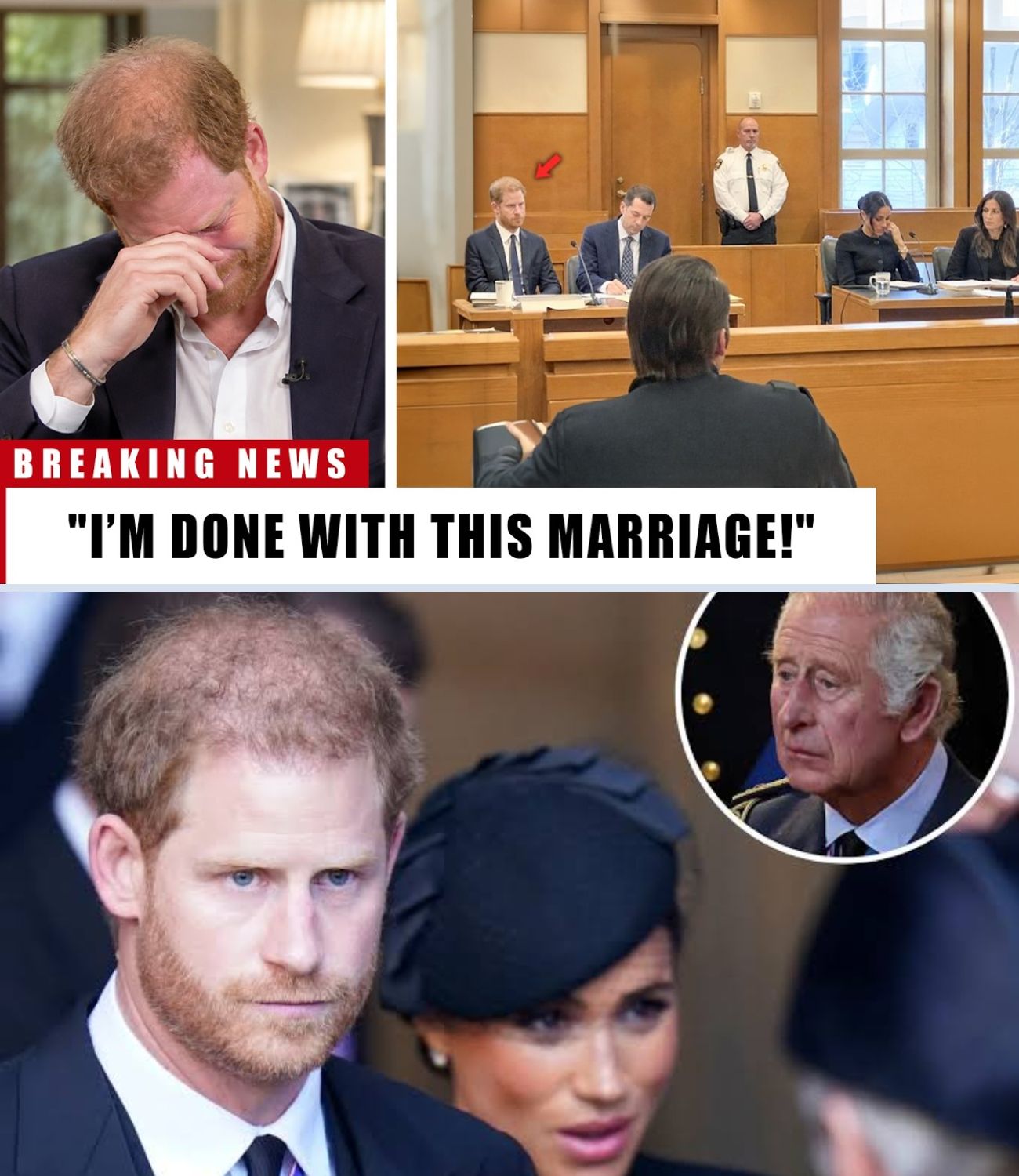
Most casual observers examining high-profile celebrity splits assume the matter will be settled quietly inside a plush conference room in Beverly Hills, with elite divorce attorneys trading real estate holdings and production credits like trading cards. That is the standard rhythm of Hollywood. However, when minor children sitting directly in the line of succession to the British throne are involved, the rules of the Californian entertainment industry evaporate entirely.
To grasp the legal vice currently tightening around the Sussex household, one must understand a foundational principle of international family law articulated clearly by prominent legal specialists: jurisdiction follows the children. The court that ultimately decides where minor children reside is not determined by where their parents exchanged vows, nor by where the family lived two years prior, or even what passport a parent carries in their pocket. It is dictated entirely by a strict legal standard known as habitual residence.
Under the Child Abduction and Custody Act, establishing habitual residence in the United Kingdom requires a continuous period of six months living under one roof. Six months—not five years of lifestyle magazine profiles, not endless public relations statements. Just six continuous months of living on British soil grants the nation’s courts exclusive, unchallengeable legal jurisdiction over the children.
Here is where the calendar becomes lethal for the Montecito operation. Archie and Lilibet arrived in Britain in late August, and their formal English school term commenced on the first of September. The absolute second those classroom doors swung open, a legal clock began ticking. If those two children remain in England under Harry’s daily care until late February, that six-month threshold is officially crossed. Once crossed, any custody battle bypasses friendly California courts entirely and lands squarely inside the High Court Family Division in London.
An American family court views a separation through the lens of fifty-fifty community property and standard parental rights. The London High Court, conversely, views these two specific children through an unyielding constitutional lens—the royal succession. Because Archie and Lilibet occupy sixth and seventh place in the line of succession, their upbringing and custody are inextricably bound to British constitutional statute. English High Court judges operate under a strict statutory duty of inquiry that does not pause for television appearances, curated interviews, or letters from Hollywood publicists. When a case enters that chamber, the presiding judge demands certified government documents, official school enrollments, and original medical registrations. Both parents are legally mandated to submit written testimony under a sworn duty of candor, where any omission or falsehood is treated as criminal perjury.
Why, then, would Meghan permit those children to set foot in England in late August if she understood the implications of the six-month rule? Did she genuinely believe it was a brief holiday, or did she assume her personal influence over Harry remained so absolute that she could haul them back to California at a moment’s notice? Sources close to Harry’s inner circle confirm that he is not visiting; he is staying permanently. To understand why Harry executed a move that systematically dismantled his wife’s legal leverage, one must look back at a generational wound forged decades ago.
The Shadow of Diana: Corporate Strategy Versus Raw Trauma
For six straight years, the relentless invocation of Princess Diana’s memory served as a cornerstone of the Sussex brand. Whenever public interest in their Californian ventures began to wane or negative headlines threatened their commercial valuation, the ghost of Diana was summoned. It manifested in crisp white dresses styled to mirror iconic photographs from the nineties, the conspicuous display of Diana’s gold Cartier watch on lifestyle red carpets, and the repeated narrative that Meghan was enduring the exact institutional persecution that drove Diana from the royal fold.
To outside observers watching the pattern unfold, it became increasingly clear that this was not merely grief; it was a calculated corporate strategy. Harry stood steadfastly beside her, convinced he was shielding his mother’s legacy. The twelve-year-old boy who walked behind that wooden coffin in 1997 had never healed from the flashing lights and predatory tabloid culture. By fleeing Britain in 2020, he genuinely believed he was rescuing his family from the very machine that destroyed his mother.
Yet, within four years of relocation, Harry had inadvertently recreated that exact media circus inside his own domain. He traded intimate details of sibling rivalries and aired personal royal correspondence for multi-million-dollar corporate pay-outs, turning generational trauma into streaming entertainment. But while Meghan treated Diana’s tragedy as a blueprint for conquering Hollywood, Harry experienced a terrifying awakening over the preceding twelve months.
Hollywood does not care about royal pedigree; Hollywood cares exclusively about profitability. The moment their joint commercial contracts began sputtering, the romantic illusion fractured. Meghan was charging full speed ahead into lifestyle branding and billionaire networking, while Harry found himself isolated in a foreign country, cut off from lifelong friends and stripped of the military patronages that defined his identity. He realised with mounting horror that he was not living out a triumphant modern fairy tale; he was walking straight into his mother’s final tragedy.
Diana’s post-palace existence was defined by bitter isolation, brutal financial negotiations, and a grueling 1996 divorce that pulverized her world. Buckingham Palace retained every institutional receipt from that era—preserving custody clauses, financial ledgers, and ironclad non-disclosure agreements. Harry had watched that legal grinder from the inside, and as his own marriage disintegrated, he understood a terrifying truth: if he waited for Meghan to initiate proceedings in California, he would lose everything his mother fought to protect, starting with his personal fortune, compromised by a massive legal oversight committed in 2018.
The Missing Prenup and the 1996 Royal Playbook
When examining the financial architecture underpinning the Sussex marriage, a glaring omission comes to light: the complete absence of a prenuptial agreement. In high-stakes American celebrity circles, walking down the aisle without a prenuptial contract appears to be financial madness, particularly when millions are generated within months of stepping down as working royals. Yet, when Harry married Meghan in May 2018, he did so without a single clause of formal financial protection.
In British royal tradition, prenuptial agreements have historically been viewed as vulgar, commercial admissions that a sacred union might fail. Neither Charles nor Prince William signed prenups before their respective weddings. Harry believed he was walking the noble path of his forebears, convinced his marriage was immune to ordinary commercial law.
When royal marriages fracture in Britain, the establishment relies not on prenups, but on institutional containment. When Princess Diana divorced Charles in 1996, she walked away with a lump sum of seventeen million pounds, an annual office allowance, and shared custody, but the Crown exacted a heavy price: she was stripped of her Royal Highness style and bound by an uncompromising non-disclosure agreement drafted by top-tier London barristers. Sarah Ferguson faced a similar fate that same year, receiving a modest settlement before spending decades navigating financial turbulence. British royal divorces are engineered to contain the departing party and protect the institutional assets.
Moving to Montecito exposed Harry to a completely different legal reality. California is a strict fifty-fifty community property jurisdiction. Every book advance, every corporate production fee, and every dollar earned between May 2018 and the official date of separation is subject to equal division. Meghan’s Los Angeles legal team was poised to leverage this framework against a multi-million-dollar estate, massive book advances, and lucrative streaming deals. Under California law, half of every penny Harry earned by trading on his royal lineage would flow directly to her, alongside substantial child support tied to royal heirs. She was one signature away from locking him into an unescapable financial settlement—until those September school forms arrived.
The Constitutional Grenade and the King’s Masterstroke
The narrative fed to American entertainment outlets for six months—portraying Meghan as a visionary CEO while Harry wandered Montecito as a lost, homesick prince—was an elaborate illusion. The events of late August and early September were not accidental; they were a meticulously engineered preemptive legal strike orchestrated by elite British constitutional minds.
When Archie and Lilibet crossed the threshold of an English school on September 1st, the enrollment documents signed by Harry were not casual holiday permissions. They were formal civil instruments filed by a legal father and guardian, explicitly establishing primary residence on British soil. When Meghan’s legal team realised the implications, shockwaves rippled through Montecito. Under the Hague Convention, custody jurisdiction is anchored to habitual residence. By establishing English residency before any formal filing in Santa Barbara, Harry ensured that the High Court of Justice in London would claim exclusive authority.
Drawing upon ancient precedent—including the Act of Settlement of 1701 and sovereign prerogative over heirs in the line of succession—Harry outflanked high-priced Hollywood attorneys using centuries-old constitutional rulebooks. Realising she had less than ninety days before London’s legal grip became permanent, Meghan prepared an emergency cross-border counterattack.
That exact moment prompted King Charles to intervene with devastating precision. Rather than calling press conferences or leaking complaints, the King signed his name to an official Buckingham Palace document delivered to Harry’s representatives with one hour’s notice. Within that formal instrument were two words that dismantled Harry’s strategy: private citizens.
Harry had operated under the assumption that returning the children to England and locking down London jurisdiction would prompt his father to roll out the red carpet, restore his royal status, and deploy the palace’s legal apparatus against Meghan’s financial claims. Instead, Charles played the ultimate constitutional survival card.
By formally certifying Harry and Meghan as ordinary private citizens, the King inflicted three irreversible blows:
Loss of Financial Secrecy: Working royals enjoy sovereign protection shielding private wealth and estate incomes. As ordinary private citizens facing the High Court, Harry receives zero privilege, allowing Meghan’s lawyers to demand unredacted financial disclosures of every trust inherited from Diana or the Queen Mother.
Ruinous Security Costs: With the British government refusing to fund armed protection for a private citizen, the immense cost of maintaining private security teams during a trans-atlantic custody battle will bleed millions from Harry’s accounts.
The Treasury Sealed: The Crown will not finance settlements as it did in 1996; the royal treasury remains firmly locked.
The Parting of Ways and the High Court Bundle
Within days of that letter, the separation manifested publicly. In London, Harry stepped onto a charity stage entirely alone, speaking passionately about his British roots and veterans without uttering his wife’s name once. Seventy-two hours later in Los Angeles, Meghan walked a red carpet solo, flashing a rehearsed smile for paparazzi while wearing Princess Diana’s vintage Cartier watch—with her original engagement ring conspicuously absent from her finger.
While Prince William and Catherine projected calm continuity by escorting Prince George through the gates of Eton College, Montecito descended into frantic damage control. Publicists attempted to spin the English school enrollment as a temporary cultural exchange—an explanation dismissed universally by legal experts. The commercial foundation of their American enterprise, anchored entirely to proximity to the British Crown and the two royal heirs, began to crumble as top-tier executives quietly resigned from Archewell.
Now, inside the Royal Courts of Justice on the Strand, legal clerks are binding the ultimate instrument: the High Court bundle. Immune to television interviews and PR spin, this unredacted master file requires both parties to sign under penalty of criminal perjury. Furthermore, the application of the Act of Settlement of 1701 mandates strict verification protocols for heirs in the line of succession—protocols that deviated significantly from the unorthodox birth announcements of 2019 and 2021.
When the six-month residency clock expires in February, an English judge will open that evidentiary bundle, demanding original hospital registrations and physician records. No amount of Hollywood publicity, high-priced legal maneuvering, or streaming contracts can halt the machinery of a thousand-year-old constitutional state. The illusion has met its match, and the final chapter of the Sussex experiment is being written not in the boardrooms of California, but in the immutable halls of British justice.
You Might Also Enjoy

“We Thought They Would Negotiate”—What Argentine Soldiers Said When The British Attacked Goose Green

“You’ll Never Finish My Ruck March, Limey” — US Sergeant Who Challenged the SAS, Then Fell Out First






