KING CHARLES’ FINAL CUT: William Allegedly Erases Harry’s Royal Ties as Tyler Perry Moves to Liquidate the $16.7 Million Mansion
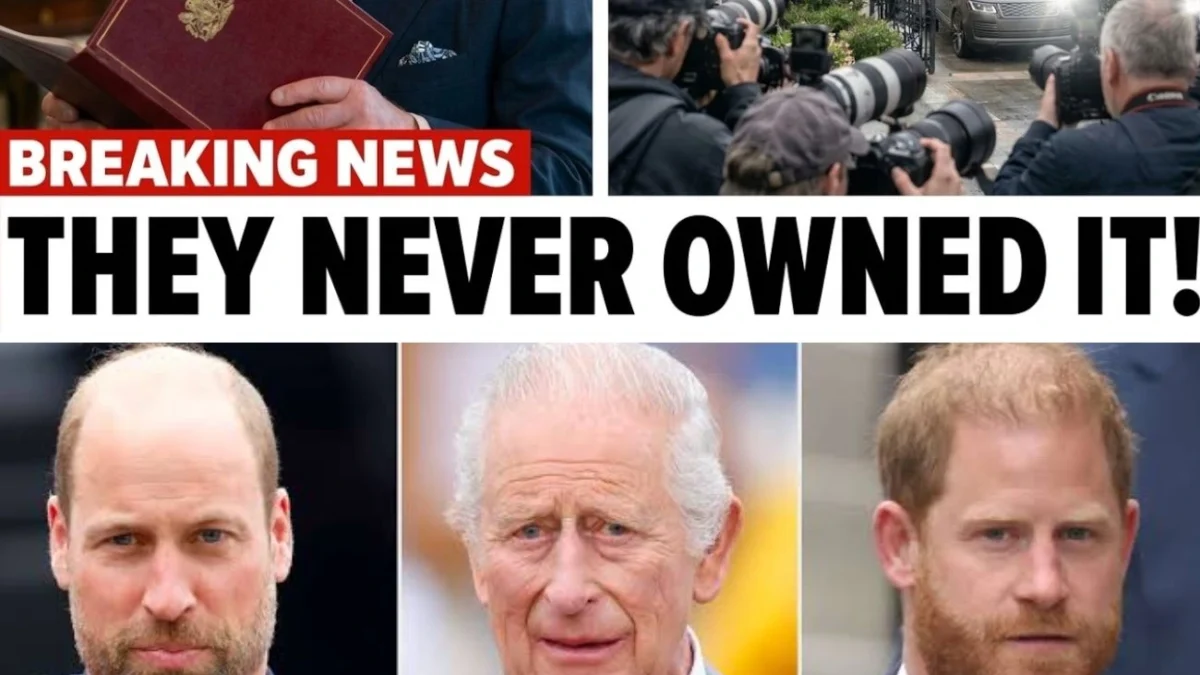
KING CHARLES’ FINAL CUT: William Allegedly Erases Harry’s Royal
KING CHARLES’ FINAL CUT: William Allegedly Erases Harry’s Royal Ties as Tyler Perry Moves to Liquidate the $16.7 Million Mansion
The dramatic story presented in the supplied script begins with what was supposed to be a polished British comeback for Prince Harry and Meghan Markle and ends with an alleged financial and institutional collapse. Instead, the story claims, the palace drew a permanent line.
At the center of the dramatic royal story is the $16.7 million Montecito mansion. According to the script, Tyler Perry—not the Sussexes—held the crucial financial position connected to the property. What appeared to represent independence was suddenly portrayed as a financial arrangement dependent on another wealthy benefactor.
Harry and Meghan were described as carrying annual operating expenses of roughly $4 million to $5 million, while private protection allegedly consumed about $3 million a year. But the script argues that major contracts could not guarantee permanent cash flow.
According to the narrative, Tyler Perry gradually became more than a friend. After helping the couple during their arrival in Southern California, he allegedly absorbed carrying expenses, legal costs, security invoices, and other emergency obligations.
Then came the alleged turning point in Montecito, California.
The script claims information passed among neighbors revealed Tyler Perry was preparing to sell the mansion. Rob Low allegedly heard the news from a broker involved in a private transaction and passed it to other residents. Neighbors were portrayed as exhausted by production crews, delivery vehicles, security activity, and drones that had transformed their quiet lane.
Perry’s own finances were also presented as part of the picture. The script says he listed a Beverly Hills estate for $57 million while preparing to relocate his life to Puerto Rico.
With the California safety net supposedly disappearing, Harry and Meghan allegedly turned their attention toward Britain. The script describes a plan developed in late summer and early September 2026: secure a rural property in Oxfordshire, establish a presence near celebrity allies such as Ellen DeGeneres and Porsche Dasi, and explore schooling for Archie and Lilibet.
The plan depended heavily on optics. A family return could create pressure around security and public sympathy. Harry allegedly believed that his father’s affection, Diana’s memory, and the presence of the children could make it difficult for the monarchy to refuse assistance.
Harry allegedly approached King Charles, discussing family unity, the children, and reconciliation. The expectation was allegedly that temporary accommodation and financial assistance could be arranged quietly.
But the response described in the script was far more severe, and it changed the entire direction of this story.
Instead of a personal letter, the story claims an official directive was issued through the Lord Chamberlain’s office. The document allegedly contained three provisions. First, Harry and Meghan would remain non-working members of the royal family, with their HRH styles in abeyance. Second, they would receive no taxpayer funding, royal-estate subsidies, or comparable institutional assistance. Third, Harry would have no automatic entitlement to state-funded armed protection and would have to meet the relevant requirements privately.
It also credits Prince William and Princess Anne with pushing King Charles toward a harder institutional position. Anne is depicted as defending a simple principle: royal status should follow public duty, not private commercial opportunity. William, meanwhile, is portrayed as determined to ensure that an ambiguous return could not become another permanent problem for the monarchy.
The story’s most theatrical public scene allegedly unfolded at the Three Horseshoes pub in Oxfordshire. Meghan reportedly arrived with Ellen DeGeneres and Porsche Dasi, accompanied by four heavily armored security vehicles. The intended image was one of effortless country living and a graceful return to Britain.
Instead, the script describes an atmosphere of cold indifference. Staff allegedly treated the visitors as ordinary private customers. The security convoy reportedly blocked the narrow village road, frustrating local traffic. Soon afterward, the planned school arrangement for Archie and Lilibet was said to have collapsed.
Then Tyler Perry allegedly made his final move.
After the Oxfordshire plan failed, Harry reportedly called Perry and asked for more time. The script says he appealed to Diana’s memory, the safety of the children, and the damage that a forced property sale could cause. Perry, however, allegedly refused another extension.
His legal team was said to have been instructed to proceed with a private liquidation of the Montecito property. The proceeds would allegedly satisfy mortgages, carrying costs, and other obligations rather than finance another Sussex reinvention.
The narrative then reaches its final institutional break. In late September, Prince William allegedly authorized the permanent reallocation of Frogmore Cottage, removing it as a future residential option for Harry. Remaining charitable and military links were also reportedly redistributed among working royals.
King Charles, Queen Camilla, William, Catherine, and Anne then appeared together publicly, presenting an image of continuity and duty.
Ultimately, the supplied story frames the entire saga as something larger than a family feud. It presents a warning about the cost of independence when prestige, security, and lifestyle depend on institutions or private benefactors. King Charles represents the final institutional boundary, William and Anne the enforcement of that boundary, and Tyler Perry the private benefactor who allegedly decided that generosity had reached its limit.
Whether treated as royal drama or a fictionalized scenario, the central message is unmistakable: the story portrays Harry and Meghan’s California independence as an illusion that could survive only while someone else kept the financial machinery running. Once the palace allegedly closed its door and Perry allegedly withdrew his support, the mansion became the symbol of a much larger collapse.
You Might Also Enjoy

“We Thought They Would Negotiate”—What Argentine Soldiers Said When The British Attacked Goose Green

“You’ll Never Finish My Ruck March, Limey” — US Sergeant Who Challenged the SAS, Then Fell Out First






