King Charles STUNS Palace With DIVORCE Bombshell After Prince Louis Uncovers Camilla’s Hidden Dossie
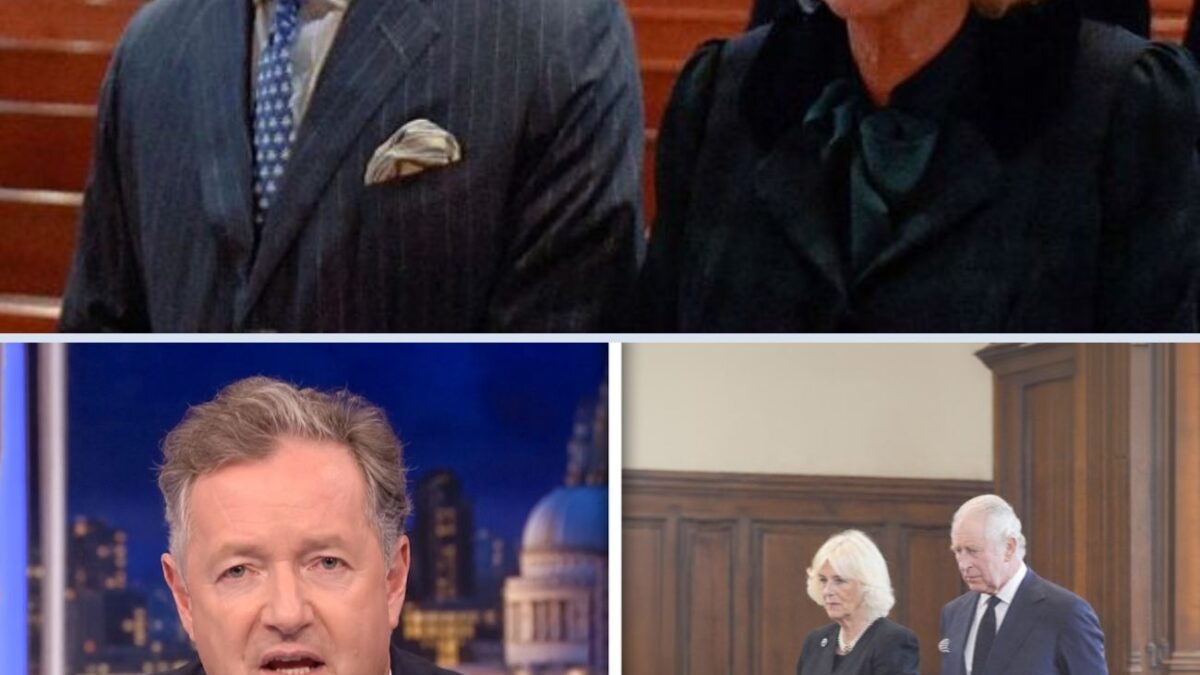
The Windsor Vault Betrayal: Inside the Shadow War That Shattered the House of Windsor
There are corners of Windsor Castle where history does not merely sleep; it presses down upon the stone floor with the heavy, unyielding weight of centuries. On a crisp Tuesday afternoon at precisely two o’clock, those silent corridors played host to an accident of timing so exquisite and so catastrophic that it altered the constitutional future of the United Kingdom before the evening gulls had even settled over the Thames.
Young Prince Louis was engaged in the timeless, frantic pursuit of an eight-year-old boy playing hide-and-seek through the ground-floor galleries. Ducking away from the patter of footsteps, he slipped through an unmarked mahogany door tucked into the shadows near the private archives—a restricted sanctuary where household staff rarely linger unless historical audits are underway. Resting entirely exposed on a low walnut side table lay an oversized leather portfolio, bound tightly with black satin ribbon. Stamped across the cover in deep, unapologetic crimson ink were three words that would soon detonate a royal civil war: Confidential Domestic Actions.
To a child, it looked like a forgotten school notebook or an artist’s sketchpad. Louis snatched the bundle beneath his emerald-sweatered arm and bolted back toward the private family apartments to share his trophy with his mother. When he burst into the sitting room brandishing the file with a triumphant grin, Catherine initially chuckled, assuming an archivist had misplaced a stack of daily scheduling sheets. She thanked her youngest son, packed him off down the hall to rejoin his nanny, and casually untied the ribbon to inspect the opening folio.
Within thirty seconds, all the colour drained from her face. Her hands began to shake so violently that several loose memoranda drifted silently onto the wool carpet.
This was no routine audit of sovereign estate properties. What Catherine held in her trembling hands was an active, highly sophisticated media campaign blueprint constructed with clinical precision—and its primary target was not a senior statesman or an outspoken political figure, but her own eight-year-old son, Prince Louis.
The Anatomy of a Smear Campaign
The briefing notes spanning the opening four pages of the red dossier recommended a chillingly systematic approach to the young prince. They explicitly advised framing his vibrant public appearances, his spontaneous, enthusiastic waves from the Buckingham Palace balcony, and his irrepressible, expressive nature as burgeoning evidence of “severe emotional instability.” The author of the brief went on to outline a strict timetable, suggesting Louis should be gradually sidelined and withdrawn from all high-profile state processions before his eleventh birthday to spare the institution embarrassment. Worse still, the documents recommended quietly bypassing him for major dukedom titles, isolating his public visibility under the guise of protecting royal dignity.
As Catherine whispered her son’s name aloud, tears prickling at the corners of her eyes, the heavy double doors swung open. Prince William walked in.
One glance at his wife’s ashen face and the scattered papers at her feet sent a surge of cold, razor-sharp fury through him. He recognized the distinct cadence of targeted character assassination instantly; it was the chillingly familiar architecture of the exact same playbook deployed against his late mother thirty years prior. As William scanned the intercepted correspondence logs tucked into the back of the portfolio, the horrifying reality set in. These domestic briefs were not internal administrative musings—they were being quietly funneled to a private royal biographer entirely behind the King’s back.
This was not institutional caution. It was cold-blooded sabotage directed at a child.
Without uttering a single word of hesitation, William closed the portfolio with a sharp thud that echoed off the oak-panelled walls. He took Catherine’s trembling hand, instructed protection officers to ready royal transport immediately, and bypassed every protocol officer in the building. There were no advanced telephone calls to private secretaries, no gentle requests for clarification. Within three hours, the Prince and Princess of Wales were speeding through the wrought-iron gates of the Balmoral estate, carrying a file that would force a reigning monarch into the most agonizing choice of his life.
Midnight at Balmoral: Confronting the Sovereign
William did not knock when he reached the double oak doors of King Charles’s private Balmoral study. He strode straight past two astonished personal aides, walked directly up to the sovereign’s polished mahogany desk, and dropped the red-stamped leather portfolio flat against the wood. The sound cracked through the quiet room like a pistol shot.
King Charles looked up from his evening dispatch boxes, bewildered and visibly startled by the profound breach of protocol. Before the sovereign could utter a single word of reprimand, William leaned both hands onto the edge of the desk. Keeping his voice low, steady, and terrifyingly cold, he delivered a sentence that froze every courtier waiting out in the corridor: he told his father plainly that the time for polite domestic excuses had expired, demanding that Charles choose immediately between the woman he had married and the bloodline he had sworn to protect.
Charles went completely pale. His fingers trembled as he reached forward to untie the black satin ribbon, expecting perhaps a minor dispute over staff allocations or duche funding. Instead, as he opened the first tabbed section and beheld the strategy documents targeting his own grandson, the blood drained entirely from his face.
Line by line, the dossier laid out how Prince Louis was to be systematically vilified across tabloid headlines over the next thirty-six months. But the horror did not stop at the grandchildren. The dossier detailed three off-the-record meetings held at a private Mayfair townhome between Camilla’s direct communications team and high-profile foreign broadcast executives. The stated objective was breathtaking in its audacity: to establish an independent overseas PR pipeline operating entirely outside the control of Buckingham Palace or the Prince of Wales, designed to build Camilla’s independent public authority while systematically undermining William’s temperament and Catherine’s standing.
Charles sat in absolute silence as the grandfather clock in the corner chimed midnight. He read every encrypted communication note and private meeting transcript while William watched him without blinking. The handwriting scrawled in the margins was unmistakable—a hand he had known intimately for over four decades. The scale of the deception was staggering. This was not a senior royal managing everyday media friction; it was a private shadow operation running within the sovereign’s own household, utilizing crown authority as a shield to build a separate empire of influence.
When Charles finally closed the thick folder, his eyes were wet with a mixture of overwhelming sorrow and cold, undeniable fury. William reminded his father softly that thirty years ago, hesitation and silence had destroyed his mother’s life within those very walls. Giving Charles precisely one night to absorb the evidence, William warned that if decisive action was not taken by sunrise, the Duchy’s legal team would handle the matter publicly.
As William turned and walked out into the Scottish night, Charles was left entirely alone beneath the lamplight, knowing the crisis was irreversible.
The Executive Order at Clarence House
The King spent the remainder of that agonizing night pacing the darkened floorboards of the sovereign library. By dawn, the harsh reality of the five-year shadow apparatus designed to outlast him—insulating Camilla’s financial standing and public clout if William ascended the throne prematurely—lay bare. The briefing drafts had systematically categorized William as emotionally unpredictable and paranoid, while dismissing Catherine as fragile and incapable of enduring a sovereign calendar.
At 9:15 the following morning, the heavy mahogany double doors of the principal briefing room at Clarence House were locked firmly from the inside. Armed royal security personnel took positions twenty feet down the hallway with strict orders to bar all approaches. Inside, King Charles sat at the head of the conference table, flanked by senior advisers and the crown’s chief legal strategist, Sir Gavin Maitland.
Without a single introductory pleasantry, the King looked directly at his lead solicitor and uttered the statement that shattered centuries of sovereign history: he announced his immediate, unshakable intent to legally separate from Queen Camilla, declaring that no reconciliation trials or public relations spin would be tolerated.
Sliding the red-stamped dossier across the table, Charles watched as Sir Gavin scanned the timeline of the Mayfair meetings. The solicitor confirmed immediately that the operational exposure constituted a profound breach of constitutional trust, noting that William held complete legal authority through the Duchy of Cornwall to freeze every sovereign stipend attached to those operations instantly.
Charles nodded once. He gave orders for Sir Gavin to draft formal terms of separation containing the most uncompromising financial and institutional penalties ever levied against a royal consort. Camilla was to be severed permanently from all crown estate allowances, stripped of royal dispatch access, and banned from attending any state banquets, foreign diplomatic tours, or ceremonial functions.
Furthermore, Charles ordered the palace technology division to sever every encrypted server, private digital phone line, and communications tablet linked to Camilla’s private staff by eleven o’clock sharp.
The Digital Quarantine
While the legal instruments were being signed behind soundproofed doors, Camilla was sitting merely four doors away in her private morning parlor, sipping her tea and believing her network remained entirely intact.
At precisely 10:30 AM, the heavy silence of her parlor was shattered by rapid footsteps. Her senior personal assistant burst through the doors without announcing herself, holding a stack of freshly printed internal memos transmitted from the Lord Chamberlain’s executive office. Right behind her walked two of her most trusted communications officers, carrying their personal belongings inside small cardboard document boxes. Two of her highest-ranking household deputies had just handed in immediate resignations directly to Human Resources, citing severe ethical conflicts arising from the unapproved media briefings discovered in the red dossier.
Reaching across her mahogany side table to summon her principal private secretary, Camilla grasped her secure communications tablet. The display remained pitch black. She snatched her encrypted smartphone from its charging cradle—only to find the network connection entirely disabled, the screen flashing a red alert that her security credentials had been remotely revoked by Royal Technical Operations.
Every electronic channel connecting her to Fleet Street and overseas allies had been wiped clean on direct sovereign orders within sixty minutes. She was standing inside her own residence, surrounded by centuries of luxury, reduced to a digital ghost behind palace walls.
Picking up the internal landline handset, she dialed the sovereign’s private line at Balmoral, desperate to reach Charles. The call bypassed her husband entirely, clicking straight into the cold, detached office of the King’s chief private secretary. When Camilla demanded to know why her staff were being dismissed and her networks frozen, the secretary delivered a single, chilling sentence: “His Majesty has absolutely nothing further to say to you, and all future communications must be directed exclusively through the crown’s legal representatives.”
The line clicked dead. Within twenty-four hours, royal protection officers arrived with instructions to supervise her immediate relocation to Ray Mill House, her private country retreat in Wiltshire. The peaceful rural sanctuary was instantly transformed into a gilded prison surrounded by sovereign surveillance teams monitoring every visitor and vehicle.
Princess Anne Steppes into the Breach
Even as the security detail cleared the final administrative files out of Camilla’s London suites, Princess Anne walked straight into King Charles’s private study at Balmoral without a hint of hesitation.
Closing the heavy mahogany doors firmly, she placed one steady hand upon her brother’s slumped shoulder and delivered the unvarnished truth: the British monarchy could not afford to bleed out over blind sentiment. The crown existed exclusively to protect the direct continuity of the bloodline, and personal indulgence had already cost the family too much.
While Charles had been paralyzed by grief, Anne moved with surgical efficiency. Taking the official sovereign engagement calendar directly off the desk, she unscrewed her fountain pen and calmly crossed Camilla’s name off seven major international diplomatic tours scheduled across the next six months. Without waiting for committee debates, Anne personally volunteered to absorb six demanding high-profile state duties into her own schedule, leading military reviews, hosting visiting Commonwealth dignitaries, and representing the sovereign at three major charitable galas.
Looking Charles in the eye, Anne told him plainly that William’s position was entirely justified, warning that any hesitation to back his son would result in William pulling Duchy funding completely from joint ventures. Charles, his lingering traces of hesitation finally evaporated, signed the executive scheduling instruments Anne laid before her, officially authorizing the Princess Royal to oversee the complete reorganization of household staff.
The £5 Million Muzzle
Down in London, Sir Gavin Maitland was putting the final touches on a legal weapon designed to ensure silence.
Inside the quiet offices near St. James’s Palace, the lead solicitor laid out four bound copies of the confidential settlement charter bearing the formal wax seals of the crown and the Duchy of Cornwall. Under William’s direct instruction, Camilla was stripped of every ceremonial privilege, discretionary budget, and royal perk. She was permanently relegated to Ray Mill House, barred from using royal livery, excluded from sovereign transport, and removed from every diplomatic protocol list.
Crucially, Prince William insisted on an ironclad lifetime non-disclosure covenant. It barred Camilla, her surviving staff, and associated PR advisers from ever granting unauthorized media interviews, co-authoring memoirs, or speaking to Fleet Street correspondents. To ensure unbreakable teeth, the agreement carried an immediate financial penalty of five million pounds for every single unauthorized disclosure, backed by the seizure of private estate assets.
Two senior legal couriers delivered the black portfolio directly to Ray Mill House. When the black portfolio was placed on the oak dining table before her, the solicitors made it abundantly clear that refusing to sign would result in the immediate forfeiture of her sovereign protection officers and an open audit of her private foundation finances.
With shaking fingers, Camila held the fountain pen, read the brutal clauses dismantling her status word by word, and signed away her titles, public income, and voice. The documents were returned to London within four hours, filed directly into the secure sovereign archives under heavy seal.
The Portrait and the Restoration
While the lawyers locked the archive vault, a quiet, symbolic execution of royal identity was taking place along the Grand State corridors of Buckingham Palace.
At six in the evening, four senior art conservators entered the central picture gallery. Hanging in the center of the eastern wall in heavy carved gilt timber was the official oil portrait of Queen Camilla commissioned after the coronation. Staff carefully lifted the massive canvas down from its brass brackets, wrapped the edges in protective felt, and loaded it onto a flat wooden dolly without a word.
The portrait was wheeled straight down the back service elevator into a dimly lit, narrow basement passage usually reserved for linen deliveries. Into that exact empty space in the centre of the gallery, curators hoisted a magnificent, luminous portrait of Princess Diana painted in the early 1990s—retrieved from deep inside the royal collection vaults at Windsor under direct personal orders authorized by Prince William.
Placed squarely between formal depictions of Prince William and Princess Catherine and bathed in high-intensity museum spotlights, Diana’s portrait sent an unmistakable visual message. When over thirty senior diplomats walked down that red carpet for a routine diplomatic reception the following morning, they stopped dead in their tracks, staring up at Diana’s smiling face glowing above the mahogany wainscoting.
The image spread across private diplomatic messaging channels before midday, confirming to every government in the Commonwealth that the balance of power inside London had decisively shifted.
The Global Aftershock
When the news of the unprecedented separation finally broke across international headlines before midday, it unleashed an unprecedented wave of public reaction. Across six continents, digital platforms surged with a single trending phrase: Diana was right.
Archival clips of Princess Diana’s 1995 television interview resurfaced instantly, replaying her haunting declaration that three people occupied her marriage. Independent national opinion polls published the following morning revealed an astonishing 81% of the British public stood unreservedly behind King Charles’s decision. Public support rallied with ferocious intensity around Prince William and Princess Catherine, with crowds gathering outside Windsor Castle and Kensington Palace carrying framed portraits of Diana alongside bouquets of white roses.
Not a single major newspaper published a defense of Camilla’s actions. Over twenty-two senior communications officers, private secretaries, and household administrators who enabled her shadow operations were quietly reassigned or given immediate severance packages without sovereign commendations. Her nameplate was removed from the private entrance at Clarence House under cover of darkness, dropped into an archival wooden crate, and cataloged into storage alongside monarchs who had abdicated in disgrace.
Today, King Charles remains on the throne, carrying out his official red box duties and presiding over state visits. But make no mistake about where real authority resides. The operational power of the British monarchy has transferred completely and irrevocably to Prince William.
Without relying on public temper tantrums, explosive tell-all interviews, or hostile media leaks, William allowed an unsealed red-stamped folder discovered by an eight-year-old child to deliver the absolute truth into his father’s hands. He moved with lethal institutional precision, bypassing thirty years of protocol to secure his children’s sovereign future.
The shadow empire has collapsed. The locks on the palace doors have been permanently changed. And the boy who walked behind his mother’s coffin in 1997 has finally locked the gates forever—ensuring that the House of Windsor steps into the future anchored entirely around William, Catherine, and their children.
You Might Also Enjoy

“We Thought They Would Negotiate”—What Argentine Soldiers Said When The British Attacked Goose Green

“You’ll Never Finish My Ruck March, Limey” — US Sergeant Who Challenged the SAS, Then Fell Out First






