King George V Lived A Double Life For Years — And No One Knew Until Now
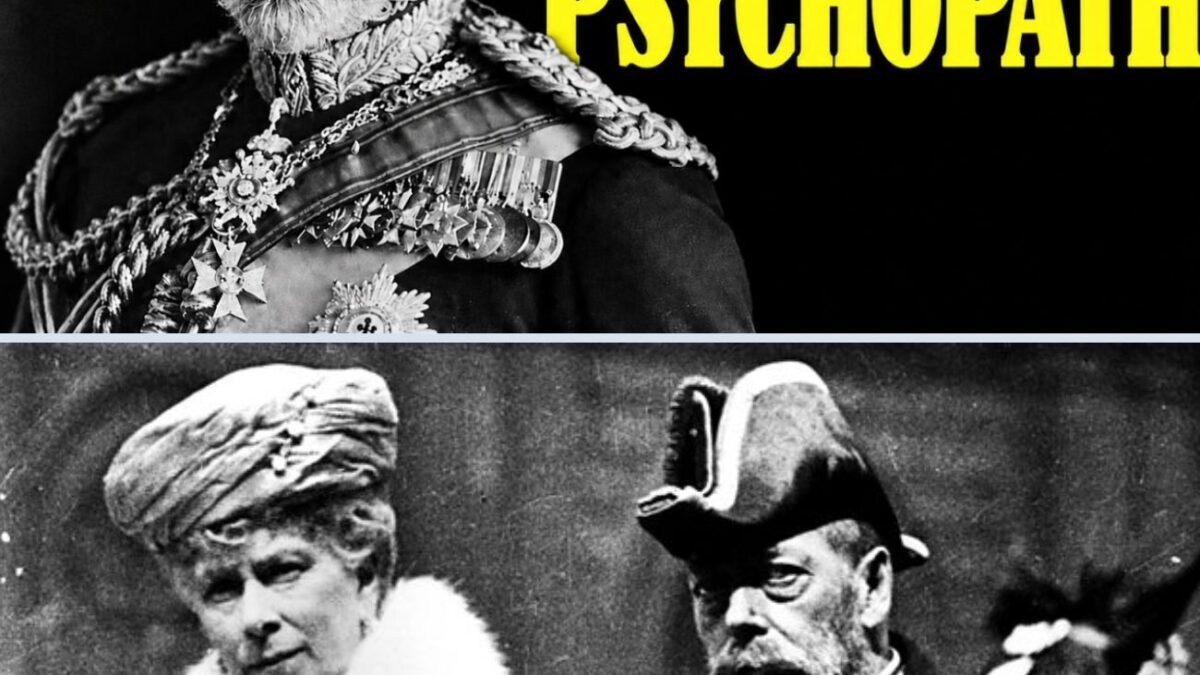
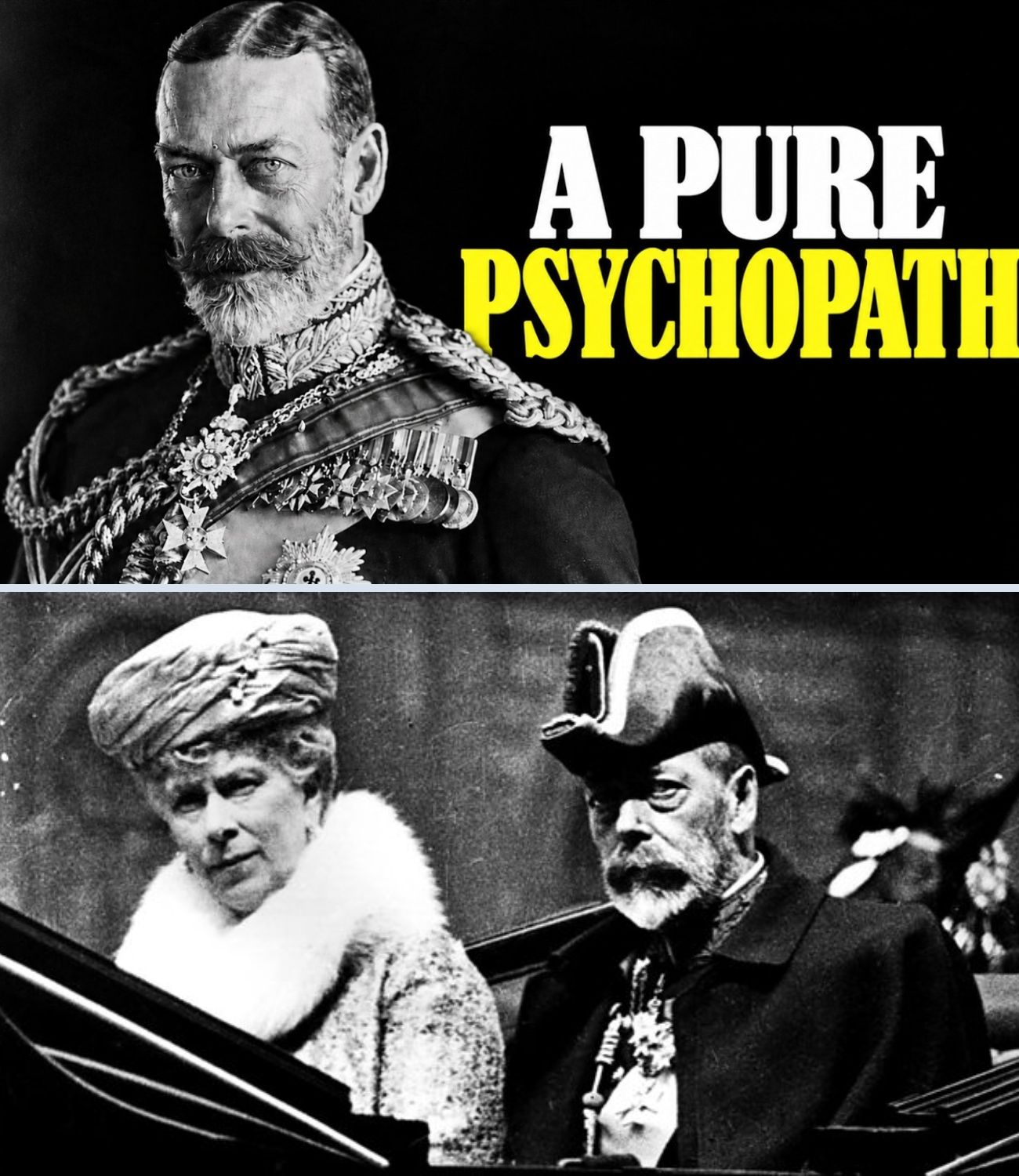
Sandringham House, Norfolk. January 20th, 1936. King George V is dying. The bedroom smells of morphine and cold stone. His nurse approaches with a sedative. The king stirs, and his last words, the final words spoken by the king of the United Kingdom and Emperor of India, are directed at her. “God damn you.”
His physician, Lord Dawson of Penn, waits until the room quiets. Then he uncaps a syringe, draws morphine, then cocaine, presses the needle into the king’s jugular vein, and administers a lethal dose. Later that night, Dawson writes the official press announcement on the back of a dinner menu card. “The king’s life is moving peacefully to its close.”
The nation wakes to a lie. They will not learn what actually happened in that room for 50 years. But the secret death was not the secret. It was only the last one. For the entire 26 years of his reign, and for the decades before it, King George V maintained two completely separate lives.
The public one, the rock, the sailor king, the unimpeachable monarch, and the private one, buried in sealed diaries, classified dispatches, and archive boxes that historians are only now fully cracking open. Two identities, one man, and a double life that shaped the British royal family for a century after his death.
George V was never supposed to be king. He was born on the 3rd of June 1865 at Marlborough House in London, the second son of the Prince of Wales, the future Edward VII, and his wife, Princess Alexandra of Denmark. There was an older brother. There was a plan. George arrived into the world with a clear and modest assignment.
Support his older brother, serve his country in the Navy, and stay out of history’s way. His older brother, Prince Albert Victor, Prince Eddie, as the family called him, sat 17 months ahead of George in the succession. The throne was Eddie’s. George was the spare, and in the hierarchy of the Victorian court, the spare existed in a particular kind of limbo, royal enough to be isolated from ordinary life, close enough to the center to feel the heat of it, and peripheral enough to be packed off to the Navy at age 12 and told that this was the finest education a boy could receive. It was also a convenient arrangement, because it gave the palace a solution to a problem it could not name.
George’s mother was Princess Alexandra of Denmark, warm-hearted, instinctively affectionate, the gentlest presence in a court of formal distances. Raised in the relatively loose atmosphere of the Danish royal household, she had grown up in a family where children were allowed to run and make noise and be held, where royal protocol had not yet calcified everything tender out of daily life.
She brought as much of that softness as she could into the cold machinery of the British court. For a time she was the emotional center of George’s world, but Alexandra was intermittently absent. A severe bout of rheumatic fever contracted after her first child was born had left her hearing permanently damaged.
And deafness creates its own particular remove, a slight delay in connection, a thinning of the room, the world at one degree of separation, even when it stands beside you. She communicated often through letters and through the careful, deliberate gestures of a woman who had learned to compensate for what she could not hear.
The warmth was genuine, but it came through a medium that kept something always slightly at arms length. Her public obligations were ceaseless. The dinners, the functions, the relentless performance of princesshood, they swallowed what remained.
George’s father, the Prince of Wales, was another problem entirely. Edward VII, the future king who became for decades the most socially celebrated man in Europe, was present in every public room and absent from every private one. A man of spectacular appetites for food, for gambling, for the company of beautiful women, for the particular pleasure of commanding any room he entered, and watching every other person in it reorganize themselves in response to his gravity.
His children orbited him the way planets orbit a star, drawn in by the pull of him, scorched at close approach, never quite landing anywhere. He was not cruel, he simply did not look.
Queen Victoria noted in her diary, when George was still a small boy, that he had an irresistible fund of spirits, so affectionate, she wrote, though sometimes rather naughty. The word affectionate carries weight when you read it against what came after. There was something open in that child, something that reached toward people, some warmth in him that had not yet been given reason to close.
The closing began in September 1877. Both George and Eddie were sent to HMS Britannia, the Royal Navy’s cadet training ship moored at Dartmouth on the Devon coast. George was 12 years old. The old wooden three-decker had served as a training vessel for decades, and its traditions were as rigid as its timber hull. Cold saltwater baths in the dark hours before dawn, mast climbing in all weathers, the rigging biting into young palms in the November wind off the channel.
Physical discipline that acknowledged no distinction between the sons of admirals and the sons of kings. When the hatches were sealed and the command came, the Navy believed with absolute conviction that hardship was the only honest education a boy could receive, and it delivered on that belief without sentiment. George was the youngest cadet at the college.
He had no preparation for this. He had been educated privately with Eddie by a tutor named Canon Dalton, a gentle arrangement that prioritized royal propriety over academic rigor. The Navy was something different in every dimension. Here, visible weakness invited consequence. Here, a boy who showed what hurt him was offering it up to be used.
The 12-year-old, who had been described by his great-grandmother as irresistibly affectionate, faced a simple institutional choice. Compress himself or suffer for it. He compressed himself. He became smaller on the inside. He learned not as a conscious decision, but as the kind of learning that happens in the body before it arrives at the mind, that showing what hurt you was the most dangerous thing you could do, that need was a liability, that the only safe version of yourself was the version that appeared to need nothing at all.
Psychiatrist Dr. Dennis Friedman, who spent years studying the psychological inheritance running through the British royal family across multiple generations, identified this period as foundational in his biography, Darling Georgie, the Enigma of George V. Friedman found the evidence of severe separation anxiety in George’s development, the kind produced when a child is removed from primary attachment too early before the internal architecture is stable enough to hold without external support. The Navy culture compounded this; systematic suppression of emotion was not merely encouraged. It was structurally enforced, built into the rhythm of every day, and the child on the receiving end learned, as such children always do, to make the anxiety invisible rather than address it.
What Friedman understood about that kind of early compression, what the clinical record has established across decades of this kind of study is that it does not dissolve. It transforms. It becomes the need for iron routine because routine is the thing that keeps the anxiety at a manageable distance. It becomes explosive disproportionate fury when that routine is disrupted because disruption feels at some ancient level like the original threat. It becomes the compulsion to maintain a precise and carefully managed emotional distance from everyone in the room.
Close enough to prevent the old terror of abandonment from resurfacing. Far enough that no attachment can ever become a genuine vulnerability. Not cruelty. Something more complicated than cruelty. Something built brick by brick in the dark hours before dawn on a ship off the Devon coast by a 12-year-old boy who had no other tools available. George V would spend every remaining year of his life managing that distance.
He and Eddie served together at sea and across the world, circling the globe on HMS Bacchante between 1879 and 1882, calling at ports from the Caribbean to Japan to the Cape of Good Hope. Two years aboard ship, the ocean a constant underneath them, the Empire unreeling at every port call. In those years, George saw more of the world than most Englishmen would see in a lifetime. He was by all accounts a capable officer, methodical, reliable, respected by the men he served with. The Navy had given him that. It had also taken something else, but in those years of wide ocean and port arrivals, and the particular fellowship of men at sea, perhaps he did not feel the cost yet.
Back in England, Eddie was in trouble. The older prince had grown into a young man who combined royal obligations with an enthusiastic and increasingly conspicuous appetite for excess. He gambled. He kept company with people whose presence at the palace created quiet alarm. His engagement to Princess Victoria Mary of Teck—May, as the family called her—was arranged in November 1891, a match designed in part to give Eddie a stabilizing anchor.
The families were agreed. The announcement was made. Three weeks later, Eddie fell ill with influenza. Then in January 1892, he died. Influenza accelerating into pneumonia, moving through him in less than a week at the age of 28. George had watched his brother deteriorate with a speed that allowed no preparation, no adjustment, no gradual taking in of what was happening.
Prince Albert Victor, Duke of Clarence, the heir, the plan, was simply gone. George wrote in his diary that he had lost his brother and his best friend. He used those exact words. And for a man who used his diary to document the weather and the shooting tallies and the precise contents of his stamp albums, that sentence, “I have lost my best friend,” represents something close to the maximum of what he was capable of releasing onto a page.
What no Victorian man of George’s training could put into language—the part the diary would never say—was that grief and a summons were arriving simultaneously. The throne was his now. Everything Eddie had been prepared for inadequately but at least intentionally now sat across George’s horizon without warning or preparation. He had spent his entire conscious life as the spare. He had built an identity around that. He was a naval officer. He was a second son. He was not the kind of person the empire put its future in, and so was something else.
Eddie had been engaged to Princess May of Teck. The families had agreed. The match had been settled, and with the pragmatic efficiency that characterized the Victorian dynasty at its most unsentimental, the bereaved George, still in the roar of grief, still adjusting to an inheritance he had not asked for, was now presented with his dead brother’s fiancée, and told that the match would proceed. “You are the heir now. This is who you will marry. The succession requires it.”
There is something genuinely eerie about this when you let it settle. George had been sent off to sea as a spare. He had watched his brother’s death from a distance of grief too enormous to fully write down. And now the woman who had been chosen for the dead man, May, who had also been grieving, who had also been adjusting, was simply reassigned. The whole machinery of dynasty redirected itself as if the individual had simply been swapped out, and nothing essential had changed.
He was always the second version, the substitute for a first draft, born second, sent away second, called to the throne second. Even the woman who stood beside him at the altar had been offered first to someone else. George married Princess May at the Chapel Royal, St. James’s Palace, in July 1893. He wrote of her warmly in his diary, “My darling May.” The words careful and deliberate, even in private. He was genuinely fond of her.
Theirs grew into a real partnership, quiet and functional, and sustained across decades. But the warmth came with conditions, as it always did with George. He would later insist that she drop one of her two forenames from her official signature. He could not have her styled as Victoria Mary, because that name carried his grandmother’s weight, and nothing about George V could tolerate things occupying positions where they did not belong. Even his affections required management.
Harold Nicolson, the British diplomat who later wrote George’s official biography, noted privately and with some exasperation that George’s diary said almost nothing about his interior life. It documented the weather, the shooting tallies, the stamps cataloged on long winter evenings, each one handled with the kind of focused attention he could never quite direct at another human being. Nicolson, writing in his own private journal while working on the official biography, called those middle years of George’s life the long stretch of dutiful dukedom before the crown arrived—17 years of killing animals and sticking in stamps. A private diary kept by a private man that was private about nothing real.
That is where the double life began. Not in Malta. Not in a palace press office. Not in a doctor’s syringe at midnight in a Norfolk bedroom. It began on a ship in the Atlantic in 1877 when a 12-year-old boy learned that the interior was a place you did not show anyone. And it continued in a daily diary that documented a life without ever once opening the door to the person living it. He never quite stopped hiding.
King Edward VII died on the 6th of May, 1910. George wrote a single line in his diary. “I have lost my best friend and the best of fathers. I never had a word with him in my life.” He was 44 years old. He had never argued with his father, not once in four decades. In another man’s account, that sentence might describe harmony so deep it approached serenity. In George V’s—read against the full biographical record of a man who swallowed everything that frightened him and called it discipline—it described something else. A silence held so long it had become load-bearing. An entire interior life kept permanently out of the rooms where the father sat.
Now he was king. And the crown pressed onto a man already carrying this much does not steady things. It magnifies them. Every fault line runs deeper when the weight of empire is bearing down. George was not, by the private assessments of those who worked closest to him, an intellectually imposing figure. Margot Asquith, the wife of his first prime minister, described him bluntly as a dunderhead. The assessment was unkind and overstated, but it points at something real. This was not a man who navigated the complexities of early 20th-century politics through strategic brilliance. He navigated them through a quality that for a constitutional monarch was arguably more valuable: an absolute iron commitment to staying within his role.
He leaned heavily on his private secretary, Lord Stamfordham, a man of enormous political intelligence who translated the demands of the age into terms the king could manage and respond to. The king who appeared to govern, in other words, was being quietly guided. The face of authority and the engine behind it were operating on separate tracks. Two versions of the same reign running simultaneously from the very first day.
The first fault line that cracked in public, the one that ran all the way down to the bloodline, split open in 1917. The Great War had been grinding for three years. Anti-German sentiment in Britain had reached a pitch of genuine hysteria. Shop windows smashed in London. Dachshunds seized from their owners in the street. German family names anglicized overnight by anyone sensible enough to read the room. Beethoven could not be performed publicly. The German-sounding names of towns on the maps of English streets were quietly revised. And there on the throne of Britain sat the House of Saxe-Coburg and Gotha, a German dynasty five generations deep.
George V’s father had been Edward of Saxe-Coburg. His grandfather was Prince Albert of Saxe-Coburg. The name was ancient and by 1916 a liability that threatened to become something qualitatively worse than embarrassment. And across the channel, commanding the armies that his soldiers were dying by the hundreds of thousands to stop, sat Kaiser Wilhelm II, George’s first cousin. Both of them grandchildren of Queen Victoria carrying the same blood.
On the 17th of July 1917, George V issued a royal proclamation. The House of Saxe-Coburg and Gotha was abolished by decree. The British royal family would henceforth be known as the House of Windsor, a name selected for its English solidity, for the ancient castle that grounded it, for the complete absence of anything that sounded remotely continental.
When news of the name change reached Kaiser Wilhelm in Germany, he reportedly delivered his verdict with cold amusement. He said he was looking forward to attending a performance of The Merry Wives of Saxe-Coburg-Gotha, a sardonic play on Shakespeare’s The Merry Wives of Windsor. The mockery was pointed and precise. The Kaiser understood exactly what his cousin had done and what it cost to do it.
The public presentation in Britain was seamless. A British king, a British name, a British war. What the proclamation could not reach was the body beneath the crown. George V did not stop carrying German blood on the day he signed the decree. While his first cousin commanded the enemy army, his other first cousin, Tsar Nicholas II of Russia—whose mother and George’s mother were born to the same Danish family, sisters of the same household—had requested asylum from the British government in 1917, the year before his murder. The offer was initially extended.
Then, with George privately expressing concerns about the political instability of sheltering a deposed Romanov dynasty in wartime Britain, with the fear of how such a thing might look, might inflame, might connect the British crown to the very monarchism it was trying to distance itself from, the offer was withdrawn. The following year, Nicholas, his wife Alexandra, and all five of their children were lined up in a cellar in Yekaterinburg and shot. The man who publicly renamed himself to appear more British sat privately with the knowledge of what that particular calculation had cost. Two names, one man, and the gap between them was not merely symbolic. It was measured in part in the lives it had consumed.
And it was not the only moment the world instinctively sensed that a second George existed beneath the surface of the first. In 1910, within months of his coronation, a Paris-based Republican paper called The Liberator published a story that moved through the European press like a fever. The claim was specific and devastating: that George V, while serving as a young naval officer in Malta in 1890, had secretly married the daughter of Admiral Sir Michael Culme-Seymour. That this woman had borne his children, that his 1893 marriage to Princess May of Teck was therefore not merely irregular—it was bigamous. The rightful king had foully abandoned his true wife, the article alleged, in order to claim a crown he had no honest right to wear.
The rumor was not new. It had circulated in various diluted forms since 1893, passed along in whispers and minor publications, dismissed each time as Republican mischief. George had shrugged off the earliest versions as a joke. But the moment the crown settled onto his head, the story transformed. It was no longer a rumor. It was a constitutional weapon. A king who had committed bigamy had no legal standing on the throne. His children had no standing. The entire succession was in theory invalid. Coronation editions of Republican papers were planned specifically around the allegation. Pamphlets crossed borders. In American immigrant cities, the story ran in the foreign-language press. The stakes were existential.
Winston Churchill, then home secretary, wrote a letter to newspaper magnate Lord Northcliffe on January 30th, 1911, two days before the trial. The letter was marked secret at the top in Churchill’s own hand. It read in part, “It is most important that the trial should kill that lying story once and for all.”
Churchill’s private alarm tells you everything about how serious the government considered this. This was not a reputational matter to be managed through press relations. It was a constitutional emergency. If the lie held, if even a jury’s uncertainty allowed it to persist, the legal architecture of the monarchy was exposed. A criminal libel prosecution was mounted. The sitting monarch of the British Empire brought legal proceedings specifically to establish the most foundational fact about a king: that he was who he claimed to be.
George refused to appear in court himself. The decision generated controversy. Mylius and his associates had specifically demanded the king’s presence, calculating that his absence would look like evasion. Instead, his private secretary, his household staff, and Admiral Culme-Seymour’s own daughters all testified. The admiral’s daughter stated clearly that she had not laid eyes on the prince between 1879 and 1898. The alleged marriage was a fiction. Edward Mylius was convicted on February 1st, 1911 and sentenced to 12 months in prison.
When the verdict came through, George wrote in his diary, “Thank God that vile trial is over and those infamous lies and foul accusations at an end forever and cleared up before the whole world.”
He was wrong about the forever. After serving his sentence, Mylius crossed to America, placing himself beyond the reach of English libel law. He republished his claims. The story mutated and migrated through the press of three continents. A version of it was still circulating a decade later. The lie that George had tried to kill with a criminal prosecution proved unkillable, not because anyone could establish its truth, but because the appetite for a hidden George V, a second George beneath the official one, was larger than any single court verdict could satisfy.
The king the world saw—unassailable, above reproach, the very image of British institutional solidity—spent the first year of his reign in quiet, urgent legal combat to prove he was not someone else in disguise. He was not on that specific charge. Mylius lied. But the broader instinct behind the story—that there was another George V beneath the one on public display—was not wrong. It was simply looking in the wrong direction.
Something about this story makes me want to stop moving through the historical record and sit with one object for a moment. The diary. George V kept a daily diary for virtually his entire adult life. A meticulous, faithful, unbroken record maintained across six decades. The Royal Collection Trust holds it. Historians have studied it. And what they consistently find is not a man opening himself onto a page. It is a man systematically performing discipline in the one document that was supposed to be private.
Entry after entry, year after year: the weather conditions at Sandringham or Balmoral, the shooting tallies—how many pheasants, how many grouse—recorded with more precision than any emotion, who arrived for dinner and what time they left, what physical symptoms he experienced, and which physician was called. Nothing about what he felt. Nothing about the cousin executed in a cellar because the asylum offer was withdrawn. Nothing about the son whose childhood was being damaged in a nursery he never visited. Nothing about the fear that must have sat behind his eyes every morning when he read the dispatches and understood that the empire was bigger than any one man could actually hold.
He kept a diary every day for 60 years and he used it to disappear. That is what I keep returning to when I think about the double life of George V. Not the proclamation, not the Malta trial, the stamp albums. 328 red albums, each holding roughly 60 pages, each page filled with the kind of obsessive taxonomic attention that George V could never quite direct at another human being.
He wrote to his collection’s first curator early in his reign, “I wish to have the best collection and not one of the best collections in England.” He meant it with total seriousness. He appointed a dedicated curator in 1913. He purchased individual stamps at record auction prices, paying £1,450 for a single Mauritius 2 pence blue in 1904, a sum that set a world record for one stamp at the time.
By the time of his death, the Royal Philatelic Collection he built was worth more than 2 million pounds in today’s currency and remains to this day one of the finest in the world. And he described the whole pursuit, this consuming sovereign-scale obsession, as the most effective means of brief forgetfulness. Brief forgetfulness.
What does it actually mean when the head of the largest empire on earth uses his evenings to arrange tiny paper squares in a silent room, specifically in order to forget for an hour who he is? There is a kind of loneliness available only to those who hold absolute power and it is nothing like the loneliness of isolation. It is the opposite. It is the loneliness of perpetual performance, of being watched so completely, so relentlessly from so many angles at once that the person watching from inside gradually stops speaking. Not because he has nothing to say, but because there is never any quiet for him to speak into. And even when you finally sit alone at a candlelight desk with no dispatch on the blotter and no audience in the room, the habit of silence is so complete that the diary you open says nothing.
You write about the stamps. You record the volume of birds shot on the estate. You note the weather. The man inside goes unwritten. The stamp albums, his private refuge, the one sealed room in the palace where the performance stopped, are now themselves historical record. Researchers open them. Archivists catalog them and photograph their pages. The one space he made specifically so that nothing public could enter it is now posthumously public. He could not even keep that.
His children, George and Queen Mary, were so thoroughly removed from the daily emotional life of their nursery that it took them several years to discover that one of their most senior childcare staff—the woman specifically entrusted with their two eldest sons—was systematically inflicting emotional and physical abuse on those children. The future King Edward VIII, the future King George VI, David and Bertie as the family knew them. The abuse went undetected for years. It left marks on Bertie, the future George VI. It left a stammer so severe it would define his entire public life. The thing he spent decades fighting in private speech therapy sessions.
The wound that would become the defining crisis of his kingship, that he carried through a world war and a coronation and every public speech of his reign, that became the subject of a celebrated film 80 years after the fact, that he took to his grave. The father, who had been trained since the age of 12 to make his own suffering invisible, had produced sons who could not make their suffering visible either, because no one had ever looked.
David, the eldest, the one who would one day walk away from everything, later wrote of his childhood tutor, Henry Hansell, “He never taught us anything at all.” That sentence is more than a complaint about academic instruction. It is a summary of an entire childhood, a household where the staff were left to manage small lives without oversight, and where the oversight that did arrive was more inspection than care.
George was not cruel to his children in the theatrical sense. He did not berate them publicly or conduct himself in the manner of the Victorian disciplinarian who has become a historical caricature. He was cold in the more corrosive way. He appeared. He reviewed. He inspected the physical and academic progress of small people he had not spent sustained time with. And then he withdrew. He wrote them letters. Even when they were young, even when a letter from a father to a child at school is more exposure than shield, and those letters could be withering in their dissatisfaction.
His sons were expected to perform composure, confidence, and unambiguous readiness for public duty. When they fell short, the response from their father arrived in ink, precise and unsparing. He was frightening. The household records, the private accounts of his sons, the biographies drawn from their own letters and diaries are consistent on this point. Frightening in the way a powerful, emotionally opaque man is always frightening to children who cannot read him, who cannot tell when the temperature is about to change, who spend enormous interior energy monitoring the atmosphere of the room for signs of what the authority in it is about to do.
George’s approval was rationed with such care that his sons chased it into their adult lives, into decisions about marriage, into duty, into abdication. Queen Mary was no more available. She was like George, a person who had learned to contain herself completely. She and George were in many ways perfectly matched. Two people whose emotional vocabularies had been stripped back to almost nothing by the same institutional forces, operating together in a palace where warmth was performed for the public and stored nowhere for the private.
Biographer Theo Aronson, writing of the generation that followed, described them with clinical precision. “George V and Queen Mary had been inadequate parents. Both were shy, inhibited, inarticulate people, not given to displays of emotion or affection.” The man the nation called a model father. The man the royal archives reveal: one title, two records. And underneath all of it, running through the final decade of his reign like a cold current moving beneath the surface of a frozen river, was a fear George confided to almost no one.
After the execution of the Romanovs in 1918, after the Russian Revolution had proven with unambiguous violence that even the most ancient dynasties could be swept away in a single season by a population that had finally decided it was finished, George V began quietly constructing something that for a constitutional monarch was almost unspeakable.
Research drawn from recently declassified archive materials, most comprehensively assembled in Richard Aldrich and Rory Cormac’s 2021 history, The Secret Royals, Spying, and the Crown, has established that George V considered using private intelligence networks to gather information on the loyalty of the British armed forces and of the broader British population—not through official channels, through private ones. The kind of arrangement that allowed the king to know things without those things appearing in any official record that could be examined. The king the nation trusted, building quiet machinery to evaluate whether the nation could still be trusted. The face the public saw: unshakable, steady, constitutionally exemplary. The private infrastructure running beneath it: surveillance of his own people conducted in secret, never disclosed. He had renamed himself Windsor to prove he was British. He was now watching the British quietly to make sure they were still loyal enough for it to matter.
The thing George V could not survive was his eldest son. David had grown into the most celebrated figure in the empire. Young, apparently effortless, magnetically charismatic in the way his grandfather Edward VII had been charismatic, in the way his father simply was not. Where George was rigid in public, David was fluid. Where George was correct, David was charming. He became, in the years after the Great War, the Empire’s most effective soft power instrument, dispatched on 16 tours between 1919 and 1935, greeted in each dominion and colony by crowds whose size and feeling testified to what the monarchy could be when it wore a young and attractive face.
The adoration was real and it was enormous. And it was for David a kind of drug because what the crowds offered—the warmth, the reaching hands, the faces turned up in genuine feeling—was the precise thing his father had never provided. David had grown up in a household where approval was rationed and coldness was the default temperature, where his father’s letters arrived to correct rather than to encourage, where his stammering younger brother was silently absorbing damage in the nursery while the father read dispatches in another wing of the palace and found nothing to concern himself with. David found in the crowds a substitute for the thing that had been withheld. It was not a substitute that could sustain him, but it was the closest thing available.
He refused, in the teeth of his father’s increasing and barely concealed fury, to settle into the role the succession required. He refused a suitable wife. He pursued women who were already married, and not merely married, but married to living, present husbands, the details of which appeared in the dispatches that crossed George’s desk at regular and grinding intervals. Each report darkened the old king’s assessment of the son he had in some sense already failed. The fury was deep and not entirely clean. Because mixed into George’s genuine alarm about the succession was something more personal and less admissible: the fury of a man who had spent 60 years compressing his own emotional life into iron discipline, who had made of that compression a kind of identity, and even a kind of pride, and who could not understand at any level that felt accessible why a child of his would simply refuse to do the same, why warmth had to be found in public, in crowds, in the arms of married women, why the discipline that had sustained George all those years seemed to offer his son nothing at all. He did not understand that he had never given David anything else to reach for.
What he did not yet know with full clarity was that David had found Wallis Simpson, an American twice divorced, a woman who would, within a year of George’s death, force the most severe constitutional crisis the British monarchy had confronted in three centuries. George sensed the shape of it without knowing its name. He reportedly told a close confidant in one of his final coherent conversations about the succession, “After I am dead, the boy will ruin himself within 12 months.” He was wrong by approximately 11 months.
The final months of George V’s life were played out against the backdrop of a country that believed it knew him, as it had never known a monarch before. The Christmas broadcasts had changed things. In 1932, the king had spoken for the first time by radio to the people of the empire, a short address written and delivered by a man who was deeply uncomfortable with the medium, his voice tight and formal in ways the transcript does not fully capture. But technology was patient with his discomfort.
By 1934, the Archbishop of Canterbury, Cosmo Lang, had begun helping draft the broadcasts with a warmer register, a more personal voice, the sound of a grandfather rather than an institution. Something in it reached people in a way nothing had before. Letters poured into the palace, ordinary letters from ordinary families written in the language of people who felt genuinely, not as a ceremony, that this man was theirs, that they knew him, that the voice through the radio set in the sitting room on Christmas Day was the voice of someone who understood their lives.
They did not know him. They knew a version of him. The version Cosmo Lang had helped construct. The version that the Christmas broadcast technology allowed: warm, certain, close, paternal. The version that existed precisely because radio could carry a voice without carrying a face, without carrying the rigid correctness of George’s physical bearing, without carrying the 50 years of compressed, weaponized emotional distance that defined every room he actually entered.
The medium had, without anyone quite planning it, produced the most convincing version of the second George, the warm, accessible king, built entirely out of voice, available to the nation every Christmas day, and completely disconnected from the man who retreated after every broadcast into a private world of red albums and unwritten diary entries.
By January 1936, the king was confined to his bedroom at Sandringham. His lungs had been compromised since a severe bronchial infection in 1928, an illness that had come close to killing him once and that had taken months to pull back from, leaving the underlying organ permanently weakened. The years since had seen a slow decline that George had, in the manner he had practiced across an entire life, stoically refused to make visible. He continued attending functions, receiving ministers, appearing at public occasions. The performance ran until the body that was running it would not.
By the middle of January 1936, the body had stopped cooperating. The bulletins released to the public were composed and measured, the language of dignified decline, the palace managing the story of a beloved king’s final days in the way it had always managed stories: with precision, with control, with a close eye on what the public version required.
On the night of January 20th, Lord Bertrand Dawson sat in the dying king’s room and made a decision. Dawson was the president of the Royal College of Physicians. He was one of the most distinguished medical figures in Britain, a man whose reputation was built on decades of careful, authoritative practice, whose patients included the most powerful people in the country, and who had for years held an additional and well-documented conviction about end-of-life care.
He had spoken publicly and repeatedly about what he called a mission of mercy, the physician’s responsibility in cases of inevitable and protracted dying to ease the passage rather than simply observe it. He used the word euthanasia. He meant it not as a social program but as a clinical philosophy, a belief that the dignity of death was something medicine could and should defend.
He assessed what he found in the bedroom at Sandringham that January night. The king’s dying, he calculated, might endure for many more hours, perhaps through the night, perhaps into the following day. The body was failing, but failing without the speed that would bring the end before midnight. He weighed this against what he believed the king deserved: the dignity and serenity, as he would later write, which the king so richly merited.
He weighed it against something else, too. Something he recorded in his clinical diary with a matter-of-factness that has shocked historians ever since: that a death occurring before midnight would be announced in the morning broadsheet newspapers, which were in Dawson’s considered judgment more appropriate for the occasion than the evening journals.
He drew morphine into a syringe, then cocaine. He pressed the needle into George V’s jugular vein and administered a lethal dose. Euthanasia was entirely illegal in Britain in January 1936. The king’s last spoken words addressed to his nurse when she administered the earlier sedative had been, “God damn you.”
Dawson then wrote the official press announcement on the back of a dinner menu card. “The king’s life is moving peacefully to its close.”
Within months of the king’s death, a dark verse was circulating quietly among those in medical and political circles who sensed something had been off about that night at Sandringham. It went, “Lord Dawson of Penn is men. / That’s why we sing / God save the king.”
Dawson continued in his positions. He received birthday honors in 1936, the same year. Later that year, during a House of Lords debate on euthanasia, he would stand and argue for what he called a gentle growth of the practice, noting that if medicine could not cure a patient, it should do its best to lighten the burden. He spoke with the authority of a man who had very recently put his own philosophy into direct practice.
No one in that chamber knew what he had done in Norfolk in January. No one would. Dawson’s private diary was not made public until 1986, 50 years after the death, half a century during which the nation mourned a king it believed had passed with quiet dignity in a house that smelled of cold air and beeswax candles, moving peacefully toward his close.
The real account—the jugular, the morphine and cocaine, the menu card, the newspaper schedule—waited in a private collection, sealed, silent. When the diary finally came out in 1986, it produced international headlines for a week. A king had been euthanized illegally. His own physician had calibrated the timing for the morning press. Then the headlines faded.
George V retreated back behind the official portrait, the silver jubilee, the Christmas broadcasts, the 328 red albums. The second George—the anxious spare who became a substitute king, who carried a German name beneath a British one, who was legally challenged in his first year on the throne to prove he was who he said he was, who left a nursery unsupervised while damage accumulated in the quiet, who described his deepest private comfort as a means of brief forgetfulness, who died in secret while the world was told he died in peace—was packed back into the archive boxes, there to wait as archive boxes do for the next researcher with enough patience to break the seal.
Edward VIII took the throne in January 1936 and abdicated in December of the same year, exactly as his father had predicted, faster than George had thought possible, even in his worst assessment.
The son who had been failed in the nursery, whose nanny inflicted years of undetected abuse, whose tutor taught him nothing, whose father’s approval was rationed like a controlled substance across a childhood that lasted just long enough to set the wound, walked away from the one obligation his entire life had been constructed to fulfill.
He did it for Wallis Simpson, an American divorcee, a woman who offered him, by every account of those who watched them together, the precise thing his father had spent 26 years withholding: the uncomplicated warmth of someone who looked at him and saw a person worth choosing. His father would have called it weakness.
George V had never understood, could never have understood from inside the life he had built, that the need for warmth was not weakness. It was the thing he had compressed in himself, and then passed that compression on as an inheritance, and then watched his son be destroyed by the absence of it.
George VI, Bertie, the stammerer, the second son, took the crown instead. Reluctantly and with characteristic duty, he ruled through a world war and led the nation through its darkest years, with a courage that was all the more real for the private battles it ran alongside. His daughter became Elizabeth II. Her son is Charles III.
The emotional template first set in 1877 by a 12-year-old boy on a ship in the Atlantic, learning in the cold hours before dawn that the interior was a place you did not show anyone, ran forward through a century of royal history. It expressed itself in every son who could not reach a father who could not reach his own. In every public performance of a unity that the private record complicated, in every institutional response to personal crisis that prioritized the appearance of strength over the reality of acknowledgement.
The double life did not die in that Norfolk bedroom on January 20th, 1936. It changed hands. George V ruled an empire. He never governed himself.
The monarchs history marks as dangerous tend to be the theatrical ones, the ones who burn things, who execute people in public, who declare themselves divine and build palaces from the labor of the hungry. George V did none of that. By every measure of constitutional behavior, he was exemplary. His biographers called him steady. His subjects called him the anchor. The official portraits called it virtue. But anchors by design hold everything in place by refusing to move. They do not adapt. They do not grow. They prevent the ship from going anywhere at all. And what holds still for long enough does not stay stable. It calcifies. It passes its own rigidity onto the next generation as the only model available.
The damage George V produced was invisible precisely because it was interior, carried not through conquest but through silence, through the rationed approval his sons spent their adult lives chasing, through the nursery no one supervised and the diary that recorded 60 years of living without ever once recording what it felt like, through the death managed for the morning newspapers, the name changed to hide the blood, the legal trial mounted to prove he was a single person.
No one knew the full architecture of his double life until the sealed diaries were opened, the classified archives were released, and historians placed the public record directly beside the private one and found two entirely different men sharing the same crown.
Now we know. And the more you understand what it costs a man, a family, a dynasty to maintain that kind of performance across 60 years without ever dropping it, the more you start to wonder how much of that cost the House of Windsor is still paying today.
You Might Also Enjoy

“We Thought They Would Negotiate”—What Argentine Soldiers Said When The British Attacked Goose Green

“You’ll Never Finish My Ruck March, Limey” — US Sergeant Who Challenged the SAS, Then Fell Out First






