King George V Was A Weird Guy
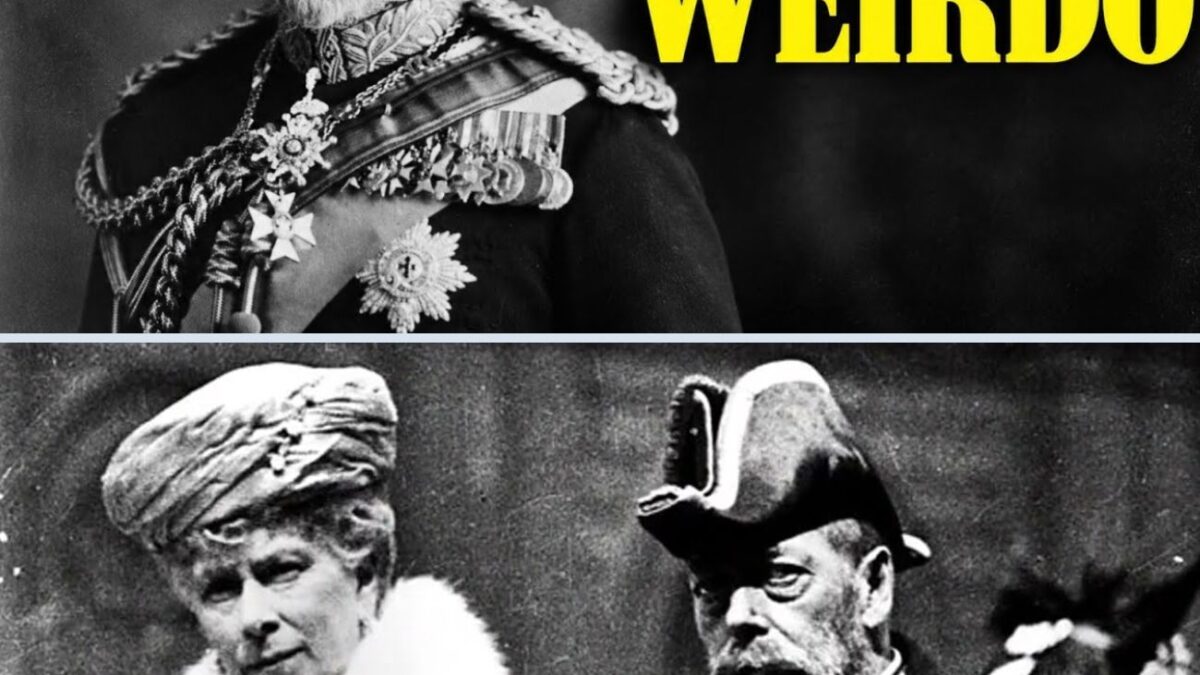
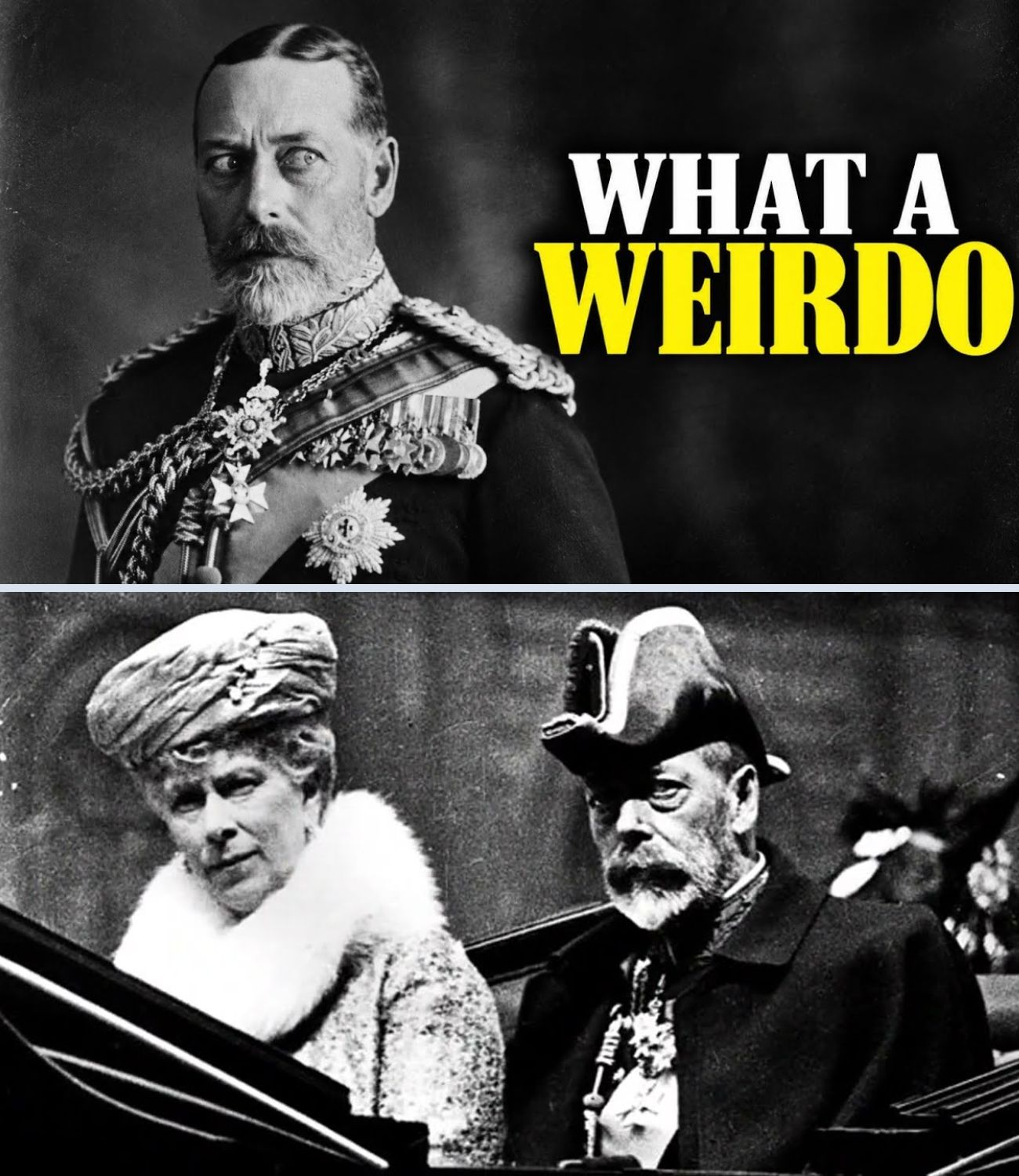
King George V’s doctor killed him deliberately. On January 20th, 1936, Lord Dawson of Penn injected the King of England with a lethal dose of morphine and cocaine directly into his jugular vein. Then he picked up a telephone and called the editor of The Times because the death announcement needed to land in the morning papers rather than, and I’m quoting the doctor’s own private notes here, the less appropriate evening journals.
The king’s reported last words, “How is the empire?”, were repeated for decades. Reverent, dignified, exactly what a king should say. They were invented. His actual last words, per those same private notes, were:
“God damn you.”
This was aimed at the nurse who had just given him a sedative. That gap between the official story and the reality underneath it is exactly what makes King George V impossible to dismiss.
He was tattooed, grumpy, obsessive, and completely unsuited to the throne he never expected to inherit. He renamed the British royal family in a single afternoon. He terrified his sons so thoroughly that one abdicated and one developed a stammer. He ran an empire covering a quarter of the earth while devoting an hour a day to sorting stamps.
He was by any reasonable measure a deeply weird man, and the story of how he got that way and what it cost is more interesting than almost anything the official record bothered to tell you. George was born on June 3rd, 1865, and from the moment of his birth, almost nobody cared very much. That is not an insult. It was the arithmetic of Victorian succession.
He was the second son of the Prince of Wales, the future King Edward VII, placed third in line to the throne, behind his father and his older brother, Albert Victor. The crown was not his concern. He was the backup, the spare. So they did what the British establishment always did with royal spares. They sent him to sea.
At age 12, George enrolled at the Royal Naval College aboard HMS Britannia in Dartmouth. His tutor, John Neale Dalton, later noted that neither George nor his brother Albert Victor excelled intellectually. This was the polite Victorian way of saying they were not academic. George didn’t need to be. The Navy didn’t want thinkers.
It wanted discipline, punctuality, and the capacity to follow a chain of command without asking inconvenient questions. George had all three in abundance. He thrived in ways the palace drawing rooms had never allowed. From 1879, George served aboard ships across the world: South America, South Africa, the West Indies, Australia, Japan, the Mediterranean.
He wasn’t on a royal tour. He was a working officer, standing watch, managing crew, learning the rhythms of a life governed entirely by structure and function. And along the way, this teenage prince picked up a habit that would follow him the rest of his life. Not stamps, not yet. First, it was tattoos.
In 1881, visiting Japan, George had a dragon tattooed on his forearm by a local artist. The following year in Jerusalem, he and his brother Albert Victor both received the Jerusalem cross, tattooed, according to George’s own diary entry, by the same man who tattooed Papa. King Edward VII had visited the same artist years before.
Father, then sons, multiple monarchs of the British Empire, one tattoo artist in Jerusalem. Completely normal. The travels eventually ended. George came home a capable officer and a quietly unusual young man. Where his father, Edward VII, was flamboyant, loud, and infamously unfaithful, collecting mistresses the way other men collected newspapers casually and without apparent shame, George was reserved, rigid, and almost aggressively respectable.
He watched his father’s behavior and was genuinely disgusted by it. He was going to be different, he had decided. Then came Malta and Princess Marie. Stationed with his uncle, Prince Alfred, Duke of Edinburgh, George met Alfred’s daughter, Princess Marie of Edinburgh, his first cousin.
They fell for each other quickly and without much subtlety. George wrote to his mother, saying he wanted to marry her. He was open about it in a way that was unusual for a man who rarely opened up about anything. Marie’s mother had other plans. She was already arranging a match with the crown prince of Romania, a far grander alignment than a second son with a naval career.
Queen Victoria, who controlled the romantic destinies of half the royal houses of Europe, did not intervene. The match was blocked. George was told politely and firmly that it was not going to happen. He said almost nothing in response. That was the thing about George. He didn’t argue. He didn’t campaign.
He absorbed the blow and went back to his duties with the same mechanical competence he brought to everything else. But the letters he wrote in that period suggest the wound was real. He had wanted one thing, one personal thing, and it had been taken from him without negotiation. He filed it away. He moved on. And then in January 1892, his brother died.
Albert Victor—Eddie to the family—contracted influenza during one of the worst epidemic winters of the late Victorian period. He was 28 years old, engaged to be married, theoretically months away from becoming the most important man in the country. Within six days of showing symptoms, he was dead. George, standing one place behind him in the line of succession, became heir to the British throne overnight.
He had not been trained for it. He had not been briefed, prepared, groomed, or even seriously consulted. He was a naval officer who had spent his adult life following orders on ships. Now he was next in line to rule the largest empire in human history. The machinery of monarchy, the state functions, the constitutional obligations, the parliamentary negotiations, the sheer weight of public symbolism—none of it had been built for him.
Queen Victoria moved with the calm efficiency of someone who had been managing crises for 50 years. She suggested, in the way that Victorian queens suggested things (meaning it was not a suggestion), that George marry his late brother’s fiancée, Princess Mary of Teck. Mary had been prepared for royal life. She understood the institution.
She was steady in a way the palace needed. It sounds cold because it was cold. Two people in grief pointed at each other and told to make something work. In practice, it worked better than almost any royal marriage of the era. George and Mary grew into a genuinely devoted partnership. They wrote letters to each other throughout their marriage, private, warm letters that surprised historians who expected nothing but formality from a man as guarded as George.
In public, they appeared stiff and remote. Behind closed doors, they were apparently each other’s closest ally. He became engaged to Mary in May 1893. He became heir apparent in 1901 when his father took the throne as Edward VII. He became King George V on May 6th, 1910, when Edward VII died of bronchitis. He was 44 years old.
He had spent his life preparing to be a naval officer. He had no map for what came next. Harold Nicolson, diplomat, biographer, a man who spent years inside George V’s private papers, delivered what has become the standard verdict on the king:
“The Royal Diary was the journal of a very ordinary man, containing a great deal more about his hobby of stamp collecting than it does about his personal feelings, with a heavy emphasis on the weather.”
He also called George a dull man who liked nothing better than to sit in his study and look at his stamps. These lines follow George V everywhere. They are accurate as far as they go, but they only go so far. The stamps were real, and the obsession behind them was serious. George had begun collecting as a boy under the influence of his uncle, Prince Alfred.
The habit deepened when he inherited his father’s collection. Once he was king, philately was no longer a pastime. It was a daily practice. He devoted a full hour to his albums every day when in London—an hour every day while governing an empire that covered roughly a quarter of the Earth’s land surface.
He didn’t just accumulate, he studied. He wanted to know how stamps were printed, what the perforations meant, where production flaws had occurred, and why. In 1904, he purchased the Mauritius 2-pence blue post office stamp at auction, one of the rarest philatelic objects in existence. He was a genuine expert, not a hobbyist with a budget. The distinction mattered to him.
By his death, the collection ran to 328 red leather albums. Today, it is the Royal Philatelic Collection, housed at Buckingham Palace, still growing under each successive monarch. George built its foundation. Every album that came after is built on what he assembled, stamp by stamp, hour by hour, across 26 years on the throne.
Now the stamps were the quiet part. George V hated the 20th century, not as a manner of speaking, but as a lived, daily, furious project. One historian described it as a one-man war against the 20th century. And that framing is not an exaggeration. He shouted at everyone. He despised divorced couples. He could not tolerate women who smoked in public and painted fingernails.
If a woman appeared anywhere within range of the palace wearing painted nails, George registered visible, vocal, personal displeasure. He genuinely did not understand why this was happening. He did not want it happening near him. His temper was not occasional. It was structural. He had spent his formative years in an institution, the Royal Navy, where authority was absolute, hierarchy was fixed, and the rules existed to be followed without debate or hesitation.
He had absorbed that framework so completely that he applied it to everything: the monarchy, the household, the dinner table, and his children—especially his children. George V was a terrible father, not in the passive, distracted sense, but in the active, present, daily sense. He created an atmosphere of fear in his own home that his sons never fully escaped.
Prince Albert, the future George VI, grew up stuttering, not from birth. The stammer developed, worsened, and became a defining feature of his adult life. Biographers and historians have drawn a direct line between the psychological environment George created and the anxiety that produced it. Bertie was sensitive, decent, and conscientious.
His father regarded sensitivity as weakness and treated it accordingly. There are accounts of Albert shaking visibly before entering a room where his father was present. The king thought this was appropriate. The king thought fear was how you made men. There is a specific documented scene that captures the dynamic precisely.
When Albert’s stammer was at its worst, a speech therapist named Lionel Logue was brought in—the man later depicted in The King’s Speech. Logue’s method required Albert to relax, to breathe, to slow down. Everything about his father’s household had trained him to do the opposite. Albert eventually overcame the stammer enough to function publicly.
He did it despite George, not because of him. His eldest son, David, the future Edward VIII, responded to the same upbringing, not by freezing, but by fleeing. He pursued the wrong women, dismissed protocol, and refused to become what the institution required. George V watched this with mounting dread. In his final years, he reportedly said he prayed God would never allow David to marry and have children, that his son would wreck everything within a generation. He was right.
He lived just long enough to know David was heading somewhere catastrophic. He did not live to see the abdication, which came 11 months after his death. He also never fully reckoned with his own role in building the rebellion he feared. There is a quote attributed to George V, repeated too consistently to ignore, possibly apocryphal in its exact wording, but accurate in its spirit:
“I was frightened of my father, and I am damned well going to see to it that my children are frightened of me.”
Whether he said it in those exact words, he lived by it. The fear moved from Edward VII to George V to his sons. It was the one inheritance nobody wanted and everybody received. Then the world cracked open.
When the First World War broke out in August 1914, George V occupied one of the strangest positions in European history. He was first cousins with Kaiser Wilhelm II of Germany and first cousins with Tsar Nicholas II of Russia. All three men were grandsons of Queen Victoria. All three were now sovereign leaders of nations at war with each other over a conflict that would kill 17 million people.
The personal dimension was real. George and Tsar Nicholas II looked so similar—dark beards, similar build, nearly identical expressions—that photographs of the two men together required close attention to tell apart. There was genuine warmth between them. It made no difference to the machinery of war.
Anti-German sentiment inside Britain turned savage. German-owned shops were attacked. People with German surnames faced harassment and violence. Bakeries associated in public imagination with German immigrant workers were targeted. Dachshunds were reportedly kicked in the street purely for being German dogs.
And at the center of all this was a royal family whose official dynastic name was the House of Saxe-Coburg and Gotha—a German title, unmistakably, historically, proudly German. The pressure on the palace was severe and accelerating. German bombers, the Gotha G.IV aircraft, had begun crossing the channel to bomb London directly in 1917, becoming a household name in the worst possible way.
The name Gotha was appearing in casualty reports and in screaming headlines. The royal family shared it. Something had to change immediately. On July 17th, 1917, at a Privy Council meeting, George V issued a formal proclamation. The royal house was henceforth Windsor, taken from Windsor Castle: English, ancient, impossible to associate with the enemy.
Lord Stamfordham, the king’s private secretary, had suggested it while sitting inside Windsor Castle at the time. All German titles held by the king’s British relatives were simultaneously surrendered. The entire dynasty, in a single Tuesday afternoon, became English by decree.
Kaiser Wilhelm heard the news from the trenches and reportedly quipped that he looked forward to attending a performance of Shakespeare’s The Merry Wives of Saxe-Coburg. A genuinely good joke. It did not change anything. That name Windsor has carried every British monarch since. King Charles III is a Windsor. The entire modern identity of the British royal house exists because George V needed to solve a branding problem in 1917 and his secretary had an obvious answer.
One proclamation, one afternoon, an institution renamed for the next century. Despite everything—the rage, the rigidity, the damage done at home—George V was not a political failure. He accepted the first Labour government in 1924, inviting Ramsay MacDonald to form a ministry in a constitutional moment that many at court found alarming.
He handled it without drama. He navigated the 1926 general strike without the monarchy becoming a political casualty. His silver jubilee in 1935 produced crowds and genuine affection: not performance, not obligation, but something closer to warmth from a public that had watched him hold the line for 25 years. People liked him, not because he was charming (he wasn’t) and not because he was kind (the evidence is mixed at best).
They liked him because in an era when the Russian throne had fallen, the German imperial house had collapsed, the Austro-Hungarian Empire had dissolved, and the old order was being dismantled continent by continent, George V was still there, consistent, unmovable, entirely himself. His stubbornness, which made him a difficult man and a brutal father, also made him an effective king in a specific and unrepeatable set of circumstances. Then his lungs gave out.
By 1935, George V was visibly, irreversibly dying. Decades of heavy smoking had destroyed his respiratory system. He suffered from chronic obstructive bronchitis that left him gray and breathless. Oxygen tanks sat permanently at his bedside by the end of that year. His physician, Lord Dawson of Penn, told Prime Minister Stanley Baldwin privately that the king was packing up his luggage and getting ready to depart.
He spent his final Christmas at Sandringham, the Norfolk estate where he had always been most at ease. He loved Sandringham in the way people love places that ask nothing of them: no ceremony, no performance, no state function requiring him to be what the institution needed him to be. He was just a man with a cold who liked looking out at the same landscape he had looked out at his whole life.
In January 1936, he took to his bed. For a brief period, he seemed to rally. People around him allowed themselves a cautious optimism. Then the improvement ended and did not return. On the evening of January 20th, the BBC broadcast a statement across Britain. It had been composed by his physician, Lord Dawson of Penn, and it read:
“The king’s life is moving peacefully towards its close.”
Peacefully towards its close. It was a carefully composed sentence. It was also a lie in the specific, deliberate sense because Dawson had already decided what he was going to do, and the statement was designed to prepare the public for an announcement he was about to engineer. What happened that night was not discovered by the public for 50 years.
Lord Dawson kept a personal diary. His biographer found it in 1950, five years after Dawson’s death. Lady Dawson asked that the relevant passages be omitted from the official biography. They were. The diary stayed buried for another three decades until 1986, when Dawson’s biographer, Francis Watson, finally published an account in the journal History Today. The diary revealed this:
At approximately 11 p.m. on January 20th, 1936, Lord Dawson of Penn injected King George V with three-quarters of a grain of morphine and one grain of cocaine, administered directly into the jugular vein. In his own handwriting, Dawson explained his reasoning:
“The king was dying but could linger for many hours, and hours of waiting just for the mechanical end when all that is really life has departed only exhausts the onlookers.”
He also noted that he wanted the timing to allow for the announcement in the morning papers rather than the less appropriate evening journals. He then telephoned the editor of The Times and told him to stand by for late news. The king was dead 40 minutes later. Official time of death: 11:55 p.m., January 20th, 1936.
The Times headline the next morning: A Peaceful Ending at Midnight. The nurse on duty that night was Catherine Black. She was present for what Dawson was doing. She refused to administer the injections herself. Dawson gave them alone. Black’s memoir, published in 1939, does not mention the night of January 20 at all. Not a word.
When Kenneth Rose later wrote the official biography of George V and encountered the Dawson diary entries during his research, he used the word murder. Rose was the son of a physician. He was not being careless with language. Lord Horder, a distinguished surgeon who had worked alongside Dawson for years, had circulated a verse in medical circles long before any of this became public:
“Lord Dawson of Penn / Has killed many men. / That is why we sing / God save the King.”
The irony goes one layer deeper. Later in 1936, after the king’s death and after the abdication crisis—in the same year that saw the British monarchy survive one of its worst internal crises—a voluntary euthanasia bill came before the House of Lords.
Lord Dawson of Penn took part in the debate. He voted against legalizing assisted dying. He argued it should remain a private matter for individual physicians rather than a regulated legal practice. He called it a mission of mercy. He did not mention the king. He had already voted in the most direct way available to him that January in a bedroom at Sandringham with two syringes.
And then there were the last words.
“How is the empire?”
That was the line that circulated. That was the line repeated in newspapers, in histories, and in retrospectives for decades after. A king’s final thought, not for himself, not for his family, but for the realm he had served for 26 years. It was the perfect closing line: dignified, selfless, exactly what the story required.
According to Lord Dawson’s private diary, those words were never spoken. King George V’s actual last words were:
“God damn you.”
They were directed at nurse Catherine Black, who had given him a sedative injection earlier that evening.
The empire did not come up. King George V ruled Britain from 1910 to 1936. He got tattooed in a Jerusalem parlor at 17, following in his father’s footsteps in the most literal sense.
He fell in love with his first cousin, was denied her without appeal, and filed the grief away so thoroughly that he almost never mentioned it again. He became king because his brother caught the flu. He spent an hour every single day sorting stamps while governing a quarter of the inhabited world. He waged a slow, furious, losing war against the 20th century, against painted fingernails and divorced couples and women who smoked and everything else that arrived after 1900 and refused to leave.
He terrorized his sons. One of them abdicated to marry an American divorcee. One of them shook in his presence and stammered through his public life. The fear George planted in them never entirely left either man. He renamed the entire British royal dynasty on a Tuesday afternoon in 1917 because his secretary had an idea while sitting in a castle. The name stuck.
It still holds. His doctor killed him. His nurse refused to help. His last words were a curse. He was never suited to the throne. He sat on it for 26 years. He held it together through a world war, through the collapse of every rival empire, through strikes and crises and the slow disintegration of the world.
He understood he was stubbornly, entirely, irreducibly himself from the first day to the last. Weird guy.
You Might Also Enjoy

“We Thought They Would Negotiate”—What Argentine Soldiers Said When The British Attacked Goose Green

“You’ll Never Finish My Ruck March, Limey” — US Sergeant Who Challenged the SAS, Then Fell Out First






