King George VI Was A MONSTER Off Camera
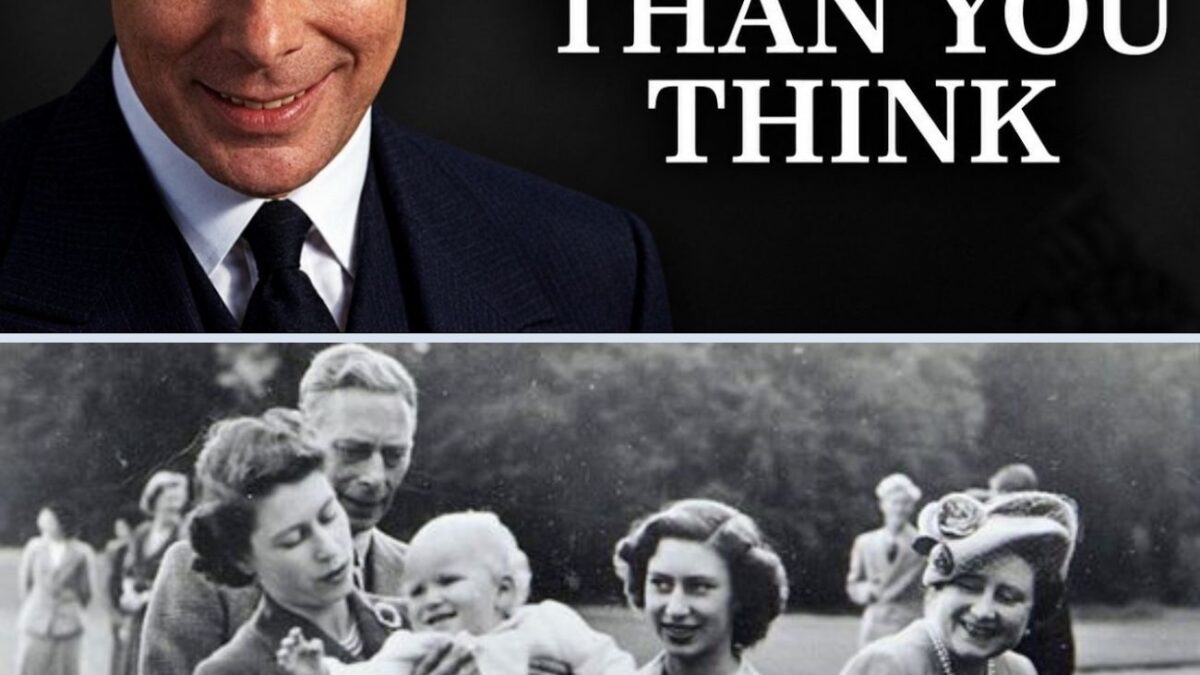
He died in his sleep at Sandringham on the 6th of February 1952, 56 years old, 5 months after surgeons removed a lung. The country mourned the shy, decent, stammering king. His own family had a private word for his rages. They called them his nashes. In 1923, his bride laid her wedding bouquet on the tomb of the unknown warrior, a gesture every royal bride has copied since. She had refused him twice before she agreed to it. Then she outlived him by 50 years and chose the man who wrote his life. Why did she finally say yes? Start with the second half of that because it’s the part nobody thinks about. Elizabeth was 51 when he died. She lived until the 30th of March 2002. 50 years and 55 days of widowhood. That is not a footnote. That is a second career. And the product of that career was a man.
Within 6 years of the funeral, the official biography appeared. King George VI, his life and reign by John Wheeler-Bennett, published in 1958. Written with access to the Royal Archives at Windsor. Access is the word to hold on to. Wheeler-Bennett was a serious historian, not a hack, and the book runs to nearly 900 pages. It is also a book written inside a house whose doors were controlled by the widow. She read drafts. She had views. The portrait that emerged, beautiful, modest, conscientious, a man who never wanted the job and did it anyway, is not false. It is curated. Curation is a form of power and in this marriage it was always hers.
Here is what the official version softens. The king had a temper that the household learned to forecast the way sailors forecast weather. The family term was nashes and it appears across memoir and recollection from his boyhood into his reign. Flashes of fury sometimes over trivial things that frightened servants and left him afterward savagely ashamed of himself. Most of those anecdotes come from people writing or talking years later, which is worth saying plainly because late recollection is softer evidence than a dated letter. But the pattern is corroborated from too many independent directions to wave away and it runs through the entire arc of his life. A man wound tight enough to snap who then spent the next hour apologizing with his eyes.
So was he a monster? Not to his wife on any evidence we have. That is the first thing the title has to survive. What the record will support is stranger and more interesting. The public saint was a nervous wreck with a short fuse. The nation never saw it. And the reason the nation never saw it was standing next to him in every photograph smiling three inches from the microphone. He had the throne. She had the access.
To understand why a man becomes that, you have to look at a very specific kind of childhood and only the parts that did damage with consequences. Born in 1895, second son of the future George V. Not needed as a boy and put into leg splints worn at night, sometimes during the day, naturally left-handed and forced to write with his right hand and a stammer that arrived around the age of seven or eight and never fully left him in a family where fluency under pressure was the entire job description. His father has been over-villainized by television and underexamined by everyone else. George V was not cruel in any sadistic sense. He was a naval officer who ran his sons like a wardroom and believed correction was love. That is a fine theory until you apply it to a child who physically cannot get the word out.
The effect was cumulative. At the Royal Naval College at Osborne, the boy known in the family as Bertie finished near the bottom of his class. At Dartmouth, worse. He was examined orally in a system built for boys who could speak and he would stand there blocked with nothing coming. The war gave him one clean thing to be proud of. He was aboard HMS Collingwood at Jutland in May 1916 in a turret under fire and nobody has ever questioned his nerve. He wanted to be a serving officer. His body refused. Chronic stomach trouble dogged him for years and in November 1917 he underwent surgery for a duodenal ulcer. He spent much of the war being invalided out of the thing he was good at.
Put those together and you get the adult pattern. A man with a lifelong physically humiliating communication disability. Raised to believe failure was a moral defect whose body collapsed whenever his nerves did. The nashes weren’t malice. They were pressure escaping from a vessel that had no other outlet. He took it out on the people who couldn’t answer back, the valet, the equerry, the staff, and almost never on the public because the public was the thing he was terrified of.
Now, the question that matters. In 1920, he was Prince Albert, Duke of York from June 1920, second son with an older brother in excellent health who would obviously be king and would obviously have children. The role was secure, pleasant, undemanding, and permanently second. Any ambitious girl in Britain would have taken it on the spot. She said no twice. They had met as children and again as adults. The usual account places the decisive reacquaintance at a ball in the summer of 1920. Lady Elizabeth Bowes-Lyon, youngest daughter of the Earl of Strathmore, 20 years old and comprehensively the most sought-after young woman in London society.
That last part is not flattery written backward. Contemporary accounts and the volume of her correspondence make it clear she was pursued by a crowd and enjoyed it. What she had was not beauty in the fashionable mode, and not money on a royal scale. It was a social gift that the House of Windsor badly lacked, and did not know how to manufacture. She was warm in rooms. She remembered people, and she could make a stranger feel chosen in 40 seconds. Set that beside a prince who could not finish a sentence in front of 50 people, and you can see what he saw. She could also read a room for danger and the danger she read was the family.
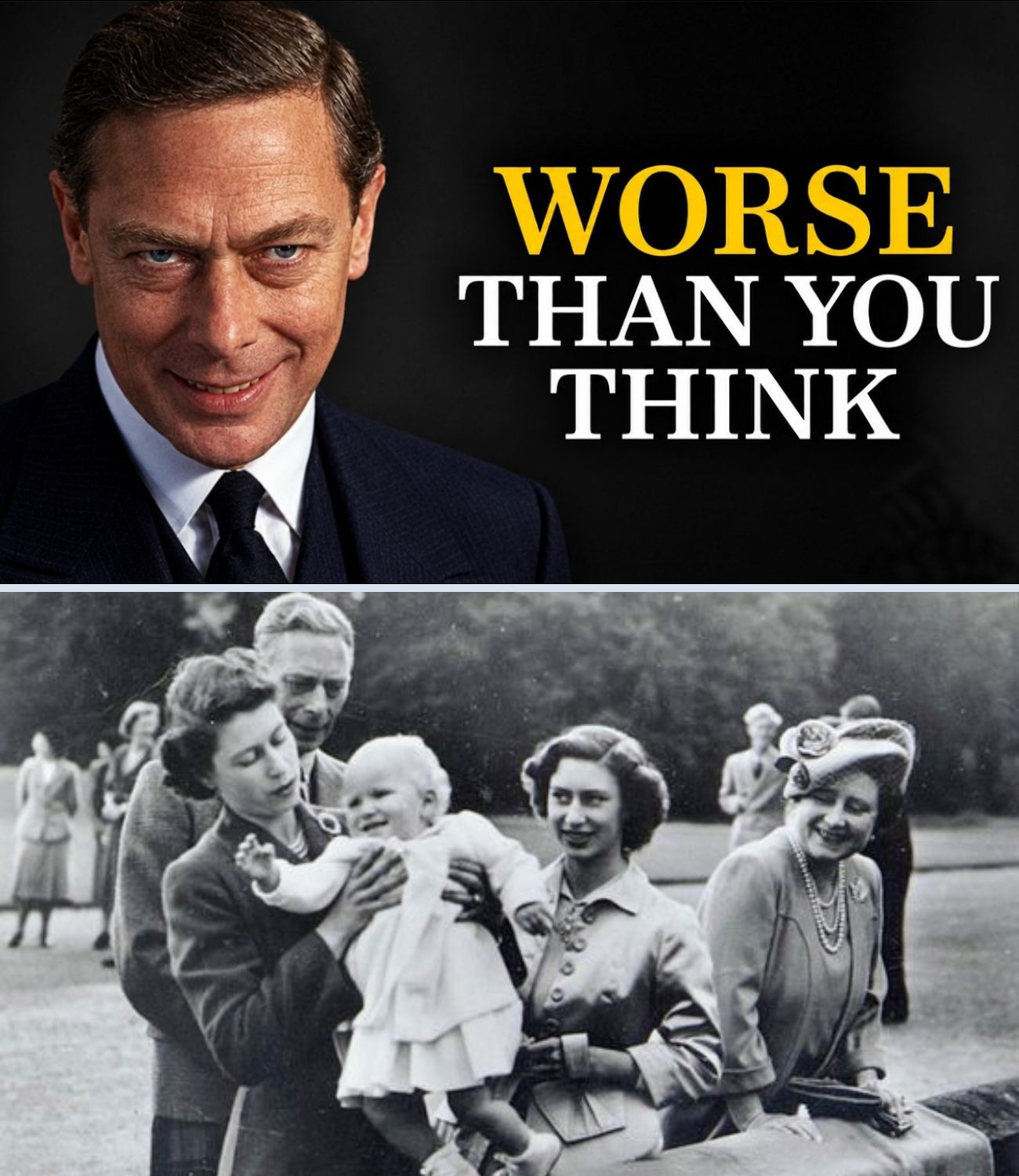
Her refusals are documented in her own letters. She turned him down in 1921. She turned him down again in 1922. The reason she gave in various phrasings was the one that should make anyone watching the next 80 years sit up. She was afraid of losing the freedom to think and speak and act as she liked. She had grown up at Glamis and St Paul’s Walden Bury in a large, loud, affectionate family that did not keep a court timetable. She had seen what royal life did to women who married into it. Queen Mary was the walking advertisement, rigid, beautiful, emotionally armored, a woman who had subordinated an entire personality to an institution. That is the thing to keep hold of because it detonates later. The specific liberty Elizabeth spent 2 years protecting is the exact liberty she would surrender permanently in December 1936 because of a decision made by a man she had no control over.
Why did she finally say yes in January 1923? The honest answer is that we have her letters and they are not a confession. Several biographers have concluded that persistence did it. He was told by his father in one of the few genuinely generous things George V said about the matter that he would be a lucky fellow if she accepted and he simply kept asking for 2 years. That is not nothing. A man with a stammer proposing three times to a woman who has already refused him twice is a man risking the one humiliation he was built to avoid.
There is a second strand and it needs careful handling. Elizabeth had an attachment understood by those around her as serious to James Stuart, Bertie’s own equerry and war officer, by every account charming, and in 1923 he left Britain for the American oil business in Oklahoma. The story that Queen Mary arranged his removal to clear the field is repeated in a good deal of royal literature. It is a later secondhand claim and historians including Kenneth Rose and Hugo Vickers have treated it with varying degrees of skepticism. What is not in dispute is the sequence. Stuart departs for America and within a short span she accepts the prince she had twice declined. Timing is not motive but the timing is there and the family that benefited from it was not a family that left such things to chance.
What each of them got is clearer than why. He got regulation, not just affection, regulation, a person who could steady him, interpret him, stand beside him, and absorb the public half of a job he physically struggled to perform. His dependence on her was visible to the household from the beginning, and only deepened. He said in substance to more than one intimate across the following decades that he could not have managed without her. And on the evidence he was not being gallant. He was being accurate.
She got something that in 1923 looked extremely attractive and in retrospect looks like a trap with excellent furniture. Royal rank, a duchess’s position, enormous social standing and no crown, a life inside the magic circle without the cage at its center. She would be photographed, celebrated, and left alone. She had negotiated, as she understood it, the safe version. The engagement was announced on the 15th of January, 1923. George V gave his consent to a bride who was not a foreign princess, which was unusual enough that the newspapers made a point of it. The public loved it instantly, the commoner, the Scottish castle, the war generation romance.
The wedding was set for the 26th of April at Westminster Abbey. And the first thing she did at that wedding, before the vows, before the photographs, was an improvised act of image-making that the royal family has been copying ever since. She had lost a brother in the war. Fergus Bowes-Lyon was killed at Loos in September 1915 and his grave was never properly located for years afterward. On the way up the aisle on the 26th of April 1923, she stopped and laid her bouquet of white roses on the tomb of the unknown warrior. Nobody had asked her to do it. It was not in the order of service. Most accounts describe it as spontaneous, a gesture to one dead brother that landed as a gesture to every dead brother in Britain. And the country understood it immediately. Every royal bride since has sent or laid her flowers on that tomb. The custom is hers.
Think about what that tells you about the woman walking into this family. She had been a duchess for roughly 90 seconds, and she had already produced the single most resonant image of the day, improvised, without a press office. The Windsors at that point had no idea how to do this. George V’s public manner was a naval glare. Queen Mary’s was a wall. The firm’s idea of popularity was to be seen often and say nothing. Elizabeth’s instinct from the first morning was that the picture matters more than the protocol and that warmth photographs better than dignity. The abbey itself gives you the other half of the story. The BBC wanted to broadcast the service. The dean and chapter refused on the grounds that men might listen in public houses with their hats on. That is the institution she had married into, an organization capable of blocking the most powerful publicity tool of the century over headwear. She spent the next 50 years working around people like that.
The marriage began well, and it is worth saying so without hedging, because the collapse narrative distorts everything. They liked each other. They wrote to each other constantly when apart. He was uxorious to a degree the court found slightly comic. The difficulty was not love. The difficulty was that within 2 years the job began demanding the one thing he could not do. The British Empire Exhibition at Wembley, the 11th of May, 1925. He had to give a speech in front of a stadium crowd with his father in attendance, broadcast by radio. It went badly. Long blocked silences. A crowd listening to a man trying to start a word and failing. Accounts differ on how total the disaster was, but nobody records it as a success, and his own reaction afterward was despair. He had been through a procession of speech specialists by then. None had worked.
In October 1926, he went to a consulting room at 146 Harley Street to see an Australian with no medical degree named Lionel Logue. What makes that appointment the hinge of this story is not the therapy. It is who arranged it and who turned up. Elizabeth was the one who pushed him to try again after a run of failures that had left him refusing to see anyone. She went with him. Logue’s own diaries and appointment books which survived in his family and were published by his grandson Mark Logue in 2010 record her presence at sessions. She sat in. She learned the breathing exercises. She did them with him at home. That is not a wife being supportive. That is a wife becoming a working component of her husband’s public function. Logue’s notes from the first consultation describe a man with a slack diaphragm, no breath control, and acute nervous tension. And crucially, the conclusion that the stammer was not structural. It could be managed.
The method was mechanical and dull: breathing, tongue twisters, hours of drill, rehearsal of every text in advance with the awkward consonants marked and substituted. The improvement was real and it was never a cure. For the rest of his life, speaking in public was work he had to prepare for the way an athlete prepares for a race. And here is the detail that explains the next 25 years of photographs. He got measurably better when she was there. Logue recorded it. The household saw it. By the 1927 tour of Australia and New Zealand, 6 months away, which also meant leaving their infant daughter Elizabeth behind with grandparents, a separation the Duchess found painful and recorded as such, he was opening the new Parliament House in Canberra with a speech that went through cleanly. He wrote home to his father in effect that it had worked.
So look again at the standard image of the pair of them at a microphone. He is at the center because protocol puts him there. She is at his left, slightly back, apparently decorative. She is not decorative. She is the stabilizer. The marriage had quietly reclassified itself. It was still affectionate and it was now also clinical. A two-person operation with a documented technical procedure in which the royal personage could not reliably perform his primary public duty without his wife in the room. That is enormous leverage. The question is whether she ever used it. And the answer the evidence gives is not in any way that was visible, which is precisely why it worked.
Meanwhile, the private cost of the arrangement was being paid by other people. The nashes continued at 145 Piccadilly and at Royal Lodge. Staff recollections, again, mostly later, mostly from people with no reason to invent and no reason to be precise, describe sudden rages, usually over disruption, mess, lateness, the small failures of a household. He was not violent. He was frightening. And the household organized itself around not setting him off. His wife’s role in that system was consistent. She diffused. She deflected. She handled him. She teased him out of it. A marriage in which one partner’s main daily skill is managing the other’s nervous system is a particular kind of marriage. It can contain real love. It is also an unequal distribution of labor that never appears in any photograph.
Through the early 30s, they had the best version of their lives. Two daughters, Elizabeth, born in 1926, Margaret in 1930, Royal Lodge at Windsor, which they rebuilt and genuinely loved. A life in the second rank with a devoted public and almost no responsibility. The thing she had negotiated in 1923 was actually being delivered. Then his brother met Wallis Simpson. Skip the abdication crisis as a constitutional drama. It has been told. Take it as a thing that happened to a marriage. For most of 1936, the Yorks were spectators to a disaster they could not influence. By November, when Edward VIII told Baldwin he intended to marry and the alternatives narrowed to abdication, the Duke of York understood what was coming and reacted the way a man with his history would.
His own diary is the evidence here, and it is unusually bare. He recorded going to see his mother at Marlborough House on the night the decision became certain, and breaking down and sobbing like a child. That is his own account in his own hand, written for nobody. He also wrote that he had never seen a state paper, that he had no idea what a prime minister’s audience consisted of, that he had been excluded from the training because nobody had expected this. His brother had taken 9 years of sovereign preparation with him into private life in 48 hours. Edward VIII signed the instrument of abdication on the 10th of December, 1936. The Duchess of York spent that week in bed with influenza. She was not at the center of the drama. She received the news of her husband’s accession while ill in the house in Piccadilly they would never live in again.
Now hold 1921 against 1936. In 1921 and 1922 she had refused this family twice in writing because she was frightened of losing the freedom to think and speak and act as she chose. In 1936, she lost all of it permanently in a single week. Not through any choice of her own, but through the decision of a brother-in-law she could not control and did not like. She never got over it. Her correspondence and the recollections of those close to her are consistent that she blamed the abdication for the strain that broke her husband’s health, and she blamed two people for the abdication. The grudge lasted 65 years.
Look at what she did with it because this is where you can actually see her power rather than infer it. She did not receive Wallis. Not in 1936, not during the war when the Windsors came through. Not at any point in the following five decades. The one documented meeting of any substance came at Edward’s funeral in 1972, by which time she was 71 and he was dead. That is not sulking. That is a sustained policy of exclusion enforced by a woman who officially had no constitutional authority at all.
And then there is the letters patent of the 27th of May 1937 issued days before the Windsors’ wedding in France. It declared that the former king retained the style royal highness and that his wife and any descendants would not. Edward regarded it as the central injury of his life and said so repeatedly for 35 years. Who drove it is genuinely disputed. The document was issued by the king. The legal advice was contested at the time. Some of the law officers thought the duchess was automatically entitled to her husband’s style. The king’s position expressed in correspondence was that the marriage might not last and that a divorced duchess walking around as a royal highness was an unacceptable risk. Historians have split on how much of this originated with him, with Queen Mary, with the government or with his wife. Her own letters from the period leave no doubt about where her sympathies lay and she never once in 65 years expressed regret about the outcome. It was his signature. The chronology and her correspondence make it difficult to believe it was only his idea.
Either way, the practical result was a king who had been handed a job he had not been trained for, could not physically perform without assistance, and could not resign from because his brother had just demonstrated exactly what resignation cost. There was no exit for either of them. Now, the only remaining question was what the two of them would do with a throne neither had wanted. The war answered it. Before the war, there was a rehearsal and it took place in North America. In May and June of 1939, they crossed Canada by train from coast to coast and then came down into the United States, the first reigning British monarch ever to set foot there. Roosevelt had them to Hyde Park and fed the king hot dogs on a picnic, which the American press adored. And the British press reported with the faint unease of people watching a relative do something unexpected.
The crowds in Washington and New York were enormous. The trip’s purpose was political, to attach American sentiment to Britain before a war everyone could see coming, and it worked better than anyone in the Foreign Office had any right to expect. The diplomatic traffic afterward credits the royal couple personally. But read the reporting and watch the news reels and the mechanism is obvious. He did the formal business competently. She did the thing that cannot be taught. She worked a receiving line like a politician and Roosevelt, a connoisseur of that particular skill, came away saying so. He had also by then got good at the microphone. Logue was still working with him, still marking up texts, and the speech he gave in Canada went out live to the empire. The breathing exercises a duchess had learned in a Harley Street consulting room in 1926 were now instruments of foreign policy.
Then September 1939, and for the only time in their marriage, the public role and the private marriage stopped pulling against each other. She refused to evacuate the children to Canada. And the line she gave that the children would not leave without her, she would not leave without the king and the king would never leave was reported at the time and has been quoted ever since. Buckingham Palace was bombed on the 13th of September 1940 with both of them in the building. Her remark afterward that she was glad they had been bombed because now she could look the East End in the face is one of the few royal quotations of the century that was almost certainly said more or less as reported and it was devastatingly effective.
They worked as a unit for 6 years. Monday lunches with Churchill, walks through bombed streets, the king visiting North Africa in 1943 and Normandy in 1944. Whatever the marriage had been in 1936, a rescue contract, a management arrangement, a clinical partnership, in the war, it became something closer to a genuine joint command. Hitler is supposed to have called her the most dangerous woman in Europe. The quotation is almost certainly apocryphal, and I’d leave it out of any serious account, but it survives because people recognized something true in it. That is the part of their story the country chose to keep. It is also the part that killed him. He smoked heavily and he smoked throughout and nobody around him seriously tried to stop it.
The war aged him visibly. Compare photographs from 1937 and 1946. And the difference is not 6 years, it’s 20. The strain he was under was the strain she had married into on his behalf. And by the late 40s, the bill arrived. In 1948, he was diagnosed with arteriosclerosis in the legs. There was talk of amputation. A lumbar sympathectomy in March 1949 at Buckingham Palace improved things temporarily. He was 53. In 1951, the cough got worse. And on the 23rd of September, surgeons removed his left lung in a room at Buckingham Palace fitted out as an operating theater. The bulletins told the public about a structural abnormality in the lung and the removal of it. The word the doctors had actually used among themselves was malignant. He was never told he had cancer.
The surviving record indicates his wife and his doctors made that decision and held it. Whether she had the full picture herself in those final months is something biographers have argued about. The weight of the evidence is that she did. So she spent the last winter of their marriage knowing something he did not and managing the public’s understanding of her husband’s body the way she had been managing the public’s understanding of his voice since 1926. The method had not changed. Only the stakes had. The last photographs are from the 31st of January 1952 at London Airport seeing Princess Elizabeth off to Kenya. He was bareheaded in the wind. He looked ruined and everyone who saw the pictures knew it. He died at Sandringham 6 days later in his sleep. He was 56.
Now the 50 years begin. Watch what she acquires in the months immediately after because the pattern is unmistakable. She was a widow at 51, displaced from every residence, outranked by her own daughter, with no constitutional function whatsoever. That is the position in which royal widows traditionally disappear. Queen Mary had done it. It was the expected script. She refused the script completely. Clarence House became hers. She swapped it with the new queen and lived there for 49 years. Royal Lodge she kept. And in the summer of 1952, on a visit to Caithness, she saw a derelict 16th century house on the north coast of Scotland called Barrogill Castle, scheduled for demolition, and bought it. She restored it and renamed it the Castle of May.
That is the first piece of ground in her entire life that belonged to her alone. Not a royal residence, not a crown property, her house bought with her money as far from London as it is possible to get and still be in Britain. She went there every August and October for nearly 50 years. She had spent 1921 and 1922 refusing a family because she was afraid of losing the freedom to think and speak and act as she liked. Within six months of her husband’s death, she bought a castle at the top of the country and did exactly that. She built the rest of it to match. Her own household at Clarence House, famously indulgent and famously expensive. The racehorses from 1949 onward, hundreds of winners over jumps, an entirely separate public identity that had nothing to do with being a queen. The overdraft at Coutts reported in the millions by the 1990s which the bank never seriously pursued and which she never seriously addressed.
The gin and Dubonnet at lunch, the steel underneath which courtiers described consistently and which only showed when someone crossed her and the archive. She selected Wheeler-Bennett. She approved the access. The 1958 official biography was built from Royal Archives material that she was in a position to open or close, and the book’s silences are as considered as its contents. The nashes are not in it. The collapse of 1936 is softened. The Windsors are handled with the correctness of a woman making a point about who had behaved properly. She also across 50 years said effectively nothing in public. No memoir, no interview of substance, not one on-the-record word about Wallis Simpson whom she outlived by 16 years or about Edward whom she outlived by 30. They both wrote their versions: Edward’s A King’s Story in 1951, the Duchess’s The Heart has its Reasons in 1956 and she answered neither.
Silence from the only surviving participant is not neutrality. It is a vacuum that the authorized version fills. She outlived every rival witness. Logue died in 1953, Churchill in 1965, her brother-in-law in 1972, the Duchess of Windsor in 1986. The last person alive who could contradict her about December 1936 was herself. Then in 2009, 7 years after her death, William Shawcross published the official life with access to her own correspondence. And the woman in those letters is not the sugared grandmother of the tabloids. She is funny, sharp, affectionate, relentlessly loyal, and implacable. The devotion to her husband is unmistakable and runs the entire length of the marriage. So does the hardness toward the people she held responsible for it ending early. Both things are true. That is the whole point.
Was he a monster? Off camera. He was a man who frightened his servants, who broke dishes of composure over nothing, whose family needed a private euphemism for his rages, and who was so dependent on his wife that his doctors and his speech therapist treated her as part of the clinical apparatus. The public never saw any of it, not once in 16 years on the throne. That is not an accident, and it is not luck. It is a 50-year editorial operation beginning in a Harley Street consulting room in October 1926 and ending in a Clarence House sitting room in March 2002, run by one person who never held an office, never gave an interview, and never once explained herself.
Look at the bouquet again. In April 1923, it was a 22-year-old bride stopping in an aisle to leave white roses for a brother killed at Loos. Genuine, private, improvised. By the time she died, every royal bride in Britain had copied it, and nobody could remember a time when it wasn’t a tradition. That is what she did to her husband as well. She took a frightened, furious, physically failing man and laid him down in the national memory as the good king, the reluctant one, the modest one, the one who stammered through the war and never complained. And she did it so completely that when a film about his speech therapy came out in 2010, it won best picture, and nobody watching it thought to ask who had booked the appointment. She refused him twice because she was afraid of what the family would take from her. It took everything. She spent the next half century taking back the only thing it could still give. He got the throne. She got the last word. And she never had to say it out loud.
You Might Also Enjoy

“We Thought They Would Negotiate”—What Argentine Soldiers Said When The British Attacked Goose Green

“You’ll Never Finish My Ruck March, Limey” — US Sergeant Who Challenged the SAS, Then Fell Out First






