King George VI Was A Weird Guy
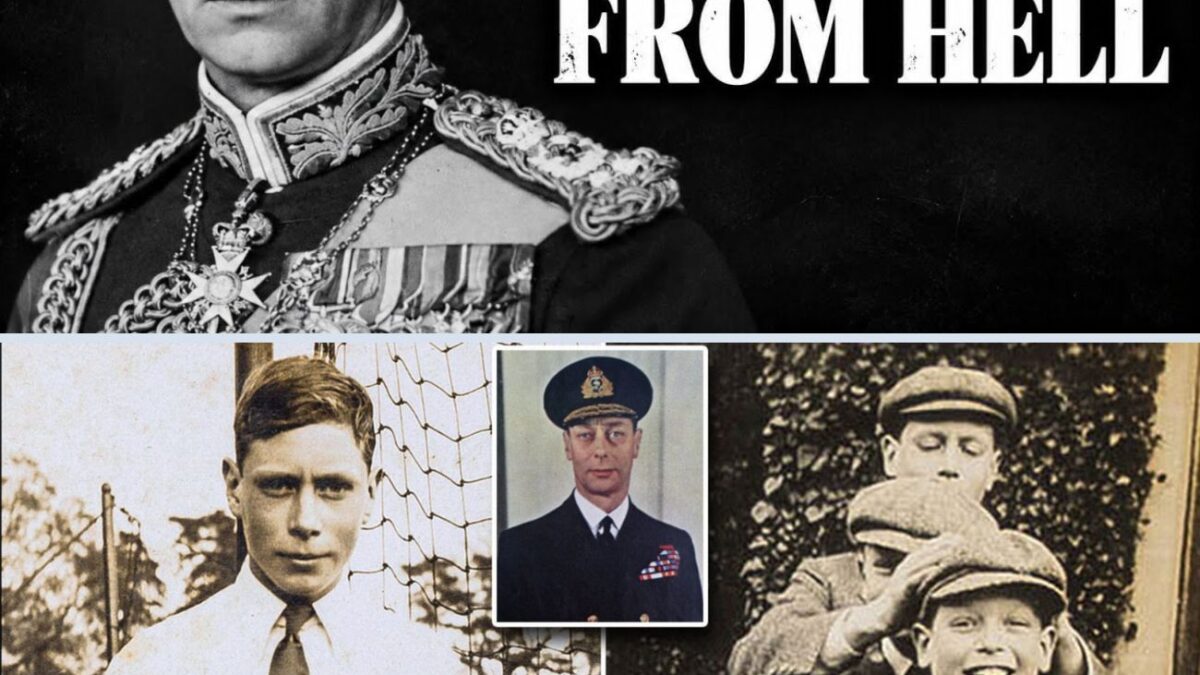
February 6, 1952. Sandringham Palace, Norfolk. A valet carries morning tea to King George VI’s bedroom. The corridor is quiet. The doors open. The cup is placed on the bedside table. The king will not move. He will never move again. He was 56 years old. I was born right here, on this estate, in a house so cramped that the footmen had to dress outside.
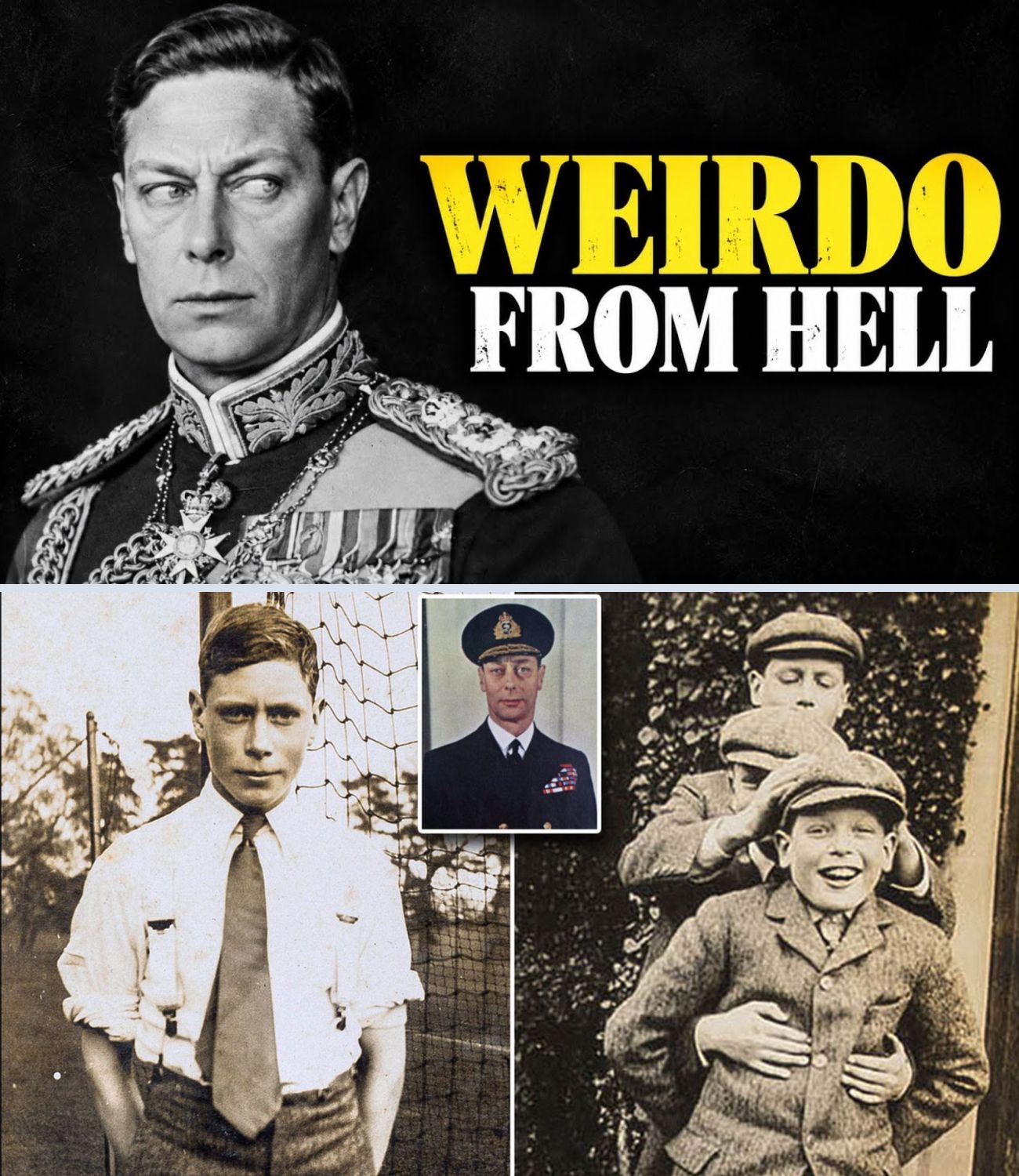
As a child, he was forced to wear metal splints on both legs. He was not allowed to use his own left hand. Plagued by a stuttering so severe that uttering even one sentence in public, by his own admission, felt like a controlled collapse. And yet King George VI was truly, concretely, and documentably strange.
In a way that goes far beyond stuttering, far beyond indecision, and far beyond anything the history books tell you. This is a classified matter. Let’s open it. Open the Household Register of York Cottage, Sandringham Estate, 14 December 1895. The first problem presents itself with the date. The second son of the Duke and Duchess of York was born at 3:05 am.
Nobody celebrated. His great-grandmother, Queen Victoria, personally declared December 14th a day of mourning. It was the anniversary of Prince Albert’s death. The Duke of York sent an alarming telegram north to Windsor, explaining the circumstances. Victoria’s secretary confirmed that she was very upset.
The Prince of Wales responded by advising the Duke to suggest the name Albert to appease her. Two days later, Victoria softened. The boy was christened Albert Frederick Arthur George. His family called him Bertie. Now let’s look at York Cottage itself, because that’s where the weirdness begins, even before the boy learned to walk.
The house was ridiculously small, with narrow corridors and rooms piled one on top of the other without any logic. The staff quarters were so cramped that footmen reportedly dressed outside. It wasn’t Windsor, it wasn’t Balmoral. It was a converted annex on a hunting estate. And it was there that the future King of England spent the first years of his life, growing up within walls so thin that everything could be heard through them.
The head nurse assigned to care for Bertie and his older brother Edward was, according to testimony corroborated by historian Charles Carleton of North Carolina State University, deliberately cruel. Her method was precise. Before introducing the children to their parents for a brief daily audience, she pinched them hard enough to bring on immediate tears.
The Duke and Duchess, faced with screaming babies, would send the children back to her. She maintained full control over the farm for 3 years. 3 years. Until the younger nanny, Charlotte Jane “Lala” Bill, reported what she had seen, and the head nanny was fired in 1897. By then, Bertie was chronically ill, pale, malnourished, and prone to stomach pains that would plague him throughout his life.
He was never able to fully recover. By the age of eight, stuttering appeared. There is no clear evidence in the medical records about its causes. All that is known is that he was naturally left-handed, and his teachers forced him to write with his right hand—a practice that modern speech therapists associate with a noticeable deterioration in his speech.
He wore painful metal splints on both legs to correct the curvature of his knees. As contemporaries noted in private letters, he was timid and somewhat prone to tears. His father, the future King George V, openly stated that his own father kept him in fear, and he intended to make his sons feel the same. He kept his word.
In 1909, Albert entered the Royal Naval College at Osborne. He took his final exams in 1911. He finished last, not just at the bottom of the list, but an absolute underdog. Every cadet in the class was higher in academic performance than him. The institution transferred him to Dartmouth anyway because of his background.
And he arrived there with a body that rebelled against itself, a voice that cracked under pressure, and a report card that was a disgrace by any standards. But the machine had already decided who Albert Frederick Arthur George should become. He just hasn’t had time to be told about it yet. By September 1913, Albert had joined the Royal Navy as a midshipman aboard HMS Collingwood.
First in the West Indies and along the coast of Canada, then in the Mediterranean Sea. The ship was huge, deafening with machinery and the voices of men who spoke without hesitation. Bertie moved around quietly. His letters home, documented in Sir John W. Wheeler-Bennett’s authorized biography, King George VI: His Life and Reign (Macmillan, 1958), show a young man acutely aware of the gap between who he was and what his position demanded.
Then in May 1916, the Battle of Jutland—the largest naval engagement of the entire First World War. The North Sea exploded around him. The ships were sinking within sight of the Collingwood. Bertie remained at his post and received a mention in reports for his behavior. Here’s what’s important to know about King George VI that isn’t in official portraits.
The stutter that clenched his jaw in the drawing rooms had no power over him in a naval battle. He could not finish a single public sentence confidently. But he went through the sea battle without flinching. This strange inversion—frozen in peacetime but unwavering in fire—is not a minor biographical detail.
This is the key to understanding almost everything that happened next. The illness still forced him to leave active duty. A duodenal ulcer led to surgery in November 1917. In April 1918 he transferred to the Royal Air Force. He became interested in aviation and received his pilot’s certificate in 1919. At 23, he could fly a biplane through the clouds, but he couldn’t finish a formal presentation without a sore throat.
After the war, he attended Trinity College, Cambridge, where he studied economics and history, and was known for his diligence. Then, in 1920, his father granted him the title of Duke of York. He accepted the title and immediately did something that none of his royal predecessors had bothered to do. He started building summer camps for boys.
Between 1921 and 1939, he organized annual camps where students from elite schools mingled with young men from working-class towns, living in tents, eating together, and competing in joint events. He was president of the Industrial Welfare Society. He walked through the factory shops. He visited shipyards. His correspondence from that period clearly indicates this.
This was not a play on the public. It was the most important job of his adult life. He also participated in Wimbledon. This is one of those details that makes you stop when you find it in the archives. In 1926, as Duke of York, Albert competed in the men’s doubles at Wimbledon, partnered with his squire, Sir Louis Greig.
He became the only member of the British royal family to ever participate in this tournament. They lost in the first round. He also collected stamps—not just casually, but with the same systematic intensity that his father, George V, brought to the hobby, spending hours cataloguing new acquisitions. He fished, hunted, and constantly returned to the confines of private life, to the closed doors of his London home at 145 Piccadilly, to what he called “the four of us” in his personal correspondence: himself, his wife Elizabeth, and their daughters, Princesses Elizabeth and Margaret.
This was the life he was building: quiet, concrete, deliberately limited. And 1926 was also the year he entered Lionel Logue’s office at 146 Harley Street, and the verdict of the British medical establishment on Logue is a strange story in itself, worth pondering. Logue was Australian, self-taught, and had no formal qualifications recognized by the establishment.
They dismissed him as an unqualified practitioner. Instead, he had a precise clinical understanding of the problem. The tension between his larynx and diaphragm caused muscle spasms every time Bertie tried to speak. Dennis Judd, in his 1982 biography King George VI, documented Logue’s regime in detail.
An hour of daily breathing exercises, regular gargling with warm water, and daily sessions by the open window chanting each vowel sound for 15 seconds. But Logue’s most disturbing demand had nothing to do with breathing. He insisted on addressing his royal patient by his first name—Bertie. Not “Your Royal Highness”, not “Sir”, but Bertie.
In that office on Harley Street, ranks were temporarily abolished. The palace found this quite embarrassing. According to surviving evidence, this was an important part of the treatment. On the evening before the opening of Australia’s new Parliament House in Canberra on 9 May 1927, Bertie wrote Logue a letter of gratitude.
The concise handwriting, the uneven pressure—the hand of someone who wrote in a hurry after long preparation, wanting to express something sincere. This letter was considered lost for over 80 years. It was found and authenticated at the beginning of the 21st century. The ink is still clear. Let’s pause for a moment in historical analysis to speak frankly.
I spent hours reading this man’s correspondence, and I want to tell you straight out how it really feels. You keep coming across the same thing. A person who was never allowed to just be themselves. The hand he wrote with was being corrected. The angle of his legs was corrected. The way his voice worked was corrected, trained, and held near an open window for 15 seconds until his breathing became correct.
Everything that was purely his was perceived as a malfunction that needed to be fixed. And then the same system that had been fixing him for decades demanded that he act according to the rules of that system publicly, without complaint, and for life. Reading the letters from the late 1920s, one feels a special shade of his exhaustion.
This is not self-pity. He was not created for self-pity. It’s just the special fatigue of someone who has been running uphill for so long that they’ve stopped noticing that it’s a mountain. You close the case, but this feeling stays with you. By December 1936, the carefully constructed private life was over. George V died in January.
Edward VIII was on the throne for 10 months. His relationship with Wallis Simpson, an American woman who was twice divorced, escalated into an open crisis in the fall. Bertie received only fragmentary information. He was the heir, and the court decided what to share with him. He was watched, his schedule planned, he was informed only of what was necessary, even when the throne was already moving directly towards him.
On December 10, 1936, at Fort Belvedere in Windsor Park, Edward signed the abdication in the presence of his three younger brothers. Pen crossed paper—no ceremony, no gathering. The crown passed to someone else without a microphone in the room. Later, confiding in Queen Mary, Bertie admitted that he had broken down and sobbed like a child.
He was 41 years old. The institutional surveillance of his movements, correspondence, and public schedule after his accession to the throne was unprecedented in his previous life. This did not stop until the morning, when the tea was found untouched. He took the throne name George VI, deliberately chosen to emphasize continuity with his father and to push the abdication out of the public spotlight.
The throne was supposed to look invincible. He associated his name with “Indestructibility.” Rumors spread through London in a matter of days. He stuttered. He was fragile. He did not have the same ease in communicating with the crowd as Edward. The modern press was specific. George VI was the wrong man. Unprepared. Not ready.
The coronation was set for May 12, 1937—the same date originally prepared for Edward. Logue intensified his breathing exercises throughout the spring. On the evening of May 11, Bertie sat down and wrote a second handwritten letter to Logue. Appreciation. Tight handwriting. The pen pressure is uneven, like that of someone who writes quickly on the verge of a long preparation.
The next morning Westminster Abbey was filled. Logue sat in the nave, close enough to be present and too far away to interfere. The Archbishop of Canterbury placed the crown on the head of Albert Frederick Arthur George. He held his breath, his voice sounding confident. He overcame his stuttering within that hour.
But here’s where things get really weird. George VI smoked from around the age of 16. By his mid-40s, according to historical medical records assessed in a 2021 cardiovascular pathology study, he had accumulated approximately 80 pack-years of smoking. His personal doctors assured him that tobacco relaxes the throat. Upon learning of this, Logue rejected the claim with his characteristic directness.
All doctors received knighthoods. The king continued to smoke. In the summer of 1939, he visited the United States with Queen Elizabeth, becoming the first British monarch to set foot on American soil. In Hyde Park, New York, they dined on the lawn with Franklin and Eleanor Roosevelt. Roosevelt served hot dogs.
The King of England ate one. This detail, confirmed in the Roosevelt archives, is not just a footnote. It’s a window into who Bertie really was, when status didn’t matter. Adaptable, easygoing, truly calm in a way that his public image never suggested. Then on September 1, 1939, Germany invaded Poland. Two days later, Britain entered the war.
He decided to stay in London. Buckingham Palace was bombed nine times during the Blitz. On September 13, 1940, two bombs fell in the palace courtyard while the king and queen were inside. The windows flew out. The walls absorbed the force of the impact. They were not physically harmed. The common danger, the same violence falling on the palace as on the houses in Stepney and Poplar, became one of the most effective displays of wartime solidarity that the government had.
This was not planned. It just happened when they refused to leave. George visited North Africa in 1943, Italy in 1944, and Normandy in June 1944, 10 days after the Allied landings. His younger brother, Prince George, Duke of Kent, died in a plane crash in Scotland on 25 August 1942 while on duty. This loss was felt in the king’s private correspondence for months.
He did not speak about this in detail publicly. That was also in his style. His medical records for 1943 note the first recorded blood pressure abnormalities. Tobacco had been destroying his cardiovascular system for almost three decades. No one told him to stop. The war ended in May 1945. By 1948, the damage had crossed a point where it could no longer be concealed by quiet treatment.
Peripheral vascular disease, a direct result of 40 years of heavy smoking, caused intermittent claudication—sharp pain in the legs when walking. The arteries have narrowed too much to provide adequate blood supply to the lower extremities. In March 1949, surgeons performed a lumbar sympathectomy on the nerves in his lower spine to relieve a blockage that was threatening his right leg.
He recovered, returned to public duties, and continued to smoke. In early 1951, a shadow appeared on a chest X-ray. Bronchoscopy confirmed carcinoma of the left lung. His doctors, all knights, operating within institutional protocols that did not contemplate royal vulnerability, made a decision that later astonished medical historians.
They hid the diagnosis from the press, from the public, from the medical community, and from the king himself. They described the necessary procedure as a treatment for structural abnormalities. They didn’t say the word “cancer.” On September 23, 1951, surgeons removed his entire left lung. The king recovered slowly.
Princess Margaret wrote to friends in December 1951 that he had made a triumphant recovery from the horrific operation. The cancer has already spread to the right lung. He continued to cough up blood. No one changed the official version of events.
Let’s look at the latest letters. January 31, 1952. London Airport. The king stands on the runway in the winter cold to escort his daughter, Princess Elizabeth, to Africa. The illustrated newspaper The Sphere noted in print that the photograph captured the heavy strain of the event on his face.
He was haggard, with a sharp chin and sunken eyes. Still, standing next to the plane, he said: “This is a wonderful airliner. A modern airplane is certainly very different from the wood-and-canvas ones I flew.”
He waved his hand. He returned to Sandringham. February 5. He spent the day hunting on the estate. Along the frost-bound paths I’ve walked every winter since childhood. According to everyone present, it was a successful day. He entered the house at dusk. Had dinner. I read it. I lay down to rest.
February 6, 1952. The valet brought morning tea. No one touched the cup. Official statement from the palace: coronary thrombosis, blood clot, cardiac arrest. The word “cancer” was not mentioned. Institutional silence continued after the death, as it did during the surgery.
Only after a reassessment of cardiovascular pathology in 2021 was it possible to recreate the full picture. 80 pack-years of smoking, total pneumonectomy of the left lung for squamous cell carcinoma, hemoptysis after surgery, indicating spread to the right lung. Personal medical journals from recent months remain sealed in the royal archives in Windsor. Independent researchers were not given access to them.
Winston Churchill said in the House of Commons: “In recent months the King has walked with death as if it were a companion, an acquaintance whom he recognized and did not fear.”
Think about it. This was the same boy who was described in childhood records as timid, a cadet at the naval academy who had arrived last. The man who sobbed like a child when he found out the crown had gone to him. He was weird in every specific, documented, special sense in which a person can be weird. Tires, forced right-handed writing, a nanny who pinched, an appearance at Wimbledon, a hot dog in Hyde Park, a cancer diagnosis, an open window, and making vowel sounds for 15 seconds every morning.
And he carried this burden for 16 years. The war, the collapse of the empire, a body that was quietly fading away, and not once in any letter or diary did he ask to be relieved of this burden. The tea was still full when it was found. He left quietly. Of all the things King George VI was good at, this was probably the one that came most naturally to him.
You Might Also Enjoy

“We Thought They Would Negotiate”—What Argentine Soldiers Said When The British Attacked Goose Green

“You’ll Never Finish My Ruck March, Limey” — US Sergeant Who Challenged the SAS, Then Fell Out First






