“Let the Clueless Brits Handle It.” — Then the SAS Carried His Pinned-Down Platoon Out Alive.
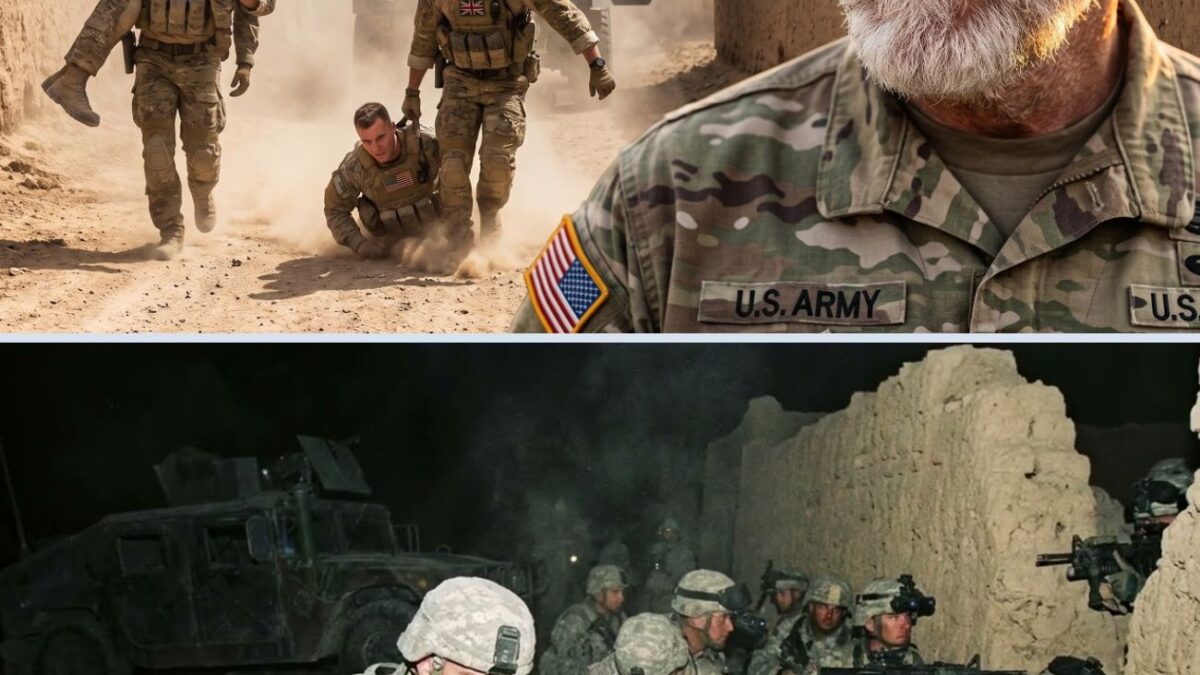
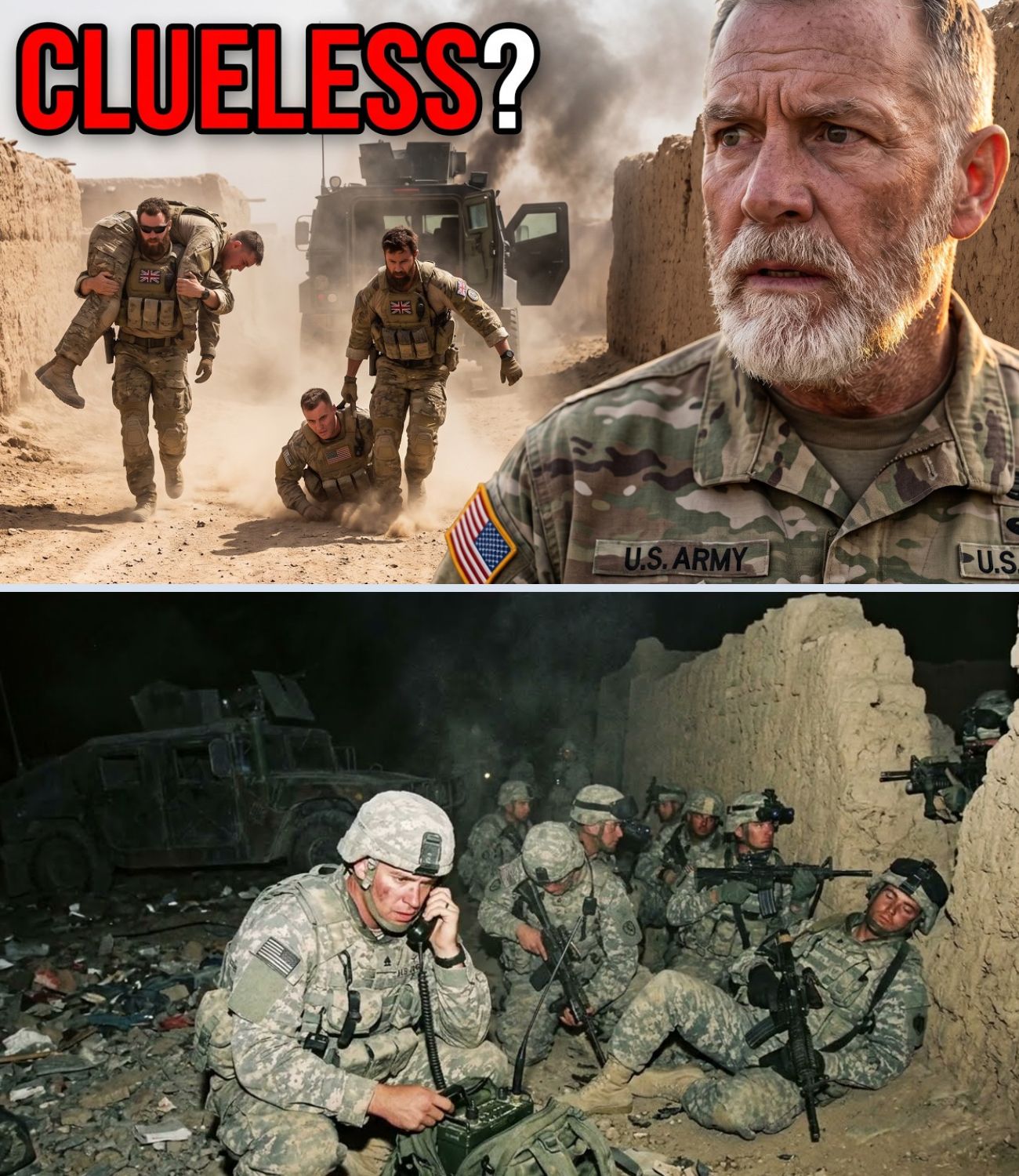
A contested valley in Kunar Province, Eastern Afghanistan. 0410 hours, September 6th, 2006. A US infantry platoon lay pinned flat along a mudwalled compound wall, taking sustained accurate fire from at least three separate directions across 200 m of open ground. One Humvey already disabled by a direct RPG strike.
Its wreckage now blocking the only vehicle route out. On the radioet, a liaison officer coordinating the response was overheard telling his own operation cell with open sarcasm to “let the clueless Brits handle it.” A fourman SAS team was already moving toward the compound on foot.
The only element close enough to reach the platoon before first light gave the ambush team clear lines of fire. The platoon belonged to a US Army company operating out of a forward operating base roughly 6 kilometers from the nearest coalition combat outpost in the valley.
Tasked that night with securing a resupply route ahead of a larger clearance operation planned for the following week. Their platoon leader, a first lieutenant this account will refer to as Lieutenant Mark Ostrander, a name invented for this account and not drawn from any real identifiable officer, had led his men into what should have been a routine overwatch position along the canal road, only for the position to be hit almost simultaneously from a compound to the north and a treeine to the east.
A coordinated ambush of a kind that the valley’s insurgent networks, among the most persistent and best organized in eastern Afghanistan that year, had grown increasingly capable of mounting. The sarcastic remark about clueless Brits did not come from Ostrander himself, who by that point had far more urgent concerns than interervice rivalry, but from a liaison officer at the battalion operations center coordinating the wider response.
A captain this account will call Captain Dale Reel. Again, an invented name. Real’s comment reflected a real, if uncharitable, undercurrent that existed in parts of the coalition command structure that autumn. British special forces elements operating across Afghanistan had taken heavy losses of their own in the preceding months, and some American officers working from an incomplete picture of the SAS’s actual operational tempo and capability in the province had formed the impression that British special forces resources in the area were stretched too thin and too cautious to reliably reinforce an American unit in genuine extremists.
The valley itself by September 2006 had already earned a reputation within the coalition as one of the most dangerous stretches of ground along the eastern border that year. A reputation American units rotating through the area would come to know at considerable cost over the following months.
The valley floor satisied a key infiltration route from the border. Its terrace fields, stonewalled compounds, and steep treeline slopes offering an insurgent force ideal ground for exactly the kind of ambush Ostrander’s platoon had walked into. A position chosen with evident local knowledge of the ground. Fields of fire pre-registered and a withdrawal route already.
Eastern Afghanistan’s valleys carry more than one buried story. The case file on Operation Trent, page 204, covers the largest SAS battle since the Second World War, fought in broad daylight in the same border country, and still officially doubted by whichever commander had planned the attack. The coordinated nature of the assault, striking from two directions within seconds of each other and clearly timed to the platoon’s arrival at that specific stretch of road, suggested a level of planning that ruled out a chance encounter and pointed instead to deliberate pre-registered targeting of the resupply route the platoon had been sent to secure. Most likely informed by local observers who had tracked the pattern of coalition movement along that road over the preceding days.
That impression, however widely or narrowly held, was about to be tested directly and in the most immediate way possible. The SAS 4man team, already moving toward Ostrander’s position, had been operating out of a patrol base roughly 4 km from the ambush site. Tasked that night with an unrelated reconnaissance mission along a suspected insurgent supply route running parallel to the canal road.
Their patrol commander, a soldier this account will call Sergeant Callum Bray, a name invented for this account, chosen specifically to avoid any resemblance to a real documented SAS veteran’s name, had monitored the initial contact report over the joint radio net and made the call without waiting for a formal tasking order to move his team toward the sound of gunfire rather than continue the reconnaissance mission as planned.
Bray himself had arrived at that patrol base after a career path that like most SAS operators of his generation ran through a conventional infantry regiment before selection. He had passed selection in his mid20s after a first attempt ended in failure during the endurance phase, a setback he reportedly attributed less to any lack of fitness than to a navigation error made in poor visibility on the Breen Beacons that cost him nearly 90 minutes against the clock.
His second attempt 18 months later succeeded on the strength of a markedly improved endurance score and a stalking assessment his instructors reportedly rated among the strongest of that intake. And by 2006, he had accumulated several operational tours, including two rotations through Iraq’s Anbar province during a period of intense urban combat there.
Experience that had sharpened exactly the kind of rapid, independent tactical judgment the September 6th contact would go on to demand of him in a very different kind of terrain entirely. The reconnaissance tasking braise team had actually been assigned that night before the contact report diverted them involved observing a suspected weapons cache location along the same canal system.
A tasking that required the kind of patient low signature movement his team had spent the preceding several nights refining across similar ground. That familiarity with the terrain, built through unglamorous repetition rather than any dramatic incident, would prove directly useful within the hour, though none of the four men moving toward the contact that night could have known it yet.
The distance itself was the first problem. 4 km across broken canal cut terrain in the dark at a pace fast enough to matter but controlled enough not to blunder into a second ambush took the SAS team the better part of 40 minutes an eternity to men listening to the contact report worsening over the radio with every passing transmission.
Bray’s team carried standard patrol loads, not the heavier support weapons a deliberate relief and force operation might have brought. A trade-off that had been the right call for the reconnaissance tasking they’d actually been assigned, but that now left them lighter on sustained firepower than the situation arguably called for.
The second problem surfaced roughly halfway to the objective when Braise team’s own radio operator lost intermittent contact with the battalion operations center. The signal degraded by the terrain’s canal walls, dense tree lines, and the sheer distance involved in a way that had plagued communications along that specific stretch of ground for most of the deployment to date.
For nearly 10 minutes, Bray’s team was moving toward a worsening firefight with only a partial picture of Ostrander’s platoon’s actual position and the scale of the force engaging them. A gap that any professional soldier would recognize as dangerous, but that the tactical situation gave them no real alternative but to accept.
The third problem was the terrain immediately surrounding the ambush site itself. The compound wall Ostrander’s platoon was using for cover backed onto an irrigation ditch that limited maneuver in one direction. While the open ground to their front, the same 200 m the insurgent force had chosen precisely because it offered clear fields of fire, meant that any relief force approaching from the south, the direction Braise team was coming from, would itself have to cross a stretch of exposed ground before reaching a position where it could actually influence the fight rather than simply adding four more men to the pinned down cluster.
By the time Bray’s team reached a position roughly 300 m from Ostrander’s platoon, the tactical picture had deteriorated further. The disabled Humvee, struck by the initial RPG round, sat burning at the edge of the kill zone, its wreckage blocking the platoon’s only vehicle route back toward the forward operating base and forcing Ostrander to consider with growing urgency whether his men would need to attempt a fighting withdrawal on foot across ground that offered almost no cover.
Two of Ostrander’s soldiers had already sustained wounds from the initial contact, one serious enough that the platoon medic had exhausted most of his immediate trauma supplies, stabilizing him. A detail Ostrander later relayed in a debrief with a bluntness that captured the night’s texture better than any tactical summary could.
He remembered more clearly than almost anything else from that night his medic’s flat request over the platoon net for more pressure dressings because they had already run out. Ostrander’s own situation in the minutes before Bray’s team arrived at their assessment position had continued deteriorating in ways that made the eventual rescue considerably more urgent than a simple contact report could convey.
A third source of fire had opened up from a compound rooftop roughly 150 m to the platoon southwest. A position that had not been part of the initial ambush, but that appeared to be a reinforcing element responding to the sound of the engagement. A common enough pattern in the valley that autumn given how densely its compounds were packed and how quickly word of a fight could draw in nearby fighters.
Ostrander, recognizing that his platoon’s position was becoming more rather than less exposed with each passing minute, had begun preparing his men for the possibility of a fighting withdrawal across the open ground to their rear. An option every soldier present understood carried a serious risk of additional casualties given the clear fields of fire the insurgent position had chosen specifically to deny exactly that kind of movement.
It was at this point, roughly 20 minutes into the contact, that Ostrander’s platoon sergeant, monitoring the radio net, first heard confirmation that a friendly element was moving toward their position on foot rather than by vehicle. A detail he reportedly found difficult to process in the moment, given how counterintuitive it seemed that help might arrive faster on foot than by armored vehicle.
It made sense only once the vehicle route status became clear. The same canal cut terrain that had slowed braise team’s approach had also made a vehicle-based relief force impractical without a substantial detour that would have taken far longer than an added few minutes of foot movement across more direct ground.
Bray’s assessment of the ground made in the few minutes his team spent studying the compound layout before committing to a course of action identified a specific weakness in the insurgent position that the pinned American platoon focused entirely on the fire coming from their front had not been positioned to observe.
The tree line to the east, from which a substantial portion of the ambush fire originated, backed onto a shallow, unremarkable depression that offered Bray’s team a covered approach to a flanking position roughly 120 m from the nearest insurgent firing point. Close enough, given the SAS team’s own considerable marksmanship, training, and experience to bring effective aimed fire onto that one specific element without first needing to cross the same exposed ground the compound itself was using to pin Ostrander’s men.
Bray split his team, a decision that carried its own considerable risk given they were already badly outnumbered and would now be dividing an already small four-man force into two even smaller elements operating apart from each other. Two men moved into the depression to engage the eastern tree line directly while Bray and his fourth team member worked toward a position that could observe and eventually suppress the compound to the north, the more heavily fortified of the two insurgent firing positions and the one Ostrander’s platoon had the least ability to counter given their own position along the compound wall directly below it.
The rooftop position to the southwest, the newest and least anticipated of the three insurgent firing points, posed a separate problem that Bray had not fully accounted for in his initial assessment, given that it had only opened fire after his team had already committed to their two-pronged approach.
Bray’s radio operator monitoring Ostrander’s platoon net through the same intermittent frustrating static that had dodged the approach march nonetheless relayed word of the new threat within roughly 90 seconds of it opening fire. And Bray made a rapid adjustment, directing his own twoman element toward the northern compound to also bring what fire they could to bear on the rooftops exposed silhouette, accepting that this would delay the more decisive suppression of the compound itself in favor of addressing the more immediate danger the rooftop position posed to Ostrander’s men, who had comparatively little cover against fire coming from that specific angle.
That adjustment made in the span of a few seconds under fire with no time for discussion illustrated the kind of continuous reassessment the entire rescue depended on rather than any single static plan executed exactly as conceived.
Bray later described the decision-making process in a comment relayed secondhand by a colleague years afterward not as following a plan but as constantly renegotiating one, each new piece of information from the radio net or from what his own eyes could see, forcing a small adjustment that cumulatively kept the operation moving in the platoon’s favor rather than away from it.
The flanking fire from the depression opened within minutes of the twoman element reaching position produced an immediate and measurable effect on the eastern treeine’s rate of fire. Several of Ostrander’s soldiers later reporting that the volume of incoming rounds from that direction dropped noticeably within the first 30 seconds of the SAS element engaging.
It did not silence that position entirely. The insurgent fighters there, to their own credit as combatants, shifted their fire toward the new threat rather than abandoning the position outright. A reaction that briefly increased the danger to Bray’s flanking element even as it relieved pressure on Ostrander’s platoon.
The compound to the north proved the harder problem of the two. Its thick ancient mud walls, common throughout rural eastern Afghanistan and remarkably effective at absorbing sustained small arms fire without significant degradation, meant that Bray and his partner could not simply suppress the position with rifle fire alone from any range that kept them reasonably safe from the compound’s own return fire.
Bray made the call to request an air asset. A decision complicated further by the same degraded, frustrating communications that had plagued the entire approach march, requiring his radio operator, now repositioned closer to the fight and picking up a marginally better signal, to relay the request through Ostrander’s own platoon net rather than directly to the battalion operation center.
The request reached real at the operations center at almost the same moment a rotary wing asset already airborne on an unrelated tasking was being redirected toward the valley in response to the worsening contact report. The same Captain Reel, whose earlier sarcastic remark about the SAS team now sat unspoken but presumably felt by at least a few people in that operations room against the reality that the clueless Brits were at that exact moment the only friendly force in physical contact with the insurgent position threatening to overrun an American platoon.
The air asset’s arrival roughly 11 minutes after Bray’s request itself an unusually compressed timeline given the redirection required from an unrelated tasking already in progress elsewhere changed the tactical calculus decisively and immediately.
A single strafing run along the tree line to the compound’s immediate rear, coordinated between the air crew and Bray’s team via the relayed radio link suppressed the northern position long enough for Ostrander to begin repositioning two of his squads toward a covered route Bray had identified during his initial assessment of the ground.
A drainage culvert running beneath the canal road that offered defilade from both remaining insurgent firing points and lead roughly 200 meters further south to ground where a vehicle extraction could be organized without crossing the same exposed kill zone that had trapped the platoon in the first place.
The extraction itself conducted over the following 20 minutes as first light began to break across the district required threading Orander’s platoon, including the wounded soldier, now carried on an improvised litter by two of his own squad members, through the culvert while Bray’s split team continued providing covering fire from their respective flanking positions.
A sequence that left every element involved dangerously exposed for a longer stretch than anyone would have preferred, but that represented, given the alternatives available at that hour, the only route out that did not require crossing open ground directly into the ambush’s original fields of fire.
By 0510 hours, roughly an hour after the very first shots of the initial contact, Ostrander’s exhausted platoon had reached a rally point south of the culvert, where a relief element from their own company, alerted by the same worsening contact reports that had prompted Bray’s initial decision to move toward the sound of gunfire, arrived with vehicles, to complete the extraction back to the forward operating base.
The wounded soldier survived, stabilized first at a combat support hospital and eventually evacuated further down the medical chain to more definitive care. A detail Ostrander reportedly checked on personally and repeatedly within days of the contact, calling the hospital directly himself rather than simply waiting for a routine casualty report to filter back through the usual channels.
The afteraction review conducted 3 days later at the battalion level produced an unusually direct acknowledgement from Ostrander himself who by all accounts made a point of naming Bray’s team specifically in his own account of the night’s events rather than allowing the SAS contribution to be folded anonymously into a broader summary of coalition support as sometimes happened in joint afteraction reports where crediting a specific allied element by name required additional coordination that overworked staff officers did not always pursue.
The review panel itself, chaired by the battalion executive officer alongside a representative from the joint special operations liaison cell spent a notable portion of its session working through the timeline minute by minute cross-referencing radio logs from both the battalion operations center and as far as compartmentalization allowed Bray’s own patrol reporting in an effort to establish precisely how the compressed sequence of events had unfolded so quickly relative to what a formally tasked relief operation would typically have required.
The panel’s own internal assessment, later summarized in the same anonymized briefing that would eventually circulate at the joint task force level, concluded that a conventional relief tasking generated and approved through standard channels would likely have taken between 25 and 40 minutes longer to reach the objective than Bray’s team’s independent decision to move immediately had achieved.
A gap that given how quickly the tactical situation had been deteriorating, the panel’s own language described as plausibly decisive to the outcome, barely described at all. It’s the kind of gap that rarely survives into the official telling.
The case file’s own introduction puts it plainly, page four. Parts of the record that don’t fit the legend tend to drop out of the telling, and a liaison officer’s bad guess about who could respond fastest rarely makes the final report.
Ostrander reportedly told the review panel in a comment later relayed by a soldier who attended the session that his platoon would very likely not have made it out of that position without Bray’s team’s flanking action and the extraction route it identified. A statement delivered, according to the same account, without any of the hedging officers sometimes apply to avoid appearing to criticize their own chain of command’s initial response.
Real’s earlier remark about the clueless Brits resurfaced inevitably in the days following the contact, circulating among soldiers at the forward operating base in the same informal way these things always travel, gaining an edge of embarrassment with each retelling rather than losing one.
Real himself, according to an account given by a soldier present at a subsequent briefing, did not attempt to deny having made the comment when it was raised obliquely in his presence and reportedly acknowledged afterward that his assessment of British special forces capability in the area had been badly out of date based on secondhand impressions rather than any direct knowledge of what SAS teams operating in that province that autumn were actually doing on a nightly basis.
To understand why Real’s initial skepticism, however uncharitable, was not entirely without foundation in the wider information environment of that period, it helps to look at the broader picture of British special forces deployment across Afghanistan during 2006.
That year saw an unusually intense concentration of British special forces effort spread thin across multiple contested provinces, each of which experienced sustained insurgent pressure that stretched available forces close to their operational limits.
American officers working alongside British units in that period sometimes formed their impressions of British special forces capability from limited direct exposure, seeing conventional infantry units under obvious strain without necessarily having visibility into the separate more specialized tempo at which SAS teams were operating in parallel, often on taskings that by their nature stayed compartmented even from allied conventional forces in the same district.
Bray’s own team, in fact, had been operating at an unusually high, near continuous tempo that entire autumn, having conducted, by their own careful patrol records, no fewer than 11 separate taskings across the six weeks preceding the September 6th contact alone, ranging from patient reconnaissance work to direct action taskings against specific insurgent commanders identified through a careful combination of signals intelligence and human sources cultivated patiently over the preceding months of that deployment.
That invisible tempo is exactly what the case file points to as the norm rather than the exception, page five. The record tends to leave out the soldiers whose truth complicates the official version, including routinely how much they were actually doing.
That grueling operational tempo, invisible to an operation center liaison officer working primarily and understandably with conventional unit reporting channels, was precisely the kind of institutional blind spot that tends to produce exactly the kind of dismissive comment Real made that night. Not malice, but a genuine information gap about what a small compartmented special forces element was actually capable of on any given night.
The tactical decision that mattered most in the entire episode, according to soldiers who later discussed the contact informally among themselves, was not any single dramatic action, but Bray’s initial choice to move toward the contact without waiting for a formal tasking order.
A decision that fell within the latitude SAS patrol commanders in that period were generally expected to exercise, but that still required a degree of confidence in his own judgment that not every soldier in every unit would have exercised under the same uncertainty.
Had Bray waited the 15 or 20 minutes it likely would have taken for a formal relief tasking to be generated and transmitted through conventional channels, the compressed timeline of the entire rescue, the flanking maneuver, the air support request, the culvert extraction would very likely have been squeezed into a window too narrow to execute before daylight gave the ambush force the kind of clear extended fields of fire that would have made Ostrander’s position substantially harder to hold.
There is a further detail from the rooftop engagement worth recording because it illustrates how thin the margin actually was that night. One of the rounds fired from the rooftop position struck the stock of the rifle carried by one of Bray’s two team members engaging the northern compound, splintering the wood grip, but leaving the weapon otherwise functional and the soldier himself unharmed.
A detail Bray reportedly recounted afterward, not as a dramatic near-miss story, but in the same flat procedural tone he used to describe everything else that night, noting only that the soldier had continued firing without missing a beat. The kind of unremarkable professionalism under fire that rarely makes it into any account except as a passing mention.
The extraction sequence through the culvert once Bray identified it as viable still required careful management given that the passage was barely wide enough for two men to move through side by side and offered no room to maneuver if the insurgent force adjusted its fire to cover the exit point.
Bray positioned his own twoman element at the culvert’s southern mouth to provide immediate covering fire as Ostrander’s soldiers emerged while the twoman element still engaging the eastern tree line held their position as long as they safely could before falling back themselves.
A sequencing decision that left that second element alone and exposed for several minutes longer than anyone would have preferred, a risk Bray later acknowledged had weighed on him more than almost any other decision of the night, given that it meant deliberately accepting continued danger to two of his own men in order to protect the platoon’s exit.
The wounded soldiers slow, careful litter carry through the culvert proved the single, slowest, and most physically demanding stretch of the entire extraction, the confined space forcing the two soldiers carrying him to move in an awkward crouch, while a third soldier crawled ahead, clearing the path of debris that had accumulated in the drainage channel over the preceding dry season.
Ostrander himself took a turn on the litter partway through, trading places with an exhausted soldier without being asked, a detail he mentioned only when asked directly in a later interview, and even then almost in passing, seemingly reluctant to draw attention to his own physical contribution to a night he clearly felt was defined far more by Bray’s team’s actions than by anything he himself had done.
The joint task force headquarters overseeing operations in that sector on receiving the afteraction review reportedly used the September 6th contact as a case study in a subsequent internal briefing addressing exactly the kind of information gap Real’s comment had reflected, recommending in language that avoided naming any individual officer that liaison staff at battalion operations centers be given clearer visibility into Allied special forces operational tempo specifically to prevent the kind of miscalculation about available reinforcement options that had nearly cost Ostrander’s platoon a longer, more dangerous wait for help that night.
It was characteristically for this kind of story an institutional correction that arrived quietly through a briefing slide rather than a public acknowledgement and that named no names beyond what internal audiences already understood from the contact report itself.
Ostrander, for his part, reportedly sought out Bray personally before either unit rotated out of the district later that year. An informal meeting that several soldiers who were nearby at the time described as brief and unscentimental in the way these encounters between soldiers so often are.
No lengthy speech, simply Ostrander thanking Bray directly and asking with evident professional curiosity rather than mere gratitude how Bray’s team had identified the culvert route so quickly under fire.
A question Bray reportedly answered by explaining that his team had studied the ground during an earlier reconnaissance pass through the area weeks before. A piece of unglamorous preparatory work that had nothing dramatic about it at the time, logged in a patrol report that no one outside the team had any particular reason to read closely, but that turned out on the single night it actually mattered to be the specific detail separating a platoon that got out from one that very possibly might not have.
There is also a wider institutional context worth setting out plainly because it complicates the tidy shape a story like this can take on if left unexamined. The Ministry of Defense and the British military’s public affairs apparatus, both then and since, have maintained a long-standing and deliberate policy of not confirming operational details involving UK special forces, meaning that no official British source has ever named the unit, the team, or the individuals.
That policy is stated plainly in the case file itself, page 248: “The SAS does not publish its own records, and the Ministry of Defense does not comment on special forces operations,” which is exactly why this account, like so many others, rests on the men who were there rather than on any official file involved in the September 6th contact.
The account preserved here draws entirely on secondhand recollections from American soldiers present that night and in the days that followed, filtered through the years since. That policy of official silence is itself part of what makes stories like this one difficult to verify against any single authoritative record, and it is worth stating clearly rather than papering over.
The names used throughout this account are inventions constructed to protect the anonymity such operations are deliberately built around, and the sequence of events reflects the general shape of what soldiers who were there have described rather than a verbatim minute-by-minute transcript that no single source could honestly claim to possess.
What can be said with more confidence is the broader pattern the contact fits because it recurs again and again across the coalition’s years in Afghanistan: a small specialized element operating independently of conventional command structures, exercising judgment that a formal tasking process would have taken too long to authorize, arriving at a decisive moment through a combination of proximity, initiative, and hard one familiarity with unglamorous terrain that had been studied on quieter nights precisely so that it would be usable on a night like this one.
Ostrander’s platoon survived that contact for identifiable describable reasons rather than through pure luck, and those reasons trace back in every account available to four men who moved toward gunfire without waiting to be told to.
The days following the contact brought a noticeable, if quiet, shift in how American units at the forward operating base spoke about British special forces generally. According to several soldiers who served through that rotation, Real’s earlier comment, once a passing jab repeated for a laugh, became instead a kind of cautionary anecdote other officers referenced when reminding each other not to assume too much about an Allied unit’s readiness or capability based on limited visibility into what that unit was actually doing on any given night.
It was not a dramatic institutional reckoning, no policy memo rewritten specifically because of one contact report, but the smaller, more durable kind of correction that actually changes how people behave going forward.
Officers at that base in the weeks that followed reportedly made a more deliberate habit of checking directly with special forces liaison staff before assuming a given element was unavailable or too stretched to respond, rather than relying on secondhand impressions formed weeks or months earlier.
Bray’s own account of the night, relayed years later to a colleague who eventually shared it in general terms without violating any operational sensitivities still attached to the specific mission, was characteristically understated.
He reportedly said that the hardest part of the whole night wasn’t the flanking maneuver or the exposed run through the culvert, but the 10 minutes of degraded communications on the approach march, moving toward a fight he could hear getting worse over a radio that kept cutting in and out with no way to know exactly what he and his team would find when they finally arrived.
It is in its way the plainest possible summary of what separated that night’s outcome from a worse one: not a single decisive act of heroism, but a chain of small, correct decisions made under exactly the kind of uncertainty that no training exercise can fully replicate, each one narrowing the odds back in the platoon’s favor until there was finally a way out through a drainage culvert that nobody watching the fight from the operation center that night had known existed until Bray’s team found it and used it.
There is one further exchange from the aftermath worth including, not because it changes the shape of the story, but because it captures something true about how soldiers on both sides tend to actually process an experience like this one once the adrenaline has worn off.
Roughly a week after the contact, at a shared meal between elements of Ostrander’s company and Bray’s patrol base, one of Ostrander’s junior soldiers, present at the ambush, but not among the wounded, reportedly asked Bray directly whether the SAS team had been frightened, moving toward a fight they could hear getting worse over a degraded radio link.
Bray’s answer, as relayed by a soldier who overheard it, was neither falsely modest nor performatively stoic. He said that fear was simply part of the job description, present on nearly every tasking, whether a man admitted it openly or not, and that the only useful question was ever what a man did with it once it arrived, not whether he felt it in the first place.
An answer that apparently struck the younger soldier as more honest and more useful than any of the more heroic sounding responses he might have expected.
The wider clearance operation that Ostrander’s platoon had originally been securing the resupply route for went ahead the following week largely as planned, delayed by only a day to allow for the platoon to recover and for a damage assessment of the ambush site to be completed.
Bray’s team rotated back to a different tasking by that point played no direct role in the clearance operation itself, their part in the story already finished in the specific narrow sense that matters most in this kind of account.
A platoon that had been in genuine danger of being overrun or of suffering considerably heavier casualties during a forced withdrawal across open ground had instead walked out through a drainage culvert, wounded but alive, because four men who owed them nothing beyond the general obligation soldiers extend to any unit under fire had decided that the sound of gunfire was reason enough to change their own plans for the night.
Real, for what it is worth, reportedly went out of his way in later years when the story came up among veterans of that deployment at informal gatherings to tell it against himself rather than around the fact of his own comment.
A choice that several soldiers who knew him described as characteristic of the kind of officer he generally was outside of one badly timed remark made under the pressure of a deteriorating situation he was in fairness trying to manage with limited information and mounting urgency.
It is in the end a small mercy the story affords everyone involved. Nobody comes out of it a villain, not even the man whose sarcasm gave the story its title, only a group of soldiers on both sides of an alliance who on one specific night in that valley learned something true about each other that no amount of secondhand impression could have taught them beforehand.
The disabled Humvey that had blocked the platoon’s original route out was recovered 2 days later by a separate maintenance element, towed back to the forward operating base and eventually written off as a combat loss, its scorched hull sitting for weeks afterward in a vehicle yard where soldiers from Ostrander’s own company reportedly passed it daily on their way to and from the motorpool.
A blunt, unglamorous reminder of a night that had for a handful of hours come very close to a considerably worse outcome than the one that had actually unfolded.
Ostrander kept for years afterward, according to a soldier who stayed in occasional contact with him, a single photograph taken the morning after the contact, showing the mouth of the drainage culvert his platoon had used to finally escape that morning, unremarkable in the frame, half hidden by tall reads, entirely indistinguishable from a hundred other culverts along that stretch of canal road to anyone at all who did not already know exactly what had happened there.
He reportedly never captioned it, never showed it to anyone who asked without some prompting, and kept it less as a trophy than as a quiet, private reminder of the specific, narrow margin by which his platoon had come home alive that morning, and of the four men, still largely nameless to any official record anywhere, who had made certain on one very long night that the margin held.
You Might Also Enjoy

“We Thought They Would Negotiate”—What Argentine Soldiers Said When The British Attacked Goose Green

“You’ll Never Finish My Ruck March, Limey” — US Sergeant Who Challenged the SAS, Then Fell Out First






