Mary of Teck Was Right About Edward VIII – But Nobody Listened To Her
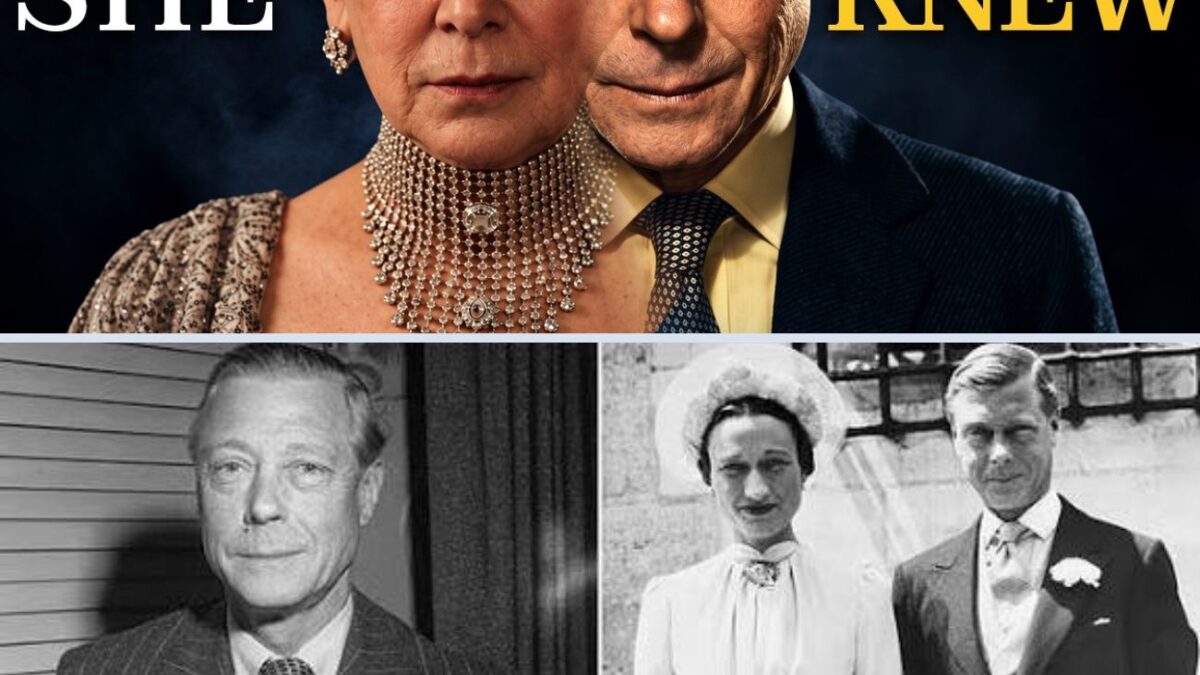
Why do we always fall for the charmer? Every generation finds one. The gorgeous frontman who walks out on the band the night before the big tour, the teenage football genius who prefers the nightclub to the training pitch, the dazzling heir who grins for the cameras while the family business quietly catches fire behind him. We adore them. We forgive them and we buy the posters. Standing behind every one of them, arms folded, is somebody nobody ever puts on a poster, the dull one who looks at the whole glittering circus and says in a flat voice that this is going to end badly. That person never gets thanked. They get called cold, stiff, old-fashioned and a killjoy, usually by the charmer and usually to a journalist. In the British royal family of the 1930s, that person stood straighter than a guardsman’s bayonet, wore hats shaped like small architectural follies, and answered to the name of Queen Mary. This is the story of a woman who looked at her eldest son, the most adored royal of his age, and decided, in her own unbending way, that he was putting himself before the job he had been born to do. The crowd saw a film star. His mother saw a problem. Over the rest of his long life, through one abdication, one guided tour of Nazi Germany, and one very awkward Portuguese summer, her son put a great deal of energy into proving her right. It’s a story about duty, which sounds about as exciting as a tax return, and about a woman who took that dull little word and swung it like a battering ram at the people she loved most. It’s also, fair warning, about a mother who may have been genuinely terrible at the hugging part. We’ll get to that.
To understand why Queen Mary believed what she believed, you have to understand that she was never meant to be Queen at all. She was born on 26th May, 1867 at Kensington Palace, christened Victoria Mary, and known to absolutely everyone as May. Her mother, Princess Mary Adelaide of Cambridge, was a granddaughter of George III, which is about as royal as a British girl could get without standing in the direct line of succession. Her father was the problem. Francis, Duke of Teck, was the son of a Duke of Württemberg and a Countess, and their marriage had been morganatic. If you’ve never met that word before, a morganatic marriage is royalty’s economy ticket. You’re allowed on the plane, but you don’t get the lounge, the free champagne, or the fancy titles for the kids. Instead of his Royal Highness, Francis received the lower style of Serene Highness. In 19th century royal circles, that was the equivalent of turning up to a white tie dinner in a very nice cardigan, and believe me, every single person at that dinner noticed the cardigan. The Tecks also had a talent that runs in a lot of families, mine included, which is spending money they did not have. By 1883, the debts were bad enough that the family packed up and moved abroad to economize, spending time in Florence, where the teenage May toured galleries, churches, and museums. They came home to London in 1885. As a royal bride, she was perfectly marriageable, but as one modern reviewer of her life put it, not quite top drawer. And then, in December 1891, the poor relation hit the jackpot. Prince Albert Victor, Duke of Clarence, known to the family as Eddie, was the eldest son of the Prince of Wales and second in line to the throne. And at Luton Hoo, he proposed to May and she accepted. The girl with the cardigan father was going to be a queen.
About 6 weeks later, on 14 January 1892, Eddie died at Sandringham of pneumonia after catching flu over Christmas, just weeks before the wedding. Pause here because this is the part everybody skips. Within 18 months, May was engaged to Eddie’s younger brother George, now the heir in his place. And on 6 July 1893, she married him in the Chapel Royal at St. James’s Palace. If marrying your dead fiance’s brother sounds like the plot of a daytime soap opera, congratulations, you have understood the Victorian monarchy. I’m not going to put words in her mouth about how she felt because she didn’t leave us a convenient speech on the subject. But if you want to know where the iron in Queen Mary came from, I’d start right here. With a young woman who learned by her mid-20s that the crown comes first. The heart files in quietly behind it. And nobody, under any circumstances, makes a scene.
Her first son arrived on 23 June 1894 at White Lodge in Richmond Park. He was christened Edward Albert Christian George Andrew Patrick David, which is less a name than a seating plan, and his family called him by the last one, David. For a while, he would be one of the most famous young men on Earth. And his childhood began with a nanny who hurt him. This comes from his own memoir, so file it under his version of events. His first nurse used to pinch and twist his arm just before he was taken in to see his parents, which is one way to make a first impression. She was eventually found out and dismissed. Historians love to wield this out as exhibit A for a cold, distant mother. And later in life, the Duke himself described his mother as a cold woman. Yet, that same memoir says she never failed to take the children’s side when their father, a naval man who ran his household like a ship’s company, came down too hard on them. So, which was it? Probably both, which is the most irritating answer in history and also annoyingly often the correct one.
In 1910, Edward VII died and David’s parents became king and queen. On his 16th birthday, David was created Prince of Wales. And in July 1911, he was invested at Caernarfon Castle in a ceremony arranged by David Lloyd George, who coached him in a few lines of Welsh for the occasion. In June 1914, weeks before the war, he joined the Grenadier Guards. And once the shooting started, he wanted to be at the front. Lord Kitchener refused, and not because the heir might be killed, but because he might be captured and used as a hostage, which tells you everything about how the British state thought of him. Less a soldier, more a crown jewel with legs. He still made it into front-line trenches several times and was awarded the Military Cross in 1916.
Then came peace, and with it a brand new kind of royal. From 1919, the Prince of Wales toured the Empire. Canada first and then Australia in 1920. And the crowds behaved less like loyal subjects and more like teenagers at a Beatles concert 40 years early. He was slim and blond and sad-eyed. He smoked and he danced, and he wore his clothes like a man in an advert. If the old monarchy was a vintage Rolls-Royce, all walnut dashboard and stately 20 miles an hour, David was the new sports model. Chrome everywhere, roof down, engine screaming, and nobody had checked the brakes. The brakes, as it turned out, were the whole problem.
In 1918, he began a long affair with Freda Dudley Ward, a married woman he had met, appropriately enough, during an air raid. Later came Thelma, Lady Furness, another married woman and an American. And if you’re sensing a pattern, so were the people paid to look after him. Meet Alan Tommy Lascelles, a sharp, dry, and deeply unimpressed courtier who had joined the prince’s household after the war. He kept a diary, and thank heavens he did. In 1927, during a tour of Canada, Lascelles went secretly to the prime minister, Stanley Baldwin, and told him that the heir to the throne was going rapidly to the devil. Sometimes, Lascelles confessed, while he sat waiting for the result of a point-to-point race the prince was riding in, he caught himself thinking that the best thing for the prince and for the country would be for him to break his neck.
And Baldwin, the prime minister of the United Kingdom, a pipe-smoking man who looked like a country solicitor, replied,
“God forgive me, I have often thought the same.”
Sit with that. A royal aid and a serving prime minister in a private conversation on the other side of the Atlantic agreeing that the country might be better off if the next king fell off a horse. Two years later, Lascelles quit the prince’s service altogether. The prince’s father had reached the same conclusion minus the horse. According to Baldwin’s biographers, George V predicted that after his death, the boy will ruin himself in 12 months.
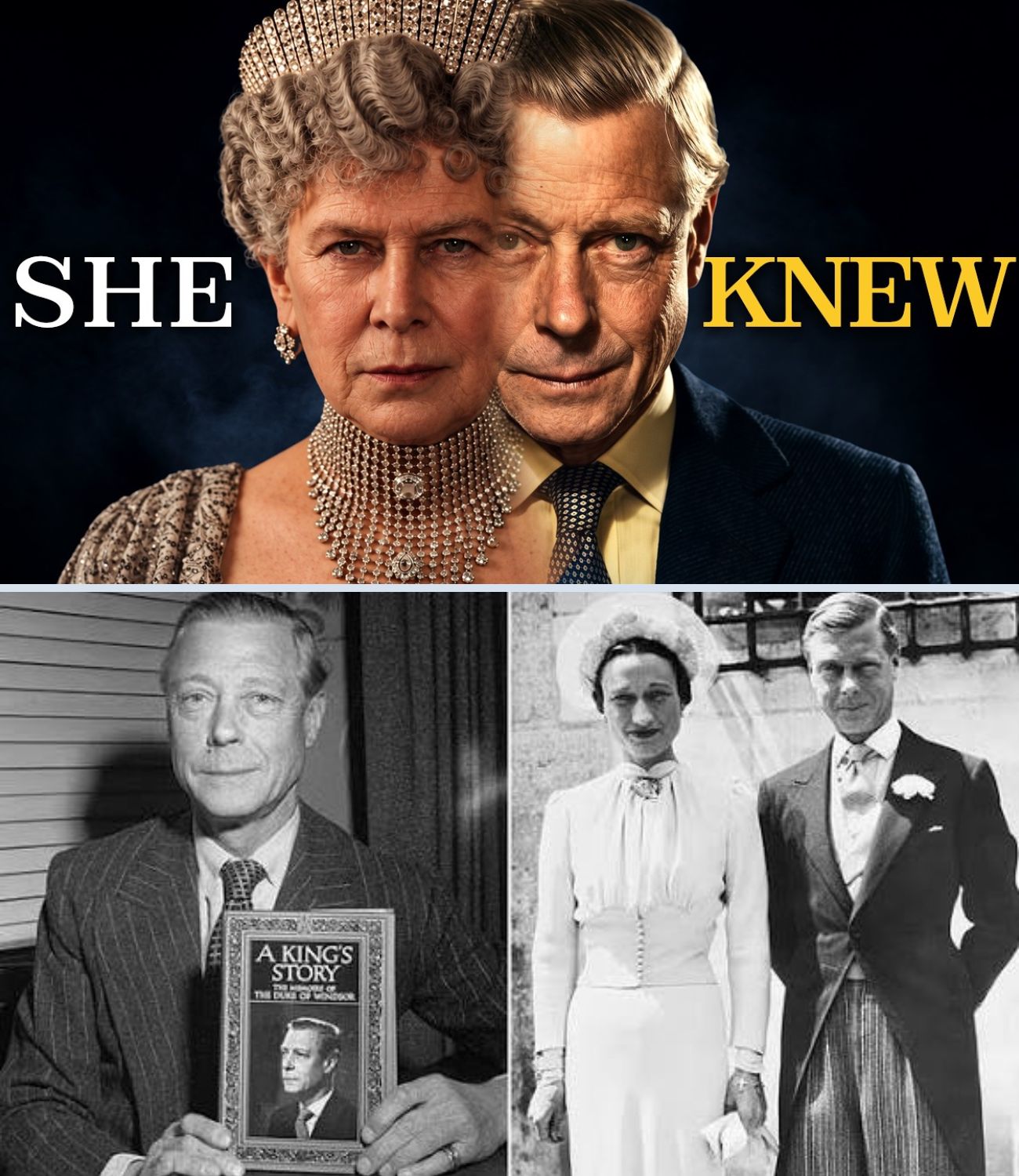
To Lady Airlie, a long-serving courtier, the king confided something even darker. He prayed that his eldest son would never marry and have children so that nothing would come between his second son, Bertie, Bertie’s little daughter, Lilibet, and the throne.
Read that one again, slowly, because it’s the king of the United Kingdom privately praying for the crown to skip over his own heir like a stone across a pond.
Bessie Wallis Warfield was born in Pennsylvania in 1896. By the time she met the prince, she had already divorced one husband, a US Navy pilot called Win Spencer, in 1927 and married a second, Ernest Simpson, in 1928. She was witty, sharp, and immaculately turned out. The meeting itself came in the winter of 1930 into 1931 at a house party Lady Furness was hosting at Burrough Court near Melton Mowbray. Wallace later dated it to 1930. Most biographers go with January 1931 and frankly, I’m not getting involved. What matters is how she got there. Another couple on the guest list fell ill so the Simpsons were invited in place, and at first she barely registered with the prince at all. The fate of the British throne, in other words, turned on somebody else’s sick note.
Things moved slowly, then very quickly. The Simpsons had him to dinner at their London flat. Invitations to his country retreat at Fort Belvedere followed, and by 1934 the two of them are generally accepted to have become lovers. The prince assured his father that the relationship was not physical, which is the kind of thing every son tells every father, and every father believes for roughly as long as it takes to say it. Wallace was presented at court and met both the king and queen before 1936. After the crisis, Queen Mary would not receive her in public or in private, and there’s no evidence she ever changed her mind. Meanwhile, and this is where the cloak and dagger stuff begins, officers of the Metropolitan Police Special Branch were quietly following the couple and writing reports. When some of those files were released in 2003, a lot of the content turned out to be the sort of hearsay you’d overhear in a pub queue, so take it with a pinch of salt, but think about the bigger picture. Before he was even king, the British state was keeping tabs on the heir’s girlfriend.
George V died at Sandringham on the 20th of January, 1936. His son flew to London for the accession council as Edward VIII, the first British monarch ever to travel by air, which is very on brand for a man whose entire approach to tradition was to leave it on the runway. The next day he stood at a window of St. James’s Palace to watch his own proclamation as king with Wallis Simpson standing beside him. That is the constitutional equivalent of reading your late father’s will aloud at the family gathering with your new girlfriend perched on the arm of your chair.
Then there were the boxes. Every day, ministers send the monarch red leather dispatch boxes stuffed with state papers, which is basically the king’s homework. Under Edward, the boxes going down to Fort Belvedere were carefully screened by the Foreign Office because ministers worried about who else might be leafing through them. Think about that for a second. The British government quietly installed parental controls on the king. In the summer, he and Wallis cruised the Eastern Mediterranean aboard a steam yacht called the Nahlin, and the foreign press went wild. American and European papers splashed the photographs everywhere, while British newspapers, bound by an unwritten gentleman’s agreement, printed precisely nothing about the woman standing next to the king in picture after picture. A reader in Ohio knew more than a reader in Oldham.
September brought one of those little moments that tell you everything. On 23 September 1936, the new Aberdeen Royal Infirmary was opened, not by the king, who had declined the job, but by his brother Bertie and Bertie’s wife Elizabeth, the Duke and Duchess of York. According to his biographer, Philip Ziegler, the king was instead reported to have gone to Ballater railway station to collect Mrs. Simpson. Bertie cut the ribbon, David picked up his girlfriend, and Scotland was watching.
The warnings were piling up now. Earlier that summer, even Winston Churchill had advised the King’s legal adviser, Walter Monckton, against Wallis’s divorce, and the advice was ignored. In October, Baldwin finally raised the subject with the King face-to-face, warned him the relationship was causing a scandal, and asked him to try to stop the divorce. Edward refused. Over at the Yorks, Bertie and Elizabeth had quietly stopped visiting Fort Belvedere, put off by the way the King deferred to Wallace, and that autumn, the King’s own private secretary warned them that abdication was a real possibility. Very discreetly, the spare was being told to start checking the size of the hat. And on 27th of October, Wallace was granted a decree nisi. If you’ve never been through a divorce, a decree nisi is the legal version of your parcel is out for delivery. It’s coming, but it isn’t final for another 6 months. Do the maths on that, and you land in late spring 1937, which, by an amazing coincidence, was when the new King was due to be crowned.
By November, the secret was cracking at the seams. In mid-November, the King’s private secretary, Alec Hardinge, warned him in writing that the silence of the British press was not going to last. On Monday, 16 November, the King summoned Baldwin and told him, according to Baldwin’s own account to the House of Commons,
“I am going to marry Mrs. Simpson, and I am prepared to go.”
Then, he did something braver, or possibly just more foolish. That same evening, he went to Marlborough House, where his widowed mother now lived, and told her and his sister, the Princess Royal, everything he had just told the Prime Minister. Here’s the scene, and I’m only giving you what the historians can stand behind. On one side of that conversation was the King-Emperor, 42 years old, and mobbed wherever he went. On the other was his 69-year-old mother, who had been Queen for a quarter of a century. Both women were astonished and shocked that he would even think of giving up the throne.
Queen Mary told him plainly that he had to choose between Wallis and the Crown, and that his duty was to give up Wallis.
He answered that he could not do the job without Wallis beside him.
So, his duty was to go.
Two people, one word, and two completely different dictionaries. People who studied her life describe the abdication as the great crisis of it. To Queen Mary, things like marriage and home were never really matters of the heart. They were settled by duty, the way her own had been. And one modern reviewer has gone so far as to suggest she knew very little about romantic love at all. So, when her son told her he would give up the throne for a woman, she didn’t hear a love story. She heard a betrayal of the family and of the country, both at once.
Two days later, he was in South Wales, walking among the derelict iron works of Dowlais, in a community flattened by the depression. He is remembered as saying that something must be done, although some sources record something should be done, and historians still argue about which, which is the most British argument imaginable. It was a genuinely moving moment, and it showed exactly why people loved him. But, he was promising action to the unemployed from a job he had told his mother only a couple of days earlier he was ready to walk away from.
On 25 November, the King floated a compromise, a morganatic marriage. Remember that word? Economy ticket, no lounge, no titles for the kids. Wallace would be his wife, but not his queen.
Baldwin’s first reaction, as he later told the Commons, was that Parliament would never pass such a bill. And in late November, the question went out by cable to the Dominion governments. Canada, Australia, and South Africa came out against it. Most of the Dominion leaders saw no alternative but abdication. And on 2 December, Baldwin reported back that the idea was impractical. Now, Queen Mary had no hand in killing that plan. That was cabinet and Commonwealth. But savor the irony for a moment. The very arrangement that had saddled her own father with a second-rate title had come back generations later as her son’s big idea.
The secret mission was getting properly spooky, too. By 5 December, the Home Secretary, Sir John Simon, had ordered the General Post Office to intercept telephone calls between Fort Belvedere, Buckingham Palace, and the continent. In a note marked “Most Secret” that nobody outside government saw until 2013. Put simply, the British state was listening in on the king. And the dam that broke was, gloriously, a bishop.
On 1 December, Alfred Blunt, Bishop of Bradford, told his diocesan conference that he wished the king gave more positive signs of religious awareness. Newspapers took it as the starting gun. On 2 December, the Yorkshire Post weighed in. The national papers followed on 3 December, and the whole country found out at once. Best of all, Blunt later insisted he had never even heard of Mrs. Simpson, which makes him possibly the only bishop in history to detonate a constitutional crisis by accident. Within days, Wallace fled to the south of France, and the king was left at Fort Belvedere with his advisers and his decision.
It’s only fair to give the king his due here. Plenty of ordinary Britons, especially working-class people and ex-servicemen, were on his side, while the furious letters tended to come from the middle and upper classes. The king himself reckoned that the newspapers backing the marriage had a combined circulation of around 12 and 1/2 million against 8 and 1/2 million for the papers opposing it. He could have tried to fight.
Baldwin later told the Commons that the king had behaved like a great gentleman, that he wanted to go with dignity, and that the very idea of a king’s party was abhorrent to him.
On 10 December 1936, at Fort Belvedere, Edward VIII signed the instrument of abdication, declaring his irrevocable determination to renounce the throne for himself and his descendants. His three younger brothers, Bertie, Harry, and George, signed as witnesses. The next day, the Declaration of Abdication Act received royal assent, the last act of his reign, and he was no longer king of anything.
That evening, in a broadcast from Windsor Castle, he was introduced by the BBC’s John Reith as His Royal Highness Prince Edward. And he told the empire that he could not carry the burden of kingship without the help and support of the woman I love. Then he left for the coast and crossed the channel aboard the destroyer HMS Fury, heading for Austria and a borrowed Rothschild castle called Schloss Enzesfeld. His reign had lasted 325 days and he was never crowned.
And Queen Mary, her reaction recorded in the notes of her official biographer and published only in 2018, is a masterpiece of royal contempt. She told her friend Margaret Wyndham that the whole business might really be Roumania. Capitals and double exclamation marks very much included. If you’re wondering why Romania, it’s because Romania’s Crown Prince had renounced his rights in 1925 over a mistress, then marched back 5 years later to take the throne anyway. To Queen Mary, that was what the House of Windsor had just been reduced to, a Balkan farce with better tailoring.
Publicly, she held the line. Her message to the nation and empire thanked the people for their sympathy and spoke of her distress that her dear son had deemed it his duty to lay down his charge, which, coming from a mother whose heart he had just broken, is an extraordinarily generous sentence. Even in the worst week of her life, she reached for the language of duty and you can only guess what it cost her to use it on his behalf.
Now meet the underdogs because this is where the story flips. The man who inherited the mess was Bertie, now George the VI, a shy, decent naval officer with a stammer who had never been trained to be king. His wife Elizabeth was formidable and his heir was a 10-year-old girl called Lilibet. And behind all three of them stood a 69-year-old widow who saw it as her duty to prop them up.
So who was she really, this battle-axe in a toque? Her public image was austere, forbidding, a Victorian relic come back to life. A few of the people interviewed by her official biographer insisted she was great fun in private, but the evidence for that is thin, and one former lady of the bedchamber said she had no real sense of humor, only a sense of the ridiculous. She was imperious, high-handed, and according to letters about her, a terrifyingly efficient collector who had a habit of leaving other people’s houses with their treasures handed over as gifts by hosts who felt they couldn’t possibly refuse. Imagine her coming round for tea. Hide the good China.
Britain got through three kings in 1936. That’s the kind of turnover you normally associate with football managers, and the monarchy had just swapped a global celebrity for a man who struggled to finish a sentence in public. If you were betting in December 1936, you would not have put your money on the stammerer.
On 12 May 1937, the very day that had been set aside for Edward’s own coronation, George VI was crowned in Westminster Abbey, and Queen Mary was there. That sounds ordinary until you learn that no British dowager queen had ever attended her successor’s coronation before. She broke a precedent not to make a scene, but to stop one. The old queen publicly, physically, standing behind the new king. She did it without saying a word.
She also took a close interest in her granddaughters’ education, marching Lilibet and Margaret around London’s galleries and museums at a time when their own parents saw no need to burden them with a demanding school regime. You can almost hear the grumbling. But think about who she was training, because the girl being dragged past the old masters would one day wear the crown for 70 years.
Three weeks later, the man who had once been king married Wallace on 3 June 1937 at the Château de Candé in France, a borrowed château owned by a businessman called Charles Bedaux. Not a single member of the royal family attended because George VI forbade it. A week earlier, letters patent had confined the style of royal highness to the Duke of Windsor alone, which meant that Wallace would never be her royal highness.
It’s worth being honest here. You can make a decent case that this was petty. But then, in October 1937, the Duke did something that made his family’s caution look less like pettiness and more like plain, boring, Queen Mary approved common sense. Against the advice of the British government, he and Wallace toured Nazi Germany, a trip pushed by Bedaux and shepherded around the country by the senior Nazi official Robert Ley.
On 22 October, they visited Hitler at the Berghof, his mountain retreat in Bavaria. The Duke was greeted with Nazi salutes again and again on the tour, and he was photographed returning at least some of them. Historians still argue about how much was courtesy and how much was conviction. What nobody argues about is the propaganda value for the Nazi regime, which is precisely what the Foreign Office had warned about before he went.
In June 1938, the Duke wrote to his mother from France and asked her to tell him frankly what she really felt about him and his position. Big mistake. Queen Mary did frankness the way other people do artillery. Her reply in July 1938 is the closest thing we have to her closing argument.
She reminded him how miserable she had been when he told her he meant to marry Wallace and give up the throne and that she had begged him not to for the sake of the family and the country. She told him he had not seemed able to take in any point of view but his own and that he had not realized the shock his attitude had caused his family and the whole nation.
Then she reached for the war. To the people who had made such sacrifices in the Great War, she wrote,
“It seemed inconceivable that their king had refused a lesser sacrifice.”
And she finished with the line that explains her entire life.
“All my life I have put my country before everything else and she simply could not change now.”
That’s not a woman being cruel for fun. That’s a woman who had buried a fiance and married his brother, who had lived through a war that took hundreds of thousands of other mothers’ sons and who could not and would not pretend that her own son’s love life outranked any of it.
Fast forward to 1940 and it’s time to see whether the old lady had read her son correctly when it really counted. After Germany invaded France in May, the Windsors fled from Paris to Biarritz, then into Franco’s Spain in June and then across the border into neutral Portugal in July. Churchill, now Prime Minister, sent telegrams pressing the Duke to come home as arranged. The Duke wanted terms first including a suitable job for himself somewhere in the Empire. Historians report that Churchill, losing patience, went as far as reminding him that he held military rank and raising the prospect of a court-martial.
In the summer of 1940, with Britain bracing for invasion, the former king was haggling and the Nazis were listening. Hitler’s foreign minister, Joachim von Ribbentrop, launched a scheme later known as Operation Willy with the SS intelligence officer Walter Schellenberg working the Lisbon end. The plan was to lure the Duke back into Spain, keep him within reach and if things went well, use him. It failed.
On 1 August 1940, the Duke sailed from Lisbon aboard the liner Excalibur bound for the Bahamas where he would serve as governor until March 1945. The British government’s solution to its most embarrassing royal was essentially to park him on an island several thousand miles from anything important, which as a strategy is roughly how my family handles uncles at Christmas.
Even the island couldn’t keep him out of trouble. In July 1943, one of the colony’s most prominent residents, Sir Harry Oakes, was found murdered and the Duke, as governor, called in two detectives from Miami to investigate. The man they built a case against, Oakes’s son-in-law Alfred de Marigny, was acquitted and the murder has never been solved. It was not, by any measure, a triumph of crime-fighting.
Meanwhile, back in England, the dowager queen had been evacuated to Badminton House in Gloucestershire, the home of her niece, the Duchess of Beaufort. She arrived, according to one account, with 70 pieces of luggage and a household of 55 servants, which is one way to evacuate. And then she went to war on the vegetation.
Queen Mary developed what can only be described as a blood feud with ivy, tearing it down wherever she found it, and marching her exhausted companions through every kind of weather. When left to her own devices, she had trees felled. The Beauforts reportedly spent the rest of the war steering her away from one magnificent cedar, and the Duchess summed up her guest as a woman whose two great loves were destruction and order, which honestly belongs on a coat of arms.
Laugh by all means, but look at what she was doing between the tree felling. She visited troops and factories. She organized the collection of scrap for the war effort, and according to her official biographer, she was known to stop her car and give lifts to soldiers walking along the road. A woman in her 70s, ramrod straight, hovering up footsore soldiers from the Gloucestershire lanes, while her eldest son sat in Government House in Nassau, about as far from the fighting as the government could put him.
Then, after the war, the paperwork caught up with him. When Allied troops seized hundreds of tons of German Foreign Ministry archives in 1945, the documents gathered at Marburg included reports from German diplomats about the Duke. According to those reports, he believed the war could have been avoided if he had stayed on the throne, and that continued heavy bombing would make England ready for peace.
Be careful here, because these are German diplomats reporting what they said they heard, not transcripts, and the Duke dismissed them as complete fabrications. Historians are split. Philip Ziegler judged him defeatist, silly, irresponsible, and indiscreet, but did not believe he ever hoped for Britain’s downfall, while harsher writers such as Andrew Lownie think the case against him is much darker.
What we do know is how hard the British establishment worked to bury those reports. In 1953, Churchill personally wrote to President Eisenhower trying to keep the telegrams out of print. Eisenhower agreed that they looked like concocted German propaganda. It didn’t matter. The papers were published anyway in 1957 and the cabinet file on the cover-up stayed hidden until the National Archives released it in July 2017. Whether the Duke was a traitor or merely a fool, successive British governments spent decades behaving as though the truth might be too dangerous to let out.
So now let’s do the bit I promised at the beginning. Let’s give the Duke his say because by every account Queen Mary was not an easy woman to be the son of and he had a long list of complaints. In October 1945, after nine years apart, the Duke came home and stayed with his mother at Marlborough House and the two of them posed for the press like a perfectly normal family. Wallace was not part of the picture then or ever.
In private, the Duke said his mother was a moral coward who would not discuss the abdication and that whenever he tried to raise it, she would simply cough. Honestly, as a method of ending a conversation, you have to admire the efficiency and I fully intend to try it at my next family dinner.
Then grief came for Queen Mary in a way that would flatten most people. She had already lost her youngest son John in 1919 and in 1942 her son George, Duke of Kent, was killed in an air crash on active service. In February 1952, her second son, the stammerer, who had taken the job nobody had trained him for, died at 56. Three sons gone.
Queen Mary died in her sleep at Marlborough House at 10:20 in the evening on 24th of March, 1953, at the age of 85. 10 weeks before the coronation of the granddaughter, she had marched around all those museums. She had let it be known that if she died, the coronation must not be postponed. Even her death came with instructions. And the instructions were about duty.
The Duke came to the funeral, and Wallace did not come with him. In letters to his wife, published decades later, he wrote about his mother with a coldness that matched anything she had ever shown him. He marveled that any mother could be so hard and cruel towards her eldest son, and wrote that the fluids in her veins had always been as icy cold as they now are in death.
Those letters hurt to read, and they are the strongest case anyone can make against her. She may well have been a poor mother to David, but the question in the title isn’t whether she was a warm parent. It’s whether she was right about him. And on that question, the evidence just keeps piling up on her side of the table.
Look at the ledger. His father thought he would ruin himself. His own aide thought the country would be safer if he broke his neck, and his prime minister quietly agreed. As king, he passed a hospital opening to his brother. Ministers felt the need to screen his state papers. And within a year of leaving the throne, he was touring a dictatorship. In 1940, he bargained with his government while Britain braced for invasion, and German agents plotted to use him. And the brother he left behind, the one nobody would have backed, held the throne through a world war and handed it to a daughter who wore the crown for 70 years.
Queen Mary looked at the golden boy and saw a man who would put himself first. She was right. The Duke of Windsor lived out his last years in Paris. On 18 May, 1972, his niece, Queen Elizabeth II, visited him there. And 10 days later, on 28 May, he died at the age of 77. He came home in a coffin. On 5 June, he was buried in the royal burial ground at Frogmore at Windsor, in the grounds of the family he had walked away from. And when Wallis died in 1986, she was laid beside him.
There is a kind of courage that gets songs written about it. He had it. He gave up a throne for love, and for a while, the whole world thought that was the most romantic thing a man had ever done. But there is another kind of courage, quieter and far less fun, and nobody writes songs about it. It is the courage of the person who stays. The one who buries the fiance and marries the brother, who swallows the grief and turns up anyway, who stands in the abbey behind the stammering second son, so that everyone can see the crown has not fallen. It is the courage of the one who says no to the people she loves most, knowing they will hate her for it, because somebody has to.
Remember the charmer and the dull one standing behind him with her arms folded. We still fall for the charmer every single time. But every so often history hands the dull one the last word. And when it does, it’s worth listening to what she was trying to tell us all along. That a promise made in an abbey is still a promise. That a job is still a job on the days it gets boring. And that somebody, somewhere, has to stay behind and keep the lights on.
Queen Mary never made a scene, never gave an interview, and never wrote a memoir to tell her side of the story the way her son eventually did. She just stood there for 60 years and let history argue for her. The charm faded. The crown held. And the old woman in the toque, the poor relation from Kensington Palace whom nobody had picked to win anything, turned out to be right about the only thing that ever really mattered to her.
And if you’re a cedar tree anywhere in Gloucestershire, you can finally relax.
You Might Also Enjoy

“We Thought They Would Negotiate”—What Argentine Soldiers Said When The British Attacked Goose Green

“You’ll Never Finish My Ruck March, Limey” — US Sergeant Who Challenged the SAS, Then Fell Out First






