“Name Tapes On, Now”: Why the British SAS Laughed at a US General’s Parade
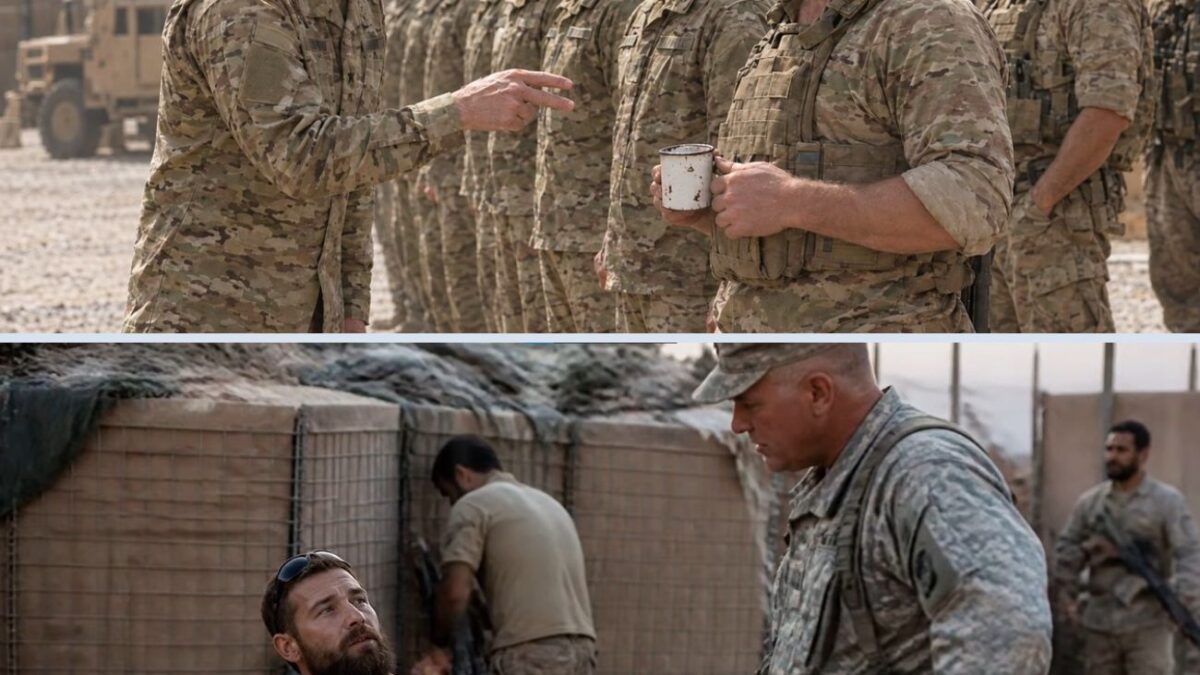
The sun is already white by 8 in the morning in southern Helmand, and the dust on the Hescos is the color of weak tea. There is a general standing on the gravel in front of you. Two stars on a cap he was not quite entitled to wear in that configuration, but which the heat and the distance from Washington have made nobody’s business, and he is pointing two fingers. He is pointing at a line of men who are not in a line. They are standing in a loose arc at the edge of the vehicle park. Eight of them, maybe nine. You have stopped counting because they will not stand still long enough to be counted. They have beards. They have plate carriers with nothing on them. No flag, no unit patch, no name tape, no blood group, no rank. Two of them are holding enamel mugs, the white speckled kind you buy from a camping shop in Hereford for £3. The nearest, the one with the reddish-brown beard, is drinking tea. He is drinking tea while the general speaks to him.
“Name tapes,” the general is saying, his voice carries, “on. Now, nobody moves. Not refusing, not agreeing. Standing.”
You are the general’s aide. You are a lieutenant colonel in the United States Army, and you have passed a course at Fort Bragg that most men who try it do not finish, and you have been to this country four times, and you have the specific professional embarrassment of watching your principal shout at men who are not going to do what he says in a language they technically share with you, in a heat that is making the back of your neck itch under the collar of a uniform that has your name on it in black thread, as regulation demands. Behind the arc of bearded men, parked at an angle a parade sergeant would weep over, a British Jackal is idling. A Welshman in his 50s is watching from the shade of its canopy, holding a chipped blue-rimmed mug, saying nothing. The man with the reddish beard sips his tea. The general lifts his two fingers again, and in a minute, not now, but in a minute, something is going to happen that will put a hinge in your career and the career of the man beside you. And the quiet understanding between two Tier 1 forces that nobody back home will ever read about. The question is not whether the Special Air Service will obey. The question is what the general will do when he finally understands they already have.
Lieutenant Colonel Elias Rourke was not a man who found other soldiers impressive easily. He had grown up outside Lexington, Kentucky, the son of a man who had run communications for a special forces team in the ’80s and had come home with a drinking problem and a filing cabinet of folded maps. He had enlisted into the infantry in 1998 because his father had told him, over a kitchen table, that the only thing worth doing in a uniform was the thing you did when nobody was watching. He had carried that sentence into the Ranger Regiment, into a company command in the 101st Airborne, into the operator training course at Fort Bragg, and out the other side of that course with a tab he did not wear and a badge he was not permitted to show his mother. He had done three rotations in Iraq, Mosul, Baghdad, Mosul again. In the gaps between them, he had spent 6 months on exchange with the hostage rescue team at Quantico, running a stack through a shoot house until the stack moved without talking. He was 41 years old by the time he landed in Kandahar as a lieutenant colonel on a general staff, and he had made a quiet accommodation with the fact that this was the back half of his operational life. He had been given to Major General Harlan Whitcomb 6 months earlier as an aide, a liaison, and, the general’s own phrase, a translator.
“You’ve worked with the Brits,” Whitcomb had said in the briefing room at Bragg. “You know how they operate.”
Roark had nodded without quite agreeing. He had worked alongside British soldiers on two deployments. He had never been inside a British special forces troop at work, and he had the professional’s instinct that alongside and inside were different countries. What he was proud of was simple, and he kept it simple. He could still run a sub-18 2-mile at 41. He could still shoot a possible hostage rescue qualification cold. He had carried a man heavier than himself out of a courtyard in Mosul in 2006 in body armor over broken ground, and he had done it without putting him down. He had, during one of the gaps between rotations, taken a short leave in Wales and climbed Pen-y-Fan in a January rain to see for himself what the British called selection, because his father had kept a photograph of it in the filing cabinet without explanation. He had come down from the hill, wet to the skin, and quietly reset by what he had seen the Welsh weather do to a hill, and he had told nobody about the trip. The belief he was carrying into Helmand, the one he did not know yet was going to be taken away from him, was that there was a shape to a professional soldier that was universal, a standard of bearing, a visible discipline, haircuts and name tapes, and the small daily deference to the uniform. He had seen that shape in Rangers, and he had seen a leaner version of it in Delta, where the beards were worked around and the uniform was negotiated, but the shape was still there. He expected to find the shape in the Special Air Service. He expected the beards and the sterile kit. He was not naive, but underneath he expected the shape.
Hereford was where the regiment lived. Credenhill, Stirling Lines, a modest cluster of buildings in a modest English county town. He had read what the open sources would let him read, and he had understood the open sources were not going to give him what he needed to know. He thought he had made his peace with that. He had not. He kept a small green Rite in the Rain notebook in his left shoulder pocket with a pen clipped to it. He had written in it on every operation he had ever been on. On the day everything changed, he would open it, and he would write nothing in it. That was later. That was the point. The shape he had believed in for 23 years, the shape that had carried him through the hinge of his career, was going to be revealed as a surface, and the thing beneath the surface was going to be a thing he had never had a word for.
Major General Harlan Whitcomb had earned his first star in Mosul in 2008 in a brigade that was no longer having a good year, and he had kept the ring his father had worn in Korea on the finger of his right hand under the glove because it reminded him on bad days that other men had done harder things. He was 58. He was the kind of senior officer who still ran, still shot his annual qualification, still read, and still believed because the belief had kept him upright through two divorces and a dead soldier he had sent on a patrol that an army ran on standards, and that standards were made visible or they were not standards. He had been given a joint task force in the south. Part of the arrangement was the attachment of a British Special Air Service Squadron, D Squadron, on a 6-month rotation operating under a liaison framework that gave their own chain of command final say on tasking while nominally placing them under his theater authority. The framework was deliberately vague. The vagueness was the arrangement. Roark had read the paperwork on the flight in and had understood, in the way you understand that a particular room is going to have an argument in it, that his general had read the same paperwork and had come to a different conclusion.
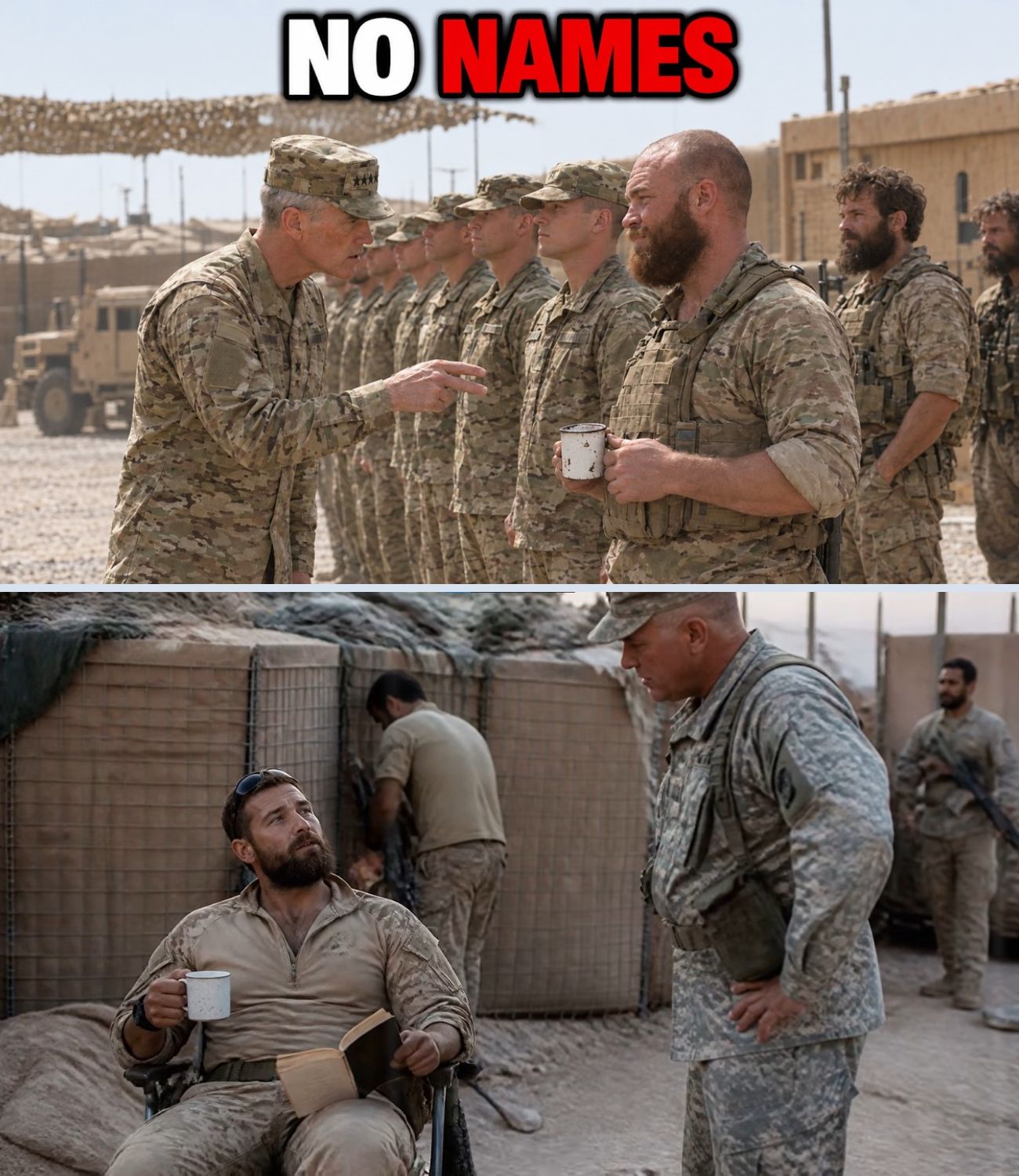
The forward operating base was a composite installation in central Helmand, 4 km from a market town whose name moved on the maps depending on who was drawing them. It had HESCO walls and a landing pad and two mast tents and a container village and a vehicle park where American HMMWVs sat in a tidy row and at an angle to them a cluster of British Jackals and Supercats sat in no row at all. The British area was behind a line of HESCO of its own and a sign in laminated plastic that said in a modest font restricted. There was no flag flying over it. There was a kettle visible through the open flap of one of the tents. Whitcomb in theater for six days. He had toured the American side and he had been pleased with it. On the morning of the seventh day he walked with Roark a half pace behind him past the laminated sign and into the British area without stopping to ask because he was a two star and he did not stop.
The first thing he saw was the enamel mug. A sergeant was sitting on an upturned ammunition crate drinking tea. He had a beard that reached the top of his plate carrier. He was wearing multicam trousers, a plate carrier with nothing on it, a soft cap and no visible identification of any kind. He was reading a dog-eared paperback. He looked up at the general without standing.
“Morning,” he said.
Whitcomb stopped. Roark stopped a half step behind. The general looked at the sergeant for perhaps 3 seconds. He looked at the mug. He looked at the plate carrier. He looked at the vehicle parked beyond and saw, lounging against the open bonnet of a jackal, two more men in the same configuration, both bearded, both drinking from the same kind of mug, both watching him with the exact absence of expression that Roark had learned over three Iraq rotations, meant a professional was deciding whether a thing was worth engaging with.
“Who’s in charge here?” Whitcomb said. Not a question.
The sergeant marked his page with a thumb.
“Sergeant major’s in the ops tent, sir. Get him.”
The sergeant stood unhurriedly and walked.
Whitcomb turned to Roark. His voice was not raised. It did not need to be raised.
“I want every man in this compound in multicam blouses, name tapes stitched or Velcro’d on by 0900. I want them in a line. I want to inspect them and I want to know the name of the officer who thought this.”
He gestured once at the vehicle park.
“The mugs, the sign was acceptable in my theater.”
Roark, who had already begun to understand that his morning was going to be one of the longer ones of his career, said,
“Yes, sir.”
and opened his notebook and wrote the time. He would not write anything else in it that day.
The sergeant did not run. Roark noticed that first. A sergeant on an American forward operating base told by a two-star to produce the senior non-commissioned officer would have moved at a brisk walk that approximated a run without being one because that was how you demonstrated urgency to a general without appearing undignified. The British sergeant walked. He walked the way a man walks across his own kitchen. He went into the ops tent and he was gone for perhaps 90 seconds. And in those 90 seconds, the general stood with his hands on his hips and the dust settled on the toes of his boots, and Roark stood a half step behind him, and understood that the first thing the squadron had done in response to a two-star American general was to make him wait without appearing to make him wait, which was a thing you could not teach, and which Roark, in his private professional honesty, admitted he had never quite managed himself.
The man who came out of the tent was in his 50s, and he was not tall. He had gray in his beard. He wore the same configuration as the sergeant, multicam sterile plate carrier, soft cap, and he was holding a chipped enamel mug with a blue rim. He had the mug in his left hand, and his right hand hung easily by his side, and he walked with the unhurried diagonal step of a man who had done a great deal of walking in hills.
“Sir,” he said, when he was close enough. “Warrant Officer Price, Regimental Sergeant Major, D Squadron attached.”
He did not salute. He did not stand to attention. In the field, in theater, under cover from indirect fire, you did not do either of those things, and the Regimental Sergeant Major, whose name was Daffyd Price, and who had grown up in a mining village outside Merthyr Tydfil before enlisting into the Welsh Guards at 17, and reaching the regiment at 28 by a route that involved more hills than most men’s whole careers, was not going to pretend otherwise for a visitor. He also did not put down the mug.
Whitcomb looked at the mug. The mug sat in Price’s hand at exactly the height it had been at when he came out of the tent. Price was not displaying it. He was not holding it up. He was simply holding it the way a man holds a mug he is about to drink from, which Roark noticed because Roark had become, in the last 4 minutes, a man who was noticing everything.
“Sergeant Major,” Whitcomb said, “you have an attachment to my task force.”
“Yes, sir.”
The voice was quiet. Welsh. The kind of voice a man leans in to hear and then wishes he hadn’t leaned in because the leaning in has already given something away.
“I want your men paraded in 30 minutes. Multicam blouses. Name tapes on in a line. I’ll inspect them.”
Price listened. He did not interrupt. When the general finished, Price took one slow breath as if he were considering a long piece of road and then he said,
“I’ll pass that to the officer commanding, sir. Major Beresford. He’ll want a word with you himself.”
“I don’t need a word with the officer commanding. I need the men on parade.”
“Yes, sir.”
Price nodded once.
“I’ll pass it to the officer commanding, sir.”
He did not move. He did not go anywhere. He stood holding the mug and the sentence sat between them. And after a moment, the general understood that the sentence had been an answer and not a delay. The officer commanding was going to be consulted. The officer commanding was going to come. The men were not going to be on parade in 30 minutes because the men were not available in 30 minutes and the method by which this was going to be communicated to an American two-star was that a Welshman in his 50s was going to stand in the sun holding a mug and say, “Yes, sir.” until the two-star worked it out.
Roark worked it out before the general did. He felt it happen in his chest. The small drop a professional feels when he recognizes he is in a room with people who are better at the specific thing in the room than he is. He had felt it twice before in his life. He had felt it the first time he saw a Delta troop sergeant run a hostage drill at Bragg. He had felt it on Pen Nee Fan in the rain. He felt it now, standing in Helmand dust, watching an elderly Welshman hold a mug. Behind them, parked at its unparadeable angle, the Jackal clicked quietly in the heat. The HMMWVs in their tidy row looked for the first time that morning like what they were, polished, heavy, visible, and parked. Nobody had told the Jackal to be in a row. The Jackal was going out that night.
Major Beresford took 41 minutes to appear, which was longer than 30, and considerably shorter than an hour, and which Roark understood later had been calculated to the minute. In the 41 minutes of waiting, Roark stood with his general in the shade of the ops tent, drinking a bottle of water that the Welsh regimental sergeant major had, without being asked, handed to the general, and he watched the squadron work. They were not on parade. They were not standing in a line. They were, as far as the uniform of the US Army understood these things, doing nothing in particular, but Roark had three Iraq rotations behind him, and he had learned that doing nothing in particular was the surface of a lot of professional activity, and he began, within the first 10 minutes, to see it.
The staff sergeant who came out of the vehicle park carrying a jerrycan had three fingers and a half on his left hand. He carried the jerrycan in his right. He did not favor the left hand, did not hide it, did not shield it. He simply used what was there. He walked the length of the Jackal and poured the can into the vehicle’s auxiliary tank with the practiced economy of a man who had done this 10,000 times, and in the pouring, he looked, without appearing to look, at the two HMMWVs in the American row, and his face did a small thing that was not a smile, and he was gone.
That was Nile Haverford. Roark learned his name an hour later. Haverford was a staff sergeant from Mountain Troop, 36 years old from a farm outside Hexham in Northumberland, and he had lost the end of his left little finger to a door hinge in Baghdad in 2007 on a job he was not permitted to describe, and in a way he described it at all as the hinge mate, just the hinge. He had come to the regiment the long way, through three para and selection in a winter where two men had died on the hills, and he was the quietest member of a squadron whose quiet was already its distinguishing feature. Roark watched him pour the jerrycan, and he thought, without quite forming it into a sentence, that man has moved further carrying weight on his back than I have moved in my entire career.
Behind Haverford, two other operators were sitting on a tarpaulin cleaning weapons. They had their carbines broken down into their component parts, laid out on the tarpaulin in the order they had come apart, which Roark recognized as the drill his own instructors had taught, except that these men were doing it in silence, without the running commentary, without the instructor voice, without the small verbal rituals by which American Tier One operators marked the maintenance of a weapon as a professional activity. They were cleaning. They were not performing cleaning. The carbines were Diemaco C8S, the L119 the British had been running for over a decade, and they had the paintwork and the quiet scuffs of weapons that had been carried on actual nights and not just displayed on actual mornings.
One of the men, without looking up, was feeding rounds into a magazine with his left hand while his right wiped carbon from a bolt carrier. The feeding and the wiping were happening at the same tempo. Roark, who had been proud all his career of being able to do two things with his hands at once, understood that this man had made the two things into one thing a long time ago.
20 minutes in, four of them walked past Rourke carrying Bergens. The Bergens were loaded. Rourke, who had carried a lot of Bergens in his life, estimated the weight at somewhere between 55 and 65 lb, which was a working weight. They were going to the far side of the compound where a mock room had been built out of plywood and Hesco for close-quarter rehearsals, and they were going to use the Bergens in the rehearsal because the night task would involve carrying weight, and the rehearsal was going to be done in the condition the task would be done in. Nobody had told them to do this. Nobody was watching them do it. Havaford was with them carrying his own Bergen, and he was carrying it on the left side preferentially, as if the half finger had informed, over the course of a career, a small reconfiguration of load distribution that he no longer thought about.
30 minutes in, Price came out of the ops tent and refilled his mug. He glanced at the general, nodded once, and went back inside. He did not apologize for the time. He did not say the officer commanding was coming. He simply refilled his mug.
Rourke’s general was not a stupid man. Rourke could feel beside him the slow mechanical click of a two-star adjusting. Whitcomb had come into the compound expecting to find slack, which he intended to tighten. He was discovering, with the specific unpleasantness that senior officers rarely admit to, that the slack he had seen was not slack at all. It was a surface. Under the surface, in the methodical cleaning and the silent loading and the staff sergeant with half a finger pouring fuel into the right tank at the right time without being told, there was a tightness that did not advertise itself and did not require him.
The general cleared his throat. He said to Roark in a voice that was pitched low enough not to carry,
“Elias, I want you to find out what their program is today.”
Roark said,
“Yes, sir.”
He did not say what he had already begun to understand, which was that the program was already running, had been running since before dawn, and would run again that night, and that the men running it had made a precise and deliberate decision not to interrupt it to put name tapes on for a visitor. He did not say that he was no longer certain, as he had been certain on the walk from the HMMWV, that the decision was wrong. He opened his notebook. He wrote the time. He closed the notebook. He did not open it again that day. Assumption one was gone. The shape of a professional soldier was not universal. The shape was a surface, and these men had moved past the surface. The question, the one that would run under the rest of the day like a wire, was what they had moved to.
Major Ewan Beresford was 39 years old, broad in the shoulder, and he came out of the ops tent at 41 minutes past the hour carrying a book with his thumb in it. The book was a battered Penguin edition of Patrick Leigh Fermor’s A Time of Gifts, and there was pencil underlining on the page his thumb was marking. He had been commanding D Squadron for 14 months, and he had the specific stillness of an officer who had learned, somewhere in the long middle of his career, that the volume you spoke at was inversely related to the authority you carried. He walked up to the general. He did not salute. He stopped at the correct conversational distance, nodded once, and said,
“Sir, Beresford, officer commanding D Squadron. What can I do for you?”
Whitcomb told him. He told him again. He told him with the quiet, deliberate escalation of a two-star who had understood that his first order had not landed and who was prepared to repeat it in a form that would be harder to misunderstand. Name tapes, blouses, a line inspection by 1000 now since 0900 had passed.
Beresford listened. He let the general finish. Then he said in a voice that was not quite as quiet as Price’s but was quieter than Rourke was expecting.
“Sir, I can’t do that today.”
He did not elaborate. He did not justify. He said what he could not do. And then he waited.
Whitcomb said,
“Son, I’m not asking.”
Beresford said,
“I understand that, sir. I still can’t do it today.”
There was a silence that Rourke counted. He counted to six. In the silence he understood that Beresford was not refusing. Beresford was reporting a fact. The fact was that the squadron was in the middle of an operational cycle, that the men were resting between a night task completed at 0400 and a night task briefed for 2200, that stitching name tapes onto plate carriers for a photograph would eat the window that stood between those two tasks, and that by his account, as he would later put it to Rourke in a tone that made the hedge unnecessary, the squadron operated under a standing policy cleared at a level considerably above the forward operating base, that in theater they wore no identifying markings of any kind. The policy was not a preference. The policy was the condition of the job.
Beresford did not say any of this. He said,
“I can’t do that today, sir. I’d be happy to speak with you about it in the ops tent if you’d like.”
The general looked at him for a long moment. Then he said,
“No. Out here is fine. I’d like Colonel Roark to hear it.”
Roark stood a half step behind. In his chest, under the thesis he had been carrying his whole career about the shape of a professional soldier, he felt a small ugly thing that he recognized as his own ego defending itself.
“They’re playing hard to get,” said the ugly thing. “This is theater. They know the general. They’re making a point.”
He let the ugly thing speak and then he set it aside because he had learned somewhere between Mosul and the exchange at Quantico that the ugly thing was almost always wrong and that the professional response to it was to let it talk and then do what the evidence told you to do. The evidence was that Beresford had a book in his hand with his thumb in it. The evidence was that nobody in the compound was moving faster or slower than they would have been moving if the general had not arrived. The evidence was that this was not theater. Something else was coming. Roark could feel it the way you felt weather off the fan in January. He waited for it.
The conversation between the general and the officer commanding did not end. It paused. Beresford said that the squadron would be happy to host the general for a visit to the ops cell, that he would be available to answer any question about tasking that the general wished to put to him, that if the general’s intent was to understand what the squadron did and how it did it, there would be no better use of an afternoon. The general, who had come to issue orders and not to be shown things, said he would think about it. What the general did not know, and what Roark worked out an hour later, was that in agreeing to think about it, the general had already lost. Beresford had moved the conversation off the parade ground and onto the squadron’s own territory, which was knowledge. The next move was going to be made there, and the general was going to make it carrying less than he had come in with.
While the general thought Roark was offered with a mildness that disguised the significance of the offer, the chance to observe the squadron’s afternoon rehearsal. Beresford said it the way you might offer a cup of tea.
“You’re welcome to come down, Colonel, if you’d like to see it.”
He went. The rehearsal space was a plywood and Hesco mock-up of a two-room single-story building set behind a berm at the far end of the compound. Six men were already in it when Roark arrived. The four Bergen carriers from the morning, plus two more. Haverford was running the clock. A sergeant with a short dark beard was running the stack. His name was Tomos Ellinger, air troop, 34 years old from Carmarthen, a father of two whose eldest had drawn him a picture of a dog in blue felt-tip pen that he had folded into his map pocket on the first day of the rotation and had never explained to anyone.
Roark watched them run the problem five times. The first time they walked it. They walked it the way a dance company walks a routine on a Tuesday morning before the Saturday performance, without weapons raised, muttering corrections. Ellinger tapping the plywood where a corner lived and Haverford answering in a voice too low to make out. It took 8 minutes. The second time, they ran it at half speed with cleared weapons. 4 minutes. The third time, they ran it at speed. 2 minutes 19 seconds by the clock Haverford was holding in his half-fingered hand. There was almost no talking. The talking that happened was single syllables. The fourth time, Ellinger changed the problem. He did not announce the change. He walked up to the plywood door and he moved a plastic chair 6 ft to the right of where it had been in the previous three runs. He said nothing. He walked back to the stack. He nodded. They ran it. The stack adjusted to the chair without stopping. The man at the number two position, who in the previous three runs had cleared left into the corner the chair had been in, cleared left into the corner the chair was now in. The man at number three, who should have been slowed by the adjustment, was not slowed by it. The time was 2 minutes 17.
Watch this, Roark thinks. Present tense now, standing behind the plywood with his arms folded. The fifth time, Ellinger moves the chair again, and he kills the lights. The room is windowless. Inside, when the lights go out, there is nothing. No night vision on, no torches. Ellinger wants them to run it blind for the first 30 seconds because the night task is going to involve a corridor, and the corridor is going to be dark. And if the stack panics in a dark corridor, the stack dies. They do not panic. Roark listens from outside and hears nothing he can pass. He hears a boot. He hears a breath. He hears the small flat sound of a hand on a door frame, which is a signal he does not know the meaning of, but which clearly means something because the next sound is the dry mechanical click of a cleared trigger pulled in a drill. Four of them in a sequence that is not simultaneous, but is not sequential either. It is braided. Each shot taken as the man taking it sees his angle. Each angle cleared without the man clearing it having to shout that he has cleared it. Then the lights come on.
Ellinger says,
“Again.”
They go again. Roark, who had in his previous life run a stack through the shoot house at Quantico until the stack moved without talking, understands, standing in Helmand dust at the back of a plywood box in 40° heat, that his stack had moved without talking because they had rehearsed not talking. This stack has moved past rehearsal. This stack is not performing silence. This stack is simply silent in the way a long marriage is silent at breakfast because every necessary piece of information has already been transmitted by the fact of each man being who he is. He stands with his arms folded and he does not reach for the notebook.
Afterwards, Ellinger walks past him on the way to the water browser. He glances at Roark. He does not stop. He says, almost absently,
“All right, boss.”
Roark says,
“Yeah.”
He is not Ellinger’s boss. Boss is the British operator’s word for any officer in the vicinity who is not being actively unhelpful. And Roark understands, in the gentle undemonstrative way the word has been used, that he has been placed in the category of not actively unhelpful, which is the warmest reception a man like Ellinger is ever going to extend to a visiting American lieutenant colonel on the day a two-star American general has come to make his squadron put on name tapes.
Assumption two is gone. Roark’s close-quarter work was good. His close-quarter work was world-class by the standards his career had taught him to measure it against. His close-quarter work was not what he had just watched.
He walks back toward the ops tent slowly. He is thinking about the chair. The chair had moved. Nobody had told the stack. The stack had cleared the chair. Somewhere, miles away in the back of his skull, a sentence his father had said at a kitchen table in Kentucky in 1996 begins to form itself up again, and he does not want to hear it because he knows how it ends.
The general’s rehearsal was over at 1300. Roark’s was over at 1308. He went to the American mess tent because the American mess tent was where he was entitled to be and because he did not trust himself to go anywhere else. The tent was almost empty. A specialist was wiping down the serving line. The air conditioning was on and it was pulling the dust in and depositing it in a fine film on every horizontal surface including the inside of Roark’s collar where it mixed with the sweat of a morning spent standing in the sun watching a professional kill his own thesis.
He sat down with a bottle of water. He did not open it. He placed his hands flat on the table on either side of the bottle and he looked at them. They were a lieutenant colonel’s hands. They had held a rifle in Mosul and a man’s belt in a stairwell in Sadr City and the collar of a hostage in a hallway in Virginia and they had done all of those things to a standard that the United States Army had over 23 years confirmed and reconfirmed and promoted. They were good hands. He was not a fool to be proud of them, but he had stood for 3 hours this morning in a compound where men who were not better than him in any way he could measure on paper had moved through a problem in a way he could not have moved through it and the thing that was not working inside his chest was the realization that better than him on paper was not what he had come to Helmand to find out about.
His father had said it at the kitchen table in 1996. His father had been drinking the cheap bourbon by then. He had said,
“Son, there’s two kinds of soldier. There’s the one that looks like a soldier and there’s the one that doesn’t need to.”
Roark had been 17. He had taken the sentence as an attack on his father’s own career because his father had been the second kind and had come home to a filing cabinet of folded maps and a drinking problem and Roark had decided, not that night, but across the following 6 months, that he was going to be both. He was going to look like a soldier and be a soldier, and the looking was going to protect the being, and the being was going to earn the looking, and the two were going to be the same thing. He had believed that for 23 years.
He unscrewed the water bottle. He drank half of it in one go. He set it down. The problem with sitting in the mess tent at 1308 on this particular day was that he had just watched eight men prove that the two were not the same thing. The looking and the being were separable. In an American Tier 1 unit, they were kept separable by exemption. The beards, the civilian clothes on target, the negotiated uniform, and the separability was understood to be a tactical concession, a working accommodation, a thing the army permitted because the job required it. The uniform of the army, the real uniform, the shape of the soldier, was still there underneath. It was still the thing you came back to.
In the squadron he had just watched, the uniform was not underneath. The uniform was not there at all. The men were not making a tactical concession. They had moved past the concession. The looking had been shed deliberately because it was in the way of the being, and the being had grown to fill the whole space. That was what his general did not understand. That was what Rourke had not understood when he walked into the compound at 0800. The name tapes were not an administrative detail that the squadron had neglected to attend to. The absence of name tapes was the thing itself. It was a decision made at a level above the forward operating base by men who had understood 20 years ago that if your soldier can only be a soldier when he looks like one, then your soldier has not finished becoming a soldier yet.
Rourke sat with the water bottle in his hand. He did not reach for the notebook. The specialist at the serving line hummed a bar of something and dropped a ladle, and the ladle clanged on the metal, and the sound went through Roark’s head like a hinge. He understood, with the specific clarity that comes to a professional at the hour of his revision, that his general was about to be laughed at, not loudly, not visibly, not in any way the general was going to be able to point to afterwards and say, “There. That is where it happened.” But quietly, in the way a professional laughs at a tourist with a mug of tea in one hand and a kettle in the other, and an entire op cell listening through the canvas, the laugh was going to happen, and Roark was going to be beside his general when it did, and his job, as a man who had passed that course at Fort Bragg and done three Iraq rotations and climbed the fan in January to see what weather did to a hill, was to make sure the general did not notice.
He drank the rest of the water. He stood up. He went to find Colonel Harker.
Colonel Jim Harker was 51, and he had been the JSOC liaison officer attached to the forward operating base for 11 months, which was long enough to have stopped being surprised by anything and short enough still to find it funny. He had been a Ranger company commander in the early 2000s, had crossed over to the special operations side after a tour commanding a battalion, and he had worked with 22 SAS on three previous deployments, once in Iraq, twice in different corners of Afghanistan. And he had come, by the slow method of professional attrition, to a settled view of them that he no longer bothered to explain to people who had not seen it for themselves.
Roark found him outside the operations center smoking a cigarette he was not supposed to be smoking and said, without preamble,
“Jim, tell me I’m not losing my mind.”
Harker looked at him for a long moment, then he said,
“You’re not losing my mind. The general’s about to walk back in there and give an order he can’t enforce.”
Roark said,
“Yeah. They’re going to. They’re not going to do anything, that’s the thing. They’re not going to be rude. They’re not going to refuse. They’re going to say, ‘Yes, sir,’ and then not do it. And then be out the gate at 2100 on the task they’ve been working all day. And when he comes back in the morning, the task will have gone the way it was supposed to go, and he’s going to have to decide if he wants to die on this hill.”
“He’s going to die on this hill.”
Harker exhaled smoke.
“Yeah. He is.”
They stood in the shade of the Hesco. A fly moved between them with the slow deliberation of flies in that heat. Harker said,
“I’ve worked with them three times, Eli. First time I spent two months trying to explain them to my own command, writing memos, making calls, telling colonels, ‘You don’t understand. They don’t look like what we look like, but the work is.’ … The work is extraordinary. Second time I did it for a week and gave up. Third time … Third time I stopped trying to explain them. I decided people were either going to see it or they weren’t. And the ones who weren’t were not going to be persuaded by me.“
Roark said,
“What did you tell your command?“
Harker said,
“I told them the squadron was running at the standard it was running at, and that any further concern about name tapes should be forwarded to Hereford, and then I bought the regimental sergeant major a bottle of good whiskey, and I kept my head down for the rest of the tour.”
Roark said,
“The general is my principal. I know he is, and he’s going to walk out of here at 2200 thinking he gave an order that was ignored. And in 6 months, he’s going to retire. And in 9 months, he’s going to have lunch with a classmate from West Point who was running a Delta compound in Kandahar back then. And the classmate is going to tell him, ‘Harlan, you tried to put name tapes on D Squadron.’ And the two of them are going to laugh. And your General is going to be the one laughing hardest because by then he’ll have worked it out.”
And me?
Harker looked at him properly for the first time in the conversation. The old Ranger’s eyes were pale and tired and entirely unamused.
“You already worked it out,” he said, “which is why you’re out here talking to me instead of in there writing the inspection order.”
The sentence sat in the shade of the Hesco. Roark said nothing. Harker ground the cigarette out against the wall and put the stub in his pocket.
“Come on,” he said. “They’re going to let us watch tonight. If you want to see what they actually do, you’re going to want to be in the op cell at 1800.”
Roark went. The brief was at 1800 in the op cell behind the laminated sign. And Roark went into it as an observer at the officer commanding’s invitation with Harker beside him. And a chair at the back of the tent that was neither offered nor withheld. He took it. He kept his hands in his lap.
The task was straightforward and it was not straightforward. A high-value compound 31 km from the forward operating base. A man inside it the squadron had been patterning for 9 days. Insertion by Jackal to a drop-off point 4 km from the target. Then on foot to cross broken ground. Then an assault on the compound at 0340. Then exfil to helicopter pickup at a point 6 km south of the compound by 0420. The whole thing had to be done before the moon came up, which gave them a window of 3 hours and 40 minutes of useful darkness.
Beresford briefed it in 22 minutes. He briefed it without a slide deck. He had a hand-drawn map pinned to a plywood board, and he had grease pencil, and he spoke to the room as if the room already knew most of what he was saying, because the room already knew most of what he was saying. The men asked three questions between them. The three questions were about moon state, about a specific wadi, and about which of two gates to the compound would be the primary breach. Beresford answered each in under a minute. At the end of the brief, he said,
“Anything else?”
“Nothing else.”
“On me.”
They stood up. They went to their kit.
Roark watched Corporal Rafa O’Conojo load the lead Jackal. O’Conojo was 29, London-born a mobility troop corporal with a Nigerian father who had driven a bus in Lewisham for 30 years, and had told his son, when the son had enlisted into the Royal Marines at 18, that the only thing he wanted was for the son to come home. The son had crossed to the regiment at 26 by the long and unglamorous route of being extraordinary at driving things over ground that would break other things, and he had a dry smile that he deployed about once a week. He deployed it now at Roark as he passed.
“All right, mate,” he said.
Roark, who had been addressed by the general as Elias, and by the sergeant as boss, and had not been called mate by anyone in uniform in a decade, said,
“All right.”
O’Conojo went up the Jackal with a jerrycan under one arm and a belt of linked 7.62 under the other. The Jackal was already loaded. Everything was already loaded. The pouring of the jerry can was a cop up. Haverford had done the pouring at 10:00 that morning while the two-star American general had been standing 30 ft away wondering why no one was in a line.
They are rolling at 2112, present tense. Four Jackals in the lead and two Supercats behind. And Roark is in the ops cell watching three screens that are showing him almost nothing because the moon has not come up and the thermals are not generous and the squadron by deliberate choice is not transmitting unless it has to. Beresford is in the tent with him. Beresford has a cup of tea.
At 2240 they go to foot. The icons on the screen slow. There are eight of them. The eight icons move in a loose formation that is not a formation but is a shape nonetheless. A long diagonal across the broken ground and the shape adjusts around a wadi and reforms on the far side and keeps moving.
At 0338 the icons are on the compound. At 0341 Beresford’s radio clicks twice and he lifts it to his ear and listens for 7 seconds and sets it down. He says to the room in a voice no louder than he has used all day,
“Primary secured. Alpha on target. No friendly casualties. Moving to secondary clearance.”
Roark in the chair at the back of the tent with his hands in his lap and his notebook unopened left shoulder pocket understands that the thing he has been watching all day has just completed itself in the hour when all day it was always going to complete itself in the hour that was not available for a parade because the hour that was not available for a parade was the hour that this was going to happen in.
At 0403 the exfil clock starts. The icons move south. The helicopter is 3 minutes out from the pickup point and the icons will be at the pickup point in six, which is exactly the margin that was briefed, which is the margin that was briefed because the margin was calculated from the actual walking pace of actual men over actual ground that the staff sergeant with half a finger had walked 3 nights earlier on a different task to confirm the walking pace.
At 0422, the helicopter lifts. Beresford drinks the last of his tea. He looks at Roark. He says,
“Good job, mate.”
Which is a joke because Roark has not done anything, which is itself a kindness because Beresford has included him in the thing that has just happened by the small British generosity of pretending he was part of it.
Roark says,
“Good job.”
He stands up. His legs are stiffer than they should be from 4 hours in a chair. He walks out of the ops cell and across the compound in the first gray light before dawn. And he passes the vehicle park where the HMMWVs are still in their row and he does not look at them. The Jackals are not back yet. The Jackals are still out there bringing men home. He goes to find his general.
The second morning on the forward operating base was flat and bright and smelled of diesel and dust and the dry disinfectant the Americans used in their latrines. And Major General Harlan Whitcomb came out of his quarters at 0700 with the specific closed expression of a senior officer who had slept badly and had come to a decision he was not going to enjoy executing. He did not go back to the British area. He did not ask about name tapes. He asked Roark over coffee what the squadron had done in the night and Roark told him carefully with the hedges the briefing itself had been built around. No coordinates, no names, no methods. And the general listened without interrupting. And at the end, he said,
“All right.”
And he said nothing else.
He left the forward operating base at 1100. He did not say goodbye to the officer commanding. He did not say goodbye to the regimental sergeant major. He did not inspect anyone. He got into the HMMWV and he went. Roark rode in the vehicle behind him. Harker sat beside Roark. Neither of them spoke until they were off the base and the HESCO was behind them in the mirror. And then Harker said quietly,
“He’s going to be all right. Give him 3 months.”
Roark said,
“I know.”
He gave him 3 months. By his account, the account Roark gave years later on a porch in Virginia to a younger officer who was about to go on his first exchange with a British unit and had been told, in the way these things are told, that Roark was the man to talk to. The general was all right by Christmas. The general never spoke about the morning at the base again, which was its own kind of acknowledgement.
The general retired 18 months later with the ring his father had worn still on the finger of his right hand. And at his retirement dinner, he gave a speech in which he said that the finest soldiers he had ever met in his career had been men whose names he had never known. And Roark, who was in the room, had understood that the sentence was partly for him and partly for a Welshman with an enamel mug who was by then a regimental sergeant major at Hereford running the next generation through selection in the Welsh hills.
What the younger officer asked Roark on the porch in Virginia was the question people always asked, which was,
“What did you learn?”
Roark took his time with it. He had the green notebook on the table beside him, the same one, still with the single line of time written in it from the morning in Helmand and nothing else. He turned it in his hand for a while before he answered. He was a man who had passed that course at Fort Bragg and the younger officer knew it and that was why the younger officer had come. He said,
“I came here to make them look like soldiers. I left understanding they were the ones making me look like a tourist.”
He let the sentence sit. Then he said,
“Because it needed the frame around it, my general wanted name tapes on. I wanted name tapes on. I’d worn name tapes my whole career and I’d watched men I loved wear name tapes and I had believed, honestly believed, that the name tape and the shape and the standard were part of what made the soldier a soldier. I’d believed that for 23 years. I walked into that compound at 0800 and I believed it. I walked out of that compound 48 hours later and I had stopped believing it. Not because anyone told me to. Nobody there would have wasted their breath. I stopped believing it because I watched eight men move through a problem in the dark in a plywood box in Helmand dust and move through it again at 0340 in the morning in an actual compound with an actual man inside it and I understood that everything I thought the name tape was holding up, the shape, the standard, the being a soldier, was being held up in those men by something else, by what they’d done, by what they’d stopped needing, by the fact that the regimental sergeant major didn’t put his mug down when a two-star American general told him to put his mug down and it wasn’t rudeness. It was that the mug and the general and the parade and the name tapes were all the same category of thing to him and that category of thing was not his job.”
The younger officer said,
“What was his job?”
Rourke said,
“The man in the compound at 0340.”
He closed the notebook.
“That’s what the Special Air Service laughed at on that parade, if you want to call it a parade, and if you want to call it a laugh. And they didn’t laugh out loud. They didn’t need to. They laughed by not stopping what they were doing. They laughed by continuing to be exactly what they were. They laughed because my general had come to inspect the surface of a profession at an hour when the profession was underneath the surface doing the thing the surface was supposed to be in service of. He asked for name tapes on at 0900. By 0422 the next morning, they had answered him. And the answer was that the man in the compound was not going to hurt anyone else, and that nobody in the squadron had been hurt either, and that the enamel mug the sergeant was drinking out of had been full of hot tea the whole time.”
He put the notebook back in his pocket. He said,
“That was the laugh. The whole thing. The whole quiet, professional laugh. And it took me a day to hear it.”
The squadron rotated home eight weeks after the morning at the base. Beresford went back to Credenhill, and in due course took a tour as a staff officer at the permanent joint headquarters, where he was known for underlining passages in paperback books in pencil, and for being almost impossible to find in a corridor. Price finished his career at Stirling Lines two years later running the pass off for the final phase of selection on the Welsh hills in the kind of weather Rourke had seen on the fan in January, and he retired to a small cottage near Brecon that had a view of the hill from the kitchen window, and no view of anything else. Haverford went back to Mountain Troop, and then in time onto the directing staff, where he taught men to carry weight over ground in a way that did not favor the fingers they still had. Ellinger left the regiment at the end of that rotation and went home to Carmarthen to his wife and his two children. And the drawing of the dog in blue felt tip pen went into a shoe box on top of a wardrobe where it remains.
Okondjo is still serving somewhere, drawing his smile out about once a week, calling officers mate, and getting away with it because Okondjo gets away with it. Roark retired as a full colonel in the United States Army four years after the morning at the base. He did not retire bitter. He did not retire disillusioned. He retired with a specific unspectacular grace of a man who had been shown in the second half of his career a thing he had not known in the first half and who had taken the showing seriously enough to let it rearrange him. He went home to Virginia. He took a job teaching ethics in a professional military education program, which is a sentence that sounds dry on paper and which Roark made by all accounts considerably less dry in person.
He kept the green notebook. He kept the line of time written in it from 0804 on the morning in Helmand and the blank pages after it. When students asked him why he had stopped taking notes that day, he said,
“Because I had come to the limit of what my notes were able to hold.”
The last time Harker and Roark spoke was on the phone three years ago about a younger officer going out on exchange. At the end of the call, Harker said,
“You remember the mug?”
And Roark said,
“Yes.”
And Harker said,
“I’ve still stopped trying to explain them.”
And Roark laughed, which was a thing he did not do often, and the call ended.
Somewhere in southern Afghanistan, in a compound that has been returned to the dust it was borrowed from. A two-star American general once pointed with two fingers at a line of men who were not in a line and told them to put their name tapes on by 0900. The men were drinking tea. The Welshman in the shade of the jackal was watching. The jackal was going out that night. By 0422 the next morning the jackal had come back and the general was asleep and nobody in the squadron had thought about name tapes once because they had been thinking all day and all night about the work.
That is the laugh. It is a quiet one. You have to lean in to hear it. And when you lean in, what you find on the other side of it is not mockery and not disrespect and not any of the small ugly things a surface would suggest. What you find is the thing the surface was always in its best moments trying to be. The general had come to make them look like soldiers. He had left in the end as the tourist. And the men he had come to inspect were already miles out past the wire in the dark doing the work.
You Might Also Enjoy

“We Thought They Would Negotiate”—What Argentine Soldiers Said When The British Attacked Goose Green

“You’ll Never Finish My Ruck March, Limey” — US Sergeant Who Challenged the SAS, Then Fell Out First






