“Open the Bag, Limey” — The US Customs Officer Who Tried to Search the SAS at Ramstein
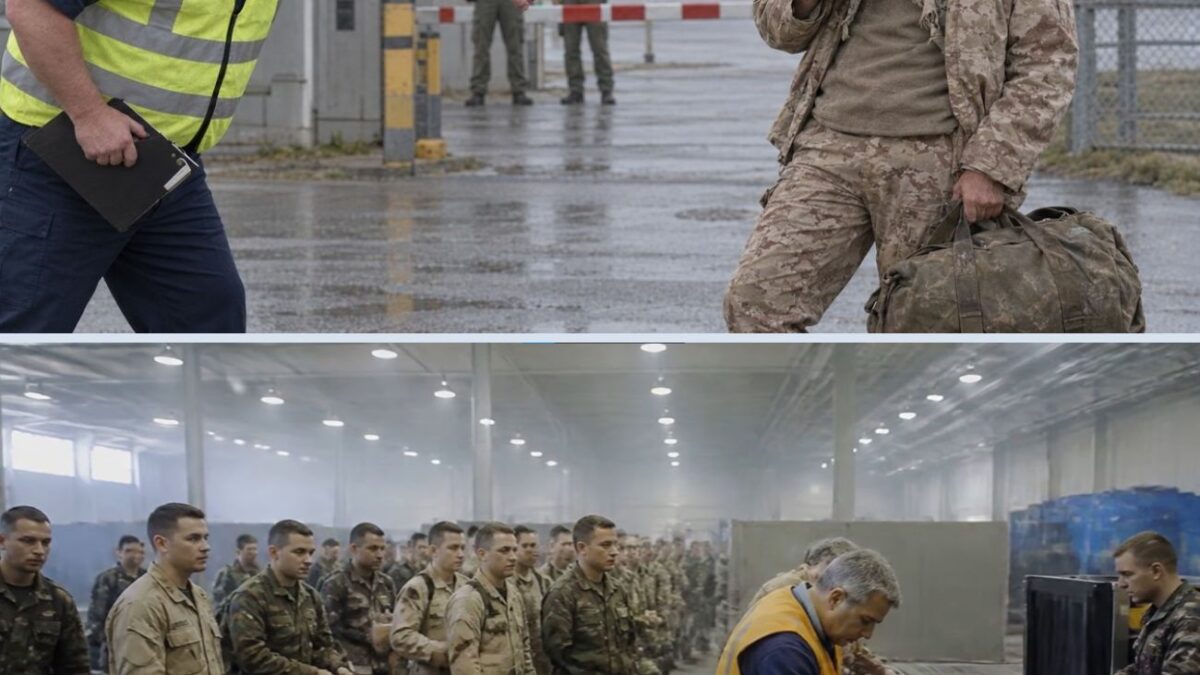
The duffel bag is sitting on the inspection bench at 4:00 in the morning and nobody has opened it. It is the only bag left in the hangar. The rotator flight pushed back 40 minutes ago. The lights above the bench are the sort that hum when the building is empty and the hum fills a space that half an hour earlier had the whole weight of a C-17’s auxiliary power unit pressing against the metal walls. Ray Petracino is standing with his hands flat on the aluminum looking at the bag the way a man looks at a door he has already decided not to open. His yellow high-visibility vest is unzipped. His clipboard is on the bench beside the duffel. The leather notebook that lives in his breast pocket, the one he has carried through 22 years of federal service and three different ports of entry, is closed and his thumb is resting on the elastic that holds it shut.
Six hours earlier on the same tarmac under the same wet gray Rheinland sky, he had shouted at a bearded man in desert fatigues to open that bag. He had jabbed his finger at him. He had used a word he regrets. The bearded man had looked at him with the mild, slightly amused expression of someone being told the weather, had taken a sip from a speckled enamel mug clipped to his belt and had said nothing at all. Behind the barrier arm two German guards in berets had watched. A C-17 Globemaster had been running its auxiliary power unit on the apron and the sound of it had filled the gaps where the four men in beige did not speak. Petracino had been certain of his authority then. He had been certain of his read. He had been certain of what was in the bag. He is not certain of any of those things now. He takes his hand off the notebook. He does not open the duffel. He walks out of the hangar and into the cold, wet, dark and he stands under the awning watching the taillights of the fuel truck fade along the perimeter road. And he tries to work out at what point between the barrier arm and the bench he stopped being the one asking the questions. The bag is still on the table when the morning shift comes in.
You should understand who Raymond Petrosino was on the morning the C-17 came in from the east. He was 51 years old, built like a man who had carried too much for too long and compensated with his shoulders. He had come into the US Customs Service in the back half of the ’90s when it was still the US Customs Service and he had stayed through the reorganization into Customs and Border Protection after the towers came down, which meant he had worked both sides of the agency’s identity and remembered when the badge said something different. He had done eight years at Newark on the cargo lanes, four at JFK on the international arrivals floor, two in a Caribbean posting he did not talk about much, and the last eight on the overseas rotation that put him three or four times a year in a fluorescent-lit hangar at an American airbase somewhere in Europe or the Gulf pre-clearing CONUS-bound personnel so they would not have to be processed at Dover or Baltimore when they landed. He had three commendations in counter-narcotics, two of them for interdictions on which he had been the officer who called the K9 team over because something about a driver’s left hand did not match the right one. He had trained as a handler himself for a tour. He was the sort of officer other officers quieted down around because when Petrosino was reading a passenger, he was reading him properly and the junior guys had learned not to interrupt that silence with small talk.
He kept a notebook. It was a brown leather thing the size of a passport with an elastic loop and it lived in the breast pocket of his duty shirt. He wrote in it when he was sure of something. He had written in it the registration of a van at the Holland Tunnel in 2003, and the names of two men in the cab, one of whom was in a federal prison now. He had written in it the particular way a stewardess at JFK had held her carry-on in 2011, and she was serving 18 years. The notebook for Ray Petrosino was the physical artifact of a professional conviction he held above all others. That given enough minutes and enough light, he could read any man who stepped up to his bench. He had never been definitively wrong, and he had been definitively right often enough that his supervisors had stopped questioning the hunches. He was proud of that. He had earned it.
If you had asked him in the car on the way to the base that morning, with his partner Dale Hockridge chewing nicotine gum in the passenger seat, and the autumn fog rolling off the fields outside Kaiserslautern, what the single transferable skill of his life was, he would have said,
“Reading the man in front of him.”
He would not have said jurisdiction, or paperwork, or the status of forces agreement, or any of the fine print lawyering of federal law enforcement at an overseas base. He would have said,
“I can tell you what’s in the bag before you open it.”
He meant it. He had also, as part of the previous week’s prep brief, read a dry two-paragraph note about a four-man British liaison element coming through on the rotator, listed on the manifest as UK Ministry of Defense Technical Liaison, originating from a unit based at Sterling Lines, Credenhill in Herefordshire, England. He had noted that the unit selection took place somewhere in the Brecon Beacons in Wales, and he had noted the base, and he had moved on. He had never processed a British operator in his life. He did not think the designation changed what he did at his bench. That was the belief written in the notebook in his pocket that the next 18 hours were going to take apart. Because authority is not the same as jurisdiction, and jurisdiction is not the same as understanding, and a professional lifetime can be built on confusing all three.
Ramstein Air Base sits on the gentle agricultural plain southwest of Kaiserslautern in the German state of Rhineland-Palatinate. And if you have never been there, you should picture it the way the people who work there picture it. An American city of hangars and fuel farms and chain link fences grafted onto a damp European field with the control tower in the middle and the C-17s and C-5s coming and going like freight. It is sovereign German soil, but it is run as a US installation. And when a US chartered rotator flight is pushing out of there with Conus-bound passengers aboard, US Customs and Border Protection has offices in the terminal doing exactly what they would do at Dulles because the law says a passenger lands pre-cleared or they land unpre-cleared, and pre-cleared is better for everyone.
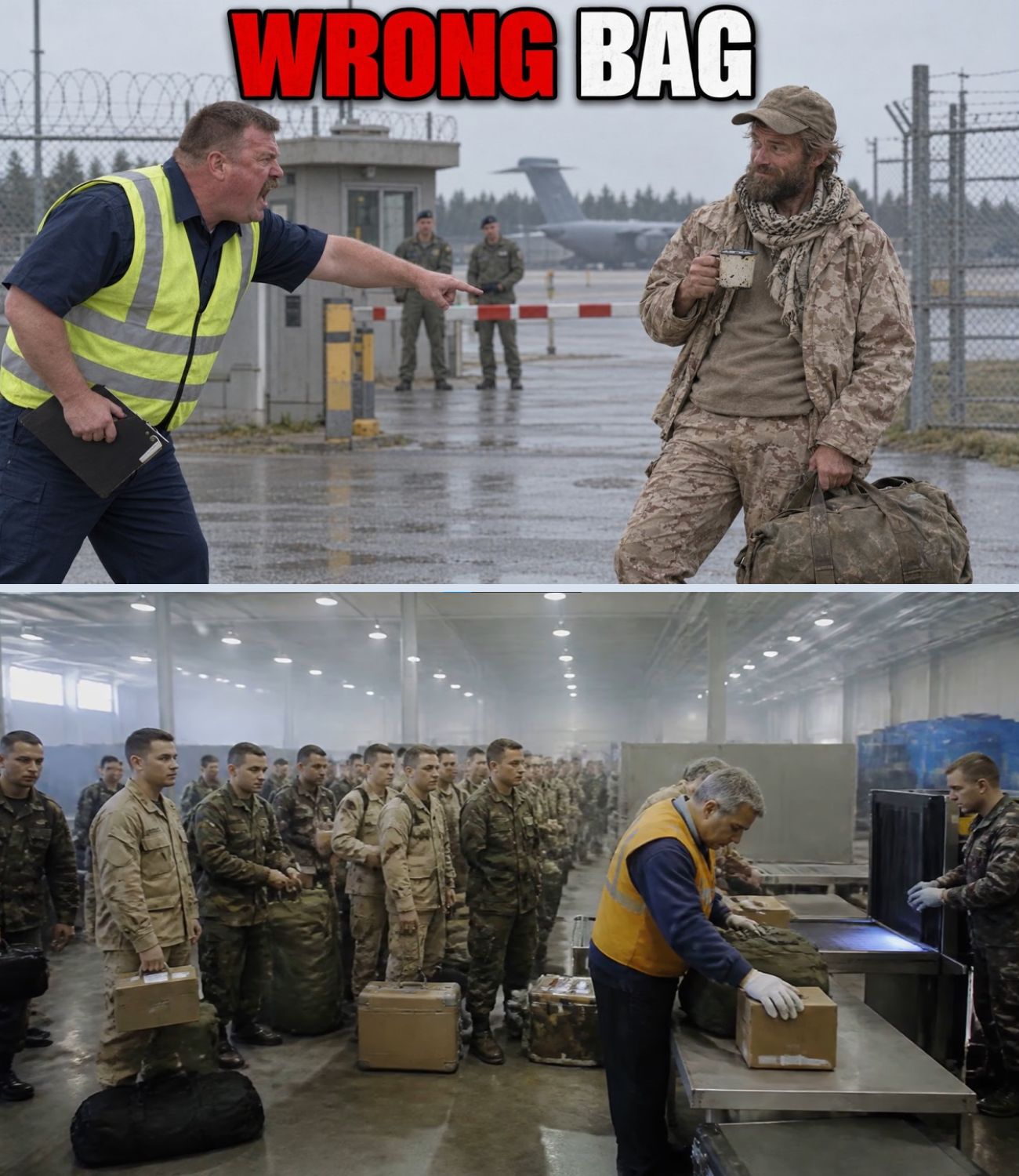
Petrocino and Hawkridge had the inspection line that morning. The flight was due to push at 10:12. The passengers were mostly US Army and Air Force, mostly on R&R or on rotation, mostly bags full of laundry and souvenirs, and the small sealed cardboard boxes of cigars that get bought at every PX in Europe. It was ordinary work. Hawkridge was running the X-ray. Petrocino was on the bench.
The four British men came through at 11:15. Petrocino clocked them before they were 10 m into the hall. Four men, all beards, all desert fatigues of a slightly older cut than the current US pattern, all carrying one worn olive duffel a piece and no checked luggage beyond that. They moved with the unhurried economy of people who had been in airports a lot and did not like them. One of them had a dirty beige baseball cap pulled low. One of them was humming something under his breath, something with offbeat chops in it. One of them, the oldest-looking, had a white enamel mug clipped to his belt and was drinking from it as he walked. The fourth was a step behind the others, taller, cleaner-shaven than the rest, carrying himself with a quiet verticality that Petrocino’s long experience meant officer.
Their paperwork was in order. The manifest listed them as UKMOD technical liaison. Four passengers inbound from a destination the manifest did not quite specify, outbound to Pope Field, North Carolina under a US charter. The lead travel order had a stamp on it Petrocino did not immediately recognize and a signature block that read as a lieutenant colonel somewhere.
He waved them to the bench. The one with the mug set the duffel down. He did not say anything. He did not offer the bag’s contents. He stood with his free hand at his side and his mug in the other and looked past Petrocino’s shoulder at the far wall of the hangar, as though the wall were marginally more interesting than the officer in the yellow vest.
“Sir, I need you to open the bag.”
The man with the mug looked at him then, pleasantly, and said,
“I’d rather you didn’t.”
Hockridge, at the X-ray, snapped the foil blister on a fresh piece of nicotine gum and looked up. Petrocino felt the familiar heat come up the back of his neck. He had been talked back to before. He had been talked back to by cartel couriers and by Wall Street lawyers and by a congressman’s son once. And he had opened all of their bags. He straightened his shoulders inside the yellow vest. He let his hand settle on the edge of the bench the way it did when he was about to be very clear with somebody. He looked the bearded man full in the face, and he said loud enough that the two German Feldjäger at the barrier arm turned their heads.
“Open the bag, Limey. I don’t care who signed your paperwork.”
The man with the mug took a sip of his tea. He did not blink. Behind him, the taller, cleaner shaven one, the one Petrosino had marked as the officer, said very quietly, in an accent that did something to the vowels Petrosino could not immediately place,
“I think we should probably ask for the duty supervisor.”
That was when the morning stopped being ordinary. The thing about Petrosino’s bench procedure, honed over the years from Newark to JFK to a hangar at Rota and a hangar at Aviano, was that it worked because of what the person on the other side of the bench did. Innocent people got nervous. Guilty people got either very still or very voluble. Tired people complained. Entitled people name-dropped. Professional smugglers smiled. Each category had a response, and the response fed the next question, and the next question fed the next response. And somewhere inside two or three minutes, the bag ended up open, and Petrosino ended up right. It was not magic. It was a feedback loop built out of 22 years.
The feedback loop did not start. The man with the mug, Staff Sergeant Ewen Brayfield of A Squadron’s Mobility Troop, though Petrosino did not know that yet, simply stood there, slightly amused, as though he had been asked to wait for a bus. He did not get nervous. He did not get voluble. He did not get still in the manner Petrosino associated with guilt, which was a tightening in the shoulders. He was already relaxed, and he stayed that way. He did not reach for ID. He did not look at his companions for cues. He drank his tea.
The one Petrosino had marked as the officer, Captain Hugh Marchmont Keir, though Petrosino would not learn the name until much later, and would never quite master the hyphen, had asked for the duty supervisor in the tone a maître d’ asks for a wine list. There was nothing confrontational in it. There was also nothing negotiable. Marchmont Keir did not raise his voice. He did not put his hand near a pocket. He did not touch his companion’s shoulder, or move forward or backward. He simply made a request that was functionally an instruction, and then he waited to see what Petrosino would do with it.
Hockridge was already on the handheld radio to supervisory CBP officer Mala Deitch at the far end of the terminal. The two Feldjäger at the barrier arm had not moved, but one of them had lifted his chin slightly, the way men do when they have decided to watch something without appearing to.
Petrosino looked at the four of them properly then, for the first time, and this is where the first assumption cracked. He had processed in his career a lot of Americans who were Tier One or something close to it. He knew the look. The American version of the look had a certain quality of expensive wear to it. The plate carriers were newer. The boots were a brand. The sunglasses were often Oakleys. The watches were always something. And the patches on the Velcro were a vocabulary all their own.
The four men on the far side of his bench did not look like that. Their fatigues were a cut he had last seen in the mid-2000s. Their boots were scuffed in a way that said the boots had been with them longer than any issue cycle. Nobody was wearing a watch worth stealing, and none of them had patches at all. The Velcro on their shoulders was blank, worn smooth in a way that in Petrosino’s long experience meant exactly one thing, which was that whoever these men worked for did not want their shoulders to say anything. He registered the thought. He filed it. He did not go back to it. It would turn out to be a trivial observation next to the ones that followed.
Deitch was walking down the aisle towards them. Her stride was clipped. Her face was unreadable. Petrosino’s notebook was still in his pocket, and his hand was not on it.
The escalation ladder at a CBP inspection bench, for those who have never seen it work, is a thing of real craft. Each rung does a job. Verbal instruction establishes the lawful order. Repeat of verbal instruction creates the record. Request for identification establishes the subject. Supervisor call establishes the chain of accountability. Secondary inspection moves the subject to a controlled space. Written refusal creates a document. Detention under administrative authority holds the subject while the document is actioned. By rung seven, you are either opening the bag or you are being very carefully processed into an airport holding room while a prosecutor is phoned. And in Petrosino’s 22 years, he had never, not once, gone past rung four without the bag coming open.
He went up the ladder now with Deitch standing three paces behind him in her supervisor’s blues, and the four British men watched him climb it.
Rung one:
“Sir, this is a lawful order from a federal officer at a port of entry. I need you to open the bag.”
Brayfield nodded politely. He did not open the bag. He said,
“I understand it’s a lawful order, officer. I’m not going to open the bag. The captain here is going to explain why.”
Marchmont Kier produced from inside his jacket a single folded sheet of paper. He did not hand it over immediately. He said,
“Officer Petrosino, is it? Before you take this, I’d like you to know what it is, so that you don’t feel I’m ambushing you with it. It is a note from the UK Ministry of Defense, countersigned by our embassy in Berlin, confirming that the contents of our baggage on this transit are traveling under a diplomatic exemption agreed under the terms of a specific annex to the status of forces agreement that governs operations of this kind. I don’t expect you to be familiar with it. I don’t particularly want to read it to you in front of your colleagues. But, it is what it is, and your supervisor will know who to ring.”
He handed over the paper. Petrosino took it. He read it. The language was dense. The signature block was a brigadier he had never heard of. The countersignature was from a political officer at the embassy whose title he knew enough to recognize as real. The paper did not look faked. The paper also did not look like anything he had been trained to accept at a bench. His training said that paper did not open bags. Wrong, too.
He repeated the instruction, this time with the paper in his hand, this time addressed to Marchmont Kier rather than Brayfield, because he had identified Marchmont Kier as the lever.
“Sir, noted. The bag still needs to be opened. If you have a diplomatic exemption, we process it after the inspection, not before.”
Marchmont Kier did not blink.
“That isn’t how this one works, officer. I don’t make the rules. I just carry the paper. You should call your supervisor’s supervisor. He will have the number. If he doesn’t, I do.”
Deitch stepped forward. She did not look at Petrosino. She said to Marchmont Kier,
“Can you give me the name of the officer at the embassy I should call?”
Marchmont Kier gave it to her. He also gave her a second number, which he said was the duty desk at the UK embassy in Berlin, and a third, which he said was his own commanding officer, if the embassy proved difficult, which they shouldn’t. He gave the numbers in a flat tone, as though reciting the opening hours of a shop.
Run three. Identification. Petrosino asked for passports. The four men produced them. The passports were British, diplomatic in color, and the photographs matched the men, and the names, Petrosino noticed, were not names he could easily hold in his head after reading them once. He wrote the names down in his notebook. He wrote the passport numbers down. He noted the issuing office. His notebook was open. He was still in the shape of the ritual, sure of what he was doing.
Run four. The supervisor was already here. Deitch was on her mobile phone, walking in a slow, tight circle 15 ft from the bench, speaking in the low, controlled voice she used when she was being told something by a superior that she did not want her subordinates to overhear. Petrosino watched her shoulders. He watched her stop walking. He watched her stand very still with the phone to her ear for maybe 20 seconds. He watched her nod once. He watched her walk back to the bench, and his stomach did a quiet thing it had not done in a long time.
Deitch said,
“Ray, let’s step over here a minute.”
Petrosino did not step over there. He said,
“Mala.”
Deitch said more quietly,
“Ray, over here now.”
He went. She told him, in a conversation he would replay many times over the years that followed, that the paper was good, that the embassy had confirmed it, that the port director had already been rung by somebody more senior than the port director, that the inspection of the four duffels was not going to happen on his bench today, and that his job for the next 40 minutes was to not make it worse.
He went back to the bench. His neck was hot inside the yellow vest. He said to Marchmont Kier in a voice calibrated to be heard by nobody but Marchmont Kier,
“You could have led with that.”
Marchmont Kier, who up to that point had been scrupulously formal, allowed himself the ghost of a smile. He said,
“Officer, if I’d led with that, you’d have thought I was lying. People only believe the paper after they’ve tried to go round it. I found that out the hard way, same as you.”
Brayfield took a sip of his tea. Petrosino closed his notebook. He did not write the exchange down. He put the notebook back in his pocket, and he felt the elastic settle under his thumb, and he understood in a small, cold way that he was not yet ready to admit that the first thing he had been certain of that morning had just stopped being true. The bench was his. The jurisdiction was not. The men were not going to open the bag because they did not have to open the bag, and the paper in his hand said so.
You might think the story was over at the bench. The paper was good. The bag was staying shut. The four British men were, by any administrative measure, free to proceed. In an ordinary rotation, Petrosino would have logged the exchange, drunk a bad coffee from the vending machine behind the X-ray, and been on to the next passenger inside 5 minutes.
He did not do that. He did not do that for two reasons, and the reasons belong on the record. The first was Marla Deitch. She had been in his academy class a quarter of a century earlier. She had been promoted past him into the supervisor’s slot two years ago after a review board interview he had not got. And the thing between them, which they did not talk about, was that he thought he had been the better officer for the job and she thought she had been the better candidate for it. And both of them were, in different ways, correct. When Deitch walked back to her office that morning without looking at him, something in the way she did not look at him told Petrosino that she thought he had just embarrassed the shift. He was not going to let the day end with that being the record of it.
The second was simpler, and it was the thing that was going to carry him through the next six hours. He still believed he could read these men. The paper had taken his authority off the bench. It had not taken his eye. He had six hours before the rotator pushed. The four British passengers, by the ordinary workings of a Conus-bound rotator at Ramstein, were going to be in the passenger terminal that whole time drinking vending machine coffee and reading month-old magazines in molded plastic chairs like everyone else. He was going to watch them. He was going to find in some gesture or some glance or some unguarded exchange between them the tell he had not got at the bench. He was going to put it in the notebook. He was going to be at the end of the day the officer who had been right about the four men, even if the paper had kept the bag shut.
He went to the vending machine. He got a coffee. He walked, with Hockridge beside him snapping foil blisters, past the row of chairs where the four men were sitting. They were not sitting the way other passengers sat. They were sitting the way men sit who have been in airports for a long time and have made peace with it.
Brayfield had his boots up on his duffel, the mug still clipped at his belt. Marchmont Kier had a small cloth-bound book out of his map pocket and was reading it. The humming one, the one Petrosino had not yet put a name to, was asleep sitting upright with his cap tipped forward over his eyes. The fourth, the one with the beige and white scarf, was writing a letter in blue biro on a piece of airmail paper folded over the arm of the chair.
Petrosino sat down three rows away with his coffee. He opened the notebook. He uncapped the pen. He waited for one of them to do something that would tell him who they really were.
He was going to be waiting for a long time, and the thing that was going to tell him was not going to be any of the things he was watching for.
The passenger terminal at Ramstein on a wet autumn afternoon with a rotator 4 hours out is one of the quieter spaces in the US military system. It is bright and warm and smells faintly of jet fuel and coffee grounds. The chairs are molded plastic. The televisions are tuned to AFN and the sound is off. The windows look onto the apron where the C-17 that will carry the rotator passengers sits with its ramp down and its crew doing a walk around in orange reflective vests. Petrosino had been in the terminal over the years maybe a hundred times. He had never watched it this carefully before.
He watched Brayfield for 40 minutes. Brayfield did not do anything. He drank one more mug of tea, which he refilled from a thermos he produced from inside his duffel without unzipping the duffel beyond the first 6 inches of its length. A small maneuver so clean that Petrosino, who had been waiting for the duffel to open, almost missed it. Brayfield then went to the toilet, came back, and resumed sitting with his boots on his bag. He did not look at Petrosino. He did not look at anybody.
He watched Marchmont Kier for an hour. Marchmont Kier read his book. The book Petrosino could just about see from across the aisle was a clothbound Penguin Classics edition of Marcus Aurelius, and this was interesting to Petrosino not because he had read it, but because he had once at JFK pulled over a man in a very good suit who had been carrying the same book. And the man had turned out to be exactly who his documents said he was and nothing more. He put the book in the notebook. He did not yet know what it meant.
He watched the sleeping one for 20 minutes. The humming one, Corporal Thomas Oyelaran of A-troop, London-born with a Yoruba father and four working languages, was not actually asleep. Petrosino worked this out slowly by watching the man’s hands. Oyelaran’s left hand was resting on the handle of his duffel. The thumb and forefinger of that hand changed position very slightly every 40 or 50 seconds in a way that was not consistent with sleep. The man was awake under the cap, and he was tracking the room. And whatever Oyelaran was tracking was not Petrosino because Oyelaran’s hand did not do a different thing when Petrosino moved.
Petrosino tested this twice. He got up, got another coffee, walked past Oyelaran, came back. The hand did not notice him. The hand was noticing something else. Petrosino looked around the terminal for what the hand was noticing. He found, after a minute, that the hand was in a particular relationship to the main entrance doors and to the far corridor that led to the medical bay and to the fire exit at the north end. The hand was watching the room’s geometry. Oyelaran, in his sleep that was not sleep, was holding the room.
Petrosino had, in his life, watched a lot of professionals in airports. He had watched air marshals who were trained to do a version of what Oyelaran was doing and who did it less well. He had watched off-duty FBI who did it occasionally and badly. He had watched organized crime surveillance teams who did it with the specific tells of their trade. Oyelaran was not doing any of those versions. Oyelaran was doing something that had been drilled into him until it had become a resting state and the drill was continuing while he looked like he was asleep in a terminal chair. Petrosino closed the notebook on his thumb. He kept it closed.
He watched the letter writer the longest. Sergeant Idris Penhaligon, Cornish mountain troop, the team medic, was interesting to Petrosino because Penhaligon was the only one who seemed in any surface way soft. He wrote slowly. He paused and looked out the window at the C-17. He capped his pen between sentences. He had, Petrosino noticed, the handwriting of a man who had been taught it carefully by somebody who cared and the paper he was writing on was onion skin blue airmail of a type Petrosino had not seen in a stationery shop for 20 years. The letter was long. Petrosino could not read it from where he sat. He did not want to read it. He wanted to read Penhaligon. And Penhaligon was not readable in the ordinary way because Penhaligon was in two places at once, on the airmail paper and in the room and his attention was divided in a way that did not look like division at all. It looked like calm.
This was the moment, if you asked Petrosino years later to pin it, when the second thing he had been certain of that morning stopped being true.
He got up. He walked back to the bench. The duffel bag with its diplomatic exemption was still on the floor by Brayfield’s chair, had been there the whole time, and nobody on the inspection line had touched it. Petrosino walked past it on his way back. He let his hand brush the strap. It was not a search. It was barely a touch. He was doing it, he admitted to himself afterwards, because he wanted to see if any of the four men would react.
None of them reacted. None of them looked at him. The hand on Oyelaran’s duffel did not change its finger position. Penhaligon did not look up from the letter. Marchmont did not turn the page of the Aurelius faster or slower. Brayfield took a sip from the mug.
A voice behind Petrosino said presently and firmly,
“Officer, I’m going to need you to step back from that bag.”
Chief Master Sergeant Vernell Hoakes, the NCOIC of the passenger terminal, 28 years in the US Air Force, had come up the aisle from behind him without Petrosino hearing him arrive. Hoakes was not a tall man. He was a wide man with a flat voice and the sort of face that had seen every unit in NATO move through his terminal. He had his hands folded in front of him in the parade rest way senior enlisted men sometimes did when they were being polite about an instruction.
Petrosino stepped back from the bag. Hoakes said,
“Thank you, officer.”
Hoakes did not look at the four British men. The four British men did not look at Hoakes. The transaction was between Hoakes and Petrosino, and the four British men were not even in the room for the purposes of it. And this fact, which Petrosino registered without immediately understanding it, was the thing that made the hair on the back of his neck stand up. Because Hoakes was treating these men the way senior NCOs at bases Petrosino had worked treated people whose work was officially somebody else’s business.
Petrosino closed the notebook again. He put it back in his pocket. He was no longer sure at 10 m or at any other distance of what he was looking at.
Deitch called him into her office at 1500. Her office was a glass box at the back of the terminal with a desk and a filing cabinet and a window onto the apron. And the window that afternoon framed the C-17 the way a painting framed a landscape.
She was sitting behind the desk. She did not ask him to sit. She said,
“Ray, close the door.”
He closed the door. She said,
“I’ve got the commanding officer of their unit on the phone. He asked to speak to the officer at the bench. That’s you. I’d like you to hear him before I take him off speaker.”
She pressed a button on the desk phone. A voice came out of the little speaker. It had an Edinburgh softness to it, the sort of accent that did not raise itself to make a point because it did not have to. The voice said,
“Officer Petrosino, good afternoon. My name is Clement Ashbrook. I’m the commanding officer of the unit your passengers belong to. I’m ringing from the UK. I’ll not take much of your time.”
Petrosino said,
“Sir.”
Ashbrook said,
“I understand there was an incident at your inspection point this morning. I want to make three things clear to you because I think you’re owed them. The first is that my people are not above the law of your country or of this one or of mine. We don’t travel with contraband. We don’t travel with items we’re not permitted to travel with. The paper my captain gave you is honest paper and I signed the originating request for it myself. The second is that the exemption is not a courtesy. It exists because the alternative, which would be a public inspection of the kit my people carry on return from certain tasks, would cause problems for your government as well as mine. It is a mutual arrangement, Officer Petrosino. It was agreed by people above both of us. The third thing is this. I’m told that at the bench this morning you used a word to my sergeant that you would not have used to an officer in another uniform.”
The office was very quiet. Ashbrook said,
“I’m not calling to ask for an apology, officer. My sergeant doesn’t want one and he wouldn’t accept one if I ordered him to. I’m calling because I’d like you to know who you were speaking to. Staff Sergeant Brayfield has been in my regiment for 17 years. He has done things in the service of your country as well as mine that he will not tell his wife about and that I will not tell you about. He has carried men out of places I will not name on his back. He drinks tea out of a mug he will not throw away because somebody he was fond of gave it to him. He stood at your bench this morning and he did not open his bag because he was asked not to by his government and by yours and he did not become angry when you spoke to him in the way you did because becoming angry at it was beneath the exchange. I think you ought to know that. Thank you for your time, officer.”
The line clicked. Deitch did not look at him. She said,
“You can go.”
Petrosino went. He walked back through the terminal. He walked past the row of chairs. Brayfield was there with the mug, with his boots on his duffel. He did not look at Petrosino. Petrosino did not look at Brayfield. He walked out of the terminal doors into the apron air, which was cold and wet and smelled of jet fuel. And he stood under the awning next to the fire door and he put his hand on the breast of his duty shirt where the notebook lived and he did not take it out.
He thought about what Ashbrook had said. He thought about the word he had used at the bench. He thought about the 22 years in the notebook and he thought about the sergeant with the mug, and he thought, and this was the thought that broke him, standing there in the yellow vest in the Rhineland rain, that in all his years he had never once stopped to consider what the men on the other side of his bench had carried before they got to it.
He did not open the notebook. He stood under the awning for a long time.
He had been under the awning for maybe 20 minutes when the door opened behind him. He did not turn. He assumed it was Hockridge coming to find him, or Deitch coming to say some version of what she had not been able to say in the office. It was neither. It was Marchmont Kier, the captain, the one with the hyphenated name and the cloth-bound book. He came out of the terminal with his hands empty and stood next to Petrosino under the awning and did not say anything for a while. And the two of them stood there watching the ground crew do their walk around of the C-17 in the thin, cold rain.
After maybe a minute, Marchmont Kier said,
“Officer, I didn’t come out here to make a point.”
Petrosino said,
“I didn’t think you had.”
Marchmont Kier said,
“He didn’t want me to come out here, either, for the record. He thought it would embarrass you further. I disagreed. I thought it would be worse if nobody said anything.”
Petrosino said,
“Say what you came to say, Captain.”
Marchmont Kier took from the map pocket of his jacket the cloth-bound Marcus Aurelius. He did not open it. He held it loosely in his left hand against his thigh. He said,
“You were doing your job this morning. I know that. The sergeant knows that. The system we were asking you to accept, the paper, the embassy, the whole business, is designed to look exactly like the sort of thing a sophisticated smuggler would try to run past a bench. It is not a kindness to the officer on the bench. If I were in your position, with your experience, I would have been suspicious as well. I want you to know that none of us thinks less of you for the first 10 minutes.”
Petrosino did not say anything. Marchmont Kier said,
“The last 10, we would have liked to go differently, but that’s not what I came out here for, either.”
He opened the book. He opened it to a page that was dog-eared at the top corner. He did not read from it. He said,
“There’s a line in here I think about a lot. It’s about what you owe the person standing in front of you, regardless of what you know about them, because you can never actually know what they’ve carried. I’m not going to quote it at you, because being quoted at by a British officer is the last thing you need this afternoon. But I thought you might like to know that we think about it, too, all of us, on both sides of your bench.”
He put the book back in his pocket. He said,
“The rotator pushes in 3 hours. We’ll be out of your hair. I hope the rest of your afternoon is quieter than the morning was.”
He went back inside. Petrosino stayed under the awning for another minute. He felt, for the first time since Ashbrook’s voice had come through the speakerphone, something other than shame. He felt, specifically, the thing he had felt as a young officer at Newark the first time an older colleague had done him a professional kindness. The recognition that somebody had chosen not to make his bad day worse, and that the choice had been deliberate, and that it had cost the other person something to make it.
He went back inside, too. He did not know yet that the 3 hours between then and the rotator were going to contain the one thing that would actually move him. He thought the hard part was over. It was not. The hard part was about to start.
In the terminal he had been watching all afternoon, with a USAF airman on the floor, and a sergeant with a scarf kneeling over him.
It happens at 17:40, 40 minutes before the rotator is due to push. The young airman is walking back from the vending machines with a bottle of water in his hand. He is maybe 20. His name tape says Alvarez. He is in Air Force working blues. He has been standing in the queue for the toilets 10 minutes earlier, and Petrosino, who has been watching the terminal in the half-focused way he has been watching it all afternoon, has registered Alvarez without thinking about him because Alvarez is the opposite of interesting in a CBP sense, a kid in uniform on his way home.
Alvarez takes four steps away from the vending machine and his knees go. He goes down slowly, which is the thing Petrosino will remember afterwards. Not the hard clean drop of a faint, but the long reluctant slide of a body that has stopped getting messages from the brain. The water bottle hits the floor and rolls. Somebody in the next row of chairs says,
“Oh.”
in a tone of mild surprise, as though a stranger has sneezed. Nobody moves for maybe a second and a half.
Penhaligon is across the aisle before the water bottle has stopped rolling. He moves without hurrying. That is the thing. He moves at a speed that is faster than walking and slower than running. And the speed is calibrated so that he arrives at the airman without having drawn the room’s attention until he is already there. He is on his knees next to Alvarez. The beige and white scarf is unwrapped from his neck in a single movement and folded in another under the back of the airman’s head. His left hand is on the carotid. His right is at the belt, pulling at the buckle. He is saying something to Alvarez in a voice that is quiet enough that only Alvarez can hear it.
Oyelaran is standing. He is not next to Penhaligon. He is at the end of the row with his back to the medical bay corridor and his hands are at his sides and he is doing nothing visible and he is doing one specific thing, which is holding the 10 ft of floor between Penhaligon and anybody who might come into it. A woman two rows down starts to get up. Oyelaran does not look at her. His left hand moves 2 inches palm towards her. She sits back down.
Brayfield is at the next row with an older couple who are, Petrosino realizes, Alvarez’s parents flying with him on R&R. He is kneeling in front of them. The mug is on the floor by his boot. He is talking to them in the same tone he used at the bench that morning, which is the tone of a man telling you the weather. And the mother’s hand is on his forearm.
Marchmont Kier is with Hoakes. Hoakes has come up from the far end of the terminal at a run. Marchmont Kier is speaking to him quickly and quietly. Hoakes nods twice. He walks away. The nod is the specific nod of a senior man accepting an instruction from a junior man in a situation where the junior man has the expertise.
Penhaligon says over his shoulder in a conversational voice,
“I need an airway kit and I need adrenaline. He’s going into anaphylaxis. Peanut, probably. He’s got hives starting on the throat.”
A man two rows away says,
“I’ve got an EpiPen, my son.”
Penhaligon says,
“Thank you. Bring it.”
The man brings it. Penhaligon takes it with his left hand without looking up. He has already cut the fabric of Alvarez’s trouser leg at the thigh. He administers the pen with a competence that is not showy, that is in fact so lacking in flourish that two people watching afterwards will say they did not see him do it. Alvarez’s eyes focus, his chest moves differently.
The base medics arrive 40 seconds later with a trolley. The lead medic, a staff sergeant, looks at Penhaligon. Penhaligon stands up. He says,
“Right thigh, 5 minutes ago. Airways holding. He’ll want a second dose in 15 if the response flattens. Known allergen is probably in the sandwich from the vending machine. I didn’t look at the wrapper. You’ll want to.”
The staff sergeant says,
“Copy.”
And does not ask who Penhaligon is because the staff sergeant has already clocked what Petrosino is only now clocking, which is that whoever Penhaligon is, he is a man you take a handover from without questioning it.
They put Alvarez on the trolley. They wheel him out. His parents go with him, Brayfield walking the mother to the corridor with his hand under her elbow, letting her go at the door.
The whole thing has taken, from the water bottle hitting the floor to the trolley clearing the terminal, under 4 minutes.
Penhaligon picks the scarf up off the floor. He shakes it once. He walks back to his chair. He sits down. He picks up the airmail letter he had been writing before, uncaps the pen, and continues the sentence he had been halfway through without comment.
Oyelaran sits down, too. He resumes humming very quietly.
Brayfield picks the mug up off the floor, blows on the lip of it, drinks what is left of the tea.
Marchmont Kier says to Hoakes in a tone of apology,
“Sorry. Didn’t mean to run your floor.”
Hoakes says,
“Captain, you can run my floor anytime.”
Petrosino is standing by the vending machine. He has not moved in 4 minutes. His notebook is in his hand, and it is open, and he has not written anything on the page, and he is looking at the four men across the aisle, and he understands for the first time all day what it was that was in the duffel bag. It was not what was in the duffel bag. It was them.
Years later, when Raymond Petrosino was no longer at an inspection bench, but was running a training module for new CBP officers at the Federal Law Enforcement Training Center in Georgia, he would tell this story in a particular way, and he would tell it, by his own account, maybe twice a year, when he thought the class in front of him needed to hear it. He would tell it like this.
He would say,
“I had two decades at benches when it happened. I had three commendations. I had a notebook in my pocket that I was more proud of than my badge. I had an opinion about myself that was mostly correct, which is the dangerous kind of opinion to have, because the parts that are not correct are the parts you cannot see.”
He would say,
“There were four of them. I’m not going to tell you their unit. You can work it out. They came through my bench at an overseas base on a rotator flight, and they had paper that said I couldn’t look in their bags, and I didn’t believe the paper. I had been lied to by better paper than theirs. I told their sergeant to open the bag. I used a word I shouldn’t have used. I said, ‘Open the bag, limey. I don’t care who signed your paperwork.’ He heard me say it. He didn’t react. His captain asked for the duty supervisor. The paper turned out to be good. The paper turned out to be exactly what it said it was. The sergeant never opened the bag.”
He would say,
“If the story ended there, it would be a story about jurisdiction, which is a boring story. It would be a story about a federal officer running into a status of forces exemption, which is the sort of thing you learn in week three of your training here, and I would not be telling it to you two decades later. The story does not end there. The story has a second half that I only understand because I was in that terminal for six more hours after I lost the argument at the bench. And in those six hours, I watched those four men without them watching me back. And in the last four minutes of those six hours, one of them saved a kid’s life on the floor of the terminal in front of a vending machine. And the other three ran the room around him while he did it. And none of them made a thing of it afterwards. They sat back down. The one with the mug finished his tea.”
He would say,
“I want you to understand what I understood that night standing in an empty hangar at 4:00 in the morning with that bag still on the bench. The paper wasn’t to protect their secrets from me. The paper was to protect them from a conversation they shouldn’t have had to have at my bench after the week they had just had with a man like me asking them questions I didn’t have the right to ask. The paper was a courtesy their government had negotiated with my government on behalf of men who were tired and were on their way home. I had read the paper as an obstruction. The paper was a mercy. I had not understood the difference.”
He would say,
“I used to think my job was to read the man in front of me. I’m not sure I was wrong. I think I was reading in the wrong direction. I was reading for what he was hiding. I should also, some of those years, have been reading for what he was carrying. Those are not the same thing. And the second thing is more important than the first, and I did not learn it until I was 51 years old in a terminal at Ramstein from a British sergeant with a mug and a captain with a book in his pocket and a medic with a scarf and a corporal who held the floor without ever once looking at it.”
He would say at the end, and this was the line the younger officers, the ones who heard the story, remembered—the one that the training module would eventually be built around:
“Authority is not the same thing as jurisdiction. Jurisdiction is not the same thing as understanding. And the officer who confuses the three of them is going to spend a long career being right at his bench and wrong about the men in front of him. And he’s not going to find out he was wrong until he’s standing in an empty hangar at 4:00 in the morning with a bag he never opened trying to work out at what point he stopped being the one asking the questions.”
He would open the notebook on the desk one last time and then he would close it. He would say,
“Don’t be me on that morning.”
He would not tell them by name what unit the four men were from, the unit at Credenhill in Herefordshire. They would, by his account, always work it out.
The rotator pushed on time. The C-17 cleared Ramstein airspace at 20 past 18 local. And the four men on it slept most of the way to North Carolina, which is a thing Chief Master Sergeant Hoakes mentioned to Petrosino the following week by email unprompted in a two-sentence note that Petrosino kept.
The incident did not generate a formal complaint. Nobody filed one. Deitch filed a shift summary that recorded the exemption and the Ashbrook phone call and did not mention the word Petrosino had used at the bench. And when Petrosino asked her why not a week later over bad coffee in the break room, she said,
“Because you already heard it, Ray.”
And did not say any more about it.
He stayed in CBP for another six years. He did not go back to a bench. He asked, 18 months after Ramstein, for a secondment to the training wing at Glynco, Georgia, where new CBP officers were put through their initial course. And the secondment turned into a posting and the posting turned into the rest of his career.
Over those years, three modules into the curriculum, two of them were technical. The third was called, on the course documents, “Reading the man in front of you.” And the course documents did not say where it came from, and the 50-minute block at the end of it was the only part of the three modules he taught personally. Every intake, without exception, he taught it.
He never saw any of the four men again. He did not expect to. He read, years later, a short item in a British newspaper about a fatal road accident involving a serving soldier that he suspected, from the age and the regiment, might have been Brayfield, and he never confirmed it one way or the other, and he found, when he thought about it, that he did not want to.
The notebook stayed in his breast pocket until his retirement day. On his last afternoon in uniform, he took it out in the car in the parking lot at Glynco, and he read the whole thing cover to cover for the first time in a decade. He did not add anything to it. He did not take anything out. He put it in the glove compartment, and he drove home.
Hockridge, who had retired a year earlier, asked him once, over a beer, what the hardest thing he had ever learned in the job had been. Petrosino thought about it for a long time, and he said,
“That the bag I didn’t open was the one I needed to be wrong about.”
Hockridge, who did not know the full story, and had never been told the word Petrosino had used that morning in the hangar at Ramstein, nodded in the way old partners nod at each other when a sentence does not need unpacking.
Picture the hangar again. 4:00 in the morning, the humming lights, the duffel bag on the aluminum bench, the yellow vest unzipped, the notebook closed under the thumb of a man who had just understood something he was going to spend the next 20 years teaching other men. The bag stays shut. The thing it was carrying walks out of the hangar into the Rhineland dark and goes home.
You Might Also Enjoy

“We Thought They Would Negotiate”—What Argentine Soldiers Said When The British Attacked Goose Green

“You’ll Never Finish My Ruck March, Limey” — US Sergeant Who Challenged the SAS, Then Fell Out First






